How Long Does a Roof Really Last in South Florida?
In this article
TL;DR: Roofs in South Florida typically last less than their rated lifespans because of UV intensity, salt air, and storm exposure. Roof-system life depends on material, underlayment, installation, exposure, and maintenance. Knowing what to expect from your specific material helps you plan, budget, and avoid being caught off guard.
What You Need
Before we get into the numbers, here's what it actually takes to track your roof's health over time:
- Your roof's installation date (check your permit history at your county property appraiser's site)
- The roofing material type (tile, metal, or shingle)
- Records of any past repairs or insurance claims
- A general sense of your roof's sun exposure, ventilation, and nearby tree cover
- A baseline inspection from a licensed contractor if you're not sure of the current condition
You don't need to be an expert. You just need accurate starting information. A lot of homeowners in Delray Beach or Lake Worth don't know exactly when their roof was installed. That's where a professional inspection and a look at your permit history can fill in the gaps.
Step 1: Understand What South Florida Does to Every Roof
Before you look at any lifespan number, you have to factor in the local environment. National roofing industry averages are built around climates that are nothing like ours.
Here's what South Florida actually throws at a roof every year:
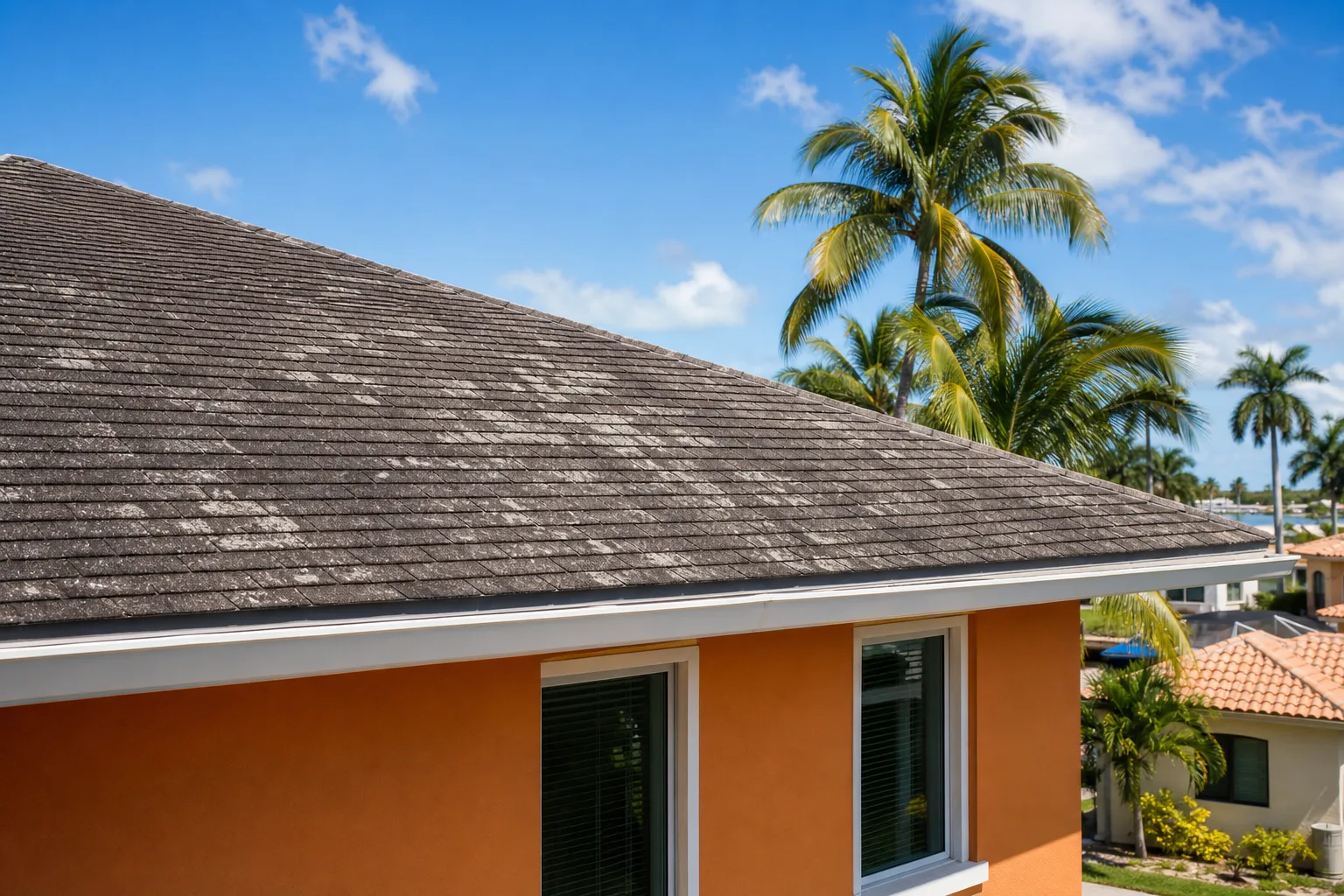
UV radiation. We get more intense sun than most of the country. UV degrades asphalt, breaks down sealants, and accelerates the oxidation of metal coatings. Hot sun and storms can affect shingle service life; evaluate the particular roof rather than applying a fixed climate discount.
Heat cycles. Daily expansion and contraction from 90-degree-plus afternoons stress fasteners, ridge caps, and underlayment over time.
Humidity and moisture. Coastal humidity promotes algae and mold growth on shingles and tile. Trapped moisture under a roof deck causes wood rot faster than in dry climates.
Salt air. If your home is within a few miles of the ocean, salt in the air works on metal components, screws, flashings, and any exposed fasteners. This applies to homes in Boca Raton, Boynton Beach, and anywhere along A1A.
Storm season. Wind-driven rain, debris impact, and periodic hurricane-force gusts create physical stress that standard wear-and-tear doesn't account for. After major events, even a structurally intact roof may need repairs that affect its remaining service life. If you're assessing post-storm condition, our Hurricane Storm Center covers what to check and how to document damage.
All of this is why I always tell homeowners: treat the manufacturer's warranty term as different from a prediction of service life, and assess local exposure and condition.
Step 2: Know the Real Lifespans by Material
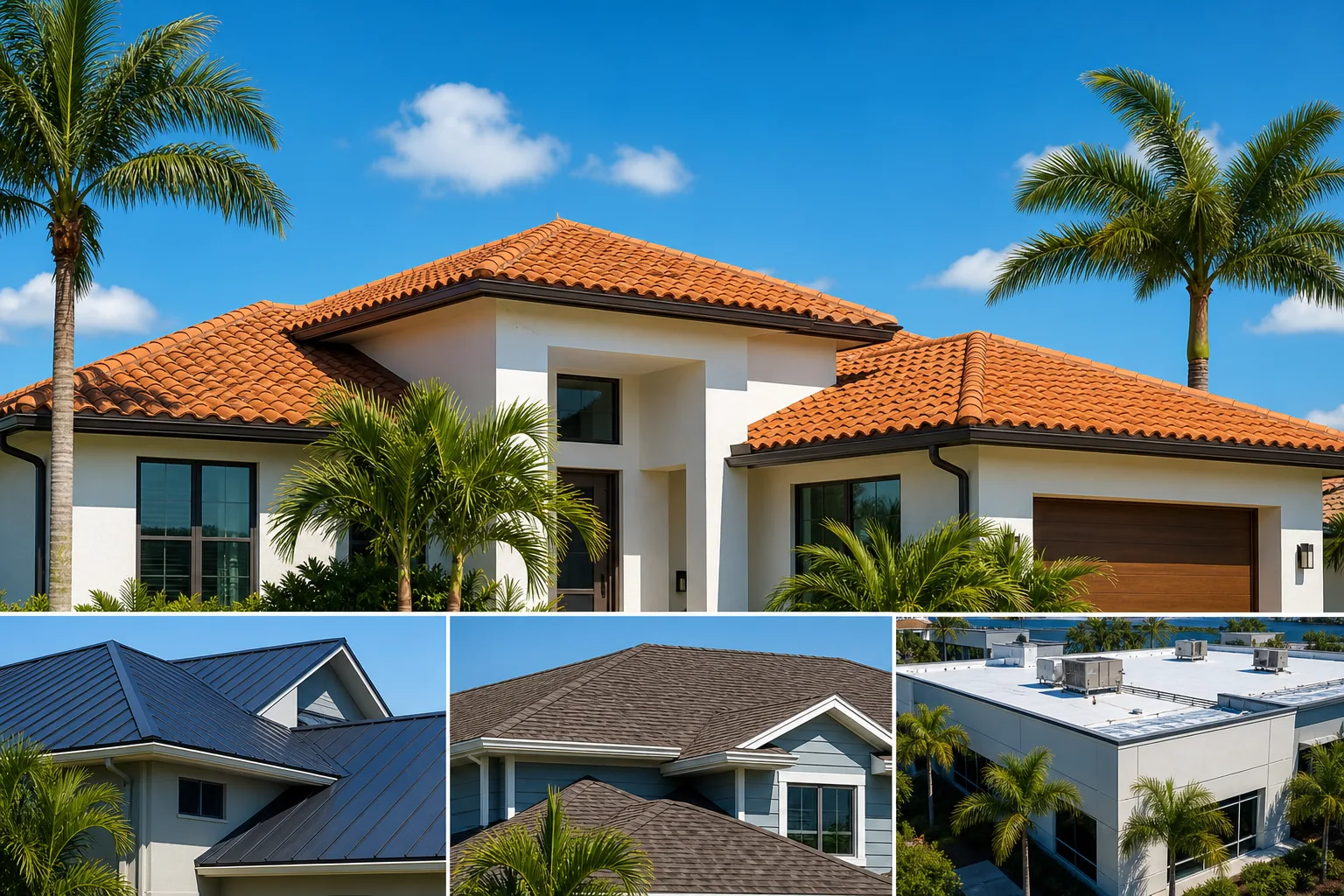
This is the information people actually come looking for. For context, roofing manufacturer GAF gives broad U.S. material ranges: asphalt shingles roughly 20–30 years, metal more than 50 years, and tile roughly 50–100 years. Those are material-level generalizations, not a South Florida roof-system guarantee. Storm history, installation, coastal corrosion, and especially tile underlayment can shorten the useful life of a particular assembly. Ask a roofer to assess actual condition rather than subtracting a fixed number of years.
Tile Roofs
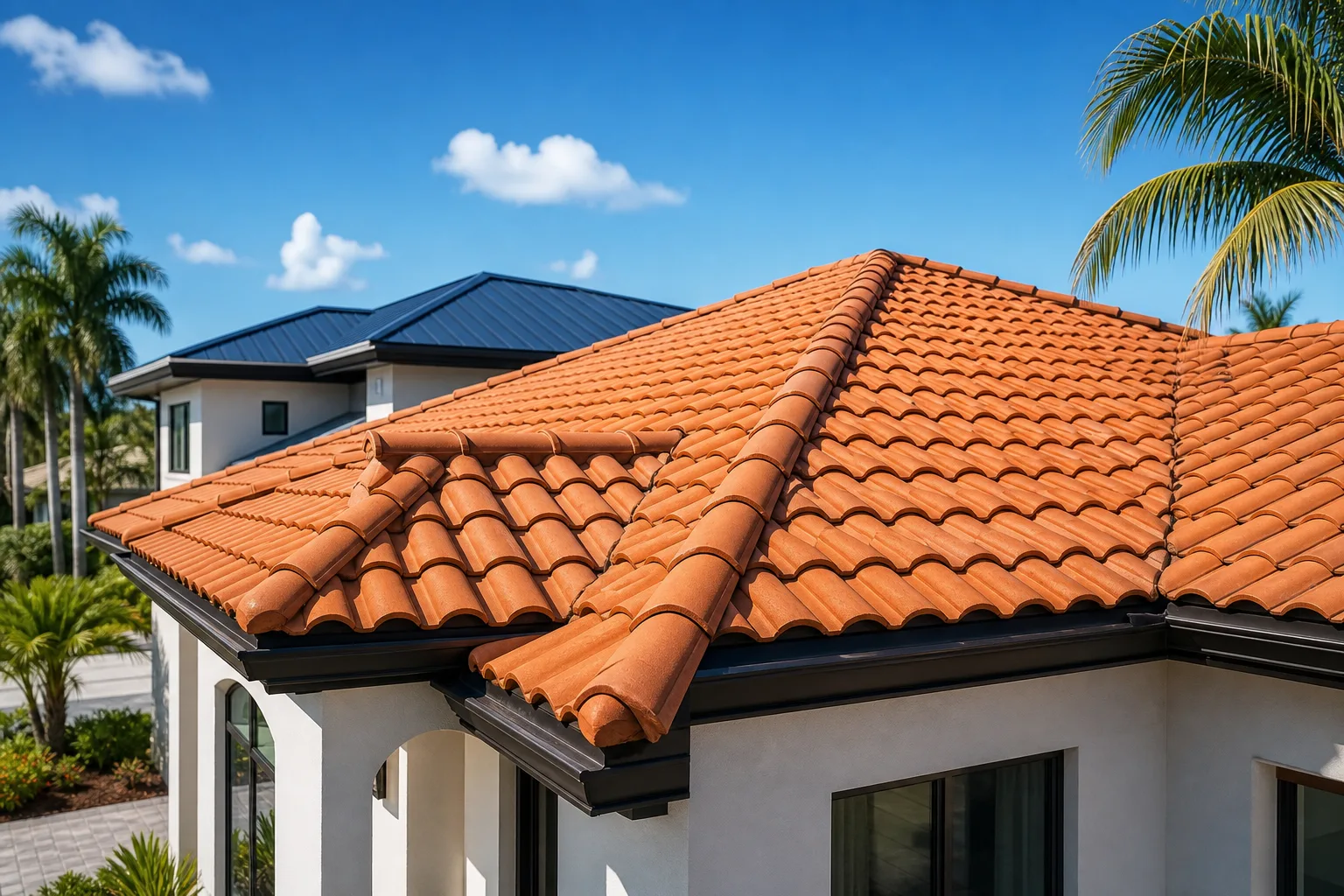
Concrete and clay tile are the dominant roofing material in this region for good reason. Tile may last for decades when sound, but system life depends heavily on underlayment and installation. The tile does not fail, generally speaking. What fails is the underlayment beneath it.
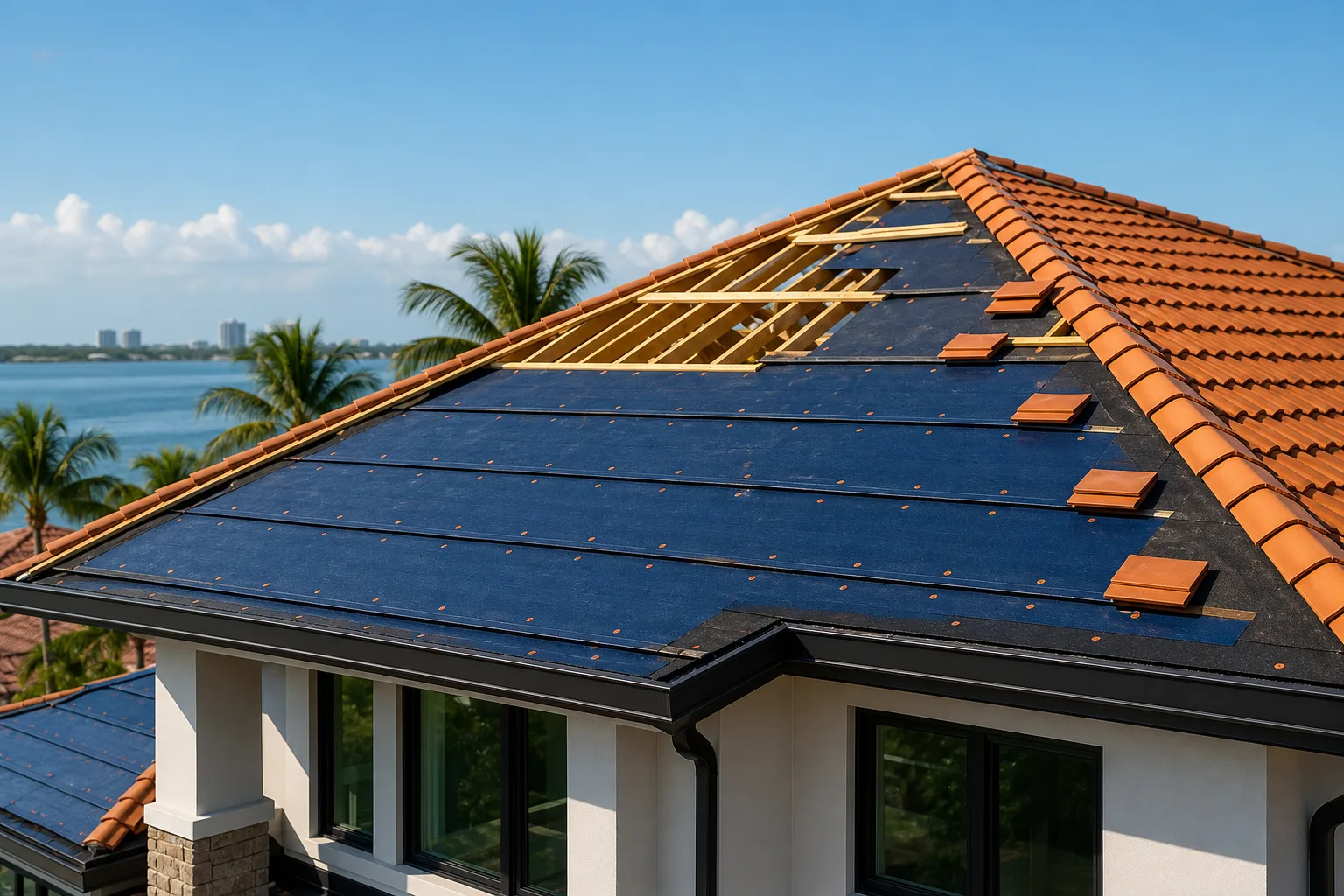
Underlayment service life varies depending on installation quality, ventilation, and whether the roof has taken storm damage over the years. When the underlayment goes, you start seeing leaks even though the tile looks intact from the street. A full re-roof replaces the underlayment and resets the clock. The existing tile can often be reused if it's in good shape.
If you're comparing materials or want to dig into what makes tile a sensible long-term choice here, our Florida tile roofing guide covers installation specifics and cost considerations in detail.
For tile work we've actually done in the area, the Emerald Pointe tile project and Coral Springs tile project in our gallery give you a sense of scope.
Planning horizon: Have the tile and underlayment inspected and budget based on their actual condition; tile reuse may be possible.
Metal Roofs
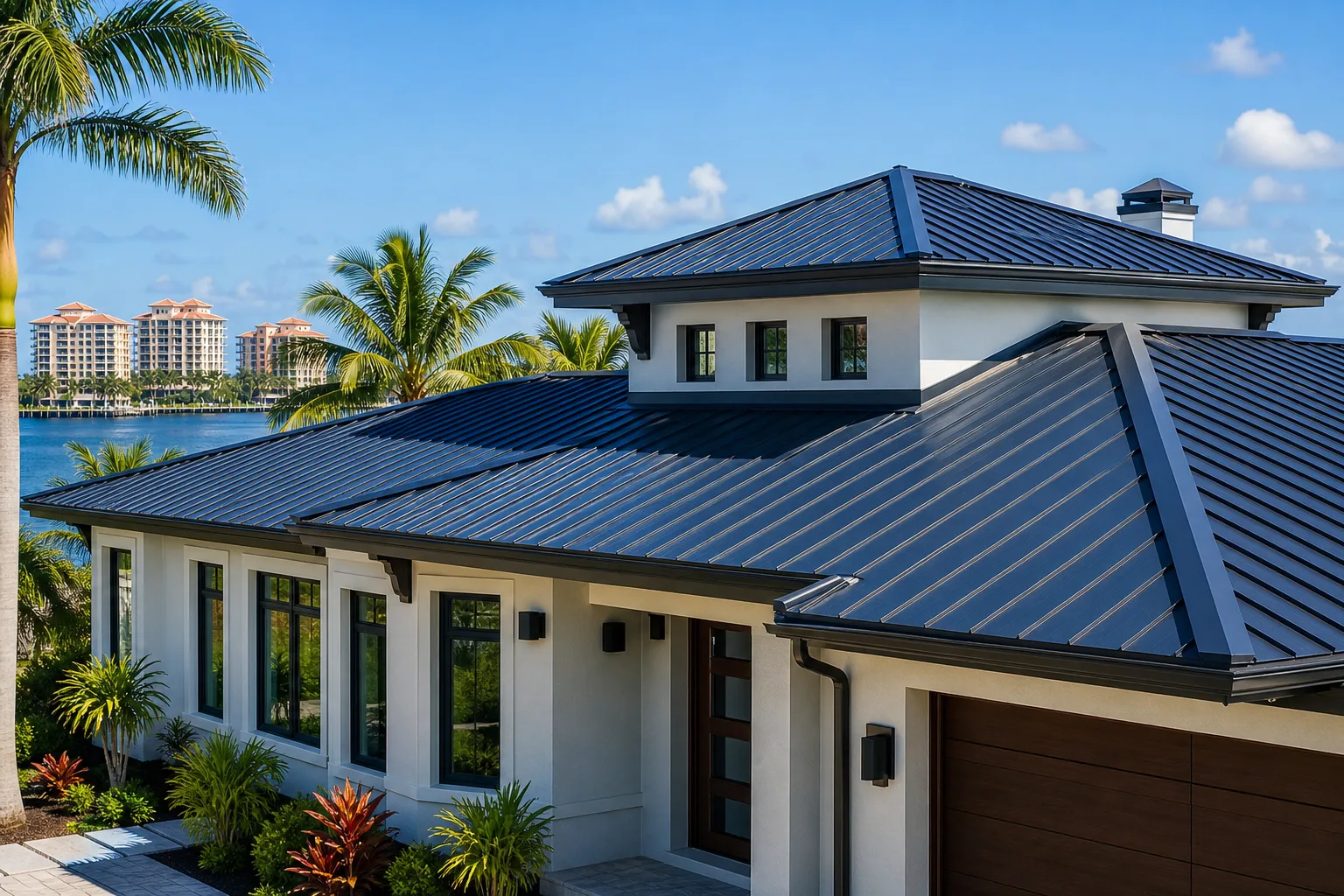
Metal is the other long-duration option. A well-installed standing-seam metal roof can provide long service, but durability varies with coating, fasteners, coastal exposure, and maintenance. It handles the heat well, sheds water cleanly, and holds up in high wind events better than most materials.
The vulnerability with metal is the coating and the fasteners. Salt air degradation on exposed screws in screw-down panel systems is a real issue, especially close to the coast. Standing seam systems with concealed fasteners handle that better. Proper paint or coating maintenance extends the surface life significantly.
Planning horizon: Assess coating, seams, fasteners, and corrosion over time rather than assuming a fixed service life.
Shingle Roofs
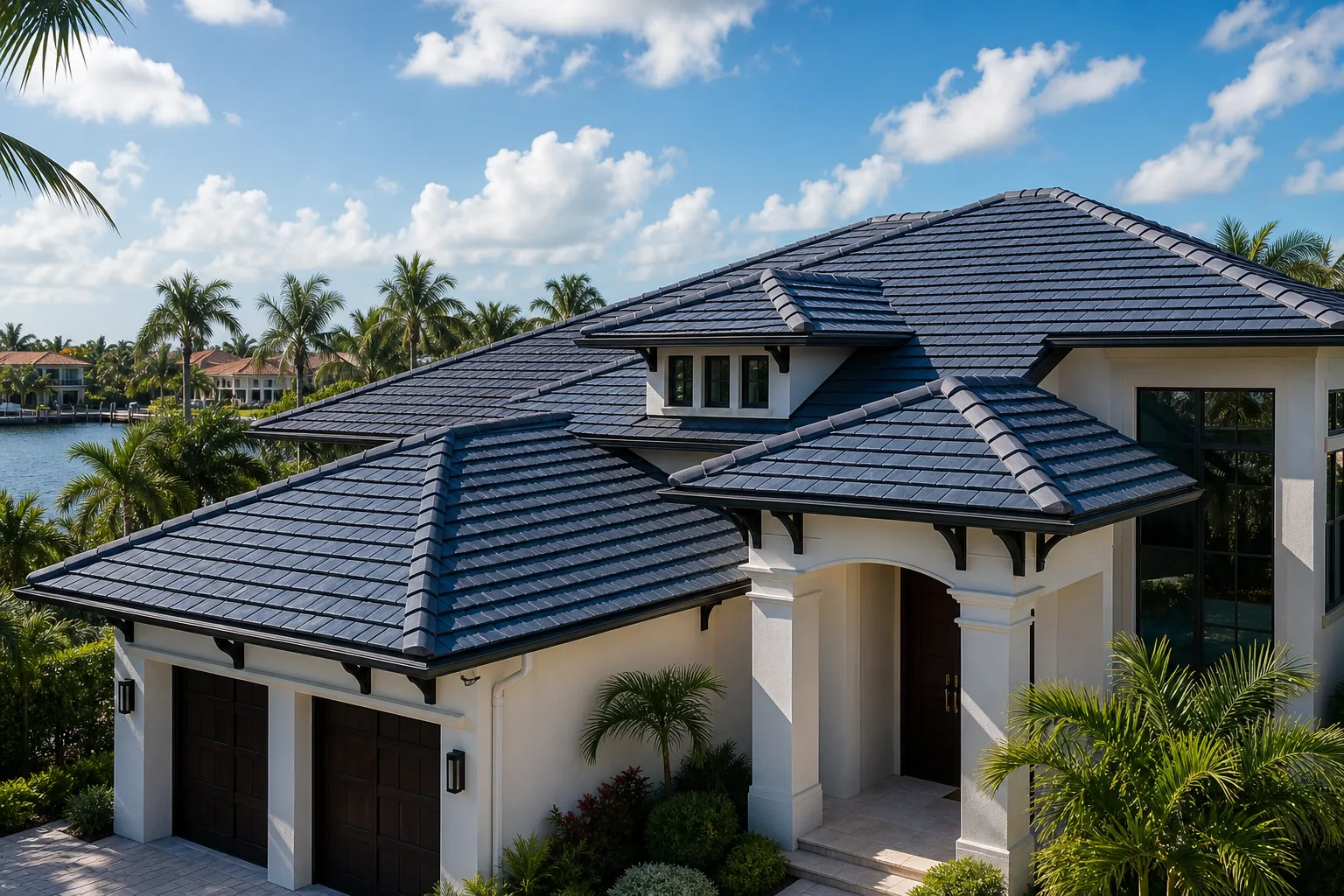
Asphalt shingles are the most common roofing material in the country, but they're the most challenged by our climate. The UV and heat cycle exposure here is punishing to asphalt.
A 30-year shingle warranty does not guarantee 30 years of service; inspect condition and plan for replacement based on wear, damage, and policy needs. Some installations push past that, especially with proper attic ventilation. Some fall short, particularly if they've taken repeated storm damage or if the original installation quality was subpar.
The complete guide to roof replacement in Florida walks through what to expect when the time comes to replace a shingle roof, including what questions to ask contractors.
Planning horizon: Monitor shingle condition and have a contractor assess remaining useful life.
Want to know what your roof actually needs? Get a free estimate
Step 3: Identify the Factors That Shorten Your Specific Roof's Life
Material type is a starting point. But individual roofs age at different rates based on specific conditions.
Attic ventilation. Poor ventilation traps heat in the attic and cooks the underside of the roof deck and underlayment from below. This is one of the most common installation shortcuts that shortens roof life in this region.
Overhanging trees. Branches that contact or shade the roof hold moisture on the surface and promote algae and mold. They also create debris and impact risk in storms.
Previous repairs and patches. A roof that's had multiple patches over the years may have compromised underlayment or flashing in those areas even if the patches held.
Gutter condition. Gutters that overflow or pull away from the fascia allow water to run behind the drip edge and into the roof edge. If your gutters haven't been looked at in a while, that's worth addressing before it accelerates roof edge damage. Our gutters service page covers what to look for.
Installation quality. This is the variable that matters most and that homeowners can't easily assess after the fact. A roof installed in 2010 with poor nail patterns, wrong underlayment, or inadequate flashing will not last as long as one installed correctly to Florida Building Code standards.
Step 4: Figure Out Where Your Roof Is in Its Lifespan
Once you know your material and the factors above, you can make a practical estimate of how much life is left.
If your roof is within the first half of its realistic lifespan and has no current issues, you're monitoring and maintaining.
If it's in the second half and you're starting to see any of these things, you're moving toward a planning conversation:
- Granule loss in gutters (shingles)
- Cracked or slipped tile
- Rust staining around fasteners (metal)
- Daylight visible in the attic
- Soft spots when walking the deck
- Staining or efflorescence on interior ceilings
Any of these in a roof that's 15 or more years old deserves a professional look. We offer a free instant estimate if you want a starting point without any commitment.
For actively leaking or damaged roofs, our roof repair service page explains what the inspection and repair process looks like.
Common Mistakes
Relying on the manufacturer's rated lifespan as your actual planning number. Those ratings assume average conditions. South Florida is not average. Plan shorter.
Ignoring the underlayment. Tile homeowners especially make this mistake. The tile looks fine, so the roof must be fine. The underlayment failure underneath is invisible until it leaks.
Skipping inspections because the roof looks okay from the ground. Significant deterioration is not visible from the ground. By the time you can see a problem from your driveway, it's usually been developing for a while.
Letting small repairs go. A flashing issue or a few broken tiles that get deferred often leads to deck damage that turns a repair into a full replacement. See the roof repairs page for what a timely fix can prevent.
Not accounting for age when buying a home. A 15-year-old shingle roof may need closer inspection; remaining life cannot be judged by age alone. That's a negotiating point and a budgeting item. A lot of buyers don't think about this until they're the new owners.
Bottom Line
Tile, metal, and shingle systems age differently, but roof and underlayment condition matter more than fixed regional lifespan ranges. A qualified inspection is a better basis for replacement planning.
Knowing where your roof sits in that timeline lets you plan instead of react. If you've got a roof approaching the back half of its expected life, or if you just moved into a home and aren't sure what you have, an inspection is the right starting point.
If you want an honest look at what you're working with, request a quote or use our free instant estimate tool to start the conversation. We've been doing this in South Florida since 2005 and we're straightforward about what we find.
Want to know what your roof actually needs?
Millennium Makeover has been roofing South Florida homes and businesses since 2005. Get a straight, no-pressure estimate from a licensed local crew (CCC1326328).
Frequently asked questions
How long does a tile roof last in South Florida?
Tile may remain usable for decades, while underlayment can fail earlier; have both assessed before deciding whether to reroof. When the underlayment deteriorates, leaks occur even if the tile looks intact from the ground. A re-roof often reuses the existing tile and replaces only the underlayment and related components.
Do shingle roofs last as long in Florida as they do in other states?
No. The intense UV exposure, heat cycling, and hurricane season stress in South Florida shorten shingle life compared to national averages. A 30-year product warranty is not a local service-life guarantee; inspect actual condition and installation. Proper attic ventilation and installation quality affect how close to that upper end you'll actually get.
What shortens a roof's life the most in Boca Raton or Boynton Beach?
Salt air, UV degradation, and poor attic ventilation are the biggest factors specific to this region. Homes close to the coast also see faster corrosion of metal flashing and fasteners. Installation quality, particularly nail patterns and underlayment selection, has a significant impact that homeowners usually can't assess after the fact.
How do I know if my roof is near the end of its life?
Signs to watch for include granule loss in gutters from shingles, cracked or slipped tile, rust staining around metal fasteners, soft spots when walking the deck, or interior ceiling staining. Any of these on a roof that's 15 or more years old warrants a professional inspection. A lot of deterioration is not visible from the ground until it's already advanced.
Should I repair or replace my South Florida roof?
The answer depends on the roof's age, material, and the extent of any damage. A roof in the first half of its expected lifespan with isolated issues is generally a good repair candidate. A roof past the midpoint of its realistic service life with recurring or spreading problems is usually better addressed with a full replacement. A licensed contractor inspection gives you the clearest picture of which direction makes sense.