Roof Repairs South Florida
Leak investigation and repair scheduling based on roof conditions, weather and safe access.
Roof Repair Assessment and Documented Scope
Availability-Based Scheduling. Root-Cause Investigation. Written Estimates.
Active water entry can worsen building damage, so owners should protect occupants and contents and request professional evaluation promptly. Emergency conditions involving electricity, structural movement or unsafe access may require other emergency professionals before roofing work can begin.
Leak investigation aims to identify likely water-entry paths before a repair scope is proposed. Some leaks travel from distant roof details or involve concealed conditions, so an initial repair cannot guarantee that every source will be visible or resolved without follow-up.
Storm damage, flashing problems, cracked materials and interior stains require different repair approaches. Scheduling, available materials, price and written warranty terms depend on the inspection, safe access, weather and agreed scope.


Common Roof Repair Conditions
Inspection and scope considerations for recurring South Florida roof concerns
Tile Breakage & Displacement - High winds, falling debris, foot traffic and age-related cracking can displace or break tile. Profile and color availability must be confirmed for each project; discontinued products may require a compatible close match, salvage material or a revised repair scope.
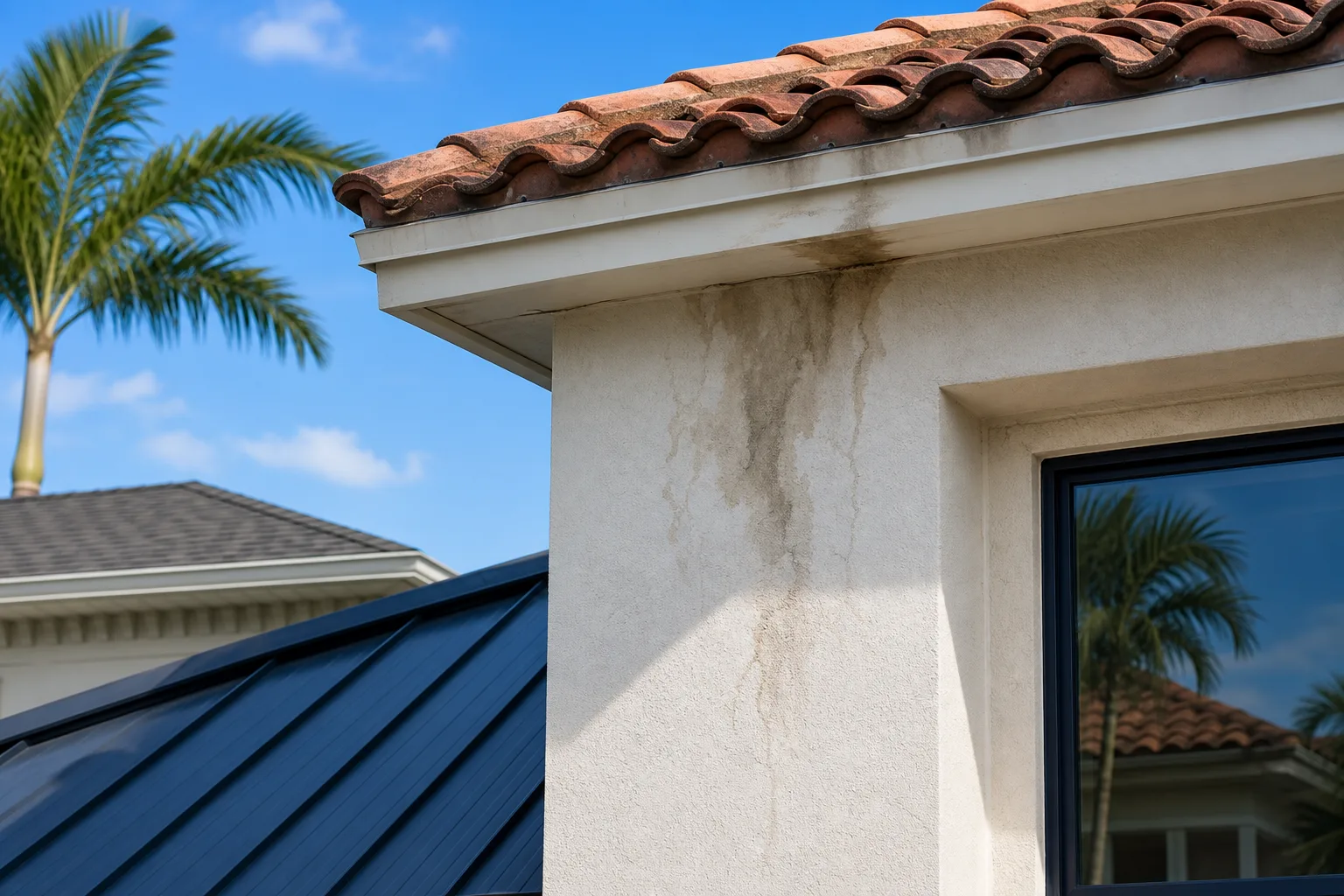
Valley & Flashing Failures - Roof valleys and flashings around penetrations (vents, pipes, skylights) are prime leak locations. Metal components corrode over time, sealants fail, and improper original installation creates problems that may take years to manifest. We replace compromised flashing with corrosion-resistant materials and proper installation techniques.
Shingle Damage - Wind can lift, crack or tear asphalt shingles, especially as materials age. Product, color and profile availability must be checked before promising a match; the scope should compare localized repair with broader replacement when conditions warrant.
Flat Roof Membrane Issues - Seams, penetrations, drains and ponding areas can show deterioration. An assessment can document visible conditions and compare compatible localized repair, section work, coating or replacement options.
Professional Leak Detection Services
"A repair scope should follow the observed evidence and documented assumptions."
Document the Likely Water Path
Finding a roof leak is not always straightforward. Water can enter at one location and travel along rafters, sheathing and other pathways before appearing elsewhere. Visual review and, when appropriate, additional testing can identify likely entry paths, but concealed conditions may require follow-up.
A leak investigation may compare the interior damage location with accessible attic and roof evidence. Moisture patterns, staining, valleys, flashings, penetrations and weather damage can inform likely water paths without proving every concealed source.
When a visual inspection does not reveal the source, controlled water testing or thermal imaging may provide additional evidence where conditions allow. These methods support diagnosis but cannot reveal every concealed pathway or guarantee that the first repair will resolve every source.
The repair proposal should identify the observed evidence, likely entry path, assumptions, exclusions and follow-up steps if water entry continues.
Storm Damage & Insurance Claims
South Florida storms can expose roofs to wind-driven rain and debris. Temporary protection, damage documentation and repair scheduling depend on weather, safe access, current workload, materials and the observed conditions; contractor documents do not determine insurance coverage or claim value.
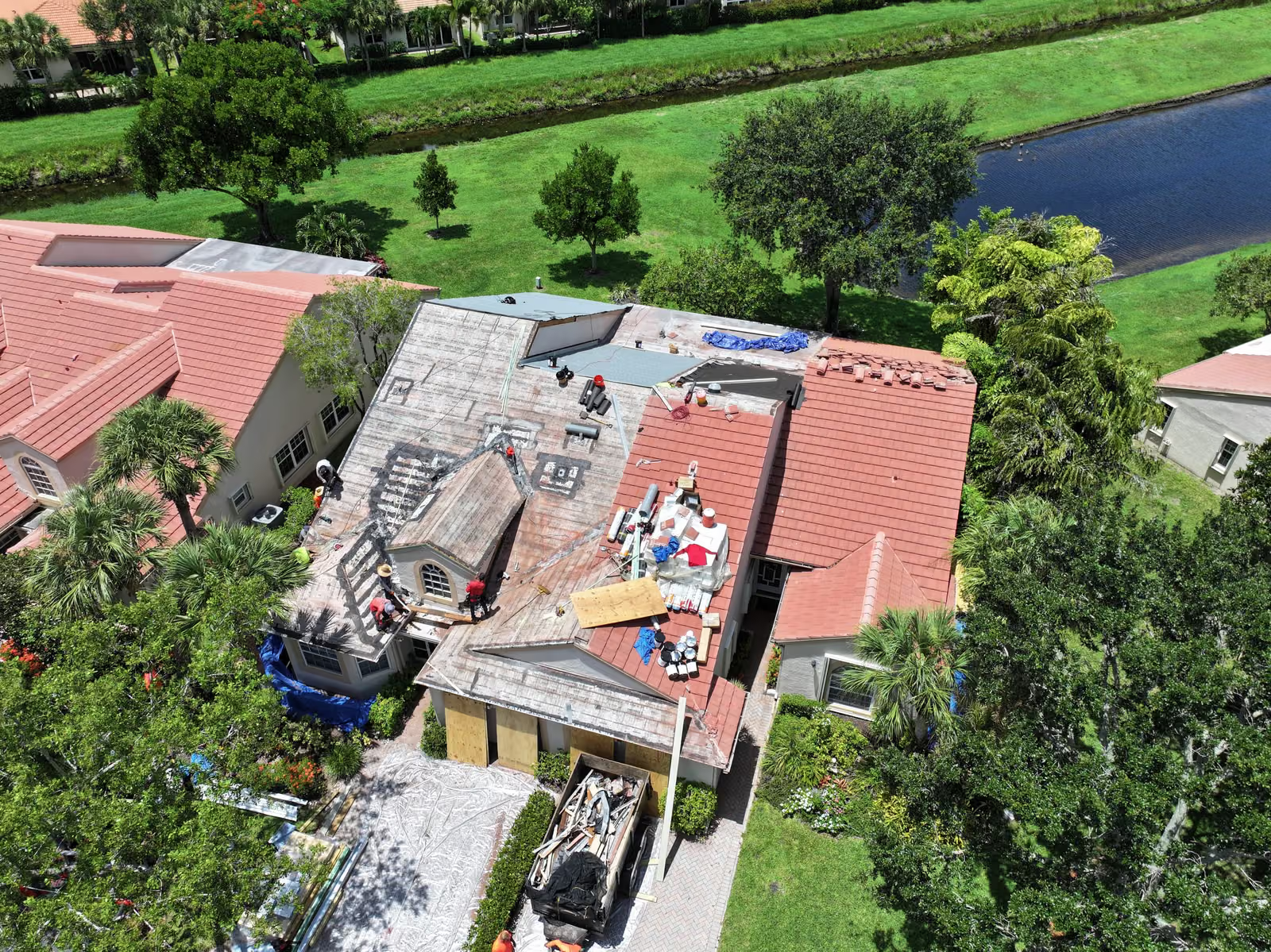
Temporary Tarping - When weather and safe access permit, temporary protection may help limit additional exposure until permanent work can be evaluated. A tarp is not a permanent waterproofing guarantee and may require monitoring or replacement.
Damage Documentation - Accessible conditions can be photographed and described for the owner. Documentation supports the record but does not determine coverage, causation, claim value or insurer acceptance.
Insurance Coordination - When authorized by the property owner, a contractor may provide scope or condition information to an adjuster. Coverage and settlement decisions belong to the insurer and policyholder; no claim outcome is guaranteed.
Preventive Repairs & Maintenance
Condition-based inspection and maintenance can identify visible concerns before some of them worsen. It cannot reveal every concealed condition, prevent every leak or guarantee a roof's full expected service life.
Inspection scope and frequency should reflect the roof system, manufacturer guidance, exposure and storm history. Reports can document accessible flashing, penetrations, valleys, drains, debris and material conditions and prioritize observed concerns.
Condition-based work might include resealing compatible pipe-boot details, replacing available cracked tiles, clearing blocked drains or addressing observed flashing concerns. Whether those repairs are appropriate depends on the surrounding assembly and concealed conditions.
For an older roof, inspection can document accessible conditions and compare repair with replacement planning. It cannot promise remaining service life or a future repair outcome; the written scope should explain the evidence, assumptions and alternatives.
Have a Roof Emergency?
For active water entry, protect occupants and contents where safe, then call for current repair or temporary-protection availability.
Our Repair Process
Condition-based scheduling, investigation and documented repairs
Urgent Request Triage
Scheduling depends on weather, safe access, current workload, materials and the type of damage. Call for current availability.
- Availability review
- Temporary protection assessment
- Active-leak information
- Safety and access check
Thorough Inspection
We compare accessible interior, attic and roof evidence to identify likely water-entry paths and document uncertainty.
- Interior damage assessment
- Attic inspection
- Roof surface inspection
- Water path tracing
Documented Findings & Estimate
We explain what we found, show you photos, and provide a written estimate with transparent pricing.
- Photo documentation
- Written estimate
- Repair options explained
- Allowances and exclusions identified
Scoped Repair
The repair uses materials and details identified in the written scope, subject to field conditions and documented changes.
- Specified materials
- Documented repair details
- Work-area cleanup
- Scope review
Verification & Cleanup
We review the completed scope and visible repair area, then clean the work area. Concealed conditions or unrelated leak sources may require follow-up.
- Repair verification
- Site cleanup
- Debris removal
- Final inspection
Warranty & Documentation
We provide the photos, maintenance guidance and warranty documents applicable to the completed written scope.
- Applicable warranty documents
- Before/after photos
- Maintenance guidance
- Follow-up process
Frequently Asked Questions
How quickly can you respond to a roof leak emergency?
How much does a typical roof repair cost in South Florida?
Should I file an insurance claim for storm damage to my roof?
Why does my roof leak only during heavy rain?
Can a roof leak cause mold growth?
How long should a roof repair last?
Schedule Your Roof Repair Assessment
Whether you have an active leak or want to address a problem before it worsens, our team is ready to help. Call or request an appointment today.
Related Roofing Guides
More on roof repairs from our South Florida roofing team.
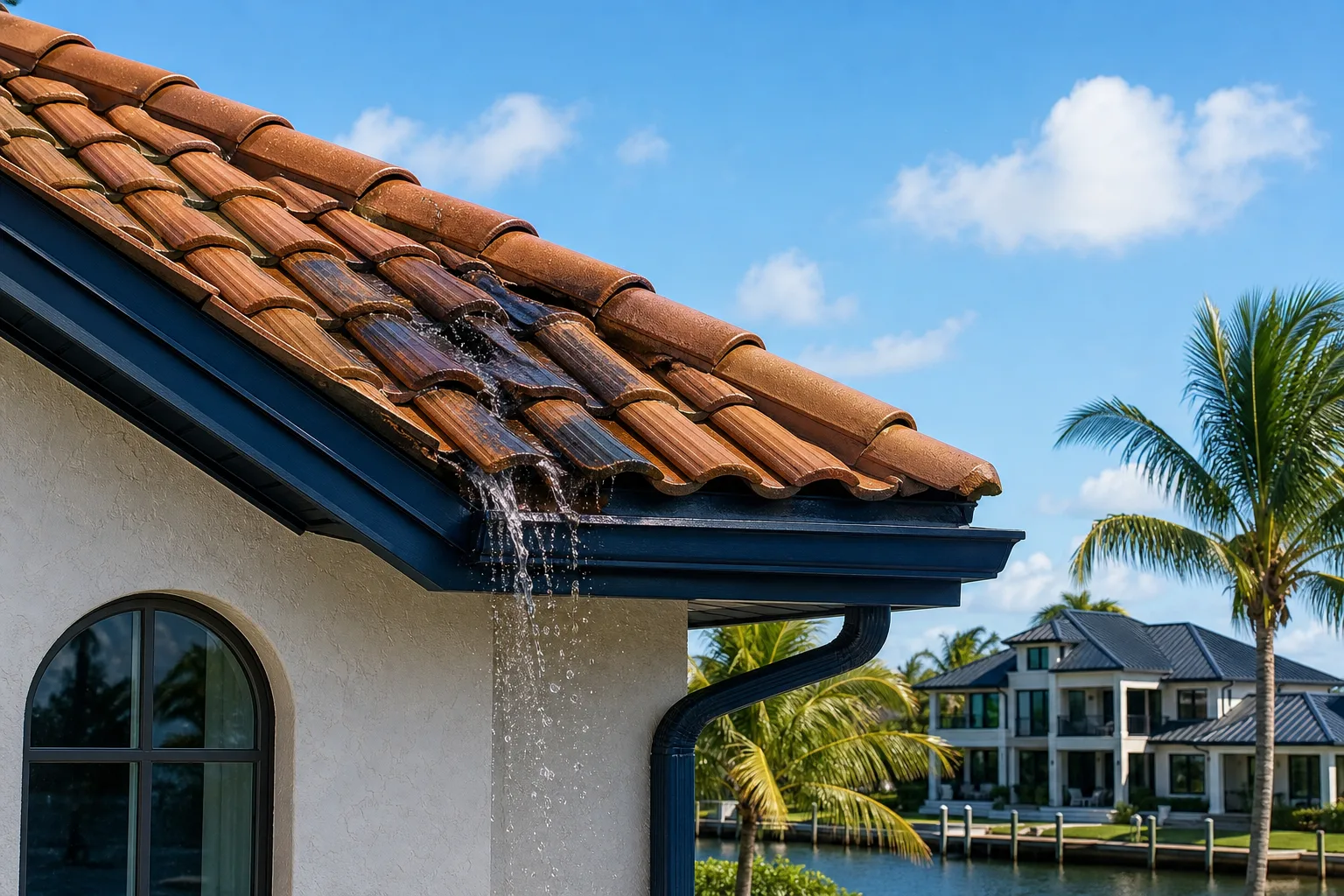
How Roofing Contractors Handle Active Leaks Before a Full Repair

Can a Roof Leak Be Repaired Without Full Replacement?