How a New Roof Affects Your Home Insurance in Florida
In this article
TL;DR: In Florida, a new roof can directly lower your homeowner's insurance premium and, in some cases, is the only thing standing between you and a policy cancellation. The key is knowing what your insurer needs, what the inspection process looks like, and how to time everything correctly so you actually see the benefit.
What You Need
Before you start calling your insurance agent, pull these items together. Having them ready saves you from chasing paperwork later.
- Contractor's completion certificate or final invoice showing the date the job was finished, materials used, and the contractor's license number
- Permit and inspection records pulled from your county building department (your contractor should provide these, or you can look them up at Palm Beach County's building department portal)
- Product approval numbers for the roofing system installed. These are the Florida Product Approval numbers issued by the Florida Building Commission and confirm the materials meet the state's wind-resistance standards
- Photos of the completed work, especially the roof deck, underlayment, and finished surface. A good contractor takes these during the job
- Your current declarations page so you know what coverage and premium you are starting from
- A wind mitigation inspection report (more on this in a moment, because this one is worth its own section)
Step 1: Understand Why Insurers Care So Much About Roof Age in Florida
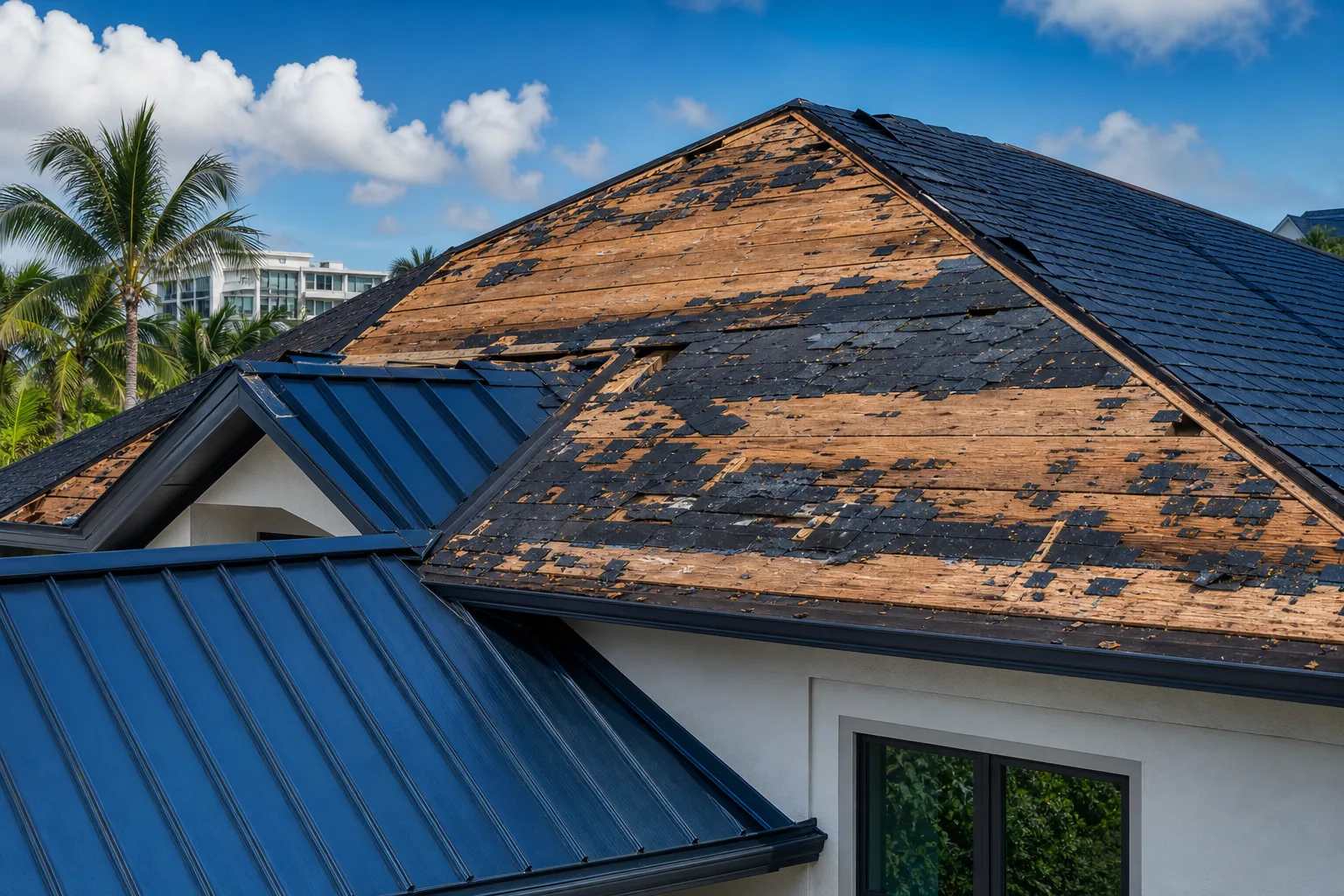
Florida insurers treat roofs differently than most other states, and with good reason. Hurricanes, tropical storms, and the relentless sun here mean a roof that is 15 or 20 years old represents a real exposure to the insurance company.
Starting around 2021, several major carriers began non-renewing policies on homes with roofs over 15 years old, especially if those roofs were three-tab shingles. Some required a roof inspection before renewing. Others simply declined to write new policies on older roofs.
A new roof changes that calculation immediately. From the insurer's perspective, a fresh installation under a current permit reduces the chance of a water-intrusion claim significantly. That lower risk is what drives premium changes and keeps coverage available in the first place.
If your roof is getting close to that 15-year mark, it is worth reading how long a roof lasts in South Florida before your insurer asks the question for you.
Step 2: Get the Wind Mitigation Inspection Done Right Away
This is the single biggest lever you can pull after a new roof is installed. A wind mitigation inspection is a separate inspection from your county permit inspection. A licensed inspector (not your roofing contractor) comes out and documents specific features of the roof that reduce hurricane damage risk.
The Florida Office of Insurance Regulation uses a standardized state form, commonly referenced as OIR-B1-1802, though the form number and revision should be confirmed with your inspector or the Florida OIR. Inspectors fill this out based on what they physically verify. The credits your insurer applies depend on what that form shows.
Here is what the inspector looks at:
- Roof covering. The type of material and whether it carries a Florida Product Approval for wind resistance
- Roof deck attachment. How the plywood or OSB sheathing is nailed to the rafters. Closer nail spacing and longer nails score better
- Roof-to-wall connection. Whether the rafters or trusses are connected to the walls with clips, single wraps, double wraps, or hurricane straps. Double wraps and straps score the highest credits
- Roof shape. Hip roofs (sloped on all four sides) perform better in high winds than gable roofs
- Secondary water resistance. Whether a self-adhering underlayment (peel-and-stick) was installed over the deck before the finish material went on
- Opening protection. Windows and doors rated for impact, though this is not a roof feature specifically
A new roof installation is often the best opportunity to improve several of these categories at once. If your old roof had inadequate deck nailing, the reroof permit process typically requires improved deck nailing, such as ring-shank nails or 8d nails at tighter spacing, though specific requirements vary by wind zone and the applicable code edition in your jurisdiction. That change alone can move you to a better credit tier.
Wind mitigation inspections generally cost somewhere in a range that can vary widely, often anywhere from around $100 to $200 or more depending on your inspector and location, and often pay for themselves many times over in the first year's premium savings. Ask your inspector for the completed wind mitigation form in PDF form so you can submit it directly to your agent.
Step 3: Notify Your Insurance Company and Submit Documentation
Do not wait for your renewal date. Notify your insurer as soon as the permit is closed and the wind mitigation report is in hand. Most carriers will apply updated credits mid-term and issue a return premium or credit toward your next billing cycle.
Here is what to send your agent:
- The completed wind mitigation inspection report
- The permit number and inspection approval date from the county
- The contractor's certificate of completion with license number
- Product approval numbers for the roofing system
If your carrier wants to do their own roof inspection to confirm age and condition, that is normal. Let them. A brand-new roof with a closed permit is about as low-risk as it gets.
If you are unsure what your specific carrier requires, ask your agent for the checklist. Every company has one.
Want to know what your roof actually needs? Get a free estimate
Step 4: Know What Premium Changes Are Actually Realistic
I want to be straight with you here, because this is an area where homeowners sometimes have inflated expectations.
The premium savings from a new roof depend on several variables: your carrier, your current coverage level, your roof shape, how much your wind mitigation credits improve, and where your home sits in Palm Beach County. Some homeowners see significant reductions. Others see modest ones. A few see none at all if their existing roof was already relatively new and already had solid wind mitigation credits.
What is more consistent is this: a new roof keeps you insurable. In South Florida's current market, that matters as much as the dollar savings. Carriers that were declining to renew older roofs often write new policies or renew existing ones readily once a new roof is documented. That access to the standard market, rather than being pushed to Citizens Property Insurance or an excess-lines carrier, can itself represent meaningful long-term savings.
For a sense of what a new roof costs before you weigh it against insurance savings, the breakdown at new roof cost in Palm Beach County walks through the main variables.
Step 5: Choose the Right Roofing System With Insurance in Mind
Not all roofing materials produce the same wind mitigation credits. If insurance outcome is part of your decision, here is the general picture:
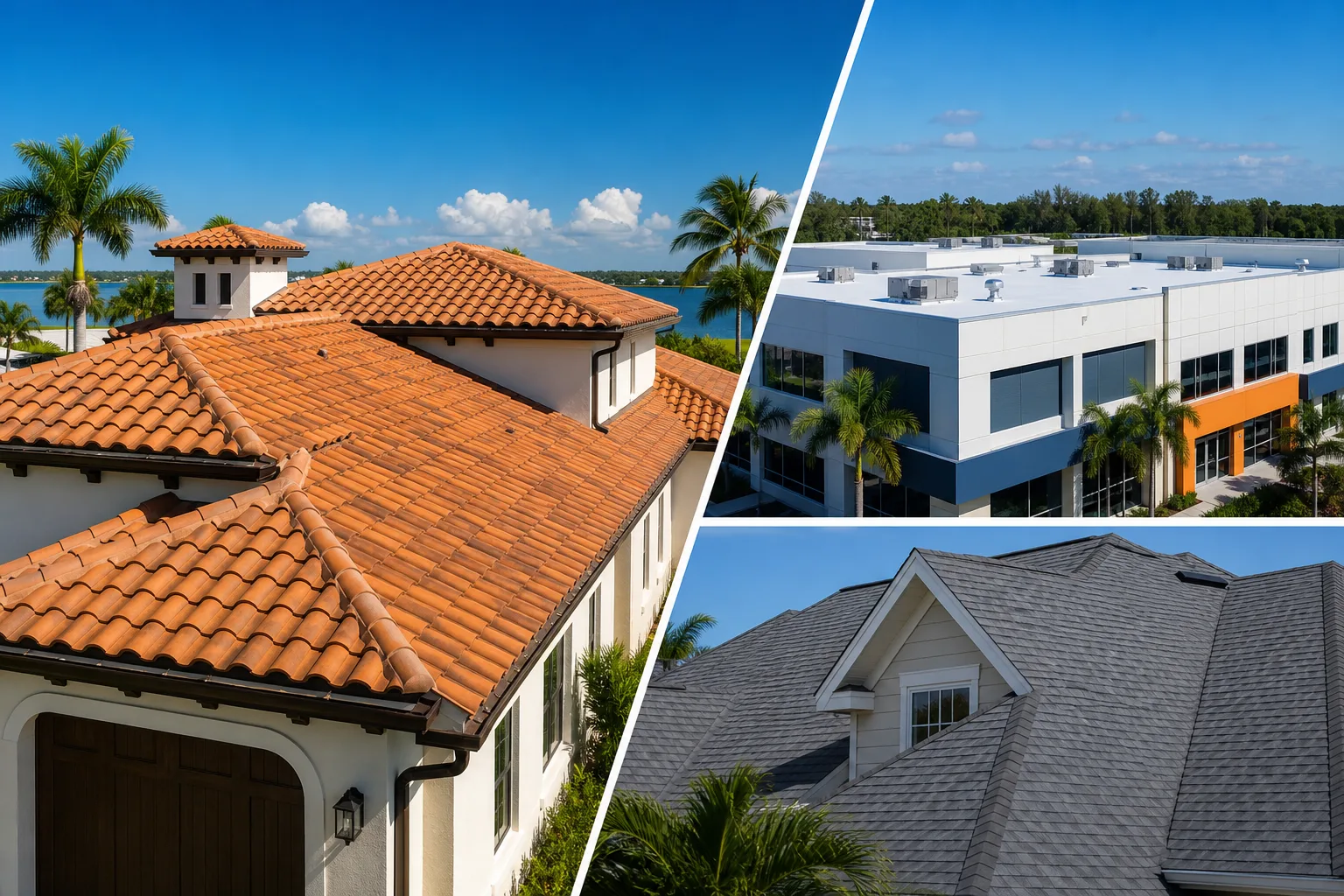
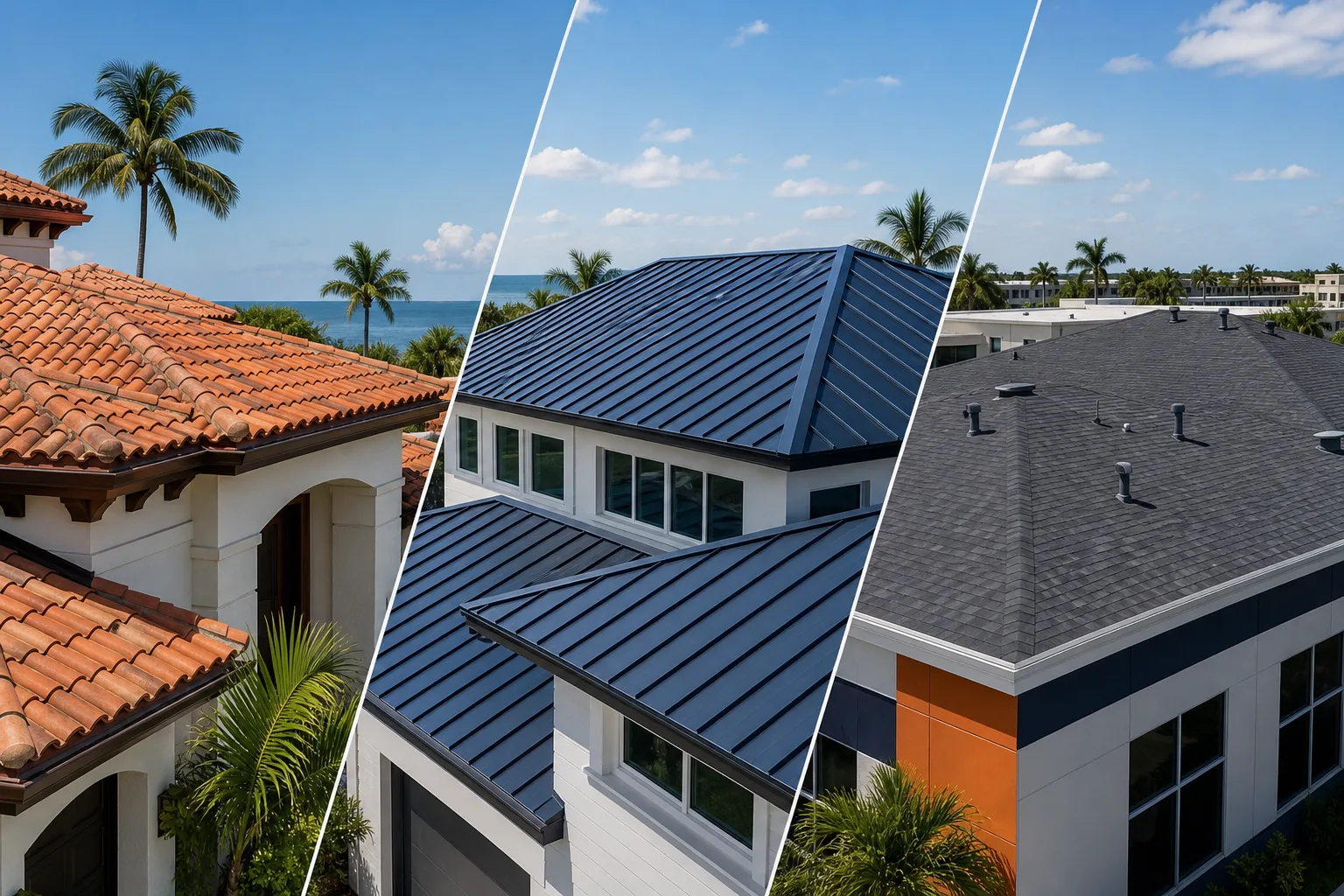
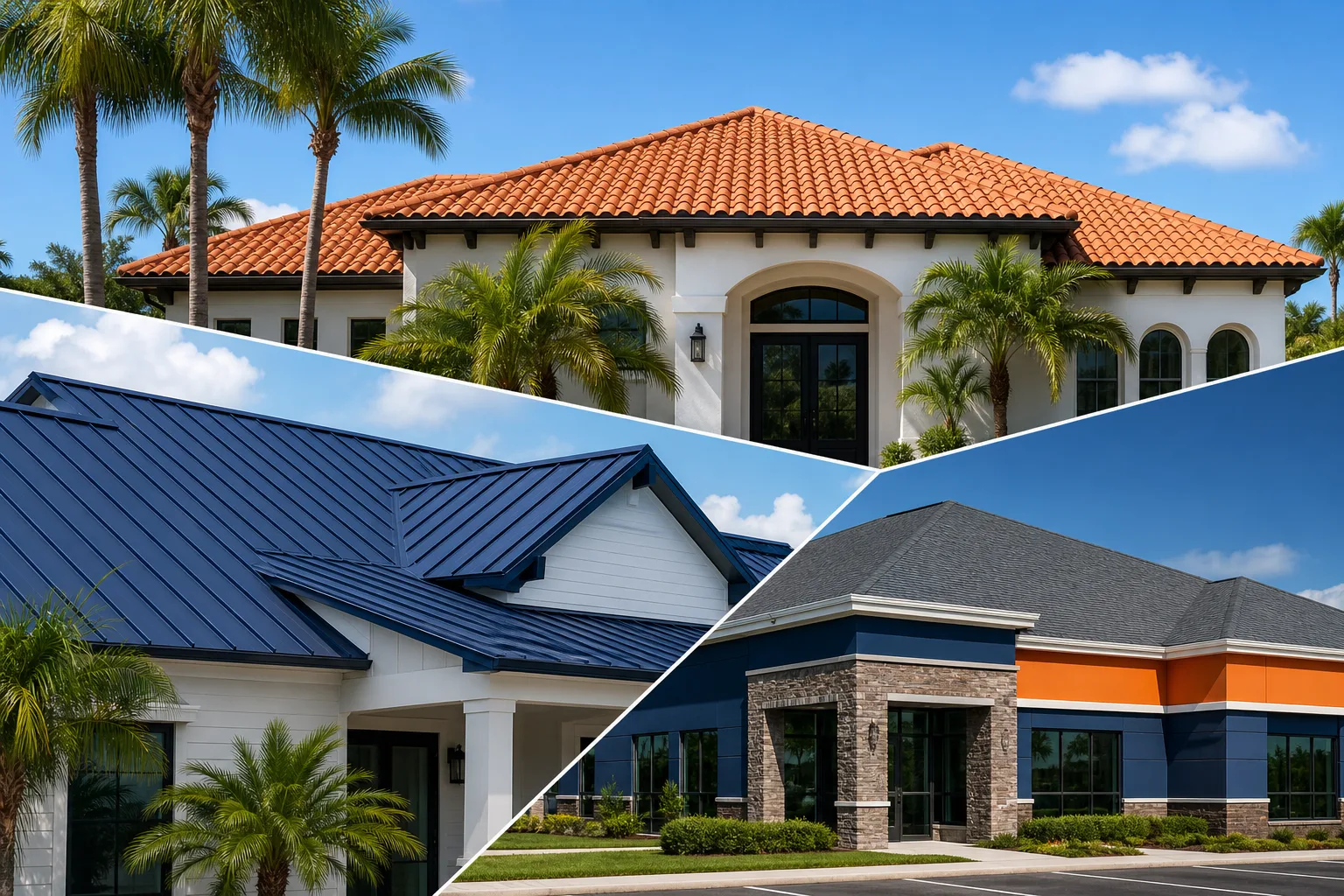
Concrete and clay tile typically earns strong wind resistance ratings when installed correctly, and the added mass helps with secondary water resistance requirements. See tile roofing options if you are weighing this system.
Metal roofing generally performs well in wind testing and often qualifies for strong product approval ratings. It also tends to have a longer rated lifespan, which helps with future renewability questions. More detail is at metal roofing.
Architectural shingles (dimensional shingles) rated for high-wind zones carry Florida Product Approval numbers and are a cost-effective option that satisfies most carrier requirements. Shingle roofing explains the rating differences.
Three-tab shingles are largely out of favor with Florida carriers and, in some cases, are specifically excluded. If you are replacing a three-tab roof, this is a good opportunity to upgrade the system category entirely.
Your roofing contractor should be able to tell you the product approval number for any system they propose before you sign a contract. If they cannot, that is a problem.
Common Mistakes
Skipping the wind mitigation inspection. The permit inspection and the wind mitigation inspection are two different things done by two different people. The permit closes when your county inspector signs off. The wind mitigation report is what your insurer uses for credits. You need both.
Waiting until renewal to notify your insurer. Mid-term updates are allowed and often result in return premiums. Waiting 11 months costs you money for no reason.
Not verifying your contractor's license before work begins. If an unlicensed contractor does the work, the permit may not pull correctly, the inspection may not pass, and your insurer may not accept the documentation. Check license number CCC1326328 if you want to see what a properly licensed contractor record looks like on the state DBPR site.
Assuming the cheapest bid produces the same insurance outcome. A bid that cuts corners on underlayment or deck nailing will produce a weaker wind mitigation report. That report is a document that follows your home for years. Comparing roofing estimates carefully is worth the time.
Not asking about secondary water resistance (SWR) before the job starts. Peel-and-stick underlayment qualifies for SWR credit on the wind mitigation form. Regular felt does not. This is a relatively low-cost upgrade during a reroof that can meaningfully affect your credits. Ask your contractor explicitly which underlayment they plan to use.
Ignoring storm-related damage that should be a claim, not a cash reroof. If your roof was damaged by a named storm or significant wind event, there may be an insurance claim path before you go to out-of-pocket replacement. The Hurricane Storm Center has information on navigating that process.
Bottom Line
A new roof in South Florida does three things for your insurance situation: it keeps you in the standard market, it creates an opportunity to improve your wind mitigation credits, and in the right circumstances it reduces your annual premium. None of that happens automatically. You have to get the wind mitigation inspection done, submit the right documentation to your insurer promptly, and make sure the roofing system you choose carries the product approvals that actually support those credits.
If you are planning a replacement and want to understand exactly what will be installed, what product approvals apply, and what documentation you will receive when the job is done, request a quote or get a free instant estimate and we will walk through it with you before a single shingle moves.
Want to know what your roof actually needs?
Millennium Makeover has been roofing South Florida homes and businesses since 2005. Get a straight, no-pressure estimate from a licensed local crew (CCC1326328).
Frequently asked questions
Will my homeowner's insurance go down after I get a new roof in Florida?
It depends on your carrier, your current wind mitigation credits, and the roofing system installed. Many homeowners in South Florida do see premium reductions, especially when a new wind mitigation inspection is submitted after the installation. The bigger win for many people is staying insurable with a standard carrier rather than being pushed to Citizens or a surplus-lines policy.
What is a wind mitigation inspection and do I really need one after a new roof?
A wind mitigation inspection is a separate evaluation from your county permit inspection. A licensed inspector documents specific features of your roof, such as deck nailing, roof-to-wall connections, and underlayment type, on a standardized state form. Your insurer uses that form to calculate premium credits. Without it, you leave real money on the table.
How long after a new roof is installed should I notify my insurance company?
As soon as you have the closed permit and the completed wind mitigation report in hand, which is typically within a few weeks of the job finishing. Most carriers allow mid-term policy updates and will apply credits or return premiums without waiting for renewal. Waiting longer just costs you money.
Does the type of roofing material affect my insurance premium in Florida?
Yes, material choice affects both the wind mitigation credits you can earn and your insurer's willingness to write or renew your policy. Metal and tile systems often carry strong wind-resistance ratings. Architectural shingles with high-wind Florida Product Approvals are also widely accepted. Three-tab shingles are increasingly disfavored by Florida carriers.
What documents does my insurance company need after a roof replacement?
Most carriers want the completed wind mitigation inspection form, the county permit number with the approval date, the contractor's completion certificate including their license number, and the Florida Product Approval numbers for the roofing materials installed. Ask your agent for their specific checklist before you start gathering documents.
My roof was damaged in a storm. Should I file an insurance claim or just pay out of pocket?
If the damage is tied to a named storm or a documented wind event, there may be a legitimate insurance claim path before you commit to an out-of-pocket replacement. It is worth having the damage assessed and understanding your policy's windstorm coverage before deciding. A reputable contractor will not pressure you one way or the other.