Signs Your Roof Needs Replacement, Not Just Repair
In this article
TL;DR: A repair makes sense when damage is isolated and the rest of the roof has meaningful life left. When damage is widespread, the system is structurally compromised, replacement may be worth comparing with repair after a condition assessment and written bids. Here is how to tell which situation you are actually in.
What You Need
- A pair of binoculars (you do not need to get on the roof yourself)
- A flashlight for attic access
- Your roof's installation date or permit history (check the Palm Beach County property appraiser site if you are unsure)
- Any recent inspection reports or insurance correspondence
- About 30 minutes to walk through this process systematically
If you want a professional set of eyes before making any decision, you can request a quote and I will come take a look at no charge.
Step 1: Establish the Roof's Age and Material Baseline
Before anything else, I want to know what I am working with. Age is not the only factor, but it sets the context for everything else.
In South Florida, shingle and tile system life depends on product, installation, maintenance, and weather; tile underlayment may fail before the tile itself. Metal roofs can go longer, but fasteners and sealants have their own timeline.
If inspection shows widespread wear or recurring leaks, compare repair and replacement bids. You are paying to extend something that is already on borrowed time. I have written more about this in the complete guide to roof replacement in Florida if you want the full breakdown.
What I check: Permit records, original installation paperwork, or visual cues like granule loss pattern and oxidation on metal components. A roof that has been through multiple South Florida hurricane seasons without maintenance ages faster than the calendar suggests.
Step 2: Look at the Scope of Damage, Not Just the Spot That's Leaking
This is the most common mistake homeowners make. They find one leak, fix that one spot, and assume the job is done. What they do not realize is that the leak is often just the place where the water finally found an exit, not necessarily where the problem started.
When I am on a roof, I am not just looking at the wet area. I am checking the entire field of the roof for:
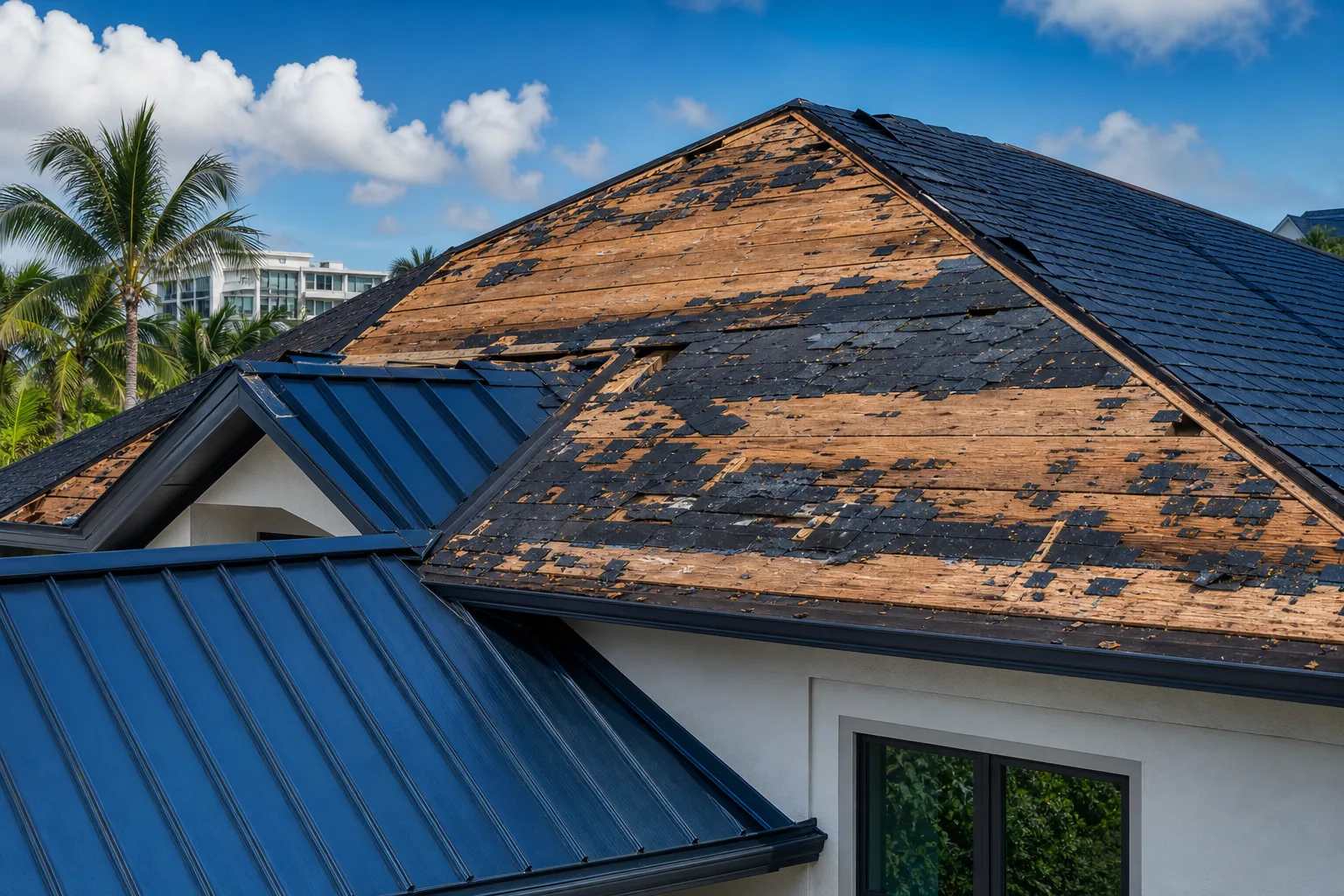
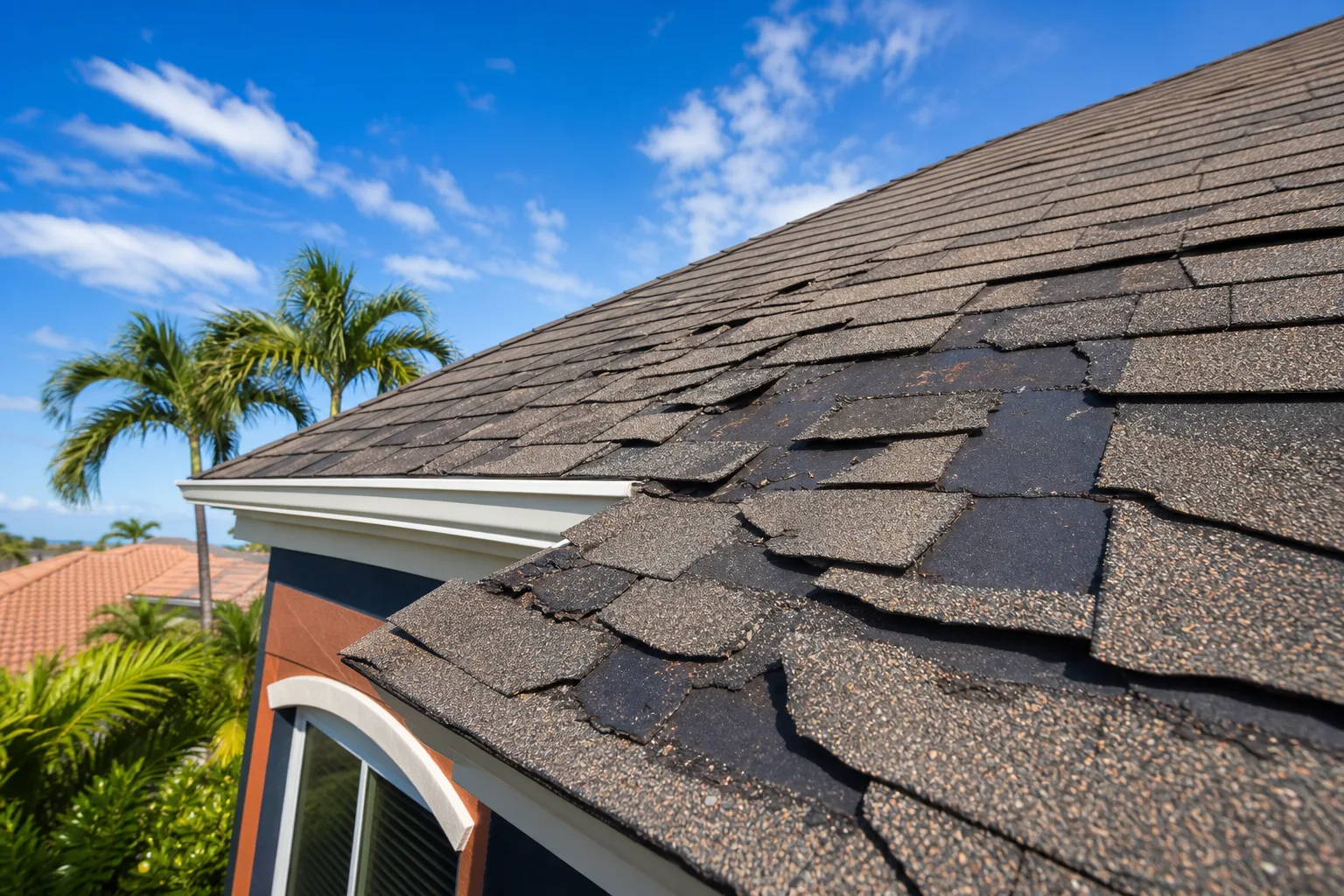
- Granule loss on shingles. A few granules in the gutters is normal. Bare patches that expose the mat underneath mean those sections are no longer protecting against UV or water penetration.
- Cupping or curling at shingle edges. This is a thermal cycling issue that is widespread by the time you notice it. It does not stay in one spot.
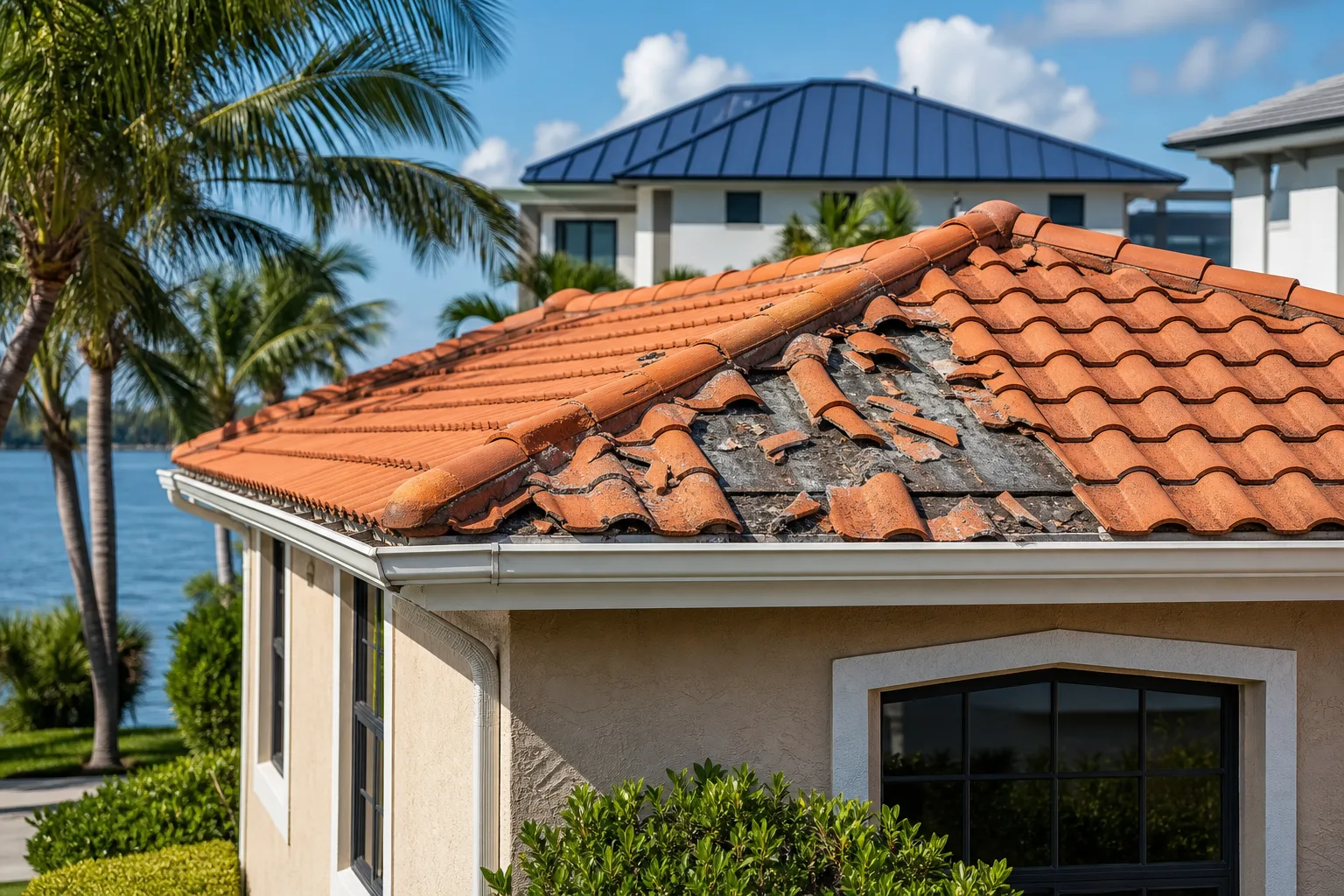
- Cracked or broken tile beyond a few isolated pieces. A few cracked tiles may be repairable; scattered damage warrants an inspection of the tile and underlayment before deciding scope.
- Flashing separation or corrosion at transitions. Walls, chimneys, skylights, and valleys concentrate water. If the flashing is failing in more than one location, the system as a whole is breaking down.
A good rule of thumb I use: widespread deterioration calls for a documented comparison of repair and replacement; Florida's code threshold is a separate legal question.
Step 3: Get Into the Attic
I never skip this step. The attic tells you what the roof surface cannot.
Grab a flashlight and look for:
- Daylight coming through the decking. Visible light may indicate an opening that needs professional assessment; do not assume the cause from the attic alone.
- Dark staining or streaking on the rafters and sheathing. Old staining that is dry may be from a past leak that was addressed. Active staining that is still damp, or staining that is widespread across multiple rafter bays, tells a different story.
- Soft or spongy sheathing. Press your hand against the underside of the decking. If it flexes or feels soft, the wood has absorbed moisture and lost structural integrity. Replacing decking during a repair is possible, but if large sections are compromised, you are essentially doing a full replacement anyway.
- Mold or mildew growth. Suspected mold or staining can indicate moisture and should be assessed; the source may be a leak or condensation.
Florida reroofing rules include a 25% roof-area threshold and a statutory exception for roofing systems compliant with the 2007 code or later. Deck repairs and permits depend on the actual scope and local building review.
Want to know what your roof actually needs? Get a free estimate
Step 4: Run the Cost Comparison Honestly
I have sat across from a lot of homeowners who have already had two or three repairs done in the past few years. When I ask what each one cost, the total sometimes surprises them. That money is gone, and the roof is still failing.
Here is how I frame it:
If repeated repairs are being proposed without resolving the underlying problem, and you have already done similar repairs before, you are spending money without resolving the underlying issue. A replacement on a typical South Florida residential roof is a larger upfront investment, but it comes with a warranty, a new underlayment system, and new flashing. You are not patching anymore.
Also factor in insurance. Florida's property insurance market has changed significantly, and some carriers are now scrutinizing roof age at renewal. A roof that is old enough to be approaching carrier limits can affect your coverage options. The 2026 Florida roofing insurance changes post covers the current landscape in more detail.
If you want a real number for your specific home, the fastest way is through our instant estimate tool.
Step 5: Check How the Roof Performed in Recent Storms
South Florida is not a forgiving environment for a marginal roof. If your roof leaked or showed damage during a storm that your neighbors' roofs handled without issue, that disparity tells you something.
Storm performance is a good proxy for overall system integrity. A roof that is structurally sound and properly installed should be able to handle the rainfall rates and wind speeds we see regularly in Boynton Beach, Delray Beach, Boca Raton, and the rest of the area without failing.
If you had a recent storm event and you are trying to figure out what the damage means for your decision, our Hurricane Storm Center has guidance on navigating the post-storm assessment process.
Also look at what your residential roofing system was originally designed to handle. Older shingle systems installed before current Florida Building Code wind resistance requirements are at a structural disadvantage compared to what is installed today.
Common Mistakes
Treating a symptom instead of a system. Replacing two broken tiles or patching one shingle area without checking the rest of the roof is the most common one I see. The visible damage is rarely the whole picture.
Relying on visual-only assessments from the ground. Binoculars help, but they cannot show you what the decking looks like, whether the underlayment is saturated, or how the flashing is sitting at the valleys. Roofs that look okay from the street can have significant issues underneath.
Comparing bids without comparing scope. If one contractor gives you a repair bid and another gives you a replacement bid, you cannot compare the dollar amounts directly. You need to understand what each one includes: decking coverage, underlayment type, flashing replacement, permit fees, and warranty terms. Our roof repairs page explains what a legitimate repair scope should include.
Delaying because the leak stopped. Roofs often leak during specific rain events and then appear fine when it is dry. The damage continues accumulating whether or not you see active water inside the house.
Not pulling a permit. In Palm Beach County and the surrounding municipalities, roofing work above a certain scope requires a permit. Unpermitted work can create problems when you sell the property or file an insurance claim. Always ask any contractor you hire whether they are pulling a permit and what license they are working under.
Bottom Line
The repair vs. replace decision comes down to three things: the age and material of the system, the scope of deterioration across the whole roof (not just the spot that is leaking), and whether the math on a repair actually makes sense given how much life is left.
If you see widespread deterioration, recurring leaks, or compromised decking, ask a licensed roofer to compare repair and replacement scopes; age alone does not settle the question. A repair might cost less today, but it will not stop the clock.
If you want me to walk through your specific situation, I am happy to come out and give you a straight answer. No pressure, just an honest assessment of what I see. Start with our instant estimate or reach out through our contact page.
Want to know what your roof actually needs?
Millennium Makeover has been roofing South Florida homes and businesses since 2005. Get a straight, no-pressure estimate from a licensed local crew (CCC1326328).
Frequently asked questions
How do I know if my roof needs replacement or just a repair?
The key factors are the age of the roof, how widespread the damage is across the entire surface, and the condition of the decking underneath. If deterioration is widespread or decking is compromised, obtain a documented repair-versus-replacement comparison; cost and code depend on actual roof condition and scope. A professional inspection of both the surface and the attic gives you the clearest picture.
Can a tile roof just need the underlayment replaced instead of the whole roof?
Yes, that is actually a fairly common scenario in South Florida. The tile itself can remain in good condition while the underlayment underneath has degraded and is no longer waterproof. In those cases, a qualified contractor will remove the tile, replace the underlayment, and reinstall the original tile if it is undamaged. This is still a significant job and requires a permit, but it is not always a full tile replacement.
My roof only leaks during heavy rain. Does that mean the damage is minor?
Not necessarily. A roof that leaks only under certain conditions often means the damage is at a threshold where water gets in only when there is enough volume or wind-driven rain to push through. The underlying deterioration may be more extensive than the intermittent leaking suggests. Dry periods in between storms do not stop the damage from progressing.
How does roof age affect my homeowner's insurance in Florida?
Florida's insurance market has tightened around roof age significantly in recent years. Insurers may request an inspection, but Florida limits refusal or nonrenewal based solely on roof age and gives owners of roofs at least 15 years old an inspection opportunity. A newer roof, particularly one with a hip design and current wind mitigation features, can meaningfully affect your premium. Replacing an aging roof may open up more coverage options depending on your insurer.
What should I look for in the attic to assess roof damage?
Look for daylight coming through the decking, which signals structural gaps. Check for active or widespread moisture staining on the rafters and sheathing, soft or spongy areas when you press on the decking, and any mold or mildew growth on wood surfaces. Isolated old staining that is completely dry may reflect a past issue that was repaired, but widespread or active moisture is a serious flag.
Do I need a permit to replace my roof in Palm Beach County?
Yes, a full roof replacement requires a permit in Palm Beach County and in the municipalities throughout South Florida including Boca Raton, Delray Beach, Boynton Beach, and West Palm Beach. Significant repairs above a certain scope also require permits depending on the jurisdiction. Confirm who will apply for the permit and arrange required inspections. Unpermitted roofing work can create issues during property sales and insurance claims.