What to Do in the First 24 Hours After Storm Roof Damage
In this article
A damaged roof after a South Florida storm needs a calm, ordered response. First protect people, then stop additional water from getting inside if it can be done safely, document what happened, and start the insurance and repair process without making the damage worse.
Do not climb onto a wet roof, walk under hanging materials, or rush into a flooded attic. In the first 24 hours, the goal is not a permanent repair. It is to prevent further loss, preserve evidence, and get a qualified roofing professional involved.
What you need
Keep these items available if conditions are safe enough to use them:
- A charged phone, flashlight, and backup battery
- Closed-toe shoes, gloves, and eye protection
- Plastic sheeting or tarps for interior protection only, if accessible without climbing
- Buckets, towels, a mop, and a wet/dry vacuum if electrical conditions are safe
- Painter's tape or masking tape to label damage locations indoors
- A camera or phone for photos and video
- Your homeowners, condominium, commercial property, or flood insurance information
- A notebook or phone note for a time-stamped damage log
For larger leaks, wind damage, or a commercial building, have a list of tenants, maintenance contacts, and emergency vendors ready. South Florida storms often affect multiple properties at once, so early documentation and clear communication matter.
1. Confirm the property is safe before inspecting anything
Start from the ground and work inward. Look for downed power lines, damaged service equipment, fallen trees, broken glass, loose soffit or fascia materials, and sections of roof covering that may still be moving in the wind. Stay away from anything touching electrical lines and call 911 or your utility provider for an immediate electrical hazard.
If water has entered the home, be especially careful around ceiling fixtures, outlets, extension cords, appliances, and electrical panels. Water staining around a light fixture, a sagging ceiling, or dripping from an electrical box can indicate a shock risk. If you can safely do so from a dry location, shut off power to the affected area. If you are unsure, call an electrician or emergency services rather than taking chances.
Do not enter an attic where the ceiling is sagging, framing appears cracked, insulation is saturated, or water is near wiring. A wet attic can hide exposed nails, unstable decking, and electrical hazards. From inside living areas, treat a bulging ceiling as a possible collapse hazard. Move people, furniture, and valuables out from beneath it.
For condominiums, townhomes, and commercial properties, notify the property manager or building representative promptly. The roof may be a shared responsibility, but occupants should still report active leaks and document their unit or suite conditions right away.
2. Make a ground-level damage check and document the conditions
Once the storm has passed and it is safe to go outside, inspect from the ground. Do not use a ladder to get on the roof. Wet tile, metal, and shingles can be slippery, and wind can leave edges and attachments compromised even when they appear intact.
Take wide photos first. Photograph each side of the building, the roofline, gutters, downspouts, exterior walls, windows, driveway, yard, and any fallen branches. Then capture closer photos of visible damage, such as:
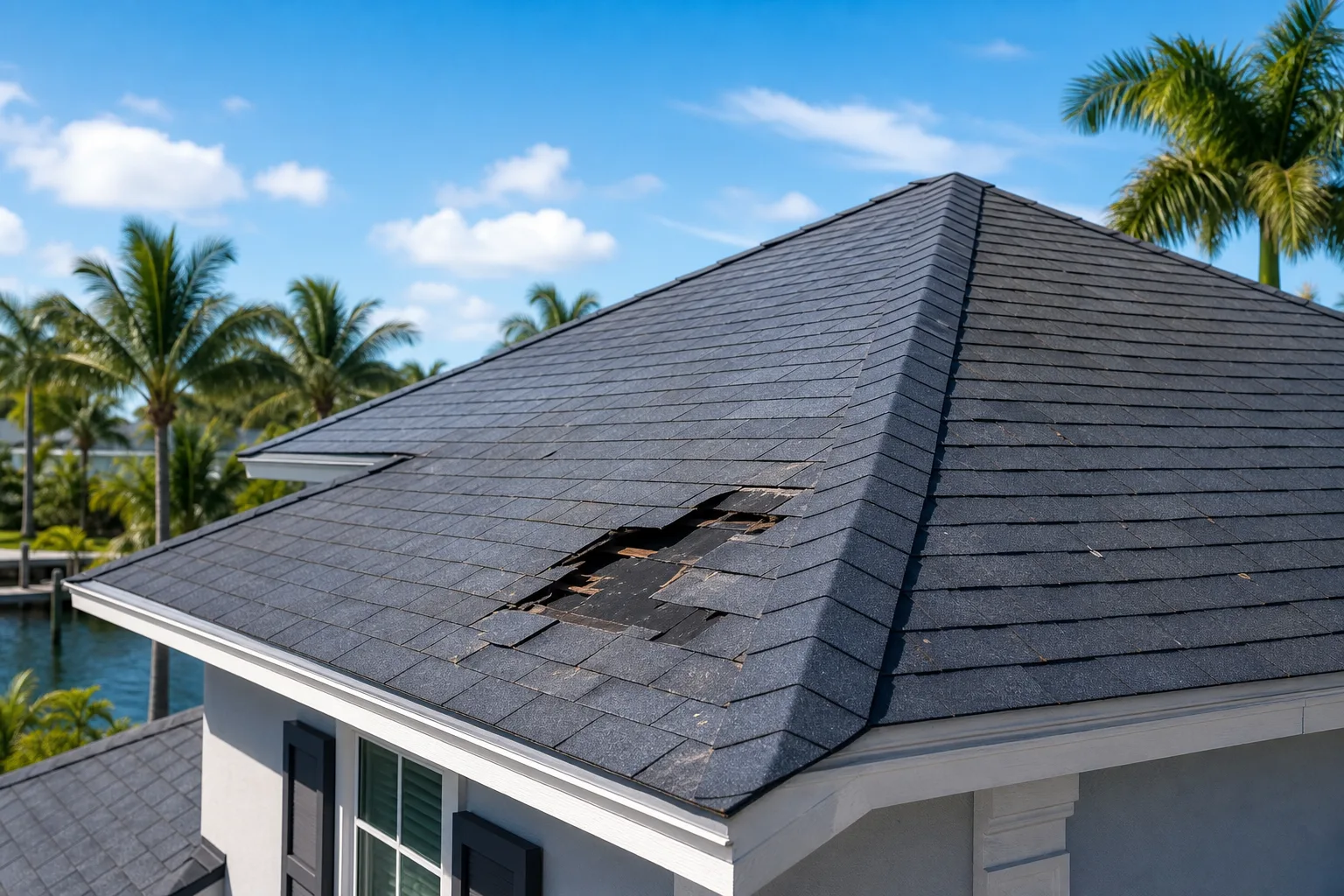
- Missing, lifted, cracked, or displaced shingles
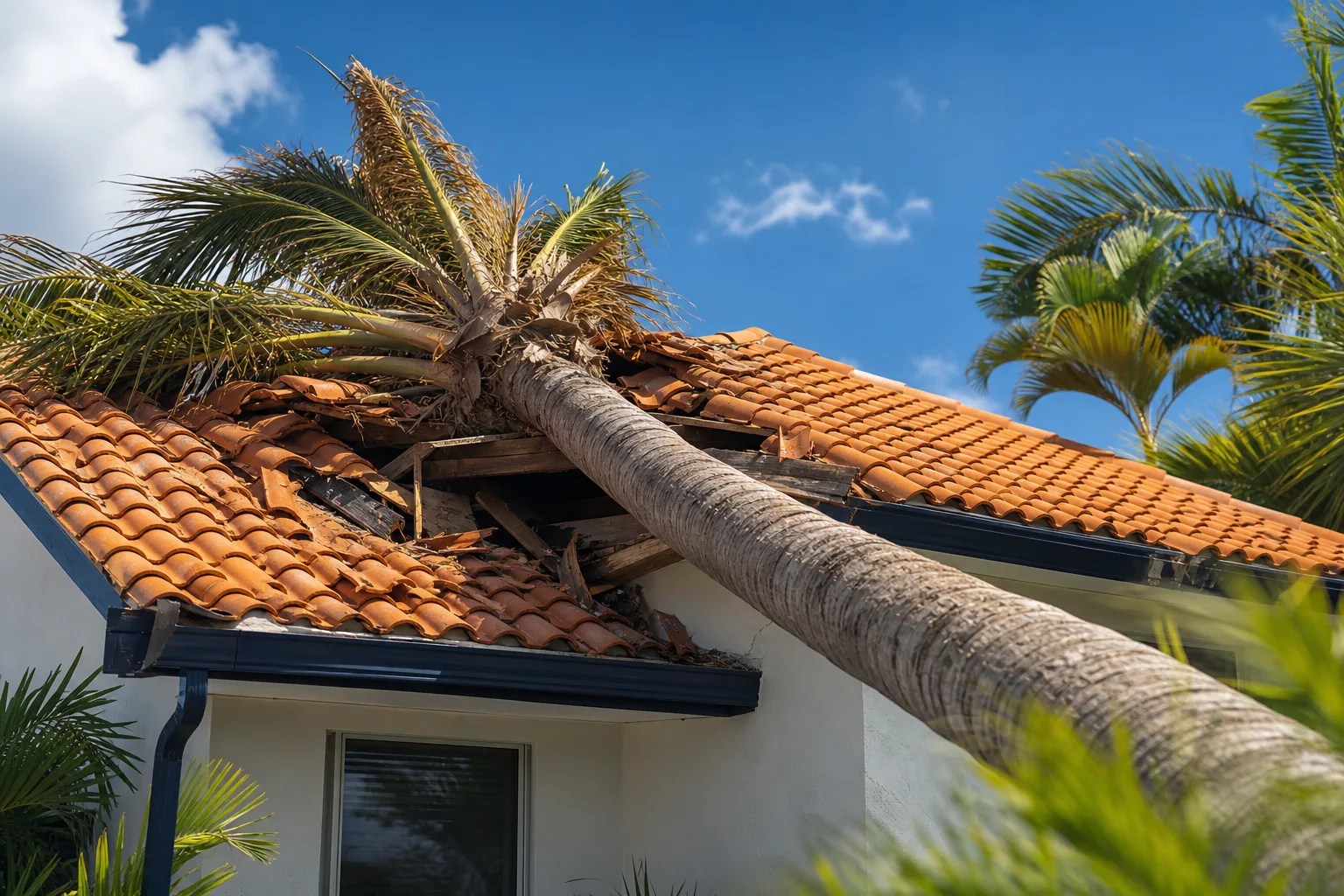
- Broken, shifted, or missing roof tiles
- Bent metal panels, loose trim, or damaged fasteners
- Exposed underlayment or roof deck
- Damaged flashing around chimneys, vents, skylights, or wall transitions
- Loose gutters, detached downspouts, or debris blocking drainage
- Fallen limbs resting on the roof
- Water stains, drips, ceiling cracks, and wet flooring inside
Video is useful too. Slowly narrate the date, time, location, and what you are seeing. If rain is still entering, record the active leak from a safe indoor position. Do not exaggerate or speculate about the cause. A simple record such as, “Water is dripping from the hallway ceiling below the rear roof slope at 8:15 a.m.,” is more useful than guessing whether the storm caused every issue.
Save original photos and videos. Email a copy to yourself or upload them to cloud storage if service is available. Create a written damage log as the day goes on. Include the time you noticed the damage, calls you made, temporary steps taken, and names of anyone who inspected the property.
3. Limit interior water damage without creating a bigger hazard
Your first temporary measures should be inside the building whenever possible. Move furniture, electronics, rugs, artwork, and stored belongings away from leaks. Use buckets and towels to collect water. If water is spreading across hard flooring, contain it before it reaches cabinets, baseboards, or adjacent rooms.
If a ceiling is holding water and bowing downward, keep everyone away from the area. Do not puncture it unless you understand the risks and can do so without exposing yourself to wiring, falling drywall, or a large uncontrolled release of water. In many cases, it is safer to isolate the room and wait for qualified help.
Use fans only after you are confident there is no electrical risk and standing water has been addressed. Air movement can help dry damp materials, but it will not solve an active roof opening. Keep a record of wet materials and any emergency drying work. This can be important when discussing the claim with your insurer.
If you have access to a safe attic hatch and the attic is dry enough to enter without electrical or structural concerns, place a container beneath a small drip. Do not step on ceiling drywall. Walk only on framing where safe, avoid saturated insulation, and leave if conditions are uncertain.
Avoid placing a tarp across the roof yourself. A roof tarp installed poorly can tear more materials loose, allow wind-driven water underneath, or expose you to a serious fall. Florida roof work and repairs are regulated, and a storm-damaged roof is not the place for an improvised climb.
4. Notify your insurer and understand the difference between mitigation and repair
Call your insurance carrier or file a claim through its official portal as soon as practical. You do not need to know the full scope of damage before reporting it. Tell the insurer what you know: the storm date, visible roof damage, interior leaks, and emergency actions taken to reduce further damage.
Ask for the claim number and write it down. Ask how the carrier wants emergency mitigation documented, whether it has requirements for temporary repairs, and where to send photos and invoices. Keep receipts for reasonable emergency expenses, such as materials used to protect belongings or professional mitigation services.
Insurance policies vary, especially for hurricane deductibles, wind coverage, water damage limitations, and condominium responsibility. Do not assume that every type of water damage is covered, and do not wait to report damage simply because you are uncertain. Your carrier can explain your policy terms, while a qualified roofer can document the roof condition and recommend the appropriate repair scope.
A temporary repair is not the same as a permanent repair. The immediate job may involve securing loose materials, protecting an opening, or stabilizing a damaged area until the roof can be properly evaluated. Do not authorize a full replacement or sign over insurance benefits before you understand the proposed work, cost, warranties, and your insurer's process.
For storm guidance and next steps during the season, visit our Hurricane Storm Center. It is also smart to keep all claim correspondence, contractor estimates, inspection notes, and receipts in one folder.
Is your roof ready for hurricane season? Visit the Storm Center
5. Arrange a professional roof inspection and emergency protection
Contact a licensed roofing contractor that works on your roof type and can assess both visible and hidden storm damage. In South Florida, wind can disturb flashing, tile attachments, underlayment, sealant lines, and edge details without leaving a dramatic hole visible from the ground. Those details deserve a close inspection.
Millennium Makeover is licensed in Florida as CCC1326328 and serves homeowners and property managers across Boynton Beach, Delray Beach, Boca Raton, Lake Worth, and West Palm Beach. You can request a roofing quote after a storm or use our free instant estimate to begin organizing the repair conversation.
When you call, be ready to provide:
- Your address and a reliable callback number
- The roof type, if known
- Whether water is actively entering the property
- Whether there are electrical, structural, or tree-impact concerns
- Photos of visible damage from the ground and interior leak areas
- Your insurance claim number, if one has already been assigned
A competent inspection should identify the affected roof areas, check flashings and penetrations, assess the condition of roof coverings and drainage components, and distinguish immediate protection work from permanent repair work. If your roof is tile, metal, or shingle, the repair approach should match the system. A displaced tile is not handled the same way as a lifted metal panel or torn shingle field.
For active leaks and wind-related damage, our roof repair services can help identify the next practical step. If the roof has broader damage or is near the end of its useful life, a contractor may recommend a replacement evaluation rather than repeated spot work.
6. Protect the claim, the building, and everyone who lives or works there
Keep your insurer updated if the leak worsens, additional rooms are affected, or emergency work becomes necessary. Send requested photos and documents promptly, but keep your own copies. If an adjuster schedules an inspection, make sure your documentation is organized and available.
For commercial properties, document each affected unit, suite, common area, and operational impact separately. Notify tenants in writing about restricted areas, ceiling hazards, and any temporary access changes. If the building has a maintenance team, make sure one person is coordinating updates so reports do not get lost or duplicated.
Do not discard damaged materials, such as fallen roof pieces, unless they create a hazard or your insurer advises otherwise. If items must be removed for safety, photograph them first. Keep them in a safe location if practical.
South Florida roof repairs must comply with applicable Florida Building Code requirements and local permitting rules. The exact requirements depend on the scope of work, building type, and jurisdiction. A licensed contractor should explain whether a permit is needed and what code-related work may be triggered by the repair. You can review statewide code information through the Florida Building Code.
Be cautious of unsolicited door-to-door offers immediately after a storm. Storm response brings legitimate contractors into neighborhoods, but it can also bring high-pressure sales tactics. Verify the contractor's Florida license through the Florida Department of Business and Professional Regulation, ask for written scope details, and do not feel pressured to sign on the spot.
7. Plan the next 24 to 72 hours while conditions are fresh
Once immediate hazards and active leaks are being addressed, set up a simple plan. Confirm the inspection appointment, record the claim number, review your deductible, and make a list of questions for your insurer and roofer.
Ask the roofing contractor what was found, what must be protected now, what can wait until materials or permits are available, and whether there are signs of prior wear separate from storm damage. Clear communication helps you avoid confusion later, especially when several roof areas are involved.
If you have gutters or downspouts that pulled loose during the storm, do not ignore them. Poor drainage can direct water into fascia, soffit, walls, and foundation areas during the next rain. Once it is safe and the roof is being evaluated, include drainage components in the inspection. Our gutter services are available for South Florida properties that need drainage repairs or replacement.
Continue checking the interior after each rainfall. Watch for fresh stains, new drips, musty odors, peeling paint, swollen trim, and bubbling drywall. A roof opening may not reveal itself until the next round of wind-driven rain.
Common mistakes
The most common mistake is climbing onto the roof to “take a quick look.” After a storm, roof surfaces may be wet, loose, cracked, or structurally weakened. A fall or a broken tile can turn a manageable claim into a much larger problem.
Another mistake is delaying the insurance report because the damage seems minor. A small visible issue can become an interior moisture problem after the next storm. Report promptly, document carefully, and let the inspection determine the scope.
Homeowners also sometimes make permanent-looking repairs before the damage is documented or inspected. Temporary mitigation is often necessary, but keep photos, receipts, and notes. Do not cover evidence unnecessarily, and do not let an unqualified person perform work that could complicate the repair or claim.
Do not rely only on a ground-level view. Some wind damage is subtle, especially around flashing, ridge areas, vents, and transitions. At the same time, do not let anyone claim major damage without a clear explanation, photographs, and a written scope.
Finally, do not sign a vague contract in the rush after a storm. Review the contractor's license, scope, payment terms, warranties, and permit responsibilities. A written plan protects everyone involved.
Bottom line
In the first 24 hours after storm roof damage, put safety ahead of speed. Stay off the roof, document damage from safe locations, reduce interior water exposure, notify your insurer, and arrange a licensed professional inspection.
South Florida weather rarely waits for a convenient repair window. Taking organized action now can help protect your property before the next rain band arrives. If you need a local team to assess storm-related roof damage, contact Millennium Makeover for practical next steps.
Is your roof ready for hurricane season?
A pre-season inspection can help identify maintenance issues before storm season. Our Storm Center has you covered before and after the storm.
Frequently asked questions
Should I get on my roof after a storm to inspect the damage?
No. Avoid climbing onto a storm-damaged roof, especially when it is wet or wind has displaced roofing materials. Take photos from the ground and from safe interior locations, then have a licensed roofing contractor perform the roof inspection.
How soon should I report roof storm damage to my insurance company?
Report the damage as soon as practical after confirming everyone is safe and documenting the visible conditions. Ask for a claim number, find out how the carrier wants emergency mitigation documented, and keep copies of every photo, invoice, and communication.
Can I put a tarp over my roof myself after a hurricane?
It is generally safer to avoid roof access and have a qualified professional handle emergency protection. Improper tarp installation can create fall hazards, damage roof materials, and let wind-driven rain get beneath the covering.
What photos should I take for a storm roof damage claim?
Take wide photos of each side of the property, then close photos of visible roofline damage, debris, gutters, exterior damage, and interior leaks or staining. Record short videos with the date, time, and location, and save original files in more than one place.
Will a roof repair after a storm require a permit in South Florida?
Permit requirements depend on the repair scope, roof system, building type, and local jurisdiction. A licensed contractor should explain the applicable permit and Florida Building Code requirements before permanent work begins.