What Happens to a Roof When a Palm Tree Falls on It (and What to Do Next)
In this article
TL;DR
A falling palm tree almost never causes just cosmetic damage. Even a mid-size trunk or a cluster of fronds can crack tile, puncture decking, and compromise the roof's water barrier in ways you can't see from the ground. Don't climb up to check it yourself. Document it, call a licensed roofer for an inspection, and loop in your insurer before you touch anything.
What You Need
- Phone camera for photos and video (ground level and from a safe distance, in daylight)
- Tarp or heavy plastic sheeting if rain is imminent and it's safe to place (skip this if the tree is still resting on the roof or power lines are nearby)
- Your homeowner's insurance policy number and claims contact
- A licensed roofing contractor for the actual inspection, not a ladder and a flashlight
- Patience. Adjusters and contractors both need clear documentation before repairs start
Step 1: Check for Immediate Hazards Before Anything Else
Before you think about the roof at all, look for downed power lines, gas smells, or a tree still partially attached to the trunk and under tension. If any of those exist, stay back and call the utility company or fire department. Roof damage can wait ten minutes. Electrocution and gas leaks can't.
If the tree fell during or right after a storm, also check for standing water pooling near the foundation or signs the tree pulled up enough root ball to affect drainage grading. That's a separate problem, but worth noting for your adjuster.
Step 2: Understand What Actually Breaks on Impact
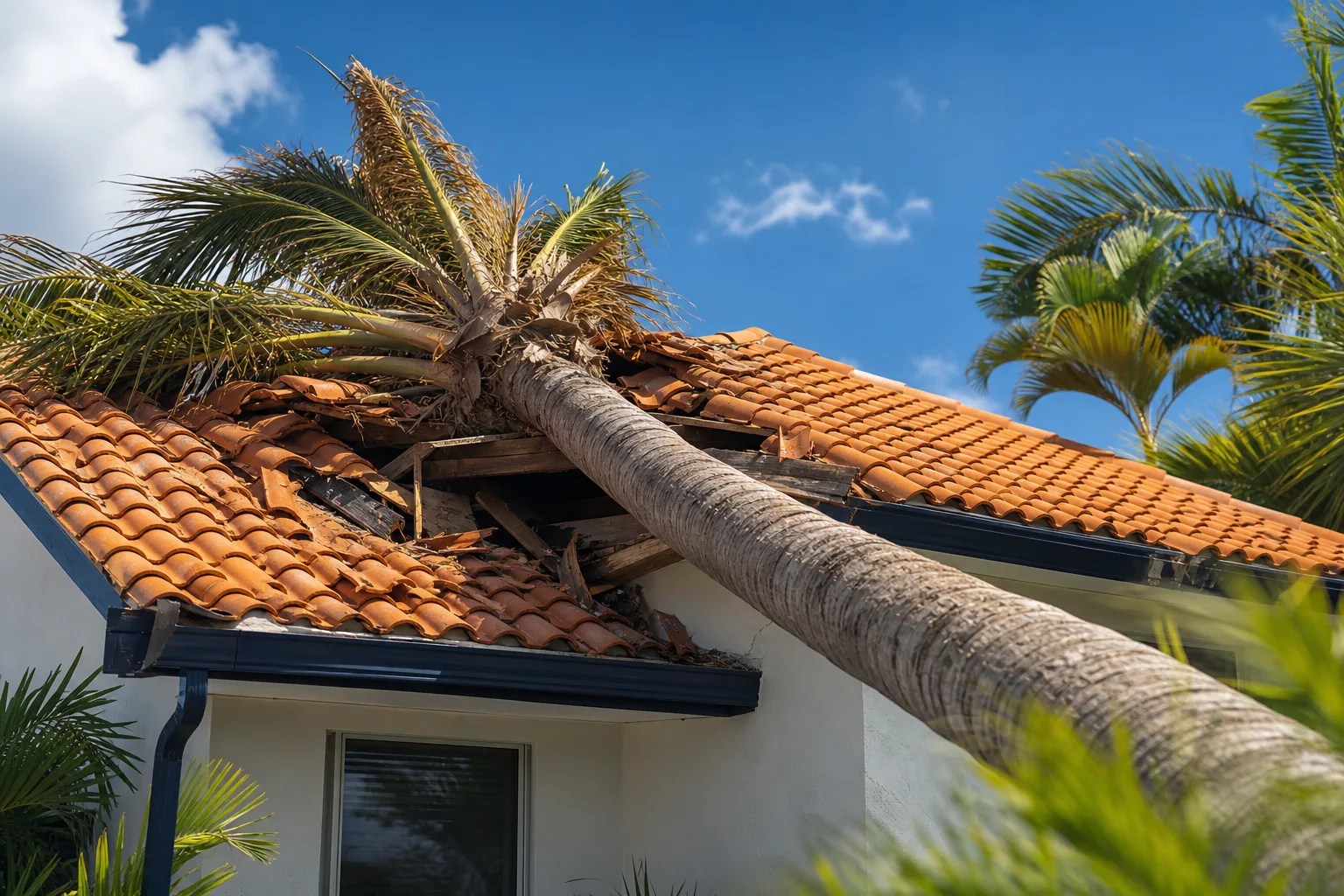
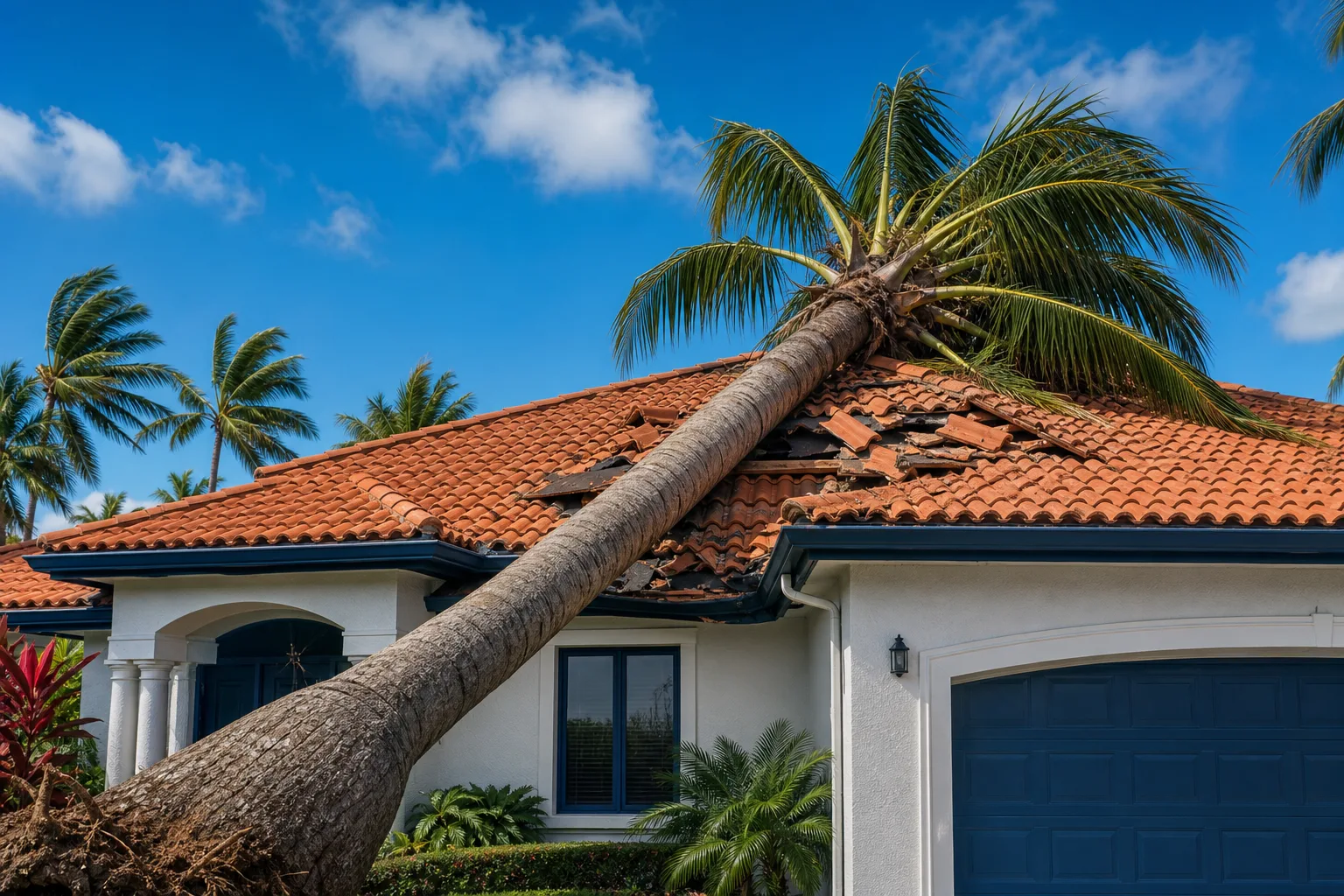
A palm tree falling on a roof rarely causes one clean type of damage. It's usually layered:
- Cracked or shattered tile. Concrete and clay tile crack under point impact even if the tree only grazed the surface. A cracked tile that isn't replaced lets water track under the neighboring courses.
- Torn or punctured shingles. Asphalt shingles can tear, lift, or lose granules where fronds dragged across the surface, even without a direct trunk hit.
- Broken or split decking. The plywood or OSB sheathing underneath is the real concern. A trunk or heavy frond cluster can crack decking without leaving an obvious hole, and Florida building standards generally require that decking maintain structural integrity, not just a watertight surface.
- Compromised underlayment. Even if tile or shingles look intact after cleanup, the underlayment beneath can tear on impact. This is the layer that actually keeps water out, and it's invisible until someone pulls back the roof covering.
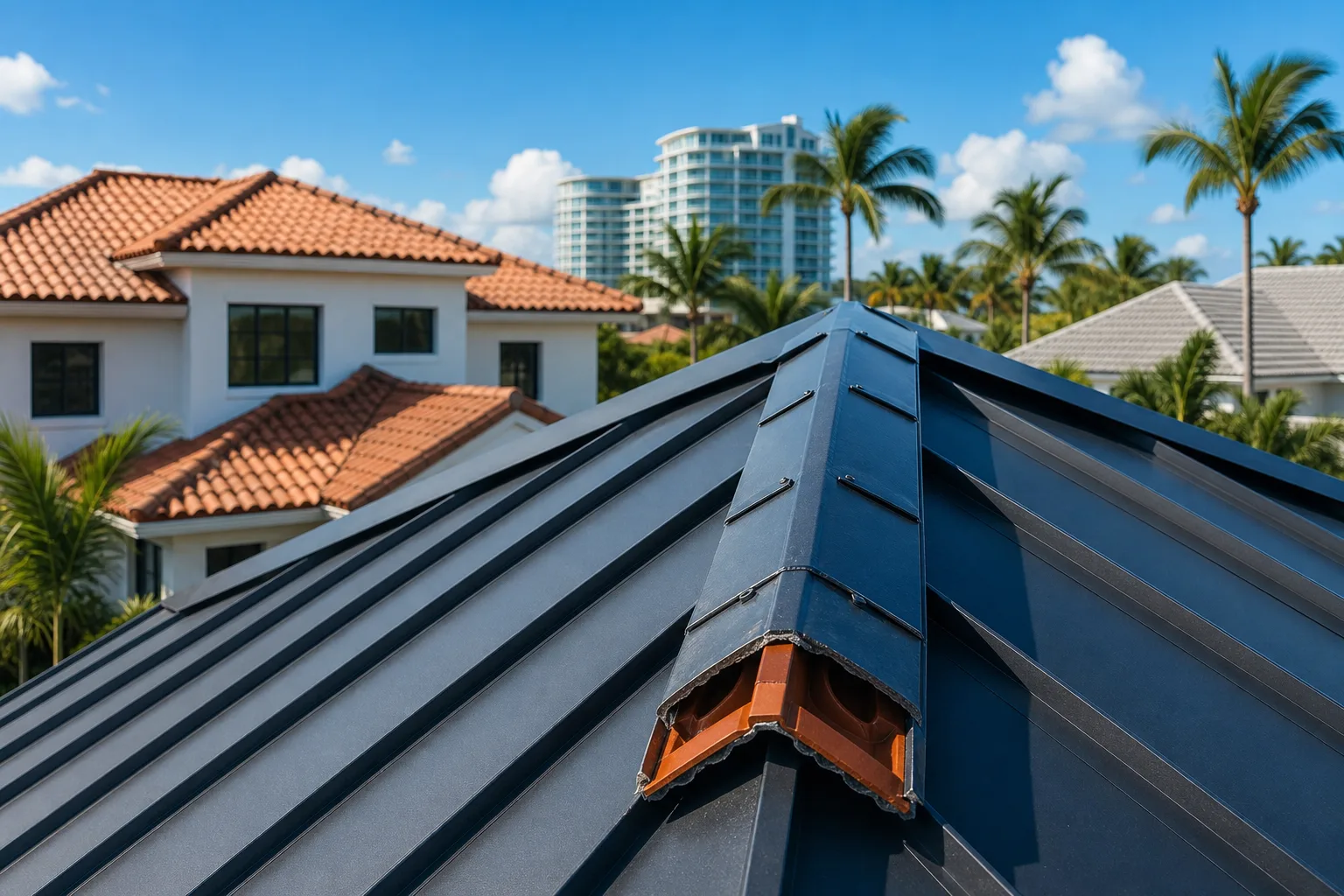
- Damaged flashing and drip edge. Branches often catch on ridge caps, valleys, or the drip edge at the roof's perimeter, bending or dislodging metal that's doing quiet, critical work. Related read: what ridge caps do and why they fail first in Florida storms and what drip edge does and why some roofers skip it.
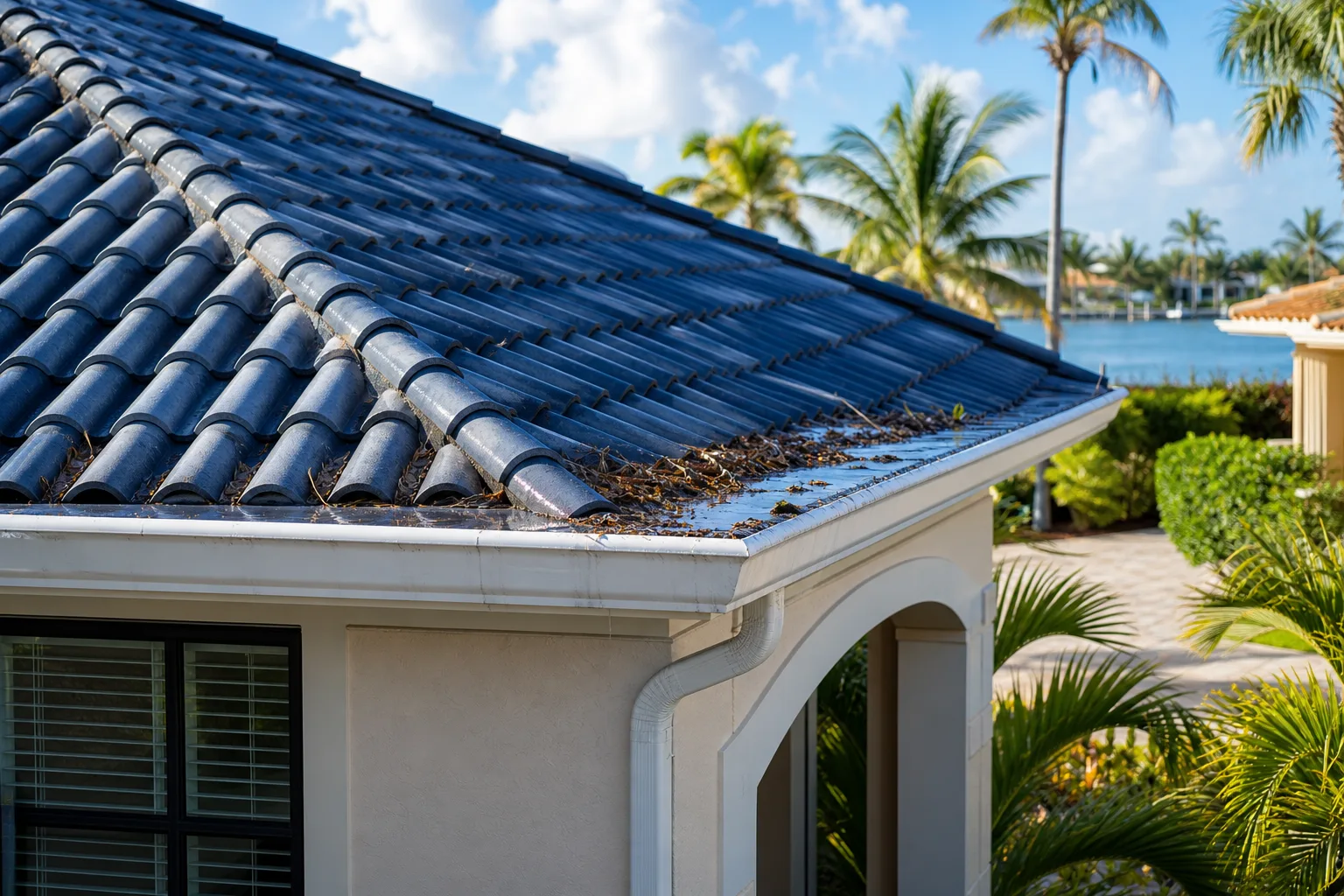
- Gutter and fascia damage. Falling fronds and trunk sections frequently take gutters down with them, which affects how water sheds off the roof afterward.
Step 3: Document Everything Before Cleanup Starts
Take photos and video from the ground, multiple angles, before anyone removes debris. Insurers want to see the tree in place relative to the roof, not just the aftermath. If a tree service is coming to remove the trunk, ask them to hold off on tarping or hauling debris until you've either had a roofer look at it or your insurance adjuster has scheduled a visit, if that's feasible given weather.
If rain is coming and you need to tarp before an inspection happens, photograph the damage first, then tarp. A tarp is a temporary stopgap, not a repair, and it should only cover exposed decking, not be used as a substitute for professional assessment.
Is your roof ready for hurricane season? Visit the Storm Center
Step 4: Get a Professional Roof Inspection, Not a DIY One
This is not a ladder-and-flashlight job. Tile and shingle roofs are slippery and unstable after impact damage, and a homeowner walking the surface can turn a cracked tile into a bigger hole. A licensed contractor knows where to check first: the impact zone, the surrounding tile or shingle courses, the decking underneath, and any flashing points nearby.
An inspection after a tree strike should cover:
- Surface material at and around the impact point
- Underlayment condition where the covering was disturbed
- Decking integrity, checked by sound and, if needed, by pulling back a section of covering
- Flashing, valleys, and ridge caps near the impact
- Gutters and fascia if the tree contacted the roofline
If you're not sure who to call yet, a free instant estimate or a repair-focused quote is a reasonable starting point, especially if the damage looks isolated to one area rather than the whole roof.
Step 5: Loop In Your Insurer With the Right Documentation
Most Florida homeowner policies cover sudden tree-fall damage, but coverage details and deductibles (including any separate hurricane deductible if the tree fell during a named storm) vary by policy. Report the damage promptly, provide your photos, and get the contractor's written inspection findings before repairs begin. Insurers move faster and disputes happen less often when the contractor's documentation and the homeowner's timeline line up.
Step 6: Decide Between Repair and Replacement
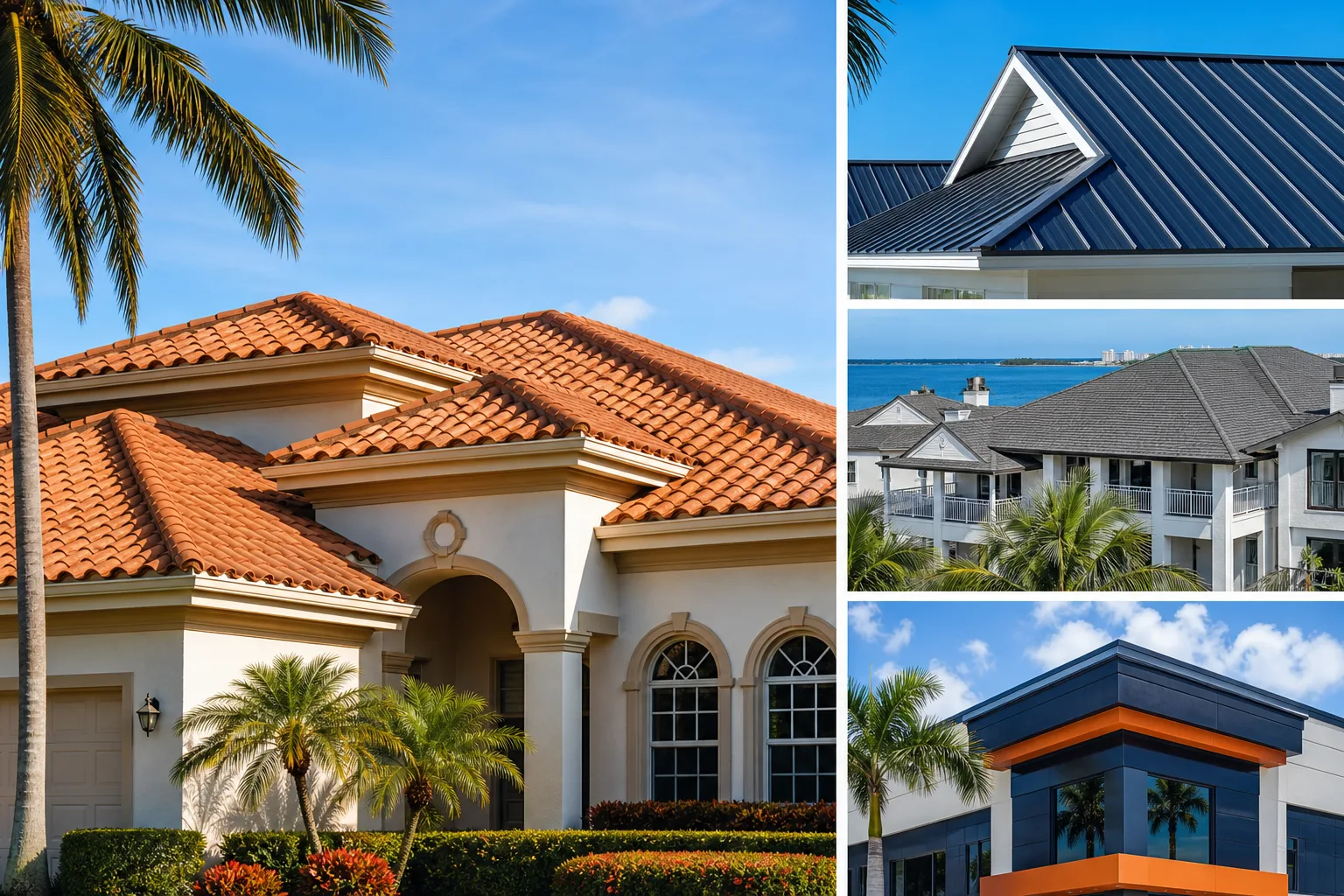
Whether you need a patch repair or a larger replacement depends on how much of the roof was affected and how old the roof was before the tree fell. A roof already near the end of its service life, or one with a large area of underlayment exposure, may make more sense to replace in that section, or entirely, rather than patch repeatedly. If the roof is tile, see tile roofing; for shingle, see shingle roofs; for metal, see metal roofing. For general repair scope, roof repairs covers what a typical assessment and fix involves.
Common Mistakes
- Assuming no visible hole means no damage. Underlayment and decking can be compromised while the surface material still looks mostly intact.
- Climbing up to inspect it yourself. Impact-damaged tile and shingles are unstable underfoot, and you risk turning a repairable spot into a bigger one.
- Removing the tree before documenting the scene. Once debris is cleared, it's harder to prove the extent of contact to an adjuster.
- Leaving a tarp up too long as a permanent fix. Tarps fail in wind and don't stop slow leaks from tracking into walls or ceilings.
- Skipping the decking check. A roofer who only replaces the surface tile or shingle without checking the decking underneath is treating a symptom, not the cause.
Bottom Line
A fallen palm tree is rarely a one-layer problem. What looks like a scrape on the surface can mean a cracked tile, torn underlayment, and compromised decking all at once, and the only way to know for sure is a professional look before cleanup erases the evidence. Document first, call a licensed roofer for inspection, and coordinate with your insurer using that documentation. If you're heading into hurricane season with trees near your roofline, it's worth reviewing storm readiness now rather than after the next system forms. Start with the Hurricane Storm Center or get an estimate through residential roofing before the next storm gives you a reason to.
For more on what happens under the surface after storm damage, see what the tear-off phase of a roof replacement actually reveals and why roof valleys are the most vulnerable spot in a storm.
Is your roof ready for hurricane season?
A pre-season inspection is the cheapest insurance you'll ever buy. Our Storm Center has you covered before and after the storm.
Frequently asked questions
Can a small palm frond cluster really damage a roof, or does it need to be the whole trunk?
Even a heavy cluster of fronds dragged by wind across tile or shingle can crack surface material and tear underlayment. The trunk causes more concentrated impact, but frond damage should still be inspected, not dismissed as minor.
How soon after a tree falls should I call a roofer versus my insurance company?
Document the damage with photos first, then contact both close together. Getting a contractor's inspection findings before or alongside your insurance report tends to speed up the claims process and reduces disputes over what actually happened.
Is it ever safe to remove a fallen tree from the roof myself?
No. Beyond the fall risk on damaged, unstable roofing, an untrained removal can shift weight suddenly and cause additional structural damage. Leave tree removal to a tree service and roof assessment to a licensed roofer.
Will a tarp stop a leak until the roofer arrives?
A properly placed tarp over exposed decking can slow water intrusion temporarily, but it is not a fix and can fail in wind or heavy rain. Treat it as a short-term measure only, and photograph the damage before tarping for insurance purposes.