How to Tell If Roof Damage Is Covered by Your Homeowners Policy
In this article
TL;DR: Florida homeowners insurance generally covers sudden storm or impact damage, but denies claims for aging roofs, deferred maintenance, and pre-existing leaks. Knowing how adjusters evaluate a claim, and documenting your roof's condition before any event, gives you the best shot at a payout. A licensed roofer's written assessment is your strongest supporting document.
What you need
- Your homeowners insurance declarations page and policy document
- Photos or video of the damage, timestamped
- Any prior inspection reports or maintenance records
- Your roof's age and permit history (pull this from your county property appraiser's site)
- A written damage assessment from a licensed roofing contractor
Step 1: Identify the cause of damage
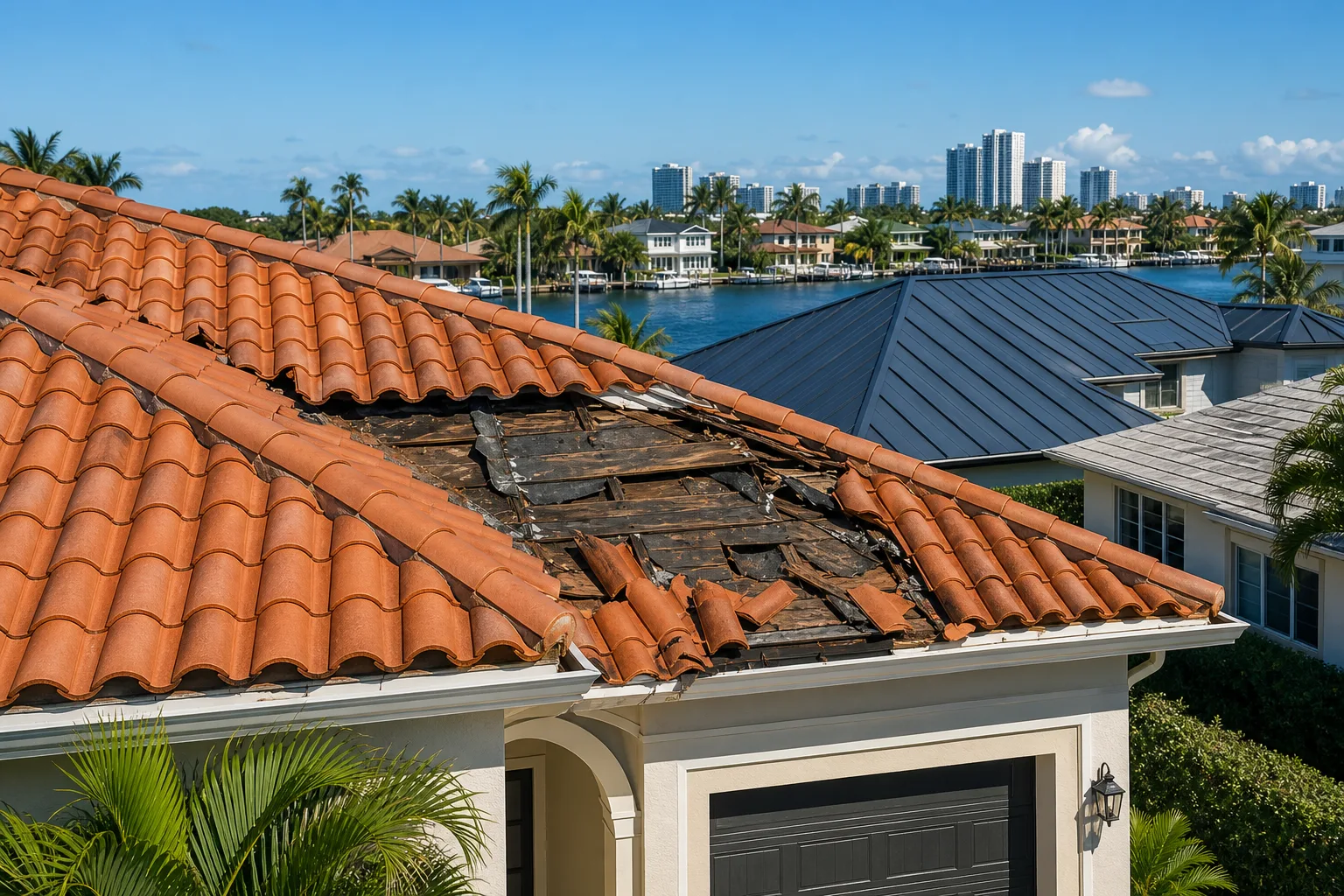
Insurance coverage almost always turns on cause, not on the damage itself. Florida HO policies are structured around two buckets: covered perils (wind, hail, falling objects, fire) and excluded perils (wear and tear, settling, fungus, neglect, and in many policies, age-related deterioration).
Ask yourself what triggered the damage:
- Storm or hurricane wind: Covered under most HO policies, though wind deductibles in South Florida are typically separate and higher than your standard deductible.
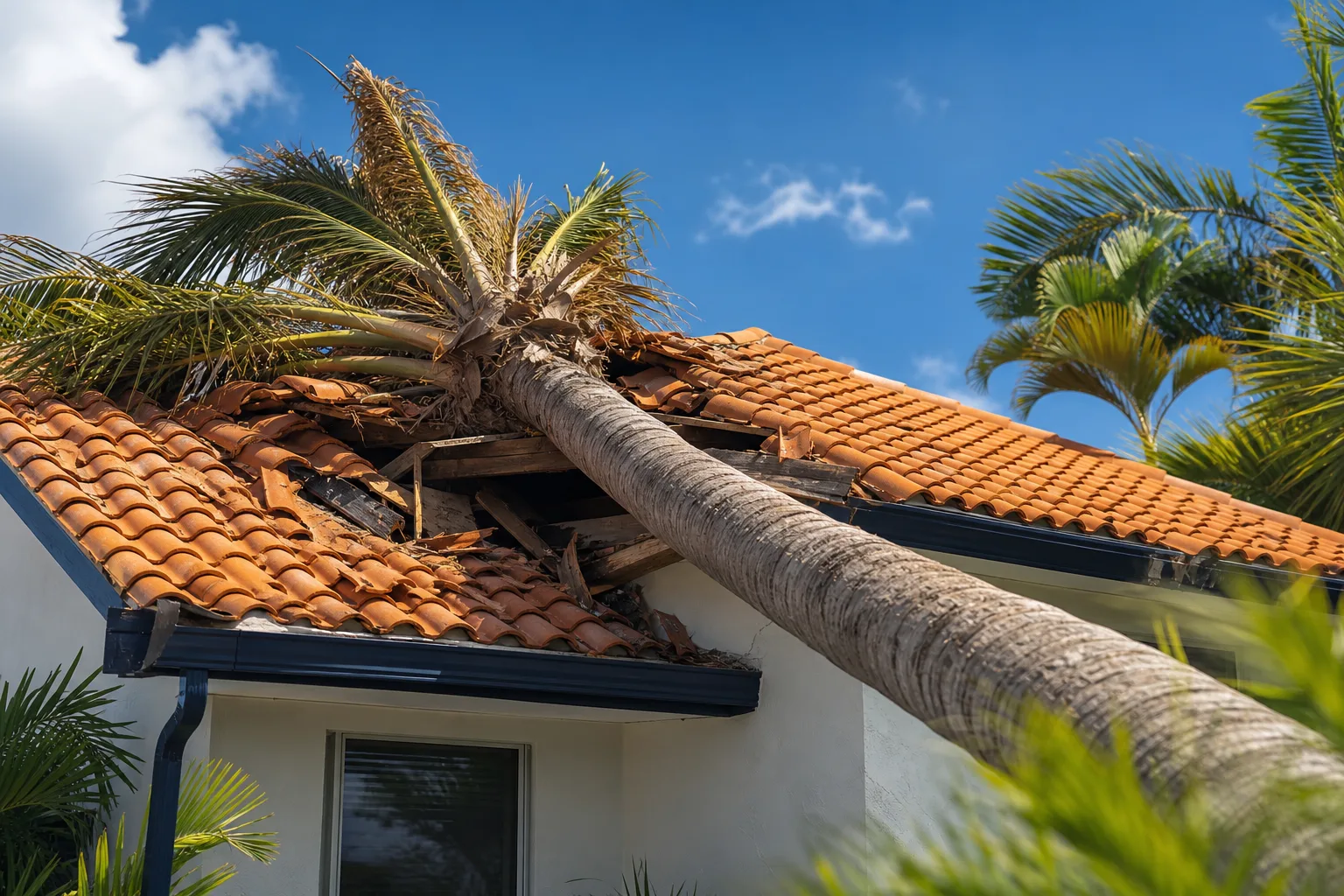
- Falling tree or debris: Generally covered as a sudden, accidental event.
- Leak with no storm: Adjusters will look for evidence of chronic moisture intrusion. If they find mold, rotted decking, or stained felt that predates the reported event, expect a denial or partial payment.
- Age-related cracking or curling: Not a covered peril. A roof that fails because it reached the end of its service life is a maintenance issue, not an insured loss.
If you are unsure of the cause, have a licensed roofer document the condition in writing before you file. Their observations about the timeline of damage carry weight during the claims process.
Step 2: Check your policy's roof payment schedule
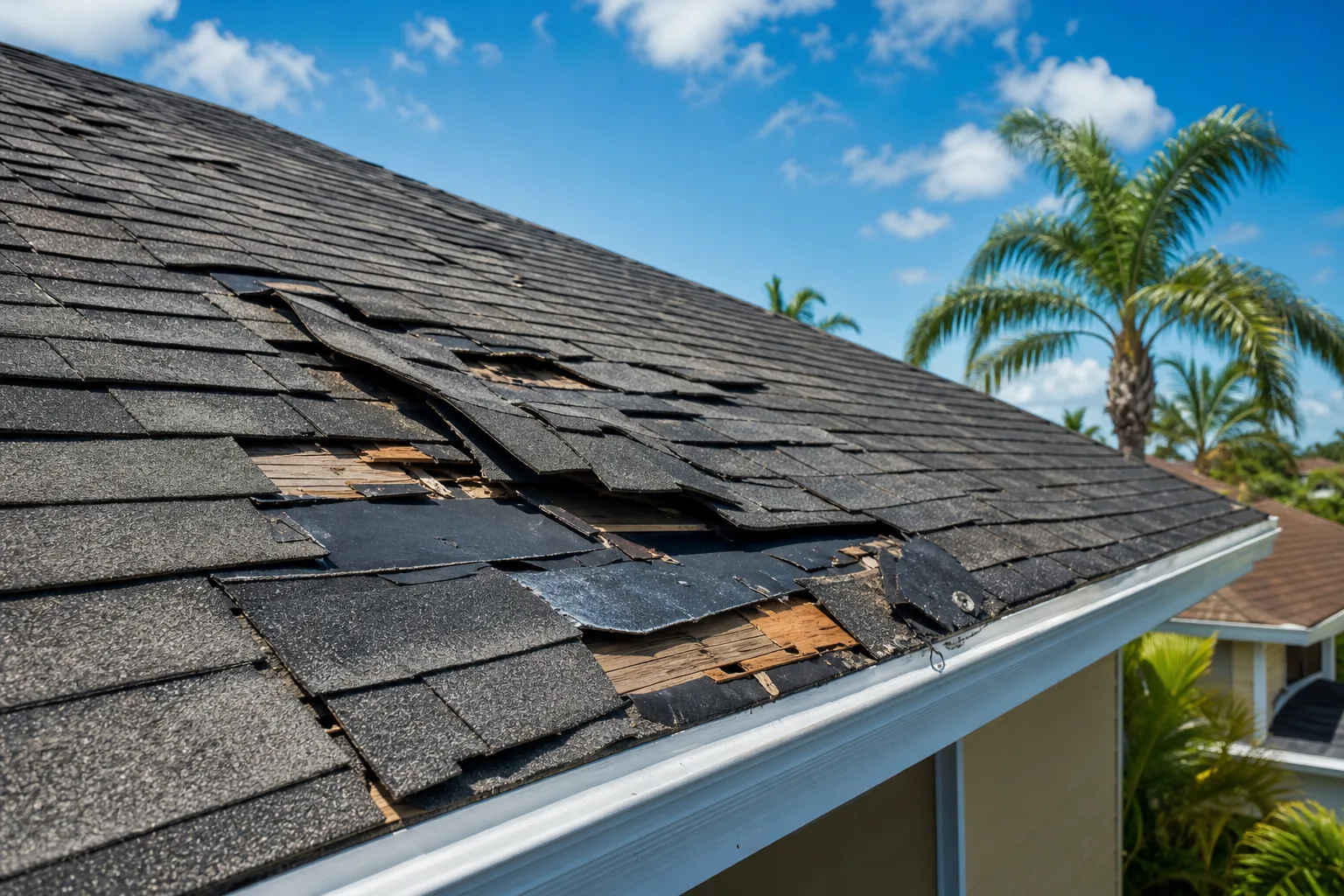
Since 2023, Florida law allows insurers to pay actual cash value (ACV) rather than replacement cost value (RCV) for roofs that are older than a certain age, typically around 10 years or more for shingles, though the exact threshold varies by insurer and policy, check your declarations page for the specific terms that apply to you. Check your declarations page for language like:
- RCV: Insurer pays full replacement cost, minus your deductible.
- ACV: Insurer pays replacement cost minus depreciation. On a 15-year-old shingle roof, depreciation can reduce the payout significantly.
- Scheduled roof endorsement: A flat dollar limit or percentage cap on roof claims, regardless of actual damage cost.
If your policy pays ACV on an older roof, the net check after depreciation may not cover full replacement. Knowing this before you file helps you decide whether a claim is worth the deductible and the potential premium increase.
Step 3: Document before anything is touched
Do not make permanent repairs before an adjuster inspects the roof. Emergency tarping or covering is fine and expected. Anything beyond that can complicate your claim.
Document systematically:
- Photograph every area of visible damage from the ground and, if safe, from the roof edge.
- Capture close-ups of broken, lifted, or missing materials alongside wide shots showing context.
- Note the date and time on every file, or use a cloud photo app that embeds metadata.
- Save any weather service data (NOAA storm reports, local airport wind readings) confirming the storm event in your area. NOAA's storm events database at https://www.ncdc.noaa.gov/stormevents/ is a free reference adjusters recognize.
If you have pre-storm photos from a previous inspection, that documentation showing the roof was intact before the event is extremely valuable.
Is your roof ready for hurricane season? Visit the Storm Center
Step 4: Get a written contractor assessment before the adjuster arrives
A licensed roofer's written report does two things: it documents what actually happened to the materials, and it gives you an independent scope of work to compare against the adjuster's estimate.
Ask the roofer to specify:
- The type and location of each damaged component
- Whether the damage pattern is consistent with wind uplift, impact, or gradual deterioration
- The condition of the underlayment, decking, and flashing
- Whether any damage is pre-existing versus event-related
Millennium Makeover has provided roof repairs and damage assessments in South Florida since 2005. A written scope from a licensed contractor (license CCC1326328) carries more weight with an adjuster than photos alone. You can start with a free instant estimate to get the process moving.
Step 5: File the claim and track every communication
Once you have your documentation, file promptly. Florida Statute 627.70132 governs hurricane-related claim filing deadlines, but the applicable window depends on your loss date: for losses occurring on or after January 1, 2023, the deadline was reduced to two years from the date of loss; an earlier three-year window applied to losses before that date. Verify the deadline that applies to your specific loss date, and in any case do not wait, delayed claims invite more scrutiny about whether the damage is from the reported event.
During the process:
- Log every call with your insurer, including date, time, and the representative's name.
- Submit documentation in writing, not just verbally.
- Ask the adjuster for a written explanation if any portion of the claim is denied.
- If the adjuster's scope is significantly lower than your contractor's, you have the right to invoke the appraisal process or hire a public adjuster. Florida law spells out this process in your policy.
For storm-season preparation and resources specific to South Florida, visit the Hurricane Storm Center.
Common mistakes
Filing without documentation. An unsupported claim is easy to underpay. Adjusters work from what they can see and verify.
Delaying repairs until after the claim settles. Secondary damage from an unrepaired roof (water-damaged ceilings, mold) can be excluded if the insurer argues you failed to mitigate.
Assuming age alone disqualifies you. An older roof hit by a covered peril can still generate a valid claim, though the payout may reflect ACV depreciation.
Skipping the permit history check. If a prior owner had unpermitted work done, that can complicate coverage. Pull the permit record from your county before filing.
Accepting the first estimate without comparison. The adjuster's scope and your contractor's scope should align. If they do not, find out why before signing a release.
Bottom line
Coverage comes down to cause, documentation, and policy language. If the damage was sudden and tied to a covered peril, you likely have a valid claim. If it developed over time or involves an aging roof with deferred maintenance, expect pushback. Either way, a written assessment from a licensed roofing contractor is the most useful thing you can have before you pick up the phone to call your insurer.
If you are in Boynton Beach, Delray Beach, West Palm Beach, Boca Raton, or Lake Worth and need a damage assessment, request a quote or get a free instant estimate to start the process.
Is your roof ready for hurricane season?
A pre-season inspection is the cheapest insurance you'll ever buy. Our Storm Center has you covered before and after the storm.
Frequently asked questions
Does Florida homeowners insurance cover a roof that is leaking but was not hit by a storm?
Generally, no. A leak caused by gradual deterioration, improper maintenance, or an aging roof is considered a maintenance issue and is excluded from most HO policies. Coverage applies when the leak is a direct result of a sudden, covered event like wind or falling debris.
What is the difference between actual cash value and replacement cost value on a roof claim?
Replacement cost value pays what it costs to replace the damaged materials at current prices, minus your deductible. Actual cash value subtracts depreciation based on the roof's age and condition before the event. On an older shingle roof, ACV can reduce your payout substantially.
Can I file a roof insurance claim without a contractor estimate?
You can file without one, but having a licensed contractor's written assessment gives you an independent scope to compare against the adjuster's estimate. It also documents the damage pattern, which matters when an insurer questions whether damage is storm-related or pre-existing.
How long do I have to file a roof damage claim in Florida after a hurricane?
Under Florida Statute 627.70132, the filing deadline depends on when the loss occurred. For hurricane losses occurring on or after January 1, 2023, homeowners generally have two years from the date of loss to file a claim. Losses that occurred before that date may be subject to the prior three-year window. For non-hurricane events, the window may differ. Verify the deadline that applies to your specific loss date and file promptly, as delayed claims face greater scrutiny.