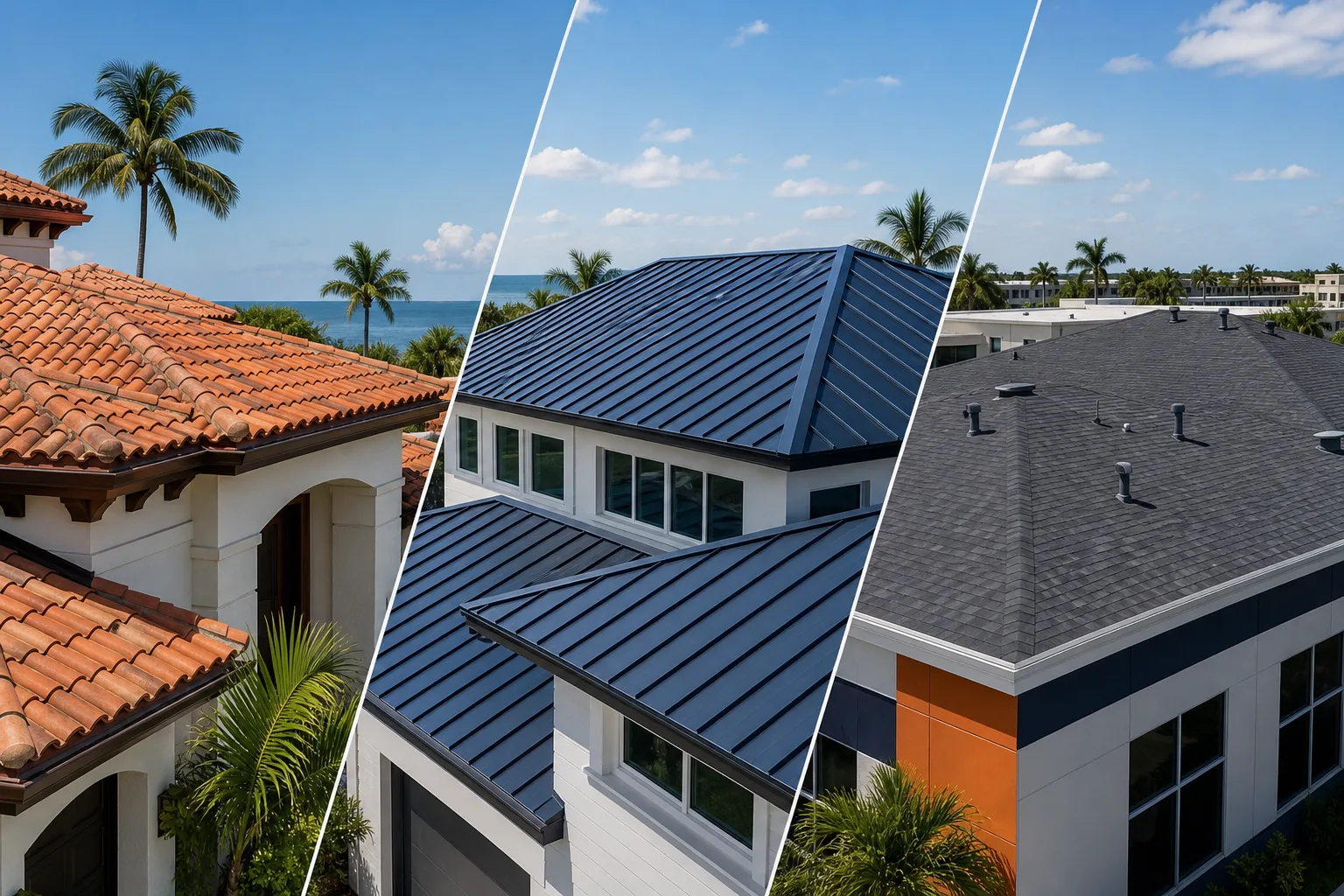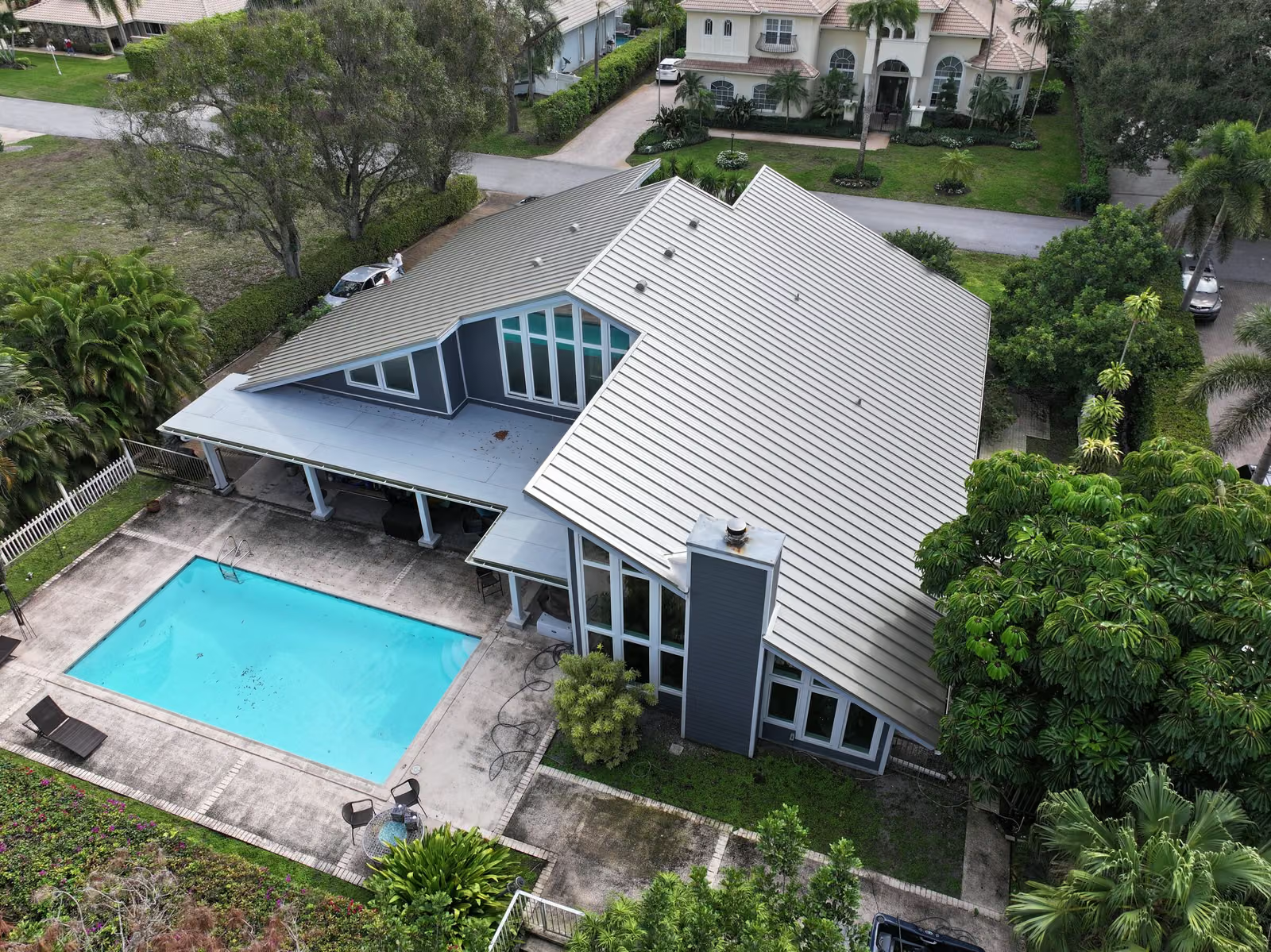
Metal Roofing South Florida
Standing-seam and exposed-fastener options evaluated for substrate, coating, attachment and exposure.
Metal Roofing Options for Florida Properties
System Selection. Approved Attachment. Coating and Maintenance Review.
Metal roofing is available in several profiles and material or coating combinations. Wind, corrosion, energy, acoustic, maintenance and service-life outcomes depend on the approved product, complete assembly, property and exposure rather than the material category alone.
Architectural systems use factory-applied finishes and concealed- or exposed-fastener profiles. Coating suitability, corrosion zone, expansion details, substrate and insulation should be reviewed for the actual project.
Available options include standing seam, 5V crimp, metal shingles and commercial panels. The proposal should identify the panel, substrate, clips or fasteners, trim, penetrations, approved attachment and written manufacturer terms.


Metal Roofing Systems We Install
From architectural sophistication to rugged durability
Standing Seam Metal Roofing - Standing-seam panels use raised seams and typically conceal primary field fasteners. Seam geometry, clips, substrate, panel length, thermal movement, coating and approved attachment vary by system; concealed fasteners do not eliminate every possible water-entry detail.
5V Crimp Metal Roofing - 5V crimp uses a traditional ribbed profile with exposed fasteners that require inspection and maintenance. Suitability and cost depend on material, coating, substrate, approved attachment and coastal exposure.
Metal Shingle Systems - Interlocking metal shingles can resemble shingle, slate or shake profiles. Product approval, attachment, repairability, HOA rules and manufacturer terms should be reviewed for the selected system.
Commercial Metal Systems - Standing-seam and R-panel systems are available for commercial and industrial buildings. Span, load, substrate, design pressure and maintenance claims must come from project engineering and the selected product documentation.
The Metal Roofing Advantage in South Florida
"Metal performance depends on the complete approved assembly and exposure."
Review Product and Project Details
Metal systems have product-specific profiles, coatings, attachment methods and maintenance considerations. The approved assembly and property conditions determine whether a metal option fits the project.
Wind Design - Wind performance is specific to the tested product, substrate, design pressures, roof zones, clips or fasteners, panel dimensions and installation. No metal category or advertised miles-per-hour figure guarantees hurricane performance at a property.
Energy Considerations - Coating reflectance is one input among insulation, ventilation, air sealing, roof geometry, building use and weather. Product data and an address-specific evaluation are more reliable than a universal solar-rejection or cooling-savings percentage.
Service-Life Planning - Metal service life and maintenance vary with material, coating, fasteners, salt exposure, penetrations, installation and storm history. Published ranges are planning context, not a promise that a roof will last for an owner's lifetime.
Environmental Considerations - Recycled content and end-of-life recyclability vary by metal product and local recycling options. Request product-specific environmental documentation before relying on a percentage or sustainability claim.
Metal Roof Installation Details
Metal installation details vary by product, substrate, panel profile, fastening or clips, thermal movement and trim. The written scope should identify the selected system and applicable manufacturer instructions.
Deck Preparation - Metal systems may use solid decking or purlins depending on the approved application. Substrate condition, structural work, ventilation channels and fastening surfaces should be documented for the project.
Underlayment Selection - Underlayment must be compatible with the selected metal system, substrate, temperatures, slope, code and manufacturer instructions. Eave, valley and penetration details are project-specific.
Panel Installation - Panel layout, seam engagement, clips or fasteners and thermal-movement allowances should follow the approved product and project design conditions.
Trim and Flashing - Fascia, rake trim, valleys, penetration flashings and ridge details must be compatible with the selected system. These transitions remain inspection and maintenance points rather than a universal water-entry guarantee.
Sound Management - Solid decking, underlayment, insulation and ceiling assemblies can affect rain noise. Acoustic results vary by assembly and conditions and should not be presented as silent or equivalent for every property.
Metal Roofing Myths vs. Reality
Metal roofing suffers from outdated perceptions that don't reflect modern product performance. Here are facts about common concerns:
Myth: Every metal roof is noisy - Reality: Sound depends on panel profile, substrate, underlayment, insulation, ceiling assembly and rain intensity. The proposed assembly should identify any acoustic components; no universal noise result applies.
Myth: Metal roofs attract lightning - Reality: Roofing material does not determine whether lightning strikes a building. Fire classification and electrical or lightning-protection considerations depend on the tested assembly and building, so product-specific documentation should be reviewed.
Myth: All metal roofs rust quickly - Reality: Corrosion resistance varies by metal, coating, cut-edge treatment, fastener, maintenance and distance from salt exposure. Product-specific coastal limitations and maintenance instructions should guide selection.
Myth: Every metal panel has the same impact performance - Reality: Impact classifications, thickness, profile, substrate and tested assembly vary by exact product. Review current product documentation rather than infer performance from the material category.
Myth: Metal alone determines indoor temperature - Reality: Coating reflectance, insulation, ventilation, air sealing, attic conditions and building use all affect heat transfer. A reflective panel does not establish a guaranteed cooling-cost change.
Considering a Metal Roof?
Compare panel, coating, substrate, approved attachment, maintenance and written product terms for the property.
Our Metal Roofing Process
System selection, approved details, installation and closeout
Consultation & System Selection
We assess accessible conditions, discuss priorities and compare metal systems for the property.
- Property assessment
- System recommendations
- Color selection
- Budget planning
Measurement & Engineering
Field measurements inform panel layout and quantities; engineering is coordinated when the scope or authority requires it.
- Detailed measurements
- Panel layout planning
- Engineering certification
- Material specification
Material Procurement
Panel dimensions, trim, quantities, color and delivery are coordinated from verified field measurements and the selected system.
- Panel manufacturing
- Color matching
- Trim ordering
- Delivery scheduling
Preparation & Tear-Off
Existing roofing removed, deck inspected and prepared for metal roof installation.
- Old roof removal
- Deck inspection
- Repairs if needed
- Substrate preparation
Installation
Underlayment, panels and trim are installed according to the approved scope and selected product instructions.
- Underlayment system
- Panel installation
- Trim and flashing
- Quality verification
Completion & Warranty
Final inspection, documented cleanup and delivery of applicable warranty documents.
- Final inspection
- Complete cleanup
- Warranty registration
- Maintenance guidance
Frequently Asked Questions
How long does a metal roof last in Florida?
Are metal roofs good for hurricanes?
How much does metal roofing cost compared to shingles?
Will a metal roof make my house hot?
Are metal roofs noisy in the rain?
Can I put a metal roof over my existing shingles?
Request a Metal Roofing Consultation
Our team can show available metal options, explain project-specific considerations and provide a written estimate.
Related Roofing Guides
More on metal roofing from our South Florida roofing team.
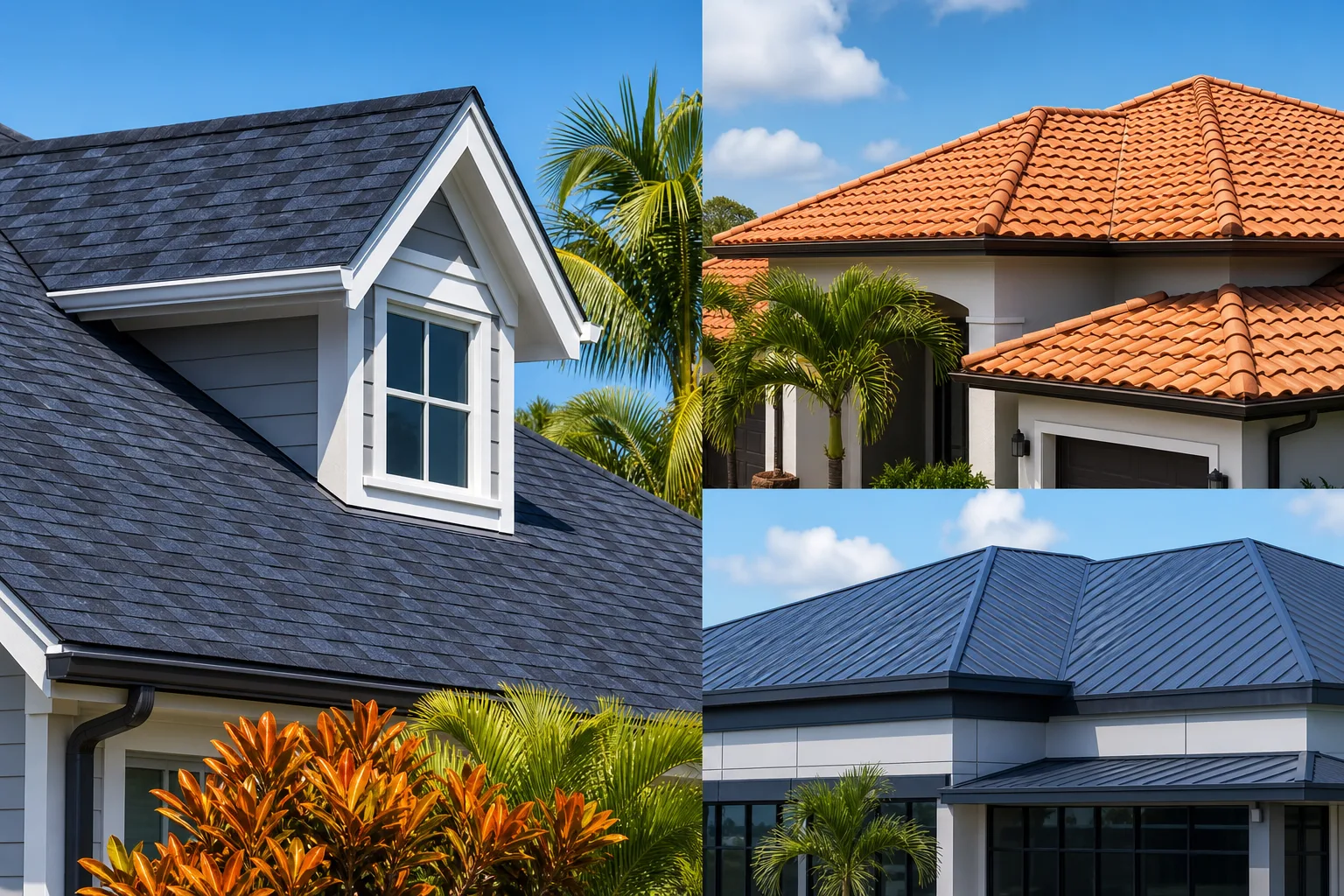
Shingle Roof Lifespan in Florida: What Cuts It Short
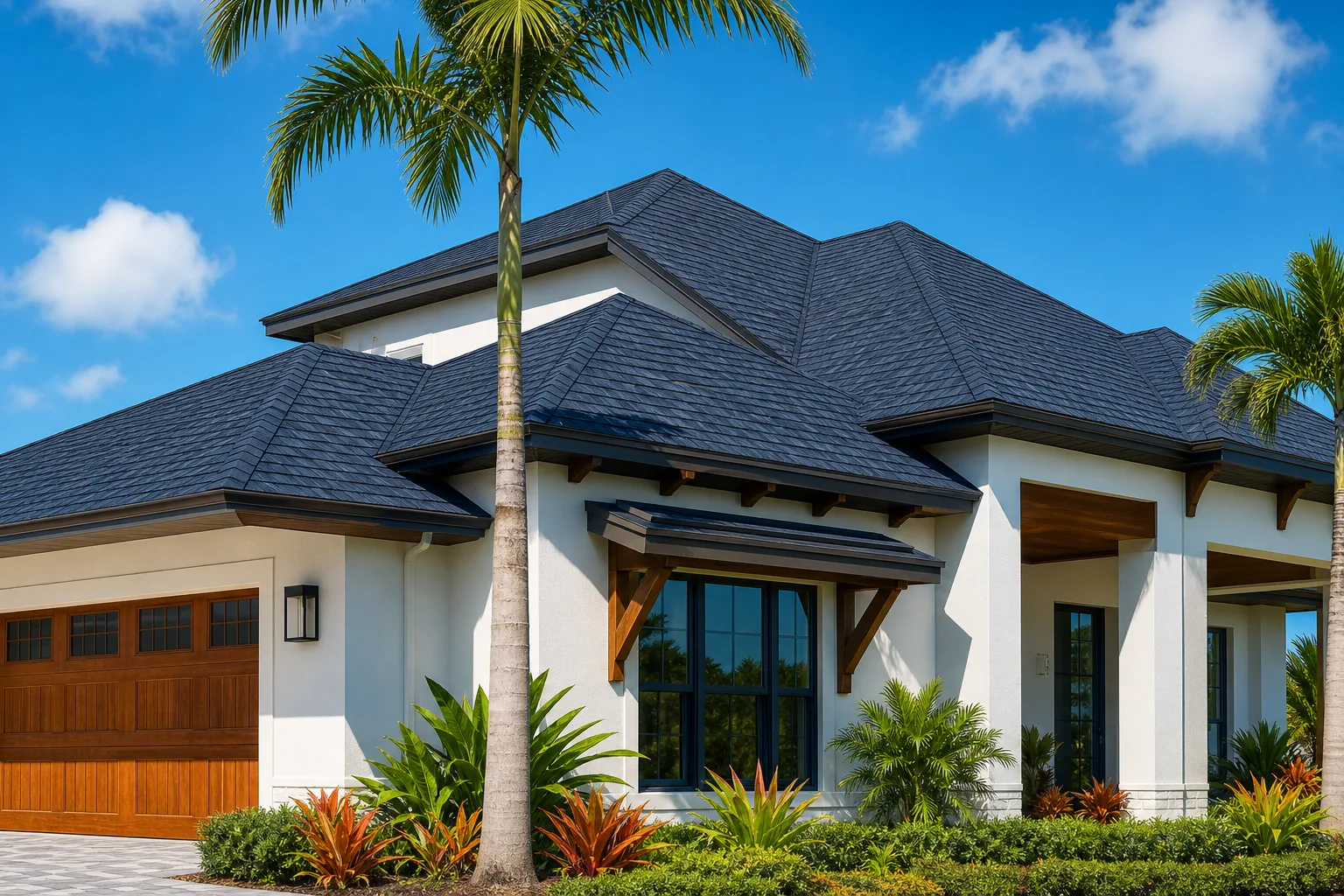
How to Choose the Right Shingle Color for a Florida Home