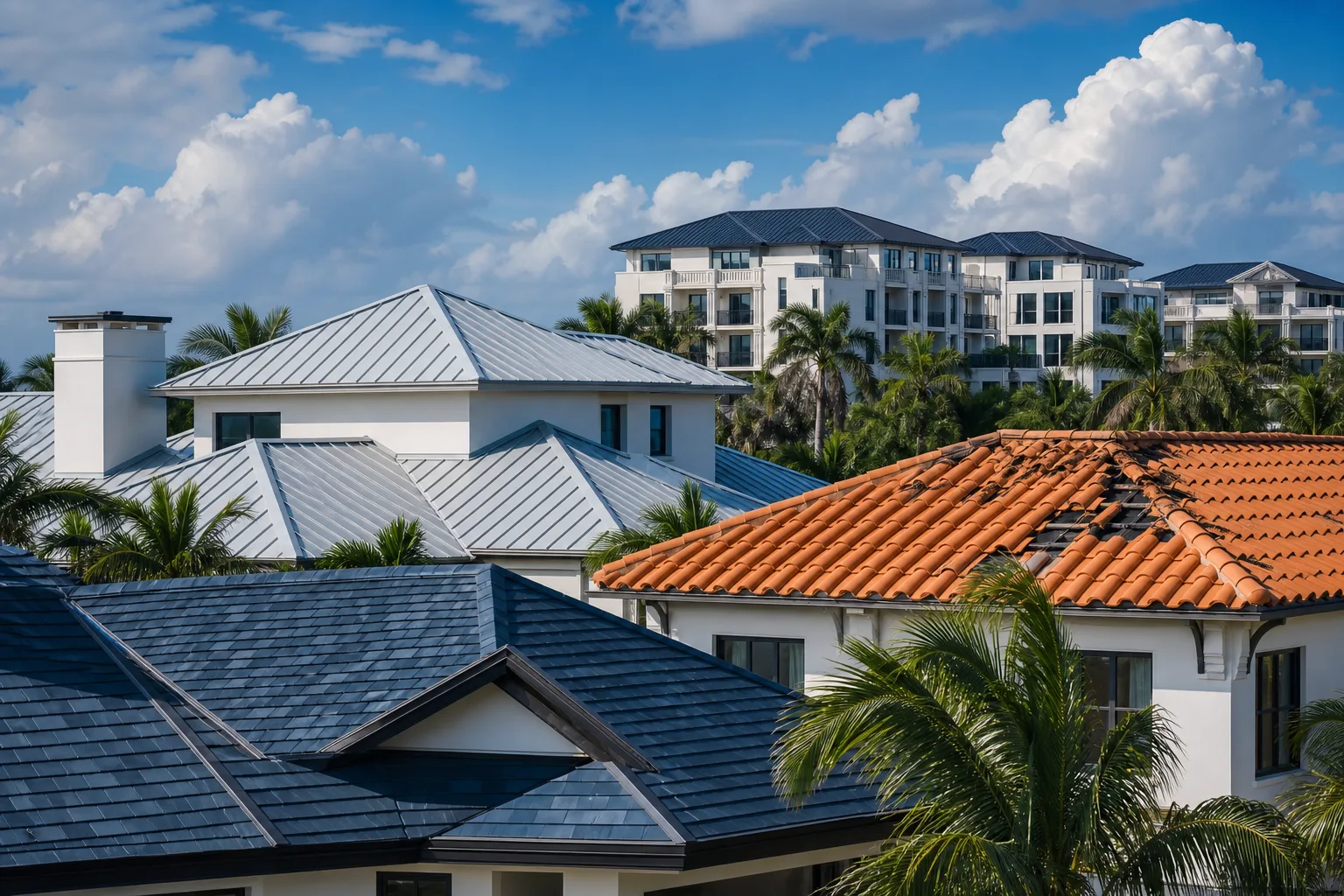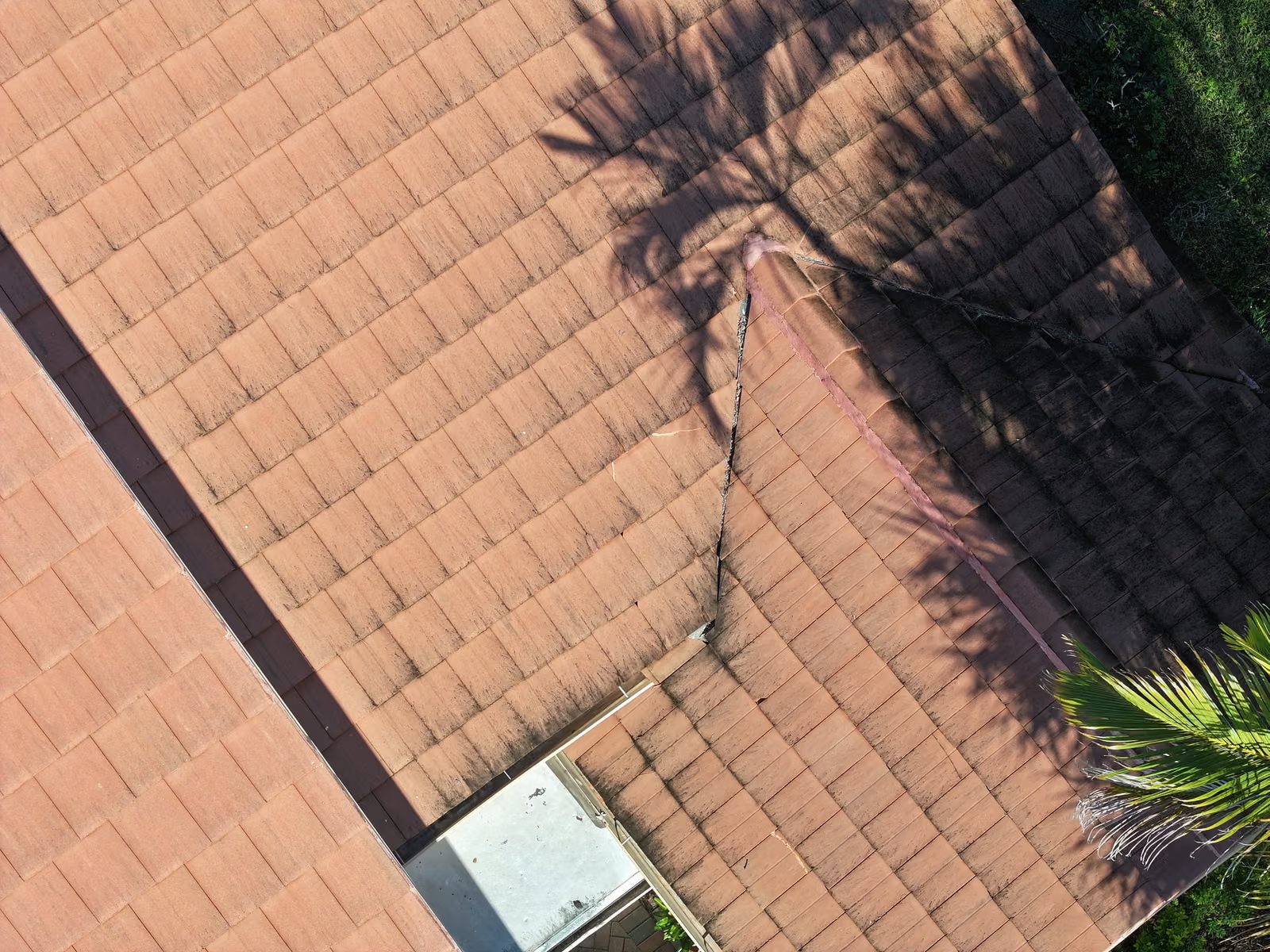
Tile Roofing South Florida
Clay and concrete tile options evaluated for structure, approved attachment and South Florida exposure.
Tile Roofing Options for Florida Properties
Profile Selection. Structural Review. Approved Attachment.
Tile roofing appears across South Florida architecture, from Mediterranean Revival properties to modern coastal homes. Millennium Makeover operates under Florida roofing license CCC1326328, held for the company since 2005; tile recommendations remain product- and project-specific.
Tile offers distinctive profiles and can provide durable service when the structure, underlayment, flashing, drainage and approved attachment are appropriate. Service life, wind performance, maintenance, energy use and resale effects vary by product, assembly, property and exposure.
Clay and concrete options include S-tile, barrel, flat and specialty profiles. Product availability and discontinued-profile matching are confirmed for each project; code compliance and warranty eligibility depend on the permitted scope and selected manufacturer documents.


Clay vs. Concrete Tile: Understanding Your Options
Clay and concrete have distinct product and structural characteristics
Clay Tile Roofing - Clay products are kiln-fired and are available in different profiles, weights, colors and finishes. Color retention, structural requirements, approved attachment and manufacturer warranty terms vary by product; no blanket color, lifespan, wind or warranty claim applies to every clay system.
Concrete Tile Roofing - Concrete products are available in profiles that resemble barrel tile, slate, shake and flat designs. Weight, coating, structural support, impact classification, wind design and product terms must be checked for the selected tile and property.
Tile Profiles - Both clay and concrete tiles are available in multiple profiles. S-tile (also called Spanish tile or Double Roman) creates the distinctive wave pattern iconic in Florida. Barrel or Mission tile produces a more pronounced curve. Flat tile profiles suit modern and contemporary architecture. Specialty profiles replicate slate, shake, and historic patterns. We help you select profiles that complement your home's architectural style while meeting HOA requirements and personal preferences.
Our Tile Roof Installation Process
"Tile performance depends on the complete approved roof assembly."
Complete Assembly Details Matter
Tile roofing is a complete building system rather than a surface-only material. The deck, underlayment, flashing, drainage, attachment, roof zones and manufacturer instructions all affect performance.
Deck Preparation - Accessible deck conditions are reviewed after tear-off when included in the scope. Required repairs, fastening and substrate preparation should follow the permitted assembly and documented change-order terms.
Underlayment System - Underlayment and secondary-water-barrier requirements depend on the permitted scope, code and approved assembly. Valleys, eaves and penetrations require compatible details, but no layer guarantees the building will remain dry if tile or other components are damaged.
Flashing Installation - Valleys, walls, penetrations and edges require compatible flashing with project-specific overlap, sealing and attachment. Material and detail selection should follow the approved scope and actual exposure conditions.
Tile Application - Mechanical fasteners, battens and approved adhesive systems have different permitted uses. The applicable jurisdiction, design pressures, roof zones, substrate, Florida Product Approval and manufacturer instructions determine attachment; Palm Beach County is not part of Florida's Miami-Dade/Broward High-Velocity Hurricane Zone.
Tile Roof Maintenance & Repair
Tile roofs still require condition-based inspection and maintenance. Frequency depends on product guidance, exposure, prior repairs, vegetation and storm history.
Regular Inspection - Inspections can document displaced or cracked tiles, debris, vegetation, flashing and drainage conditions. They cannot guarantee that every concealed issue will be detected or prevent future damage.
Tile Replacement - Cracked, broken or missing tiles should be evaluated with the surrounding attachment, underlayment and flashing. Profile and color availability is project-specific, and a compatible repair cannot be promised until the existing product and conditions are reviewed.
Cleaning - Growth and staining may appear on tile roofs in humid conditions. Cleaning suitability, pressure, chemistry and access depend on the tile, coating, manufacturer guidance and roof condition; an unsuitable method can damage surfaces or move water beneath the covering.
Underlayment Review - Tile and underlayment can age differently. When underlayment work is needed, tile condition, breakage risk, code, product availability and labor affect whether existing tile can be reused. An inspection provides observed conditions, not a guaranteed remaining-life estimate.
Planning a Tile Roofing Investment
Tile roofing decisions should account for the approved system, structure, underlayment, flashings, maintenance, written warranty terms and address-specific proposal—not an assumed return on investment.
Service-Life Planning - Published life ranges differ by product and do not account for every Florida exposure, underlayment, flashing, maintenance or storm history. Compare product documents and lifecycle assumptions without treating a range as a property-specific guarantee.
Insurance Considerations - Eligibility and premium changes depend on the carrier, policy, inspection, approved product and documented installation. Ask the insurer what it accepts before relying on a discount.
Energy Considerations - Tile color, ventilation, insulation, underlayment, air sealing, building use and weather affect heat transfer. No universal cooling-cost reduction applies to a tile roof.
Property and Appearance - Tile can change curb appeal, but appraisal, sale price and time on market depend on the entire property and market. We do not promise a premium, value increase or faster sale.
Considering Tile Roofing?
Discuss structure, profile, approved attachment, maintenance and written product terms for the property.
Our Tile Roofing Process
From assessment through product selection, permitting and closeout
Consultation & Assessment
We evaluate your current roof, discuss tile options, and provide recommendations suited to your home and budget.
- Current roof evaluation
- Structural assessment
- Style recommendations
- Budget discussion
Tile Selection
Compare tile profiles, colors, current availability, approved attachment and written manufacturer terms for the property.
- View tile samples
- Color matching
- HOA compliance check
- Manufacturer comparison
Permitting & Preparation
The written scope identifies permit and approval responsibilities while the property is prepared for installation.
- Permit applications
- Engineering if required
- HOA submission
- Material ordering
Tear-Off & Deck Prep
Old roofing is removed, decking inspected and repaired, and the surface prepared for new underlayment.
- Old roof removal
- Deck inspection
- Repairs as needed
- Surface preparation
Underlayment & Tile Installation
The permitted underlayment, flashing, attachment and tile details are installed for the selected approved assembly.
- Self-adhering membrane
- Metal flashings
- Tile layout
- Secure attachment
Inspection & Warranty
Required final inspections, documented cleanup and delivery of applicable warranty documents.
- Quality inspection
- Building department inspection
- Complete cleanup
- Warranty delivery
Frequently Asked Questions
How long does a tile roof last in Florida?
Are tile roofs heavy? Does my house need special structure?
What's the difference between clay and concrete tile roofing?
Can you match my existing tile for repairs?
How much does tile roofing cost compared to shingles?
Do tile roofs require maintenance?
Request a Tile Roofing Consultation
Our team can assess accessible conditions, show available tile options and provide a written estimate for the property.
Related Roofing Guides
More on tile roofing from our South Florida roofing team.
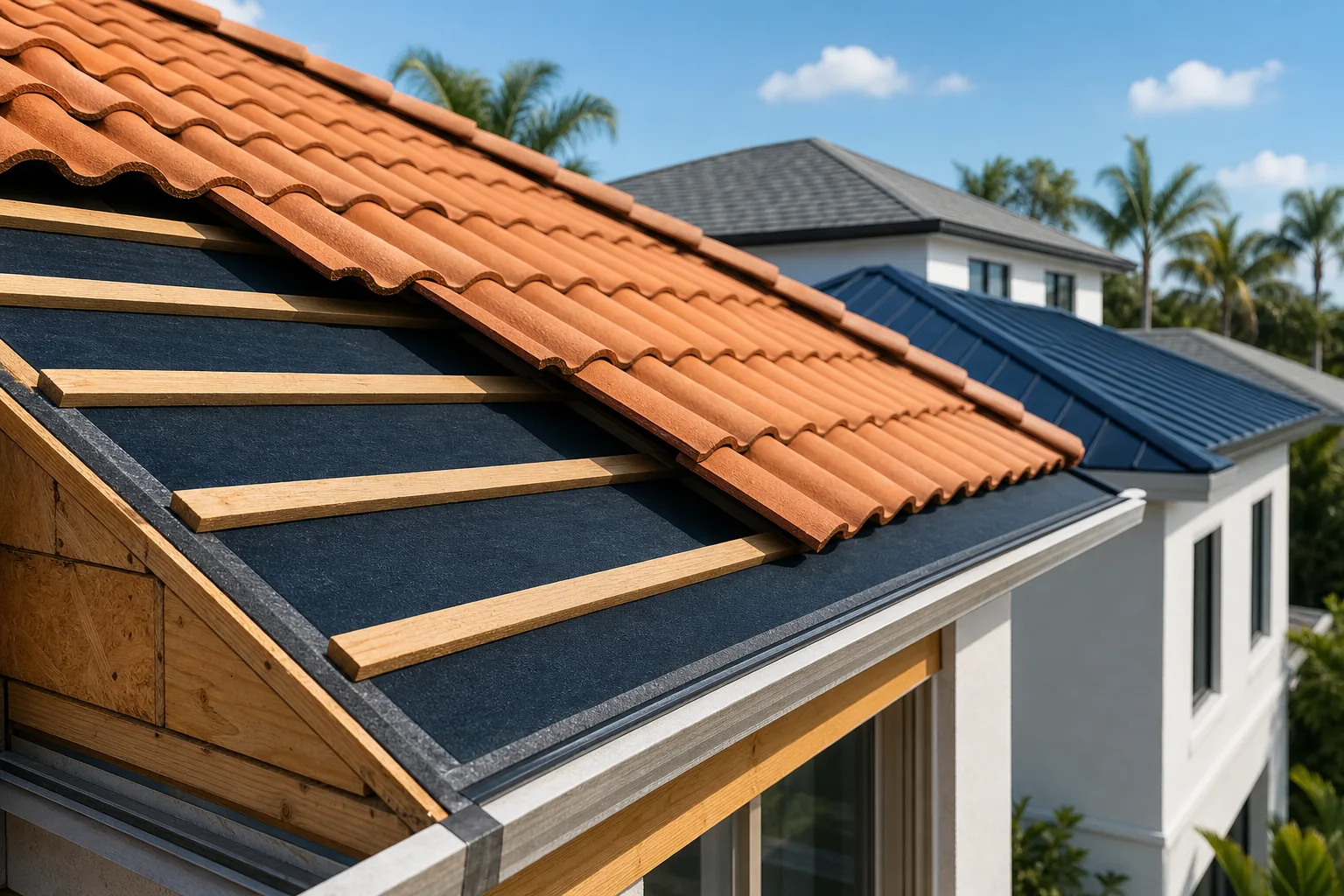
What Goes Beneath Roof Tiles That Most Homeowners Never See
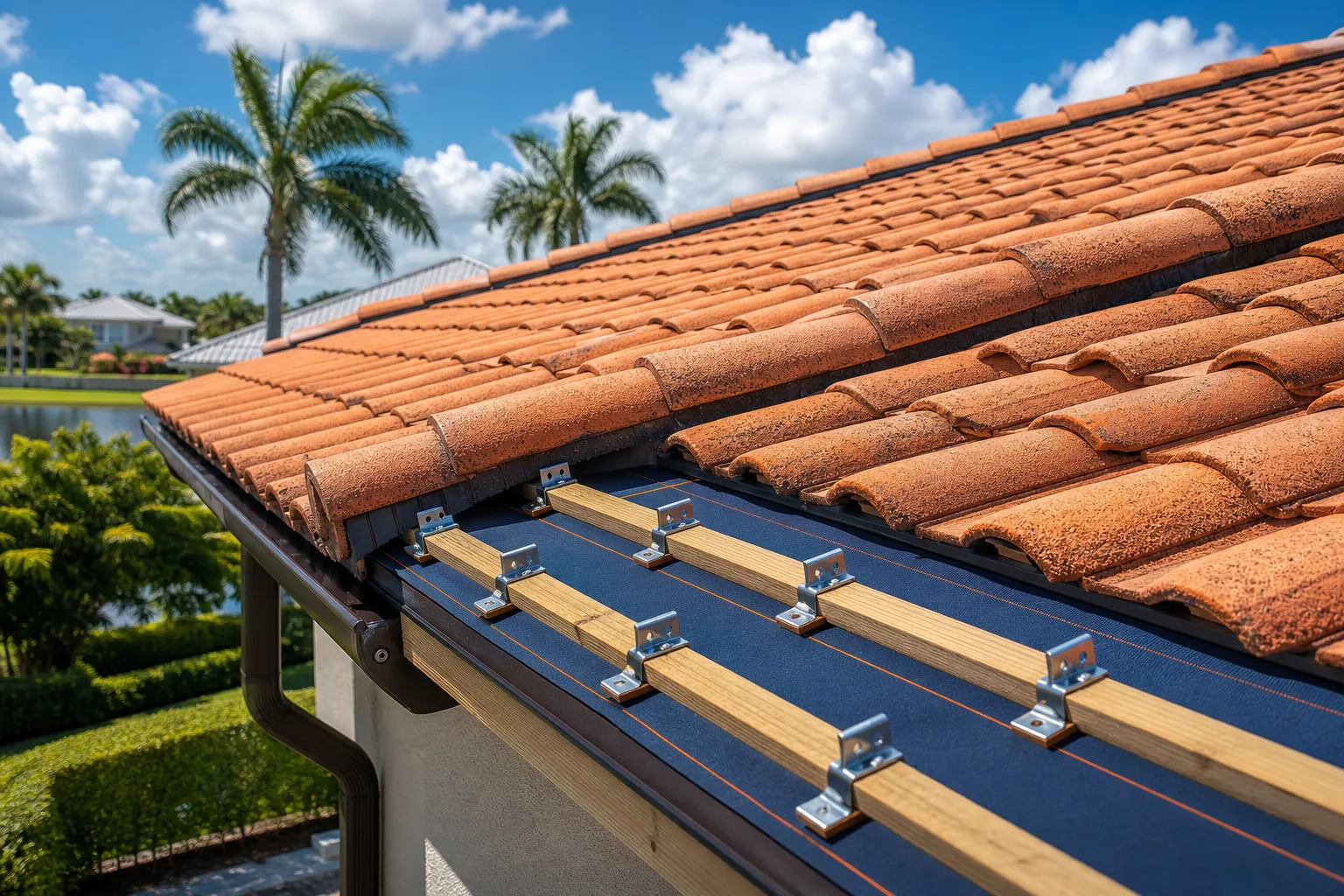
What Holds Roof Tiles Down in a Florida Hurricane