Commercial Roofing South Florida
Roofing solutions for warehouses, retail centers, HOAs, and office buildings. Licensed in Florida since 2005.
Commercial Roofing Assessment and Project Planning
Documented Scope. Occupant Coordination. Written Project Terms.
Commercial properties require roofing plans that account for building use, access, rooftop equipment, drainage, occupants and operational constraints. Millennium Makeover, Inc. is listed by GAF as a GAF Certified™ Commercial Contractor and has held Florida roofing license CCC1326328 since 2005.
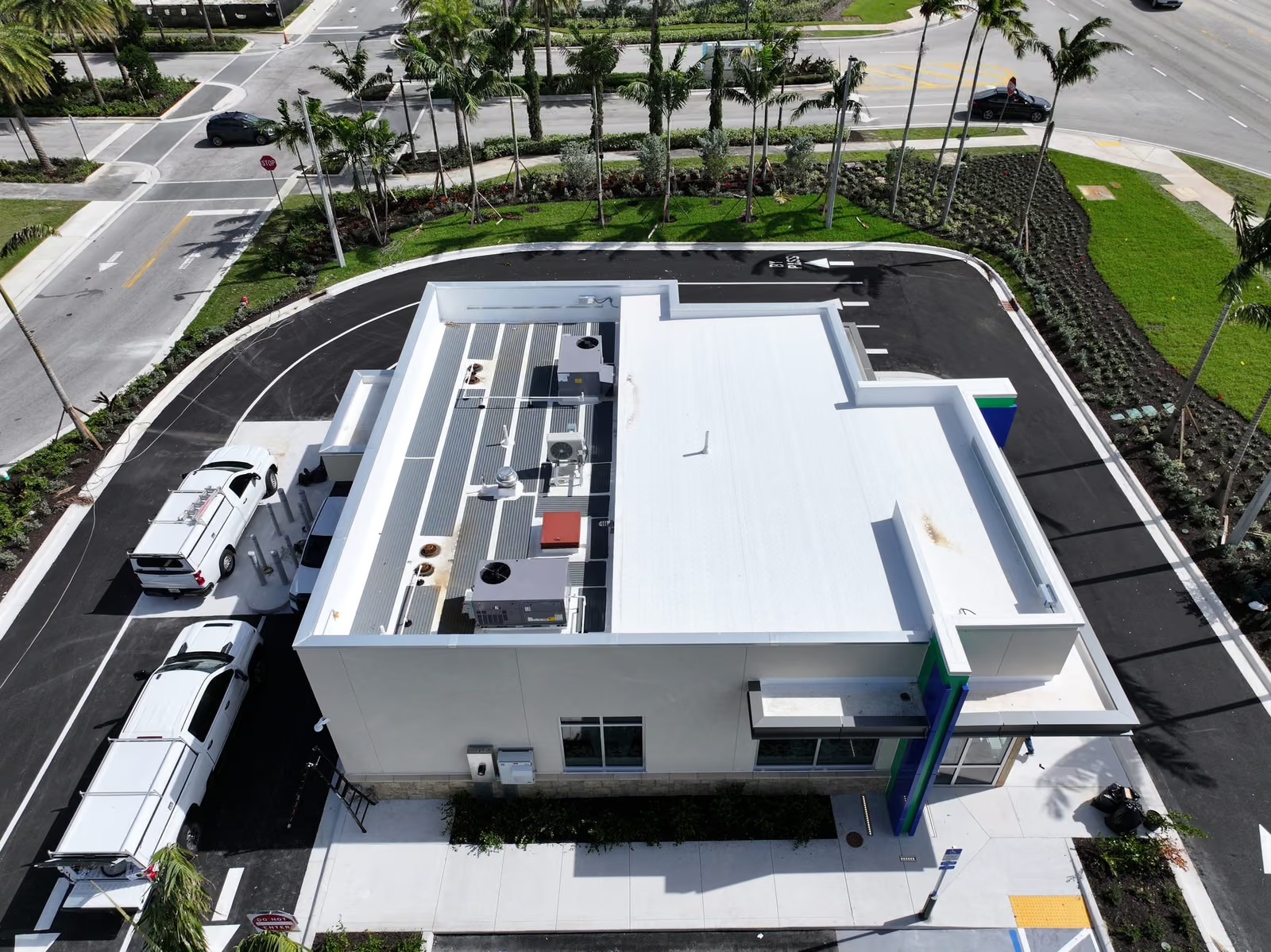
Commercial work can be sequenced around agreed access and occupant needs when the site and scope allow it. Phasing, shutdowns, tenant coordination, weather and inspection dependencies should be documented in the proposal; uninterrupted operation or a fixed completion date is not guaranteed.
For repairs, replacements and multi-building planning, proposals should identify the observed conditions, system options, unit pricing or allowances, schedule assumptions, exclusions, inspection requirements and written warranty terms.


Commercial Roofing Systems Built for Florida
Compare commercial systems against use, drainage and approved details
TPO (Thermoplastic Polyolefin) - TPO is one option for low-slope commercial roofs. Membrane thickness, attachment, insulation, drainage, seam details, reflectance and manufacturer terms vary by system. Energy performance and service life depend on the complete roof and building assembly rather than the membrane name alone.
PVC (Polyvinyl Chloride) - PVC membranes are available for environments where chemical or grease exposure is a concern. Compatibility, fire classification, attachment, seam details and manufacturer limitations should be checked for the actual building use and selected system.
Modified Bitumen - Modified-bitumen assemblies use layered polymer-modified materials and are available in different application methods. Traffic, drainage, substrate, equipment access and maintenance needs should guide selection.
Metal Roofing Systems - Standing-seam and exposed-fastener systems may suit certain sloped commercial buildings. Substrate, coating, attachment, design pressures, penetrations and maintenance requirements are project-specific; no universal lifespan or wind result is promised.
HOA & Multi-Family Roofing Planning
"Community roofing requires documented phasing, communication and approvals."
Plan Around Occupied Properties
HOA and multi-family projects involve budget constraints, architectural consistency, resident communication, access and multi-phase planning. The written scope should define which buildings were assessed and which assumptions remain subject to field verification.
Boards and property managers can use condition documentation to distinguish immediate repairs from planned replacement needs. Reserve planning, insurance decisions and property-value conclusions remain the responsibility of the appropriate licensed or authorized professionals.
Occupied-community work should document parking, access, resident notices, work hours, safety zones and cleanup responsibilities. Actual disruption and schedule depend on site conditions, weather, inspections and resident cooperation.
Communication cadence, decision owners and change-order authority should be agreed before work begins so the board, manager and contractor have a shared record of project status.
Commercial Roof Maintenance Programs
Condition-based commercial roof maintenance can document accessible concerns and prioritize repair or replacement planning. Frequency, scope, scheduling and cost effects depend on the roof system, building use, exposure, manufacturer guidance and observed conditions.
Scheduled Inspection Programs - Inspection frequency should reflect the roof system, manufacturer guidance, building use, exposure and recent events. Reports can document membrane, flashing, drainage and penetration conditions, but an inspection cannot guarantee that every concealed issue will be found.
Urgent Repair Requests - Scheduling depends on weather, safe access, current workload, materials and damage type. Call (561) 967-1306 for current availability; maintenance status does not guarantee a response time.
Roof Condition Documentation - Dated photographs and inspection notes can support owner records, reserve planning and budgeting. They do not establish insurance coverage or predict an exact replacement date; decisions should use current conditions and the appropriate insurer, engineer or financial professional where applicable.
Budget Planning - Condition records and prioritized recommendations can support budgeting. Maintenance may reduce avoidable deterioration, but it does not guarantee lower total cost, prevent every leak or establish a particular service-life extension.
Commercial Roof Coating & Restoration
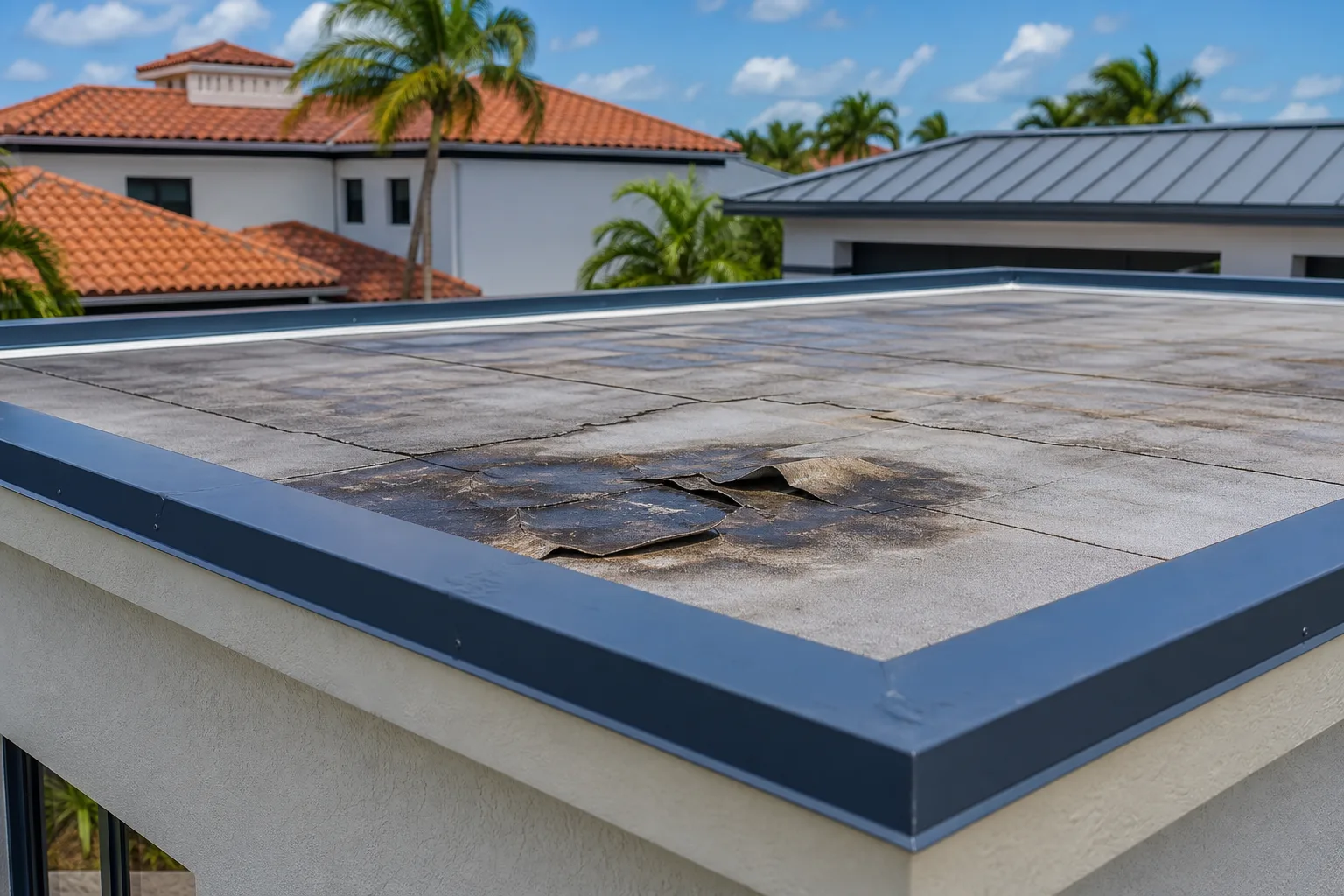
Not every commercial roof requires immediate replacement. A qualified assessment can determine whether localized repair, restoration, coating or replacement is appropriate. Compatibility, moisture, adhesion, drainage, warranty eligibility and substrate condition must be verified before recommending a coating.
Silicone Coatings - Silicone is one coating option for compatible low-slope roofs. Ponding-water limitations, preparation, thickness, adhesion and warranty terms vary by manufacturer; no coating should be described as indefinitely waterproof.
Acrylic Coatings - Acrylic products are available for compatible roofs and vary in reflectance, color, preparation, thickness, ponding-water limitations, maintenance and written terms. Suitability must be verified for the substrate and drainage conditions.
SPF (Spray Polyurethane Foam) - SPF can add insulation and create continuous coverage on compatible substrates. Preparation, drainage, protective coating, penetration details and maintenance remain important, and energy results depend on the complete building assembly.
Ready to Discuss Your Commercial Project?
Discuss observed conditions, operational constraints and the documentation needed for a commercial roofing proposal.
Our Commercial Project Process
Documented scope, phasing, access and closeout planning
Initial Consultation
We meet with property managers and stakeholders to understand project scope, timing constraints, and budget parameters.
- Site assessment
- Stakeholder meetings
- Budget discussion
- Timeline planning
Written Proposal
Detailed written proposal with material specifications, pricing breakdown, and project schedule.
- Material specifications
- Cost breakdown
- Project timeline
- Warranty details
Permitting & Coordination
The written scope identifies permit, approval, tenant and building-management coordination responsibilities.
- Permit applications
- HOA coordination
- Tenant notification
- Access planning
Phased Installation
Work proceeds in phases designed to minimize business disruption while maintaining project momentum.
- Phased work schedule
- Daily coordination
- Safety protocols
- Quality checkpoints
Inspection & Documentation
Required building-department inspections, any applicable manufacturer documentation, and project records.
- Code inspections
- Photo documentation
- Warranty registration
- Final walkthrough
Closeout & Future Requests
Applicable warranty documents and closeout records are delivered, and future inspection or repair requests are scheduled according to current availability and written terms.
- Closeout records
- Applicable warranty documents
- Maintenance guidance
- Future request process
Frequently Asked Questions
How long does commercial roof replacement take in South Florida?
What is the best commercial roofing material for Florida weather?
Do you work with property management companies and HOAs?
What warranties are available for commercial roofing?
Can you repair my commercial roof rather than replace it?
How do you minimize business disruption during commercial roofing projects?
Request a Commercial Roofing Assessment
Our commercial team can evaluate accessible roof areas, discuss priorities and provide a written proposal for the property.
Related Roofing Guides
More on commercial and flat roofing from our South Florida roofing team.
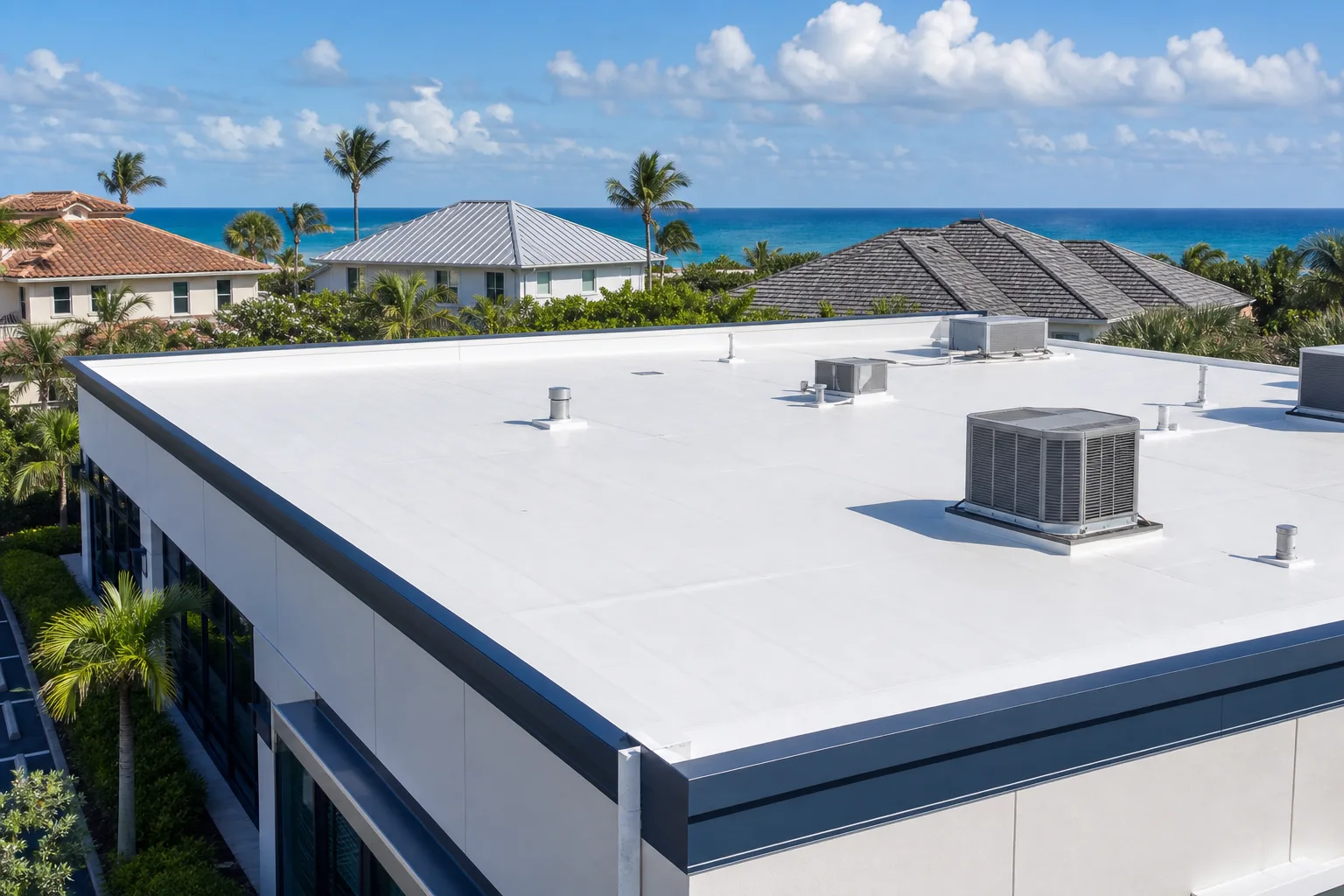
TPO Roofing Explained: Is It the Right Flat Roof for Your Commercial Building?
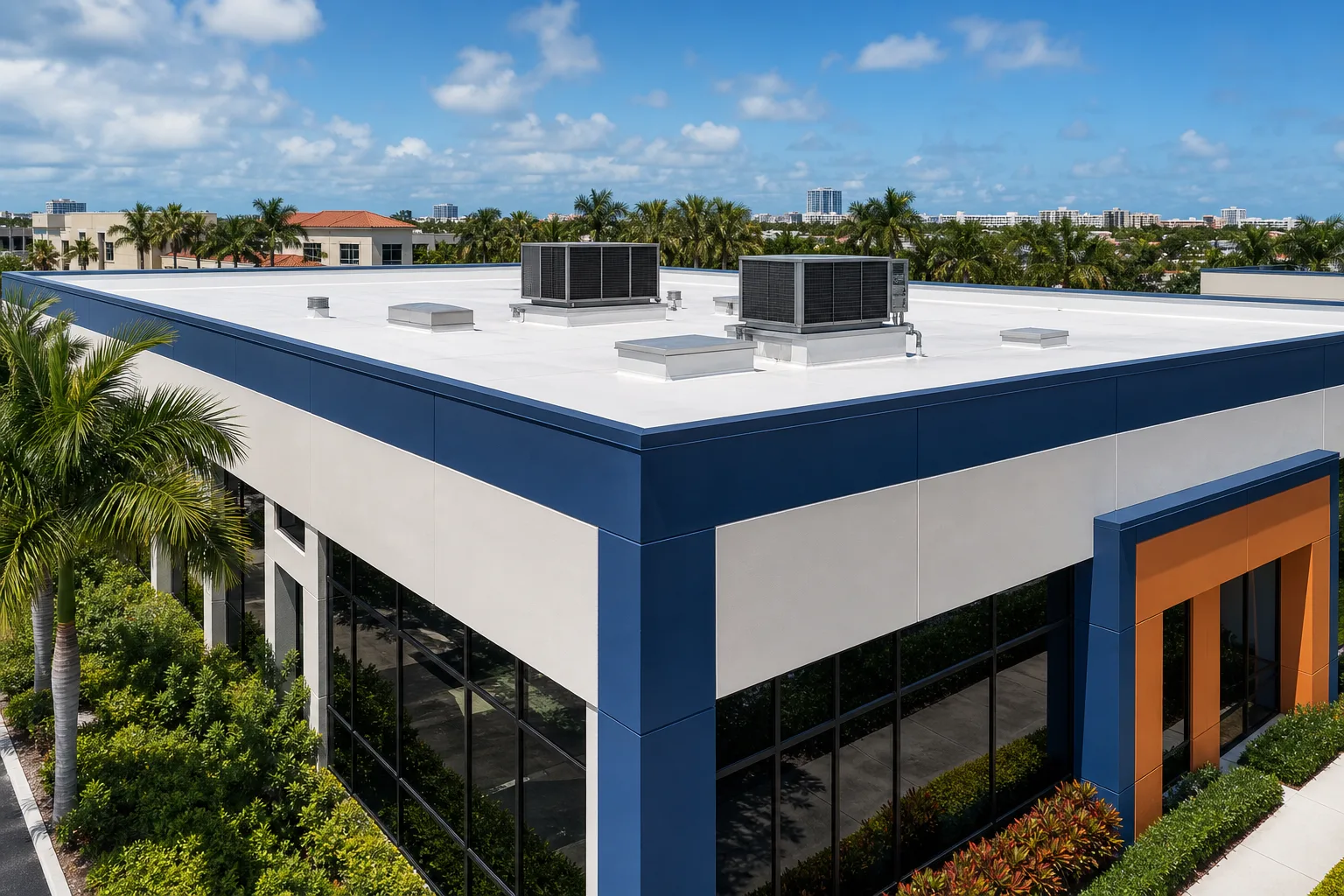
Flat Roof Options for South Florida Commercial Buildings