5 Gutter Problems That Cause Serious Florida Roof Damage

In this article
TL;DR: Gutters do more than keep water off the walkway. In South Florida, a gutter that overflows, pulls away from the fascia, drains too close to the house, or is installed at the wrong pitch can repeatedly wet roof edges and wall areas until small defects become expensive repairs.
When I inspect a roof, I do not judge the gutter system by whether it is simply attached to the house. I look at where rainwater lands, where it travels, where it spills over, and whether the roof edge and fascia are staying dry between storms. The five issues below are the ones most likely to turn a drainage problem into roof damage.
South Florida rain is intense, fast, and often wind-driven. A gutter system has to handle more than a light afternoon shower, especially in Boynton Beach, Delray Beach, Boca Raton, Lake Worth, and West Palm Beach. Here is what I check and why it matters.
1. Gutters packed with leaves, roof grit, and debris
A clogged gutter is the most familiar problem, but it gets underestimated because homeowners often see it as a simple cleaning chore. It can be that, but a blockage also changes where water goes during the next hard rain.
When the trough fills with leaves, palm debris, seed pods, granules from an aging shingle roof, or pieces of broken tile, water cannot reach the downspout fast enough. It rises and spills over the front or back edge. If it spills behind the gutter, it repeatedly wets the fascia board, roof sheathing at the eave, and the lower edge of the underlayment.
What I look for during an inspection
From the ground, I look for dark streaks on the outside of the gutter, vegetation growing out of a corner, or water marks on the soffit. From the roof edge, I look for standing debris, packed downspout openings, and places where water has been running behind the gutter.
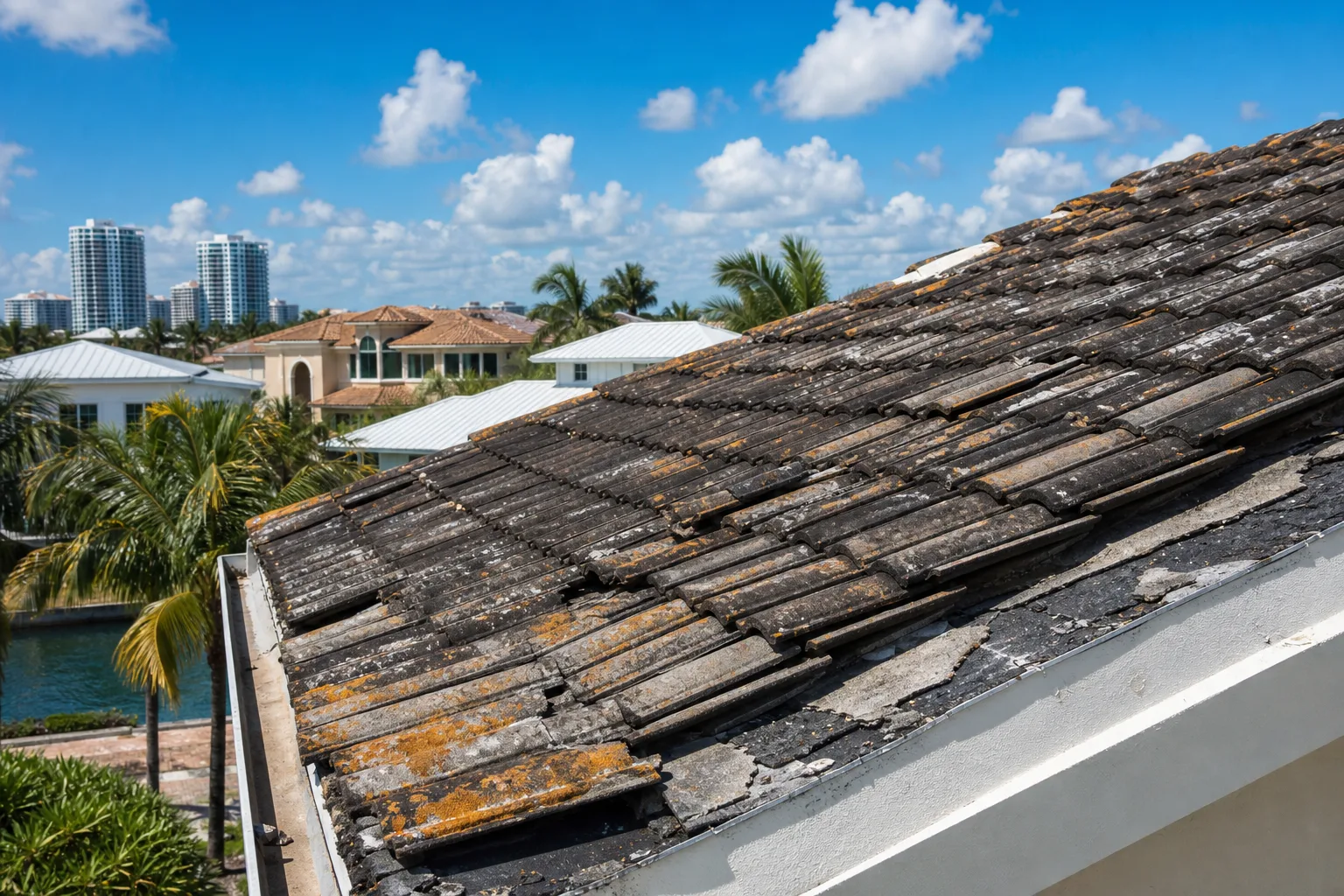
I also check the roof edge material. On shingle roofs, repeated overflow can affect the drip edge area and the lowest courses of shingles. On tile roofs, water can work into the eave details and expose weak points in the underlayment. Metal roof edges need a clear drainage path too, because trapped debris holds moisture and can contribute to staining or corrosion around fasteners and trim.
Why it becomes a roof problem
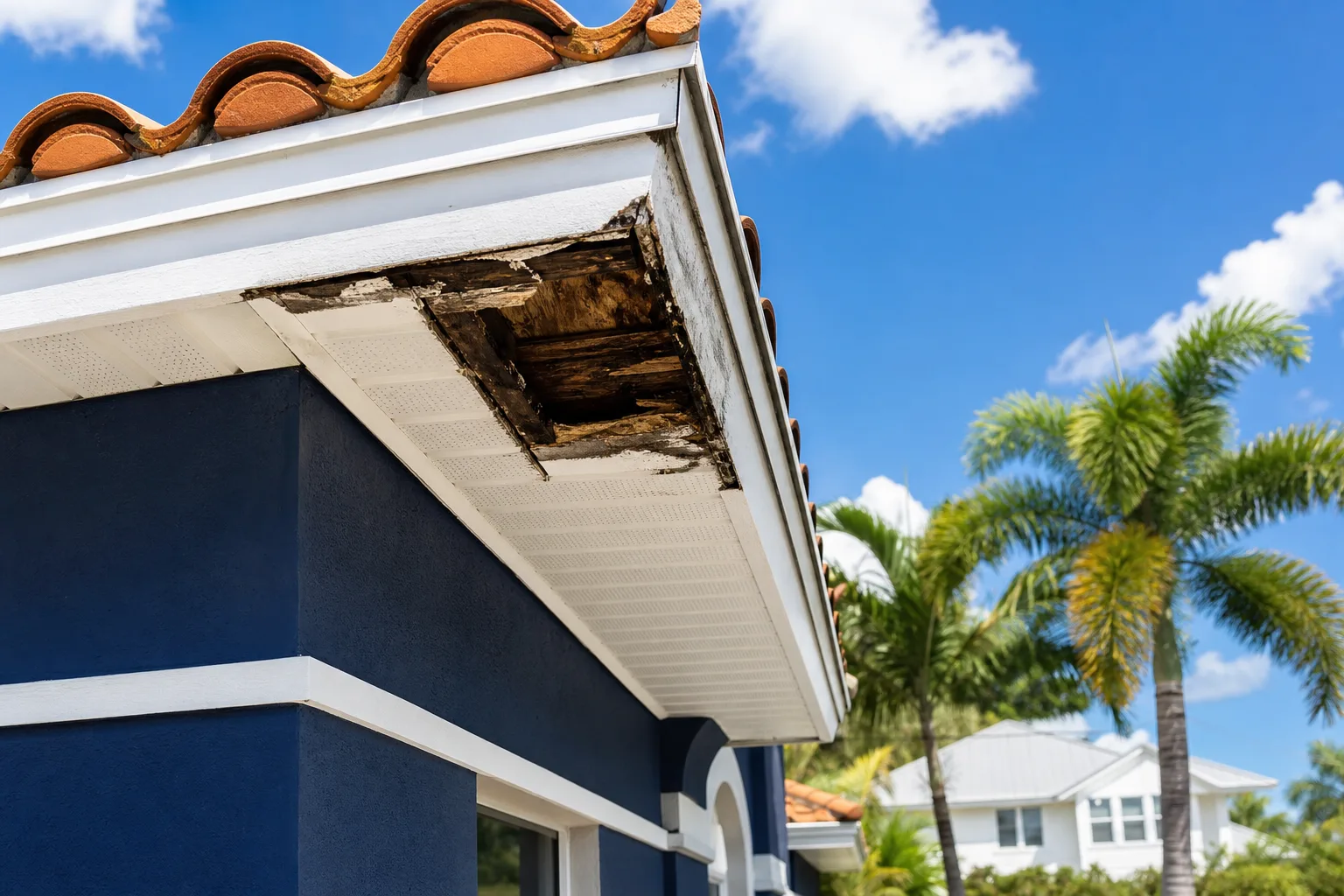
The damage usually develops slowly. Wet fascia can soften or rot. Once wood loses its ability to hold screws and hangers, the gutter begins to sag, which makes the drainage problem worse. Water that gets behind the gutter can also stain soffits, enter wall cavities, and wet the roof deck along the eaves.
A gutter cleaning is often enough if the system is otherwise sound. But if the roof edge is already soft, stained, or deteriorated, the right solution may include gutter removal, fascia repair, and a closer review of the roof's eave details. That is why a roof repair inspection should include the drainage system, not just the visible roofing surface.
A practical homeowner check
After a normal rain, walk around the home. You should not see water pouring over the middle of a gutter run, a waterfall at a seam, or a downspout that barely discharges. If you do, do not assume the gutter is the only issue. The hangers, slope, outlet size, and roof runoff may all be part of the problem.
2. Gutters that slope the wrong way or have settled over time
A gutter needs a controlled, gradual slope toward its downspout. It does not need to look dramatically tilted, but it does need to move water reliably. If sections are level, back-pitched, or sagging in the middle, they hold water after the rain stops.
I see this often on older systems and on gutters that have been pulled down by debris, storm winds, or failing fasteners. Sometimes the original installation was not pitched correctly. Other times the gutter was installed properly, then the fascia or hanger points weakened over the years.
What standing water tells me
Standing water is not just a gutter maintenance issue. It adds weight. That weight strains hangers and can pull the gutter farther away from the fascia. It also lets debris settle and form a compact blockage, especially near corners and downspout outlets.
During an estimate, I check whether water stains appear at low spots, whether seams are separating, and whether the gutter line has visible dips. I will also look at the fascia behind those dips. If the wood has softened, replacing only a few hangers may not be a lasting repair because there may be no solid material left for the fasteners to grab.
How it damages the roof edge
A sagging gutter can create a gap between the gutter and the roof edge. In a hard, wind-blown rain, water can bypass the trough and run onto the fascia or into the soffit area. This is especially important on roof sections that receive concentrated runoff from a valley.
Roof valleys collect water from two roof planes and send it to one location. If the gutter below the valley is undersized, clogged, or sagging, overflow is more likely. I pay close attention there because one small gutter problem can affect a large amount of runoff.
If you are comparing proposals, ask whether the contractor plans to correct the pitch across the full run or only reattach the visibly loose section. A good gutter bid should identify downspout locations, repair or replacement of damaged fascia if needed, hanger spacing, and how drainage will be tested. For a system designed around your roof layout, review our gutter services.
3. Loose gutters and damaged fascia behind them
A gutter is only as secure as the structure it attaches to. In many homes, that means the fascia board at the roof edge. When fasteners loosen, screws pull out, or fascia deteriorates, the gutter can separate from the house just enough for rainwater to get behind it.
This is one of the problems that can look minor from the driveway. A gutter may still appear mostly straight. But if you see a gap between the back of the gutter and the fascia, a section pulling down near a corner, or screws sticking out, it deserves a closer look.
What an inspector actually checks
I check the line of the gutter, but I also check the substrate. Is the fascia solid? Are there soft spots? Is the soffit stained? Are gutter spikes or screws pulling through? Are there dark lines below the roof edge that suggest water has been traveling behind the gutter?
I also look for prior patchwork. A row of mismatched screws, excessive sealant, or a repeatedly reattached section can signal that the real issue is not the hardware. It may be wood damage, poor flashing detail, or a gutter run that is overloaded during heavy rain.
The roof damage chain reaction
Here is the usual sequence. Water gets behind a loose gutter. The fascia stays damp. The attachment points weaken. The gutter pulls farther away. More water gets behind it. Eventually, water can reach the roof deck or the wall system near the eave.
On a tile roof, this can be hidden because the roof cover may look fine from the ground while the underlayment and edge details are taking the water. On a shingle roof, you may see curling at the lowest edge, staining, or soft decking if the issue has gone on long enough. On metal roofs, check the trim and fastener areas for signs of runoff bypassing the gutter.
The repair needs to match the finding. Sometimes it is a straightforward reattachment. Sometimes the fascia must be repaired before a new gutter can be properly secured. If the roof edge itself has failed, the scope may need to include roofing work as well. This is where a written request for a roof and gutter quote helps establish exactly what is included and what is not.
Spotted a leak or missing tiles? Schedule a repair visit
4. Too few downspouts or downspouts that discharge in the wrong place
A clean gutter can still overflow if it does not have enough exits for the volume of water coming off the roof. Downspouts are the system's release valves. If they are too few, too small for the gutter layout, blocked, crushed, or poorly placed, water backs up in the trough and spills where it should not.
The key point is that gutter performance depends on the whole drainage path. The trough, outlets, elbows, downspouts, extensions, and final discharge location all matter.
Places I check first
I start at roof valleys and long gutter runs. Those are common high-volume areas. Then I look at downspout outlets for debris buildup and at elbows for dents or blockages. I also check where the downspout ends.
If a downspout dumps water right beside the foundation, onto a lower roof, against a stucco wall, or into an area that repeatedly floods, it is not finishing the job. Water needs to be carried away in a way that works with the property grade and does not create a new problem at the building.
Why this can affect more than the gutter
Backed-up water can get under the roof edge. Water discharged onto a lower roof can concentrate runoff in one spot and accelerate wear at that roof section. Water that splashes a wall over and over can stain exterior finishes and find its way through vulnerable joints, openings, or flashing details.
On commercial buildings, roof drainage is often more complex, with scuppers, internal drains, flat roof edges, and larger drainage areas. A blocked drain or poor flow path can hold water where it should not remain. Property owners should have those systems reviewed as part of regular commercial roofing service, particularly before the wet season.
What to ask when reviewing a bid
Ask where every downspout will be located and where each one will discharge. Ask whether the proposal accounts for valleys and long roof runs. If a contractor is replacing gutters but does not discuss drainage outlets, they may be quoting the visible trough without addressing why the old system overflowed.
You do not need a complicated engineering lecture. You do need a clear explanation of how water will get from the roof edge to a safe discharge point.
5. Leaking seams, failed end caps, and poorly detailed gutter transitions
Gutters leak at seams, corners, end caps, outlets, and connections to downspouts. A small drip from a seam may seem harmless, especially if it only shows up during a heavy storm. But a leak that hits the same fascia area, soffit section, or wall surface every time can create concentrated damage.
Seam problems are common because joints expand and contract, sealants age, and debris can hold water in a corner. Storm winds can also work sections loose. In South Florida, the combination of heavy rain, heat, and salty air closer to the coast can be hard on exposed metal components and sealant joints.
The transition points matter most
I spend extra time at inside and outside corners, end caps, and places where an upper roof or roof valley drains toward a gutter transition. These are the locations where water changes direction or volume. If a seam is weak there, the leak can be more than a drip.
I also look at how the gutter meets roof-edge flashing and how water enters the trough. The goal is not simply to seal every visible opening with caulk. The goal is to make sure water has a clear, durable path without being forced behind the gutter or over a weak connection.
Why patching is not always the right answer
A quality sealant repair can make sense when the gutter is otherwise properly sloped, securely attached, and in good condition. But if multiple seams are leaking, the metal is heavily corroded, the gutter has poor pitch, or the fascia is damaged, spot sealing may only postpone the next failure.
This is one reason I recommend looking at the full condition of the system. A cheap repair is not a bargain if it leaves the main cause untouched. If a repair decision is not obvious, start with an instant estimate request and include clear photos of the gutter line, corners, downspouts, and any interior or exterior staining you have noticed.
Bottom line
Gutters are a roof-edge drainage system, not an accessory. Clogs, improper pitch, loose attachment, inadequate downspouts, and leaking seams can all direct water behind the gutter, onto the fascia, or into areas of the roof that were never meant to stay wet.
My advice is simple. Check the system after heavy rain, not only on a dry day. Watch for overflow, standing water, gaps at the fascia, stained soffits, loose sections, and discharge points that flood the area around the house. Those clues tell you much more than a quick look from the driveway.
If you are seeing any of those signs in Boynton Beach, Delray Beach, Boca Raton, Lake Worth, West Palm Beach, or nearby communities, have the roof edge and gutters inspected together. The right scope may be cleaning, re-pitching, reattachment, fascia repair, gutter replacement, or targeted roof repair. The important part is identifying the actual water path before choosing the fix.
Spotted a leak or missing tiles?
Small problems get expensive fast in the Florida sun. Get it looked at by a local crew before the next storm.
Frequently asked questions
Can clogged gutters really cause roof leaks?
Yes. When a gutter is blocked, water can overflow behind it and repeatedly wet the fascia, soffit, and lower roof edge. Over time, that moisture can reach roof decking or exploit weak flashing and underlayment details.
How often should gutters be cleaned in South Florida?
The right schedule depends on nearby trees, palms, roof type, and how much debris collects around your home. A practical approach is to inspect them before the wet season, after major storms, and whenever you notice overflow or water spilling from an unexpected location.
Why is my gutter overflowing when it is not clogged?
The gutter may have poor slope, sagging sections, too few downspouts, blocked outlets, or a roof valley sending more water than the system can handle at that point. An inspection should follow the water path from the roof to the downspout discharge rather than assuming a cleaning will solve it.
Can loose gutters damage fascia boards?
Yes. A loose gutter can allow water behind the trough, keeping the fascia damp and weakening the material that holds the gutter fasteners. As the attachment points fail, the gutter may pull farther away and increase the water exposure.
Should gutters be replaced when a roof is replaced?
Not always, but the gutter system should be evaluated during roof replacement. If gutters interfere with roof-edge work, are poorly pitched, have recurring leaks, or are attached to damaged fascia, addressing them at the same time can avoid reopening completed work later.