How Soffit Damage Lets Pests and Water Into Your Roof System
In this article
TL;DR: Soffit damage creates direct entry points for rainwater and wildlife into your attic and roof system. In South Florida's climate, this accelerates rot, mold, and structural decay faster than most homeowners expect. Catching it early, before hurricane season, keeps a small repair from becoming a full roof replacement.
What Happened
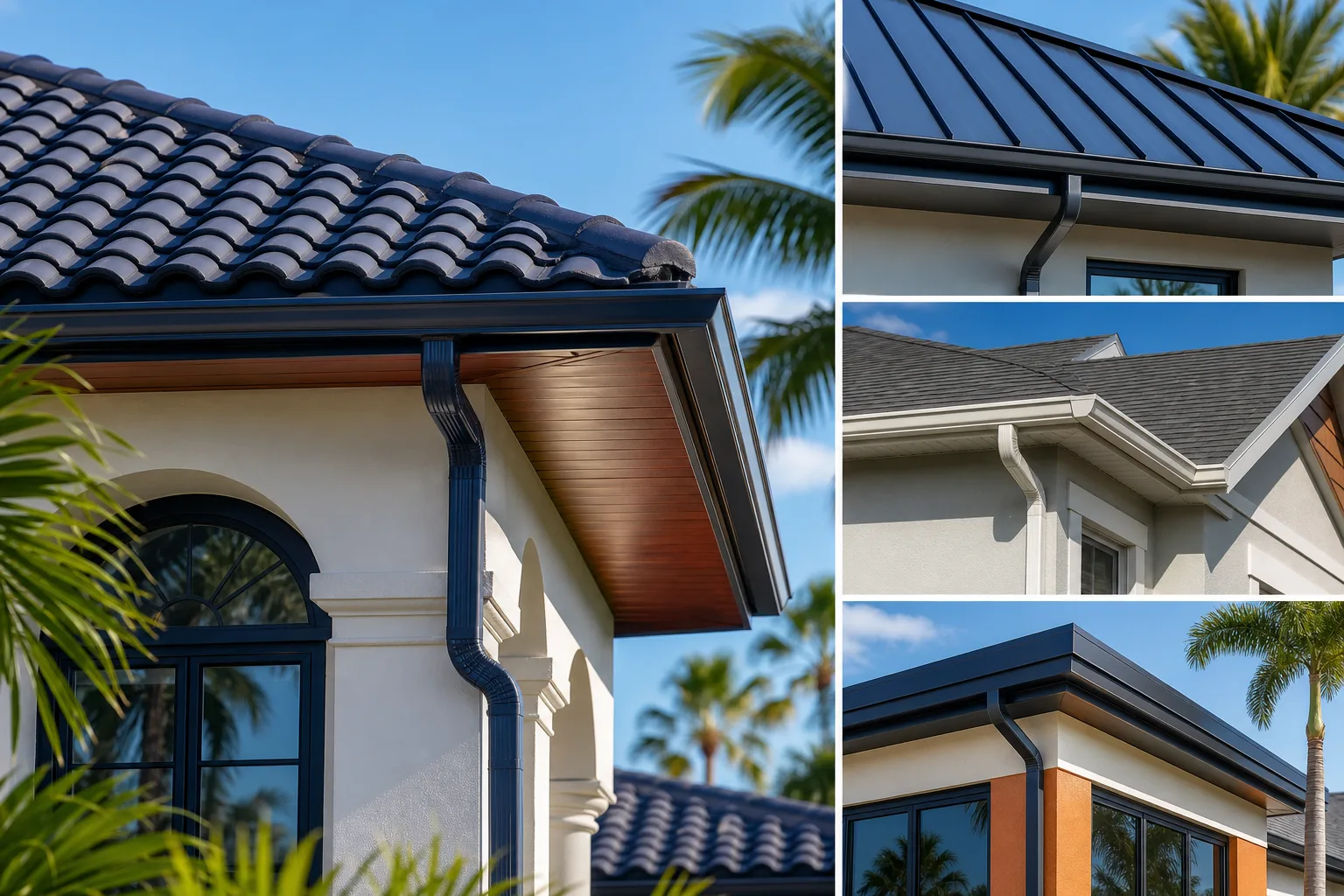
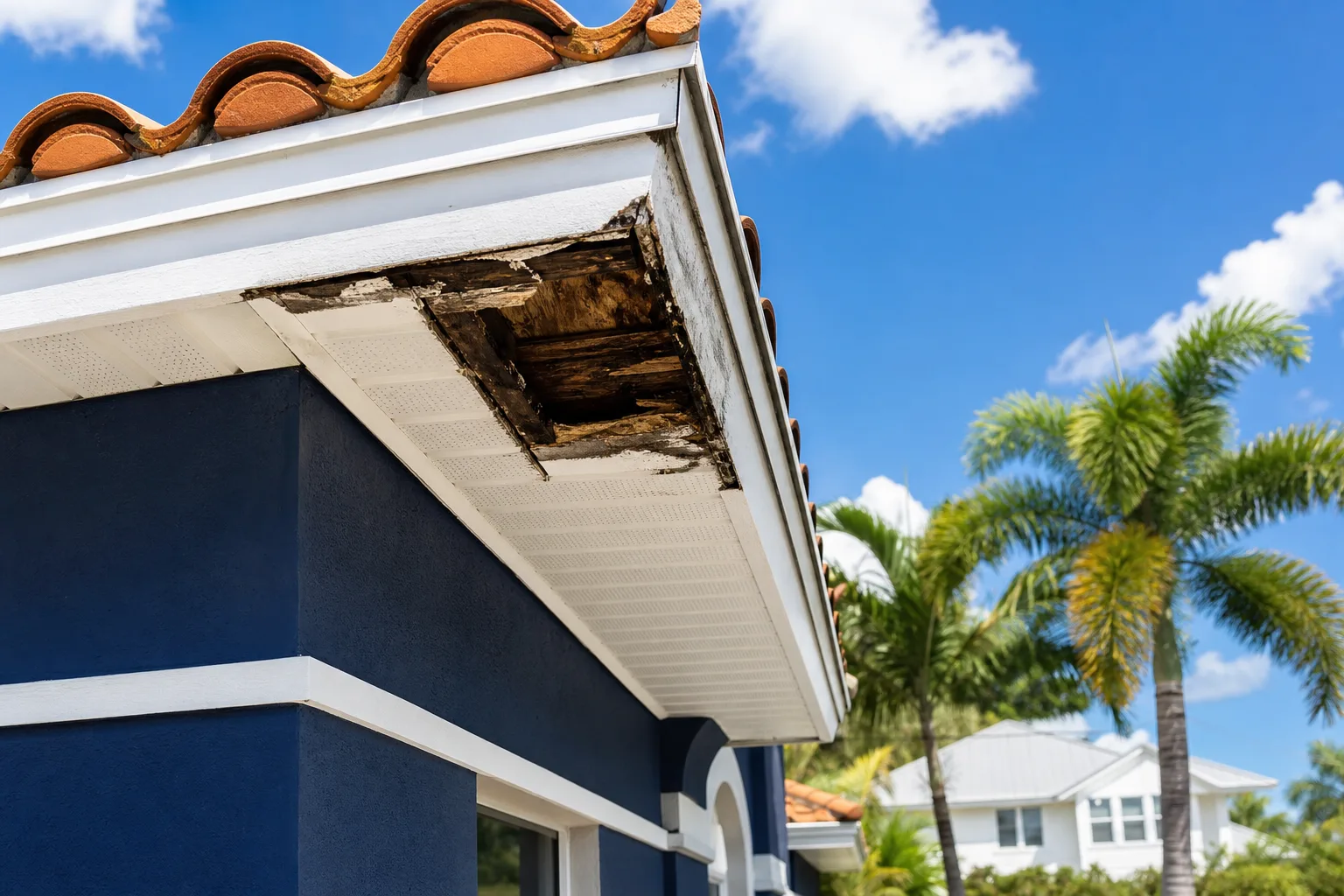
Soffits, the panels that close off the underside of your roof overhang, are built to do two jobs: protect the rafter tails from weather and allow ventilation into the attic space. When they fail, both jobs stop at the same time.
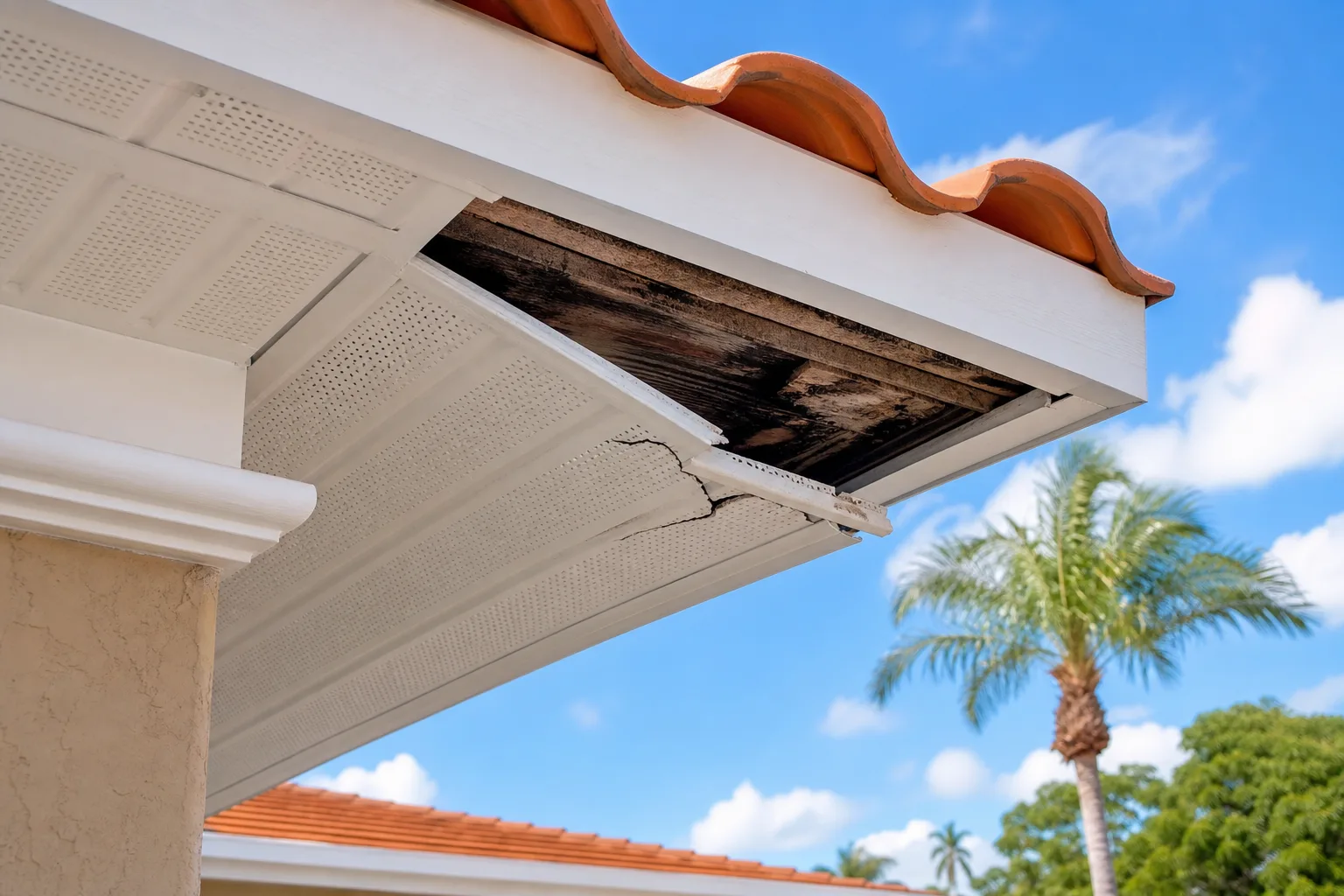
Soffit material varies by home and age. Older South Florida homes often have wood soffits that rot when the paint seal fails. Newer construction typically uses vinyl or aluminum, which can crack, pull loose at the seams, or get knocked out entirely by ladder impacts, storm debris, or pest pressure from inside.
Once a gap opens, two things happen in parallel. Water gets in during rain events, especially when wind-driven rain comes from a low angle, which is exactly what a tropical storm or hurricane produces. And animals, primarily squirrels, rats, and various wasps or carpenter bees, find a protected opening and move in.
This is not a rare edge case. In South Florida's urban and suburban mix, these pressures are constant. A small gap that looks like nothing in February can be a significant intrusion point by the time June arrives.
Why It Matters
The real cost of soffit damage is rarely the soffit itself. It is everything the opening allows to happen behind it.
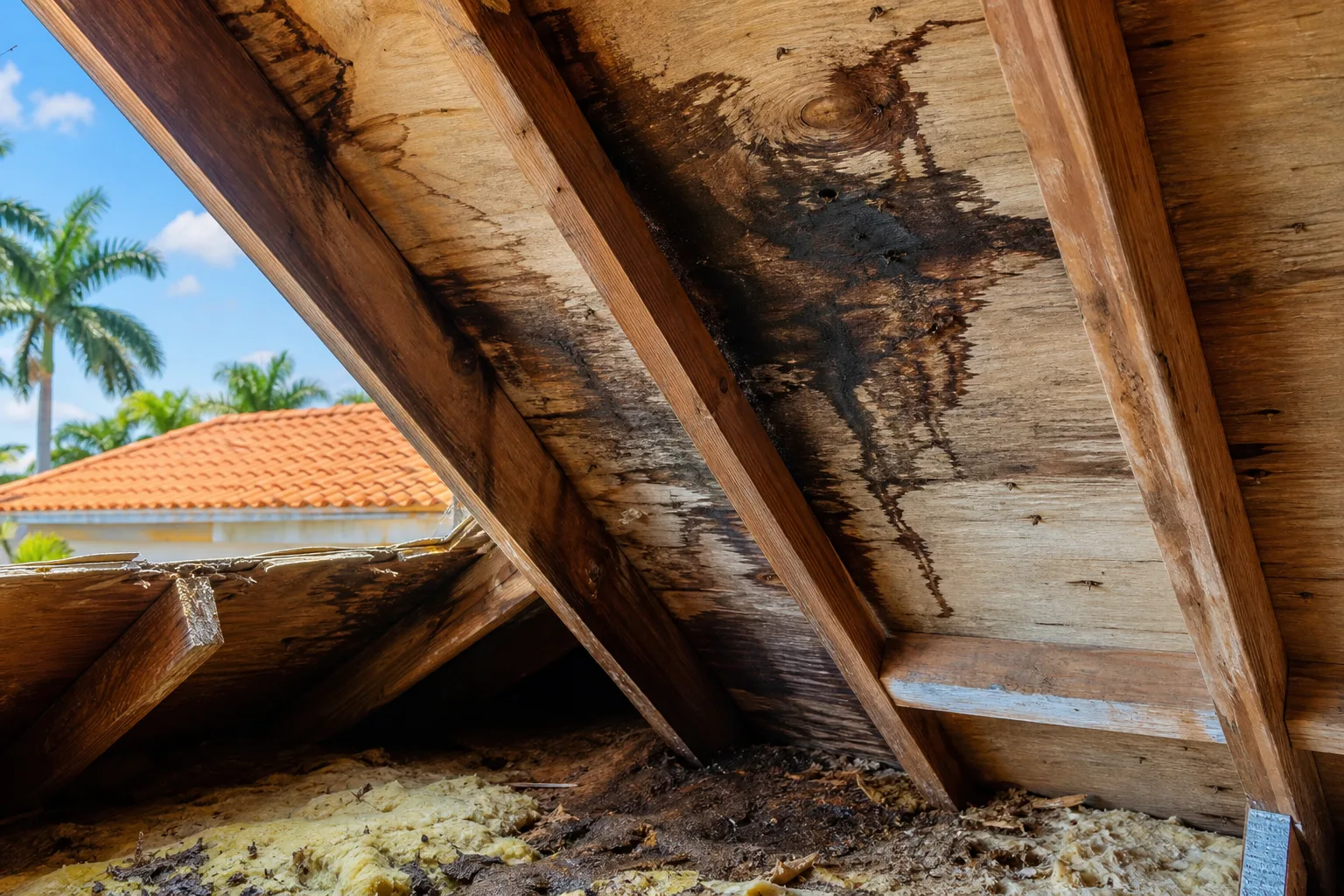
Water intrusion path: Wind-driven rain enters the gap and contacts the roof decking, rafter tails, and top plates of your exterior walls. Wood in this region absorbs moisture fast and stays wet because attic ventilation becomes disrupted the moment soffit vents are blocked or missing. Wet decking delaminates. Wet framing invites fungal growth. Neither shows up as a ceiling stain until the damage is already substantial. See roof decking water damage for how quickly this progression moves.
Pest intrusion path: Squirrels and rats gnaw existing gaps wider, which makes the problem self-compounding. Once inside, they nest against insulation, chew electrical wiring, and block soffit vents with debris. Wasps build inside the soffit cavity itself, making future repairs more complicated. The attic is the first place to check for roof problems precisely because this kind of damage accumulates there invisibly.
Florida Building Code and insurance reality: Under Florida's building code, the roof system includes the soffit and fascia as part of the weatherproofing envelope. Insurers reviewing a claim after a storm may deny coverage for water damage they determine entered through a pre-existing soffit opening. That makes deferred soffit repair a genuine financial risk, not just a maintenance inconvenience.
Ventilation loss: Soffit vents and ridge vents work as a system. A blocked or missing soffit vent reduces airflow, raises attic temperatures, and shortens shingle life. If you want to understand why this pairing matters, ridge vents and soffit vents on a Florida roof covers the mechanics in detail.
Spotted a leak or missing tiles? Schedule a repair visit
What We Don't Know Yet
Soffit damage is often not visible from ground level. A panel that looks intact from below may have separating seams or small holes hidden by the overhang angle. Internal damage, meaning rot at the rafter tail or pest nesting already in progress, cannot be assessed without getting eyes into the attic or physically inspecting the soffit cavity.
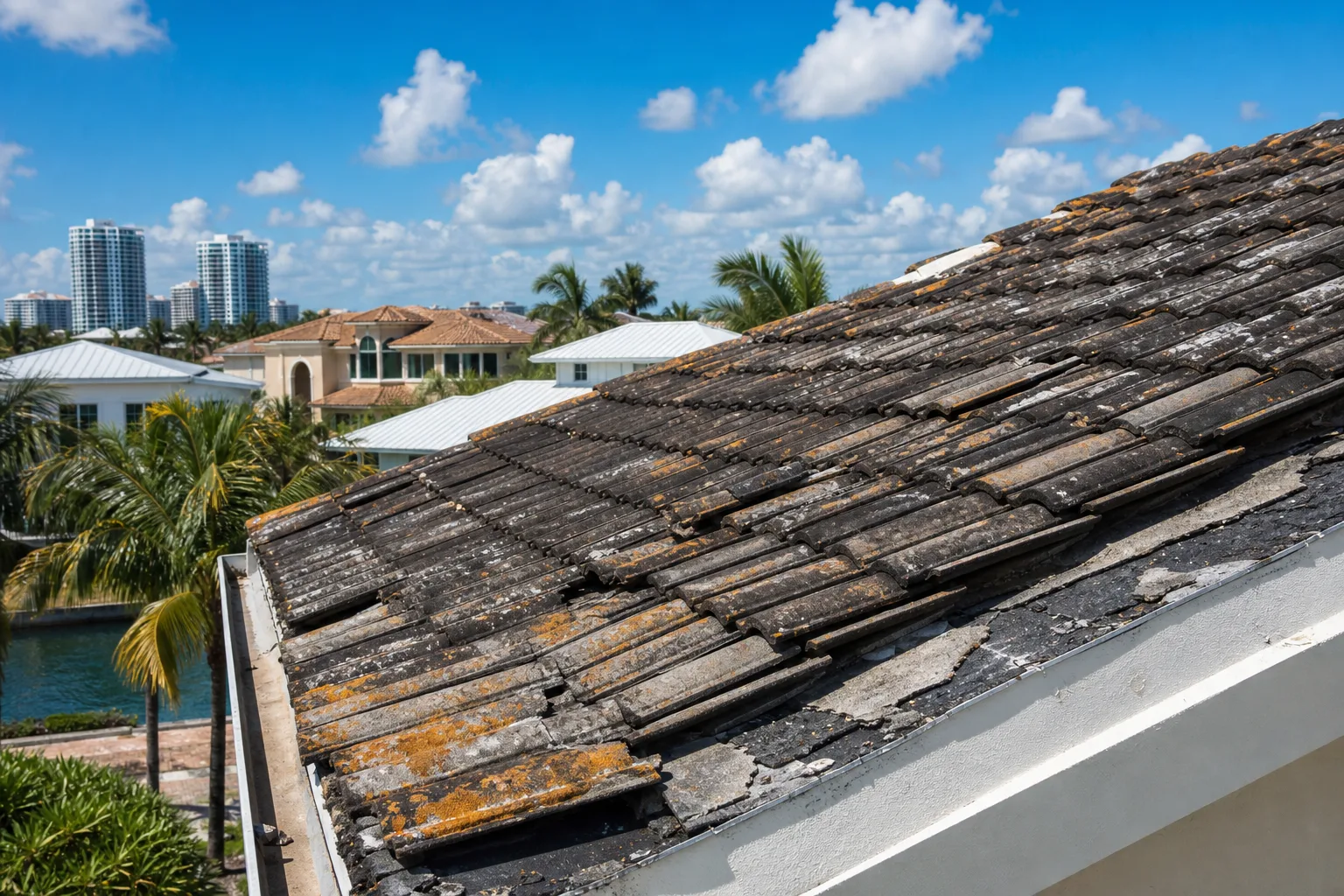
It is also not always clear whether damaged soffits are a standalone issue or a symptom of broader system failure. Fascia board rot, gutter separation, and roof edge flashing problems often appear together, because they share the same exposure zone and often the same age. A single cracked soffit panel on an otherwise sound system is a different situation than widespread soffit failure on a 20-year-old roof approaching end of life.
That distinction changes the repair strategy significantly.
What to Do About It
Here is a practical diagnostic sequence you can work through before calling anyone.
Step 1: Ground-level visual check. Walk the perimeter of your home and look at the soffit from different angles. Look for visible gaps, cracks, paint bubbling (a sign of moisture behind the panel), staining, or panels that sag or have pulled away from the fascia. Note any wasp activity entering or exiting.
Step 2: Attic check. On a bright day, go into your attic with the lights off and look for daylight penetrating through the eaves. Any visible light is a confirmed gap. Check insulation at the perimeter for moisture, staining, or pest debris.
Step 3: After-rain inspection. If you can safely access the attic within 24 hours of a significant rain event, check for active moisture or dripping at the rafter tails and the perimeter of the roof deck.
Decision table: Repair scope guidance
| Condition | Likely scope |
|---|---|
| One or two cracked vinyl panels, no rot | Soffit panel replacement only |
| Multiple gaps, no rafter or fascia rot | Soffit replacement, inspect fascia |
| Fascia rot present | Fascia and soffit replacement, check decking edge |
| Active pest infestation | Pest remediation before roofing work |
| Wet or delaminated decking visible | Roof repair, decking replacement needed |
| Widespread damage on aging roof | Full system evaluation, may indicate replacement |
When self-help is appropriate: Replacing a single vinyl soffit panel is within reach for a handy homeowner if there is no rot behind it and the cause was purely mechanical (a ladder strike, for example). The panel clips or nails in place, and the work may not require a permit in many jurisdictions, but check with your local building department before starting work, as requirements vary by Florida municipality and county.
When professional help matters: Any soffit damage involving rot, water staining, pest activity, or more than isolated panels should be evaluated by a licensed roofing contractor. In Florida, soffit work tied to the roof system may fall under the contractor's license scope depending on extent. A contractor can also document the condition for insurance purposes before the next storm season.
If you want an assessment of your soffit and roof edge condition before hurricane season, request a quote or use the instant estimate tool. For storm-related repairs or pre-season inspections, the Hurricane Storm Center is the right starting point. General roof repair questions can start at roof repairs.
Spotted a leak or missing tiles?
Small problems get expensive fast in the Florida sun. Get it looked at by a local crew before the next storm.
Frequently asked questions
Can a damaged soffit affect my homeowner's insurance claim after a storm?
Yes. Florida insurers may deny or reduce a water damage claim if the adjuster determines the water entered through a pre-existing opening like a damaged soffit rather than storm-caused damage to a sound structure. Documenting and repairing soffit defects before a storm event protects your claim position.
What is the most common soffit material in South Florida homes and how long does it last?
Vinyl and aluminum soffits are most common in homes built from the 1990s onward, and both can last 20-plus years if paint and caulk seals at the fascia are maintained. Older wood soffits are more vulnerable to South Florida humidity and typically require more frequent attention or full replacement with a modern material.
Do pests cause structural damage once they get through the soffit?
Squirrels and rats in particular will gnaw on wood framing and electrical wiring, which creates both structural and fire risk. Their nesting materials can also block soffit vents and trap moisture against the decking. The damage compounds over months, which is why early detection matters.
How do I tell if the soffit damage is causing ventilation problems in my attic?
Elevated attic temperatures, shingles aging faster than expected, and a musty smell in the attic are all indirect signals. Keep in mind that even well-ventilated attics in South Florida can run significantly hotter than outside air on sunny days, so any noticeable attic overheating warrants professional evaluation rather than relying on a specific temperature threshold. A more direct check is looking for blocked or missing soffit vents, which a licensed contractor can assess alongside overall attic airflow.