5 Roofing Problems Boca Raton Homeowners Discover Too Late
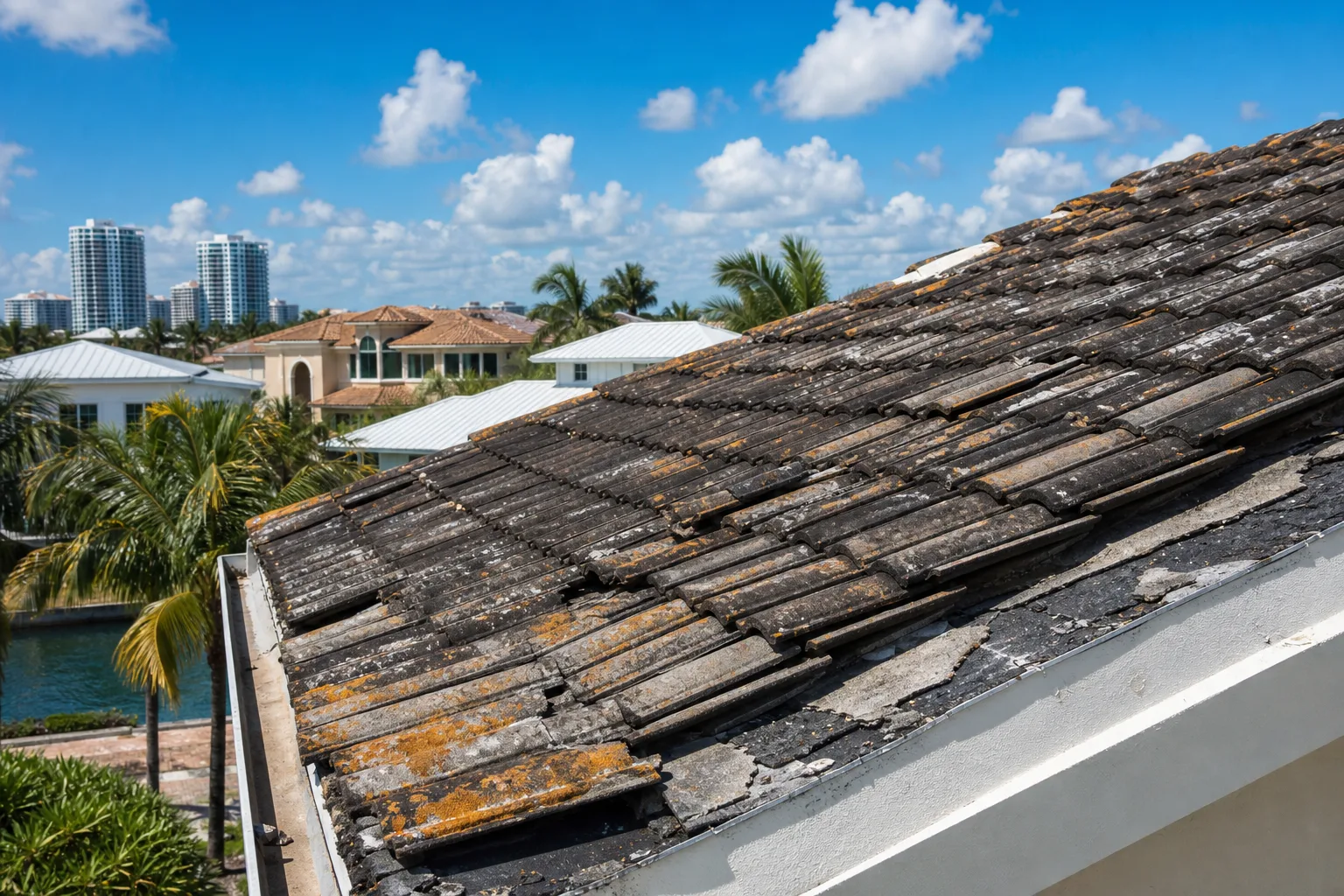
In this article
TL;DR: Boca Raton homeowners most often discover failed ridge caps, corroded flashing, hidden deck rot, clogged gutters causing fascia damage, and inadequate attic ventilation after the problem has already spread. Each one is detectable with a basic visual inspection before it escalates.
South Florida's climate is relentless. UV exposure, afternoon thunderstorms from May through October, and the occasional named storm create conditions where roofing problems develop quietly. By the time a stain shows up on your ceiling, the damage usually started months earlier. These five issues show up repeatedly in Boca Raton homes, and most of them are catchable early.
1. Ridge Cap Failure
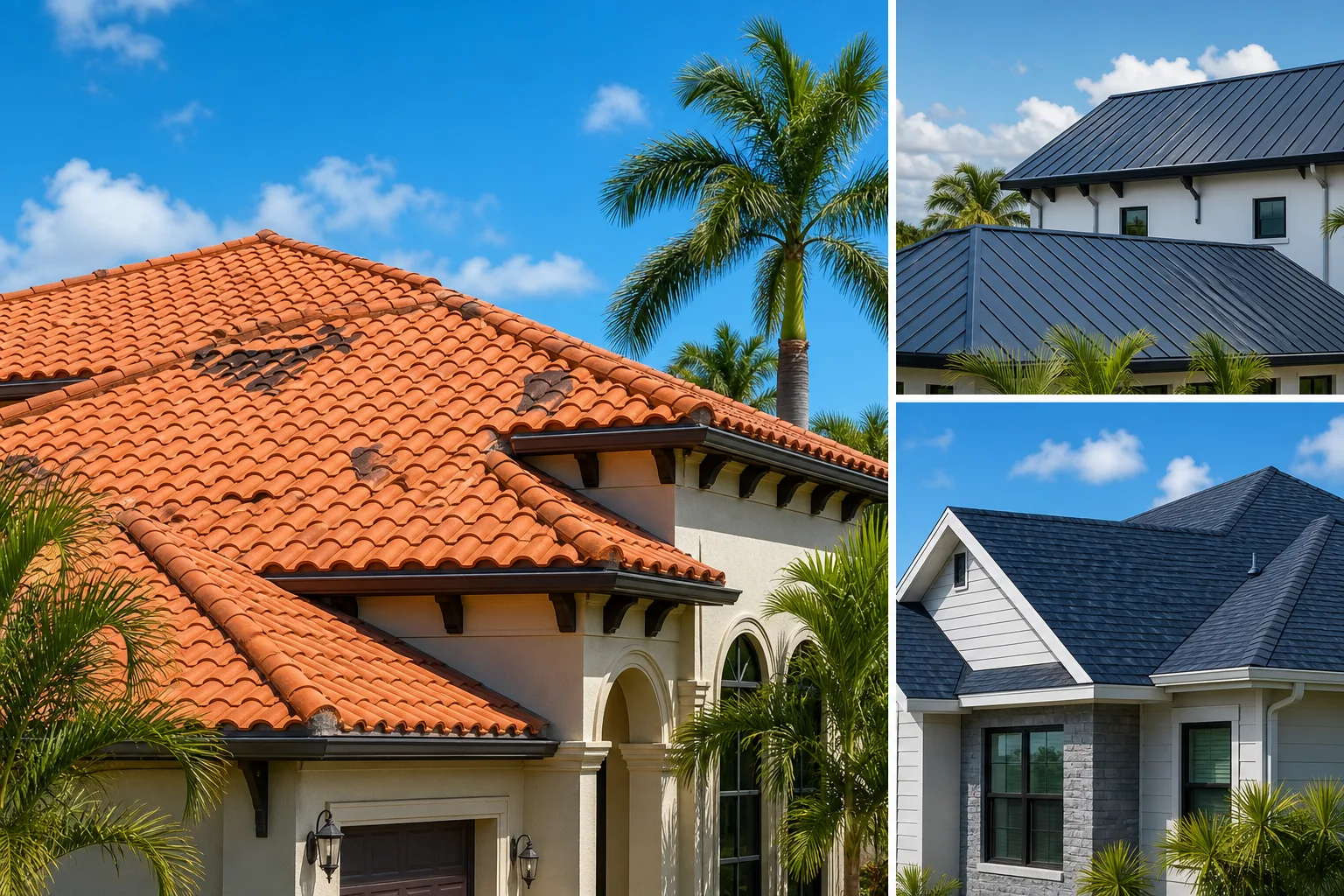
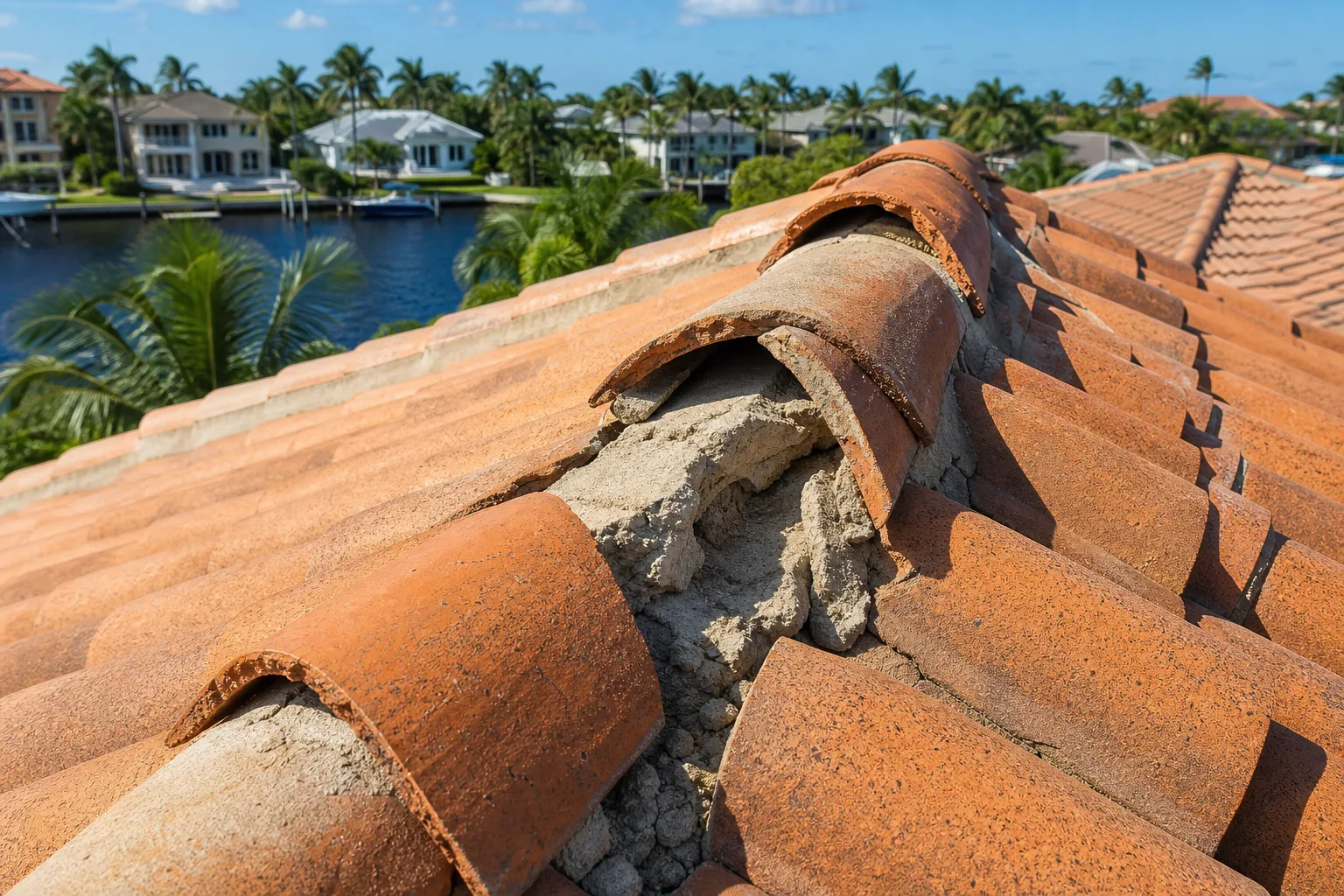
Ridge caps sit at the highest point of your roof and take the most direct wind and sun exposure of any component. In Florida's heat, the sealant under ridge shingles or mortar on barrel tile ridges breaks down faster than most homeowners expect. When a ridge cap lifts or cracks, water can enter the roof deck directly at the peak.
What makes this a late discovery: ridge damage is invisible from ground level until shingles are visibly missing or mortar is crumbling. By then, moisture has often already reached the decking below.
What to check: Look along the roofline peak from the street at an angle. Raised or displaced ridge caps cast a slight shadow against the flat plane of the roof. If you have tile, binoculars can show cracked mortar. For a closer look, a licensed contractor can walk the ridge safely.
See also: What Ridge Caps Do and Why They Fail First in Florida Storms
2. Corroded or Improperly Sealed Flashing
Flashing is the metal installed at every roof penetration: chimneys, skylights, vent pipes, and wall transitions. In Boca Raton's salt-air environment, galvanized flashing corrodes faster than it would inland. Improperly sealed flashing is also one of the most common reasons a roof that looks fine from outside leaks during a hard rain.
Florida Building Code requires flashing at all roof-to-wall intersections and penetrations. Older homes built before stricter post-Andrew code updates sometimes have undersized or misinstalled flashing that has never been brought into compliance.
What to check: From the attic with a flashlight, look at the underside of any penetration point during or after a rainstorm. Rust streaks on interior walls near a chimney or skylight are a reliable sign the flashing above has failed.
3. Hidden Roof Deck Rot
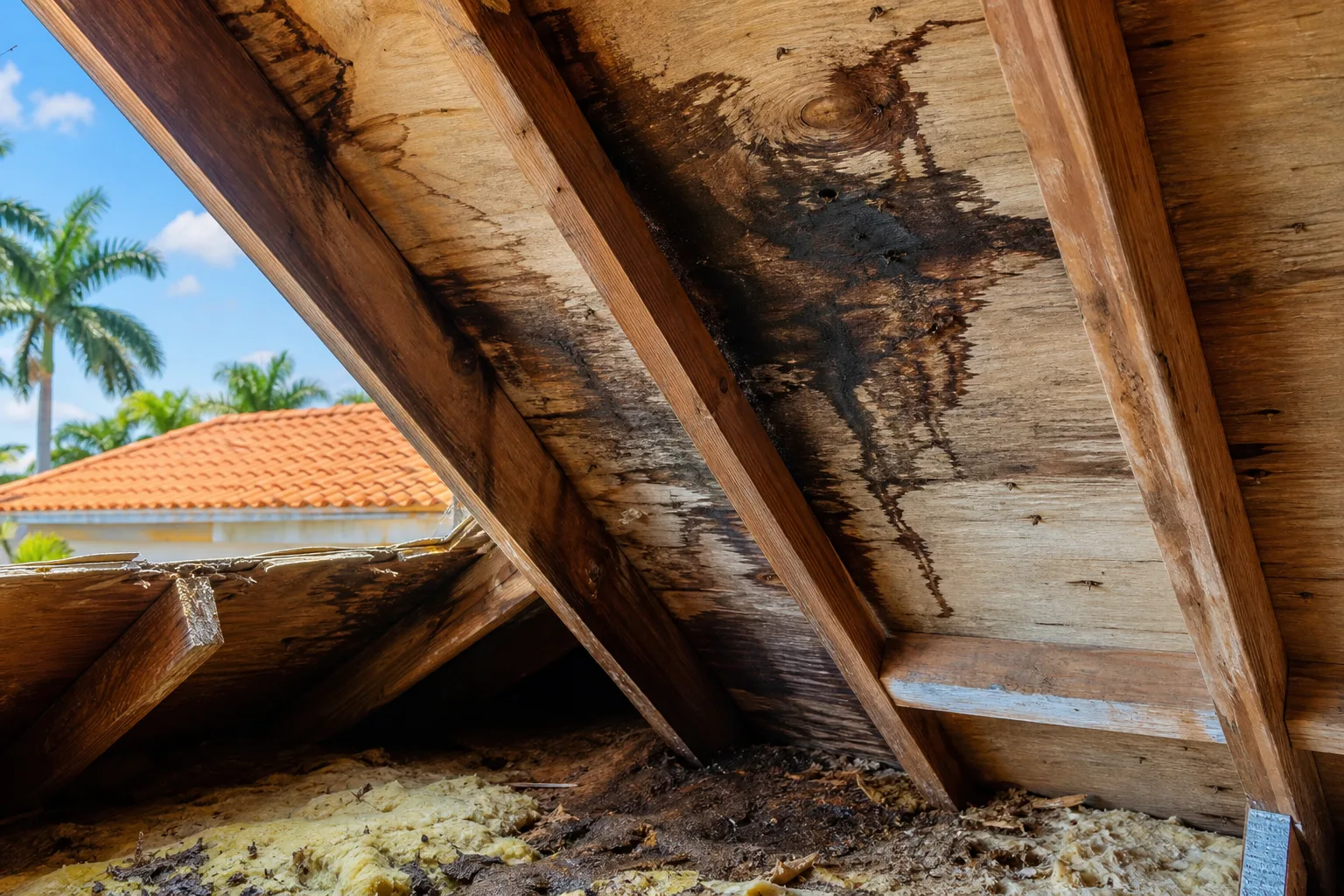
Roof deck rot is the problem that most surprises homeowners when they finally get a replacement quote. The deck, typically oriented strand board or plywood, absorbs moisture slowly over years of minor leaks or poor ventilation. It can be structurally compromised without any visible interior signs.
This becomes a code and insurance issue in Florida. During a permitted re-roof, contractors are required to replace any decking that fails a probe test. Homeowners who deferred a replacement sometimes discover that 30 to 40 percent of their deck needs replacing, adding significant unplanned cost.
What to check: During any inspection or repair visit, ask the contractor to probe suspect areas of the deck. If you have easy attic access, look for soft spots, dark staining, or visible daylight around penetrations. The tear-off phase of a roof replacement is often when this becomes fully visible for the first time.
Spotted a leak or missing tiles? Schedule a repair visit
4. Gutter Overflow Damaging Fascia and Soffit
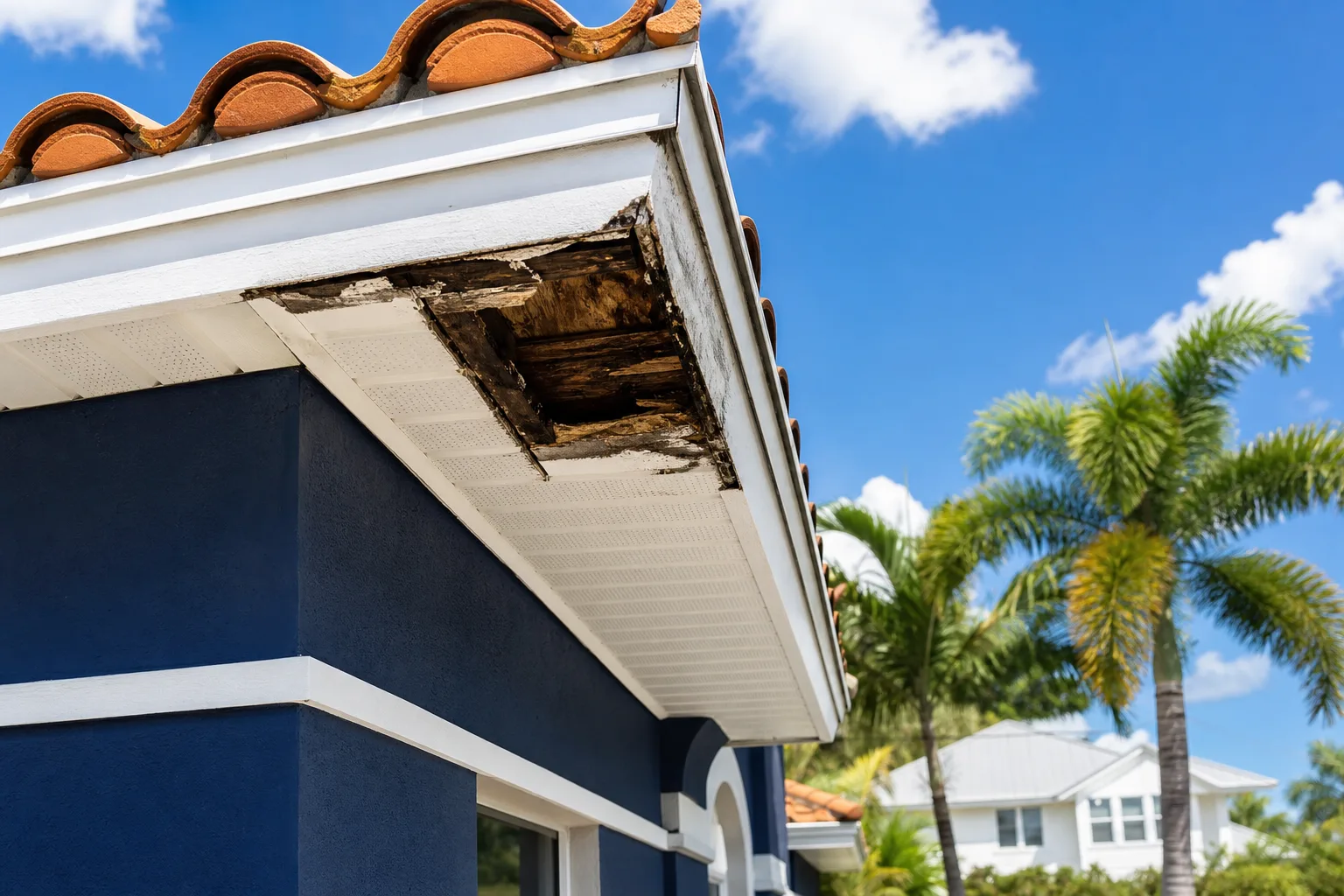
Boca Raton gets concentrated rainfall, especially during afternoon storms in the wet season. Gutters that are not cleaned or that are undersized for the roof area overflow regularly, and that overflow saturates the fascia board behind the gutter and the soffit below it. Wood fascia and soffit rot quickly in this environment.
Once fascia rot sets in, pests find an easy entry point. Rats and wasps in particular exploit soft fascia and damaged soffit panels to access the attic space, compounding the repair scope.
What to check: Stand at your roofline after a heavy rain and look at the gutter. Is water spilling over the front edge or running behind the gutter toward the fascia? Probe the fascia board with a screwdriver at its base. Soft spots indicate rot that has already started. Gutters that are pulling away from the fascia are another sign the wood behind them has deteriorated.
Learn more: Soffit Damage and How It Lets Pests and Water Into Your Roof System and Gutters
5. Inadequate Attic Ventilation Leading to Accelerated Shingle Aging
Attic temperatures in Boca Raton homes can reach 130°F or higher in extreme cases on summer afternoons, depending on ventilation and roofing material. Without balanced intake and exhaust ventilation, that heat bakes the underside of the roof deck and accelerates the aging of shingles from below. Manufacturers' warranties generally assume code-compliant ventilation ratios. When ventilation is insufficient, shingle lifespans shorten and manufacturers may deny warranty claims.
This is also a Florida Building Code compliance issue. Florida Building Code provisions addressing attic ventilation , found in the residential code under ventilation requirements , generally require minimum net free ventilation area ratios, though specific thresholds can vary by code cycle and local jurisdiction. Homes that have had additions, re-roofs without ventilation upgrades, or blocked soffit vents from insulation blown over intake pathways are common violators.
What to check: From the exterior, count soffit vents and ridge vents or attic exhaust vents. From the attic, look for insulation pushed up against soffit vent baffles, which cuts off intake airflow. An infrared scan during an inspection can reveal heat buildup patterns that indicate ventilation gaps.
See also: Ridge Vents and Soffit Vents: Florida Roof Ventilation Explained
A Simple Self-Check Sequence
Before calling a contractor, run through this order of operations:
- Ground-level ridge scan with binoculars for raised caps or cracked mortar.
- Gutter check during or after the next hard rain for overflow direction.
- Fascia probe with a screwdriver at the base of the fascia board.
- Attic inspection after a rain: look at penetrations for moisture, check soffit baffles for blocked airflow.
- Flashing visual from inside the attic at chimneys, pipes, and wall intersections.
If any of these checks raises a concern, a professional inspection before hurricane season is the most cost-effective next step.
Bottom Line
None of these five problems announce themselves loudly. They develop over months or years and surface as expensive repairs, failed insurance claims, or storm damage that a maintained roof might have survived. A targeted inspection before peak storm season, ideally between February and May, gives you time to address findings before contractors are fully booked and materials are under demand.
If you want a professional set of eyes on your roof before the season ramps up, request a quote or get a free instant estimate from Millennium Makeover. For storm-specific guidance, the Hurricane Storm Center has resources specific to South Florida homeowners.
Spotted a leak or missing tiles?
Small problems get expensive fast in the Florida sun. Get it looked at by a local crew before the next storm.
Frequently asked questions
How often should Boca Raton homeowners have their roof professionally inspected?
Most roofing professionals recommend an inspection every two to three years for roofs under 10 years old, and annually for older roofs or after any named storm passes within 50 miles. South Florida's climate accelerates wear faster than most national guidelines assume.
Does homeowner's insurance cover the roofing problems listed here?
Coverage depends heavily on the cause and your policy terms. Sudden storm damage is typically covered; gradual deterioration from deferred maintenance usually is not. Florida insurers have tightened exclusions in recent years, so knowing your policy's roof age and condition provisions before you file is important.
Can I check my attic for moisture damage myself safely?
Yes, a basic attic check with a flashlight is something most homeowners can do. Look for dark staining on the underside of the deck, rust around nail penetrations, and soft or spongy spots. Avoid walking on the joists if you are unsure of their condition, and never go into the attic during or immediately after a storm.
What is the best time of year to address these issues in Boca Raton?
February through April is the ideal window. Hurricane season begins June 1, and experienced contractors in South Florida get heavily booked from May onward. Addressing repairs in early spring also gives time for permit pulls and material lead times before storm demand surges.