Can a Roof Leak Be Repaired Without Full Replacement?

In this article
A roof leak can often be repaired without replacing the entire roof, especially when the problem is isolated to flashing, a pipe penetration, a small storm-damaged area, or a limited section of worn material. The key is finding the actual entry point and checking whether water has spread beneath the roof covering.
For South Florida homes and commercial buildings, a repair is sensible when the roof system is otherwise sound. Replacement becomes the better call when leaks are recurring, widespread, tied to aging materials, or accompanied by wet decking, failing underlayment, or a roof that will not stand up well through another hurricane season.
At a glance: roof leak repair vs. full replacement
| Question | Targeted roof repair | Full roof replacement |
|---|---|---|
| Best fit | One identifiable leak or a contained damaged area | Multiple leaks, widespread deterioration, or an aging roof system |
| Typical work | Replace damaged materials, repair flashing, reseal penetrations, correct a local drainage issue | Remove and replace the roof covering and associated components as needed |
| Disruption | Usually limited to the affected roof area | Greater job-site activity, but addresses the roof system as a whole |
| Risk of future leaks | Lower when the surrounding roof and underlayment are in good condition | Lower when failures are system-wide or materials are near the end of service |
| Insurance considerations | Often appropriate for sudden, localized covered damage, subject to the policy and deductible | May be necessary after a covered storm loss, but age, exclusions, and policy terms matter |
| Hurricane-season value | Good if completed before the roof is exposed to repeated heavy rain and wind | Stronger choice when the existing roof has broad vulnerabilities before peak storm months |
The practical question is not, “Can someone patch the visible spot?” Nearly any roof can be patched. The better question is whether a properly scoped repair restores a sound, code-conscious roof assembly or simply covers a symptom that will return in the next hard rain.
When a roof leak can be repaired successfully
A targeted repair is often the right solution when an inspection shows one clear failure point and dry, stable conditions around it. On a South Florida roof, the usual suspects are not always the roofing field itself. Details and transitions tend to fail first.
Flashing and penetration failures
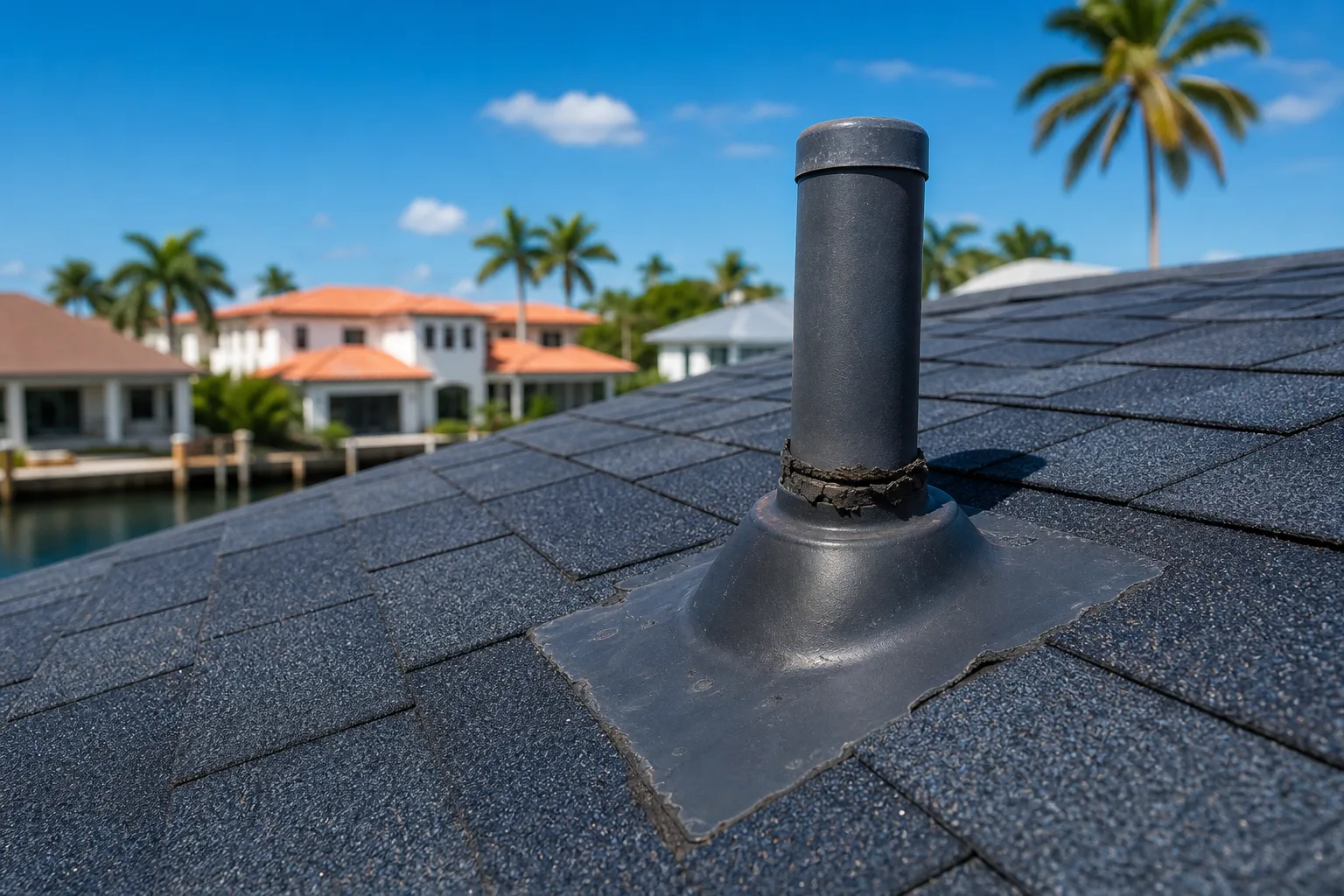
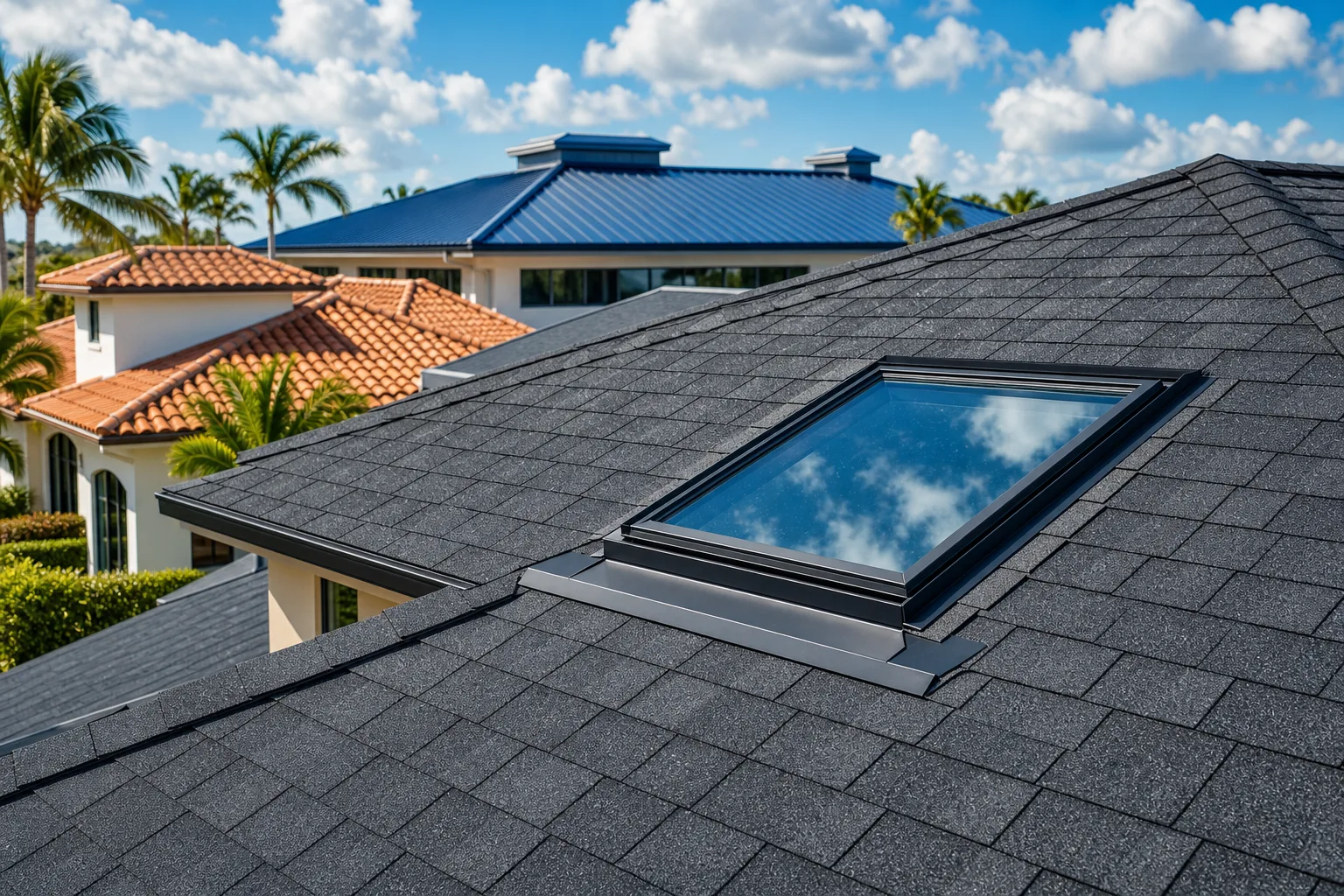
Flashing is the material that directs water away from vulnerable transitions, including walls, chimneys, skylights, vents, and plumbing pipes. A loose counterflashing, failed seal at a pipe boot, or cracked flashing connection can let in a surprising amount of water while the rest of the roof remains serviceable.
These issues are frequently repairable because the correction can be limited to the detail itself. The contractor still needs to examine nearby decking and underlayment. Water can travel along framing or beneath the roof covering, so the stain on a ceiling is not a reliable map of the entry point.
For example, a leak showing up near a hallway ceiling may originate several feet uphill on the roof, especially on a sloped tile, shingle, or metal system. That is why a real inspection matters more than applying sealant where the interior stain appears.
Localized storm damage
A branch strike, wind-lifted section, displaced ridge component, or isolated impact can sometimes be repaired without disturbing the rest of the roof. After a storm, the repair decision should be based on the extent of damage, not just what is visible from the ground.
If wind has lifted materials in one area, the surrounding attachments and edges should be checked as well. In a Category 3 hurricane, roof edges, ridges, flashing, roof-to-wall transitions, and penetrations are among the areas that deserve close attention because wind pressure works hardest at these details. A small missing section may be the obvious problem, but loosened materials nearby can become the next leak.
If you are assessing conditions during hurricane season, use our Hurricane Storm Center for practical next steps and prioritize temporary protection if active water intrusion is occurring. Permanent repairs should be completed by a licensed contractor once the roof can be safely inspected.
A single damaged section on an otherwise healthy roof
Roofing materials can be locally replaced when matching material is available and the surrounding roof is in good shape. The repair may involve replacing damaged shingles, resetting or replacing a limited number of tiles, repairing a section of metal paneling or trim, and restoring the water-shedding details beneath the visible surface.
The material type changes the repair process:
- Shingle roofs: A localized repair can work when the shingles remain flexible enough to be lifted and resecured without damaging adjacent courses. Brittle, sun-aged shingles are harder to blend and may crack during work.
- Tile roofs: The visible tile is only part of the water-shedding system. A repair may require lifting surrounding tiles and addressing the underlayment or flashing beneath. Broken tile alone is not always the source of a leak.
- Metal roofs: Leaks often develop around fasteners, laps, penetrations, flashing, or panel transitions rather than through the center of a panel. The repair must preserve the system’s designed drainage path and expansion behavior.
Homeowners comparing material-specific repair needs can review our shingle roofing services, tile roofing services, and metal roofing services. The important part is not picking the material that looks easiest to patch. It is repairing the complete detail that keeps water out.
Leaks caused by drainage or gutter overflow
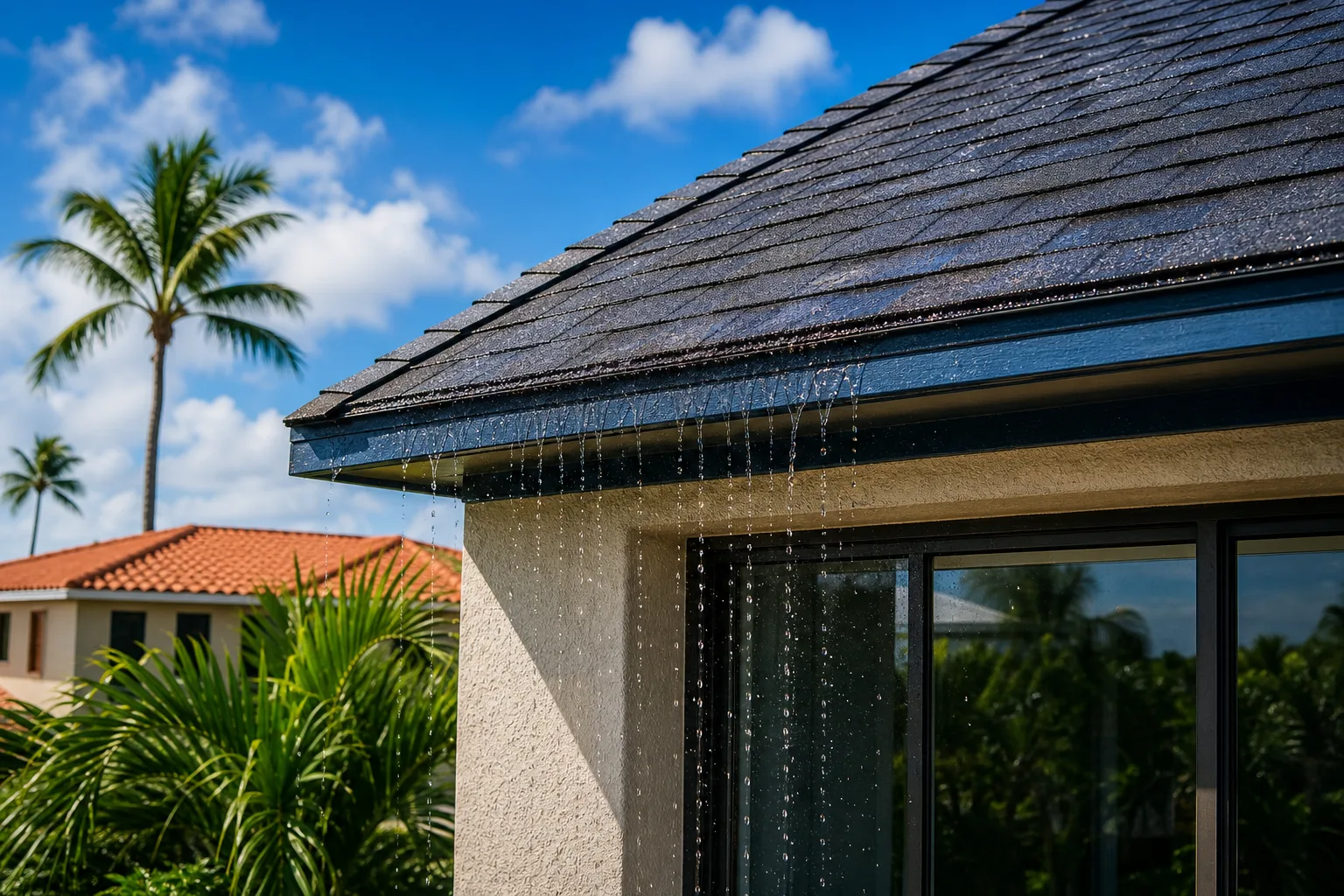
Sometimes the roof is doing its job, but water is being driven back toward the fascia, edge metal, or wall because gutters are overflowing, sagging, disconnected, or improperly sloped. In South Florida’s intense rain events, undersized or obstructed drainage can expose roof edges to repeated overflow.
Correcting the drainage problem can stop the leak if the roof edge has not already sustained significant deterioration. The roof deck, fascia, and soffit should still be checked for moisture damage. Our gutter services can help address roof drainage as part of the full water-management picture.
When repair is only a short-term answer
A repair can be technically possible and still be the wrong investment. This is where an honest roof assessment saves property owners from paying for the same area repeatedly.
Recurring leaks in different places
One repaired leak is normal. Several leaks appearing over time, particularly in unrelated locations, often point to a broader issue. The roof covering may be aging, the underlayment may be failing, flashing details may be breaking down throughout the roof, or moisture may be finding multiple weak points.
Repeated repairs can also make diagnosis harder. Layers of sealant, incompatible patch materials, and pieced-together flashing can interfere with drainage and hide the original condition. A contractor should be able to explain whether each repair is isolated or whether the roof is showing system-wide failure.
Widespread underlayment or decking concerns
On tile roofs, an intact-looking tile surface can conceal a worn or damaged underlayment below. On shingles and metal systems, water can travel beneath the covering and affect the deck before there is obvious visible deterioration. Soft decking, rot, persistent moisture, or signs that water has spread across multiple areas change the decision significantly.
A roof is not just the outer material. It is an assembly that includes decking, underlayment, flashing, ventilation details where applicable, edge components, and the roof covering. Replacing one visible component will not solve a widespread failure beneath it.
Under the Florida Building Code, roofing work must meet applicable current requirements, and the exact scope can depend on the building, roof type, location, and amount of work involved. A licensed roofer should evaluate permit and code requirements before treating a major repair as a simple patch. You can verify Florida contractor licensing through the Florida Department of Business and Professional Regulation.
Materials that are broadly worn or difficult to repair reliably
If shingles are brittle across the roof, tiles have widespread displacement or failing underlayment beneath them, or a metal roof has recurring corrosion or detail failures, a local repair may not hold up as intended. Matching older roofing materials can also be difficult, and appearance is only one concern. The new section has to integrate correctly with the existing water-shedding system.
This does not mean every older roof needs replacement. It means the repair should be judged by its likely performance through heavy summer rain, wind-driven rain, and the next tropical system, not by whether it looks acceptable on the day it is completed.
A roof that is nearing planned replacement
Timing matters in South Florida. If a roof is already at the point where replacement is being planned, spending heavily on multiple temporary repairs may not be the best use of the budget. A limited repair may still be appropriate to stop active intrusion and protect the interior while a replacement is scheduled.
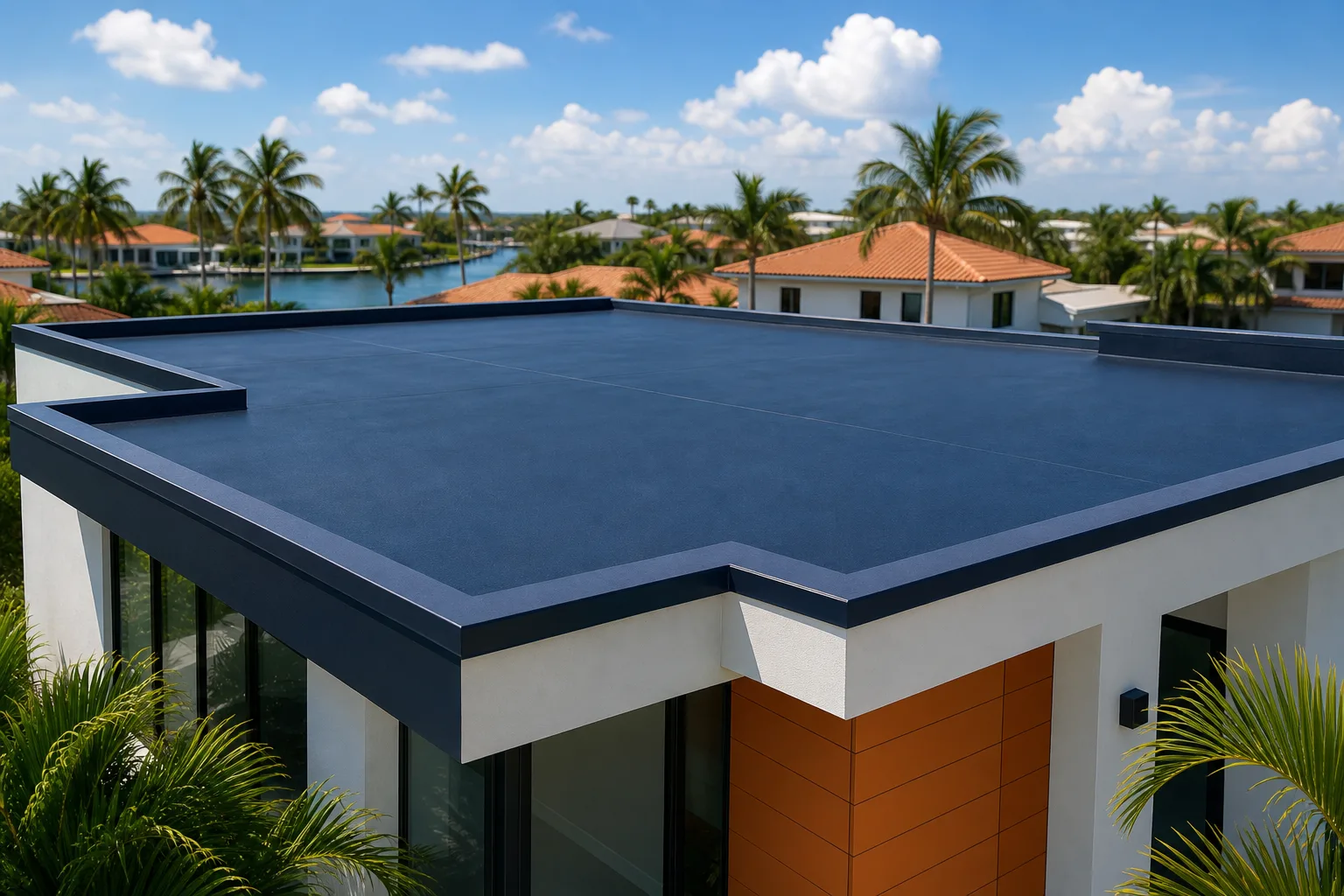
For commercial properties, the calculation can include tenant impacts, equipment protection, roof access, drainage, and maintenance history. Property managers should compare the cost and operational risk of repeated spot repairs against a planned project. Learn more about our commercial roofing services when evaluating building-wide options.
Repair versus replacement: the inspection questions that matter
A reliable recommendation starts with a condition assessment, not a guess based on the interior ceiling stain. Before choosing repair or replacement, ask these questions.
- Where did water actually enter? The entry point may be uphill or away from the visible interior damage.
- Is the problem limited to one detail or repeated across the roof? One failed pipe boot is different from multiple failed penetrations and edges.
- What is the condition of the surrounding roof? A repair needs sound materials around it to tie into.
- Is there hidden moisture, damaged decking, or compromised underlayment? These conditions can turn a small-looking leak into a larger scope.
- Has the roof had several repairs already? Repair history helps show whether failures are isolated or progressive.
- Will the repair be completed before the next major weather window? During hurricane season, an open or partially repaired roof should never be left exposed to forecast rain.
- Does the work require permits or trigger code-related considerations? The answer depends on the project scope and building conditions.
For a house, a thorough assessment should include roof surfaces, flashings, penetrations, valleys, ridges, edges, drainage, attic conditions when accessible, and the interior evidence of water. For a commercial roof, the review should also include drains, scuppers, seams, curbs, equipment penetrations, previous repair areas, and ponding patterns.
Our roof repair team can inspect the source of the problem and explain the scope in plain language. If replacement is warranted, that should be based on documented roof condition, not a blanket rule that every leak requires a new roof.
Spotted a leak or missing tiles? Schedule a repair visit
Insurance reality after a leak or storm
Insurance can be part of the decision after sudden storm damage, but it should not determine the diagnosis. Policies differ on deductibles, exclusions, roof age, maintenance-related issues, water damage, and what is considered a covered cause of loss. A leak from long-term wear is often treated differently than damage from a documented wind event.
If you believe a storm caused the damage, take clear photos from a safe location, note the date and weather event, protect the property from further damage when possible, and report the claim according to your policy requirements. Do not climb onto a wet or storm-damaged roof to collect evidence. The Florida Office of Insurance Regulation provides consumer information, but your policy language and insurer are what control the claim.
A licensed roofer can document observed roof conditions and prepare a repair or replacement estimate. They should not promise coverage or tell you what an insurer will pay. Be wary of anyone who guarantees an insurance outcome before the roof is properly inspected.
What not to do with an active roof leak
A few common reactions can make a manageable leak worse:
- Do not coat the area with roof cement or caulk without identifying the water path. It can trap water, block drainage, and complicate the eventual repair.
- Do not pressure wash near vulnerable roof details or lift materials to investigate without proper training.
- Do not ignore a sagging ceiling, bubbling paint, or water near electrical fixtures. Move belongings, contain water safely, and contact appropriate help immediately if electrical risk is present.
- Do not wait through the peak of hurricane season if a repairable weakness has already been identified. A modest issue can become a much larger interior claim after wind-driven rain.
- Do not accept a repair plan that cannot explain what failed, how the repair integrates with the existing roof, and what condition was found beneath the surface.
Planning repairs around South Florida weather
From late spring through hurricane season, repair scheduling needs to account for daily thunderstorms, tropical forecasts, and the time required to secure materials properly. A roofer should not open more roof area than can be made watertight within the safe weather window.
This is especially important for tile and underlayment work, where the repair may require carefully removing materials around the affected area to reach the true failure point. It also applies to commercial roof repairs involving seams, drains, or equipment penetrations, where standing water and incoming weather can quickly complicate the work.
If you have noticed a new stain, dripping, loose material, or a musty odor after rain, arrange an inspection before the next extended wet period. You can request a roof quote or use our free instant estimate to start the conversation with Millennium Makeover.
Verdict
Yes, many roof leaks can be repaired without replacing the whole roof. A focused repair is the right answer when the leak has a clear, isolated cause and the surrounding roof assembly is still in sound condition.
Replacement is the more responsible choice when leaks are recurring, moisture has spread beneath the roof surface, underlayment or decking is broadly compromised, or the roof is no longer a dependable system heading into South Florida’s severe-weather months. The best decision comes from a careful inspection of the entire affected area, not a quick patch over the visible symptom.
Spotted a leak or missing tiles?
Small problems get expensive fast in the Florida sun. Get it looked at by a local crew before the next storm.
Frequently asked questions
Can a leaking roof be repaired instead of replaced?
Yes, if the leak comes from a contained issue such as damaged flashing, a pipe penetration, a local storm-damaged area, or a limited drainage problem. The surrounding roof materials, underlayment, and decking must be in sound condition for a repair to be a durable solution.
How do I know if a roof leak is isolated or widespread?
A professional inspection should trace the likely water entry point and examine the roof around it, not just the interior stain. Multiple leaks, repeated repairs, soft decking, widespread material wear, or failures in several roof details can indicate a broader roof-system problem.
Will insurance cover a roof leak repair in Florida?
Coverage depends on the policy, deductible, cause of damage, exclusions, roof age provisions, and the insurer's claim review. Sudden storm damage may be handled differently than leaks caused by wear, deferred maintenance, or long-term deterioration.
Can I use caulk or roof cement to stop a roof leak myself?
Temporary sealing may reduce water entry in limited situations, but it can also hide the source, trap moisture, or interfere with correct drainage. For an active leak, protect the interior, avoid unsafe roof access, and have the roof assessed by a licensed contractor.
Should I repair a roof leak during hurricane season?
In most cases, it is better to address a known leak before the next heavy-rain or tropical-weather event. Repairs must be planned around safe weather windows so the roof is not left open or vulnerable to incoming rain.