Pipe Boot Failures: Stop Small Roof Leaks Early
In this article
A pipe boot is a small seal around a plumbing vent pipe, but it is one of the most common places for a roof leak to begin. South Florida sun, heat, wind-driven rain, and hurricane debris can age or damage this part long before the rest of the roof looks worn.
Check vent penetrations from the ground and from inside the home after heavy storms. If you see staining near a vent, cracked rubber, lifted flashing, or a pipe that has shifted, arrange a targeted inspection before the next long rain event.
What you need
For a safe homeowner check, you need binoculars or a phone camera with zoom, a flashlight, a dry day, and access to the attic if it is safe to enter. You may also want a notepad or phone photos to document what you find, especially if the issue followed a named storm.
You do not need to walk the roof to identify every problem. In fact, walking on a tile roof can crack tiles, and wet roofs are unsafe regardless of material. A qualified roofer should handle any repair involving a vent penetration, flashing, shingles, tiles, metal panels, or underlayment.
If active water is entering the house, place a container beneath the drip if you can do so safely, move belongings away from the area, and call for roof repairs. Avoid driving screws, caulk, spray foam, or patching compound into the roof from inside. Those shortcuts can trap water, conceal the leak path, and complicate a proper repair.
1. Understand what a pipe boot is and why it fails
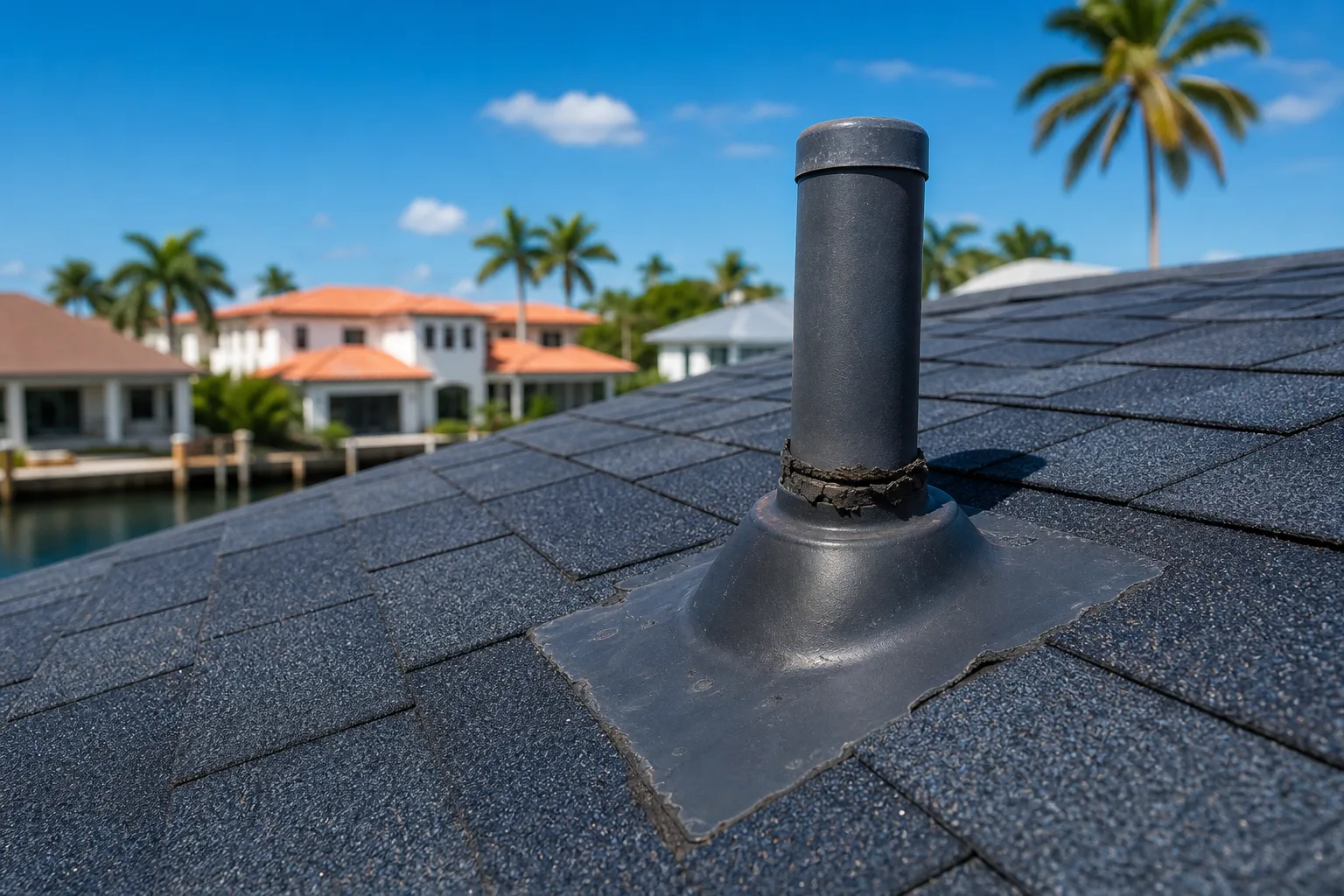
Plumbing vents allow sewer gases to exit through pipes that extend above the roof. Where each pipe passes through the roof covering, the opening must be sealed. On many sloped roofs, that seal includes a flashing base, often called a pipe flange or boot, plus a flexible collar that fits tightly around the pipe.
The exact assembly varies by roof type. A shingle roof commonly uses a metal or plastic base integrated with surrounding shingles. Tile roofs may use specialized flashing and tile work around the penetration. Metal roofs need a compatible flexible boot and fastening method that maintains the roof panel system. Low-slope commercial roofs use penetration flashings designed for the membrane or coating system.
The failure usually begins at one of three locations:
- The flexible rubber or neoprene collar splits, hardens, shrinks, or separates from the pipe.
- The flashing base lifts, cracks, rusts, or loses its proper overlap with the surrounding roof material.
- The roof covering or sealant around the penetration fails, allowing wind-driven rain to enter at an edge rather than through the collar itself.
In South Florida, ultraviolet exposure is relentless. A rubber collar can look acceptable from the street but be brittle at its upper edge, where the sun and heat work on it every day. Afternoon downpours then test the seal, and tropical systems add wind pressure that can force rain under lifted edges.
A vent pipe can also move. Building movement, loose pipe supports in the attic, debris impact, or a branch brushing the pipe may break the tight fit at the boot. The pipe does not need to move far for a small gap to open.
2. Know the warning signs before the leak spreads
Pipe-boot leaks often show up as an intermittent stain rather than a dramatic ceiling collapse. That is why they get missed. Water may run along the underside of the roof deck, framing, or pipe before it reaches a visible ceiling surface.
Start outside, standing on the ground. Look for vent pipes that appear tilted, unusually tall above the roofline, capped with cracked-looking collars, or surrounded by missing or displaced roof material. Binoculars are useful, but do not treat a distant visual check as a diagnosis.
Inside, inspect the ceiling and upper walls below or near bathrooms, laundry rooms, kitchens, and utility areas. A plumbing vent does not always exit directly above the fixture it serves, so use the attic to confirm the pipe route where possible.
Signs worth documenting include:
- A yellow, brown, or gray ceiling ring that enlarges after rain.
- Peeling paint, bubbling drywall, or a soft ceiling area near an upper-floor bathroom or hallway.
- Damp insulation or darkened roof sheathing around a vent pipe in the attic.
- A musty odor that returns after humid or rainy weather.
- Drips that occur during wind-driven rain but not during a light, straight-down shower.
Do not assume every stain near a bathroom is a plumbing leak. If the stain worsens after rainfall, the roof penetration needs attention. If it appears when someone showers or flushes, a plumbing issue may be involved. Sometimes both conditions exist, so a careful inspection matters.
After a storm, take photos from the ground and inside the attic before cleaning or repainting anything. For broader storm-response guidance, our Hurricane Storm Center covers practical first steps and when temporary protection may be appropriate.
3. Inspect safely from the attic and ground
Choose a dry day and avoid an inspection during lightning, high winds, or while the roof is wet. In South Florida, the best window is usually soon after daylight before afternoon heat builds, provided conditions are dry and stable.
From the attic, step only on framing or use a properly supported walkway. Ceiling drywall is not designed to hold your weight. Bring a flashlight, wear shoes with good traction, and watch for exposed wiring, low clearances, and loose insulation.
Locate each vent pipe where it passes through the roof deck. You are looking for evidence around the penetration, not merely at the point directly below it. Check for water tracks, wet insulation, wood discoloration, rusty nail tips, or daylight visible around the pipe. Daylight is not automatically proof of a leak, but it is a reason to have the exterior flashing evaluated.
If the area is damp, do not pull insulation away aggressively or disturb electrical components. Take clear photos. Then note whether the moisture is fresh, whether rain occurred recently, and which room sits below the location.
From ground level, photograph the vent from more than one angle if visibility allows. Compare the pipe boot to neighboring penetrations. One boot that looks sharply cracked, lifted, or distorted compared with others deserves prompt attention.
Do not climb a ladder onto the roof to “just add caulk.” On tile roofs, the risk includes broken tiles and damaged underlayment beneath them. On shingle roofs, stepping on hot, aged shingles can loosen granules or damage tabs. On metal roofs, an incorrect step or fastener repair can create a new leak point. A proper repair must match the roof system, not simply cover the visible gap.
Spotted a leak or missing tiles? Schedule a repair visit
4. Identify the roof-specific repair approach
A sound pipe-boot repair starts with identifying the roof material and the actual source of water entry. The visible crack may be only part of the problem. A roofer should check the condition of the flashing, the surrounding roof covering, the fastening, and the underlayment or membrane beneath the assembly as applicable.
Shingle roofs
On a shingle roof, the repair often requires lifting or replacing surrounding shingles so the new flashing integrates correctly with the water-shedding pattern. The upper portion of the flashing generally needs to be covered by the course above it, while the lower portion sheds water over the course below it. Surface caulk cannot substitute for that overlap.
If your roof has multiple aged vent boots, it may be sensible to inspect all of them at the same visit. Similar materials installed at the same time often weather at a similar rate. Learn more about system-specific concerns on our shingle roof service page.
Tile roofs
Tile work around a vent penetration requires extra care. The tile may need to be removed and reset without cracking it, and the flashing detail beneath it must direct water correctly. A boot replacement that leaves tile unsupported, poorly aligned, or improperly sealed can create a recurring leak even if the collar itself is new.
Tile roofs can hide trouble because the water barrier sits below the tile layer. If the leak has been active for a while, the inspection may need to extend beyond the visible boot. For repair and replacement considerations specific to this system, see our tile roofing page.
Metal roofs
Metal roof penetrations depend on compatible materials and correct fastening. The boot must conform to the panel profile without creating stress points, and sealants must be appropriate for the roofing system. An incompatible sealant or overtightened fastener can fail under heat expansion and contraction.
A proper inspection also checks whether the panel shape, seams, and fasteners near the pipe have been affected. Visit our metal roofing page for more on protecting roof penetrations in this type of system.
Low-slope and commercial roofs
On commercial buildings, plumbing vent penetrations are often flashed into a membrane, modified bitumen system, coating, or other low-slope roof assembly. Ponding water, foot traffic, aging sealants, and movement at the penetration can all expose weak points.
Property managers should document the exact leak location, rainfall conditions, tenant reports, and any recent rooftop work. That information helps isolate whether the source is the vent flashing, a nearby seam, a drain issue, or another penetration. For an assessment of a business or multifamily property, review our commercial roofing services.
5. Decide whether it is a repair, an emergency, or part of a larger roof issue
A failed pipe boot is often repairable when the surrounding roof materials are in good condition and the leak is addressed early. The scope grows when water has damaged the deck, insulation, interior finishes, or the waterproofing layer around the penetration.
Call promptly if you see active dripping, a spreading stain, sagging drywall, wet electrical fixtures, or visible roof material displaced after a storm. Shut off power to the affected area if water is near an electrical fixture and you can do so safely. Do not touch a wet fixture or stand under a sagging ceiling.
It is also time for a broader roof evaluation when more than one penetration is failing, the roof has repeated leaks in different areas, or the surrounding shingles, tiles, or metal details are clearly worn. A pipe boot can be the immediate leak point while also revealing that the roof is nearing a maintenance or replacement decision.
Florida building requirements and permitting can apply when work goes beyond a simple maintenance repair or affects a larger part of the roof system. Requirements can vary by jurisdiction and scope, so the right approach is to use a licensed contractor who can determine what applies to your property and coordinate the work accordingly. For current statewide code resources, consult the Florida Building Code.
During hurricane season, do not wait until a named storm is approaching to discover whether a vent penetration is compromised. Once forecasts become serious, qualified crews, materials, and safe weather windows can become limited. If you want a professional opinion before the season or after a suspicious leak, request a quote with photos and a brief description of when the issue appears.
6. Prevent the next pipe-boot leak
Prevention is mostly about routine observation and timely repair, not coating every penetration with extra sealant. Excess sealant can conceal deterioration and may make future work harder. The goal is a correctly installed, compatible flashing assembly that sheds water naturally.
Make roof penetrations part of your annual property checklist. In South Florida, a practical schedule is to look from the ground before hurricane season, after any significant wind event, and after you notice a new ceiling stain. A second look near the end of the wet season can catch issues that only appear after repeated rain exposure.
Keep tree limbs trimmed back from the roof where feasible. Branches can strike vent pipes, scrape flashing, and deposit debris that holds moisture around roof details. Avoid attaching decorations, wires, antennas, or other items to vent pipes unless the work is designed and approved for that purpose.
If contractors perform HVAC, plumbing, solar, or other rooftop work, inspect the area afterward from the ground and inside the attic. Any trade working near a roof penetration should leave the roof weather-tight, but it is reasonable to document its condition after the work is complete.
Keep records of repairs, storm dates, interior photos, and contractor findings. Insurance coverage depends on the policy, cause of damage, maintenance history, and the adjuster's review. Good records do not guarantee coverage, but they can help establish a clear timeline if a storm-related claim is necessary. For consumer guidance on insurance questions and claims, the Florida Department of Financial Services is a useful starting point.
Common mistakes
The most common mistake is treating a pipe boot like a tube-of-caulk job. Caulk can be part of a professional repair in the right location, but it is not a replacement for sound flashing, a flexible collar, proper overlap, or compatible materials.
Another mistake is waiting because the ceiling stain is small. A small stain can mean a small leak, but water may be traveling away from the actual entry point. The longer moisture remains in the roof assembly, the more likely it is to affect wood, insulation, drywall, and indoor finishes.
Homeowners also sometimes replace only the visible collar without examining the base flashing and adjacent roofing. If the flashing is corroded, lifted, incorrectly integrated, or damaged by wind, the new collar alone may not solve the leak.
On tile roofs, walking directly to the vent without the right access and technique can create cracked tiles that were not there before. On metal roofs, using generic screws or incompatible patch products can damage panel coatings and introduce new failure points.
Finally, do not confuse a dry attic on one day with a confirmed repair. Many penetration leaks require a specific rain direction, intensity, or wind condition to show themselves. A roofer should evaluate the assembly and the evidence, rather than relying only on whether the area happens to be dry during the visit.
Bottom line
Pipe boots are small, but they protect one of the roof's most vulnerable openings. In South Florida, heat, ultraviolet exposure, wind-driven rain, and storm debris can turn a cracked collar or loose flashing edge into an interior leak quickly.
Check vent penetrations from the ground, inspect the attic safely after suspicious rain, and act on stains or moisture before they spread. A targeted professional repair can often solve the issue when caught early. If you have a suspected vent leak, Millennium Makeover can assess the roof system and recommend the appropriate next step. Start with a free instant estimate or contact our team for a direct inspection request.
Spotted a leak or missing tiles?
Small problems get expensive fast in the Florida sun. Get it looked at by a local crew before the next storm.
Frequently asked questions
How long do roof pipe boots last in South Florida?
Service life varies by boot material, installation quality, roof type, sun exposure, and storm exposure. South Florida heat and ultraviolet exposure can age flexible collars faster than owners expect, so visual checks before hurricane season and after major storms are worthwhile.
Can I repair a cracked pipe boot with roof cement or caulk?
A temporary surface seal may slow minor water entry in limited situations, but it does not correct a cracked collar, failed flashing, or improperly integrated roof materials. A lasting repair typically requires evaluating and replacing the failed component using materials compatible with the roof system.
Why does a pipe boot leak only during heavy rain or wind?
Wind-driven rain can enter small gaps that a light, straight-down rain does not reach. A lifted flashing edge, split at the upper collar, or a gap caused by pipe movement may only leak when rain hits from a particular direction.
Is a pipe boot leak covered by homeowners insurance?
Coverage depends on your policy, the cause of damage, maintenance condition, deductible, and the insurer's investigation. Sudden storm damage may be handled differently from gradual wear, so photograph the condition, save repair records, and review your policy or speak with your insurer.
Do pipe boots need to be replaced during a roof replacement?
In most cases, replacing aging penetration flashings and boots during a reroof is the practical approach because the surrounding roof materials are already being removed and rebuilt. The exact scope should be confirmed by the contractor based on the roof system, condition, and applicable code requirements.