When Should a Flat Roof Be Repaired Instead of Replaced?
In this article
TL;DR: Repair a flat roof when damage is limited to a small, clearly defined area and the rest of the membrane is still structurally sound. Consider replacement when leaks keep coming back, the system is past its useful life, or deck damage is found under the membrane. A proper inspection separates these two paths quickly.
At a Glance
| Factor | Lean Toward Repair | Lean Toward Replacement |
|---|---|---|
| Damage area | Less than 25% of total surface | More than 25-30% of surface |
| Membrane age | Under 10-12 years (TPO/mod bit) | Near or past rated lifespan |
| Leak history | First or second isolated event | Recurring leaks, multiple locations |
| Deck condition | Dry, firm, no soft spots | Soft spots, rot, or water staining below |
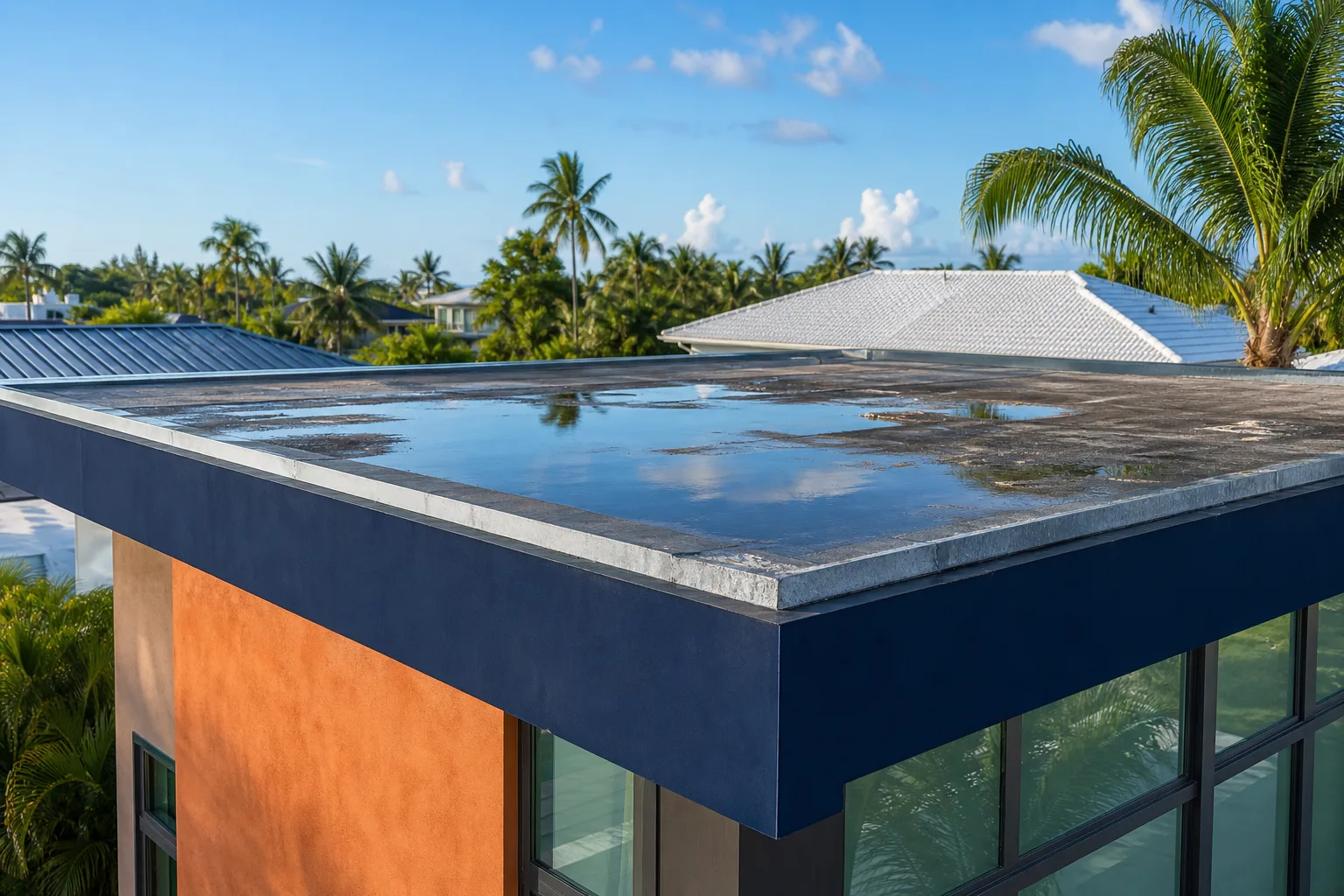
| Ponding water | Minimal, drains within 48 hrs | Chronic standing water causing membrane fatigue |
| Prior repairs | None or one small patch | Multiple patches layered over years |
What I Actually Check on a Flat Roof Inspection
Before anyone can give you a straight answer on repair versus replacement, the membrane needs to be walked. Here is the sequence I follow on every flat roof estimate in South Florida.
Core sample check. On modified bitumen and built-up roofs, a core sample punched through the membrane tells you how many layers are present and whether moisture has reached the insulation board or deck. Wet insulation is a clear signal that replacement is the more cost-effective path, because wet insulation never fully dries under a sealed membrane.
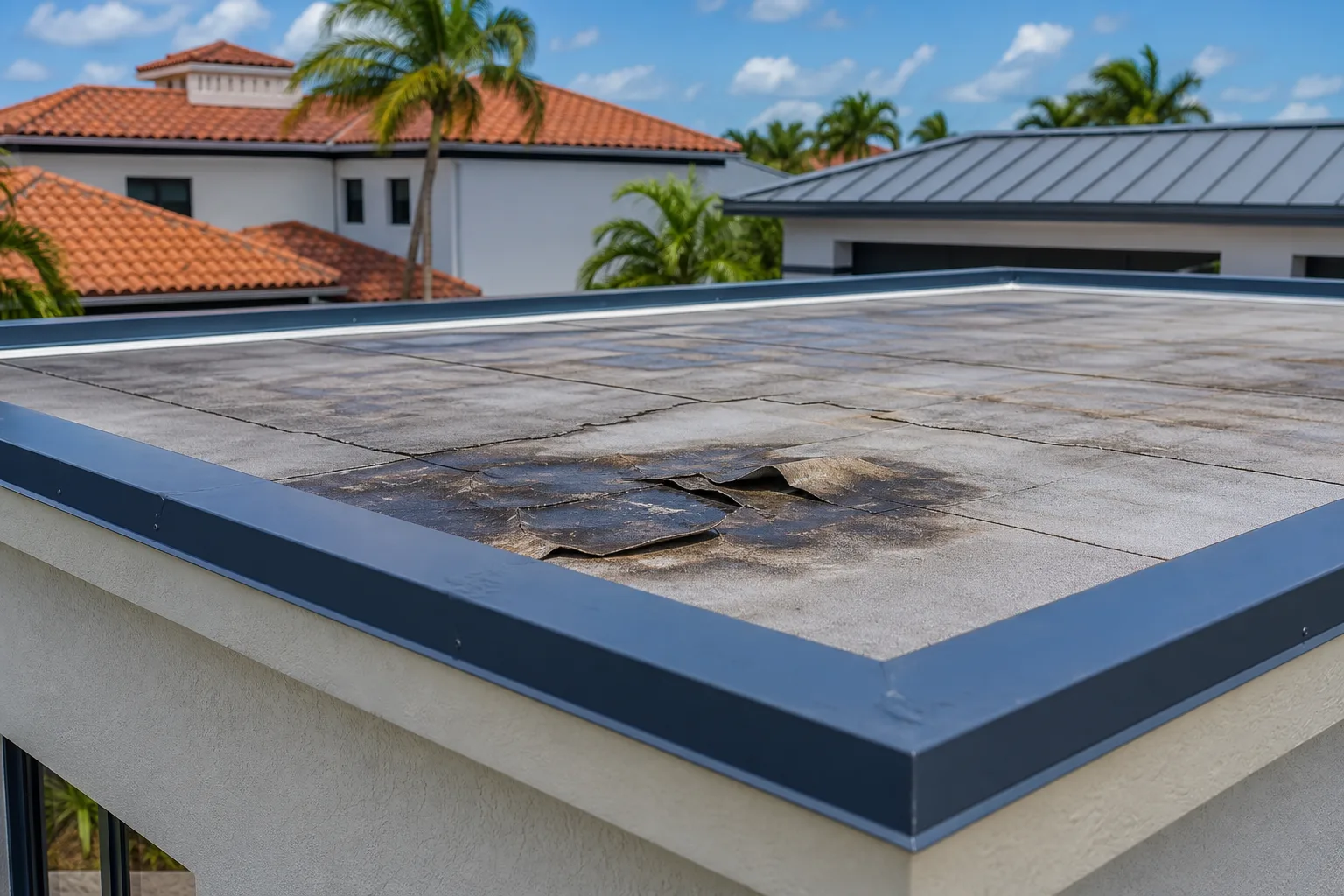
Seam and flashing condition. Most flat roof leaks originate at seams, termination bars, or base flashings around parapets and penetrations, not in the field of the membrane itself. If seams are lifting but the field membrane is intact, targeted repairs and reflashing often solve the problem. See also: replacing flashing during a reroof.
Soft spot mapping. I walk a grid pattern across the entire roof and note any give underfoot. Soft spots indicate wet deck or wet insulation below. More than a few scattered spots means the moisture intrusion has been going on for a while and deck replacement is likely involved. That changes the math significantly.
Ponding inventory. Standing water that sits longer than 48 hours after rain accelerates membrane breakdown and adds structural load. Chronic ponding usually means the drain system or slope is inadequate. Repairs will not fix the root cause. More detail on what standing water does over time is in this article on flat roof ponding.
Interior evidence. Staining, efflorescence, or bubble damage on ceilings below is useful context but does not replace a roof-level inspection. Stains can be old. The roof surface tells the current story.
The Case for Repair
Repair is the right answer when the damage is genuinely isolated. A single blister from South Florida heat, a lifted seam at one parapet, or a failed pipe boot are all discrete problems with discrete fixes. Pipe boot failures are a common source of leaks that look worse than they are.
Repair also makes financial sense when the membrane has significant remaining life. TPO and modified bitumen systems installed correctly in Florida typically carry 15-20 year lifespans. If yours is eight years old and in otherwise good condition, replacing it now wastes that remaining value.
Finally, repair is appropriate as a legitimate short-term bridge when budget constraints are real and a full replacement is planned within one to two years. Document the repair scope clearly so the next contractor understands what was done.
Spotted a leak or missing tiles? Schedule a repair visit
The Case for Replacement
Replacement becomes the smarter spend in a few specific situations.
Multiple repair cycles. Every patch on a flat roof is a future seam. When a membrane has been patched in several locations and leaks keep appearing in new spots, the membrane itself has lost integrity. You are chasing the problem rather than solving it.
End-of-life membrane. A 20-year-old modified bitumen roof that is cracking, alligatoring, or granule-stripped has used up its service life. Repairing an end-of-life membrane is like patching a tire with wornthrough sidewalls.
Deck damage. When soft spots reveal rot or delamination in the roof deck, you have to open the membrane anyway to replace decking. At that point the cost difference between repair and replacement often narrows, and a new membrane installed over new decking performs far better than a patch. Roof deck damage caught late is one of the most common drivers of unexpected replacement costs.
Insurance or permit requirements. Florida and local municipal codes may impose permitting requirements depending on repair scope and jurisdiction, your contractor should verify the specific rules that apply to your building before work starts. Unpermitted work creates its own problems at resale. More on that in this article on unpermitted roof work.
How to Compare Bids Without Getting Fooled
Flat roof bids are easy to compare badly. Here is what to look for.
- Scope in writing. Does the bid specify what is being repaired or replaced, including deck inspection, flashing work, and drain clearing? Vague bids invite scope creep arguments later.
- Warranty terms. A repair warranty of one to two years is reasonable. A replacement should carry a manufacturer membrane warranty plus a separate workmanship warranty.
- Layers being removed. Florida and local codes may limit the number of roof layers permitted, confirm the applicable rules with your contractor and local building department. If a second layer is being proposed over an existing membrane, ask specifically whether code allows it for your building type and whether it voids the new membrane warranty.
- Drainage plan. If ponding is part of the problem, the bid should address it. A new membrane over a flat field with no drainage improvement is a short-term fix.
For commercial properties especially, the scope difference between bids is where money gets lost. Our commercial roofing page has more on what to expect from a commercial flat roof estimate.
Verdict
Repair when damage is isolated, the membrane has useful life remaining, and the deck is dry. Replace when leaks are recurring, the membrane is aged out, deck damage is found, or the repair scope is broad enough that replacement costs are comparable.
The honest answer requires a real inspection, not a phone estimate. If you want a clear picture of where your flat roof stands, request a quote or use the instant estimate tool to start the conversation. For storm-related damage specifically, the Hurricane Storm Center is the right starting point.
Spotted a leak or missing tiles?
Small problems get expensive fast in the Florida sun. Get it looked at by a local crew before the next storm.
Frequently asked questions
How long does a flat roof repair typically last in South Florida?
It depends on the repair type and the condition of the surrounding membrane. A properly executed seam repair or flashing replacement on a roof with remaining life can last five or more years. A patch on an aging, brittle membrane may only hold one to two seasons before adjacent areas start failing.
Can a flat roof be repaired in sections, or does the whole thing need to come off?
Sectional replacement is a legitimate option when one portion of the roof has sustained damage but the rest is sound. A contractor removes and replaces just the affected area with new membrane, insulation, and flashing. This approach works best when sections are clearly delineated and the rest of the membrane passes inspection.
Does homeowner or commercial property insurance cover flat roof repairs in Florida?
Coverage depends on the cause of damage and the policy terms. Storm-related damage is generally covered if the roof was maintained and in serviceable condition before the event. Damage attributed to wear, aging, or lack of maintenance is typically excluded. A documented inspection report helps when filing a claim.
What flat roof membrane types are most common in South Florida?
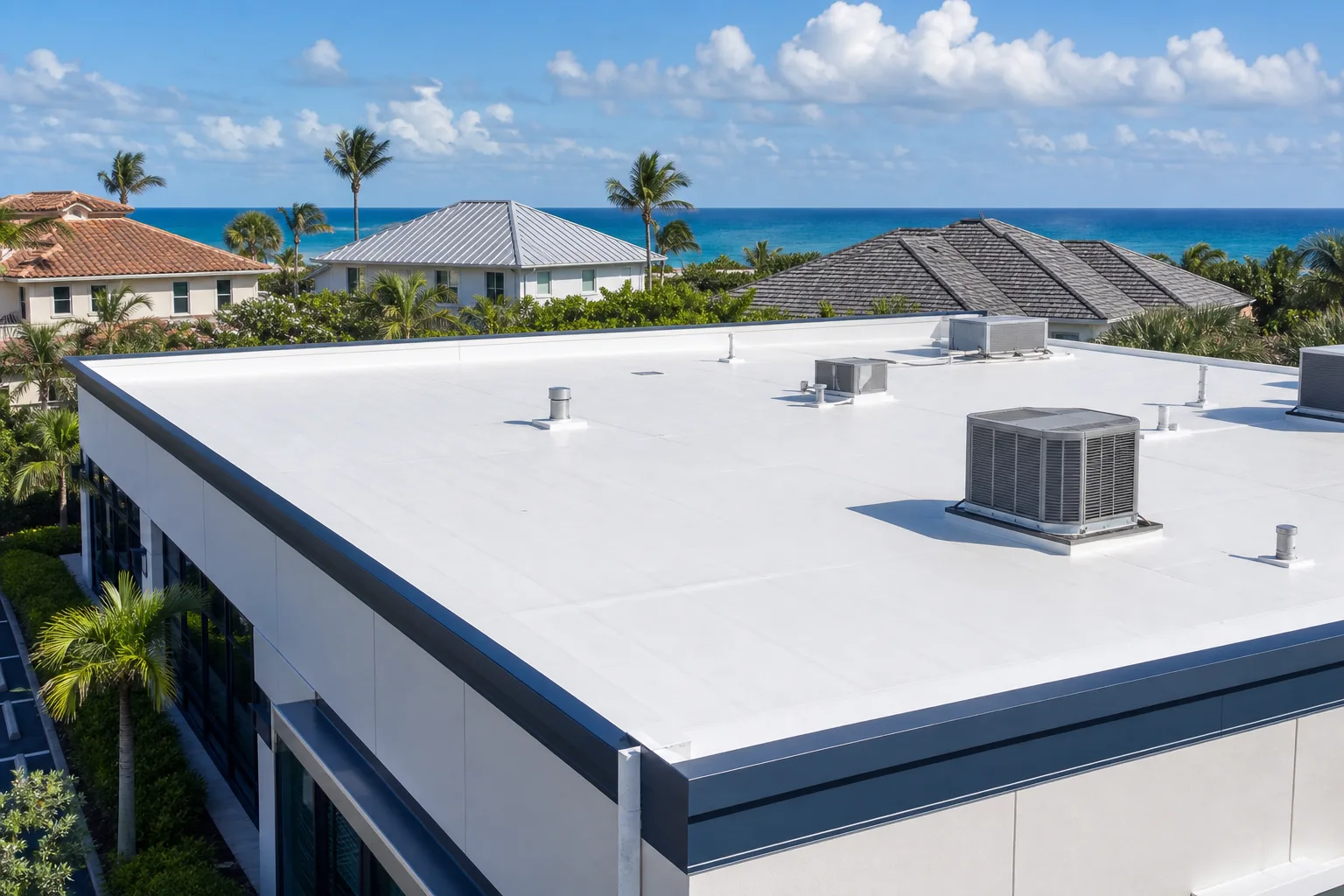
Modified bitumen and TPO are the most common systems on South Florida residential and commercial flat roofs. Modified bitumen is a two-layer system with a long track record in hot climates. TPO is a single-ply thermoplastic membrane that reflects heat well, which matters here given the UV exposure and temperature load.