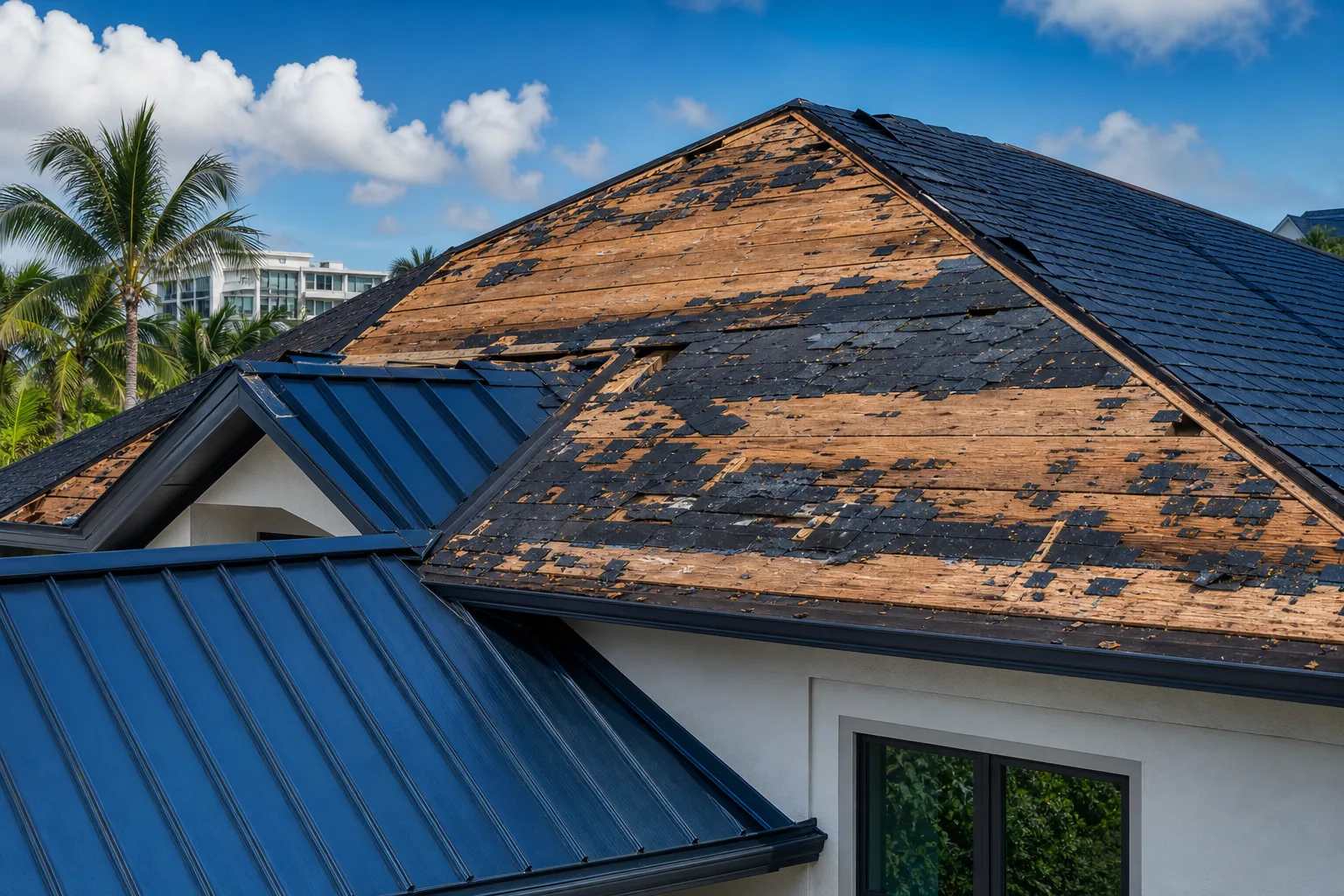
Can You Stay Home During a Roof Replacement?

In this article
TL;DR: Yes, you can usually stay home during a roof replacement, and most of our customers do. But it's loud, it shakes the house, dust gets into the attic and vents, and you'll want a plan for pets, kids, work calls, and parking before the crew shows up. Here's what to actually expect and how to set your house up so the week goes smooth.
What you need
Before tear-off day, get these squared away:
- A clear driveway and street access. Dumpsters, material delivery trucks, and a nail magnet sweep all need room. The dumpster alone can take up the full width of a standard two-car driveway, and material pallets often get staged on the lawn or apron. If you're in a tight neighborhood in Delray Beach or Lake Worth with street parking only, tell your contractor early so they can coordinate delivery windows and avoid blocking neighbors or fire hydrants.
- A plan for pets. Dogs and cats do not handle roof-tear-off noise well. The vibration through the walls and ceiling is disorienting for animals, and the constant banging can trigger anxiety, excessive barking, or destructive behavior that lasts days after the job ends. Board them, send them to a friend's house, or set up the quietest interior room you have with a fan running for white noise. If your dog is crate-trained, a interior bathroom or laundry room away from the roofline is often the best spot.
- Attic prep. Anything stored up there, boxes, holiday decorations, old insulation, bins of clothes, should be bagged or moved if possible. Tear-off shakes dust, old insulation fibers, and debris loose from the decking and it will fall through gaps, landing on whatever is stored below. Even a light plastic drop cloth over shelving units can save you a major cleanup headache.
- A work-from-home backup plan. If you're on video calls, expect to reschedule anything important during active tear-off hours, which typically run from early morning until early afternoon. Nail guns and hammering do not stay quiet for conference calls, and the vibration can actually rattle your desk setup and interrupt recordings. Consider booking a co-working space, working from a coffee shop, or front-loading your meetings to early morning before the crew arrives.
- Window and vehicle protection. Cars in the driveway should be moved to the street or a neighbor's driveway, or covered with a moving blanket and tarp. Falling debris, dropped nails, and sliding shingles happen even with a careful crew, especially on steeper-pitched roofs. One errant roofing nail through a windshield or into a tire is an avoidable expense.
- Realistic expectations on bathrooms, water, and power. Your water and electricity generally stay on throughout the job. Bathrooms work fine. What changes is noise, vibration, and foot traffic on your property, not your utilities. The one exception is if your job involves electrical work at the roof penetrations or a solar system disconnect, which your contractor should flag in advance.
If you're weighing whether to stay or go, it helps to first understand the scope of your job. A straightforward shingle roof replacement moves faster than a full tile roof tear-off, which involves heavier loads, more crew traffic, and more debris management. Concrete or clay tiles are heavy enough that crews work in stages, stacking removed tiles or loading them directly into a dumpster, which adds time and noise. Metal roofing jobs can run longer too, especially standing seam, because each panel is custom-cut and seamed on site. Ask your contractor for a day-by-day breakdown before you commit to staying home the whole time.
Step 1: Talk to your contractor about the real timeline
Don't assume every roof replacement takes the same number of days. A single-story home with a simple shingle roof might be a one to two day job. A larger tile roof, or anything with multiple roof planes, dormers, or skylights, can stretch to a week or more. A home with extensive wood rot or decking damage discovered during tear-off can add an unexpected day as crews replace rotted plywood before laying new underlayment.
Ask specifically:
- What day is tear-off? This is the loudest, dirtiest, most disruptive day of the entire job. Everything else, laying underlayment, installing new shingles or tiles, flashing work, is comparatively tolerable. If you can only arrange to be out of the house for one day, make it tear-off day.
- Will they work straight through or is there a dry-in period? Some jobs, particularly larger roofs or those with complex geometry, involve a dry-in phase where the crew lays synthetic underlayment over the bare decking and stops for the day. Your roof will be weatherproofed but not finished, and the crew will return the next morning. Knowing this prevents the anxiety of seeing your bare decking at 5pm and wondering if it's going to rain.
- What's the crew's daily start time? South Florida crews often start early to beat the heat, sometimes as early as 6:30 or 7am. If you weren't expecting someone on your roof at sunrise, that's a jarring way to start the morning. Getting an exact start time lets you set your own alarm and have pets secured and vehicles moved before the first boot hits the ladder.
- How many crew members will be on site? A larger crew finishes faster but means more foot traffic around your property, more vehicles parked outside, and more coordination needed. A smaller crew might work two or three days instead of one, which spreads the disruption out over more days but at lower intensity each day.
Getting this information in writing, even informally through a text or email confirmation, helps you plan which days you absolutely need to be elsewhere and which days are just manageable background noise.
Step 2: Set up a quiet zone inside the house
Even if you plan to stay home every day of the project, you'll want to designate one room as your anchor. Choose an interior room, meaning no exterior walls directly under the roofline, and set it up before the crew arrives. A first-floor interior room in a two-story home is ideal. A bedroom in the center of a single-story home works too.
Set up that space with:
- Noise-canceling headphones. Even the best ones won't block out full tear-off hammering, but they'll take the edge off during lighter work phases. A pair of over-ear headphones combined with a white noise app running on your phone can make a meaningful difference for focus work.
- A power strip and extension cord. You're going to be in one room more than usual, and you'll want your laptop, phone charger, and any other devices close by rather than hunting for outlets.
- Snacks and drinks staged in advance. The constant foot traffic around the house makes casual trips to the kitchen feel more disruptive. If you're trying to stay focused and out of the way, it helps to have what you need in your workspace already.
- A do-not-disturb signal for the front door. Crew members may knock to check in, ask questions, or flag something that needs your attention. That's appropriate and expected. But delivery drivers and others don't need to ring the bell repeatedly. A simple note on the front door, "Construction in progress, please knock loudly" or "Text for deliveries", saves small frustrations.
Want to know what your roof actually needs? Get a free estimate
Step 3: Walk the property before and after each workday
One habit that protects both you and your contractor is a quick property walkthrough. Before the crew arrives on day one, take photos of your driveway, yard, landscaping, and any vehicles you're leaving on-site. This creates a baseline that documents existing damage and prevents any confusion after the fact.
At the end of each workday, do a brief sweep of the yard and driveway before letting pets out or letting kids play outside. Roofing nails are the number one post-job hazard. Even crews that use magnetic nail sweepers miss nails in grass, mulch beds, and gravel areas. A slow walk with your eyes down takes five minutes and can prevent a punctured tire or a trip to urgent care.
Also check your gutters and downspouts. Granules from shingles and debris from tile removal migrate heavily into gutters during tear-off. If your crew isn't doing a gutter flush as part of their cleanup, run a hose through them yourself at the end of the first day so you don't end up with clogged downspouts during the first rain after installation.
What it actually feels like inside the house
The most common thing homeowners say after staying home during a roof replacement is that tear-off day was much louder and more physical than they expected. The vibration is what surprises people most. You don't just hear the work, you feel it through the floors, the walls, and your furniture. Picture frames shake. Cabinet doors rattle open. Anything loose on a shelf will fall.
Once tear-off is done, the job becomes dramatically more livable. Laying underlayment and installing new shingles or metal panels is still noisy, but it's rhythmic rather than jarring. Most people find they can adapt to it within an hour or two and get actual work done.
The other thing that surprises homeowners is how much dust comes through. In older South Florida homes especially, attic insulation and decades of accumulated debris shake loose during tear-off and migrate down through light fixtures, exhaust fans, and any gaps in the ceiling drywall. Running your HVAC fan on circulate rather than auto during tear-off day can help filter some of that particulate, but plan on running your air filter and doing a light clean of surfaces on the first floor after the crew leaves.
The bottom line
Staying home during a roof replacement is completely doable, and most homeowners in our experience prefer it, they like being on-site to answer questions, see progress firsthand, and know what's happening with one of the biggest investments in their home. The key is treating it like any other disruption that requires a bit of prep rather than assuming it'll just blend into a normal workday. Set up your quiet zone, secure your pets, move your vehicles, get the timeline in writing, and give yourself permission to step out during the worst of tear-off day. Everything after that is manageable.
Want to know what your roof actually needs?
Millennium Makeover has been roofing South Florida homes and businesses since 2005. Get a straight, no-pressure estimate from a licensed local crew (CCC1326328).
Frequently asked questions
Do I need to turn off water or electricity during a roof replacement?
No, in almost all cases your water and electricity stay on throughout the job. The only exception is if a specific repair requires temporary access near an electrical line or fixture, and your contractor will flag that ahead of time.
How loud is roof tear-off, really?
Loud enough that phone calls and video meetings are tough during active tear-off hours, especially the first day. Expect hammering, prying, and material being tossed into a dumpster or down a chute repeatedly through the morning and into the afternoon.
Should I board my pets during a roof replacement?
It's a good idea, especially for anxious dogs and cats. If boarding isn't an option, set up a quiet interior room far from the roofline with white noise running, and keep pets away from yards and driveways where crews are working.
How many days will I need to plan around?
It depends on the roof type and size. A simple shingle roof might take one to two days, while a larger tile or metal roof replacement can run a week or more, especially with weather delays common in South Florida's storm season.
What happens if it rains mid-project?
A reputable crew dries in the roof with underlayment before leaving for the day and pauses work if storms roll in, which is standard practice, not a red flag. Rushing to finish ahead of weather is far more likely to cause leaks and problems later.
Is it safe for kids to be in the yard during the job?
No, active work zones should be off-limits to kids and pets during work hours. Falling debris, dropped nails, and ladder traffic make the yard genuinely unsafe until the crew wraps for the day and does a cleanup sweep.