What the Tear-Off Phase of a Roof Replacement Actually Reveals
In this article
TL;DR: Tear-off is the phase where old roofing material is stripped down to bare decking. It routinely exposes hidden rot, moisture damage, failed flashing, and inadequate ventilation that no inspection from above could catch. What gets found at this stage determines the true scope of your replacement.
What You Need
- A licensed roofing contractor with a valid Florida CCC license on file
- A written scope of work that explains how hidden damage will be handled and priced
- Basic knowledge of what gets inspected during tear-off so you can ask the right questions
Before the first shingle or tile goes on, your crew needs access to the substrate below. Tear-off makes that possible. It is not just demolition. It is the first honest look at what your roof system has actually been doing for the last 15 to 25 years.
If a contractor skips a thorough tear-off inspection, or rushes through it to hit a daily shingle count, problems get buried under new material. That is how a roof that should last 30 years fails in ten.
Step 1: Strip the Field Material Down to Deck
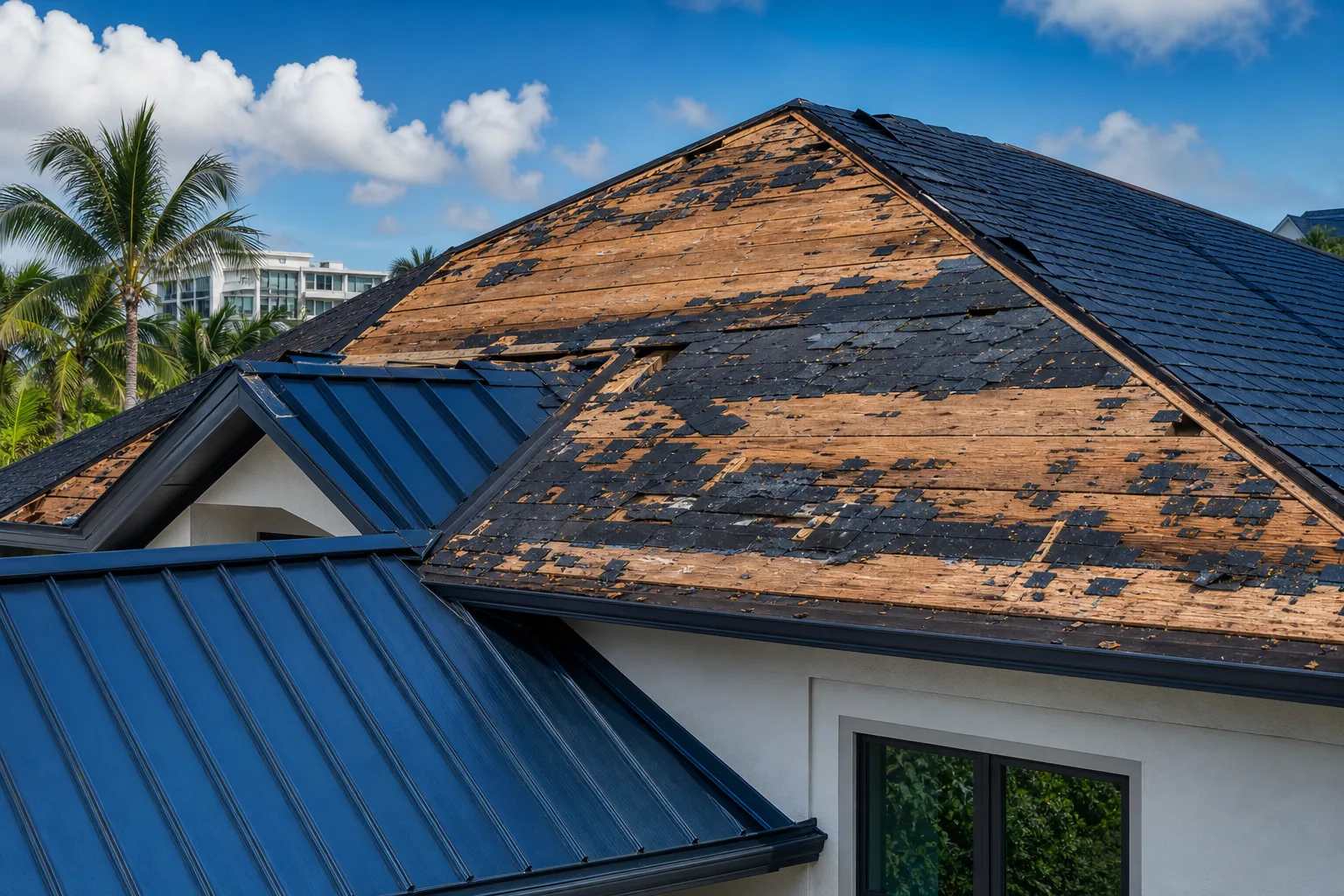
The crew removes shingles, tiles, or membrane in sections, working from ridge to eave. On tile roofs this is heavier, slower work than on shingle roofs, but the principle is the same: everything comes off before anything gets assessed.
Worn-out underlayment comes off with the field material. In South Florida, that underlayment takes a beating from UV, heat cycling, and storm moisture. By the time a roof is ready for replacement, the underlayment is often brittle, torn, or fully degraded in spots, even if the tiles above looked intact from the ground.
Step 2: Inspect the Roof Deck Board by Board
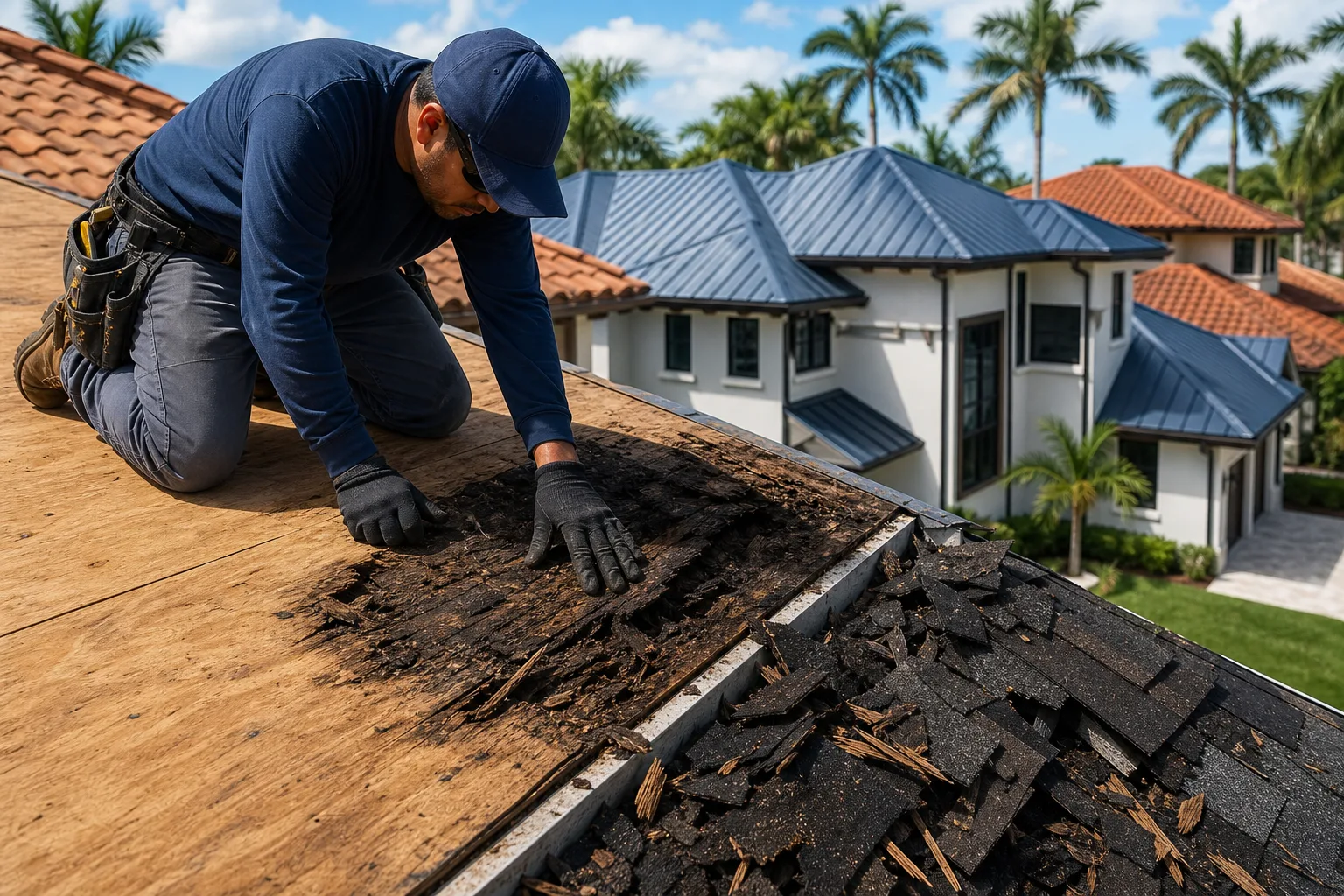
This is the critical step. Once the deck is bare, a good roofer walks it systematically, pressing and probing every section. Soft spots, bounce, dark staining, and visible rot are all signs that decking needs to come out.
In South Florida, the most common culprits are:
- Chronic slow leaks around pipe boots, valleys, or improperly flashed penetrations
- Condensation damage from poor attic ventilation, which is widespread in this climate
- Storm-driven moisture that got under field material at ridge lines or rakes
Partial deck replacement is common and normal. A reputable contractor should document every damaged section with photos before replacing boards, so you can see exactly what was found and why it mattered. You can read more about what that inspection covers in our post on roof decking water damage in Florida.
Step 3: Evaluate the Flashings and Penetrations
With the field material gone, every flashing point is exposed. Step flashing along walls, apron flashing at chimneys, pipe boot collars, skylight curbs. These are the highest-failure points on any South Florida roof.
Correded, unseated, or improperly lapped flashing gets replaced at this stage. If a contractor reuses questionable flashing to save a few minutes, you will likely be calling for roof repairs within a few years. Good tear-off practice means evaluating every penetration as if water will find any weakness, because it will.
Want to know what your roof actually needs? Get a free estimate
Step 4: Check Fascia, Drip Edge, and the Deck Edge
The deck edge and fascia board are often missed because they sit at the perimeter rather than the field. South Florida's heat and humidity cause fascia rot that is invisible until the drip edge comes off. A rotten fascia cannot hold drip edge securely, and a loose drip edge is an open door for wind-driven rain.
If you want to understand why drip edge installation matters beyond just looks, see our post on what drip edge does and why some Florida roofers skip it.
Step 5: Assess Ventilation Before Anything Goes Back On
With the deck bare and accessible from above, it is the best possible time to evaluate intake and exhaust ventilation. Blocking in soffits, adding ridge vent, or correcting a ventilation imbalance is far cheaper and cleaner to do now than after new material is installed.
Poor attic ventilation is one of the main reasons South Florida roofs underperform their rated lifespans. Heat and moisture build in the attic, cook the underside of the deck, and degrade new underlayment from below. Fixing ventilation at replacement time is one of the highest-value decisions you can make. Our guide on ridge vents and soffit vents for Florida roofs explains how the two systems work together.
Common Mistakes
Covering over soft decking. Some contractors will nail down new material over a marginally soft spot to avoid a conversation about added cost. Ask to see photos of the deck before new material goes on.
Reusing old pipe boots and flashing. Old rubber pipe boots are frequently cracked at the collar from UV exposure. A new roof with a ten-year-old boot is a leak waiting to happen. See our post on pipe boot failures and South Florida roof leaks for more on this.
Skipping a deck walk entirely. On rushed jobs, a crew lead may approve the deck from the ladder rather than walking every section. If the contractor cannot show you documented findings from the deck inspection, ask why.
Not accounting for hidden damage in the original estimate. Storm-chaser outfits and lowball bids often quote a tight number with no allowance for deck replacement or flashing work. Then the add-ons hit you mid-job when you have no leverage. A honest estimate should explain how discovered damage will be priced. Our post on how to read a roofing estimate line by line walks through what to look for.
Bottom Line
Tear-off is not a formality. It is the one opportunity to see your roof system as it actually is, not as it appeared from the driveway. Hidden rot, failed flashing, ventilation problems, and edge deterioration all come to light at this phase. A contractor who rushes it or skips systematic documentation is not doing the job right.
If you are planning a replacement, ask your contractor upfront how they handle discoveries during tear-off and how they price deck repairs. That conversation tells you a lot about who you are dealing with before any work starts.
Ready to get a straight answer on your roof's condition? Request a quote or get a free instant estimate from Millennium Makeover. We have been doing this in South Florida since 2005 and we are not going to bury problems under new material.
Want to know what your roof actually needs?
Millennium Makeover has been roofing South Florida homes and businesses since 2005. Get a straight, no-pressure estimate from a licensed local crew (CCC1326328).
Frequently asked questions
Can a roofer install new shingles over old ones without a tear-off?
In most of South Florida, including Miami-Dade and Broward counties, which fall within the High-Velocity Hurricane Zone (HVHZ), installing new shingles over an existing layer is not permitted under the Florida Building Code. Some non-HVHZ jurisdictions elsewhere in Florida may have different local provisions, but you should verify requirements with your local building department before assuming re-roofing over an existing layer is an option. Regardless of what local code may allow, full tear-off is strongly recommended: without it you cannot inspect or repair the deck, and problems get sealed underneath new material. Most reputable South Florida contractors default to full tear-off for this reason.
How long does the tear-off phase typically take?
On an average residential shingle roof, tear-off can be completed in a few hours to a full day depending on roof size, pitch, and how many layers are coming off. Tile roofs take longer because the material is heavier and must be removed more carefully. Weather and crew size also affect timing.
Will I be charged more if damaged decking is found during tear-off?
Almost certainly yes if significant sections need replacement, which is why your written contract should spell out the per-sheet or per-square cost for additional decking before work starts. That way there are no surprises mid-job and you can verify what was actually replaced.
Who decides what stays and what gets replaced during tear-off?
The contractor's lead crew member or project manager makes those calls on-site, but a transparent contractor will document findings with photos and loop in the homeowner before proceeding with significant added scope. Ask upfront how that communication process works before signing a contract.