How Roofers Decide Whether to Overlay or Tear Off a Shingle Roof
In this article
TL;DR: Florida building code limits most roofs to two shingle layers. If a second layer already exists, a full tear-off is required. Even with only one layer, poor decking, moisture damage, or significant structural concerns will push a roofer toward tear-off regardless of cost savings. An overlay is only appropriate when the existing layer is flat, dry, and code-compliant.
What You Need
- Access to the attic for a moisture and decking check
- Knowledge of how many shingle layers the roof currently has
- A copy of the local permit or original roofing invoice if available
- Understanding of the Florida Building Code re-roofing requirements (consult your local jurisdiction for the specific adopted version and any Florida amendments)
Step 1: Count the Existing Shingle Layers
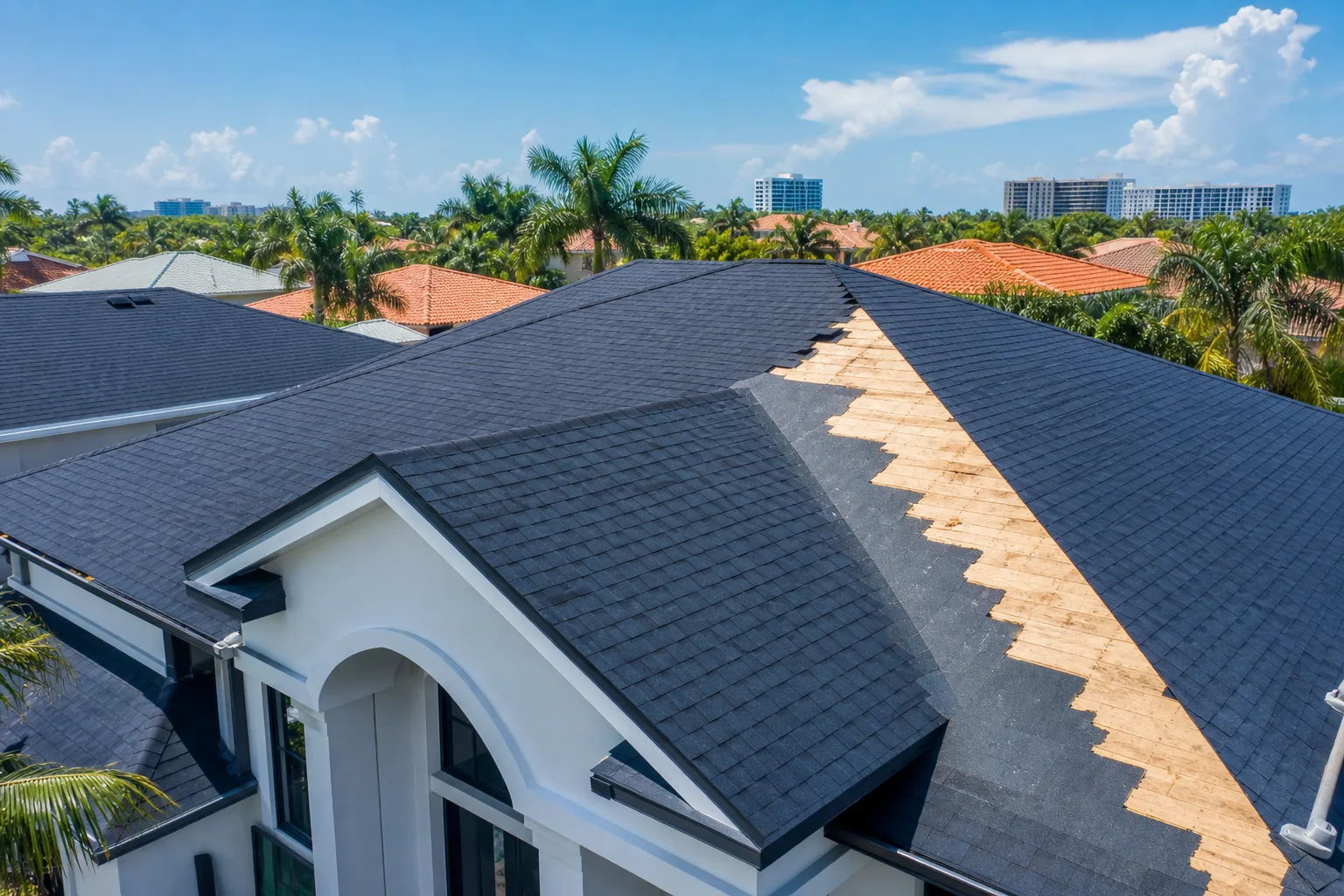
The first thing I do on any shingle estimate is check the edge of the roof at the eave. You can count layers there without removing anything. One layer of shingles over the original decking is the starting point for the decision. Two or more layers means the conversation is over: Florida Building Code requires a full tear-off before new shingles go down.
This rule exists because stacking weight matters in hurricane country. Multiple shingle layers add load that older roof structures were not always engineered to carry, and wind uplift calculations for South Florida assume a single layer of finished roofing.
Step 2: Assess the Condition of the Existing Layer
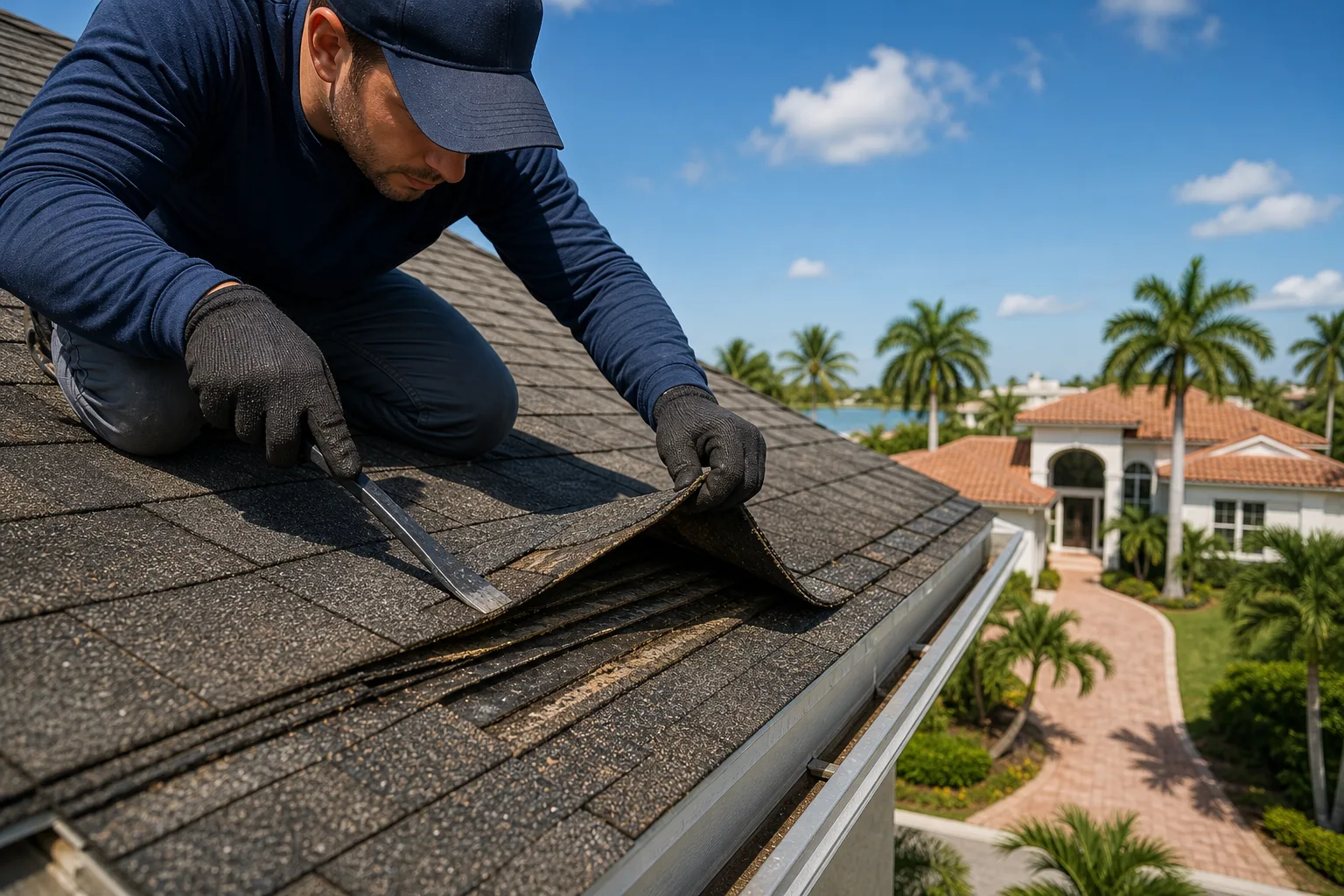
Even with only one layer present, an overlay is only appropriate if the existing shingles are reasonably flat and stable. I look for:
- Cupping or curling. Cupped shingles create an uneven base. New shingles laid over them will buckle and telegraph the distortion through the finished surface.
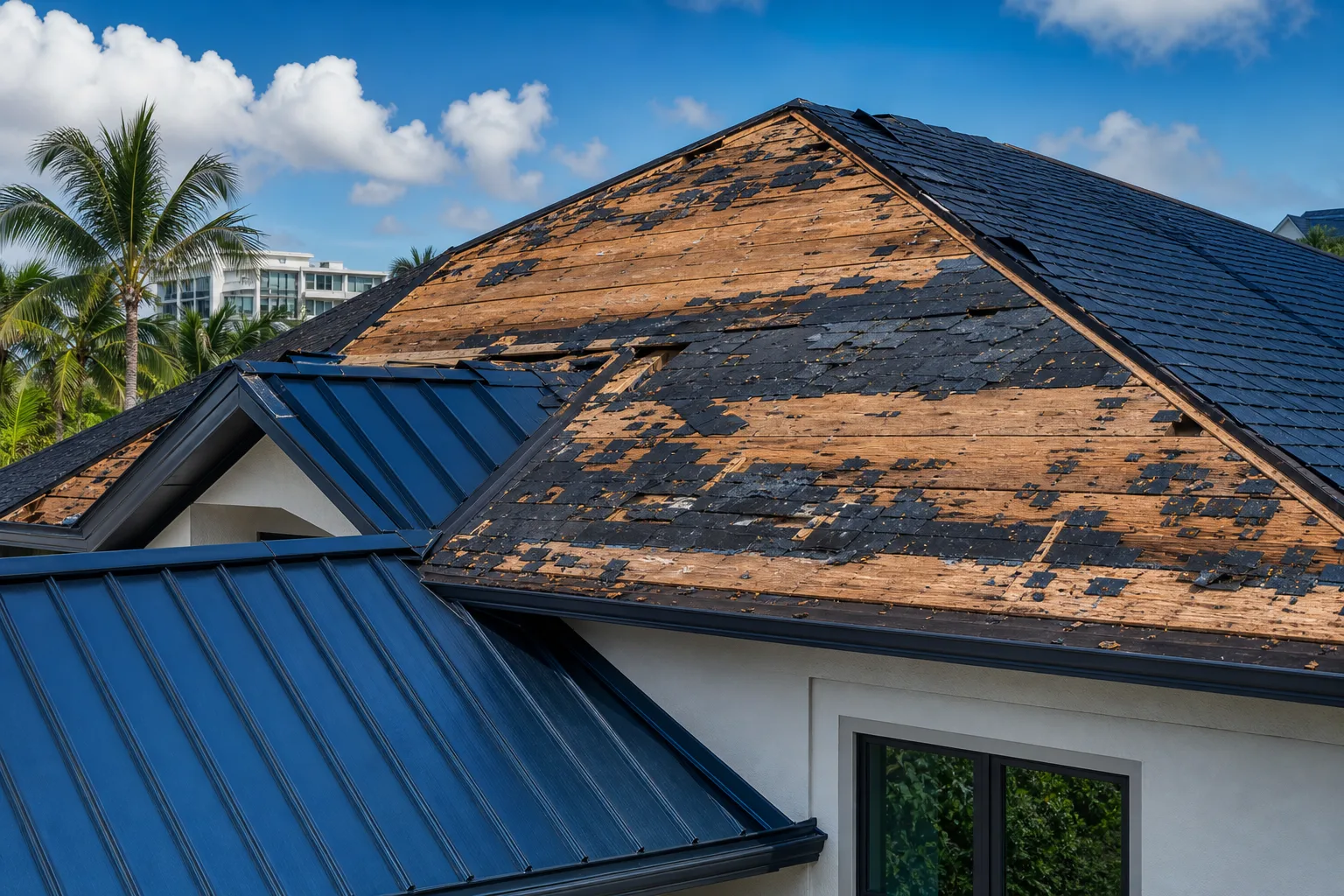
- Widespread granule loss. Heavy granule loss means the mat is exposed and the shingle is near end-of-life. An overlay on top does not fix what is already degraded.
- Missing or lifted shingles. Patches of missing material signal that fastening has failed across the roof, not just in one spot.
If more than roughly a third of the existing layer shows these problems, tear-off is the more honest recommendation. An overlay in that condition will underperform and may not qualify for a manufacturer warranty on the new shingles.
Step 3: Inspect the Roof Decking
This is the step that separates a thorough estimate from a number on a napkin. Decking condition cannot be fully confirmed without removing the existing shingles, but there are reliable indicators before tear-off begins.
From the attic: I check for soft spots, staining, mold lines, or daylight visible between decking panels. Any of those findings changes the recommendation immediately. A wet or delaminating deck cannot hold fasteners properly, which is a code and safety issue. See what a failing roof looks like from inside the attic for a detailed breakdown of what those signs look like.
From the roof surface: Walking the field of the roof and feeling for spongy areas underfoot is a reliable secondary check. Soft spots indicate decking that has absorbed moisture and begun to delaminate.
If decking problems are confirmed or strongly suspected, a tear-off is necessary regardless of layer count. Damaged decking has to be replaced, and you cannot do that without removing the shingles on top.
Want to know what your roof actually needs? Get a free estimate
Step 4: Check Flashing and Penetration Conditions
An overlay leaves all existing flashings in place. That is a limitation worth understanding. Valley metal, drip edge, pipe boot flashings, and any step flashing at walls or chimneys stay buried under the new layer.
If existing flashings are corroded, improperly installed, or already leaking, an overlay will not solve those problems. Tear-off lets the crew inspect every flashing location, replace what needs replacing, and start with a clean system. For homes with known leak histories, I nearly always lean toward tear-off for this reason alone. Related reading: how roofing contractors waterproof around chimneys.
Step 5: Factor in Permit and Insurance Requirements
South Florida permits for re-roofing require the contractor to document the scope of work. Some insurance carriers, particularly after storm events, may prefer or recommend tear-off as part of a claim. If the roof damage was wind or water-related, check with your adjuster and review your policy before assuming an overlay is an option , your adjuster can clarify whether your specific policy has any requirements regarding installation method. The Hurricane Storm Center has additional context on storm-related roofing decisions.
Overlays also carry a weight caveat on the permit: the contractor must confirm the structure meets load requirements for the added layer. In practice, most standard residential framing in South Florida handles a second layer without issue, but it is a required check, not an assumption.
Common Mistakes
Choosing overlay purely to save money. The cost difference between overlay and tear-off is real, but if the decking is compromised, you are paying to cover up a problem that will return faster and cost more to fix later.
Assuming one layer means overlay is always fine. Layer count is necessary but not sufficient. Decking condition and flashing condition matter just as much.
Not pulling an attic inspection before deciding. A roofer who quotes an overlay without checking the attic is skipping the most important diagnostic step.
Skipping the permit. Both overlays and tear-offs in Florida require a permit. An unpermitted roof replacement creates problems at resale and may void insurance coverage.
Bottom Line
The overlay-or-tear-off decision follows a clear sequence: layer count first, then existing shingle condition, then decking, then flashings, then permit and insurance requirements. Only when all five check out cleanly does an overlay make sense. In South Florida's climate, where moisture intrusion and wind uplift are constant concerns, tear-off is the more common outcome of a thorough inspection, but that does not mean overlay is never appropriate.
If you want an honest assessment of which option your roof qualifies for, request a free estimate or learn more about shingle roofing services for South Florida homes.
Want to know what your roof actually needs?
Millennium Makeover has been roofing South Florida homes and businesses since 2005. Get a straight, no-pressure estimate from a licensed local crew (CCC1326328).
Frequently asked questions
Does Florida allow a second layer of shingles at all?
Yes, Florida Building Code permits a second layer of shingles over one existing layer, provided the decking is sound and the structure can support the added weight. A third layer is not permitted under any circumstances, meaning a full tear-off is required once two layers exist.
Will an overlay void the new shingle manufacturer warranty?
It depends on the manufacturer. Some offer full warranties on overlays if the existing layer meets their condition requirements. Others restrict warranty coverage to tear-off installations only. Your contractor should confirm warranty terms in writing before work begins.
How much does a tear-off add to the total project cost compared to an overlay?
Tear-off adds labor for removal and disposal fees for the old material, which typically increases the total project cost. The exact difference varies by roof size and local disposal rates. Get both options itemized in your bid so you can compare what you are actually paying for.
Can I tell from the ground how many shingle layers my roof has?
Sometimes. The eave edge is the best place to look because you can often see the layering where the shingles overhang. A noticeable step at the drip edge or a thicker-than-normal edge profile suggests more than one layer. A roofer can confirm the count quickly during a physical inspection.