What Happens If You Replace a Roof Without a Permit

In this article
TL;DR: An unpermitted roof replacement in Florida can void your insurance claim, tank a home sale, and leave you legally on the hook for someone else's bad work. It's not a technicality. Permits are how the county verifies the roof was actually built to code, and without one there's no proof it was. If you're not sure whether your roof was permitted, you can check in about five minutes.
What happened
We get calls every year from homeowners who find out, usually at the worst possible time, that their roof was never permitted. Sometimes it's during a refinance. Sometimes it's after a storm, when the insurance adjuster pulls county records and finds nothing on file. Sometimes it's a buyer's inspector flagging it during a sale.
The pattern is almost always the same. A roofer, often a storm-chaser who showed up after a hurricane with a folder full of promises, did the work fast and cheap and never pulled a permit. No permit means no inspection. No inspection means nobody, not the county, not you, not your insurance company, ever confirmed the roof was installed to Florida Building Code.
In South Florida counties, a full roof replacement legally requires a permit, period. That's true in Palm Beach County, Broward, and everywhere else covered by the Florida Building Code's High Velocity Hurricane Zone provisions or the wind-borne debris region rules. A licensed contractor pulls the permit, the work gets inspected at set stages (usually dry-in and final), and the county issues a certificate that the roof passed. Skip that process and you've got a roof with no legal record it was ever done right, no matter how good it looks from the driveway.
Why it matters
This isn't paperwork for paperwork's sake. Here's what actually goes wrong.
Your insurance company can deny a claim. If a storm damages an unpermitted roof, the adjuster pulls county records as a matter of routine. No permit on file for a roof that's clearly been replaced is a red flag that can lead to a denied claim or a reduced payout, because the insurer has no verified proof the roof met code when it was installed. You end up arguing about work you can't document, right when you need the payout most.
It can kill or delay a home sale. Buyers' lenders and title companies check permit history. An unpermitted roof replacement shows up as an open violation or missing record, and it routinely stalls closings until it's resolved, sometimes with a retroactive permit and inspection, sometimes with a full re-inspection of the roof itself. Sellers often eat the cost of fixing this at the worst possible time, mid-contract, with a buyer already nervous.
You may be legally responsible even if you didn't do the work. If you hired someone who skipped the permit, the county still holds the property owner accountable for code compliance. That's not the contractor's problem to fix, it's yours, because the violation is tied to the address, not the person who did the work.
There's no proof the roof deck, fasteners, or underlayment were installed correctly. Inspections exist to catch exactly the stuff you can't see once shingles or tile go down: nail patterns, deck attachment, flashing details, underlayment type. Skip the inspection and you're trusting the installer's word for all of it. If that installer cut corners, you won't know until the next hurricane finds the weak spot.
Fines and forced removal. Counties can issue citations for unpermitted work, and in some cases require the roof to be opened back up for inspection after the fact, which is far more disruptive and expensive than doing it right the first time.
This is the same reason we're blunt about storm-chaser outfits that roll through South Florida after every named storm. A lot of them are gone by the time the permit problem surfaces. You're the one left holding it.
Want to know what your roof actually needs? Get a free estimate
What we don't know yet
Every county and municipality in Palm Beach County (Boynton Beach, Delray Beach, West Palm Beach, Boca Raton, Lake Worth) has its own permitting office and its own quirks in how it enforces unpermitted work, and enforcement can vary depending on how the violation was discovered. We're not going to guess at fines or timelines for a specific address, because that genuinely depends on the local building department, whether the work is otherwise up to code, and how it came to their attention.
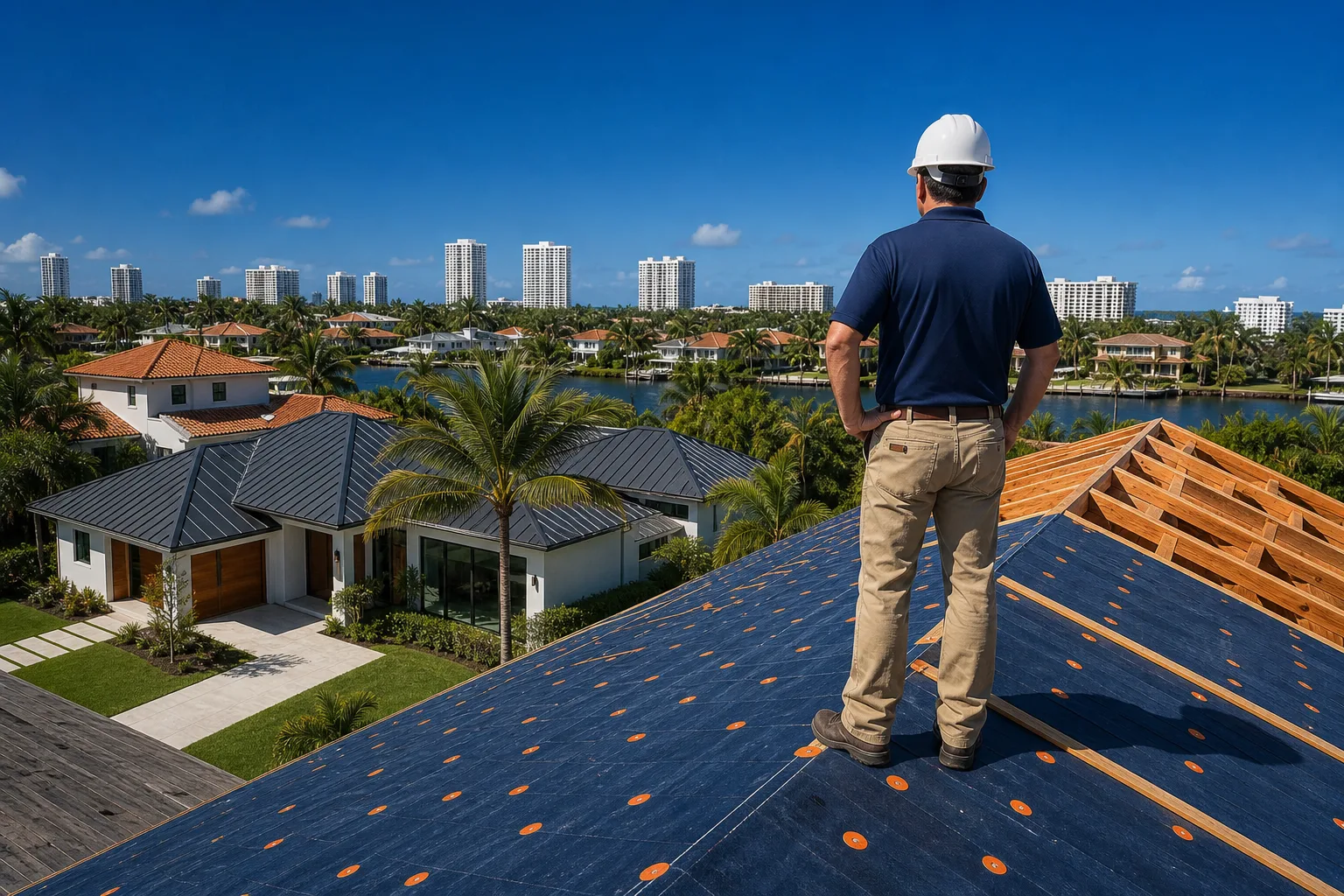
We also can't tell you from the outside whether a given roof's underlying work is sound. A roof can be unpermitted and still be built reasonably well, or it can be unpermitted and hiding real problems. The only way to know is to have someone qualified actually get on the roof and, where possible, verify what's underneath. If you're dealing with a roof of unknown history, that's worth treating as a serious unknown, not a coin flip.
And if you're currently mid-claim or mid-sale with a permit issue already on the table, the right move isn't a blog post, it's a conversation with the local building department and, if insurance is involved, your agent or a public adjuster. General information only gets you so far once a specific case is open.
What to do about it
If you're about to have a roof replaced: Confirm the permit is pulled before work starts, not after. A legitimate, licensed residential roofing contractor will pull it as a matter of course and won't blink if you ask to see the permit number. If a contractor tells you permits aren't necessary, or that they'll "take care of it later," that's a hard no. We walk every customer through this on our residential roofing and commercial roofing jobs because it's not optional, it's how the work gets verified.
If you're buying a house or already own one and aren't sure: Most Florida counties and cities have an online permit search tied to the property address. Look up the parcel and check for a roofing permit that matches the apparent age of the roof. If the roof looks newer than the last permitted roofing work on file, that's worth asking about directly, before you close on the house or before hurricane season tests it.
If you find out your roof was never permitted: Don't panic, but don't ignore it either. Talk to the local building department about what it takes to get it legalized, which may involve an inspection of the existing roof or, in some cases, opening sections of it up to verify the work underneath. It's a hassle, but it's a smaller hassle now than during a denied insurance claim or a stalled closing.
If you're dealing with storm damage on a roof you're not sure about: Get a straight inspection first. Our Hurricane Storm Center walks through what to check after a storm, and if you need documentation of current roof condition for insurance purposes, that's a separate and useful step regardless of permit history. For general damage that doesn't need a full tear-off, our roof repair team can assess what's actually going on before anyone talks about full replacement.
If you're planning a replacement now: Whether you're looking at tile, metal, or shingle systems, get a free instant estimate or request a quote from a licensed contractor who pulls permits as standard practice, no exceptions. You can also see completed, permitted work in our project gallery to get a sense of what a properly documented job actually looks like.
The bottom line: a permit isn't red tape, it's the only independent record that your roof was built to withstand what South Florida throws at it. Skipping it doesn't save you money, it just moves the cost, and the risk, down the road to a moment when you can least afford it. Do it right the first time, get the permit, and you'll never have to think about this again.
Want to know what your roof actually needs?
Millennium Makeover has been roofing South Florida homes and businesses since 2005. Get a straight, no-pressure estimate from a licensed local crew (CCC1326328).
Frequently asked questions
Is a permit legally required to replace a roof in Florida?
Yes. Full roof replacement in Florida requires a permit under the Florida Building Code, and licensed contractors are required to pull it before starting work. This applies throughout South Florida counties including Palm Beach and Broward.
Can my insurance deny a claim because my roof wasn't permitted?
It can significantly complicate or reduce a claim. Insurers routinely check county permit records after storm damage, and a roof with no permit on file gives the adjuster no verified proof it was installed to code, which can be grounds for denial or a lower payout.
How do I find out if my roof was permitted?
Most Florida counties and cities have an online permit search by property address. Look for a roofing permit matching the age of your current roof. If you can't find one, contact the local building department directly to confirm.
What happens if I buy a house with an unpermitted roof?
Lenders and title companies often catch this during the closing process, since permit history is part of standard due diligence. It can delay or stall the sale until the issue is resolved, sometimes requiring a retroactive permit and inspection of the roof.
Am I responsible if my contractor didn't pull a permit?
Yes, in most cases the property owner is held accountable for code compliance regardless of who did the work or why the permit was skipped. This is one of the biggest reasons to avoid storm-chaser contractors who disappear after the job is done.
Can an unpermitted roof be fixed after the fact?
Often yes, but it usually requires working with the local building department to get the work inspected retroactively, which can mean opening up parts of the roof to verify what was installed. It's more disruptive than doing it right the first time, but it's better than leaving it unresolved.