Why the Fascia Board Matters More Than Most Homeowners Realize
In this article
TL;DR: The fascia board anchors your gutters and seals the gap between your roof deck and the outside world. Rot or damage there moves fast in South Florida's heat and humidity. Catch it early and you are fixing trim. Ignore it and you are replacing decking, rafters, and maybe more.
What you need
- A sturdy ladder tall enough to reach the roofline safely
- A flathead screwdriver or awl for probing wood
- Binoculars (optional, but useful for a first pass from the ground)
- Good lighting, ideally early morning or overcast sky so you are not staring into glare
- A helper to foot the ladder
You do not need to get on the roof for this inspection. The fascia runs along the eaves, so you can reach it from ladder height.
Step 1: Do a ground-level scan first
Before you climb anything, walk the perimeter of your house and look up at the roofline. You are checking for:
- Paint that is bubbling, cracking, or missing in patches
- Wood that looks wavy, cupped, or darker than surrounding boards
- Gaps where the fascia meets the soffit or the gutter
- Staining that runs down from the gutter line
Binoculars make this easier on a two-story home. Mark any suspect areas with a piece of chalk or tape on the wall below so you know exactly where to look when you get the ladder out.
Step 2: Probe the wood at problem spots
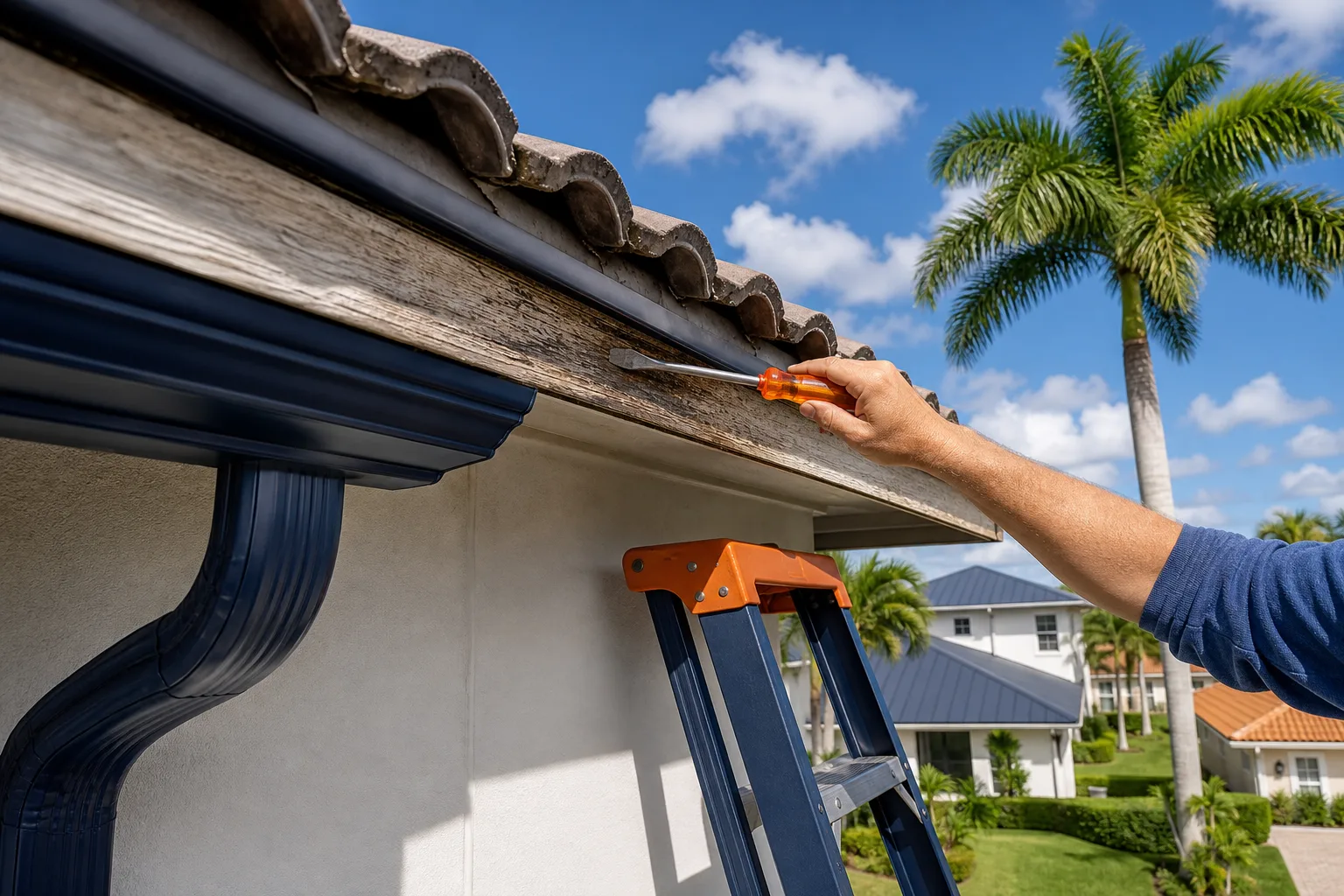
Set up your ladder at each flagged spot. Push the tip of a screwdriver or awl firmly into the fascia face and edge.
Healthy wood resists the probe. You have to push hard. Rotted wood gives way, feels spongy, or crumbles. Even one soft spot means moisture has been sitting there long enough to break down the fiber. In South Florida, that process accelerates year-round.
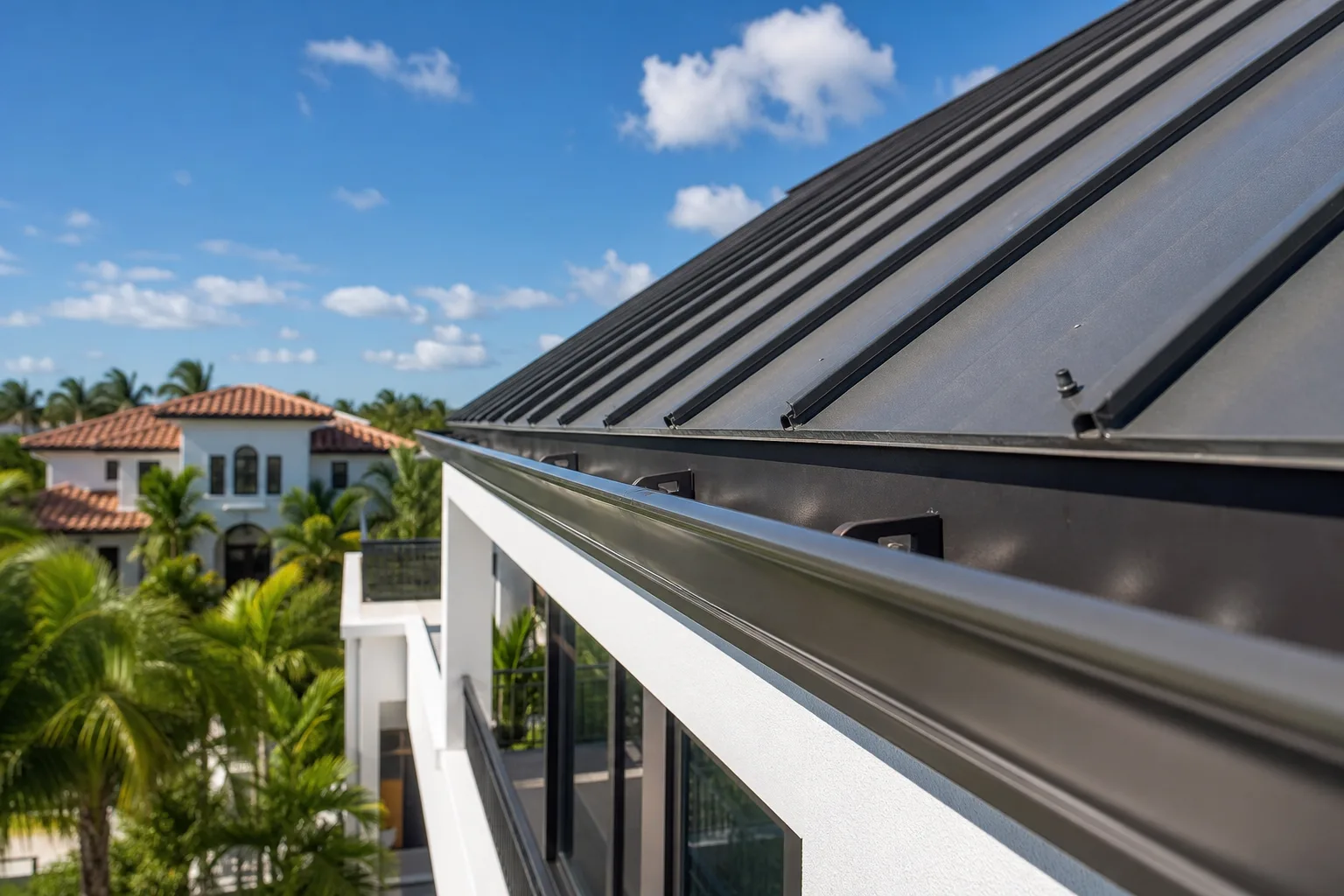
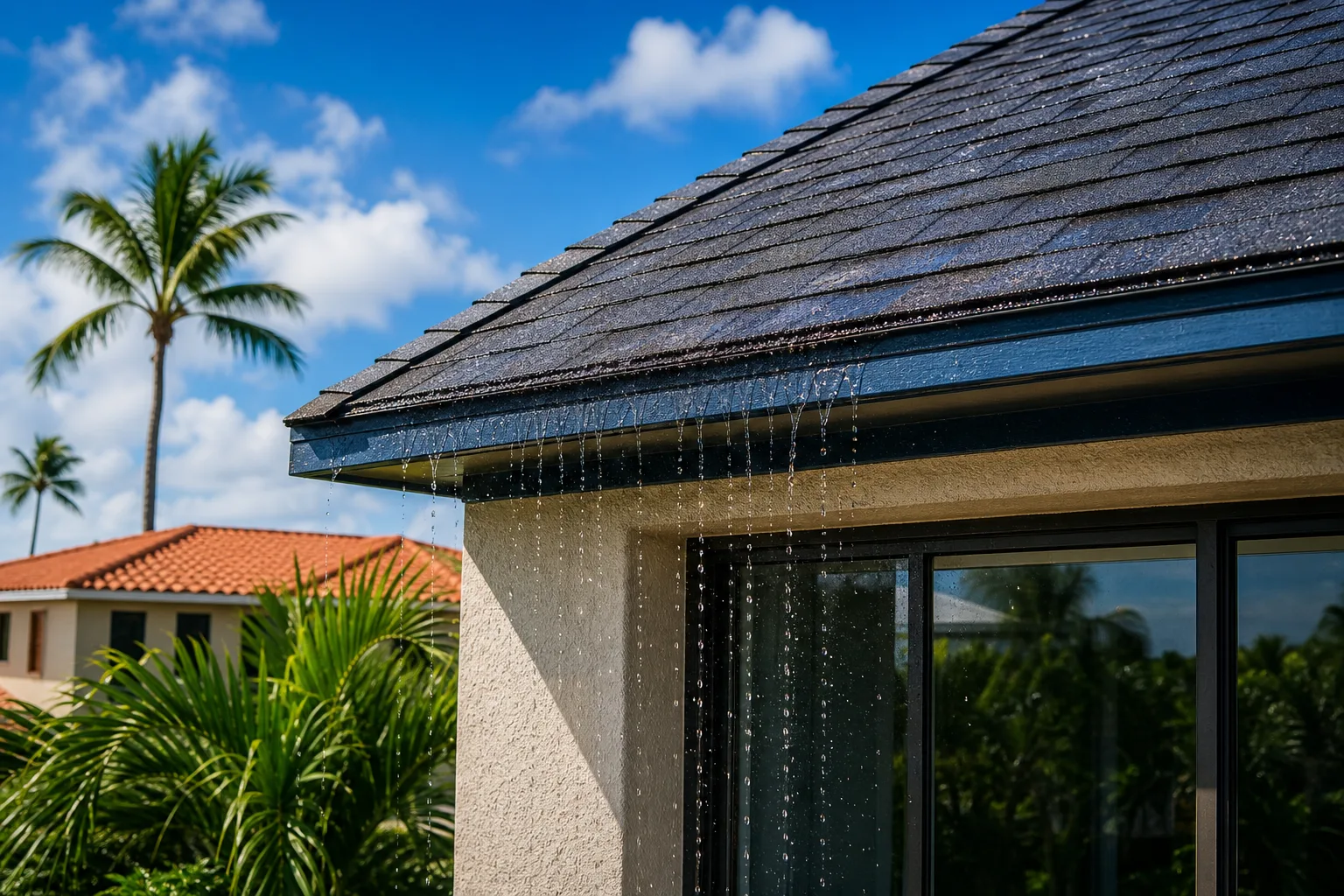
Also check behind the gutter. Water that overshoots or backs up sits right against the fascia face. If the gutter is pulling away from the wall, there is a good chance the wood it was nailed into has softened. See our post on what roofers look for when inspecting gutter pitch and slope for related detail on gutter failure signs.
Step 3: Trace the damage upstream
Fascia rot rarely starts at the fascia itself. Find the source or you will replace boards twice.
Common causes in South Florida:
- Gutters holding standing water. Overflow or blockage keeps the fascia wet. Check your gutters for pitch problems and clogs.
- Missing or lifted drip edge. Drip edge is a metal strip that directs water off the deck edge into the gutter. Without it, water wicks back under the shingles and onto the fascia.
- Damaged roof edge shingles. Cracked or lifted shingles at the eave let water in before it even reaches the drip edge. A roof repair at the edge often solves recurring fascia problems.
- Overflowing valleys. On homes with complex rooflines, valley runoff can dump concentrated water at a single eave point.
Fix the source. Then replace the board.
Spotted a leak or missing tiles? Schedule a repair visit
Step 4: Decide whether this is a DIY fix or a contractor job
Not all fascia work requires a licensed roofer. Here is a straightforward decision guide:
| Situation | Reasonable DIY? | Call a contractor? |
|---|---|---|
| Single board, surface rot only, source already fixed | Possibly, if you are comfortable on a ladder | Optional |
| Multiple boards or entire run | Not recommended | Yes |
| Rot has reached the rafter tails | No | Yes |
| Drip edge needs replacing at the same time | No | Yes |
| Gutter rehang required after board replacement | No | Yes |
| Two-story home | Use caution | Strongly recommended |
Rafter tail damage is the line where this stops being a trim job. Once rot works its way into the structural framing at the eave, you are into a repair that touches the roof deck and potentially the framing. That work needs to be permitted and done by a licensed contractor in Florida.
Step 5: Replace the board correctly
If the damage is limited and you are doing it yourself, here is the sequence that matters:
- Remove the gutters first. Do not try to work around them.
- Pull the damaged fascia board carefully. Check the rafter tails and decking edge behind it. Probe everything.
- Let the opening dry out fully before installing new material. Trapping moisture behind new wood defeats the purpose.
- Use pressure-treated lumber or a composite fascia board rated for exterior use. In South Florida's climate, untreated pine will rot again inside a few years.
- Prime all four sides of the new board before installation, including cut ends.
- Install drip edge before re-hanging gutters. If the old drip edge is bent, corroded, or missing, replace it. This is cheap insurance.
- Rehang gutters with the correct pitch. A flat gutter traps water and starts the problem over.
If at any point you find soft decking or compromised rafter tails behind the board, stop and call a roofer. Do not nail new fascia over bad framing.
Common mistakes
Painting over rot. This hides the problem for one season and makes the next inspection harder. If the wood is soft, it has to come out.
Using the wrong lumber. Standard dimensional lumber from a big-box store is not always rated for direct exterior exposure. Confirm the treatment rating before you buy.
Skipping drip edge replacement. Replacing the fascia without addressing a missing or damaged drip edge means water will follow the same path again. Most fascia failures in South Florida trace back to a drip edge that was never installed correctly or was damaged in a storm.
Re-hanging the gutter at the same height. If the old gutter position contributed to overflow, putting it back in the same spot continues the problem. Proper gutter slope matters.
Letting a storm-chaser talk you into a full roof replacement because of fascia damage. Fascia rot does not automatically mean your roof needs replacing. Get a clear explanation of what is structurally compromised before agreeing to anything beyond the affected boards.
Bottom line
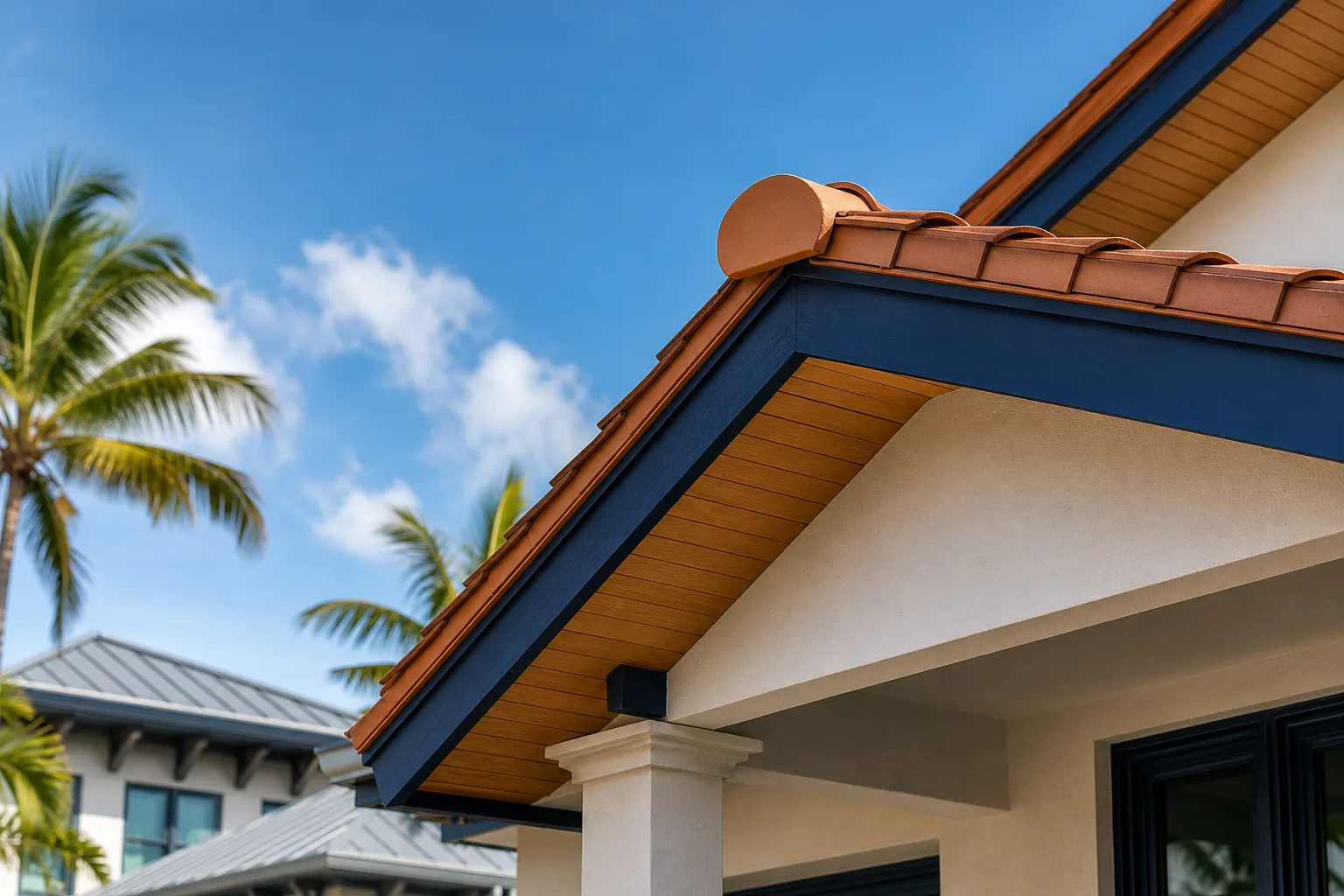
Fascia is not decorative trim with a side job. It is the anchor point for your gutters, the barrier between your roof deck and the weather, and one of the first places South Florida's humidity will find a foothold if your drainage is off.
Check it once a year, after every significant storm, and any time your gutters start pulling away from the house. Most of the time you are catching something small. Occasionally you will find something that needs a contractor's attention before it gets expensive.
If probing turns up rafter damage, soggy decking, or you are not sure how far the rot goes, get a professional set of eyes on it. You can request a quote or use the instant estimate tool to start that conversation.
Spotted a leak or missing tiles?
Small problems get expensive fast in the Florida sun. Get it looked at by a local crew before the next storm.
Frequently asked questions
What is the difference between fascia and soffit?
The fascia is the vertical board that runs along the roofline and faces outward. The soffit is the horizontal panel underneath the eave, between the fascia and the exterior wall. Both protect the rafter tails, but they face different directions and take damage differently.
Can I replace fascia board without removing the gutters?
In practice, no. You need full access to nail or screw the new board properly and to inspect the framing behind it. Trying to work around the gutters usually results in a poor fit and leaves the back of the new board unsealed.
How long does pressure-treated fascia last in South Florida?
With a good paint or primer system and proper drip edge above it, pressure-treated fascia can last 15 to 20 years or longer. The bigger factor is whether the drainage above it is working correctly. Persistent water contact will shorten any board's life regardless of the wood species.
Does fascia rot affect my homeowner's insurance claim?
It depends on the cause. Rot from long-term maintenance neglect is typically not covered, but fascia damage resulting directly from a storm event may be. Document the condition before and after any storm, and review your policy before filing. A licensed contractor can help identify which damage is storm-related versus pre-existing.