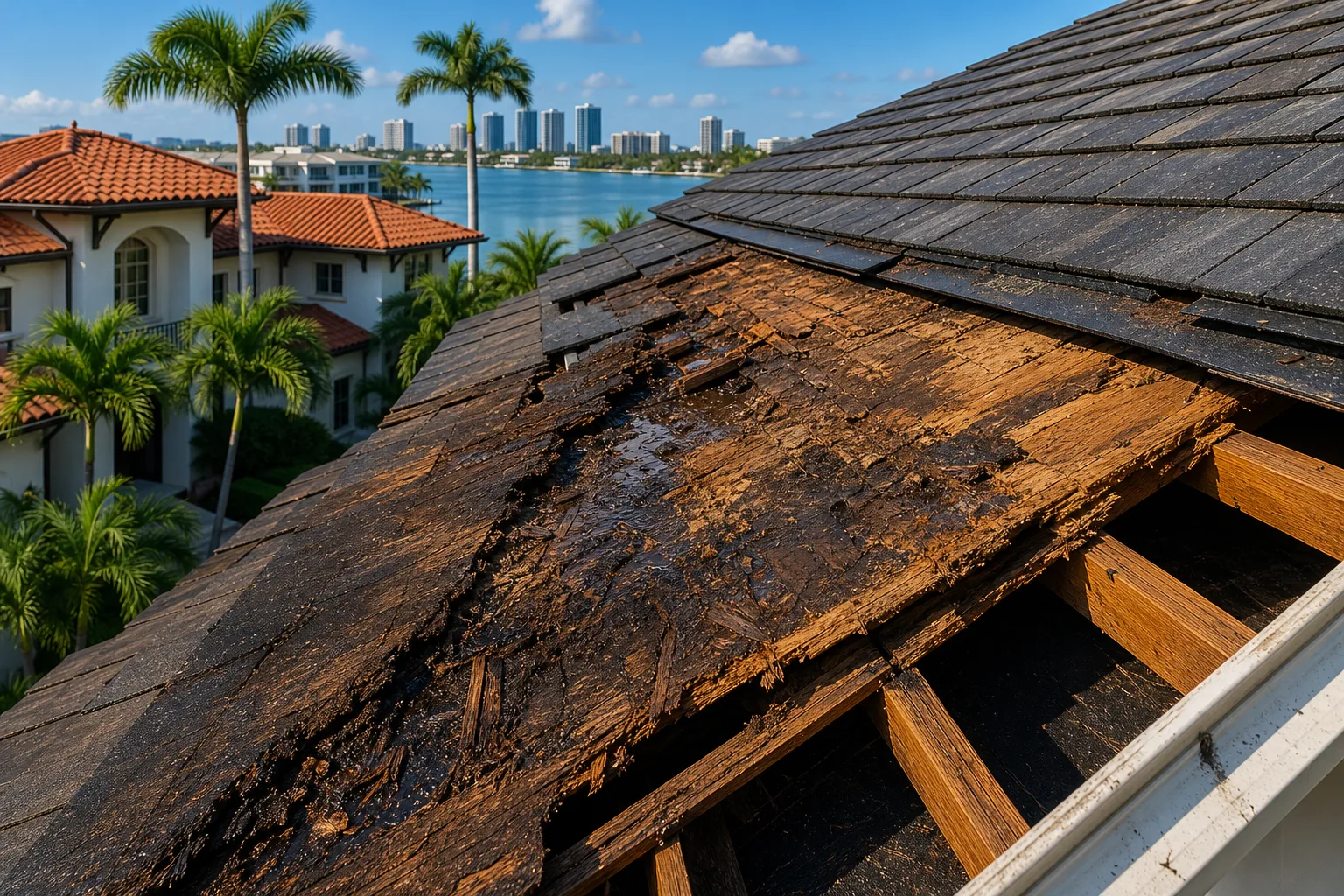
What Causes Roof Decking to Rot on a House That Never Leaked
In this article
TL;DR: Roof decking rots from moisture that never enters the living space, most commonly trapped attic humidity, inadequate ventilation, condensation on the underside of the deck, or small penetration leaks that dry before reaching the ceiling. In South Florida's humid climate, these conditions can destroy plywood or OSB within a few years. A good attic inspection is usually how the problem is first found.
What You Need
- A flashlight and a screwdriver (the poke test)
- Access to your attic hatch
- A basic hygrometer or humidity meter (optional but useful)
- A roofing contractor for anything beyond the initial look
Step 1: Understand Where the Moisture Actually Comes From
Most homeowners assume a leak means water dripping on the ceiling. That is not how wood rot works. Rot needs sustained moisture above roughly 19 percent wood moisture content. The moisture source does not need to be dramatic.
The four most common sources on houses that show no interior stains:
Attic condensation. South Florida air is warm and loaded with humidity. When that air enters the attic through soffit vents or gaps and meets cooler roof decking (cooled by the air conditioning running below), moisture condenses on the underside of the deck. It wets the wood repeatedly without ever dripping through.
Blocked or undersized ventilation. Florida's residential building code requires a minimum net free ventilated area generally in the range of 1/150 of the attic floor area (reduced under certain conditions when vapor retarders are used correctly). When insulation is blown over soffit vents or ridge vents are missing, humid air stagnates and the deck never dries out. Consult the current adopted Florida Building Code or a licensed contractor for the exact ventilation requirements applicable to your jurisdiction.
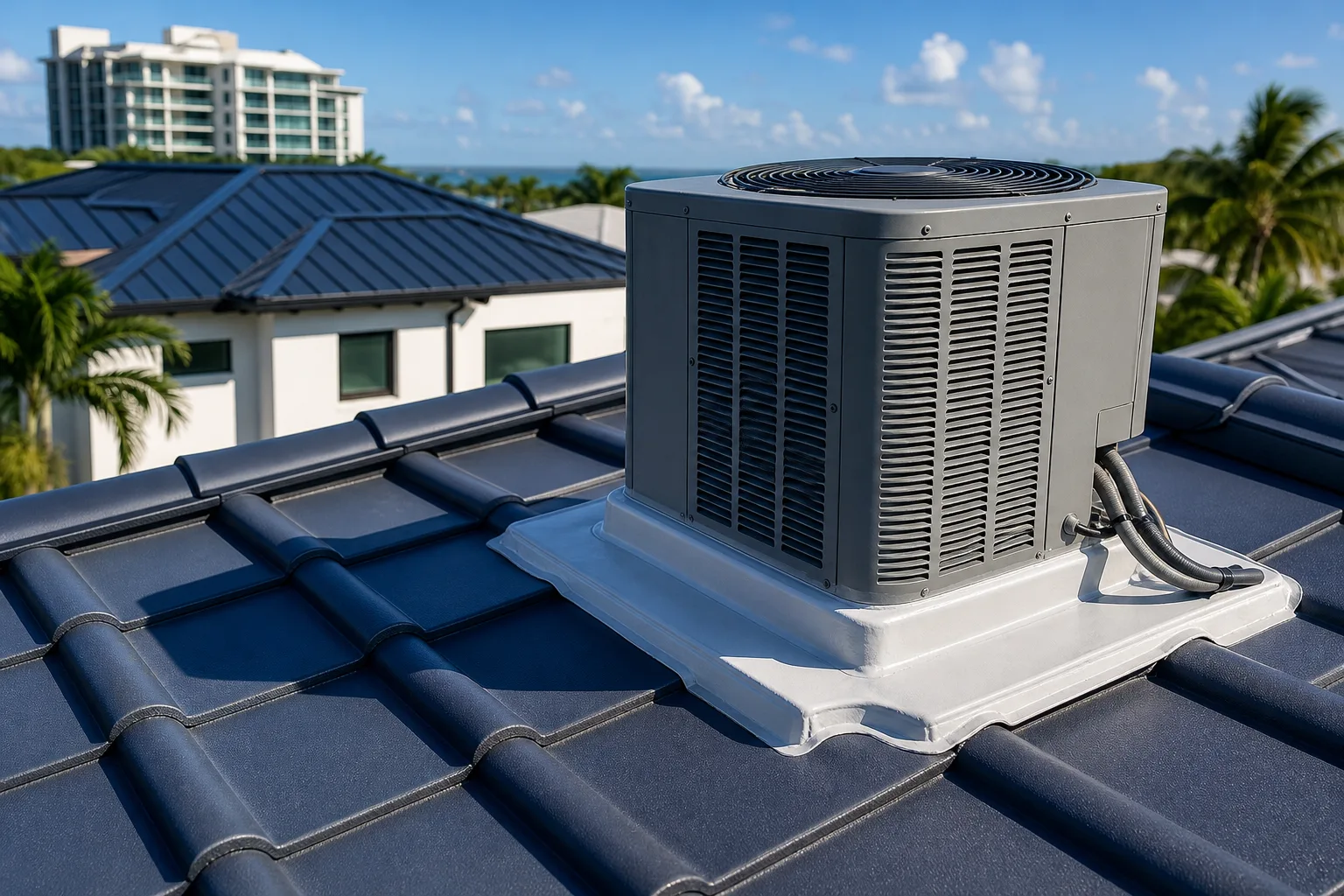
Slow penetration leaks at fasteners or flashings. A nail pop, a loose pipe boot, or slightly lifted flashing around an AC curb can admit a small amount of water on every rain event. That water wicks laterally into the decking fiber before evaporating, and it never travels far enough to reach the ceiling drywall.
Ice dams (not relevant here) vs. vent stack backdrafting. In South Florida, dryer and bathroom exhaust fans vented into the attic instead of outside are surprisingly common and are a significant moisture source. That warm, humid exhaust hits the decking directly.
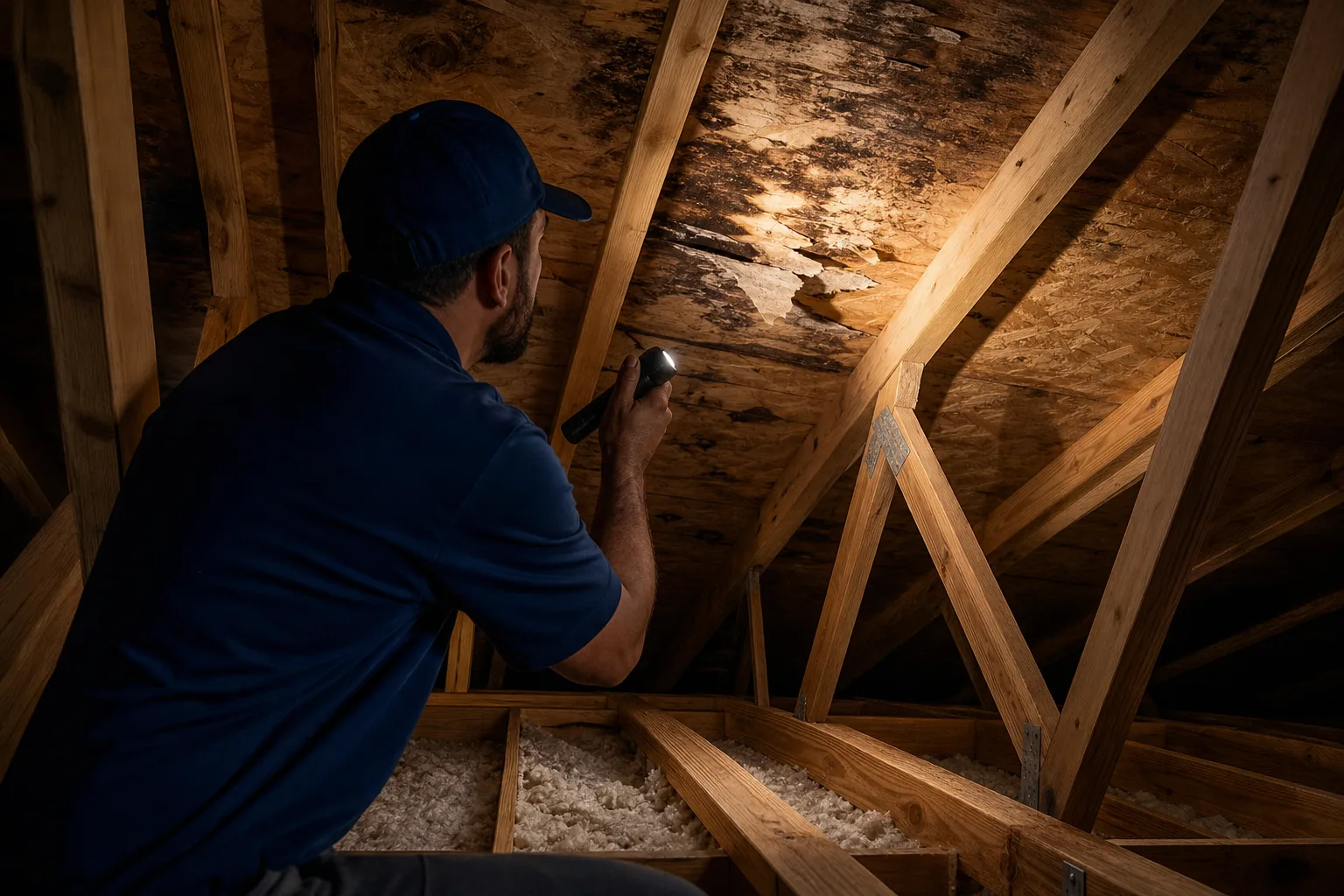
Step 2: Do the Attic Walk-Through
Get into the attic during the day with the lights off for a minute first. Any daylight visible through the roof means a gap that also passes moisture.
Then use your flashlight to look at the underside of the decking. Signs of trouble:
- Dark staining that radiates from a fastener or seam
- Fuzzy or powdery growth on the wood surface
- Delamination where the plywood layers are separating
- A soft spot when you press the decking with your thumb
Use the screwdriver for the poke test: press the tip gently into any stained or discolored area. Sound wood resists firmly. Rotted wood gives, compresses, or the tip goes in with little resistance.
Check the soffit vents from inside the attic. If you can see insulation pressing against them, air is not moving and you have found a likely contributor.
Step 3: Check the Exhaust Fan Terminations
Trace every bathroom fan and dryer duct you can reach. Each one should exit through the roof or a gable wall with a proper cap, not terminate in the attic space. If you find flex duct that simply ends or is disconnected, that is a code violation under FBC Mechanical and a direct moisture source.
This fix is often inexpensive and dramatically reduces attic humidity. It is also one of the first things a roofer finds during a pre-quote attic inspection.
Spotted a leak or missing tiles? Schedule a repair visit
Step 4: Evaluate the Ventilation Balance
A balanced system has roughly equal intake (soffits) and exhaust (ridge or power vents). Stacking only exhaust vents without adequate intake pulls conditioned air from the living space upward, bringing moisture with it.
If you have a powered attic ventilator but sealed or blocked soffits, the fan is essentially depressurizing the attic and drawing humid indoor air through every ceiling penetration.
A rough check: stand in the attic on a breezy day and hold your hand near the soffit area. You should feel mild airflow. No airflow usually means blocked soffits or no intake path.
Step 5: Identify the Deck Damage Extent Before Deciding on Repairs
Not every area of soft decking requires a full replacement. Roofers typically replace individual deck sheets or sections as part of a repair or re-roof. The decision depends on how widespread the damage is.
Use this table to frame the scope:
| Damage Pattern | Likely Cause | Typical Response |
|---|---|---|
| One or two soft spots near a penetration | Localized slow leak | Spot deck repair plus flashing fix |
| Soft areas spread across multiple rafters | Ventilation failure or exhaust fan dumping | Larger deck replacement, ventilation upgrade |
| Soft spots under every rafter bay | Chronic condensation across full attic | Full deck assessment, ventilation redesign |
| Staining at ridge only | Ridge vent blocked or absent | Ridge vent repair, check deck condition |
If you are in South Florida and your home is approaching 15 to 20 years old with original roofing materials, it is worth having a licensed contractor look at the deck before the next hurricane season. Rot compromises the nail-holding capacity of the deck, which is what keeps roofing systems attached during high winds. Florida Building Code requires a structurally sound decking substrate for any roofing system to meet wind uplift requirements; consult the current adopted FBC or a licensed contractor for the specific provisions applicable to your jurisdiction.
Common Mistakes
Assuming no stain means no problem. Ceiling drywall is a poor indicator of deck moisture. It wicks, holds, and dries before you ever see a spot.
Fixing the roof surface and skipping the deck inspection. A new layer of shingles over rotted decking is a failed repair. A reputable contractor will probe soft areas and replace them before nailing down new material.
Covering soffit vents with insulation. This is one of the most common attic mistakes in South Florida and directly causes the stagnant humid air conditions that rot decking.
Ignoring the problem until re-roofing. If the decking is structurally compromised, the existing roof may not hold its fasteners adequately in a storm. Florida Building Code requires sound substrate for any roofing system to meet wind uplift ratings. See the Hurricane Storm Center for how ventilation and deck integrity tie into storm readiness.
Venting exhaust fans into the attic. It is cheap to fix and expensive to ignore.
Bottom Line
Roof decking rots on houses with dry ceilings because the moisture never comes from above. It comes from inside, from trapped attic humidity, unvented exhaust fans, and condensation that cycles with every South Florida rainy season. The fix always starts with finding the moisture source, not just replacing the wood.
If your attic shows dark staining, soft spots, or any delamination, get a qualified contractor to assess the extent before it spreads. Request a quote or use the free instant estimate tool to start the conversation with Millennium Makeover. If you are heading into hurricane season and are not sure about your deck's condition, the residential roofing page covers what a full inspection covers.
Spotted a leak or missing tiles?
Small problems get expensive fast in the Florida sun. Get it looked at by a local crew before the next storm.
Frequently asked questions
Can roof decking rot from the inside out?
Yes, and it is more common in South Florida than rot caused by an active leak. Attic humidity, unvented exhaust fans, and condensation on the underside of the deck can saturate the wood repeatedly without water ever reaching the ceiling. The rot starts from the bottom face of the decking and works upward.
How do I know if my roof deck is rotted without getting on the roof?
The most reliable way is to access the attic and do the poke test with a screwdriver on any stained or discolored wood. Rotted decking compresses or punctures with light pressure. Dark radiating stains around fasteners, delaminating plywood layers, and fuzzy surface growth are also reliable indicators you can see from below.
Does rotted roof decking need to be replaced before a new roof goes on?
Yes. Florida building code requires a sound structural substrate for any roofing system to meet wind uplift requirements. Nails driven into rotted OSB or plywood do not hold at rated values, which matters significantly during a hurricane. Any reputable contractor will replace damaged sections before installing new roofing material.
How common is roof deck rot in South Florida compared to other regions?
South Florida's high year-round humidity and the heavy use of air conditioning create a consistent temperature differential between the living space and the attic, which promotes condensation on roof decking. This makes moisture-driven deck rot more common here than in drier climates, even on homes where interior leaks have never been reported.