Why Some Florida Roofs Last 40 Years and Others Fail at 15
In this article
TL;DR: A roof that reaches 35 or 40 years in South Florida usually got several things right at once: the right system for the building, careful installation, sound drainage, prompt minor repairs, and reasonable storm luck. A roof that fails around year 15 is not automatically a bad material or a bad homeowner decision, but early failure usually leaves clues an inspector can identify.
When I inspect a roof in Boynton Beach, Delray Beach, Boca Raton, Lake Worth, or West Palm Beach, I do not start by asking how old it is. I start by asking how it has aged. Two roofs installed in the same year can be in very different condition because Florida is hard on every layer of the system, not just the visible tile, metal, or shingle surface.
What happened
Homeowners often hear broad lifespan ranges: tile can last decades, metal can last decades, and shingles generally have a shorter service life. Those ranges are useful for planning, but they are not expiration dates. They also do not tell the full story of why one roof stays watertight for a long time while another becomes a repair cycle well before its owner expected.
The main reason is that a roof is a system. The visible covering sheds most of the water and takes the sun, wind, and impact. Beneath it are the underlayment or waterproofing layers, flashings at walls and penetrations, fasteners, roof deck, edge details, and drainage components. On some homes, ventilation and attic conditions also affect how the assembly ages.
A long-lived roof typically has no single magic feature. It has a series of ordinary details that were handled correctly from the beginning and monitored over time. A shorter-lived roof often has one weak point that allowed water, wind movement, heat stress, or corrosion to create a larger problem.
The material matters, but the system matters more
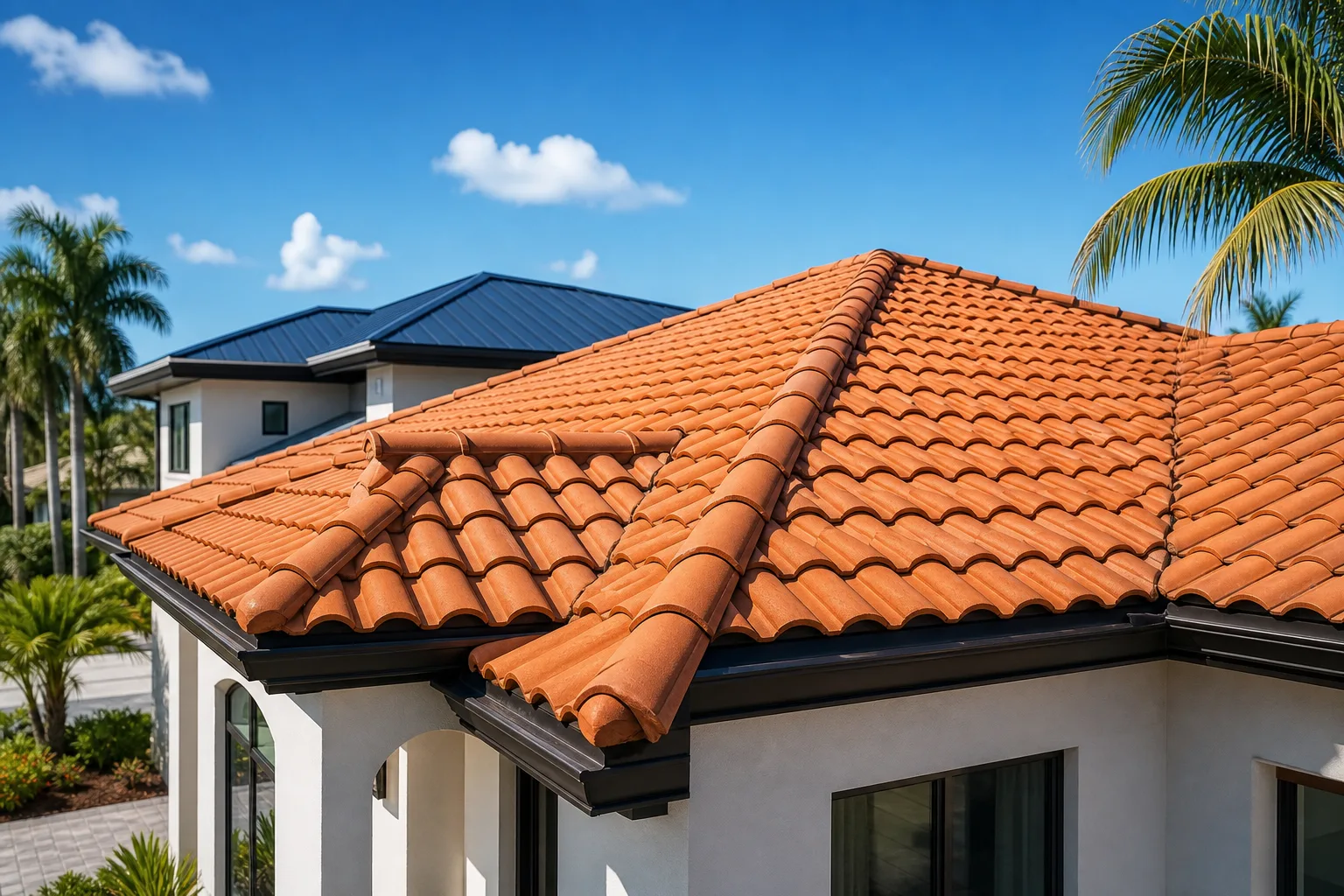
A tile roof can have tile that still looks presentable while the weatherproof layer beneath it is nearing the end of its useful life. That is one reason a tile roof cannot be judged by curb appeal alone. Loose, cracked, displaced, or poorly repaired tiles matter, but the inspector is also looking for exposed areas, failed flashing transitions, aging underlayment at vulnerable edges, and evidence of moisture below.
If you own tile, our overview of tile roofing systems explains why the visible surface and the waterproof layer below need to be evaluated as a package.
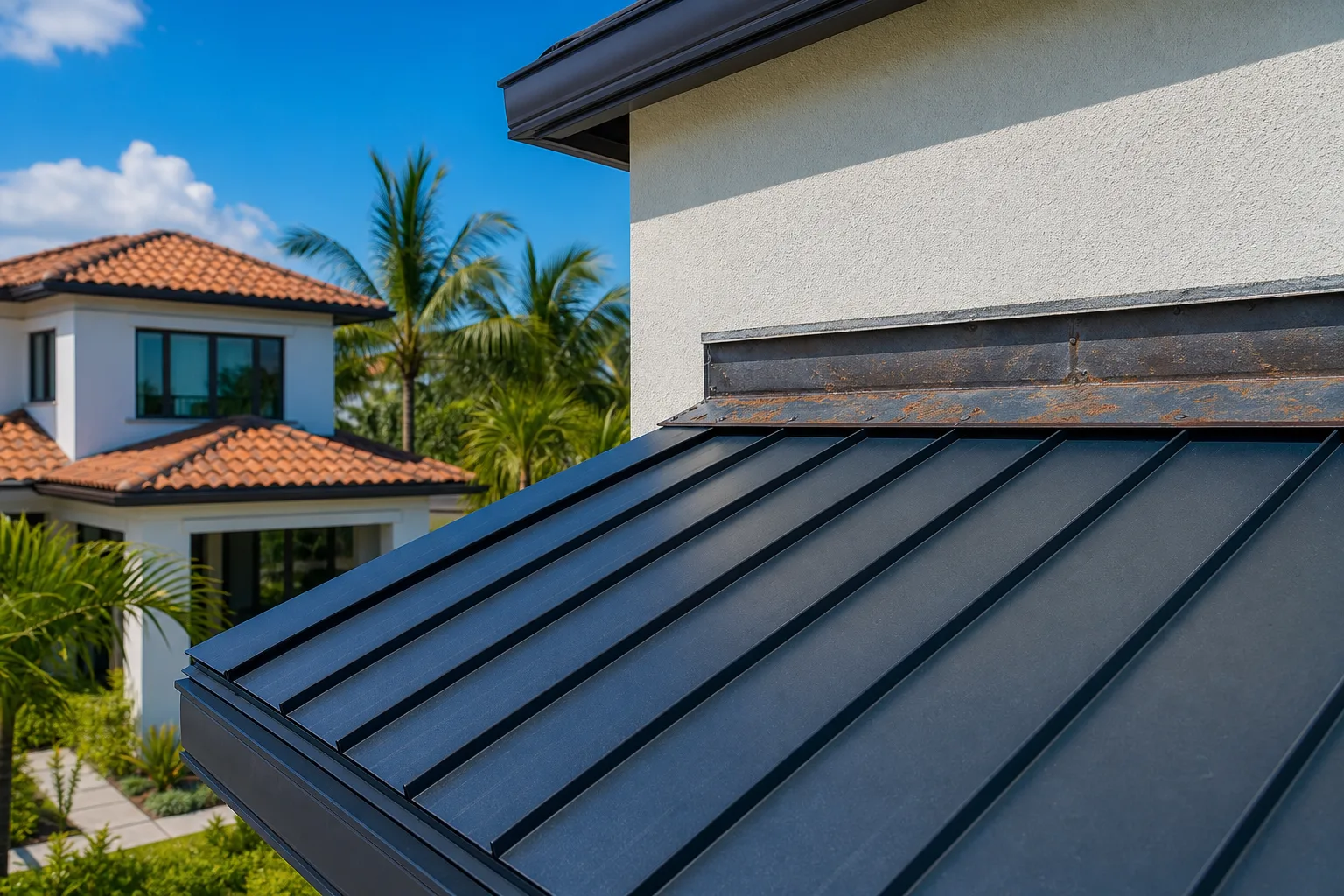
Metal roofs can offer long service when the panel profile, fastening method, flashing details, and metal compatibility are suited to the building. But metal does not forgive sloppy penetrations, incompatible metals, missing closure details, or drainage that leaves wet debris trapped in trouble spots. A roof can have good-looking panels and still leak at a poorly detailed vent, wall transition, ridge, or fastener location.
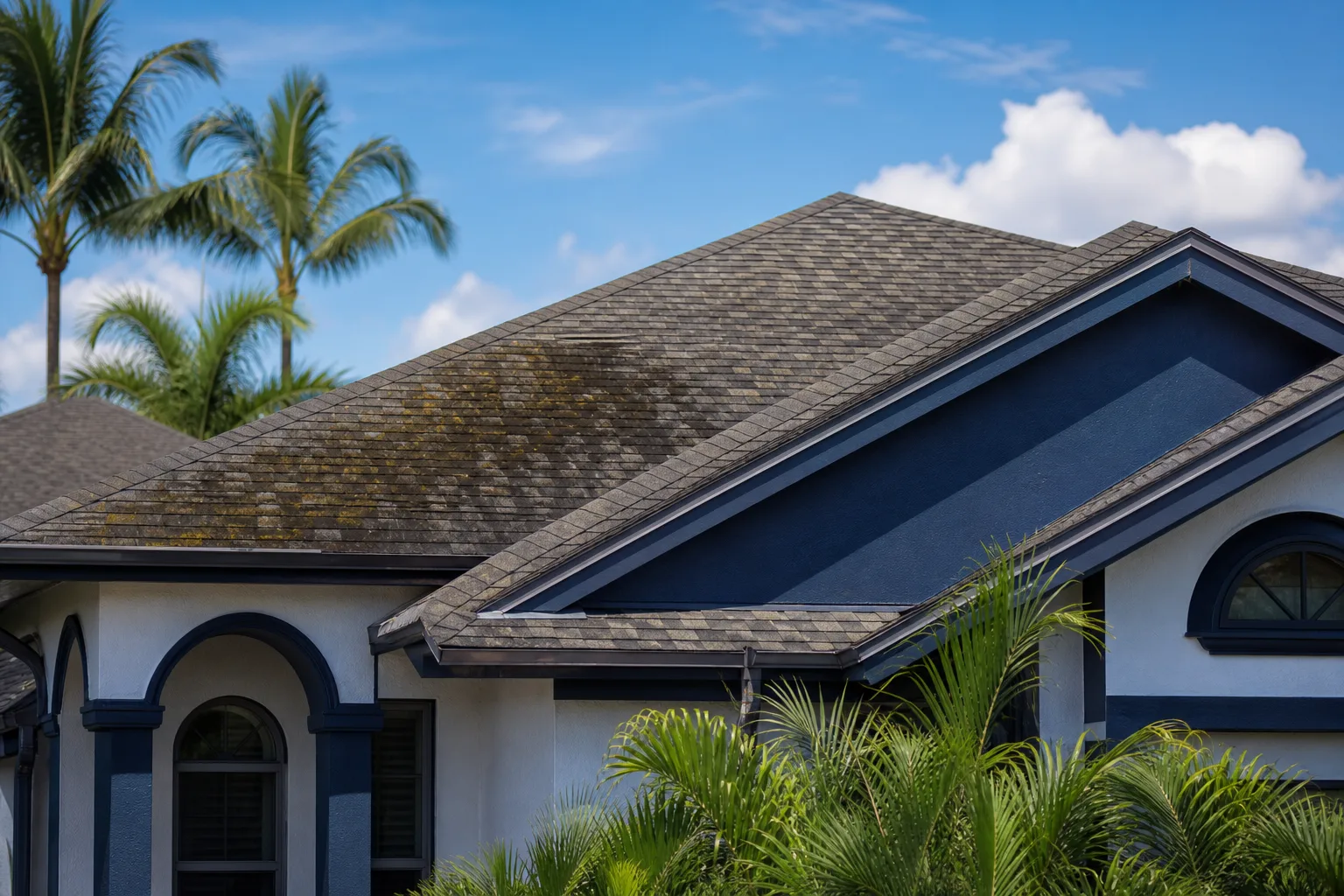
With shingles, sun exposure, installation quality, slope, drainage, fastening, and attic heat can all influence how the roof ages. Curling, granule loss, open seals, lifted tabs, exposed nail heads, and brittle flashing are not just cosmetic observations. They help establish whether a roof needs targeted work, closer monitoring, or replacement planning. See the options we install for South Florida shingle roofs.
For low-slope and commercial roofs, a small drainage or seam issue can have an outsized effect because water moves more slowly and details around equipment and penetrations are numerous. A property owner should not assume a roof is fine just because the field surface looks smooth from ground level. Commercial roofing inspections need to focus on seams, terminations, drains, scuppers, curbs, and the condition of the roof around every penetration.
Florida exposure is uneven, even between nearby homes
South Florida sun is relentless, and ultraviolet exposure gradually affects roof materials. Heat cycles cause materials and metal components to expand and contract. Heavy rain tests drainage. Wind exposes weak attachments and loose components. Salt-laden air can be an additional concern closer to the coast, particularly where metal components, flashings, or fasteners are involved.
But neighboring homes are not exposed equally. One house may have little shade and full afternoon sun. Another may sit beneath trees that deposit leaves and branches. One roof may receive direct wind-driven rain at a particular wall or valley. Another may be partly shielded. Roof geometry changes the equation too. Valleys, dead valleys, skylights, chimneys, dormers, solar equipment, plumbing vents, and wall transitions add details that have to work correctly for years.
Hurricanes and tropical storms can accelerate issues that had been minor before the storm. A lifted tile, disturbed flashing, open seal, or compromised edge may not immediately become an interior leak. Then the next hard rain finds the weakness. After a significant weather event, use our Hurricane Storm Center for sensible next steps and documentation guidance.
Installation is where lifespan is won or lost early
Here is the straight answer I give homeowners comparing bids: materials matter, but workmanship is not a line item you can see in a brochure. It shows up in preparation, fastening, flashing, layout, transitions, cleanup, and whether hidden components were handled correctly.
Before a reroof begins, the contractor needs to understand what is under the existing roof, whether there are soft or damaged deck sections, how the roof drains, and where details are likely to require extra work. During installation, details such as penetrations, valleys, wall flashings, eaves, ridges, hips, and roof-to-gutter transitions cannot be treated as afterthoughts.
A short bid can hide important exclusions. For example, it may not clearly say how damaged decking is priced, whether flashings are replaced or reused, what happens at wall transitions, how many layers will be removed, or whether permit requirements are included. That does not mean the lowest bid is automatically wrong. It means you need a scope you can compare line by line.
The Florida Building Code and local permitting process set important baseline requirements. Homeowners can review current building-code information through the Florida Building Code website, but the practical question for a specific project is how the contractor will apply the required details to your roof's shape and condition.
Maintenance protects small details before they become big repairs
Maintenance does not mean someone needs to walk a roof every month. It means not ignoring visible changes, water stains, backed-up gutters, loose materials, or a leak that appears only during wind-driven rain.
Gutters are a good example. A gutter system will not solve every roofing issue, but it has a job to do. If water routinely overflows near fascia, soffit, walls, or entry areas, the roof edge and surrounding exterior can see more moisture than they should. Keeping drainage paths clear and correctly pitched is part of taking care of the entire envelope. If you are seeing overflow or water misdirection, review our gutter services.
Tree limbs rubbing a roof, debris collecting in valleys, and unsealed penetrations added for satellite dishes, solar work, HVAC, or other equipment can also shorten a roof's effective service life. These are not always installation failures. They are conditions that need to be addressed before repeated movement or trapped moisture turns them into damage.
Why it matters
The difference between a roof that lasts 40 years and one that fails at 15 is not just a question of how long you can postpone replacement. It affects repair decisions, insurance conversations, property planning, and the risk of water reaching the deck, insulation, drywall, and electrical areas below.
Early trouble often begins at a detail, not across the whole roof. That matters because homeowners can make better decisions when they know whether they have a localized repair, a recurring system issue, or a roof approaching the point where repairs no longer make financial sense.
A few cracked tiles after a branch strike may be a repair. Widespread brittle underlayment beneath aging tile is a different conversation. A single failed pipe flashing may be a straightforward repair. Multiple leaks at penetrations, deteriorated field material, and recurring patchwork may point toward replacement planning.
That distinction is why we offer roof repair evaluations rather than treating every call as a replacement lead. A responsible inspection should identify the active issue, look for related weaknesses, and explain the limits of a repair. If a repair is likely to buy useful time, I will say so. If it only masks a larger problem, you deserve to know that before spending money on it.
There is also a safety and resilience side to this. Roof damage after a storm is not always obvious from the driveway. The Federal Emergency Management Agency recommends documenting damage and using qualified professionals where safety is a concern. Its hurricane preparedness guidance is a good general resource for homeowners preparing before storm season and responding afterward.
For a roof replacement, the goal should not be to buy the longest label or the cheapest square-foot number. The goal is to install a complete, appropriate system with a clear scope and a contractor who can explain how the details will be handled.
Want to know what your roof actually needs? Get a free estimate
What we don't know yet
Without inspecting a specific roof, no one can reliably tell you whether it has five years left, fifteen years left, or a problem that needs attention now. Age alone is not enough. The same material can age very differently based on exposure, prior repairs, installation history, storm events, and roof design.
We also do not know, from a ground-level view, the condition of concealed components. On tile roofs, the visible tile may not reveal the condition of the waterproofing layer beneath. On shingle roofs, a roof can look generally uniform until close inspection reveals failed seals, damaged flashing, or worn areas around penetrations. On metal roofs, the important clues may be at seams, fasteners, edges, and transitions rather than in the center of a panel.
An inspection also cannot promise that a roof will never leak in a future major storm. Wind-driven rain can test roofs in unusual ways. What an inspection can do is identify visible deficiencies, aging patterns, vulnerable details, drainage conditions, and signs that repairs or replacement planning are warranted.
This is also why I caution homeowners against accepting a lifespan claim without context. Ask what part of the roof that claim refers to. Is it the visible material, the underlayment, the fasteners, the coatings, the flashings, or the complete installed system? Ask what maintenance and storm assumptions are built into the estimate. Clear answers are more useful than a big number attached to a brochure.
What to do about it
Start with a practical baseline inspection, especially if your roof is getting older, you have bought a home with an unknown roof history, you have had repairs after storms, or you are noticing interior stains, loose material, granule loss, displaced tile, corrosion, overflowing gutters, or recurring leaks.
During an inspection, I am looking for more than a single obvious defect. I want to understand how water gets off the roof, where it can back up, how penetrations are flashed, whether roof edges are secure, whether materials are moving or deteriorating, and whether previous repairs match the surrounding roof system. I also look for signs that an issue is isolated versus widespread.
Use this checklist when comparing roof estimates
If replacement may be on the table, get written scopes that answer the same questions. This makes bid comparison much more honest.
What roof system is proposed? The estimate should identify the material type and the major components being installed, not just say “new roof.”
What is being removed? Confirm whether existing material is removed, how many layers are included, and how disposal is handled.
How are deck repairs handled? Hidden deck damage is sometimes discovered after tear-off. Ask how it will be documented, approved, and priced if needed.
Which flashings and penetrations are included? Ask about wall flashings, valleys, vents, pipe penetrations, skylights, chimneys, curbs, and other roof details specific to your home.
How will drainage be addressed? The bid should account for valleys, low areas, roof edges, gutters, scuppers, drains, and areas where debris collects.
Are permits and inspections included? Confirm who pulls the permit and what local inspections apply. Do not rely on a verbal answer.
What warranty documents will you receive? Ask what is covered, who provides the coverage, what maintenance is required, and what actions can affect it.
What is excluded? This is one of the most important questions. An estimate can be fair and still have exclusions, but they should be plain enough for you to understand before work starts.
The best estimate is not necessarily the longest one, either. It is the one that clearly describes the work, identifies assumptions, answers your questions, and allows you to compare it with other bids without guessing what was left out.
If you are trying to decide whether a roof needs a repair, a closer inspection, or replacement budgeting, start with a free instant estimate for an initial planning point. For a site-specific scope, photos, and a conversation about the details on your roof, request a quote.
A roof that reaches 40 years usually did not get there by accident. It was installed as a complete system, protected from avoidable problems, and repaired before minor defects became water damage. The useful question is not, “How long is a Florida roof supposed to last?” It is, “What condition is this roof in now, and what evidence supports the next decision?”
Want to know what your roof actually needs?
Millennium Makeover has been roofing South Florida homes and businesses since 2005. Get a straight, no-pressure estimate from a licensed local crew (CCC1326328).
Frequently asked questions
Can a Florida roof really last 40 years?
Some roof systems can remain serviceable for several decades, particularly when the material, roof design, installation details, drainage, maintenance, and storm history all work in their favor. The visible covering is only one part of the equation, so an inspection is the best way to assess an individual roof.
Why would a roof fail after only 15 years?
Early failure can result from installation defects, inadequate flashing, poor drainage, repeated storm damage, neglected repairs, harsh sun exposure, or problems with concealed components. The cause is not always visible from the ground, which is why a detailed inspection matters.
Does a tile roof last as long as the tiles look good?
Not necessarily. Tile can remain visually intact while the waterproofing layer beneath it, flashings, or other details age and become vulnerable. A tile roof should be evaluated as a complete system rather than judged only by its surface appearance.
What should I ask when comparing roof replacement bids?
Ask what materials and components are included, what will be removed, how damaged decking is handled, which flashings are replaced, whether permits are included, and what exclusions apply. Written answers to those questions make it much easier to compare proposals fairly.
Should I repair an aging roof or replace it?
It depends on the location and cause of the problem, the overall condition of the roof, and whether repairs are likely to provide meaningful service time. A localized defect may justify repair, while widespread aging, recurring leaks, or failing underlying components may support replacement planning.