Flat Roof: New Membrane or Just a Patch? How to Tell the Difference
In this article
TL;DR: A patch is the right move when damage is isolated, the surrounding membrane is still sound, and the roof has meaningful life left. Full membrane replacement makes sense when damage is widespread, the deck is compromised, or repeated patches have stopped holding. Knowing which situation you are in saves you from paying twice.
At a Glance
| Factor | Patch | Full Membrane Replacement |
|---|---|---|
| Leak source | Single, clearly located | Multiple or hard to pinpoint |
| Membrane condition | Sound and bonded elsewhere | Widespread cracking, bubbling, or delamination |
| Deck condition | Dry and solid | Soft spots or water-damaged substrate |
| Membrane age | Within expected service life | At or past service life |
| Repair history | First or second repair | Third repair or more in same area |
| Cost efficiency | Lower upfront | Higher upfront, lower long-term |
What I Look at First on a Flat Roof Inspection
Before I decide patch or replace, I work through the same sequence every time. Skipping steps leads to the wrong call.
1. Find the actual leak origin, not just where water shows up inside. Water on a flat roof travels before it finds a way in. I trace back from the interior stain to the roof surface, looking for the entry point. If I find one clean puncture or one failed seam, that is a good sign a patch can hold.
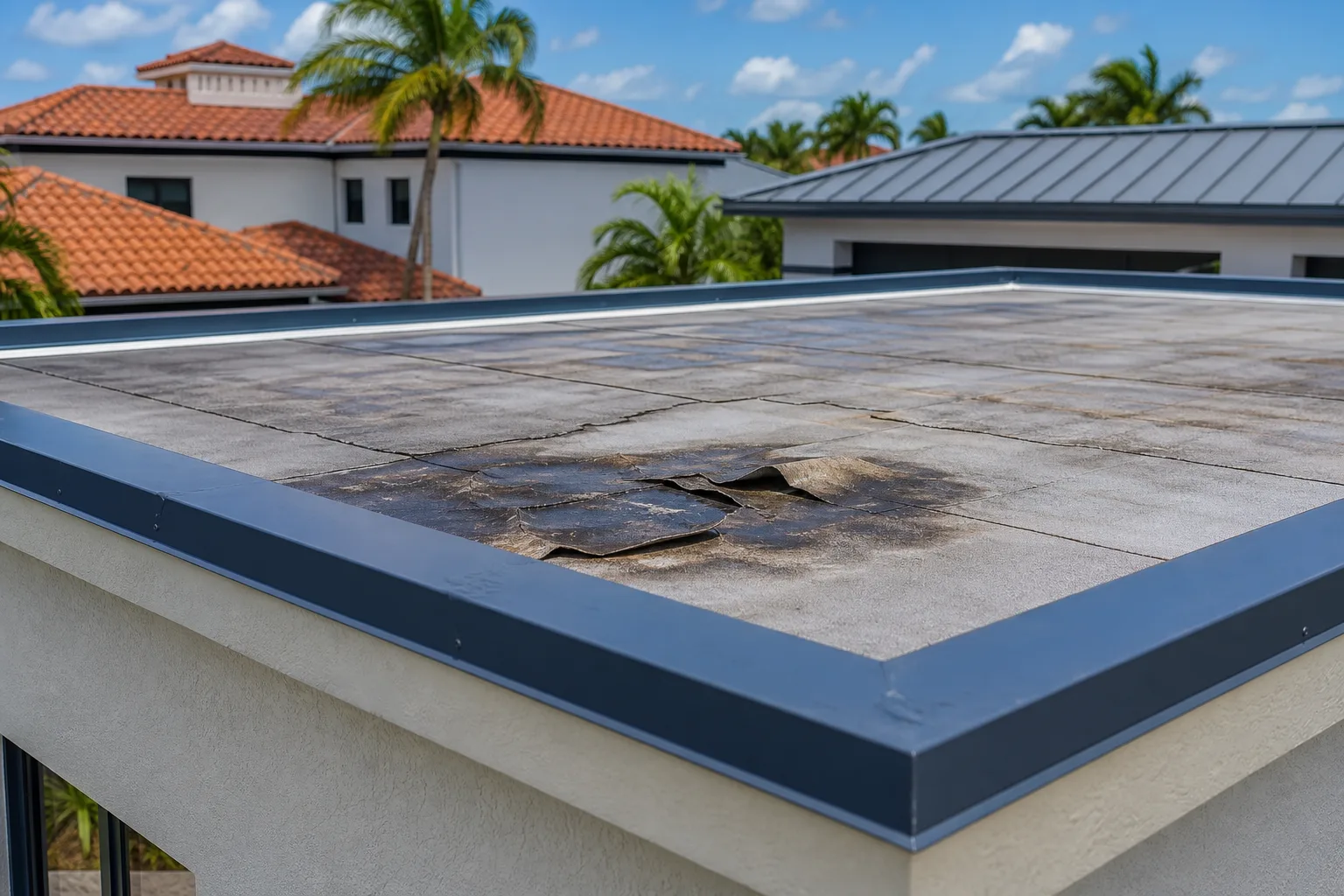
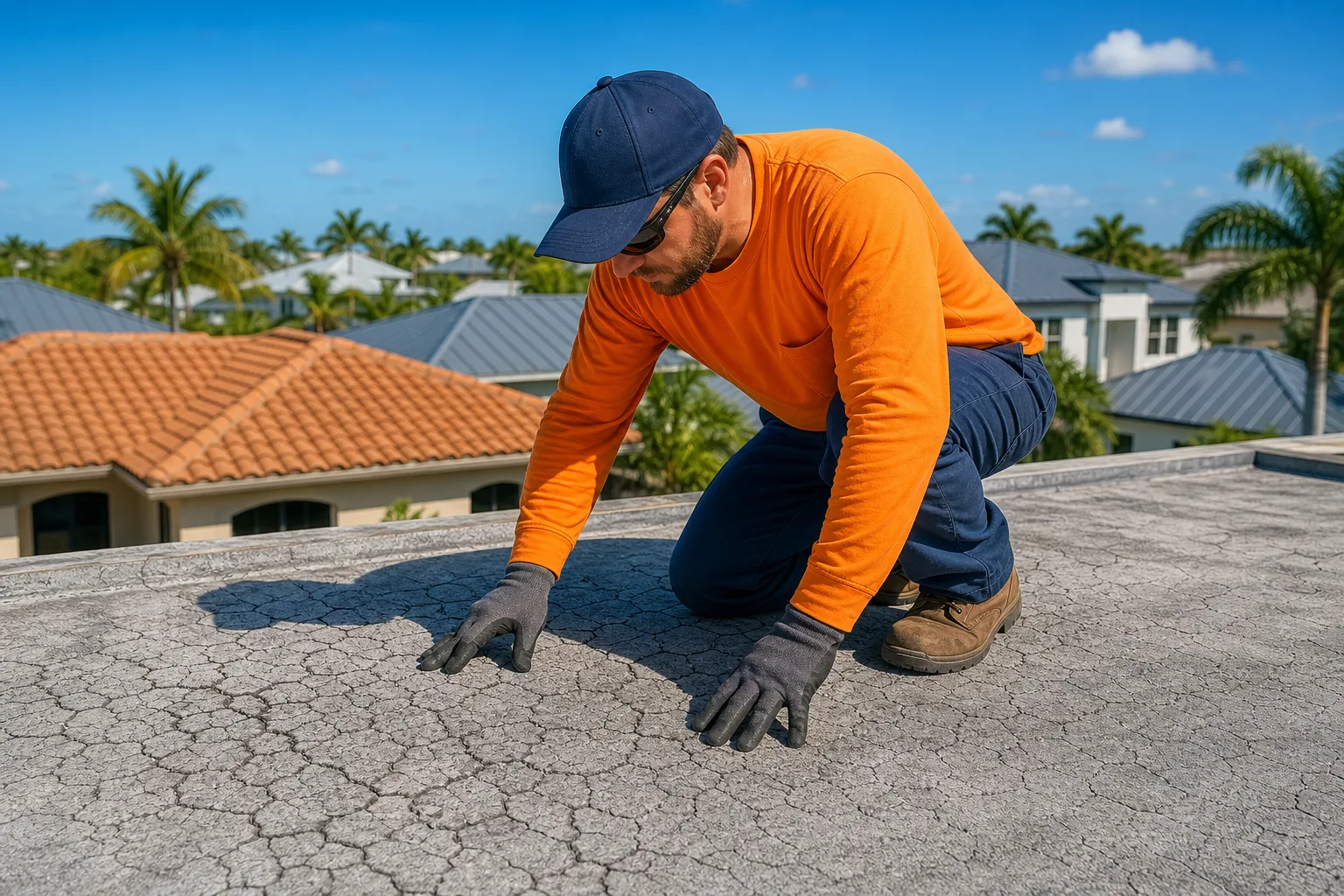
2. Check the membrane surface across the whole roof, not just the problem area. I look for alligatoring (a pattern of surface cracks that looks like reptile skin), widespread bubbling or blisters, seams that are lifting or separating, and areas where the membrane has shrunk away from edges or penetrations. Any of those conditions across a large portion of the roof changes the conversation.
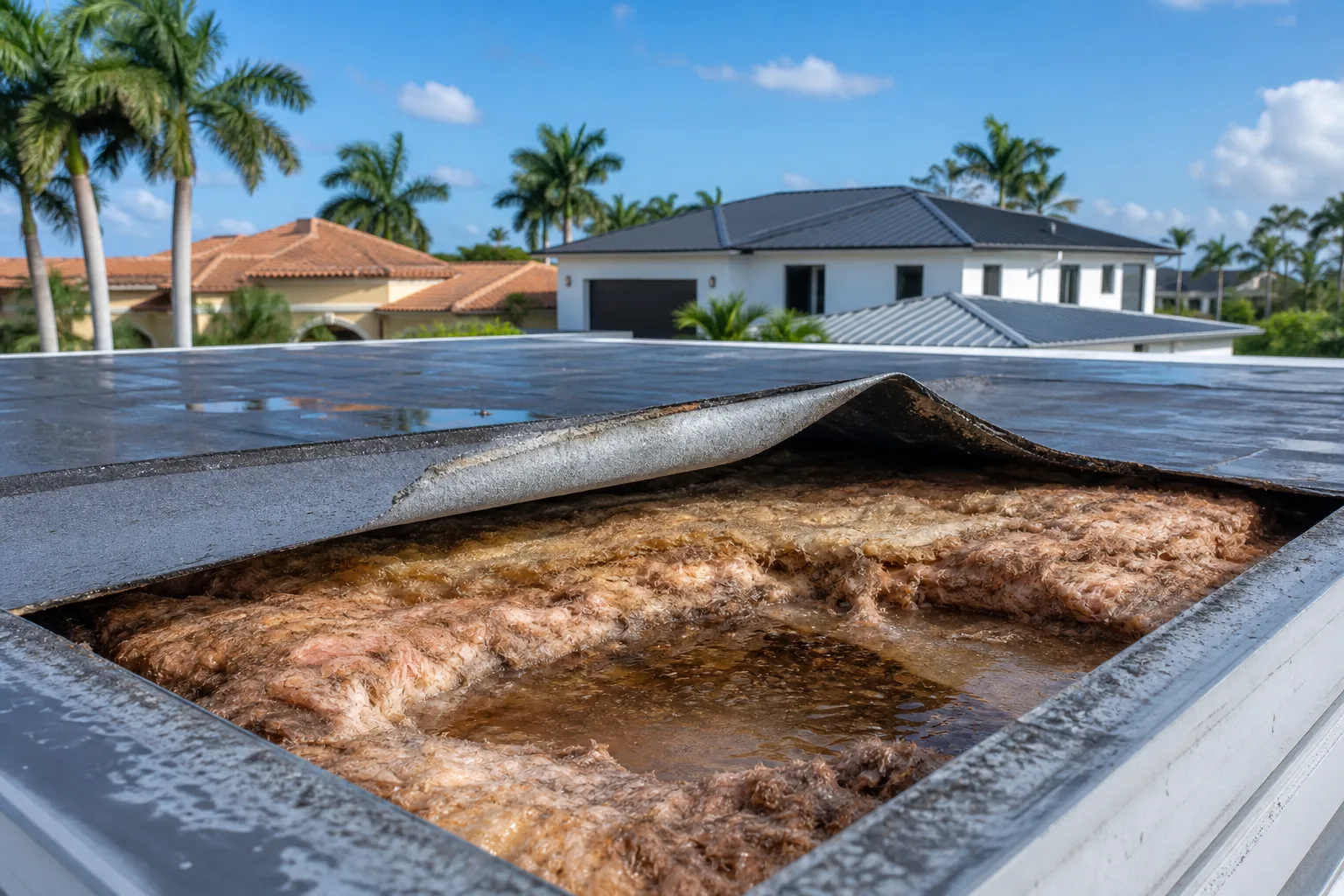
3. Walk the deck. Soft spots underfoot mean moisture has reached the substrate. That changes the scope entirely, because a new membrane over wet or rotted decking will fail early. See what roofers do when they find wet insulation under a flat roof for more on how that gets handled.
4. Check the age and repair history. A TPO, EPDM, or modified bitumen membrane typically carries a 15-to-20-year service life under normal South Florida conditions, though heat and UV exposure here can shorten that. If the membrane is already 15-plus years old and showing surface degradation, patching buys very little time.
5. Count prior patches. If a section of roof has been patched two or more times in the same general area, the membrane has lost its ability to bond cleanly. Each subsequent patch has a shorter lifespan than the last.
The Case for Patching
A patch is a legitimate repair, not a shortcut, when conditions support it.
Patching works well when:
- Damage is limited to a small, clearly defined area (a puncture, a failed pipe boot, a single open seam)
- The membrane around the damage is still flexible, fully bonded, and not showing surface degradation
- The deck underneath is dry and solid
- The roof is within the first half of its expected service life
- You have not patched this same spot before
In South Florida, storm seasons can punch through an otherwise healthy membrane at a fastener head or around a rooftop unit. A focused repair on a 7-year-old membrane that is otherwise intact is exactly what a patch is designed for.
One honest note: patches on flat roofs need to be done correctly. The patch material needs to match the existing membrane type (you do not bond EPDM patch tape over modified bitumen and expect it to hold). The area needs to be clean, dry, and primed where required. A sloppy patch can fail faster than no repair at all.
Spotted a leak or missing tiles? Schedule a repair visit
The Case for Full Membrane Replacement
Full replacement costs more upfront, but it is the right answer when patching would just delay the inevitable.
Replacement makes sense when:
- Leaks are coming from multiple locations, or the source is genuinely hard to isolate
- The membrane shows widespread alligatoring, crazing, or seam separation across more than roughly 25 percent of the surface area
- The deck has soft spots or the insulation layer is saturated
- The membrane is at or past its expected service life
- You have already patched the same area more than once
- A new rooftop unit, solar installation, or addition is changing the drainage or load pattern anyway
For commercial buildings especially, repeated patch cycles can eat through a maintenance budget faster than a planned replacement would have. A full membrane replacement also resets the warranty clock, which matters if you are managing a property with tenant obligations.
Millennium Makeover handles both residential and commercial flat roof work across South Florida. If you are dealing with a commercial property, our commercial roofing page has more on the system types we install.
The Middle Ground: Restoration Coatings
There is a third option worth knowing about, though it does not fit every situation.
If a membrane is degrading on the surface but the seams are still bonded and the deck is dry, a fluid-applied restoration coating can extend the roof's life by several years. This is not a patch and not a full tear-off. It is essentially a new waterproof layer applied over the existing membrane.
Coatings are not appropriate if:
- There is active ponding water that never drains
- The deck is compromised
- Seams are lifting or the membrane has delaminated in sections
A coating on a compromised substrate will fail and trap moisture underneath, making the eventual replacement more expensive. Use it only when a thorough inspection confirms the substrate is sound.
Verdict
If you have one isolated problem on a roof with life left in it, patch it correctly and move on. If you are chasing leaks across the surface, the membrane is visibly degraded across a wide area, or the deck underneath has taken on moisture, replacement is the more cost-effective path even though the upfront number is higher.
The fastest way to know which situation you are actually in is a proper inspection, not a guess from the ground. If you are in Boynton Beach, Delray Beach, Boca Raton, West Palm Beach, or the surrounding area, request a quote or use our instant estimate tool to get the process started. We will tell you what we see and what it actually takes to fix it.
If storm damage is part of the picture, the Hurricane Storm Center has guidance on how to handle the insurance and documentation side of things.
Spotted a leak or missing tiles?
Small problems get expensive fast in the Florida sun. Get it looked at by a local crew before the next storm.
Frequently asked questions
Can I patch a flat roof myself?
Small surface patches with compatible tape or sealant can be a temporary stop-gap, but they rarely hold as long as a professional repair. Getting the surface clean and dry enough for a proper bond is harder than it looks, and mismatched materials will fail faster. For anything beyond a temporary cover-up before a pro arrives, professional repair is worth the cost.
How do I know if my flat roof membrane has reached the end of its life?
Signs include widespread surface cracking (alligatoring), seams that are lifting or no longer bonded, areas where the membrane has pulled away from edges or penetrations, and a history of recurring leaks even after repairs. Age alone is not the only factor, but a membrane 15 or more years old showing any of these signs in South Florida's UV-heavy climate is usually at the end of its useful life.
Does a flat roof replacement require a permit in Florida?
Yes, in most Florida jurisdictions a full roof replacement requires a permit and inspection. This applies to residential and commercial properties. Work done without a permit can create problems when you sell the property or file an insurance claim. A licensed contractor like Millennium Makeover (CCC1326328) will pull the required permits as part of the job.
What flat roof membrane types are common in South Florida?
TPO (thermoplastic polyolefin) and modified bitumen are the most common systems on South Florida commercial and residential flat roofs. EPDM is also used but less frequently in this climate. Each system has different patching requirements, which is one reason matching the patch material to the existing membrane type matters so much.