TPO Roofing Explained: Is It the Right Flat Roof for Your Commercial Building?
In this article
TL;DR: TPO (thermoplastic polyolefin) is a heat-welded, white single-ply membrane suited to flat and low-slope roofs. It reflects heat well, which matters in South Florida. Its main competition is EPDM and modified bitumen, each with different tradeoffs on cost, durability, and installation sensitivity.
At a Glance: TPO vs. EPDM vs. Modified Bitumen
| Factor | TPO | EPDM | Modified Bitumen |
|---|---|---|---|
| Color / reflectivity | White standard, high solar reflectance | Black standard (white available) | Dark standard, limited reflectance |
| Installation method | Heat-welded seams | Adhesive or mechanically fastened | Torch-applied or cold adhesive |
| Seam strength | High when properly welded | Moderate (adhesive seams) | Moderate to high |
| FL wind uplift performance | Dependent on attachment method | Dependent on attachment method | Dependent on attachment method |
| Typical thickness range | 45 mil to 80 mil | 45 mil to 90 mil | Layered system, varies |
| Heat and UV performance | Good reflectance, formulation matters | Good UV resistance | Moderate |
| Maintenance access | Easy to walk, easy to weld repairs | Easy to walk | Can be slippery when wet |
All three systems can be code-compliant under Florida Building Code when installed with the correct attachment and approved assemblies. The table shows tendencies, not absolutes.
What TPO Actually Is
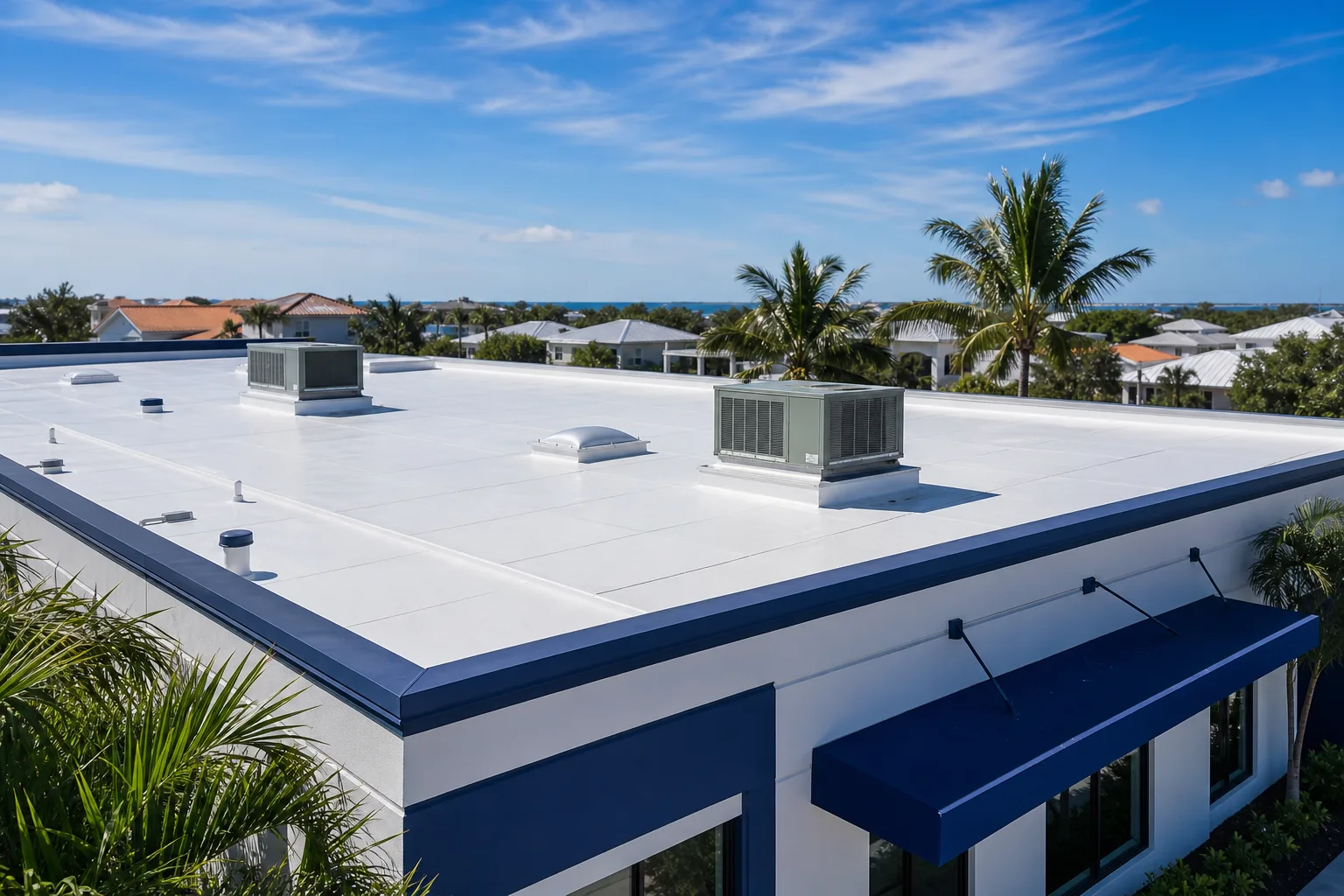
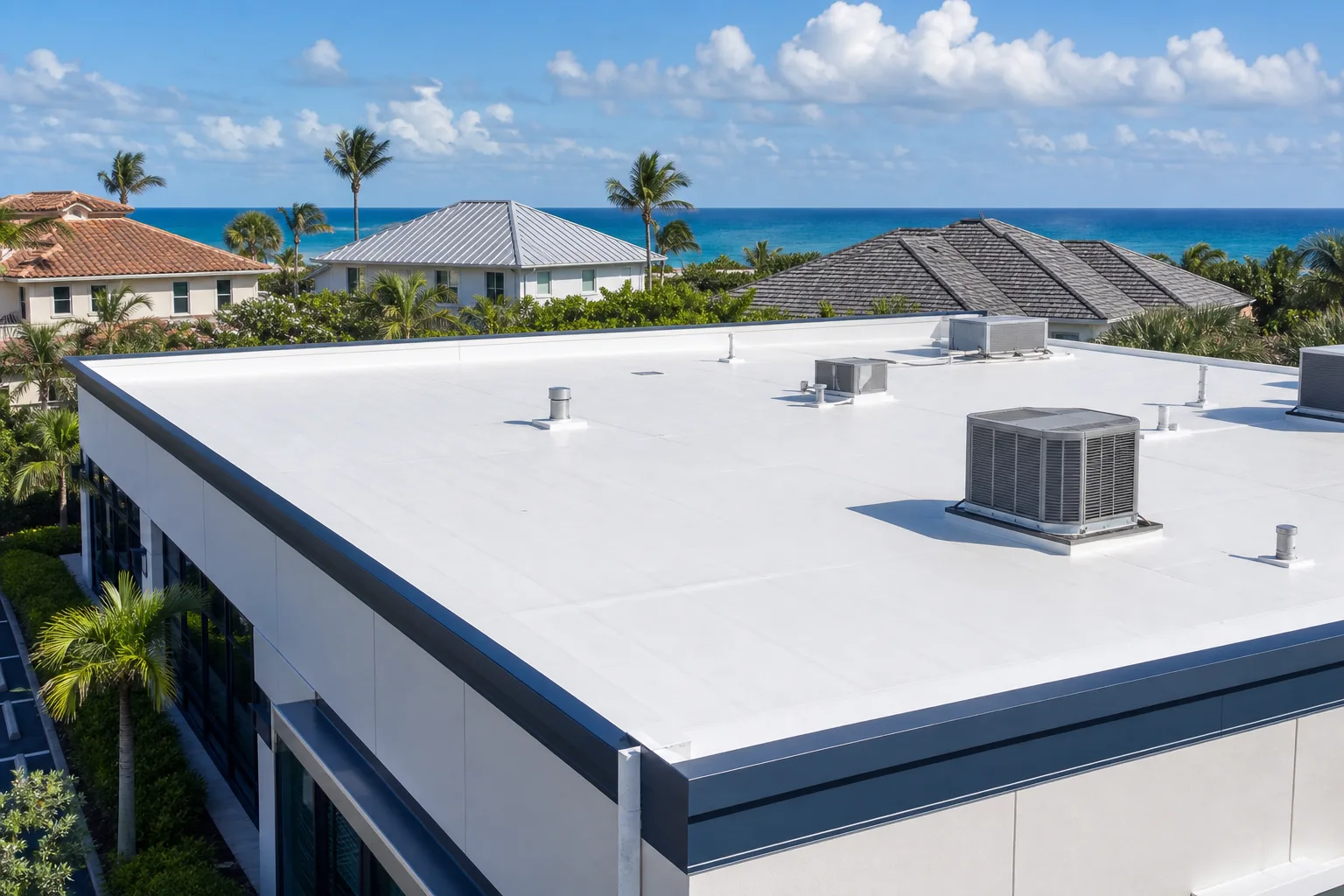
TPO stands for thermoplastic polyolefin. It is a single-ply roofing membrane made from a blend of rubber and plastic compounds, typically reinforced with a polyester scrim. The finished sheet is white or light gray on the surface, which is the default, and it reflects solar radiation rather than absorbing it.
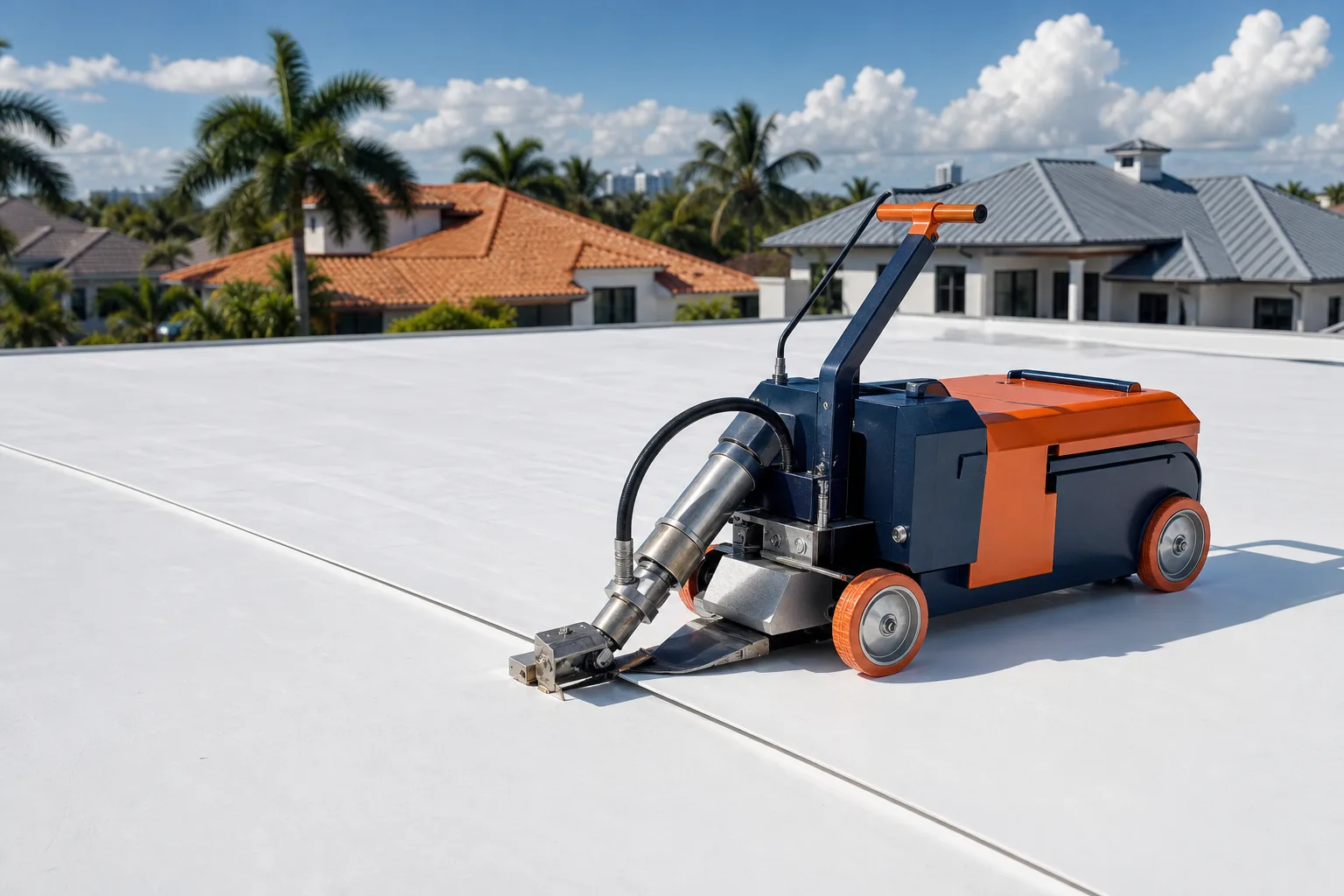
The defining feature of TPO is its installation method. Seams are heat-welded using a hot-air gun or an automated welder, which fuses two sheets into a continuous bond. A properly welded TPO seam is often stronger than the membrane itself. That is a meaningful claim because seam failure is one of the most common ways flat roofs leak. If you have seen signs of membrane problems, the flat roof membrane failure checklist gives a useful pre-inspection walkthrough.
TPO membranes are available in thicknesses from 45 mil to 80 mil. Thicker membranes resist puncture and weathering better, but cost more. The 45-mil option is the minimum most roofers recommend for commercial work in South Florida, and some specify 60 mil or 80 mil for roofs with foot traffic or mechanical equipment.
Why South Florida Conditions Matter
Flat roofs in Boynton Beach, Delray Beach, and the broader Palm Beach County corridor deal with three overlapping stressors that affect membrane choice.
Intense UV and heat. A dark EPDM or modified bitumen surface can reach 160 to 180 degrees Fahrenheit on a summer afternoon. White TPO reflects a large portion of that energy, which reduces surface temperature and slows membrane degradation. It also reduces cooling load for the building below, which matters for owners paying South Florida electricity rates.
Wind uplift. Hurricane-season wind pressure on a flat roof is handled by the attachment system, not the membrane type. A TPO system can be mechanically fastened, fully adhered, or ballasted. Mechanically fastened systems are common but can be vulnerable to membrane flutter at seams in high winds. Fully adhered systems tend to perform better in wind events but cost more to install. The Florida Building Code requires roofing assemblies to carry a valid Miami-Dade Notice of Acceptance (NOA) or Florida Product Approval for high-velocity hurricane zones. Confirm that any system proposed for your building includes this documentation.
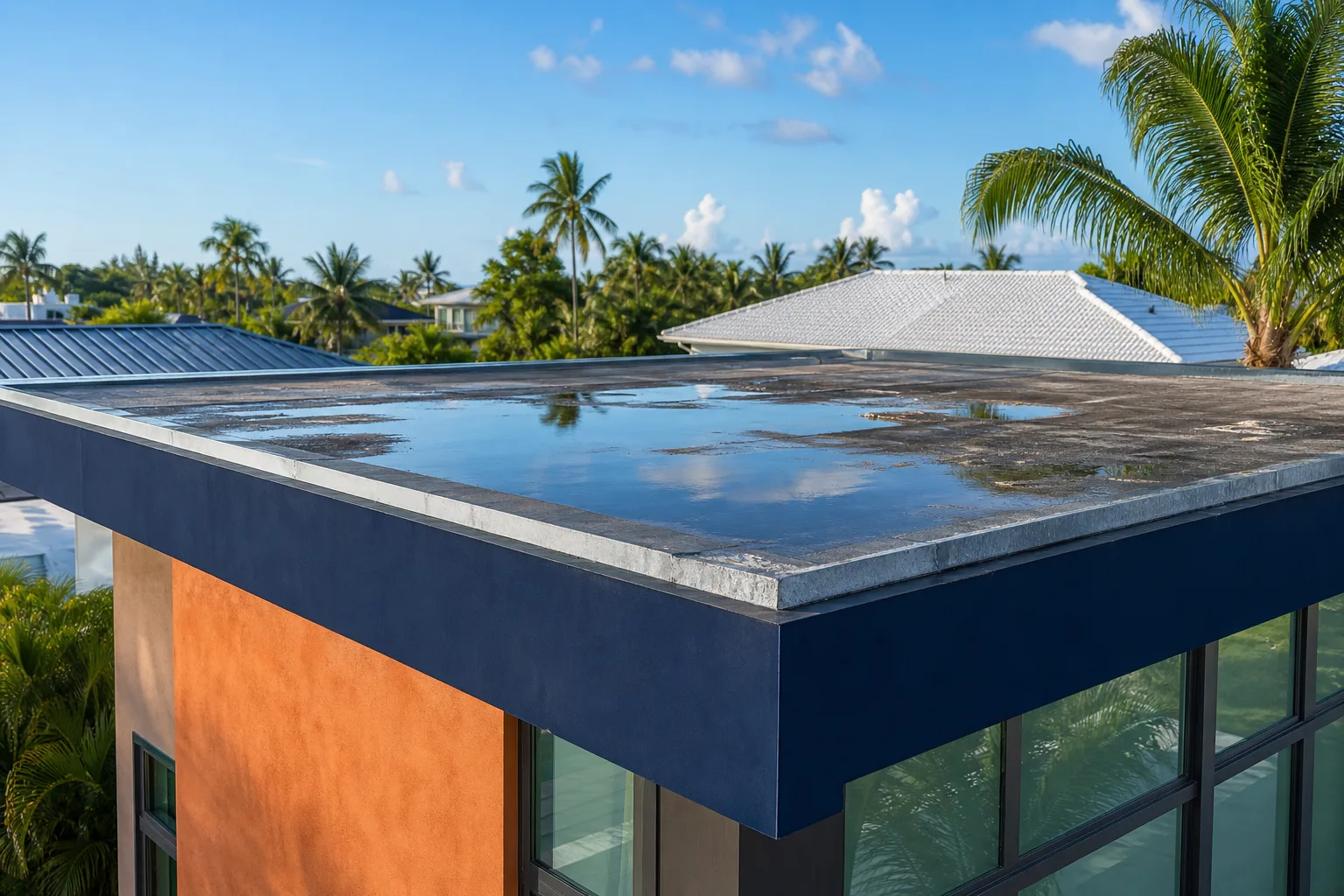
Ponding water. Any flat or low-slope roof in South Florida will see standing water after a summer storm if drainage is not designed correctly. TPO handles intermittent ponding reasonably well, but chronic ponding accelerates membrane breakdown on any system. Drainage design matters more than membrane choice for this problem.
Protecting a commercial property? Request a commercial assessment
TPO's Weaknesses You Should Know
TPO has one well-documented weak point: formulation inconsistency. Early TPO products from the 1990s had significant problems with brittleness and seam failure. Modern formulations are more stable, but quality still varies by manufacturer. A TPO membrane from a manufacturer with a long track record and a strong warranty is a different product from a low-bid alternative with a short warranty.
Welder skill is the other variable. A heat-welded seam is only as good as the operator and the equipment calibration. Underheated seams do not bond fully. Overheated seams can burn through. This is not a reason to avoid TPO, but it is a reason to ask your contractor specifically about their welding process and quality control.
TPO is also less forgiving of foot traffic on rough or sharp substrates. Rooftop HVAC equipment, conduit, and walkway edges are common puncture sources. Walkway pads should be part of any commercial TPO installation where maintenance crews will access mechanical equipment.
When TPO Makes the Most Sense
TPO tends to be a strong choice when:
- The building has a large, relatively simple flat or low-slope roof with limited penetrations.
- Energy efficiency and reflectivity are a priority, particularly for buildings with significant cooling costs.
- The owner wants strong seam integrity and is willing to invest in a quality installation with an 80-mil membrane.
- The project budget supports a fully adhered system for better wind uplift resistance.
TPO tends to be a less obvious choice when:
- The existing roof has many penetrations, complex geometry, or heavy rooftop equipment. More penetrations mean more flashings, and flashings are where TPO installations are often weakest if rushed.
- A lowest-bid contractor is selected. TPO rewards quality installation more than some competing systems.
- The building is residential. TPO is used almost exclusively on commercial, industrial, and some multifamily structures. It is not a typical choice for single-family homes.
For residential flat or low-slope sections, modified bitumen is more common in South Florida. Your residential roofing options cover what is typically used in that context.
How to Compare Bids for a TPO System
When you receive estimates for a TPO reroof or overlay, look for these specifics rather than comparing top-line numbers.
- Membrane thickness. 45 mil, 60 mil, or 80 mil. Higher is better for durability.
- Attachment method. Mechanically fastened or fully adhered. Ask which the estimate assumes and why.
- Manufacturer and product approval. The system should have a current Florida Product Approval number. Ask for it.
- Warranty terms. Manufacturer warranty covers the membrane. Workmanship warranty covers installation. Both should be documented.
- Flashing and termination details. How penetrations, edges, and drains are treated matters as much as the field membrane.
For a broader guide to interpreting what roofing estimates actually include, the line-by-line estimate breakdown is worth reviewing before you sign anything.
Verdict
TPO is a capable, well-established flat roof membrane that fits South Florida's climate reasonably well, particularly its heat-reflective surface. Its reputation for seam strength is deserved when it is installed by an experienced crew with proper equipment. Its weaknesses are formulation quality and installer skill, both of which you control by being selective about the contractor and the product specified.
For large commercial buildings with straightforward roof geometry and a priority on energy efficiency, TPO is a defensible first choice. For complex rooftops or projects where the lowest bid wins the job, the risks increase.
If your building has an existing flat roof and you are not sure whether it needs repair or full replacement, the flat roof repair vs. replacement guide walks through that decision. When you are ready to get a commercial roofing assessment, request a quote or use the instant estimate tool to start the conversation with Millennium Makeover's commercial team.
Protecting a commercial property?
We handle flat, tile, and metal commercial roofs across Palm Beach County with minimal disruption to your operation.
Request a commercial assessment
Frequently asked questions
How long does a TPO roof typically last in South Florida?
Manufacturer warranties on TPO systems commonly range from 10 to 20 years depending on membrane thickness and the specific product. Actual service life depends heavily on installation quality, UV exposure, and how well drainage is maintained. A 60-mil or 80-mil system from an established manufacturer, properly installed and periodically inspected, can reach or exceed its warranty term in South Florida conditions.
Can TPO be installed over an existing flat roof without a full tear-off?
In some cases, yes. Florida Building Code limits the number of roof layers allowed, and an overlay is only appropriate if the existing deck and substrate are structurally sound and dry. A contractor should probe for moisture in the existing assembly before recommending an overlay, because trapping wet insulation under a new membrane accelerates failure.
Is TPO a good choice for a condominium or multifamily building?
TPO is regularly used on multifamily and condominium buildings with flat or low-slope roofs. The key considerations are the same as for any commercial application: attachment method, membrane thickness, and penetration flashing details. Buildings with rooftop mechanical equipment or frequent HVAC access should budget for walkway pads to protect the membrane surface.
Does a TPO roof require a permit in Palm Beach County?
Yes. Roof replacement in Palm Beach County requires a building permit, and the installed system must carry a valid Florida Product Approval or Miami-Dade NOA. Your licensed contractor should pull the permit and provide documentation showing the specific TPO assembly meets local code requirements. Never accept a bid that proposes to skip the permit process.