How to Choose the Right Shingle Color for a Florida Home
In this article
TL;DR: In Florida, shingle color affects energy bills, HOA approval, and long-term home value. Start with any HOA or deed restriction requirements, then factor in heat reflectivity and your home's exterior palette. Most South Florida homeowners land on a mid-range tone, such as weathered wood, light gray, or sand, that balances all three.
What you need
- Your HOA governing documents or architectural review committee (ARC) contact
- A copy of your home's exterior paint color (the brand and code, if available)
- A shingle manufacturer's color chart, including their "Cool Roof" or IR-reflective options
- A Florida building permit if a full replacement is involved (your contractor handles this)
- Basic knowledge of which direction your roof faces
Step 1: Check HOA and deed restrictions first
This is the non-negotiable step. Many South Florida communities, especially in Boca Raton and Delray Beach, have an ARC that pre-approves a limited palette of shingle colors. Installing a color outside that list can result in a mandatory replacement at your expense.
Get the approved color list in writing before you do anything else. If the list references brand names, ask your roofing contractor to cross-reference equivalent products, since manufacturers update their lines regularly.
If you live in an unincorporated area or a community without an HOA, you have full flexibility, but local municipalities may still have aesthetic codes. A quick call to your county planning department confirms whether any restrictions apply.
Step 2: Understand how shingle color affects heat in Florida
Dark shingles absorb more solar energy. In South Florida's climate, that directly affects attic temperatures, which in turn affects how hard your air conditioning works. This matters more here than in almost any other region of the country.
That said, modern shingles marketed as "cool roof" or "energy-efficient" use infrared-reflective (IR) granules regardless of surface color. A medium charcoal shingle with IR granules can outperform a standard light tan shingle on actual heat rejection. Look for ENERGY STAR certification or Florida Product Approval numbers when comparing options.
For reference, the Florida Building Code has provisions related to roof solar reflectance in some construction categories. The Florida Building Commission publishes current energy code requirements if you want to verify what applies to your project type.
If your attic already runs hot or your AC struggles in summer, leaning toward lighter tones or IR-rated shingles is a practical choice. You can read more about how attic conditions interact with roofing in Why Your Attic Is the First Place to Check for Roof Problems.
Step 3: Match your home's exterior palette
Shingle color should complement your roof's largest visual partners: exterior wall color, trim, and any stone or brick accents. Here's a decision table to help narrow options by wall color:
| Exterior Wall Color | Colors That Tend to Work | Colors That Tend to Clash |
|---|---|---|
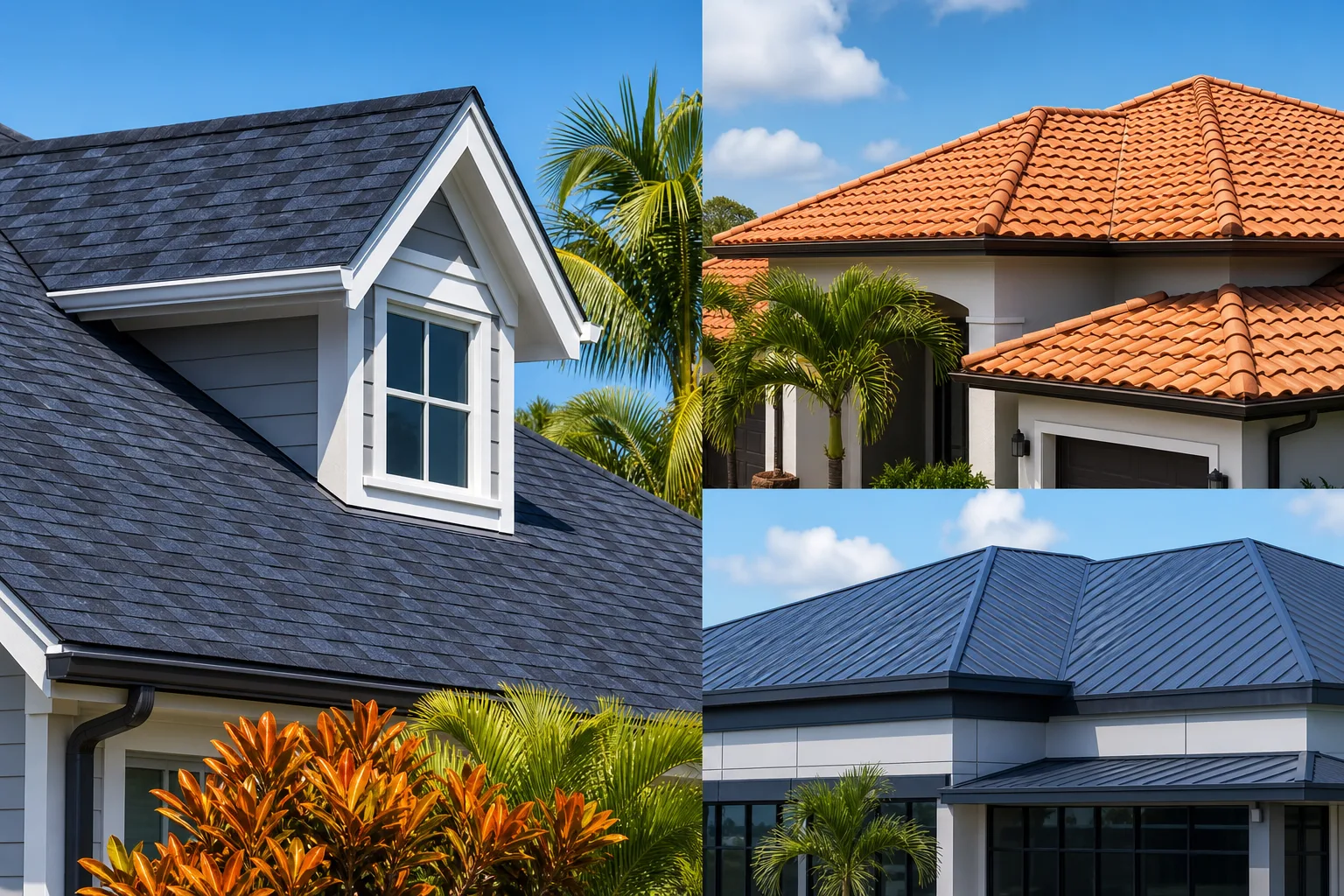
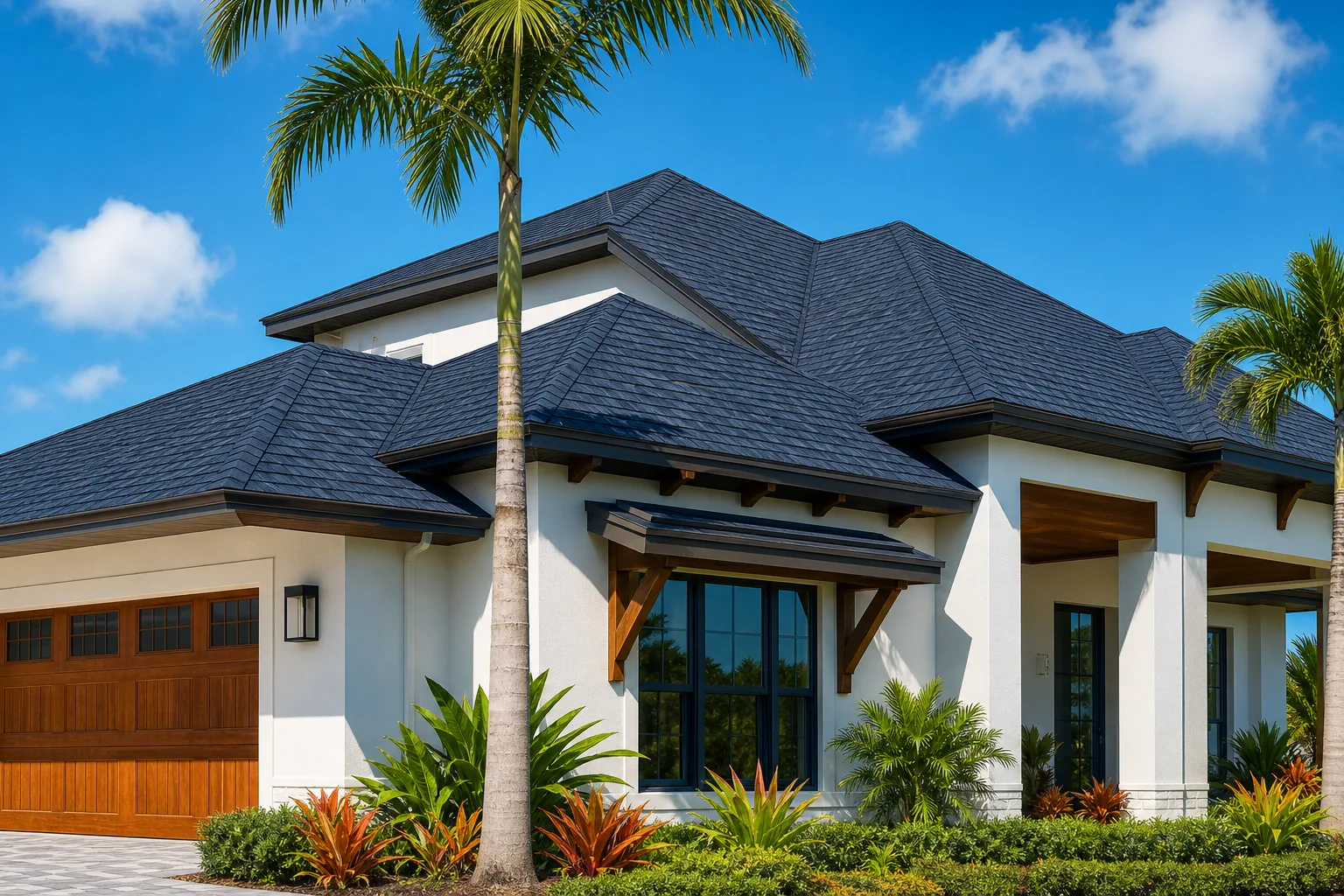
| White or light gray | Charcoal, slate gray, weathered wood | Bright reds, bold greens |
| Beige or tan | Weathered wood, brown blend, sand | Dark black, cool grays |
| Pale yellow or cream | Brown blend, terra cotta blend, gray | Blue-tone grays, black |
| Medium blue or teal | Gray blend, slate, weathered wood | Warm browns, orange blends |
| Coral or peach | Brown blend, gray, sand | Charcoal, dark green |
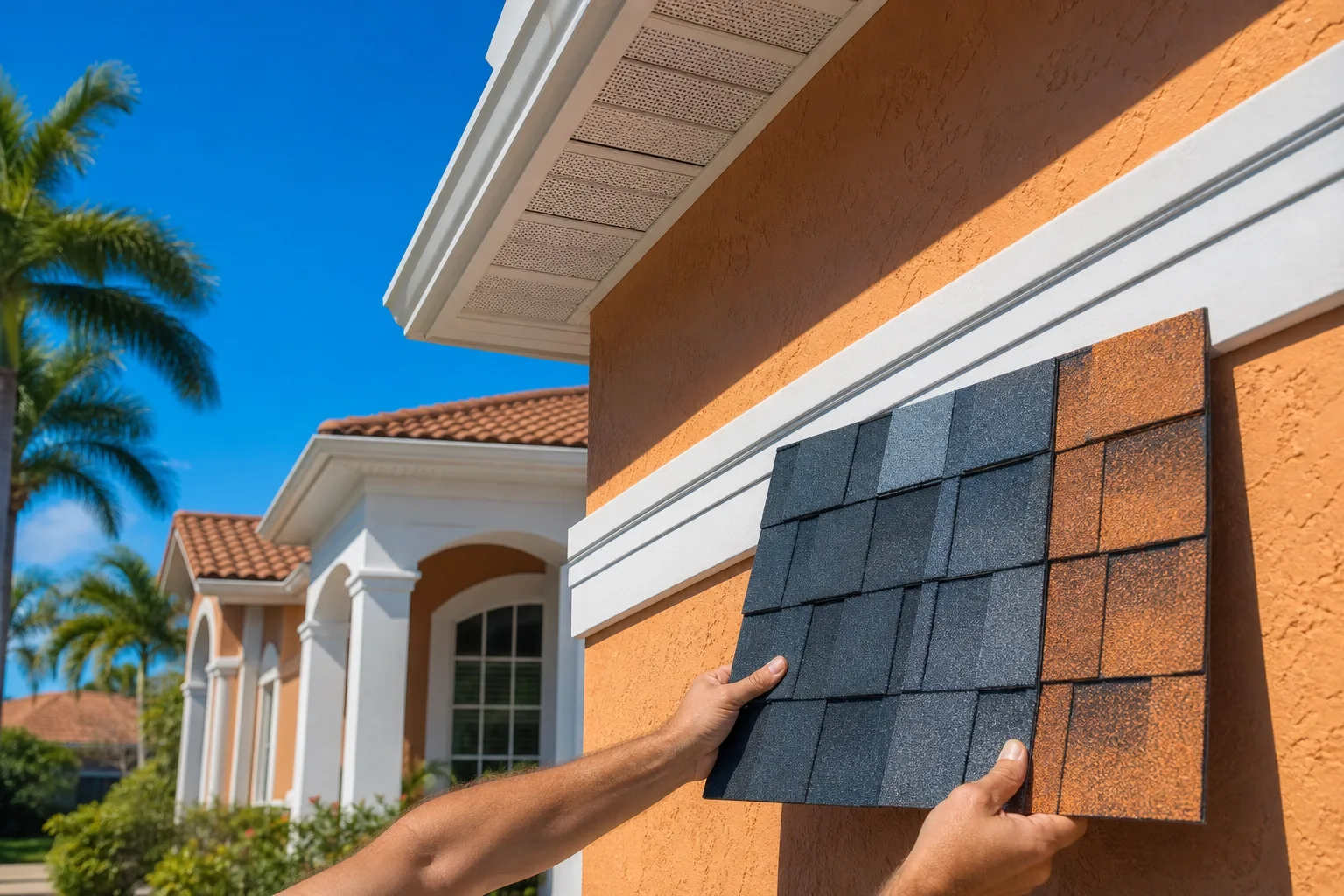
These are tendencies, not rules. Viewing physical shingle samples against your actual exterior in direct sunlight is the most reliable method. Colors look different on a color chart than on a hot Florida roof in afternoon light.
Also consider that shingles weather slightly over time. Lighter shingles may show algae staining faster in Florida's humidity. Algae-resistant shingles with copper or zinc granules are widely available and worth requesting specifically.
Want to know what your roof actually needs? Get a free estimate
Step 4: Factor in resale value and neighborhood fit
Extreme or unusual shingle colors narrow your buyer pool when you sell. This is especially true in established South Florida neighborhoods where most homes trend toward a consistent look.
Neutral tones, grays, weathered browns, and sand-based blends, consistently perform well in resale research because they offend the fewest buyers. Bold choices like bright red or forest green may reflect your taste accurately but may not reflect well on an appraisal.
A useful gut check: look at recent sales in your neighborhood using the county property appraiser's photo tool. Note what shingle tones appear on homes that sold quickly and at asking price.
Step 5: Get samples and view them in context
Once you have a short list of two or three colors, request physical shingle samples from your contractor. Do not rely solely on a screen or printed brochure.
Hold the sample against your exterior wall at midday when the sun is high. Step back 20 feet and check the relationship between the sample and your trim, soffit, and fascia. Check again in the evening light, which is warmer and changes the perceived tone significantly.
If your roofing contractor has completed similar projects nearby, ask to visit an installed example. Millennium Makeover maintains a project gallery where you can see completed shingle roofs on South Florida homes, which can help you visualize how specific tones look once installed.
Common mistakes
Choosing color from a photo on a phone. Screen brightness and color calibration make shingle colors look different than they do on an actual roof in Florida sunlight. Always use a physical sample.
Skipping the HOA check. Replacing a non-approved shingle color after installation is an avoidable expense. Do this step first, not last.
Ignoring algae resistance. Florida's humidity makes algae streaking a real issue on lighter shingles. Skipping algae-resistant granules can mean visible staining within a few years. You can see what algae staining versus actual water damage looks like in Roof Stain: Algae, Mold, or Water Damage?.
Assuming dark means poor performance. A dark shingle with an IR-reflective granule layer can outperform a plain light shingle. Read the product spec sheet, not just the color chip.
Matching only the current paint color. If you plan to repaint the exterior within a few years, factor in that future direction. Shingles last 20 to 30 years. Your wall color may change; the shingles will not.
Bottom line
For most South Florida homeowners, the decision comes down to: what does your HOA allow, what keeps your attic cooler, and what makes your home look like it belongs in the neighborhood. Work through those three filters and you will usually land on one or two solid candidates.
If you want a set of eyes on your specific roof and exterior before committing, our estimating process includes a review of shingle options relevant to your home's profile. You can start with a free instant estimate or request a quote for a full shingle roof replacement conversation. You can also learn more about our shingle roofing services to see what product lines we work with in South Florida.
Want to know what your roof actually needs?
Millennium Makeover has been roofing South Florida homes and businesses since 2005. Get a straight, no-pressure estimate from a licensed local crew (CCC1326328).
Frequently asked questions
Do lighter shingle colors actually lower energy bills in Florida?
They can, but the effect depends more on whether the shingle has IR-reflective granules than on visible color alone. A light-colored shingle without reflective granules may perform similarly to a medium-tone shingle that carries an ENERGY STAR rating. Ask your contractor for the product's solar reflectance index (SRI) rather than relying on color alone.
How do I find out what shingle colors my HOA allows?
Contact your HOA's architectural review committee directly and ask for the approved material and color list in writing. Some HOAs reference specific manufacturer product names; others just describe a tone range. Get written approval before installation, not after, since post-installation disputes can require a costly redo.
Will my shingle color affect my homeowner's insurance in Florida?
Color alone rarely changes your premium, but some insurers give credits for impact-resistant or ENERGY STAR-rated shingles regardless of color. When you replace your roof, ask your insurer what product attributes, not colors, qualify for a discount before you finalize the shingle choice.
How long before algae staining shows up on lighter shingles in South Florida?
In humid coastal environments like South Florida, algae streaking can appear within two to four years on standard shingles if conditions are right. Algae-resistant shingles with copper or zinc granules significantly slow that process and are a practical upgrade worth requesting when comparing product lines.