Why Roof Underlayment Matters More in Florida Than Anywhere Else
In this article
TL;DR
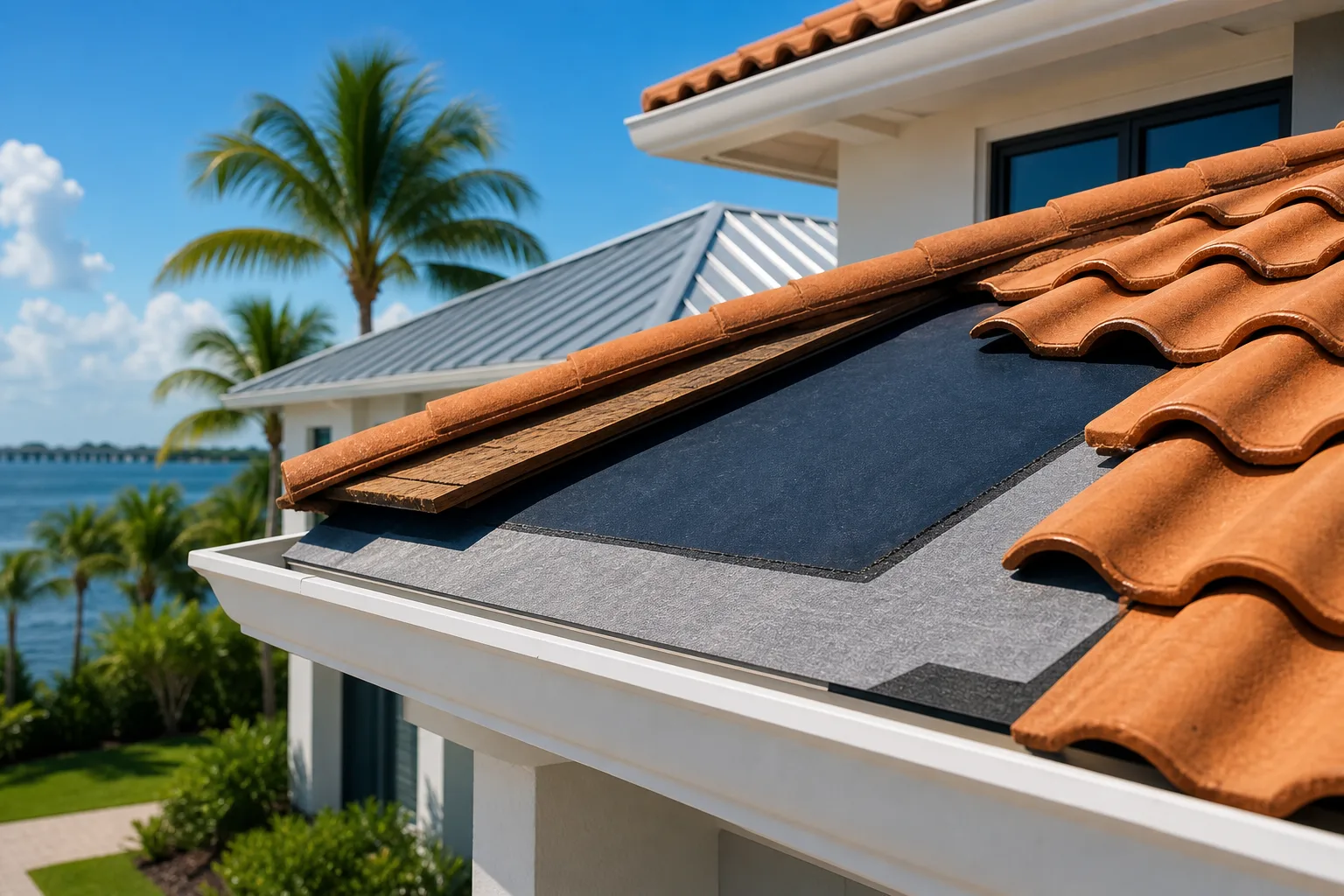
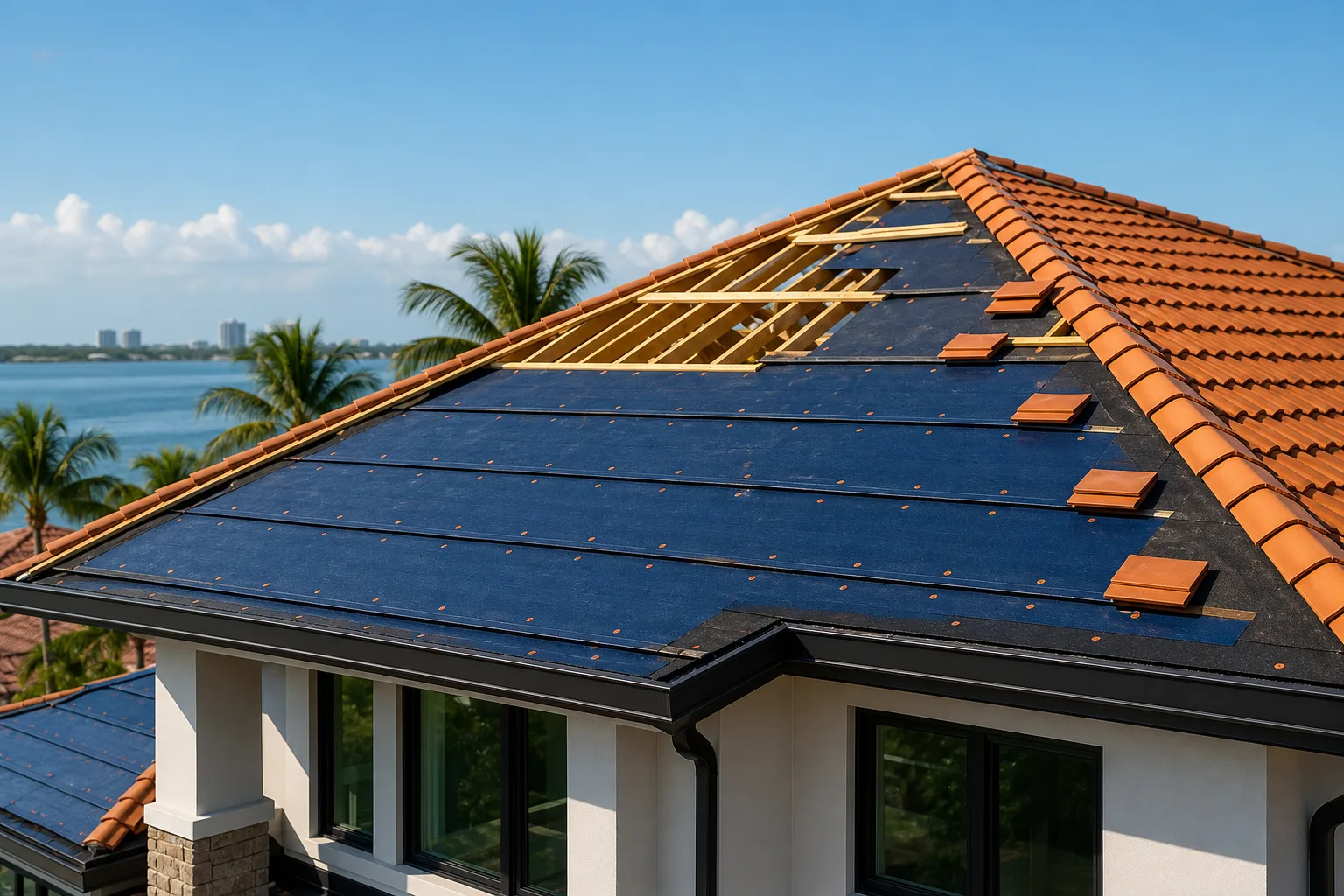
Underlayment is the waterproof layer between your roof deck and your shingles, tile, or metal. In most of the country it's a backup. In Florida, where wind-driven rain and Cat 2 to Cat 3 storms are a yearly possibility, it's often the only thing keeping water out once the roof covering is compromised. Florida Building Code has specific underlayment requirements for exactly this reason, and skipping the right one is one of the most common corners cut on cheap re-roofs.
What You Need
Before we get into the how, here's what a proper underlayment job requires:
- The right underlayment type for your roof covering. Self-adhered modified bitumen (peel-and-stick) or synthetic felt rated for your material and wind zone.
- A code-compliant fastening pattern, not just staples or minimal nails, especially in High-Velocity Hurricane Zones (Miami-Dade and Broward, though many South Florida jurisdictions follow similar wind provisions).
- Proper lap and overlap measurements at seams, valleys, and roof penetrations.
- Sealed penetrations around every pipe, vent, and skylight curb before the covering ever goes down.
- A permit and inspection, because underlayment installation is a mid-job inspection point in most South Florida municipalities, not something you find out about after the fact.
- Manufacturer compatibility between the underlayment, the covering material, and any adhesive or fastening system, since mismatched products can void warranties.
If you're not sure what's currently under your roof covering, that's normal. Most homeowners never see it unless there's a repair or replacement in progress. A free instant estimate is a good starting point if you're wondering whether your current setup meets today's standard.
Step 1: Understand What Underlayment Actually Does
Your shingles, tile, or metal panels are the first line of defense, but they're not actually waterproof on their own in the way people assume. Shingles shed water. Tile sheds water. Metal sheds water. All three rely on gravity and lapped design to move water downhold, and all three can be defeated by wind-driven rain that comes in sideways or gets forced upward under an edge.
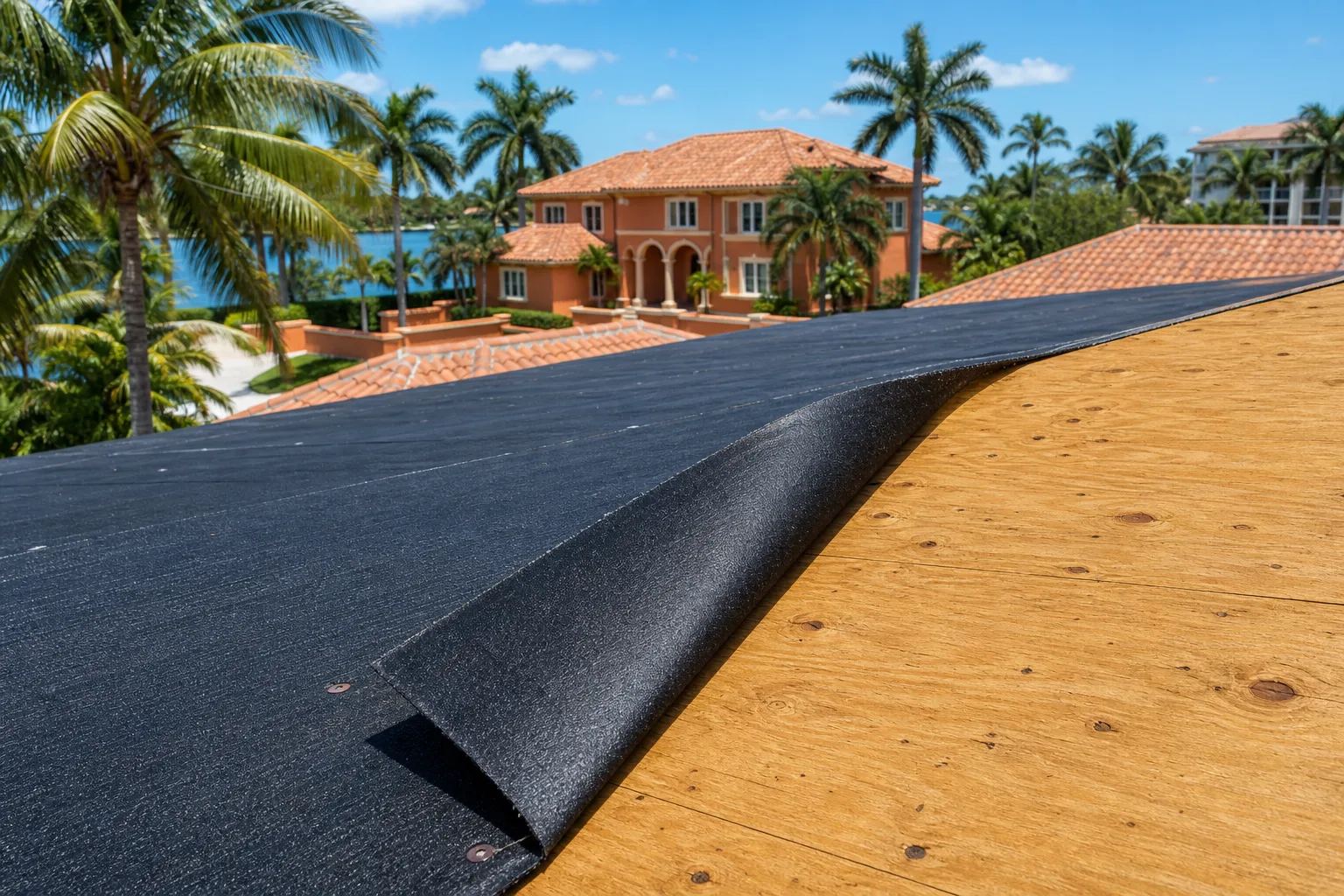
That's where underlayment comes in. It's the continuous waterproof membrane fastened directly to the roof deck, underneath everything else. When wind lifts a tile, cracks a shingle, or drives rain up under a metal panel seam, the underlayment is what stands between that intrusion and your wood decking, insulation, and ceiling drywall.
In most of the U.S., underlayment is treated as a backup layer for a worst-case scenario that rarely happens. In Florida, sideways rain during a tropical system isn't a worst-case scenario. It's a Tuesday in September.
Step 2: Know Why Florida Code Treats It Differently
Florida Building Code, particularly in High-Velocity Hurricane Zones, requires underlayment systems that are tested and rated for wind uplift and water intrusion in ways many other states don't mandate. This isn't bureaucratic overreach. It's a direct response to decades of hurricane damage claims where the covering held up reasonably well but the underlayment underneath was outdated, improperly lapped, or simply not rated for the wind speeds the storm produced.
Second-generation underlayment requirements (self-adhered membranes in many tile and metal applications, for example) exist because inspectors and insurers kept seeing the same failure pattern: covering damage that should have caused a localized repair instead caused a full interior ceiling collapse, because the layer underneath wasn't doing its job.
If your home was built or re-roofed before current code cycles, it's worth finding out what's actually under your tile or shingles. This matters most for tile roofs, where the underlayment often ages out well before the tile itself does, since clay and concrete tile can last 40-plus years while older felt underlayments were rated for maybe half that.
Step 3: Match the Underlayment to the Roof Covering and Wind Zone
Not all underlayment is created equal, and matching matters more than most homeowners realize.
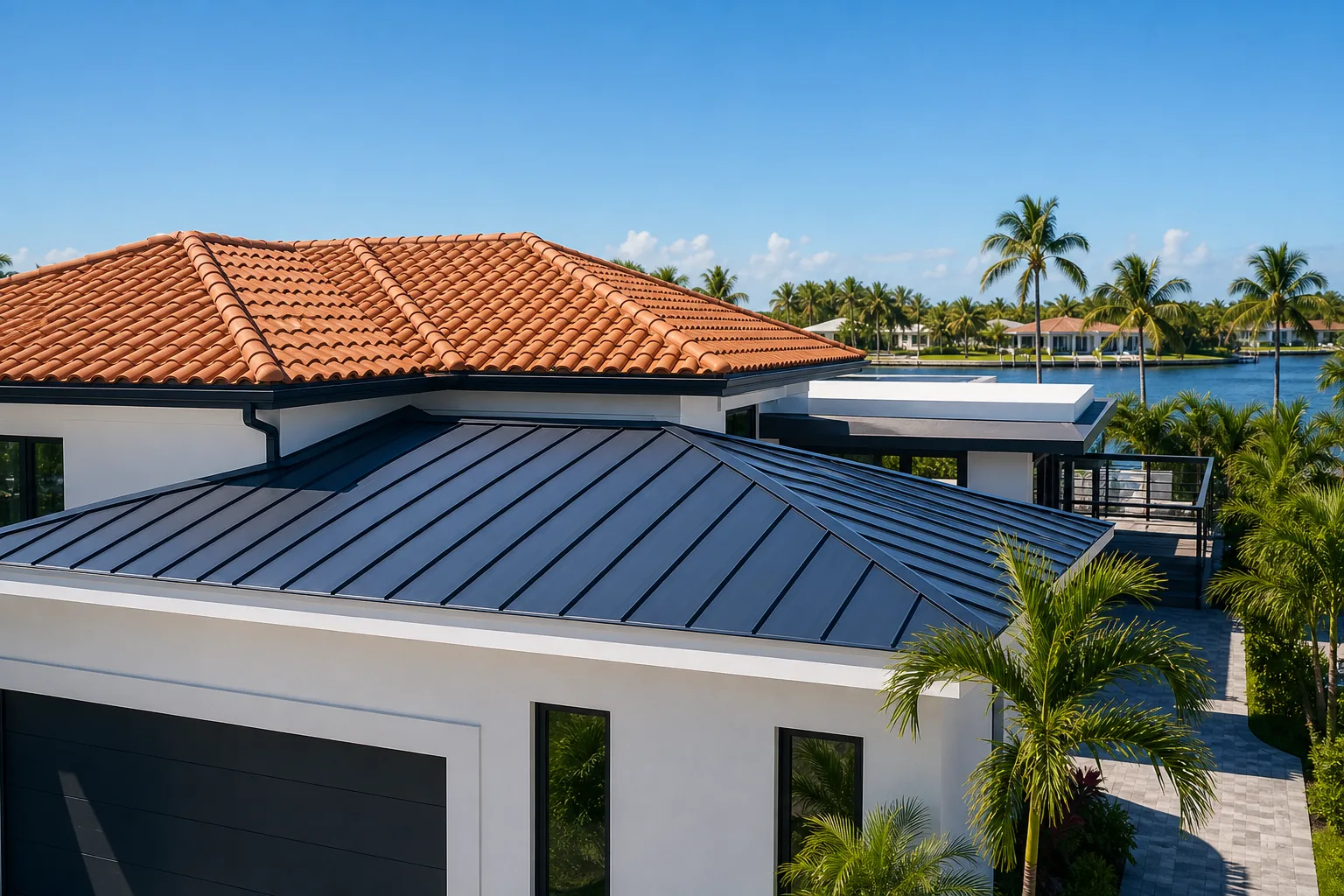
- Shingle roofs typically use synthetic underlayment or self-adhered membrane at eaves, valleys, and around penetrations, with the field area covered by a lighter-weight synthetic. Shingle roof systems in wind-borne debris regions need underlayment rated to work with the specific shingle's wind warranty, not just any generic product.
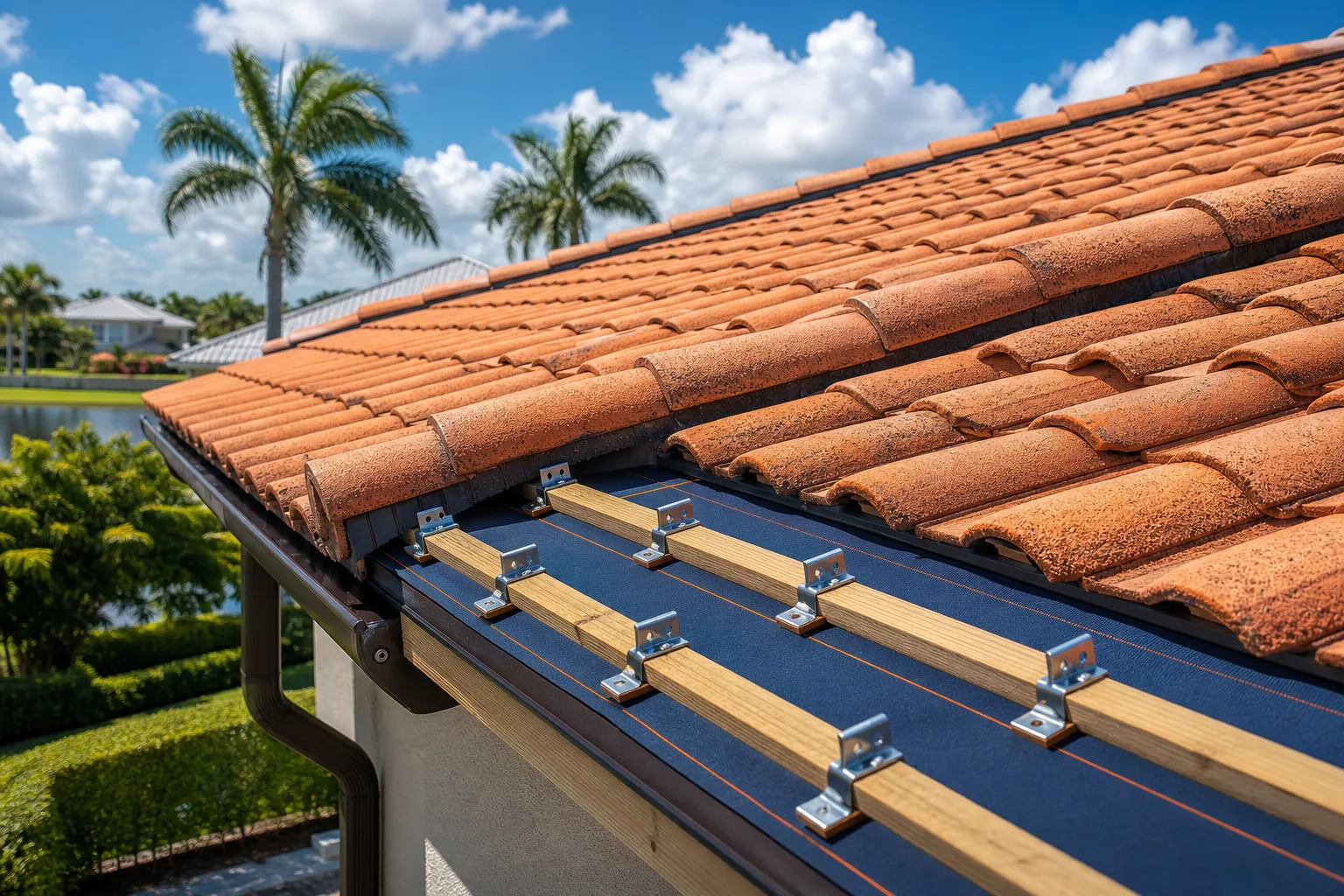
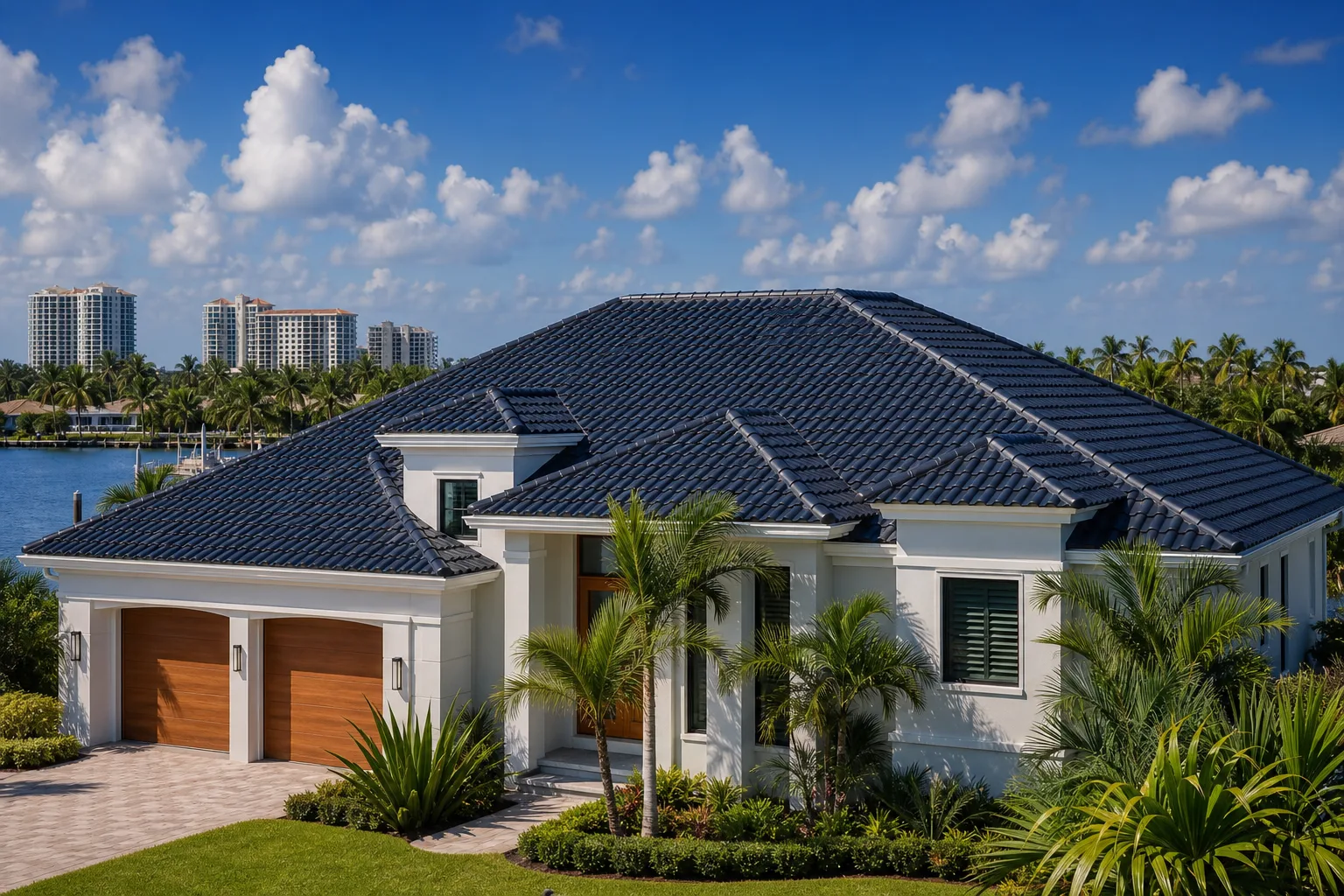
- Tile roofs almost always need a heavier self-adhered or hot-mopped modified bitumen system, since tile is a battened or mortar-set covering that leaves more exposed underlayment area than shingles do. This is one of the biggest cost differences between a cheap tile re-roof and a properly done one.
- Metal roofs need underlayment compatible with high heat, since metal panels can reach very high surface temperatures in direct Florida sun. Standard felt can degrade fast under a metal roof; high-temp synthetic or self-adhered products are the standard now for good reason.
Getting this wrong doesn't show up immediately. It shows up three, five, or ten years later, when a storm exposes the mismatch.
Is your roof ready for hurricane season? Visit the Storm Center
Step 4: Insist on Proper Overlaps, Fastening, and Penetration Sealing
Even the right underlayment product fails if it's installed wrong. The most common installation shortcuts:
- Insufficient overlap at seams. Code specifies minimum lap distances for a reason. Water finds the shortest path, and a skimpy overlap is exactly that path.
- Wrong fastener spacing. Underlayment fastened too sparsely can shift, tear, or lift in high wind before the covering is even installed, which is a real risk during a re-roof if a storm rolls through mid-project.
- Unsealed penetrations. Every pipe boot, vent stack, and skylight curb needs the underlayment properly cut, lapped, and sealed around it. This is one of the most common places where roof repairs crews find the actual point of failure long after the original install.
- Skipped valleys. Valleys carry more water volume than any other part of the roof. Underlayment reinforcement here isn't optional.
A licensed contractor pulling a permit means these steps get inspected before the covering goes on. That inspection is your protection against a rushed job you'd never otherwise see.
Step 5: Time It Around Hurricane Season, Not Around It
If you're planning a re-roof, timing the underlayment work matters. Ideally, the roof deck is exposed and the underlayment installed during a stretch of dry, predictable weather, which in South Florida generally means outside the peak of hurricane season if you have the flexibility to choose.
In practice, roofs fail and need replacement on their own schedule, not the calendar's. If a project has to happen during active season, ask your contractor about dry-in procedures, how quickly they can get underlayment installed and sealed once the old covering is off, and what happens if a storm is forecast mid-project. A reputable crew has a plan for this. Check our Hurricane Storm Center for season-specific prep guidance if your timeline is tight.
Step 6: Verify It During Any Roof Inspection or Insurance Review
If you're getting a wind mitigation inspection, filing an insurance claim, or just having your roof looked at after a storm, ask specifically about underlayment condition and type. Insurance adjusters and inspectors increasingly document underlayment type because it affects both premium calculations and claim outcomes.
If you don't know what's under your current roof, a licensed inspection can tell you. This is also where a free instant estimate or a full quote request becomes useful, since it gives you a documented starting point rather than a guess.
Common Mistakes
Assuming the covering is doing all the work. Shingles, tile, and metal are the visible layer, but underlayment is what actually keeps your house dry when the covering is compromised, which happens to some degree in nearly every significant storm.
Choosing underlayment by price alone. The cheapest synthetic felt on the market is rarely rated for the wind and heat conditions South Florida roofs actually see. This is one of the easiest places for a lowball bid to cut real cost out of a project.
Not asking what's currently installed. Homeowners often don't know their underlayment type, age, or condition until a leak forces the question. If your roof is nearing 15 to 20 years old, it's worth asking now rather than during a storm.
Reusing old underlayment during a partial re-roof. If only part of a roof covering is being replaced, underlayment continuity matters. Patched-in sections with mismatched or aged underlayment create weak points exactly where two systems meet.
Skipping the permit and inspection. Underlayment installation is checked at a specific point in the process precisely because it's impossible to verify once the covering is on. A contractor who avoids permits is avoiding the one checkpoint that protects you.
Ignoring penetration details. Most underlayment-related leaks trace back to a poorly sealed penetration, not a failure of the field membrane itself. It's a small detail with an outsized consequence.
Bottom Line
Underlayment is the part of the roof nobody sees, which is exactly why it's the part most likely to get shortcut on a cheap job and the part most likely to matter when a storm actually tests your roof. Florida code treats it as a critical system because decades of storm damage claims proved it is one. If you're planning a re-roof, replacing storm-damaged sections, or just haven't thought about what's under your covering in fifteen years, it's worth finding out before the next named storm does it for you. Our residential roofing and commercial roofing teams can walk you through what's currently on your roof and what code requires now, with a straightforward quote either way.
Is your roof ready for hurricane season?
A pre-season inspection is the cheapest insurance you'll ever buy. Our Storm Center has you covered before and after the storm.
Frequently asked questions
What is roof underlayment and where is it located?
Underlayment is the waterproof membrane installed directly on the roof deck, underneath your shingles, tile, or metal covering. It's not visible once the roof is finished, but it's the layer that actually stops water intrusion if the covering above it is damaged or lifted.
Does Florida require a specific type of underlayment by code?
Yes, Florida Building Code specifies underlayment requirements based on roof covering type and wind zone, with High-Velocity Hurricane Zones like Miami-Dade and Broward having some of the strictest standards in the country. A licensed contractor pulling proper permits will use underlayment rated for your specific situation.
How long does underlayment last compared to the roof covering?
It varies by product, but older felt underlayments were often rated for roughly half the lifespan of long-lasting coverings like tile or metal. This is why a roof covering can look fine while the underlayment underneath is well past its functional life, especially on older tile roofs.
Can underlayment be replaced without replacing the whole roof?
In some cases, yes, particularly during a partial repair where the covering is already being removed for other reasons. But full underlayment replacement generally requires removing the covering system, which is why it's most commonly addressed during a full re-roof rather than as a standalone repair.
Will insurance ask about my underlayment type?
Increasingly, yes. Wind mitigation inspections and some claims reviews document underlayment type and condition because it directly affects water intrusion risk during storms. Knowing what's currently installed can help you understand your coverage and premium before a claim situation forces the question.
Is peel-and-stick underlayment better than synthetic felt?
Self-adhered peel-and-stick underlayment generally offers stronger water sealing at seams and penetrations, which is why it's often required or preferred for tile roofs and high-wind applications in Florida. Synthetic felt has its place on shingle roofs, but the right choice depends on your specific roof covering and code requirements.