What Holds Roof Tiles Down in a Florida Hurricane
In this article
TL;DR: Florida concrete and clay tiles are held in place by mortar bedding, two-component foam adhesive, or mechanical fasteners, sometimes a combination. Florida Building Code requires wind-rated attachment methods based on your wind zone. Foam adhesive has largely replaced mortar since the 2001 code revisions, and mechanically fastened systems are still common on steeper-pitch roofs. The oldest and weakest link is usually dried-out mortar at the hip and ridge, not the field tiles.
What Happened
After every major South Florida hurricane, tile roofs make the news, but usually for the wrong reasons. The story is almost always hip and ridge tiles scattered across the yard while the field tiles stayed put. That is not random. It reflects how the two zones are attached differently, and which attachment method ages faster.
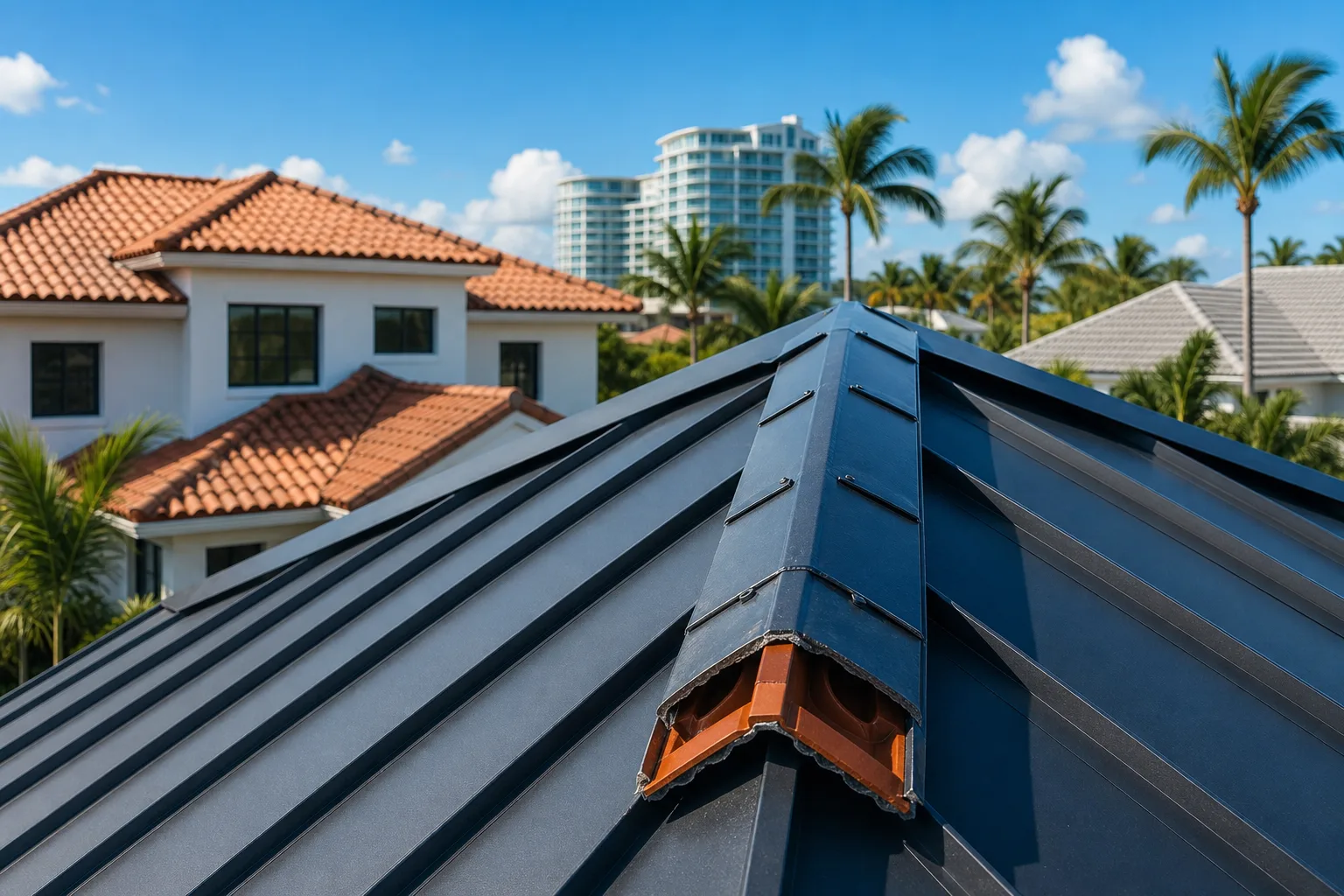
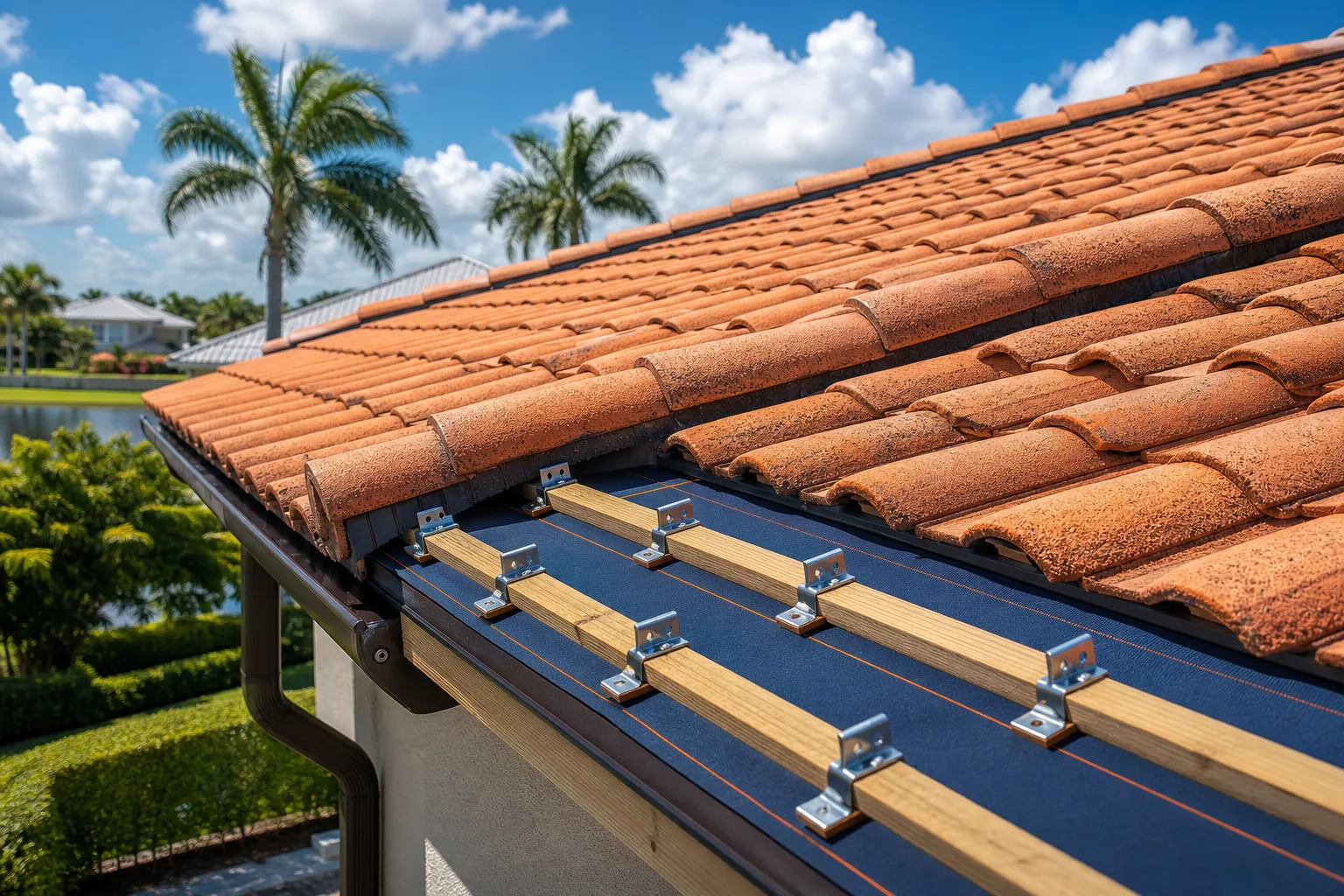
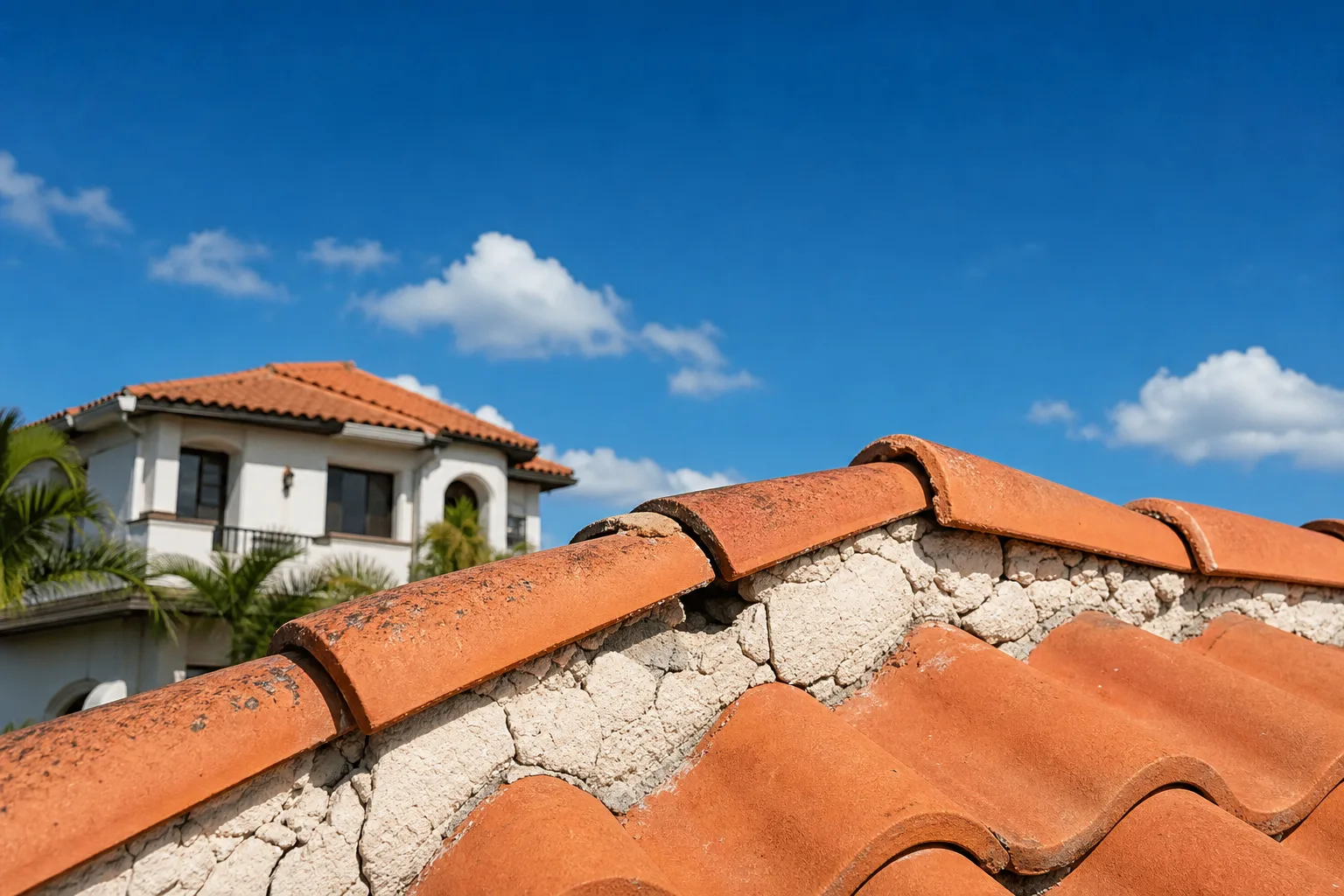
Field tiles, the flat or curved tiles covering most of your roof plane, are typically set in foam adhesive or mechanically fastened directly to battens or the deck. Hip and ridge tiles, the capping pieces at the roof edges and peak, have historically been bedded in mortar. Mortar is a cement-based material. In South Florida's heat, humidity, and seasonal wet-dry cycles, mortar at hip and ridge can become brittle and detach from the tile within 15 to 20 years, sometimes sooner.
For more on why the edges and peaks of a roof take the most punishment, see why roof valleys are the most vulnerable spot in a storm and what ridge caps do and why they fail first.
Why It Matters
Tile attachment is not a detail. Florida's high-velocity hurricane zones, which include most of Miami-Dade and Broward counties, have had some of the strictest tile attachment requirements in the country since the early 2000s. The 2001 Florida Building Code introduced wind uplift testing standards for roofing products, and tile manufacturers had to demonstrate that their systems could survive design wind speeds appropriate to the zone.
Here is what each attachment method does and where it tends to fall short:
Mortar-set (older construction): Portland cement mortar was the standard for decades. It bonds tiles to battens or to a mortar bed. The problem is that mortar is rigid. As the roof deck and battens flex slightly in wind, mortar cracks. Accelerated UV exposure and South Florida's rain frequency speed up that breakdown. Mortar-set field tiles are now rare in new construction but are common on roofs built before 2002.
Foam adhesive (post-2001 standard): Two-component polyurethane foam is injected as a bead between the tile and the batten or deck. It bonds flexibly, resists UV degradation better than mortar, and cures quickly. Florida Product Approval testing covers foam adhesives at specific bead sizes and placement patterns. This is currently the dominant method for field tile in South Florida.
Mechanical fasteners (screws or nails through the tile): Common on steeper-pitch roofs where foam adhesive may not make full contact, and required in some wind zones as a primary or supplementary attachment. Stainless steel screws provide the most durable long-term fastening because they resist corrosion in the salt-air environment near the coast.
Most tile roofs built today use a hybrid: foam adhesive for field tiles and mechanical fastening or enhanced mortar systems for hip and ridge caps, sometimes with a secondary sealant.
What the Florida Building Code Requires
The roofing chapters of the Florida Building Code, Residential and the Florida Building Code, Building both specify tile attachment by wind zone. Miami-Dade County has its own Notice of Acceptance (NOA) process that goes beyond state minimums. Any tile product used in Miami-Dade must carry an approved NOA listing the specific attachment method and fastening pattern.
Outside of the High-Velocity Hurricane Zone, the standard Florida Building Code applies, but wind speed maps still drive fastening requirements. A home in Boynton Beach or Delray Beach is in a different wind zone than a home in Homestead, and the required attachment pattern can differ. A licensed contractor pulling a permit is required to install to the code for your specific address.
What Fails First and Why
A practical way to think about tile roof failure in a hurricane:
- Hip and ridge caps are the first to go, especially if mortar-set and more than 15 years old. Loose caps create an opening at the roof's edge that allows wind-driven rain to enter immediately.
- Eave tiles face the highest uplift pressure because wind accelerates as it transitions from wall to roof. Tiles at the first course above the eave that were not adequately fastened or foamed are the next common failure point.
- Field tiles in the middle of the roof plane are the most protected aerodynamically, though individual tiles with failed foam bonds or cracked fastener holes can still lift.
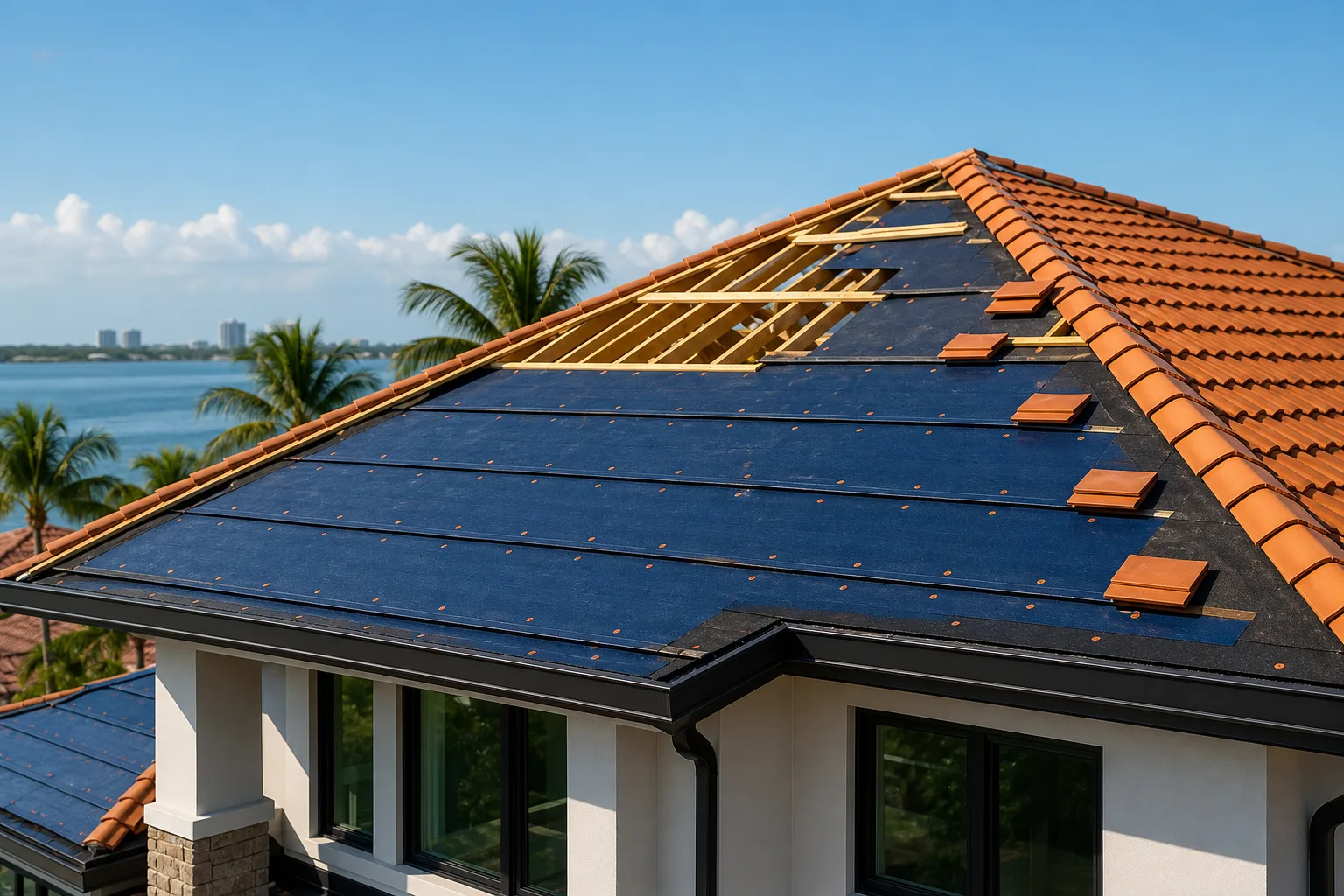
- The underlayment beneath the tiles becomes exposed the moment a tile is lost. In South Florida, the underlayment is often a modified bitumen or self-adhering membrane. A quality underlayment buys time before water intrusion, but it is not a permanent solution once tiles are missing.
See also hip roof vs. gable roof: which holds up better in Florida storms for how roof geometry affects where uplift forces concentrate.
Is your roof ready for hurricane season? Visit the Storm Center
What We Don't Know Yet
There is active research into how foam adhesive systems perform after 25 or 30 years of South Florida service. Most of the post-2001 code-compliant foam-adhered roofs are only now approaching that age range. Long-term adhesion data in real-world conditions, rather than lab conditions, is still accumulating.
It is also not fully settled how well current attachment standards will hold at the upper end of a Cat 4 or Cat 5 event. The code is calibrated to design wind speeds, not the absolute maximum a storm can produce. A direct strike from a major hurricane produces conditions that exceed most design assumptions.
What to Do About It
If your tile roof is more than 15 years old, the practical pre-season checklist is short but important:
- Walk the perimeter and look up at hips and ridges. Loose, lifted, or missing cap tiles are visible from the ground with a decent angle of view. You should not need to climb the roof to spot obvious displacement.
- Check for hollow-sounding tiles. A roofer doing a pre-season inspection can tap individual tiles to identify those with failed adhesive bonds. This is not a DIY repair task, but it is a straightforward diagnostic for a professional.
- Ask about the attachment method. If you do not have original permits or a roof inspection report, a licensed contractor can identify whether your field tiles are foam-adhered or mechanically fastened and whether your hip and ridge caps are mortar-set.
- Review your insurance policy before the season. Many Florida homeowners insurance policies now require a roof condition inspection or have coverage limits tied to roof age and attachment method. A documented inspection can support a claim if the roof sustains wind damage.
If you are unsure about the condition of your tile attachment system before hurricane season, Millennium Makeover's tile roofing services cover inspection, re-bedding of hip and ridge caps, and full tile system replacement when warranted. You can also visit the Hurricane Storm Center for seasonal guidance, or get a free instant estimate if you already know repairs are needed.
Self-inspection from the ground is always appropriate and safe. Getting on a tile roof without proper equipment and training is not recommended. Tile is brittle and a foot in the wrong place can crack a tile and create the leak you were trying to prevent.
Is your roof ready for hurricane season?
A pre-season inspection is the cheapest insurance you'll ever buy. Our Storm Center has you covered before and after the storm.
Frequently asked questions
Can I re-secure loose hip and ridge cap tiles myself before a hurricane?
Reapplying mortar or foam adhesive to cap tiles is not a reliable DIY repair, especially under time pressure. The tile surface must be clean and dry for adhesive to bond properly, and the cap needs to be seated at the correct angle. A licensed roofer can re-bed caps correctly in a fraction of the time and ensure the repair meets code.
How do I know if my field tiles are foam-adhered or mortar-set?
The installation era is the first clue. Roofs installed before roughly 2002 in most of South Florida are more likely to have mortar-set field tiles. A licensed roofing contractor can confirm by examining a tile at the eave or inspecting from the attic side. Permit records from your county building department will also list the approved attachment method.
Does homeowners insurance cover tile roof damage after a hurricane differently based on attachment method?
Some Florida insurers do factor attachment method and roof age into wind coverage terms. A roof with documented code-compliant foam adhesive installation may be treated differently from an older mortar-set system. Check your policy declarations and ask your insurer specifically about wind mitigation credits. Florida law requires insurers to consider wind mitigation features when setting rates (per Florida Statute 627.0629), though actual credits vary by insurer and policy.
What is an NOA and do I need to check it for my tile roof?
NOA stands for Notice of Acceptance, a product approval issued by Miami-Dade County's building department. It confirms that a roofing product and its specific installation method have been tested to meet Miami-Dade's wind requirements. If your home is in Miami-Dade County, the tiles and attachment system used should carry a valid NOA. For Broward County, check with your local building department, as NOA requirements may differ from Miami-Dade. Outside the High-Velocity Hurricane Zone, Florida Product Approval applies instead.