Why Your Attic Is the First Place to Check for Roof Problems

In this article
TL;DR: Your attic shows roof damage weeks or months before it ever reaches your ceiling. A quick, methodical walkthrough with a flashlight can catch leaks, ventilation problems, and deck damage early, before they turn into a bigger repair. Here's exactly what I check and how you can do the same thing.
I've been doing roof inspections in South Florida since 2005, and if I had to pick one habit that saves homeowners the most money, it's this: check the attic before the roof surface starts showing symptoms. By the time you see a stain on your ceiling drywall, that leak has usually been dripping into your insulation and framing for a while. The attic is where the story starts. The shingles or tile are just where it eventually ends.
I walk attics on almost every residential roofing inspection I do, even when the homeowner called about something totally unrelated, like a gutter issue or a few missing tiles after a storm. Nine times out of ten, the attic tells me more in five minutes than the roof surface tells me in twenty.
What you need
You don't need much to do a basic attic check yourself. Here's what I bring, and what you should have on hand too:
- A bright flashlight or headlamp (headlamp is better, keeps your hands free)
- Old clothes you don't mind getting dusty or itchy from insulation
- A dust mask, especially if you have blown-in insulation
- Sturdy shoes, you'll be stepping on joists, not drywall
- A phone camera to document anything you find
- Daylight hours, ideally not the hottest part of the day since South Florida attics can hit dangerous temperatures by early afternoon
If your attic access is tight, in a closet ceiling, or requires a pull-down ladder you haven't used in years, that's fine. You're not doing a full inspection, just a look-and-listen pass. Anything that concerns you gets handed off to a professional from there.
Step 1: Time your visit right after rain or heat
The best time to check your attic is either right after a heavy rain or on a hot, sunny afternoon, for different reasons.
After rain, you're looking for active moisture: wet spots, dark streaks, or actual dripping. Water travels along framing members before it drips, so a wet spot on the underside of the deck doesn't always sit directly under the point of entry on the roof. That's normal and it's one reason tracing a leak from inside the house alone can send you chasing the wrong spot.
On a hot day, you're checking ventilation. If your attic feels like an oven within thirty seconds of climbing up, that's worth noting. Poor attic ventilation doesn't cause a leak by itself, but it accelerates shingle aging from underneath and can contribute to moisture buildup that looks like a roof leak but is actually condensation.

Step 2: Look at the underside of the roof deck first
Once you're up there, point the flashlight at the underside of the roof deck, that's the plywood or OSB you see between the rafters. This is the single most important surface in the whole attic.
What you want to see: dry, uniform-colored wood, maybe with some nail points poking through where roofing nails came through from above. That's normal.
What you don't want to see:
- Dark brown or black staining, especially in streaks running down from a specific point
- Wood that looks swollen, warped, or has a different texture than the surrounding deck
- Any spot where you can push on the wood with a finger and feel softness or give
- Daylight coming through, which means there's a gap somewhere in the roofing material above
I've written before about how roof deck damage gets missed until it's too late, and the attic is exactly where that damage gets caught early instead. A soft or stained deck board doesn't always mean you need a whole new roof. Sometimes it's a localized repair. But it's not something to wait on.//end note: keep going, we're mid-article, don't wrap up.
Step 3: Check the insulation for stains, compression, or moisture
Next, scan the insulation itself. If you have batt insulation, look for any spots that look flattened, discolored, or noticeably darker than the rest. Water compresses insulation and leaves stains that don't go away even after the area dries out.
With blown-in insulation, look for small craters or dips. Water flowing through loose-fill insulation tends to create a slight depression where it's traveled, almost like a tiny dry riverbed.
If insulation feels damp to the touch, that's an active or recent leak. If it's dry but stained, that's an older leak, possibly already addressed, possibly not. Either way, mark the spot mentally (or with a piece of tape) so you can find it again from the roof side or point it out to whoever inspects it.
Step 4: Follow the nails and check flashing penetration points from below
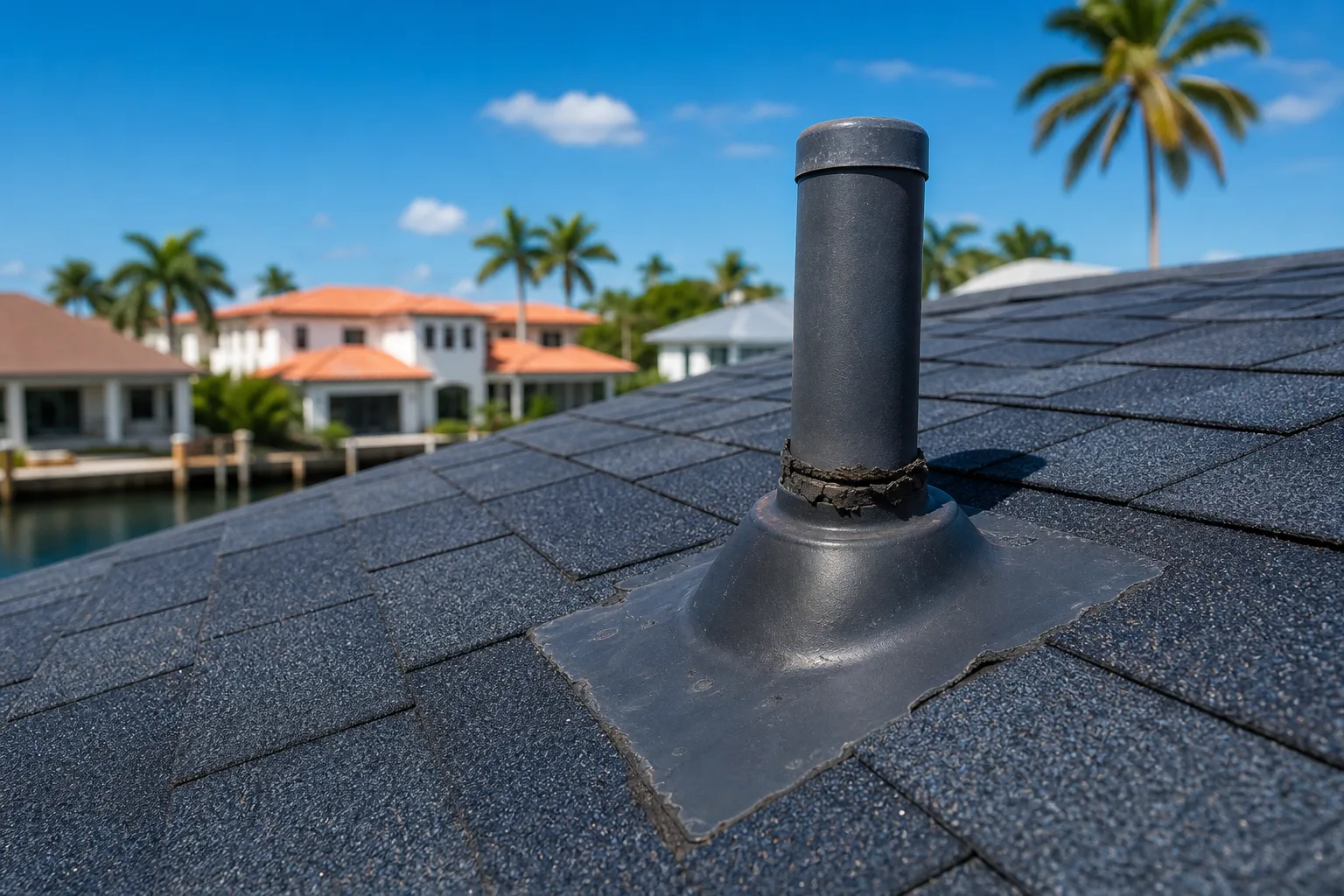
Every place something penetrates your roof, a plumbing vent stack, a chimney, an AC line, a skylight shaft, has flashing on top and usually shows up as a corresponding point in the attic. Look at these spots specifically, since they're statistically where most leaks originate, far more often than the open field of shingles or tile.
From inside the attic, you're looking for staining or moisture right around where these penetrations pass through the deck. If you see rust streaks around a vent pipe collar or dark rings around a chimney chase, that's telling you the flashing above needs attention before it worsens.
Also check where the roof deck meets the exterior walls at the eaves. This is a common spot for water intrusion during wind-driven rain, especially relevant here in South Florida. If you see staining concentrated along the perimeter rather than in the middle of the roof, that pattern often points to fascia, drip edge, or gutter issues rather than a problem with the field of the roof.
Spotted a leak or missing tiles? Schedule a repair visit
Step 5: Check for daylight, gaps, and animal activity
Turn off your flashlight for a moment (once your eyes adjust) and look up and around. Any pinpricks of daylight are gaps in your roofing material, whether that's a lifted shingle, a cracked tile, or a seam issue on a metal roof. Small gaps like this don't always leak yet, but they're a preview of where a leak will eventually start, particularly once wind gets involved.
While you're at it, look for signs of animal entry: chewed wood, droppings, nesting material. Raccoons, rats, and birds all find their way into South Florida attics through the same gaps that let water in, and an animal entry point is also a moisture entry point.
Step 6: Note the smell and the humidity level
This sounds unscientific, but it works. A musty, damp smell in an attic that isn't from stored boxes usually means moisture has been sitting somewhere long enough to start growing mold or mildew. Combine that with visibly foggy or overly humid air (your glasses fogging up, condensation on any metal surfaces like ductwork) and you've likely got a ventilation or moisture problem worth addressing even if you don't see obvious staining yet.
Step 7: Document what you find and get it checked by a professional
Take photos of anything unusual: stains, soft spots, daylight gaps, insulation issues. Note roughly where they are relative to the house (over the garage, near the chimney, on the north side). This information is genuinely useful when you call for an inspection, because it tells the roofer where to focus first instead of starting from scratch.
If what you find is minor, a small stain that's clearly old and dry, for example, it may just be worth keeping an eye on. If you find active moisture, soft decking, daylight gaps, or staining around multiple penetrations, that's the point to schedule a proper inspection. You can start with our free instant estimate tool if you want a fast read on your situation, or go straight to requesting a quote if you already know you need someone out to look at it.
Common mistakes
Only checking after you already see a ceiling stain. By then the leak has usually been active for a while. Attic checks are most valuable as a preventive habit, ideally once or twice a year and after any major storm.
Assuming the leak point on the deck is directly under the leak point on the shingles. Water runs along rafters, deck seams, and framing before it drips. A stain three feet from the actual entry point is common. This is exactly why matching an attic finding to a roof-surface finding needs an experienced eye.
Confusing condensation with a roof leak. Poor ventilation causes moisture to condense on the underside of the deck, especially in humid South Florida attics. It can look identical to a leak stain but the fix (ventilation) is completely different from the fix for a roofing failure. This is one of the more common misdiagnoses I see homeowners make before calling us.
Ignoring small daylight gaps because there's no leak yet. A pinhole of daylight today can become a real leak the next time wind drives rain sideways under a tile or shingle. Small gaps are cheap to fix now and expensive to fix after they've caused deck damage.
Skipping the attic entirely because it's uncomfortable. I get it, South Florida attics are genuinely brutal in the afternoon heat. But a five-minute check in the morning or evening beats discovering a soft, rotted deck section during a re-roof that could have been caught and addressed years earlier.
Not connecting attic findings to roof material type. What's normal to see under a tile roof looks different from what's normal under shingles or a metal roof. Tile roofs, for instance, often have a secondary water barrier that handles some incidental moisture as designed, so not every damp spot under tile is a failure. If you're not sure what's normal for your system, that's a good reason to have someone experienced take a look rather than guess.
Bottom line
Your attic is the most honest part of your roofing system. It doesn't have curb appeal to maintain and it shows you exactly what's happening to the wood, insulation, and framing before any of it becomes visible from your living room or your driveway. A flashlight and twenty minutes a couple times a year can catch problems while they're still small, cheap repairs instead of surprises during a bigger project.
If you go up there and find something that concerns you, don't guess at what it means. Grab some photos, note the location, and reach out. We've walked thousands of South Florida attics since 2005 and we're happy to tell you straight whether it's something to watch or something to fix now. You can contact us directly, browse our project gallery to see the kind of work we do, or start with a free instant estimate if you want a quick first read before scheduling an in-person look.
Spotted a leak or missing tiles?
Small problems get expensive fast in the Florida sun. Get it looked at by a local crew before the next storm.
Frequently asked questions
How often should I check my attic for roof problems?
Twice a year is a good baseline, once before hurricane season and once after, plus an extra check any time you experience a heavy storm with wind-driven rain. If your home is older or has had roof issues before, checking quarterly isn't overkill.
Is a musty smell in the attic always a sign of a roof leak?
Not always. It can also mean poor attic ventilation is trapping humidity, which is common in South Florida homes. Either way, a persistent musty smell is worth investigating since both causes can lead to mold growth or wood damage over time.
Can I tell how bad a roof problem is just from the attic?
You can get a good sense of whether something is active, old, minor, or serious, but pinpointing the exact cause and fix usually requires matching what you see in the attic with an inspection of the roof surface itself. That's where an experienced eye makes the difference between guessing and knowing.
What's the difference between a leak stain and a condensation stain in the attic?
Leak stains often follow a defined streak or drip pattern from a specific point, like near a flashing penetration or roof valley. Condensation tends to be more widespread and shows up as general dampness or fogging on cooler surfaces, and it's usually tied to ventilation rather than a breach in the roofing material.
Do tile roofs show different attic signs than shingle roofs?
Yes. Tile systems often include a secondary water barrier underneath the tile, so some incidental moisture reaching the deck can be normal and handled by that barrier. Shingle roofs generally shouldn't show any moisture reaching the deck at all, so the same stain can mean different things depending on your roofing system.
Should I climb into the attic myself or hire someone?
A basic visual check with a flashlight is safe for most homeowners as long as you're comfortable navigating the space and it's not extremely hot. If you find anything concerning, or if your attic access is difficult, it's worth having a licensed roofer do a full inspection so nothing gets missed or misdiagnosed.