Roof Stain: Algae, Mold, or Water Damage? How to Tell
In this article
TL;DR: Black streaks running down a shingle or tile roof are almost always algae, which is ugly but not urgent. Dark, fuzzy patches in shaded, damp spots can be mold or lichen, which point to a moisture problem worth checking. Brown or yellow stains on your ceiling or in the attic are water damage, and that one needs attention now, not later.
I've been called out to look at hundreds of "roof stains" over the years, and I'd say maybe one in five was actually an emergency. The rest were homeowners who saw something dark and assumed the worst, or worse, got talked into a full roof replacement by someone who didn't want to climb up and actually look. So let's walk through how to tell these three things apart yourself, and when it's actually time to call someone.
What You Need
You don't need much for this. A pair of binoculars, a flashlight, a ladder if you're comfortable using one safely (and I'd rather you didn't climb onto the roof itself), and about 20 minutes.
- Binoculars or a zoom camera to inspect the roof from the ground
- A flashlight for the attic
- A notepad or your phone camera to document what you find
- Access to your attic hatch
- A ladder tall enough to see the roofline up close, if you have one
If you're not comfortable on a ladder, don't get on one. Stains rarely need same-day inspection, and a fall does far more damage than algae ever will. Take photos from the ground with a zoom lens instead.
Step 1: Look at Where the Stain Is Located
Location tells you almost everything before you even get close.
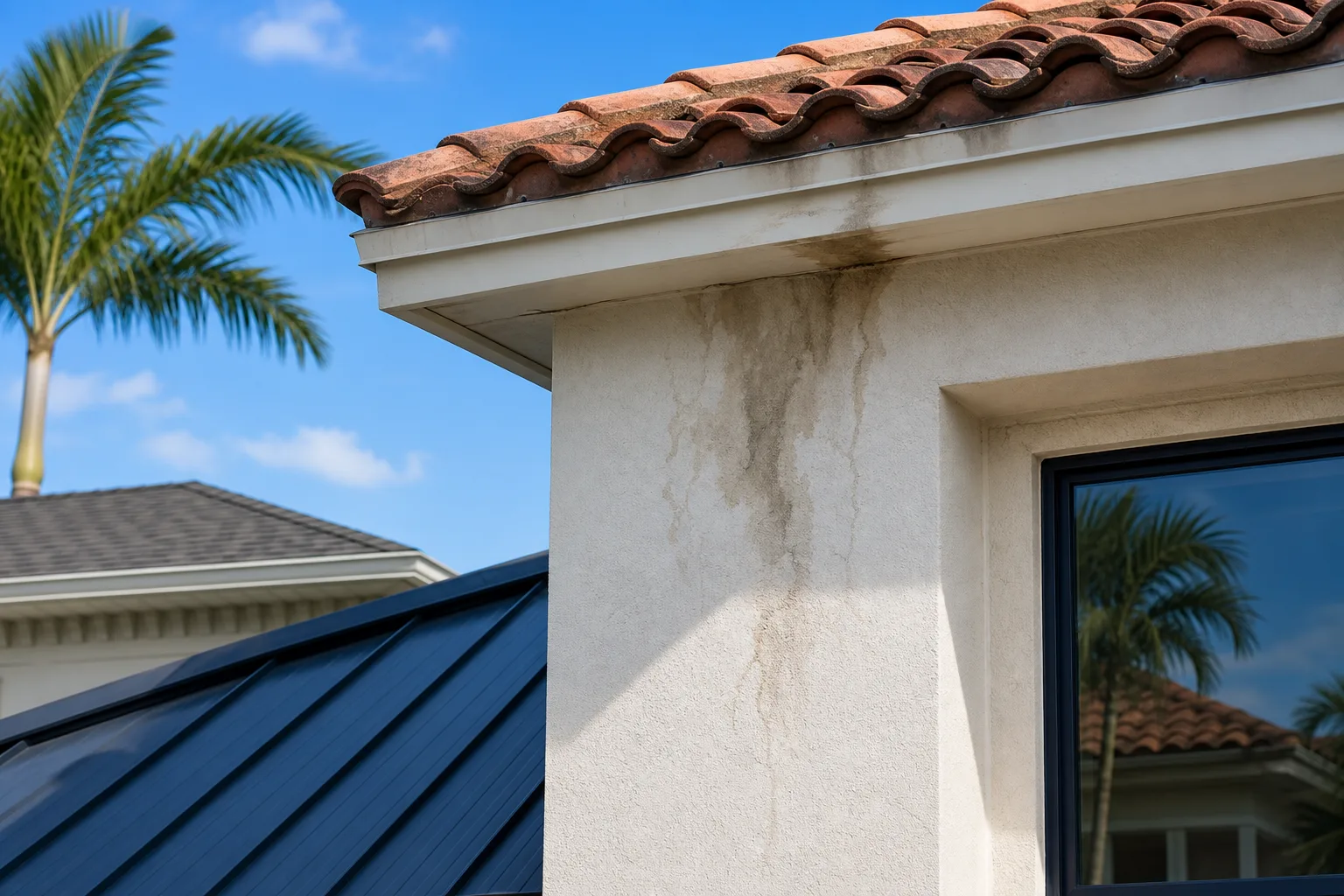
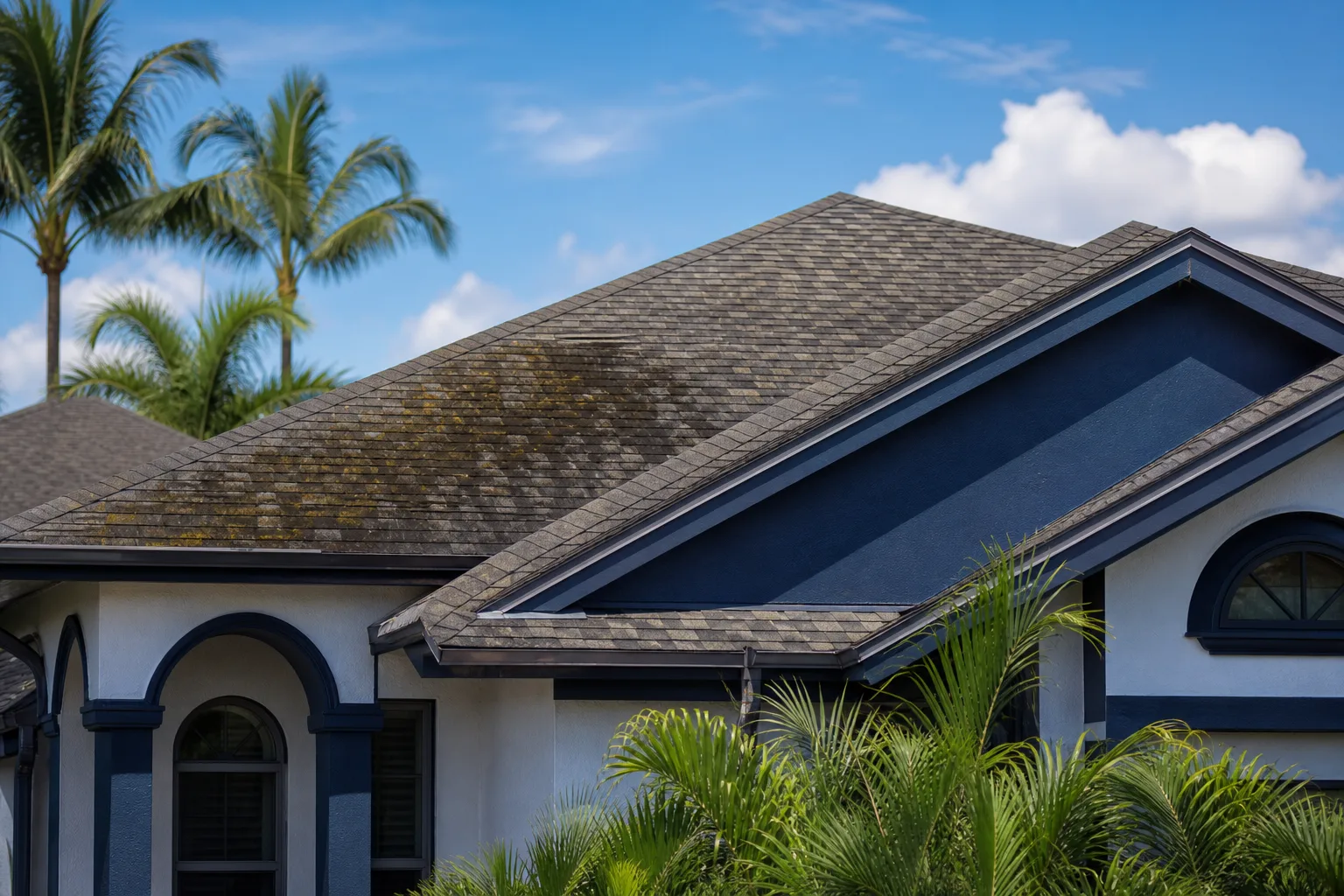
Streaks running vertically down a slope, usually starting near the ridge or a vent and fanning out toward the eaves, are classic algae. It grows where water sheets down the roof surface, so it follows the water's path.
Dark blotches concentrated in shaded areas, under overhanging trees, on the north-facing slope, or anywhere air doesn't move much, point toward mold, lichen, or moss. These organisms need sustained moisture and shade to establish themselves, so they show up in the spots that stay damp longest after a rain.
Stains on interior ceilings, in the attic on the underside of the decking, or around a chimney or vent penetration are water intrusion. Water damage almost never shows up as a clean pattern. It follows gravity and framing, so you'll often see a stain that's bigger or in a different spot than the actual leak source.
Step 2: Check the Texture and Color
Get close enough (binoculars work fine) to look at texture.
Algae looks like black or dark green streaking that's flat against the shingle or tile surface. It doesn't have thickness to it. Rub a gloved finger across a sample if you can reach it safely, and it'll usually smear slightly or feel like a thin film. On tile roofs especially in South Florida, this is often just Gloeocapsa magna, a common airborne algae that feeds on the limestone filler in shingles and the mineral surface of tile.
Mold and lichen have texture. Lichen looks crusty, sometimes greenish-gray or orange, and it's raised off the surface. Mold tends to look fuzzy, dark, and irregular, and it often smells musty if you get close enough on a calm day. Moss is obviously green and spongy.
Water damage on a ceiling or attic deck shows up as a brown, yellow, or tan ring, often with a darker center. It's a stain into the material, not on top of it. If the drywall feels soft or the wood decking looks swollen or delaminated, that confirms actual water intrusion rather than just surface growth.
Step 3: Inspect the Attic, Not Just the Roof Surface
This is the step most homeowners skip, and it's the one that actually settles the question.
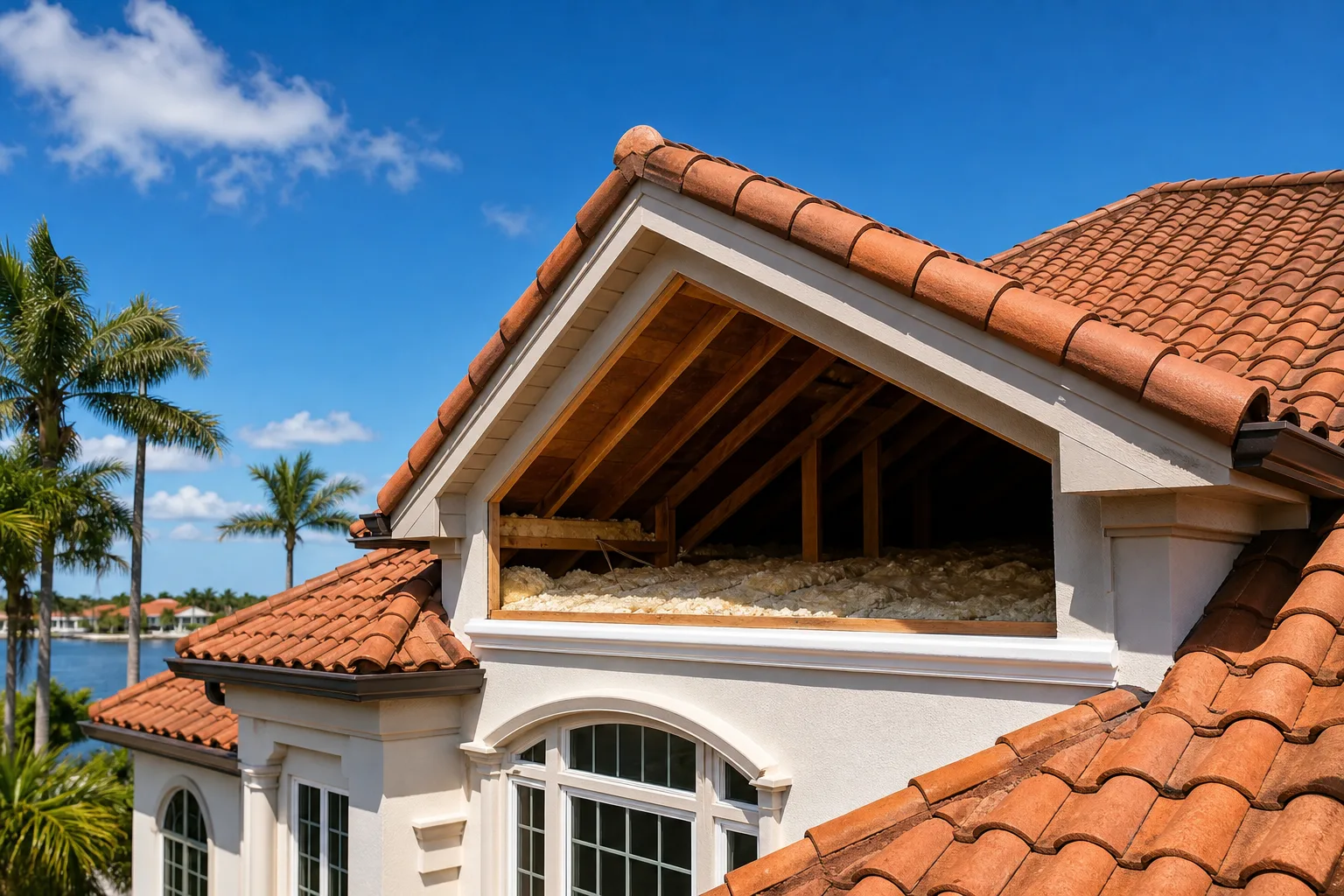
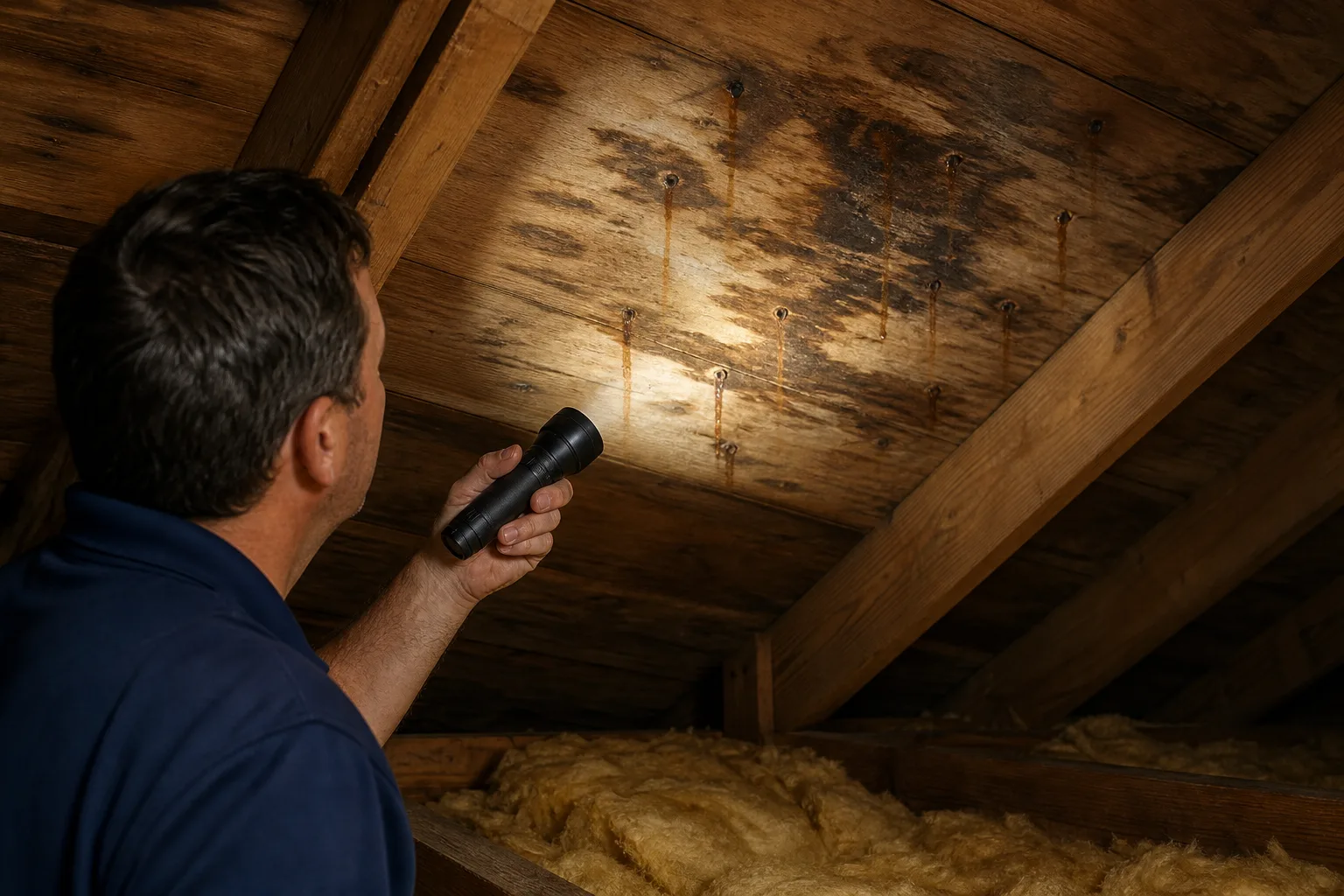
Grab your flashlight and get into the attic. Look at the underside of the roof decking for:
- Dark staining on the plywood or wood sheathing, especially near nail heads (rust streaks around nails are a strong water intrusion sign)
- Any soft, sagging, or discolored wood
- Daylight coming through anywhere it shouldn't
- Insulation that's compressed, damp, or stained
If the attic deck is clean and dry, whatever you're seeing on the exterior roof surface is almost certainly cosmetic, algae, lichen, or surface mold. If you find staining, softness, or dampness up there, you've got an active leak feeding it, regardless of what the roof looks like from the street.
This is also the step that separates a real problem from a scare tactic. I've seen storm-chasing crews point at a black streak from the driveway and tell a homeowner they need a full roof replacement that same week. Nine times out of ten that streak is algae. Get in the attic and look for yourself before anyone gives you a number.
Spotted a leak or missing tiles? Schedule a repair visit
Step 4: Time and Weather Pattern Matter Too
Algae and lichen build up slowly, over months or years, and they get worse in humid weather and better (slightly) after a good dry stretch. If the stain has been there a long time and isn't spreading fast, that supports algae or lichen.
Water damage stains show up or expand right after specific events: a heavy rain, a storm, a period of high wind that drove water sideways under flashing. If you can connect a stain's appearance to a specific storm or rain event, that's a strong sign it's water intrusion, not biological growth. Our Hurricane Storm Center has more on what to check after named storms specifically, since wind-driven rain finds paths water normally wouldn't take.
Step 5: Match the Stain to Your Roof Material
What's normal varies by roofing material, so factor that in.
Shingle roofs in South Florida almost always develop some black algae streaking within a few years of installation, especially on north-facing slopes that stay shaded and damp longer. It's common enough that many shingle roof products are rated for algae resistance, which tells you how expected this is.
Tile roofs get a different look: white or gray mineral haze from efflorescence, plus the same black algae streaking on the tile surface itself. Cracked or shifted tile combined with staining underneath is a different story and worth a proper look, which our tile roofing team handles regularly.
Metal roofs rarely grow algae because the surface doesn't hold moisture the same way, so dark streaking on a metal roof is more often a sign of a fastener issue, a seam problem, or actual rust, and deserves a closer inspection sooner rather than later.
Common Mistakes
Assuming any dark streak means the roof is failing. Algae is cosmetic. It doesn't eat through shingles or tile, and it's not a structural problem. It's ugly, and if you want it gone, that's a cleaning job, not a replacement job.
Pressure washing the roof yourself. This is the single most damaging thing I see homeowners do to a perfectly fine roof. High pressure strips the granules off shingles and can crack tile, turning a cosmetic issue into an actual leak risk. If you want algae cleaned, it needs a soft-wash approach with the right chemicals, done by someone who knows the material.
Ignoring a ceiling stain because it's small. A small brown ring on the ceiling can mean a slow leak that's been running for months inside your attic, quietly rotting decking and framing the whole time. Small on the ceiling doesn't mean small up top.
Letting a fast-talking estimator diagnose from the driveway. If someone gives you a firm number for a full roof replacement without getting on the roof or in the attic, that's a red flag. A real inspection includes both. Anyone skipping that step is guessing, or worse, working an angle.
Confusing lichen for a minor issue. Lichen actually can cause damage over time because its root structures work into the surface of shingles and tile, unlike algae which stays on top. If you see the crusty, raised patches, don't lump it in with regular streaking.
Waiting too long to check the attic. Homeowners often notice exterior staining and monitor it for a year before ever grabbing a flashlight and looking underneath. If there's any chance it's water intrusion, the attic check should happen the same week you notice the stain, not next spring.
Bottom Line
Most roof stains in South Florida are algae, and algae is a cosmetic annoyance, not a roofing emergency. The way to know for sure is simple: check the pattern, check the texture, and most importantly, get into the attic and look at the decking with a flashlight. Clean and dry up there means you're dealing with something on the surface. Stained, soft, or damp decking means you've got water getting in somewhere, and that's worth addressing before it spreads.
If you've done the check yourself and you're still not sure, or you found something in the attic that worries you, that's the right time to get someone out who'll actually climb up and look, not just eyeball it from the street. You can request a quote or get a free instant estimate to start, and if repairs turn out to be the answer rather than replacement, our roof repair team handles those without pushing you toward more work than you need.
Spotted a leak or missing tiles?
Small problems get expensive fast in the Florida sun. Get it looked at by a local crew before the next storm.
Frequently asked questions
Are black streaks on my roof dangerous?
Black streaks on shingles or tile are almost always algae, specifically a type that feeds on limestone filler in roofing materials. It's cosmetic and doesn't threaten the roof's structure or function, though it can shorten the look of curb appeal and, over long periods, may slightly affect how well the surface reflects heat.
Can mold on a roof cause health problems inside the house?
Mold growing on the exterior roof surface generally stays outside and isn't the same as indoor mold. That said, if mold is present because water is actually getting into the attic or walls, that moisture can lead to indoor mold growth, which is a different and more serious issue worth checking with an attic inspection.
How do I know if a ceiling stain is old or an active leak?
Press gently on the stained area. If it's soft, damp, or the stain looks fresh and dark at the edges, it's likely active. Old, dry stains with hard, firm drywall underneath are typically from a past leak that's already been fixed, but it's still worth confirming in the attic that no new staining has appeared.
Will pressure washing remove roof algae safely?
Standard high-pressure washing is not recommended on shingle or tile roofs because it can strip protective granules or crack tile, creating new leak paths. A soft-wash cleaning method with appropriate cleaning solutions is the safer approach, and it should be done by someone familiar with your specific roofing material.
Should I get a roof replacement quote based on visible stains alone?
No. A legitimate inspection should include both a close look at the roof surface and a check of the attic decking from underneath. If someone offers a firm replacement estimate without doing both, get a second opinion before agreeing to anything.
How often should I check my attic for water stains?
A quick flashlight check once or twice a year, plus after any major storm or heavy rain event, is a reasonable habit for most South Florida homes. If you already see exterior staining or have an older roof, checking more frequently is worth the ten minutes it takes.