How to Find the Source of a Roof Leak Around a Skylight

In this article
TL;DR: A leak that shows up near a skylight is almost always coming from the flashing or curb around it, not the glass itself. Work from the attic side first if you can, check the flashing and sealant, and don't assume the closest stain marks the actual entry point. If you can't find it in an hour of dry-weather inspection, it's time to call in a licensed roofer before the next storm finds it for you.
Skylights are one of the most common leak points on South Florida homes, and also one of the most misdiagnosed. Homeowners see a brown ring on the ceiling directly under the skylight and assume the glass or the seal failed. Most of the time it's the flashing, the curb, or a cracked sealant bead that's been letting water in for months before it ever showed up inside.
Finding the real source matters because Florida Building Code repair requirements and insurance claims both hinge on documenting exactly what failed and when. A vague "skylight is leaking" claim gets pushback. A clear trail from entry point to stain gets paid.
What you need
- A flashlight, ideally a bright LED one
- A ladder tall enough to safely reach the attic access or roof eave
- A garden hose with a controllable nozzle
- A helper to watch inside while you test outside (or a phone to video call)
- A moisture meter if you have one, though a flashlight and patience work fine
- Painter's tape or chalk to mark suspect areas
- Basic caution: never get on a wet or pitched tile roof alone, and never test during actual rain or lightning
Step 1: Start in the attic, not on the roof
Before you climb anywhere outside, get into the attic space above the stained ceiling with a flashlight. Water travels. It can enter at the skylight curb and run several feet along a rafter or the underside of the decking before dripping down somewhere else entirely. That's why the stain on your ceiling is a landing spot, not necessarily the source.
Look for:
- Dark streaks or mineral trails on wood framing near the skylight shaft
- Damp or discolored insulation
- Rust on any metal fasteners or flashing visible from inside
- Daylight gaps around the skylight curb, which shouldn't be there
Trace any staining back toward its highest point. That's your best clue to where water is actually getting in.
Step 2: Inspect the skylight curb and flashing from outside
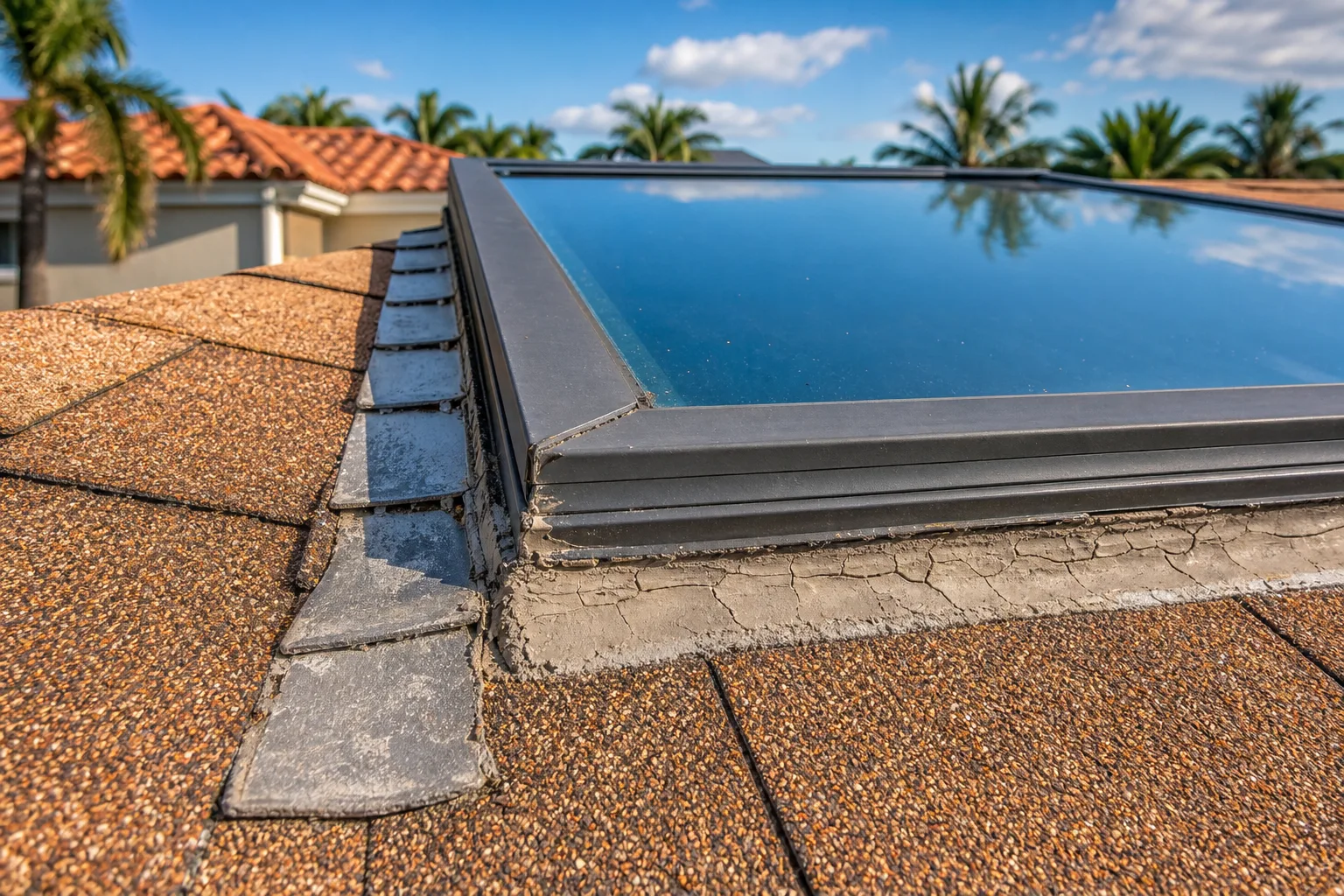
Once it's safe and dry, get eyes on the skylight from the roof or from a ladder at the eave. Most skylight leaks come from one of these spots:
- Step flashing along the sides, where individual metal pieces overlap the roofing material. If they're bent, rusted, or the sealant has pulled away, water gets behind them.
- Head flashing at the top of the curb, which takes the brunt of rain running down the slope.
- The curb-to-glass seal itself, which does fail over time but is less common than flashing failure.
- Cracked or dried sealant at any seam, especially on older skylights that haven't been resealed in years.
- Surrounding shingles or tiles that have shifted, cracked, or lost granules near the skylight, letting water bypass the flashing entirely.
On tile roofs specifically, check whether the tiles around the skylight are properly cut and mortared or if a repair was done with the wrong slope. A lot of the tile roof leaks we trace back start with a poorly fitted tile next to a skylight curb rather than the skylight hardware.
Step 3: Run a controlled water test
If the visual inspection doesn't show an obvious culprit, a hose test isolates the leak location without waiting for the next rainstorm to tell you.
- Have your helper stationed in the attic with a flashlight, watching the exact spot where staining starts.
- Start low. Wet the bottom edge of the skylight curb first for two to three minutes.
- Wait, and ask your helper if any moisture appeared.
- If nothing, move up one section at a time: sides, then the top flashing, then the roof surface a foot or two above the skylight.
- Only move to the next section once you've ruled out the current one.
This methodical, low-to-high approach keeps you from soaking the whole area at once and getting a false positive. Water almost always enters higher on the slope than where it shows up inside, so patience here pays off.
Spotted a leak or missing tiles? Schedule a repair visit
Step 4: Check the roofing field around the skylight, not just the unit itself
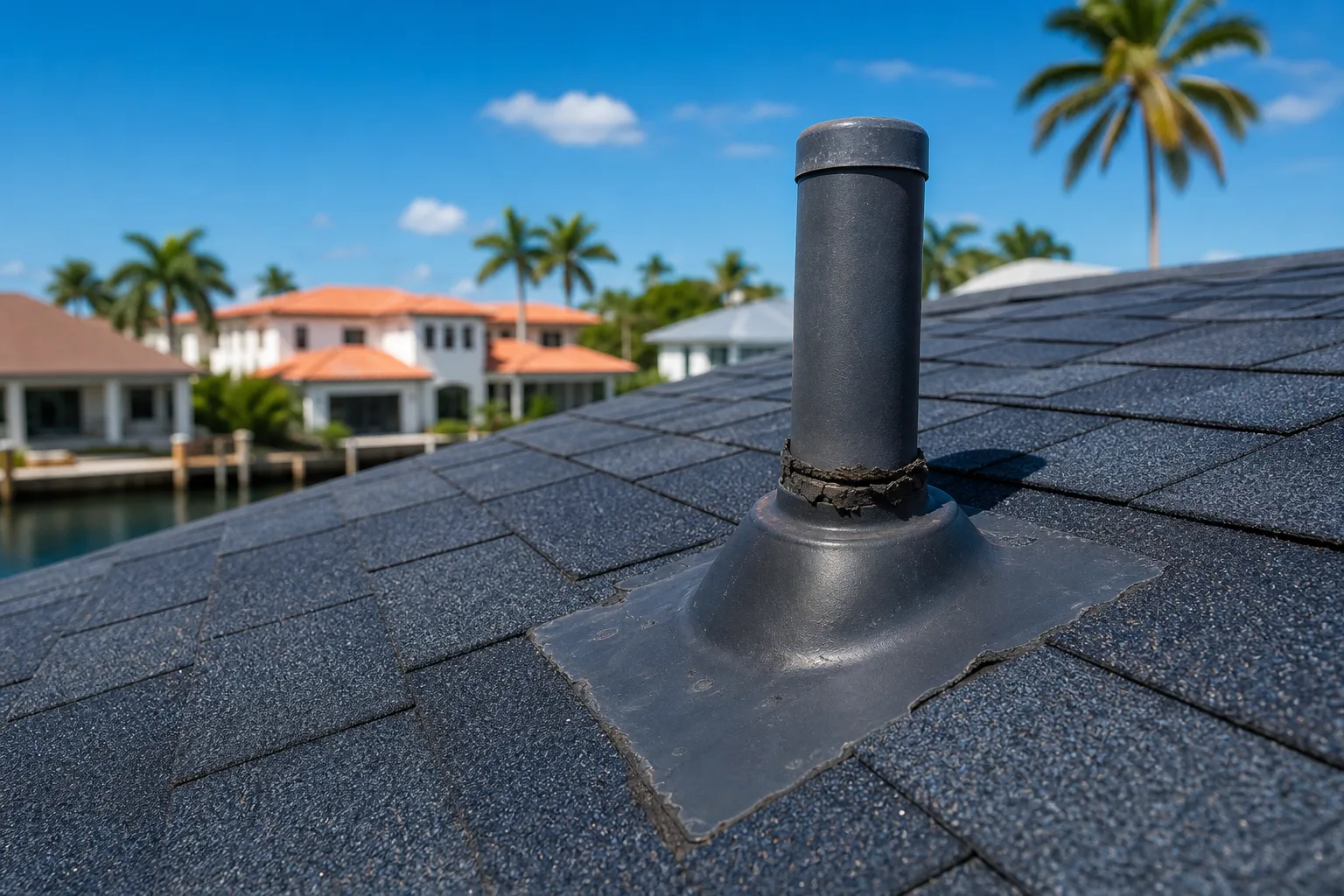
Skylights get blamed for leaks that actually start a few feet away. Cracked tiles, lifted shingle tabs, or a failed pipe boot nearby can send water traveling under the roofing material until it finds the skylight shaft as the easiest path down into the house. Walk the roof area in a 4 to 6 foot radius around the skylight and look for:
- Cracked or slipped tiles
- Missing or curled shingles
- Old patch jobs with visible sealant or tar
- Debris buildup that's been trapping water against a seam
If your gutters near that section of roof are clogged or pitched wrong, standing water can back up higher on the roof than it should, adding pressure right where the skylight flashing meets the field. It's worth a quick look at your gutters while you're up there.
Step 5: Document everything before you patch anything
Once you've found the likely entry point, take photos and notes: the exact location, the visible damage, and any water staining trail from attic to ceiling. This matters for two reasons.
First, if you're filing an insurance claim, especially after a named storm, adjusters want a clear causal chain, not just "there's a leak." Florida policies increasingly scrutinize whether damage was storm-caused or maintenance-related, and clear documentation helps your case either way.
Second, even a temporary patch should target the actual source, not just the ceiling stain. Sealing over a symptom without fixing the flashing underneath just delays the next leak, often until the middle of a storm when you can't get anyone out to fix it.
Common mistakes
Assuming the skylight glass is the problem. Actual seal failures in the glazing happen, but flashing and curb issues are far more common and cheaper to fix if caught early.
Caulking over old sealant without removing it. Fresh sealant on top of cracked, dirty sealant doesn't bond properly and fails again within a season, usually right before the next storm.
Testing in the rain instead of a controlled hose test. Wind-driven rain during an actual storm can enter from multiple directions at once, making it impossible to isolate the real source. A calm, section-by-section hose test on a dry day gives you cleaner answers.
Ignoring the attic side entirely. Homeowners often only inspect from the roof, which means they miss how far water has traveled before it shows up as a ceiling stain. The attic tells you the true path.
Waiting until hurricane season to deal with a known leak. If you've noticed a stain in the spring, don't wait until a June system is bearing down to address it. Flashing repairs are quick when the weather's calm and become urgent, expensive scrambles once a storm is on the radar. Our Hurricane Storm Center has a seasonal prep timeline if you want to plan around it.
Assuming a small leak means small damage. A slow drip around a skylight curb can rot decking and framing over months without much visible sign until the ceiling finally gives way. If your attic inspection shows soft or discolored wood, that's beyond a sealant fix.
Bottom line
A leak near a skylight is a puzzle with a specific, findable answer, it's rarely the glass and almost always the flashing, curb, or surrounding roofing material. Work from the attic out, test methodically, and document what you find before you patch it. If the source isn't obvious after a careful look, or if you find soft decking, extensive staining, or damage on a tile roof where cut tiles are involved, that's a job for a licensed roofer rather than a tube of caulk.
Millennium Makeover has been tracing and fixing skylight and flashing leaks across Boynton Beach, Delray Beach, Boca Raton, West Palm Beach, and Lake Worth since 2005. If you want a second set of eyes before the next system rolls through, you can request a quote or grab a free instant estimate and we'll help you figure out exactly what's failing and what it'll take to fix it right.
Spotted a leak or missing tiles?
Small problems get expensive fast in the Florida sun. Get it looked at by a local crew before the next storm.
Frequently asked questions
Why is there a leak around my skylight if the glass isn't cracked?
Most skylight leaks come from failed flashing, dried out sealant, or cracked tiles and shingles near the curb, not from the glazing itself. Water often travels along the roof deck or attic framing before it shows up as a ceiling stain, so the entry point can be a foot or more from the actual leak.
Can I fix a skylight flashing leak myself?
If the issue is a small sealant crack you can access safely, a temporary patch is reasonable. But flashing that's rusted, bent, or improperly installed usually needs to be replaced correctly to hold up through a Florida storm season, which is better handled by a licensed roofer.
How do I know if a skylight leak is storm damage or wear and tear?
Insurance adjusters look for a clear causal link between a specific storm event and the damage. If the flashing shows gradual wear, like cracked sealant or rust built up over years, it's more likely classified as maintenance related rather than storm damage, so documenting the condition and timeline matters.
How often should skylight flashing be resealed?
There's no single fixed interval, since it depends on the skylight age, material, and sun exposure, but South Florida's heat and UV exposure break down sealant faster than milder climates. A yearly visual check before hurricane season is a reasonable habit, with resealing whenever cracking or gaps appear.
Should I worry about a small skylight leak if it's not hurricane season?
Yes. A slow leak can quietly damage decking and framing for months before it becomes visible, and small issues become much harder to address once storm season starts and contractors get busy. Addressing it in the off season is usually faster and less stressful.
Does a leaking skylight always mean I need a full skylight replacement?
Not necessarily. Many leaks are resolved by repairing or replacing the flashing and surrounding roofing material rather than the skylight unit itself. A full replacement is usually only needed if the frame, curb, or glazing has deteriorated beyond a straightforward repair.