What Ridge Caps Do and Why They Fail First in Florida Storms
In this article
TL;DR: Ridge caps cover the peak where two roof planes meet, sealing out wind-driven rain. Florida's sustained winds and UV exposure degrade them faster than most homeowners expect, and their position at the highest point of the roof makes them the first component to lift in a tropical storm or hurricane. Inspect them before each hurricane season and after any named storm.
What you need
- Binoculars (for a ground-level visual check, which is safer than getting on the roof yourself)
- A flashlight and attic access (to check the underside of the ridge for daylight or moisture staining)
- Notes from your last roof inspection, if you have them
- A licensed roofer for anything that requires walking the roof or hands-on repair
1. Understand what a ridge cap actually does
Your roof has at least one ridge, the horizontal peak where two sloping planes meet. That joint is an open seam if left uncovered. Ridge caps, whether cut shingles, purpose-made cap shingles, mortar-set ridge tiles, or a metal ridge closure, seal that seam against rain and wind.
They do three jobs at once:
- Waterproofing. They overlap the upper edges of the field shingles or tiles on both sides, directing water away from the seam.
- Wind resistance. They press down on the top course of field material, holding the edges that would otherwise catch wind like a sail.
- Ventilation management. On roofs with ridge vents, the cap sits over the vent and controls airflow without letting rain in.
When the cap fails, all three functions fail together.
2. Know why Florida conditions degrade ridge caps faster
Florida's climate hits ridge caps from multiple directions simultaneously.
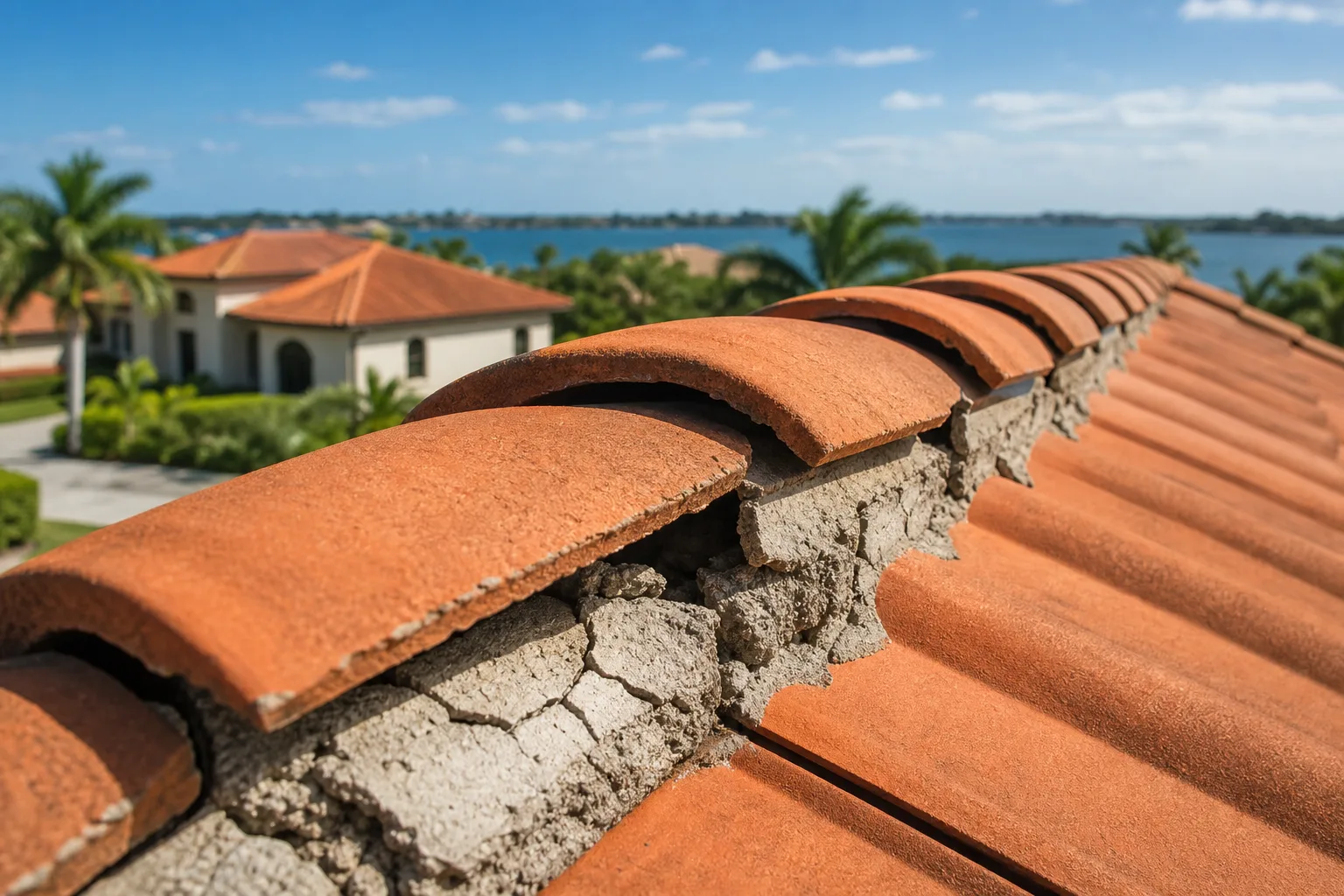
UV and heat. Ridge caps are at the highest, most exposed point on the roof. Asphalt-based caps can lose granules and become brittle faster than field shingles at lower elevations. Mortar on barrel tile ridges dries, cracks, and crumbles under thermal cycling, especially after years of summer heat followed by cooler winter nights.
Wind angle. During a tropical storm or hurricane, wind doesn't just blow horizontally. It swirls, gusts, and creates uplift pressure at the ridge that can be significantly higher than on the field of the roof. Florida Building Code wind load requirements (FBC Chapter 15 and ASCE 7 standards) account for this, but older installations, improper nailing patterns, or the wrong number of fasteners will fail before code-compliant ones.
Moisture cycling. South Florida gets intense rain followed by rapid drying. This repeated wetting and drying accelerates adhesive failure on shingle caps and mortar deterioration on tile ridges.
Age compounding. A 15-year-old cap on a 15-year-old roof has experienced all of the above for 15 years. There is no buffer left when a storm arrives.
3. Identify the common failure modes by roof type
Shingle roofs
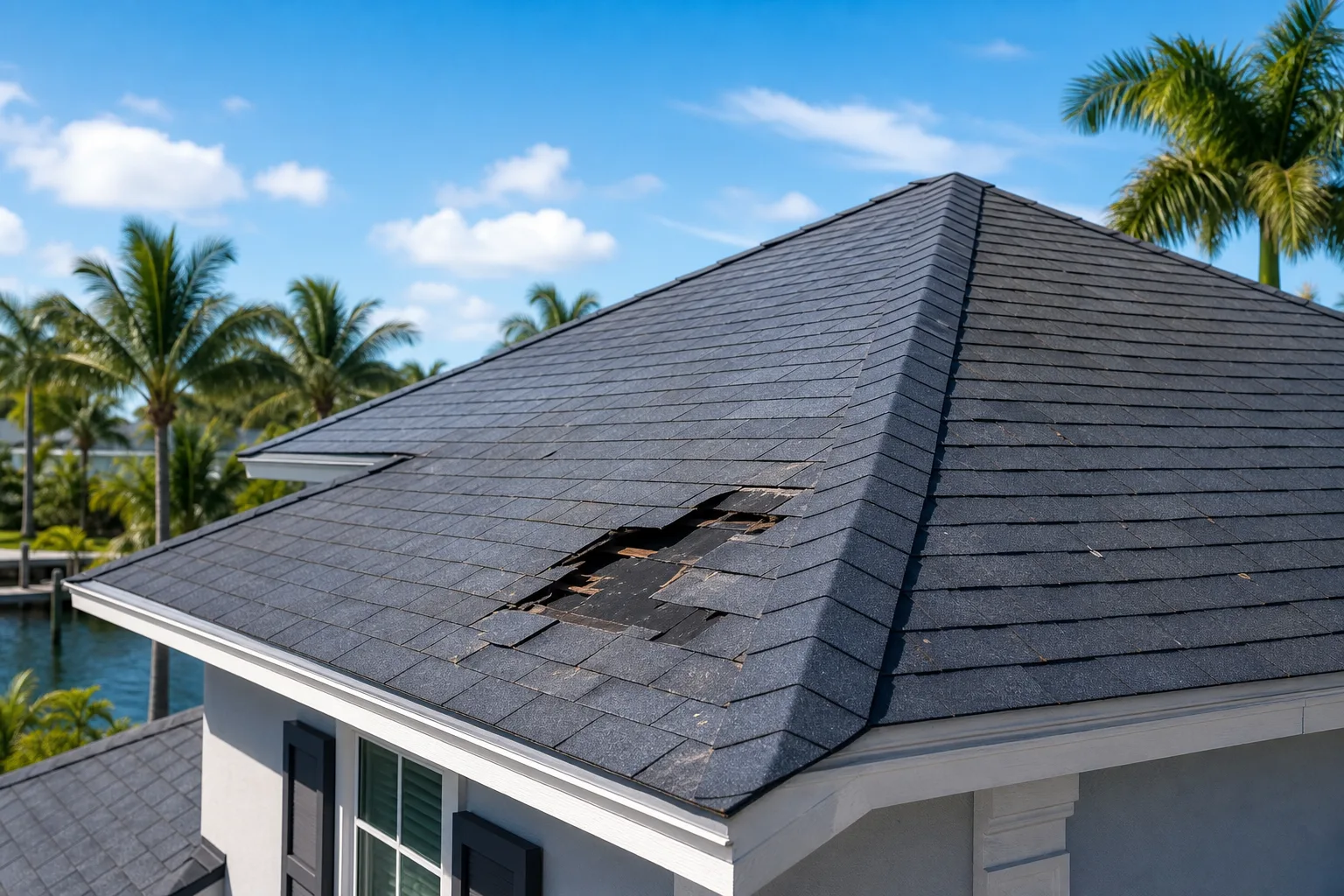
Shingle ridge caps are typically cut from 3-tab or architectural shingles, or installed as pre-formed cap shingles. Failure looks like:
- Lifted or missing caps exposing the ridge nails of field shingles
- Cracked or curling cap edges
- Granule loss concentrated at the ridge, visible as bare dark patches from the ground
- Exposed nail heads (cap nails should be covered by the overlapping piece above them)
Barrel tile and flat tile roofs
Mortar-set ridge tiles are the standard in South Florida. Failure looks like:
- Cracked or crumbling mortar at the base of ridge tiles
- Hollow-sounding tiles when tapped (indicates mortar bond has broken)
- Loose or shifted ridge tiles, sometimes visibly out of line
- Staining or efflorescence on the ridge tiles indicating moisture intrusion
Florida code now requires mechanically fastened ridge tile systems in many applications rather than mortar-only. If your tile roof is older, the ridge may be mortar-only and more vulnerable. A licensed roofer familiar with current FBC requirements can tell you where your system stands.
Metal roofs
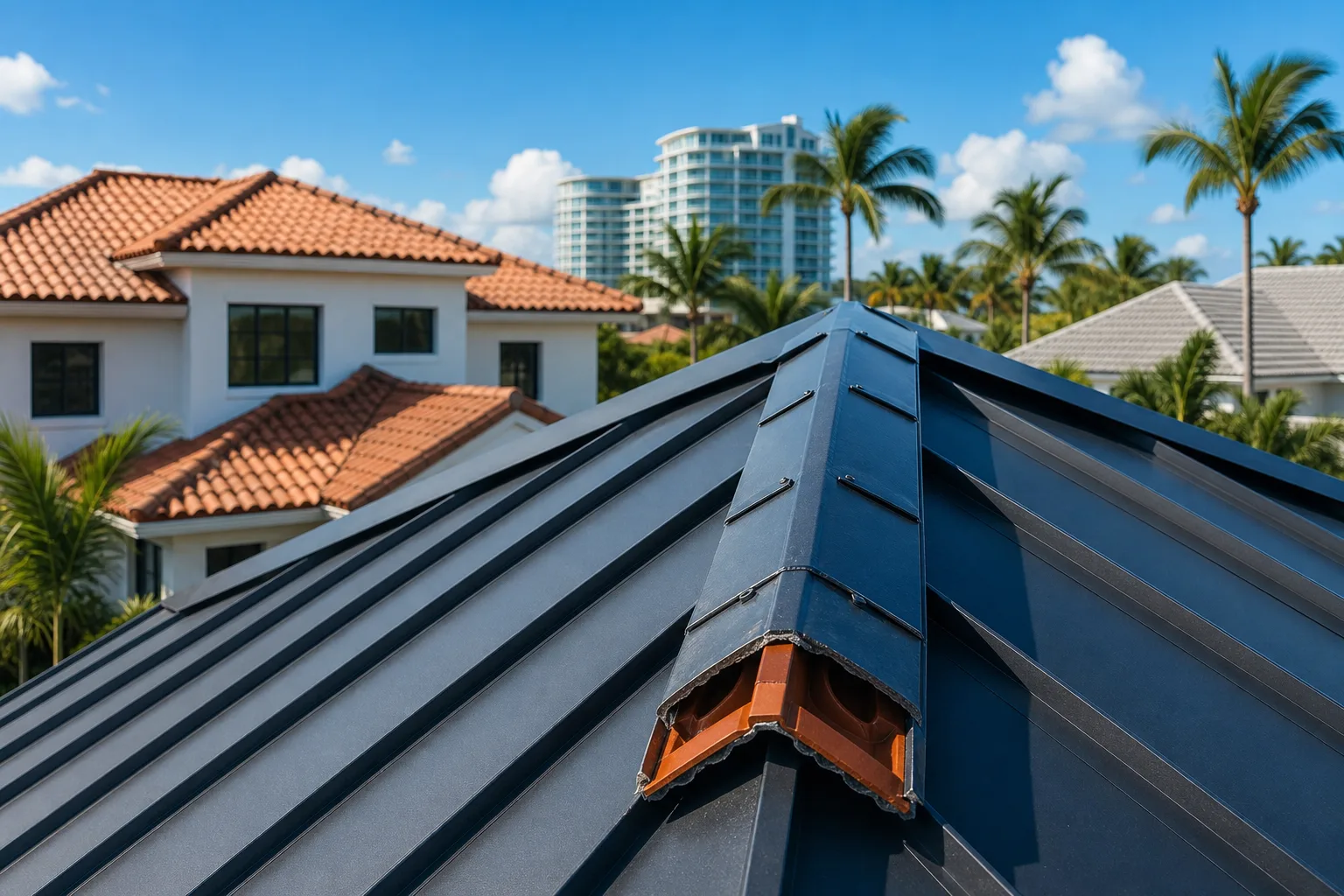
Metal ridge caps use mechanical fasteners and sealant tape. Failure modes include:
- Sealant tape drying out and separating, allowing wind-driven rain to enter at fastener points
- Fasteners backing out due to thermal expansion and contraction
- Ridge cap panels lifting at the ends
Is your roof ready for hurricane season? Visit the Storm Center
4. Inspect before hurricane season opens
Hurricane season runs June 1 through November 30. The best inspection window is March through May, giving you time to schedule repair before contractors are overwhelmed with storm work.
Ground inspection (do this yourself):
- Stand back far enough to see the full ridge from multiple angles.
- Use binoculars to look for lifted caps, missing pieces, visible nail heads, cracked mortar, or tiles out of alignment.
- Check after any rain for staining or wet spots at the ceiling level near the peak of interior rooms.
Attic inspection (do this yourself if you have safe attic access):
- Go into the attic on a bright day with the lights off.
- Look toward the ridge for any pinpoints of daylight. Any visible light means there is a gap in the cap system.
- Look for water staining, dark streaking, or soft wood at the ridge board or top of the rafters.
Professional inspection: If you see any of the warning signs above, or if your roof is over 10 years old and has never had the ridge caps inspected specifically, get a licensed roofer on the roof before the season opens. Ground and attic checks are useful filters, not substitutes for a hands-on assessment.
5. Understand the repair vs. ignore tradeoff
This is where insurance reality matters in Florida.
If ridge caps blow off during a named storm and you have a documented pre-storm inspection showing the roof was in acceptable condition, you have a strong basis for a wind damage claim. If the adjuster finds crumbling mortar or lifted caps that were clearly failing before the storm, the claim for interior water damage may be denied as a maintenance issue.
Florida insurers have tightened underwriting requirements significantly. Some carriers now require roofs under 15 years old to be eligible for full replacement coverage. A ridge cap failure that lets water into the deck and attic can trigger a much larger repair scope than the caps themselves.
Fixing a failing ridge early costs far less than a water-damaged deck. See roof deck damage for what that progression looks like.
Common mistakes
Patching only the obvious missing cap. If one cap blew off or cracked, the adjacent ones are under the same stress and likely at the same stage of degradation. Replacing only the visible damage often means the neighbor fails in the next storm.
Using standard shingles as ridge caps without proper bending. Ridge caps need to flex over the peak. Flat field shingles used as caps without scoring and bending crack across the ridge line quickly in Florida's heat.
Ignoring mortar-set tile ridges because the tile looks fine. The tile can look intact while the mortar bond underneath is completely gone. The tile is held in place only by friction until wind or foot traffic dislodges it.
Waiting until after a storm to schedule inspection. Post-storm contractor backlogs in South Florida can run weeks to months. A roof with compromised ridge caps sitting through a wet season is a deck damage scenario waiting to happen.
Assuming a new roof means new ridge caps. A reroof that reuses existing ridge tiles or caps is not uncommon. Ask specifically whether ridge caps are being replaced as part of your scope of work.
Bottom line
Ridge caps are a small percentage of your roof's total surface area but cover the single most vulnerable seam on the entire system. Florida's combination of UV, heat cycling, and hurricane-force wind uplift degrades them faster than any other component, and their failure puts your deck, attic, and interior at immediate risk.
Inspect before June. If you see any of the warning signs, get a professional assessment before the season opens, not after the first named storm passes.
For a pre-season check or ridge cap repair in Boynton Beach, Delray Beach, Boca Raton, West Palm Beach, or Lake Worth, request a quote or get a free instant estimate. If a storm has already come through, start at the Hurricane Storm Center for next steps.
For broader context on what fails on Florida roofs and why, see why some Florida roofs last 40 years and others fail at 15 and why roof underlayment matters more in Florida.
Is your roof ready for hurricane season?
A pre-season inspection is the cheapest insurance you'll ever buy. Our Storm Center has you covered before and after the storm.
Frequently asked questions
Can I replace just a few ridge caps myself, or does it require a licensed contractor?
Replacing one or two loose shingle caps is within DIY range if you are comfortable on a roof and use the correct roofing nails and sealant. However, tile ridge systems and any work that involves the underlayment beneath the caps should be done by a licensed contractor. In Florida, improper repairs can also create documentation problems if you file a wind damage claim later.
How do I know if my tile ridge is mortar-set or mechanically fastened?
A licensed roofer can tell you definitively by inspecting the ridge from the roof surface. From the attic, you can sometimes see whether fasteners penetrate through the ridge board. Mortar-only ridges were the standard for older Florida tile roofs, while current Florida Building Code in high-velocity hurricane zones requires mechanical fastening in most applications.
Will my homeowner's insurance cover ridge cap replacement after a hurricane?
Coverage depends on your policy, the adjuster's findings, and whether the damage is attributed to storm wind or pre-existing deterioration. Documented pre-storm inspections showing the caps were in acceptable condition strengthen a wind damage claim. Florida carriers are increasingly scrutinizing maintenance-related failures, so proactive upkeep and documentation matter.
How often should ridge caps be inspected in South Florida?
At minimum, inspect once a year before hurricane season opens and after any named storm passes near your area. Tile ridges on roofs older than 10 to 15 years may warrant inspection every year regardless of storm activity, given how quickly mortar bonds degrade in Florida's climate.