Hurricane Season 2026: Get Your Roof Ready in Time
In this article
TL;DR: Hurricane season 2026 starts June 1. South Florida homeowners should begin roof prep no later than mid-April to beat contractor backlogs and give time for any permitted repairs. Focus on flashings, ridge caps, and soffit edges. Those are the first things to fail in a Cat 3.
What Happened
The 2025 Atlantic hurricane season was the kind of season that reminds South Florida why we do this. A string of named storms, including several that intensified faster than forecast models predicted, caught some homeowners off guard. The pattern that meteorologists flagged going into 2025 has not changed materially heading into 2026. Warm sea surface temperatures in the Atlantic and Gulf, reduced wind shear in peak months, and a La Nina pattern setting up for late summer all point toward another active season.
For homeowners in Boynton Beach, Delray Beach, West Palm Beach, Boca Raton, and Lake Worth, that means the question is not whether to prep. It is how much runway you have to do it correctly.
National Hurricane Center data consistently shows that peak activity clusters between mid-August and mid-October, with September being the statistical bull's-eye. But storms can and do form earlier. Getting your roof squared away in April or early May is not overkill. Earlier planning reduces the risk of competing for limited contractor availability after a named storm.
Why It Matters
A roof in South Florida is not just a building component. It is the first line of defense for everything inside the structure, and the Florida Building Code reflects that reality aggressively. Palm Beach County falls under the Florida Building Code's wind provisions, which set strict standards for how roofing systems must be installed, fastened, and verified. If your roof was installed or repaired without pulling a permit and passing inspection, you may have a code compliance gap that your insurer can use to limit or deny a wind claim.
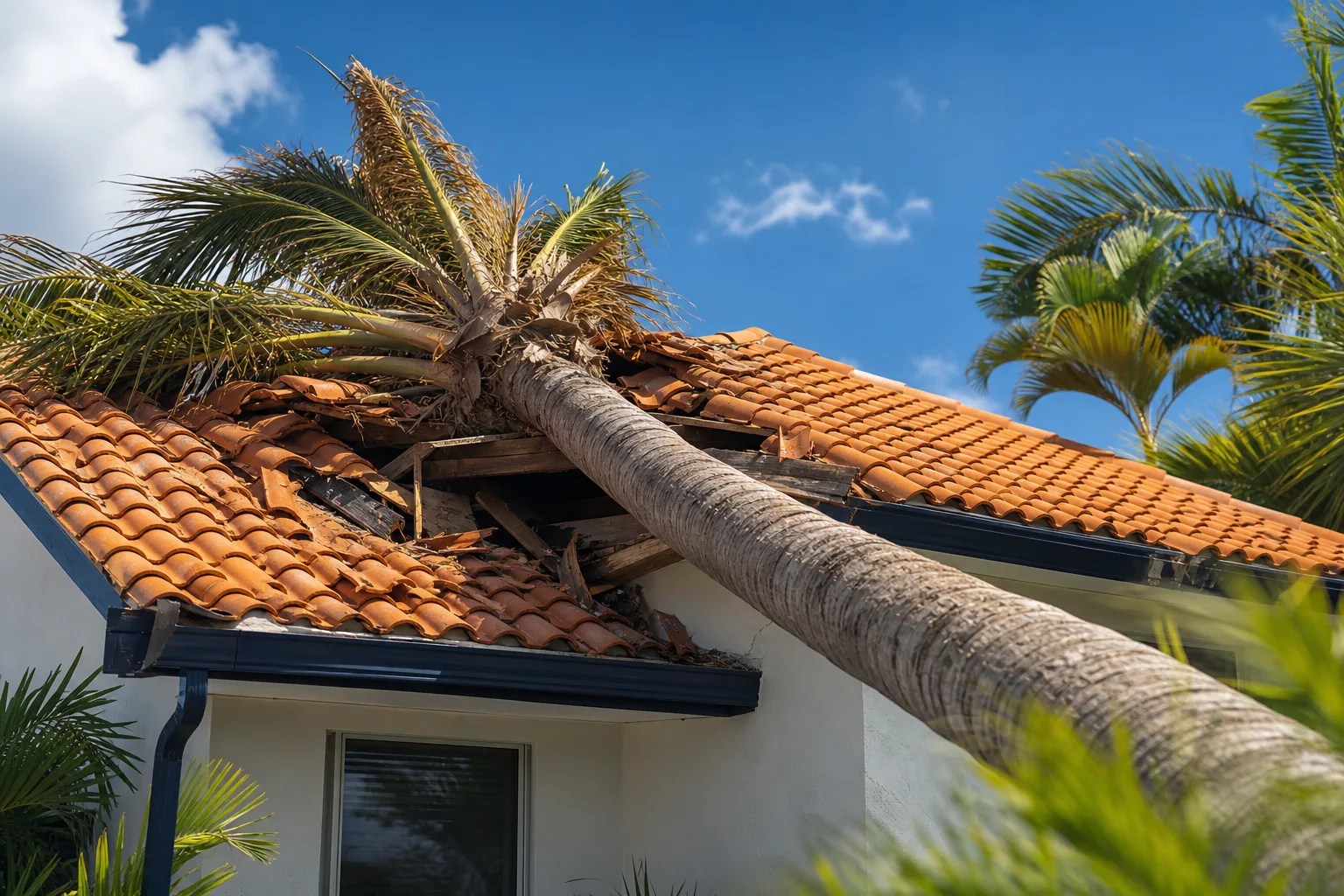
Let me walk through the specific failure points that show up in a Cat 3 event over and over again.
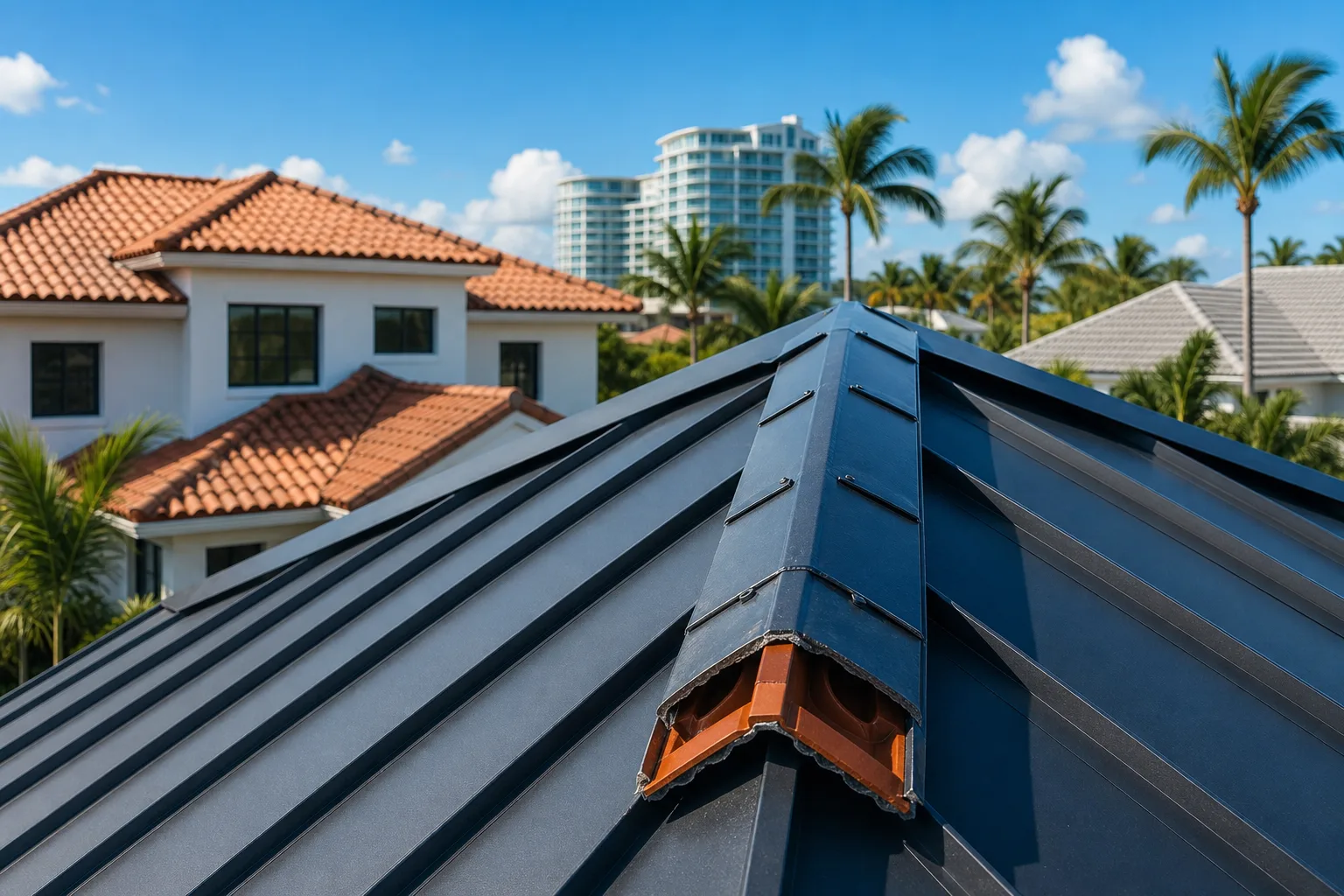
Ridge caps. The cap shingles or mortar-set caps on a tile roof sit at the apex, which is the highest-pressure zone during a storm. Deteriorated mortar, cracked caps, and improper re-nailing all turn ridge caps into airborne projectiles. On tile roofs, we look at cap bedding and whether the mortar has developed any cracking or hollow sound when tapped.
Flashings at penetrations. Pipe boots, skylights, chimney bases, and any point where something penetrates the deck is a vulnerability. Rubber pipe boots degrade faster in South Florida UV than in northern climates. A cracked boot is a water entry point even in a moderate storm.
Soffit edges and fascia. Wind gets under the roofing system from the edges. Loose or poorly attached soffits act as a scoop, and once wind pressurizes the attic space, the roof deck faces uplift from both above and below simultaneously. This is how whole-roof failures happen. Checking fascia board integrity and soffit attachment is a non-negotiable part of storm prep.
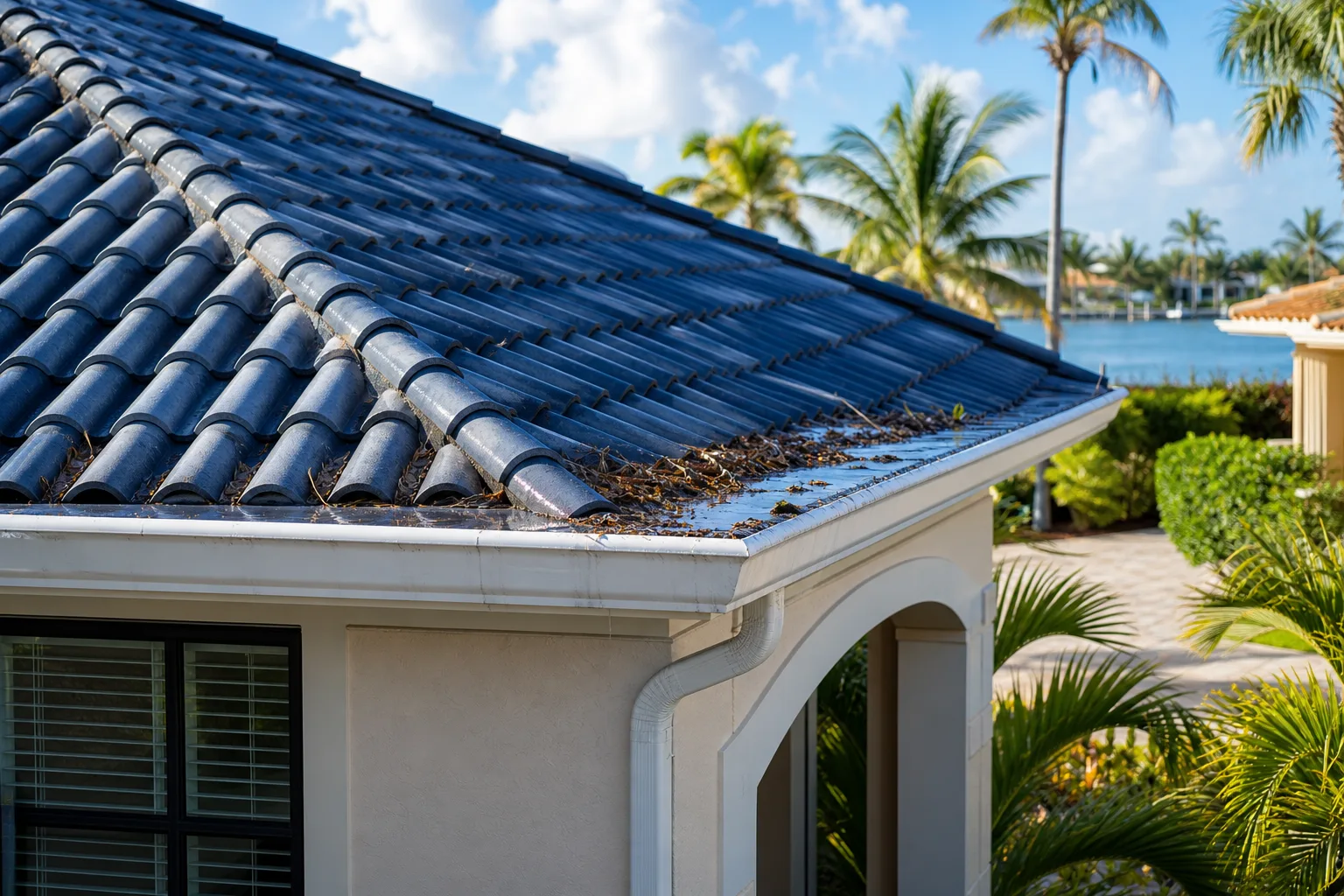
Gutter attachment and drainage. Full gutters during a storm add weight stress to fascia, and clogged downspouts back water up under the drip edge. If your gutters have pulled away from the fascia even slightly, now is the time to address it. A secure gutter system also protects your foundation during a flooding event.
Roof deck fastening. Florida Building Code has evolved significantly since Hurricane Andrew in 1992. If your roof was last replaced before the mid-2000s code updates, the deck may have been fastened to a less stringent standard than what is required today, for example, using smaller nails on wider spacing rather than the ring-shank fasteners on closer patterns that current wind-zone requirements typically call for. The specific requirements vary by wind speed zone and deck thickness, so this is worth confirming with a licensed contractor. When a licensed contractor replaces a roof today in Palm Beach County, they must meet the current fastening schedule and get it inspected. If yours has never been replaced under the modern code cycle, that is worth knowing before June 1.
What the Insurance Picture Looks Like in 2026
Florida's property insurance market has shifted considerably, and insurers operating in the state are paying close attention to roof condition and age at renewal. Without getting into the recent legislative changes (covered separately in a recent post), the practical effect for homeowners is that a roof with visible deterioration, unrepaired storm damage, or a prior unpermitted repair is a real liability at policy renewal time.
Documented, permitted work, completed by a licensed contractor and passed by a county inspector, creates a paper trail that supports your claim when you need it most. An instant estimate can help you understand scope and cost before you commit to anything.
Is your roof ready for hurricane season? Visit the Storm Center
What We Don't Know Yet
Several things remain uncertain heading into 2026.
We do not yet have a consensus early-season forecast. Colorado State University, NOAA, and other major forecasting groups release updated outlooks in April and again in early June. Those numbers will sharpen the picture, but historical patterns already support preparing as if it will be active.
We also do not know yet how the insurance carrier landscape will look by the time peak season arrives. Some carriers have been adjusting underwriting requirements mid-policy cycle based on roof age or material. If you have not spoken with your insurance agent about what they need to see on your roof documentation, that conversation is worth having before the season starts, not during it.
Finally, lead times on roofing materials can shift. Certain metal roofing profiles and premium shingle products have had supply chain variability in recent years. If a major storm hits somewhere in the Southeast before it reaches us, regional demand spikes immediately. Starting your prep in April gives you the ability to order materials with buffer time.
What to Do About It
Here is the prep sequence I walk clients through every spring.
Step one: visual self-inspection, now. Walk the perimeter of your home and look up. You are not looking for every defect. You are looking for anything obvious: missing shingles or tiles, sagging sections, granule loss that has exposed the mat on asphalt shingles, or vegetation in the valleys. Take photos with timestamps. This documentation matters.
Step two: schedule a professional inspection by mid-April. Not a free inspection from a company that only sells replacements. A real inspection from a licensed contractor who will give you a written scope of conditions. At Millennium Makeover, we have been doing this in South Florida since 2005. Visit our Hurricane Storm Center for resources specific to storm prep, or head directly to our repairs page to understand what common pre-season fixes involve.
Step three: address repairs under permit. Any repair that involves opening the deck, replacing flashings, or reattaching roof components requires a permit in Palm Beach County for most scopes of work. Do not let a contractor talk you into doing it without one. Unpermitted work does not just risk your insurance claim. It can create liability if the work fails and injures someone.
Step four: clear gutters and downspouts. Clean out debris from winter and spring. Check that downspout extensions are directing water at least four feet from the foundation. If gutters are sagging or pulling from the fascia, have them reattached or replaced before the season. This is a low-cost item relative to what clogged drainage causes during a prolonged rain event.
Step five: document everything. Photograph your roof from the ground in good light. If you had work done, keep copies of the permit, inspection report, and contractor invoice in a cloud-based folder alongside your insurance policy. When you are filing a claim at midnight during a storm, you will be glad you can pull up that documentation on your phone.
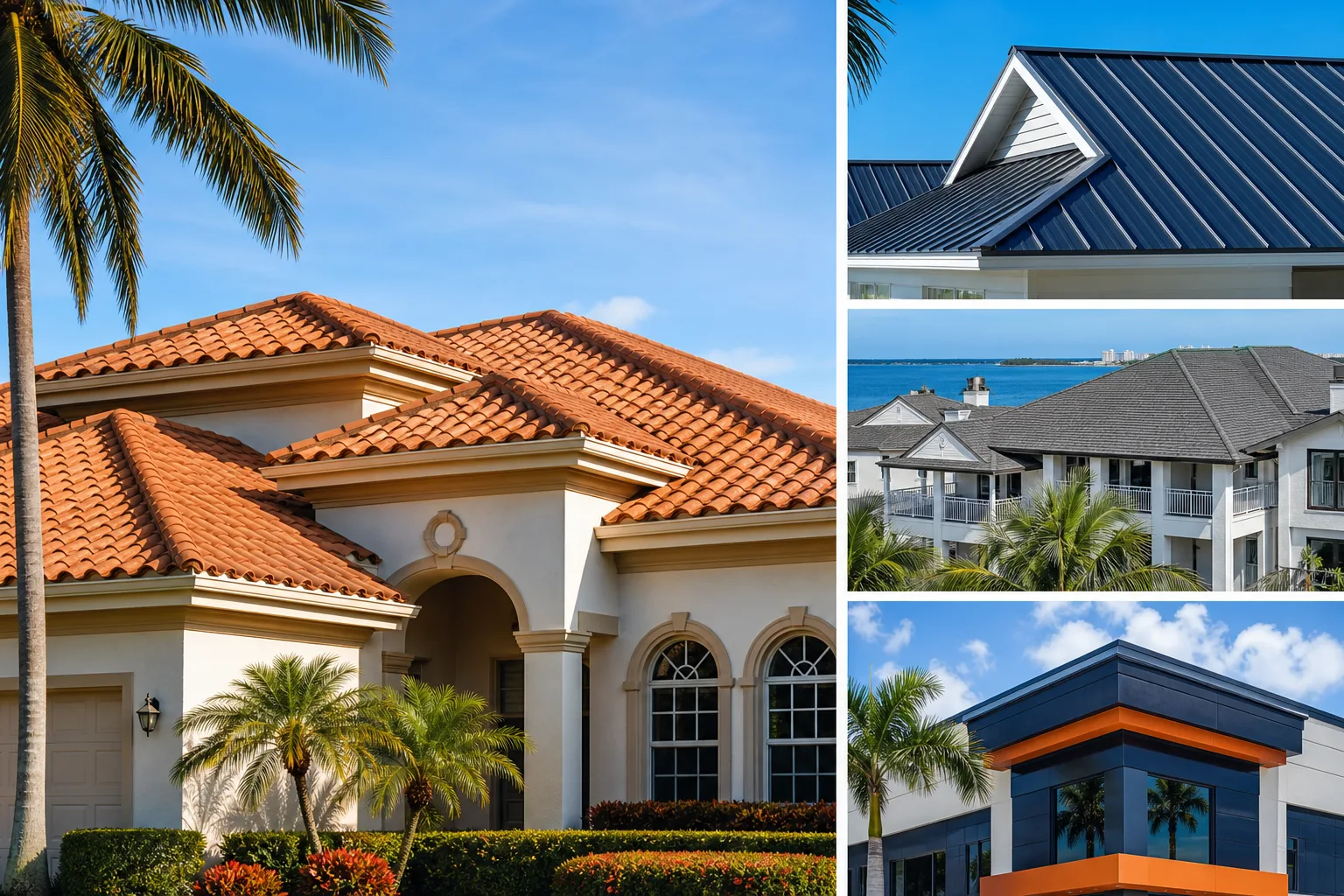
Step six: commercial property managers, this applies to you too. Flat and low-slope commercial roofs in our area have their own storm-prep checklist: drains, membrane seams, flashings at parapet walls, HVAC curb attachments. Our commercial roofing team handles pre-season assessments for property managers throughout Palm Beach County. Do not wait until June to schedule a commercial inspection. Those slots fill up fast.
When to Request a Full Replacement vs. Repair
This comes up every spring. The short answer: if your roof is within three to five years of the end of its rated life, or if it has had multiple repairs in different locations, the math often favors replacement before a storm season rather than reactive repair after one. A new roof installed to current code standards, with proper permit and inspection, gives you the strongest possible standing with both the county and your insurer.
If you are not sure where your roof falls, start with an assessment. You can request a quote online and we will give you a straight answer about what we find, not a pitch for work you do not need.
The window to get this done before the season is open right now. By late May, the schedule fills. By June 1, we are in response mode. Do not put yourself in the position of making these decisions under pressure.
For current guidance on hurricane preparedness at the regional level, the National Hurricane Center and Palm Beach County Emergency Management both publish updated resources each spring. Use them alongside a professional roof assessment, not instead of one.
Is your roof ready for hurricane season?
A pre-season inspection is the cheapest insurance you'll ever buy. Our Storm Center has you covered before and after the storm.
Frequently asked questions
When should I schedule a pre-hurricane roof inspection in South Florida?
Mid-April is the target. That gives enough time to complete any repairs under permit before contractor schedules fill up in May. Waiting until June means you are often competing with emergency calls after the first named storm of the season.
What parts of my roof are most likely to fail in a Cat 3 hurricane?
Ridge caps, pipe flashings, soffit edges, and gutter attachment points are the most common failure locations we see. Wind gets under the system from the edges, and once attic pressure builds, the deck faces uplift from both directions simultaneously. Addressing these specific points before the season matters more than a general once-over.
Do I need a permit for pre-season roof repairs in Palm Beach County?
For most repairs that involve opening the deck, replacing flashings, or reattaching roof sections, yes. Unpermitted work creates a paper trail gap that insurers can use when you file a wind claim. Always confirm the permit requirement with your contractor before work begins.
How does roof condition affect my homeowners insurance in Florida?
Insurers in Florida are increasingly scrutinizing roof age, material, and condition at renewal. A roof with documented permitted repairs or a recent replacement under current code standards is in the strongest position. An older roof with visible deterioration or unpermitted work is a real liability when it comes time to file or renew.
Should I repair or replace my roof before hurricane season?
If your roof is within three to five years of its rated lifespan, or has had multiple repairs in different areas, replacement before the season often makes more financial sense than another repair. A licensed contractor can walk you through the current condition and give you an honest recommendation based on what they find.
What should commercial property managers do to prepare for hurricane season?
Flat and low-slope commercial roofs need a focused assessment of membrane seams, internal drains, parapet flashings, and HVAC curb attachments. These are different failure points than residential roofs. Schedule a commercial inspection in March or April because those assessment slots in Palm Beach County fill up faster than most property managers expect.