5 Questions to Ask Before a Roofer Gets on Your Roof

In this article
TL;DR: Ask every roofer for their license number, proof of insurance, permit plans, a written scope of work, and local references before a single nail goes in. If they hesitate on any of these, walk away.
After twenty-plus years on South Florida roofs, I can tell you that most homeowner regrets come down to one thing: they didn't ask enough questions before the job started. A good roofer won't mind being asked. A bad one will. Use that as your filter.
Here are the five questions that matter most.
1. Are You Licensed in Florida, and Can I Verify It?
Florida requires roofing contractors to hold a state-issued license. For residential and commercial work, that's a Certified Roofing Contractor license (prefix CCC). Ask for the license number, then look it up yourself at the Florida Department of Business and Professional Regulation. Takes two minutes.
Also check that the license is active and not under any disciplinary history. Out-of-state roofers who roll into town after a storm frequently aren't licensed here at all. That's a red flag that should end the conversation.
2. Do You Carry General Liability and Workers' Compensation Insurance?
Ask for a certificate of insurance, not just a verbal yes. The certificate should list your property as the certificate holder. Call the insurance company directly if you want to confirm coverage is current.
Without general liability, you're on the hook if they damage your home. Without workers' comp, you could be liable if a worker is injured on your property. This isn't paperwork for its own sake. It's real financial exposure for you.
3. Will You Pull a Permit?
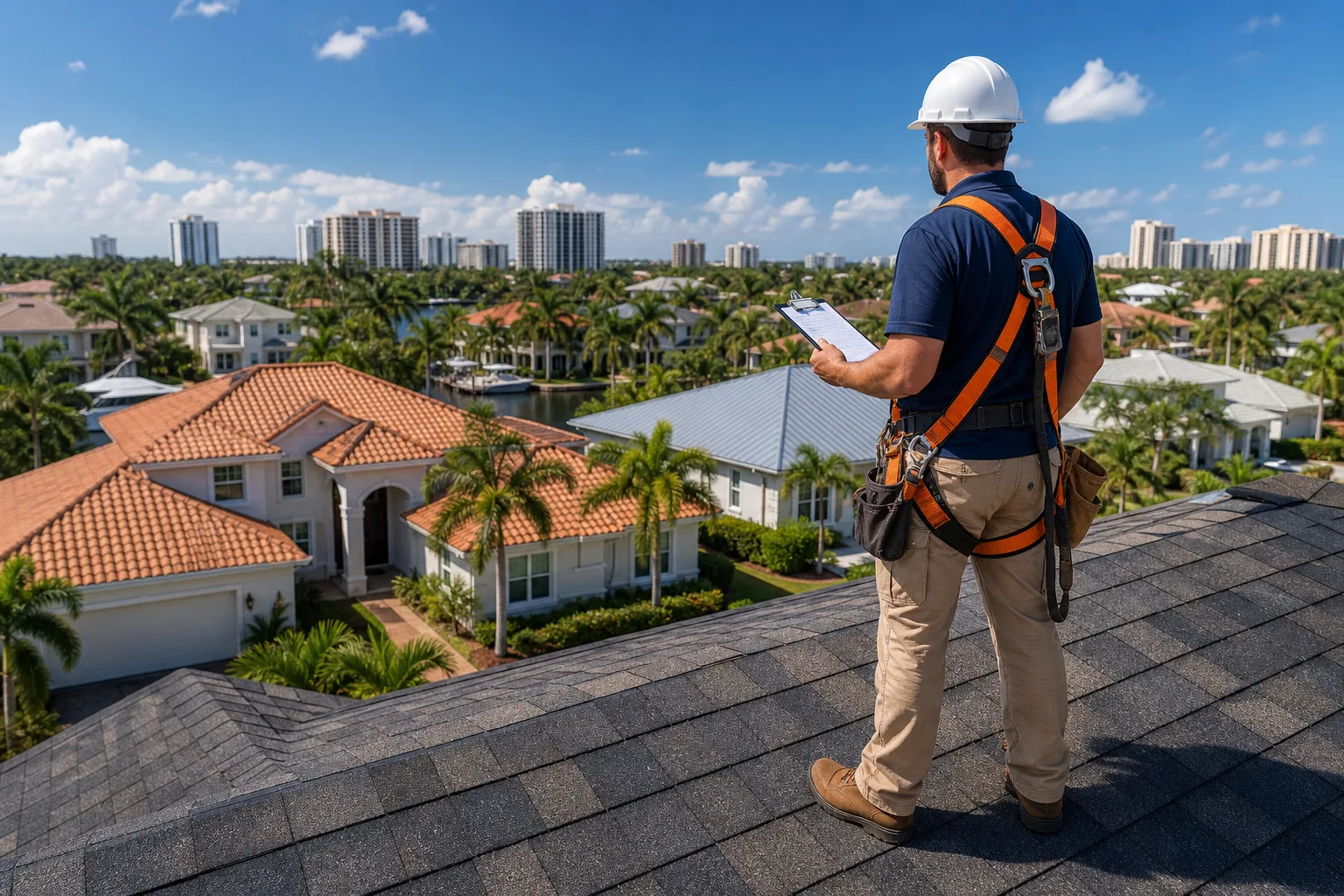
In Florida, a full roof replacement almost always requires a permit. Some repairs do too, depending on scope. A roofer who suggests skipping the permit is doing you no favors. Unpermitted roof work can cause serious problems when you sell the home or file an insurance claim. The consequences are worth understanding before you agree to anything.
Read more on this: Unpermitted Roof Replacement in Florida: What Homeowners Risk.
A legitimate contractor handles permit pulls as a standard part of the job. If they're suggesting you skip it to save money, that savings isn't real.
Want to know what your roof actually needs? Get a free estimate
4. What Exactly Is Included in the Scope of Work?
Get it in writing. A quote that says "replace roof" tells you almost nothing. Before work starts you should have a written document that covers, at minimum:
- Material brand, product line, and color
- Underlayment type and coverage
- What happens if damaged decking is found
- Whether flashing will be replaced or reused
- Cleanup and debris removal
- Warranty terms for both materials and labor
Vague scopes lead to disputes. If a roofer won't put specifics in writing, that tells you something. A related issue worth knowing: why replacing flashing during a reroof matters.
5. Do You Have Local References or a Project Gallery I Can See?
A roofer who has worked in your area for years will have a track record you can verify. Ask for two or three references from jobs in the last twelve months, in the same general area. Call them. Ask how the job went, whether it came in on budget, and whether they'd hire the same contractor again.
You can also look at completed projects. Our own project gallery shows finished residential and commercial work across South Florida. That kind of documentation isn't something a fly-by-night operation can fake.
If a contractor is new to the area, just showed up after a storm, and can't point to a single completed local job, treat that as a serious warning sign.
Bottom Line
These five questions are not about being difficult. They're about hiring someone who will do the job correctly and stand behind it. A licensed, insured, permit-pulling contractor with a written scope and local references is the baseline, not a bonus.
If you want a straight answer on what your roof actually needs, get a free instant estimate or request a quote from a contractor who's been doing this in South Florida since 2005. We'll put everything in writing before anyone sets foot on your roof.
Want to know what your roof actually needs?
Millennium Makeover has been roofing South Florida homes and businesses since 2005. Get a straight, no-pressure estimate from a licensed local crew (CCC1326328).
Frequently asked questions
What is the difference between a Certified Roofing Contractor and a Registered Roofing Contractor in Florida?
A Certified contractor (CCC prefix) passes a state exam and can work anywhere in Florida. A Registered contractor holds a local license that limits where they can operate. For most South Florida homeowners, either can be legitimate, but you should always verify the license is active through the Florida DBPR website before hiring.
Can a roofer legally start work before the permit is approved?
In most Florida jurisdictions, work cannot legally begin until the permit is issued. Some contractors will schedule the job and pull the permit shortly before start date, which is normal. What's not acceptable is starting work with no permit filed at all. Always confirm permit status before they get on the roof.
What should I do if a roofer knocks on my door after a storm and offers a free inspection?
Post-storm door-to-door solicitation is a common tactic used by out-of-area contractors who follow severe weather events. Ask for their Florida license number and look it up before agreeing to anything. A legitimate local roofer doesn't need to knock on doors to find work. Learn more at our Hurricane Storm Center.
Should I ask for a lien waiver from my roofer?
Yes. A lien waiver confirms the contractor has paid their suppliers and subcontractors, which protects your property from a mechanics lien if those parties go unpaid. Ask for a final lien waiver upon project completion before you make your last payment.