What a Roofing Contractor Checks Inside Your Attic Before Quoting
In this article
TL;DR: A responsible roofer checks the attic before quoting because what is visible from the roof does not tell the whole story. Deck rot, failed ventilation, and hidden moisture damage can all change the scope and cost of a job. Skipping the attic inspection is a red flag.
What you need
- Safe attic access (a pull-down stair, hatch, or scuttle hole)
- A flashlight or headlamp
- At least 15 to 20 minutes of uninterrupted time during the appointment
- A notepad or phone to record what the contractor finds
If a contractor shows up, glances at your shingles from the driveway, and hands you a quote in five minutes, walk away. That is a storm chaser or a lowball bidder, and neither ends well for you.
Step 1: Assess the roof deck
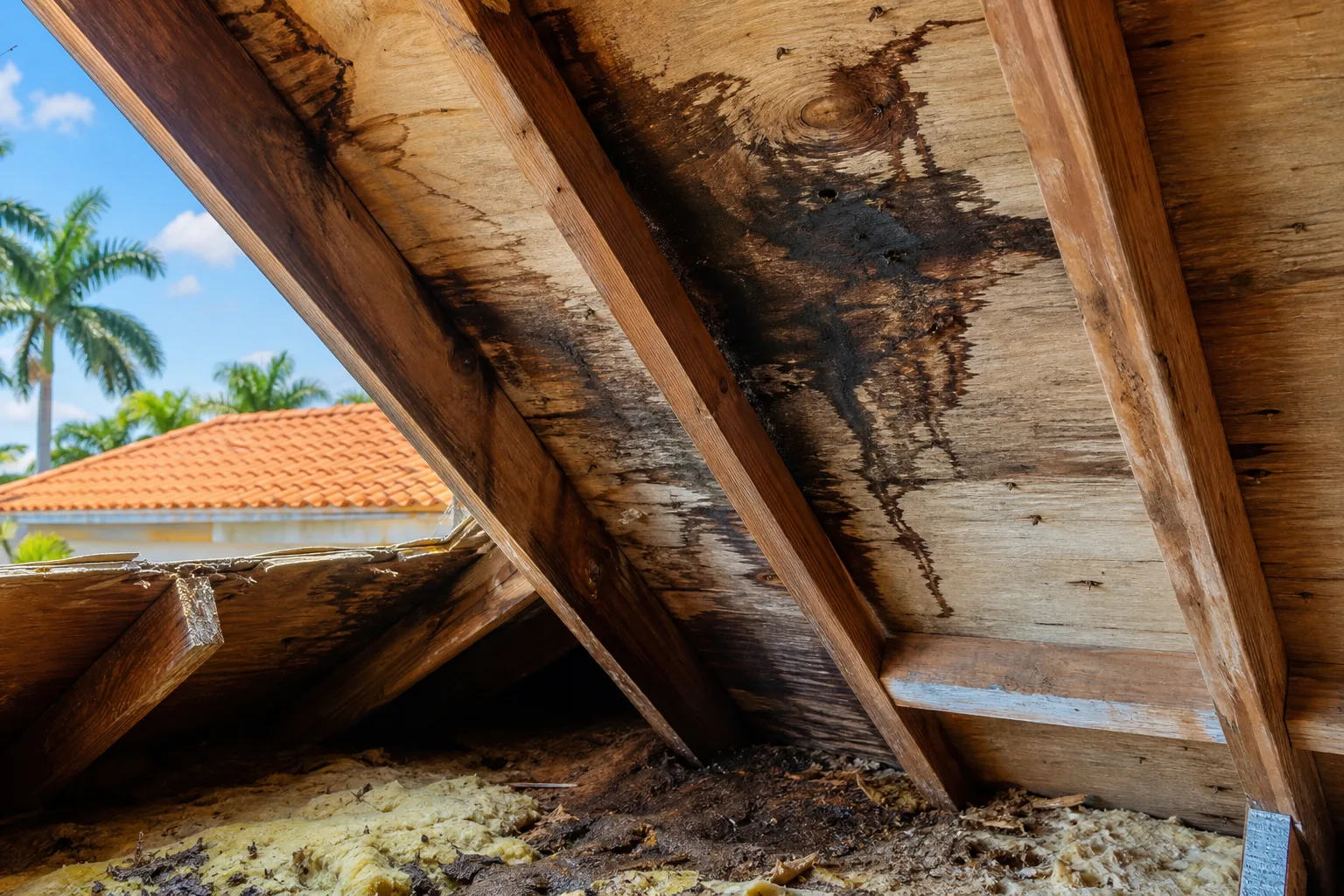
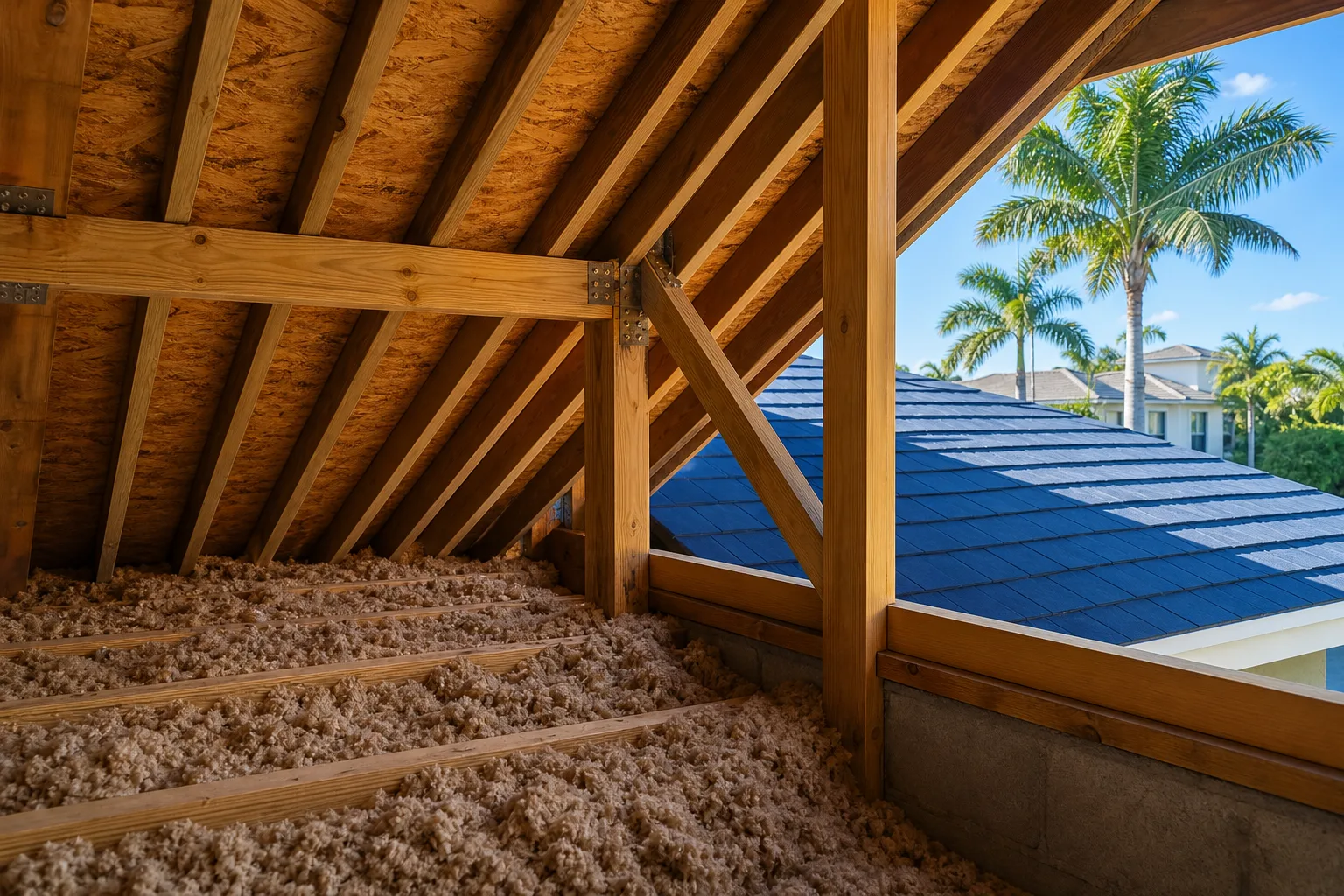
The deck is the plywood or OSB sheathing that everything else sits on. From inside the attic, a contractor can push on the deck to feel for soft spots, look for delamination (layers separating), and spot discoloration from long-term moisture exposure.
In South Florida, humidity cycles and past storm events can rot a deck that looks fine from the outside. Replacing a full deck adds real cost. Knowing about it before the quote means there are no surprise change orders mid-job.
A good roofer documents which sections are compromised and prices accordingly. A bad one misses it and then hits you with an "extra" bill once the old shingles come off.
Step 2: Check for active or past moisture intrusion
Staining on the rafters or deck, mold growth, and rust on metal fasteners all signal that water has been getting in. The attic inspection helps pinpoint where, which is not always directly below the visible leak on your ceiling.
Water travels. A penetration near the ridge can show up as a stain three feet away. The attic is the only place to trace that path before the quote is written.
If mold is present, a contractor may recommend a remediation assessment before or alongside the roofing work. That is not upselling. That is doing the job correctly.
Step 3: Evaluate ventilation
Florida building code addresses attic ventilation requirements. Inadequate ventilation traps heat and moisture, which degrades shingles from the underside and shortens the life of any new roof system.
A contractor checks whether ridge vents, soffit vents, and any mechanical ventilation are present, unobstructed, and balanced. Blown-in insulation that covers soffit vents is a common problem in South Florida homes and one that will quietly destroy a new roof over time.
If ventilation needs to be corrected as part of the project, that work should appear in the quote, not be discovered after installation. See Florida Roof Shapes: Which Style Works Best in Your Climate for more on how attic design connects to roof performance.
Step 4: Inspect insulation
Insulation condition is relevant to roofing for two reasons. First, wet or compressed insulation is evidence of past or current leaks. Second, if the deck needs replacement, saturated insulation often needs to come out and be replaced as well.
A contractor is not your insulation contractor, but a thorough roofer notes the condition and flags it so you can make an informed decision. Ignoring wet insulation and sealing a new roof over it is a shortcut that creates mold problems down the line.
Want to know what your roof actually needs? Get a free estimate
Step 5: Look at rafter and truss condition
Rafters and trusses carry the load of the entire roof system. Storm damage, termite activity, or long-term moisture can compromise structural members. A contractor checks for cracks, splits, sagging, or signs of pest damage.
This is not a structural engineering assessment, but a seasoned roofer knows what normal looks like and what warrants flagging for a further evaluation before work starts.
Step 6: Identify penetrations and interior flashing points
From the attic you can see where plumbing vents, exhaust fans, and electrical chases penetrate the deck. These are common leak points. Checking them from below confirms whether existing flashing is seated correctly and whether any of these areas need attention as part of the roofing scope.
For more on how penetration and wall flashing works in practice, see How Roofers Flash a Second-Story Roof Against a Stucco Wall.
Attic inspection findings: decision table
| Finding | Impact on quote | Action |
|---|---|---|
| Solid deck, no staining | Baseline scope | Proceed as planned |
| Soft spots or delamination | Partial or full deck replacement added | Priced before work starts |
| Active mold | Possible remediation referral | Address before or alongside roofing |
| Blocked soffit vents | Ventilation correction added to scope | Recommended; code requirements vary by jurisdiction |
| Wet insulation | Insulation removal and replacement noted | Homeowner decision with full information |
| Damaged rafters or trusses | Structural review flagged | Engineer or licensed contractor evaluates |
Common mistakes
Accepting a quote without an attic visit. If no one went inside, the quote is incomplete. Period.
Assuming attic problems are always obvious from outside. Deck rot, blocked ventilation, and early-stage mold are invisible from the street and often from the roof surface.
Letting a contractor skip this step to "keep costs down." Any legitimate roofer will tell you that surprises found after tear-off cost more than problems priced upfront. An attic inspection protects both parties.
Not asking what was found. You should receive a verbal or written summary of attic conditions before you sign anything. If the contractor cannot tell you what they saw, that is a problem.
Bottom line
An attic inspection before quoting is not optional on a thorough job. It is how a roofer determines the real scope of work, not a guess based on shingles visible from the ground. Deck condition, moisture history, ventilation, and structural integrity all feed into an accurate, honest estimate.
If you want a quote that reflects what your roof actually needs, start with a contractor who goes inside. Request a quote from Millennium Makeover and we will do the full inspection before we write a number down. You can also use our free instant estimate tool for a ballpark before scheduling.
For more on what to look for after work is done, see How to Spot Poor Workmanship After a Roof Replacement.
Want to know what your roof actually needs?
Millennium Makeover has been roofing South Florida homes and businesses since 2005. Get a straight, no-pressure estimate from a licensed local crew (CCC1326328).
Frequently asked questions
Does every roofing quote require an attic inspection?
Not every contractor does one, but every thorough contractor should. The attic reveals deck condition, moisture history, and ventilation problems that are invisible from the roof surface. A quote written without an attic visit is an incomplete quote.
How long does the attic portion of a roof inspection typically take?
For a standard residential home, a careful attic inspection usually takes 15 to 30 minutes. Larger homes, complex framing, or evidence of significant moisture damage can extend that time. Rushing it is how things get missed.
What if my attic is not easily accessible?
A contractor should still make the attempt using whatever access point exists, whether that is a pull-down stair, a hatch, or a scuttle. If access is genuinely impossible, that limitation should be noted in your quote along with any assumptions being made about deck and structure condition.
Can attic findings void or change a roofing warranty?
Yes, in some cases. Many manufacturer warranties require adequate ventilation and a sound deck as conditions of coverage. If the attic inspection reveals problems that are not corrected before installation, the warranty on the new system may not apply. This is one more reason the inspection matters before the quote is written.