Roof Coating: Smart Fix or Just Delaying the Inevitable?
In this article
TL;DR: Roof coatings are a legitimate tool for extending the life of a structurally sound roof, especially on commercial flat or low-slope systems. But if the deck is compromised, the underlayment is saturated, or the system is past its service life, a coating just hides the damage. It won't stop what's coming.
At a Glance
| Situation | Coating Makes Sense | Replacement Makes Sense |
|---|---|---|
| Roof age | Under 75% of expected lifespan | At or past expected lifespan |
| Deck condition | Dry, solid, no soft spots | Soft spots, rot, or moisture intrusion |
| Leak history | None, or one isolated incident | Recurring or multiple leak points |
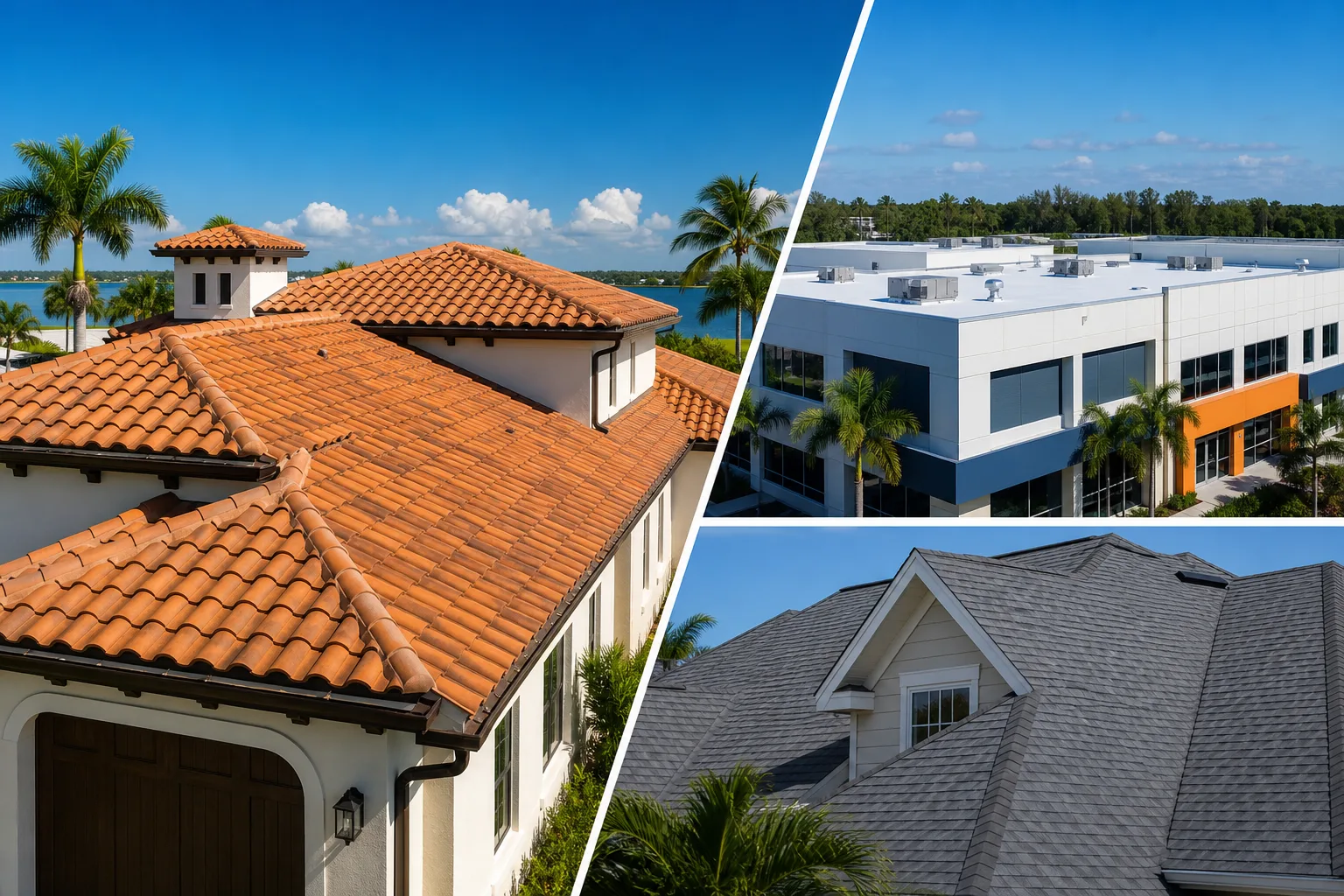
| Roof type | Commercial flat/low-slope, metal | Shingle, tile, aged modified bitumen |
| Insurance status | Coating accepted by insurer | Insurer requires replacement for coverage |
| Storm season timing | Applied well before June 1 | Major work needed before season |
That last row matters more in South Florida than anywhere else. A coating applied in April while a named storm forms in May buys you almost nothing if the underlying system isn't sound.
What a Roof Coating Actually Does
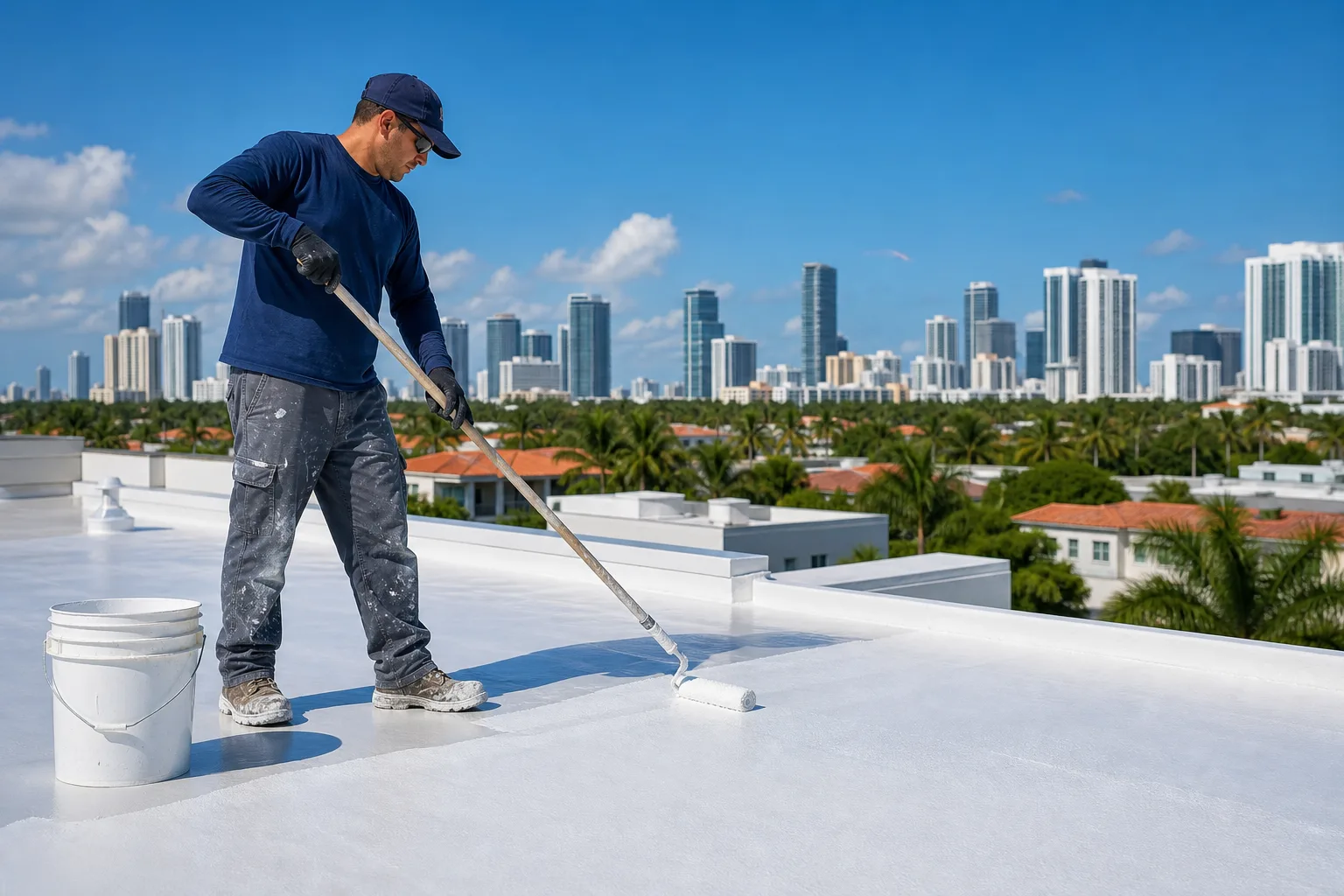
A roof coating is a fluid-applied membrane, typically acrylic, silicone, polyurethane, or elastomeric, that goes over an existing roof surface. When it cures, it creates a continuous, waterproof layer that can reflect UV, seal minor surface cracks, and reduce thermal movement stress on the roof.
What it does not do is repair structural problems. It cannot re-bond delaminated layers, replace rotted decking, or stop water that has already found a path through the existing system. Think of it as a high-quality skin, not a skeleton.
In Florida's climate, UV degradation is real and relentless. A coating that adds reflectivity and seals surface porosity on a still-sound roof can genuinely extend service life by several years. That's not marketing language, that's the practical logic behind why many commercial property managers use coatings as part of a planned maintenance cycle.
When Coating Is the Right Call
The roof is structurally sound but aging at the surface
If your roof membrane or metal panel is intact, the deck is dry and firm underfoot, and you have no active leaks, a coating is a defensible investment. You're protecting what's still working rather than patching something that's already broken.
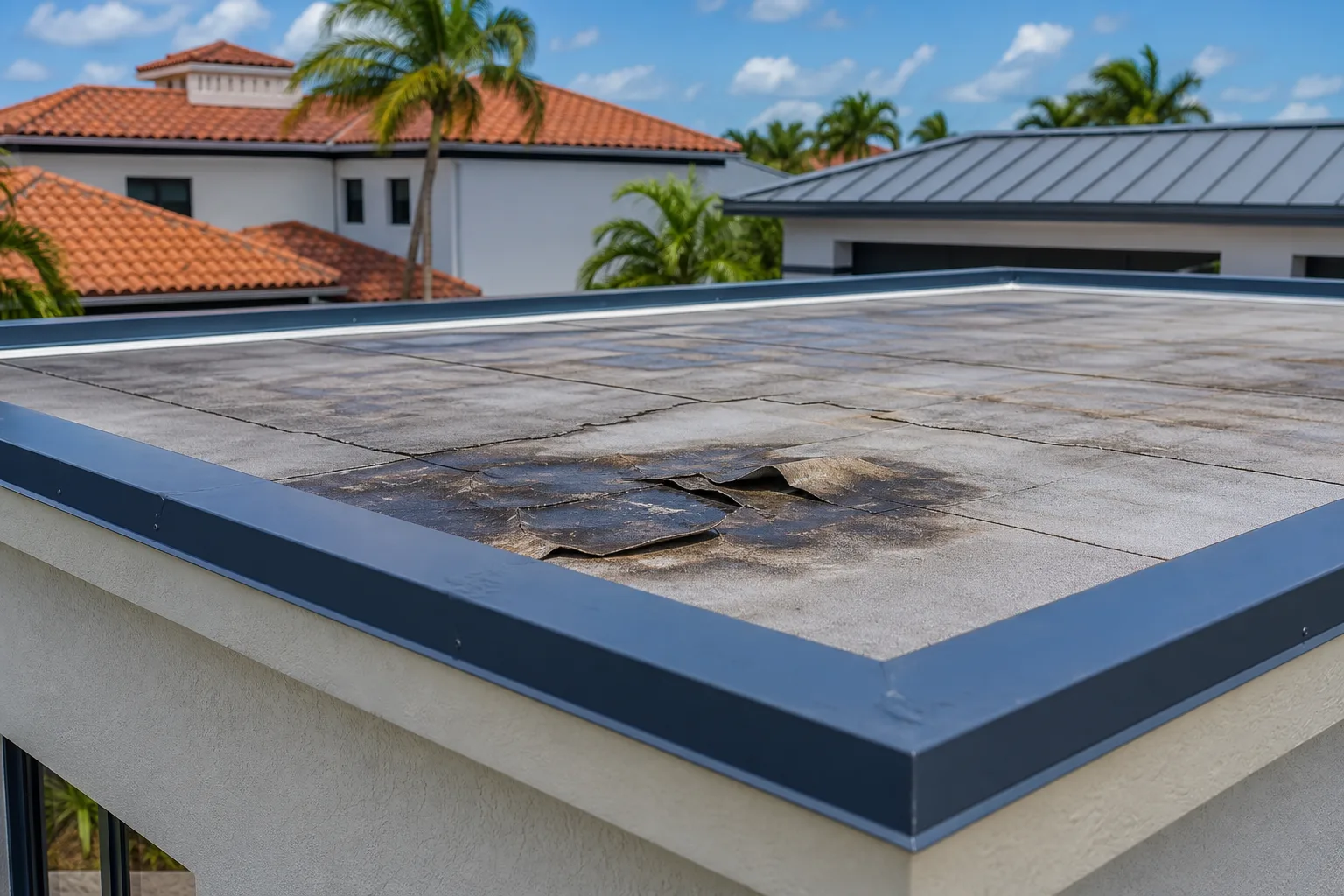
This is most common on commercial roofing systems, particularly modified bitumen and TPO roofs that have surface weathering but no penetrating damage. A coating resets the UV clock without the disruption and cost of a full tear-off.
Metal roofs with minor surface oxidation or seam fatigue
Metal roofs are strong candidates for coating because the structural system, the panels and fasteners, often outlasts the surface finish. If you're seeing minor rust streaks, chalking paint, or early seam separation without active leaks, an elastomeric coating can seal the seams and protect the metal for years.
The key qualifier is "minor." Significant rust through the panel, or fastener backout that's letting water under the laps, needs mechanical repair first. Coating over those problems doesn't solve them.
You need to extend life while planning a bigger project
Sometimes the budget isn't there for a full replacement this year, but the roof has enough integrity to last another cycle if protected. A coating buys time without gambling on the roof failing catastrophically. That's a reasonable bridge strategy, provided you're honest with yourself about what "another cycle" actually means.
If you're not sure where your roof stands, the fastest way to get an honest read is through a free instant estimate or a professional inspection that includes a moisture scan.
Spotted a leak or missing tiles? Schedule a repair visit
When Coating Just Delays the Inevitable
Active leaks or recurring moisture intrusion
This is the most common mistake: applying a coating to stop a leak. A coating sits on top of the surface. Water that has already found a path through the system, through a failed flashing, a cracked field membrane, or a compromised underlayment, will continue moving. The coating may temporarily hide the entry point but the water is still moving underneath, and you won't see the damage growing until it's worse.
At that stage, coating is not a repair. It's a cover-up. And it can actually complicate legitimate roof repairs later by adding layers that need to be stripped before the actual problem can be addressed.
The deck or underlayment has moisture damage
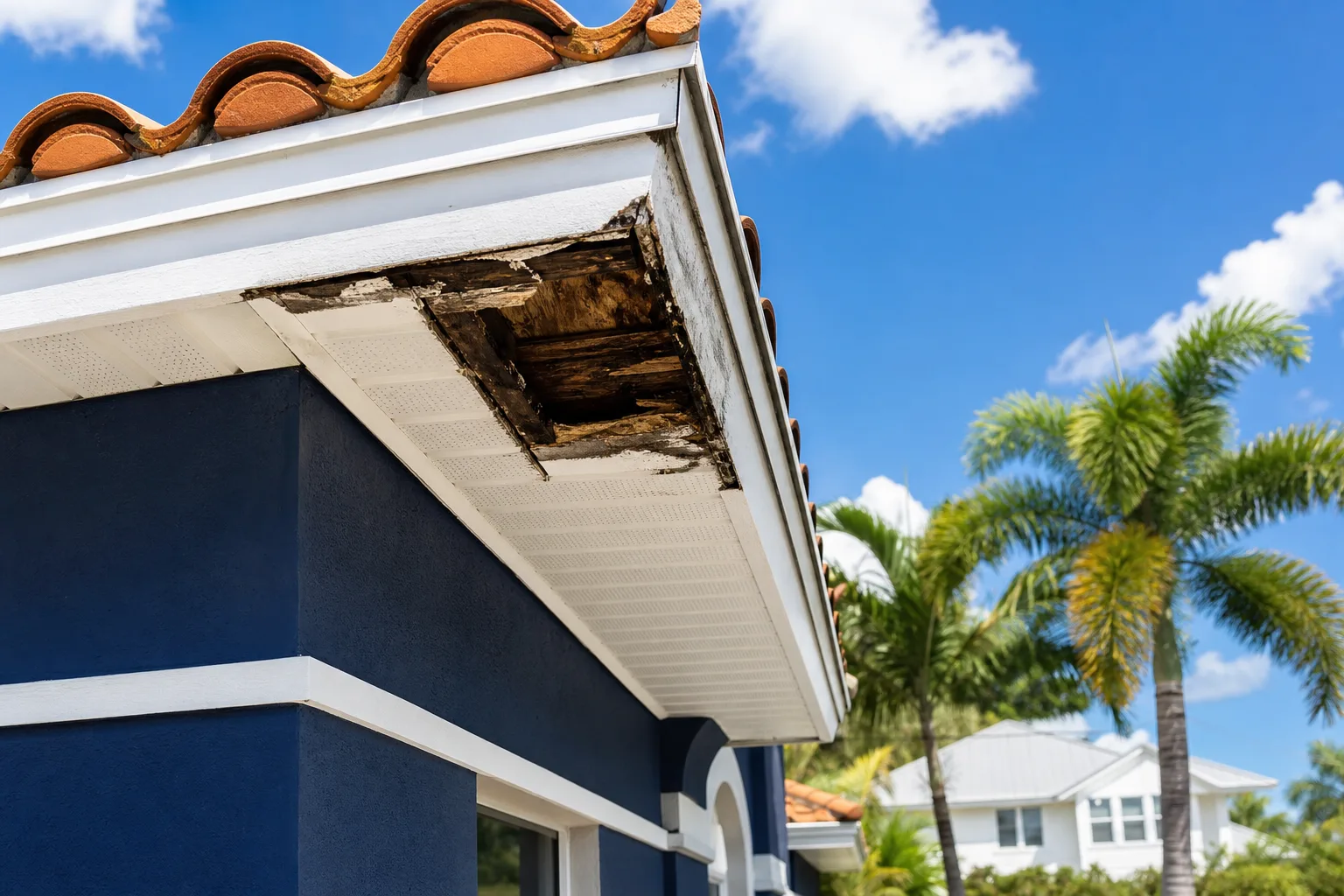
Soft spots when you walk the roof, staining on the underside of the deck, or moisture readings above acceptable thresholds on a scan are disqualifying. A coating cannot dry out wet wood. It cannot re-laminate a bubbled underlayment. These are mechanical failures that require mechanical solutions.
In South Florida, where high humidity and frequent rain cycles accelerate rot, a deck that's already compromised will continue degrading under a coating. You're essentially sealing the problem in.
The roof is at or past its expected service life
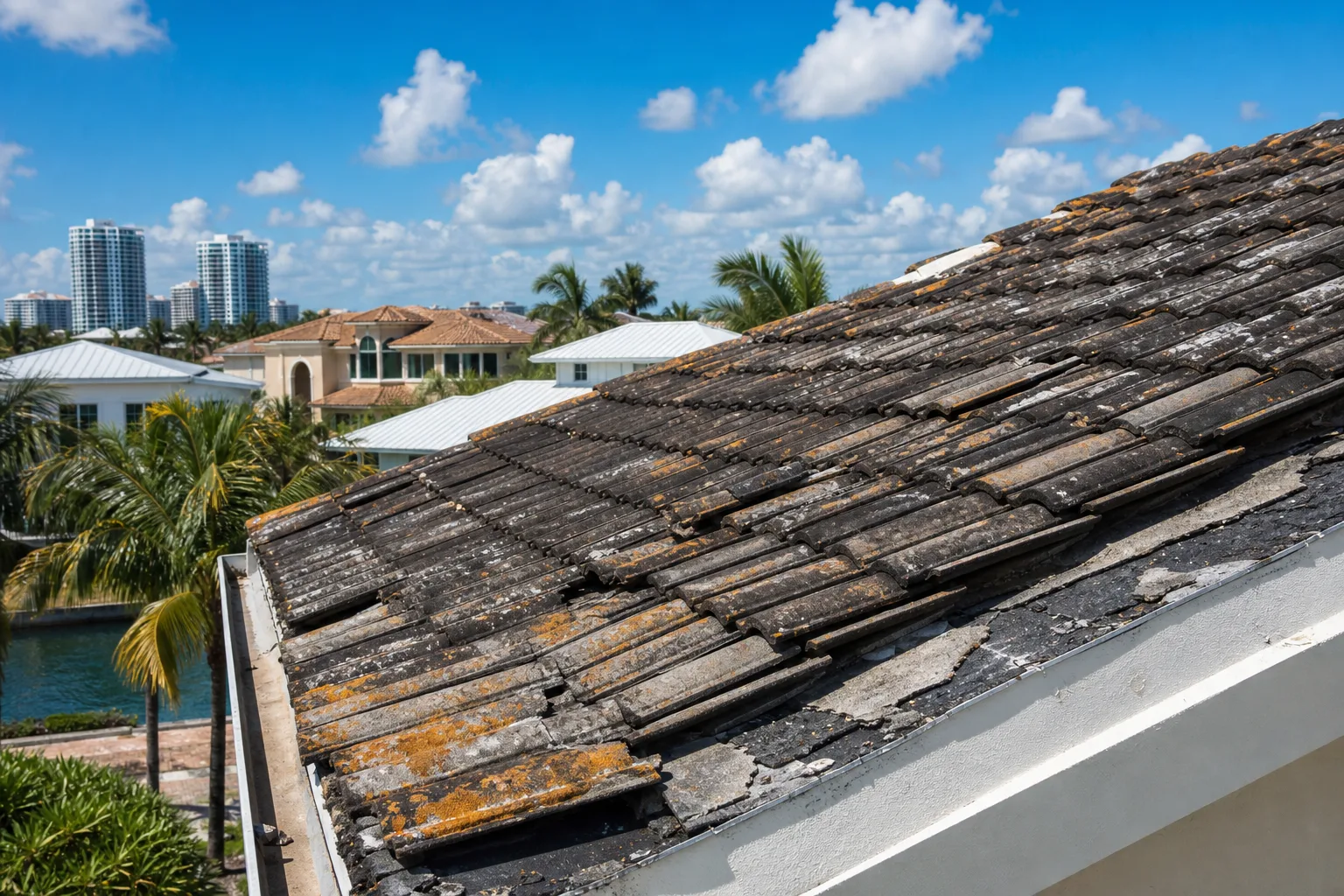
Every roofing system has a design life. Asphalt shingles in Florida typically run 15 to 20 years under real conditions, shorter than manufacturer ratings designed for cooler climates. Tile systems last much longer but the underlayment beneath them does not. If your shingle roof is 18 years old and showing granule loss, curling, and brittleness, a coating doesn't change the age of the material. It adds surface protection to a system that's already in decline.
Florida's building code ties into this, too. Under many interpretations of the Florida Building Code, a re-roofing permit is generally required when the repair or replacement exceeds 25% of the total roof area, though this threshold can vary by code cycle and local amendment, so you should confirm the exact requirement with your local building department before proceeding. Coating typically doesn't trigger that threshold, but if your roof genuinely needs replacement and you're using coating to avoid that trigger, you're trading a code-compliant roof for a temporary fix that won't satisfy an insurance adjuster after a storm.
Your insurer won't accept it
This is a South Florida reality that doesn't get discussed enough. Many homeowners' insurance carriers in our market, particularly after the 2022 and 2023 market disruptions, have specific requirements about roof age and condition for coverage eligibility. A roof that needs replacement but gets a coating instead may still be flagged as uninsurable or face non-renewal.
Before committing to a coating over a failing roof, talk to your insurance agent about whether the coating satisfies their underwriting guidelines. If it doesn't, you've spent money on a fix that doesn't protect you when it matters most. Check our Hurricane Storm Center for more on how roof condition affects your coverage standing before hurricane season.
The Florida Building Code and Insurance Reality
Florida's wind-load requirements under the current Florida Building Code are among the most stringent in the country, and for good reason. What matters for coatings is this: a coating does not bring an older roof into compliance with current code requirements. If your roof system was built to an earlier wind standard, a coating doesn't upgrade it.
After a major storm, if your roof sustains damage and an adjuster determines the underlying system was already compromised or non-compliant, the coating won't help your claim. The Florida Division of Emergency Management has resources on hurricane preparedness, and the Florida Department of Financial Services offers guidance on insurance claims, but neither can substitute for having a roof that meets current standards.
The Insurance Institute for Business and Home Safety has documented repeatedly that proper roof installation, not surface coatings, is the primary factor in wind-driven rain resistance.
How to Tell What Your Roof Actually Needs
Before anyone recommends a coating, these questions need honest answers:
- Has the roof leaked in the past two years?
- Are there any soft spots or visible deflection when you walk it?
- What does a moisture scan show?
- How old is the current system, and what's the expected lifespan of that material in South Florida conditions?
- What does your insurance carrier require for continued coverage?
If the answers come back clean, a coating is a reasonable conversation. If any red flags show up, you're likely looking at residential roofing repair or replacement, not a surface treatment.
A reputable contractor will tell you which one your roof actually needs, even if it's not the cheaper answer. That's the conversation worth having before June 1.
Verdict
Roof coatings are a legitimate part of roof asset management when used correctly. On a sound commercial flat roof or a metal system with surface wear but structural integrity, they extend life and protect the investment.
They are not a repair strategy for leaking roofs, not a substitute for deck replacement, and not a way to avoid the replacement your insurer is likely to require anyway. In South Florida, where storm season has a fixed start date and insurance underwriters are watching roof ages closely, the cost of getting this wrong is high.
If you're unsure which side of the line your roof falls on, get a real inspection with a moisture scan before making the call. You can request a quote or use our instant estimate tool to start that conversation with our team. We'll tell you straight what your roof actually needs.
Spotted a leak or missing tiles?
Small problems get expensive fast in the Florida sun. Get it looked at by a local crew before the next storm.
Frequently asked questions
Can a roof coating stop an active leak?
No. A coating is a surface membrane applied over the existing roof system. If water has already found a path through your underlayment, flashing, or membrane, a coating won't seal it from above. You need the actual penetration point identified and repaired before any surface treatment will hold.
How long does a roof coating typically last in South Florida?
Lifespan varies significantly by product type, surface preparation quality, and ongoing maintenance. In South Florida's high-UV, high-thermal-cycling environment, most elastomeric coatings realistically last around 7 to 12 years, though some silicone products may perform longer under ideal conditions. UV intensity and thermal cycling here are harder on coatings than in cooler climates, so realistic expectations, and a conversation with your contractor about the specific product being used, matter.
Will a roof coating satisfy my insurance company's requirements?
Not necessarily. Many Florida insurers have specific requirements about roof age, material, and condition for coverage eligibility. A coating does not replace the underlying system, so if your carrier is flagging your roof for age or condition, a coating may not resolve the underwriting concern. Always confirm with your agent before committing to a coating as an alternative to replacement.
Does applying a roof coating require a permit in Florida?
In most cases, applying a roof coating does not require a permit because it generally doesn't exceed the Florida Building Code threshold for re-roofing, which is typically triggered when work covers more than 25% of the total roof area, though this threshold can vary by local amendment and code cycle. Local municipalities can have their own rules, so checking with your city or county building department before starting any work is the right move.
What roof types are best suited for coating in South Florida?
Commercial flat and low-slope systems, including modified bitumen, TPO, and built-up roofs, are the most common candidates. Metal roofs with surface oxidation but sound panels are also good candidates. Shingle and tile roofs are generally not coated because their surface geometry and the role of the underlayment make coating less effective as a protective strategy.
How do I know if my roof deck is too compromised for a coating to help?
The clearest signs are soft spots when you walk the roof, visible sagging or deflection, and moisture readings above acceptable thresholds on an infrared or electronic moisture scan. Any of those findings mean the structural issue needs to be addressed first, and coating over it will only hide the damage while it continues to worsen underneath.