How to Prepare Your Roof for Florida's Rainy Season
In this article
TL;DR: Florida's rainy season arrives fast, and small roof problems become expensive leaks once afternoon storms start. Walk through this checklist in May or early June, fix anything you find, and you will have a much better shot at getting through the wet months without an emergency call.
What you need
- Binoculars (for a safe ground-level look at the roof surface)
- A ladder tall enough to inspect gutters safely
- Garden hose for testing drainage
- Flashlight for attic inspection
- Notepad or phone camera to document what you find
- A licensed roofing contractor for anything beyond visual inspection and gutter cleaning
Step 1: Do a ground-level visual inspection of the roof surface
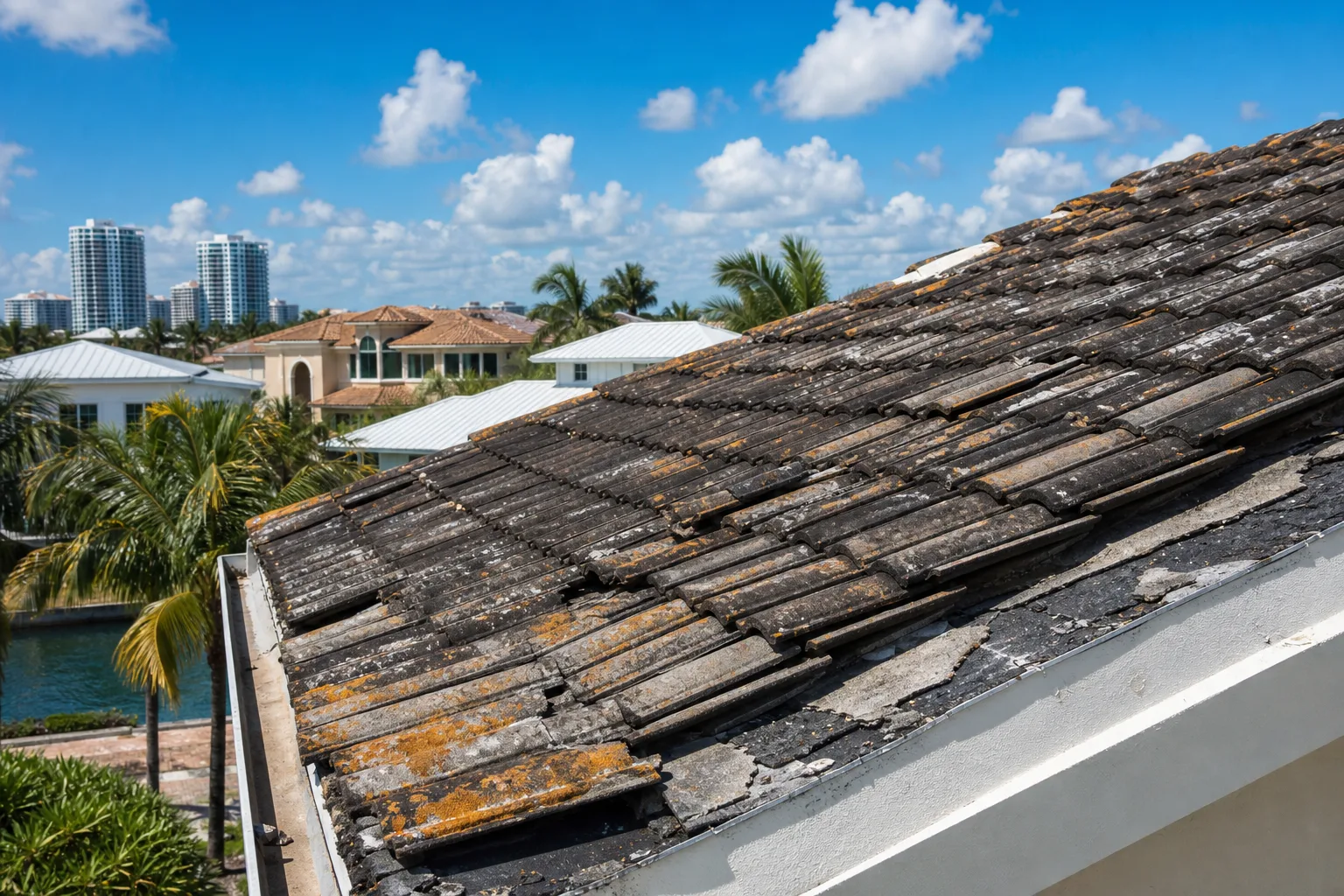
Stand at each corner of the house with binoculars and scan the roof systematically. You are looking for:
- Missing, lifted, cracked, or curling shingles
- Broken or displaced tile, including any tile that appears to have shifted
- Metal panels with visible rust, open seams, or raised fasteners
- Dark staining or moss growth, which can indicate trapped moisture
- Sagging sections anywhere on the plane of the roof
Take photos of anything that looks off. You do not need to get on the roof yourself. In fact, walking on a tile roof without knowing what you are doing can cause more damage than it reveals.
For a deeper look at what a professional checks during this kind of inspection, see 5 questions to ask before a roofer gets on your roof.

Step 2: Inspect the attic for moisture and light
Go into the attic on a bright day with your flashlight off first. Look for pinpoints of daylight coming through the decking or around penetrations. Any light means a gap that rain will find.
Then turn on the flashlight and check for:
- Water stains or dark streaks on the decking or rafters
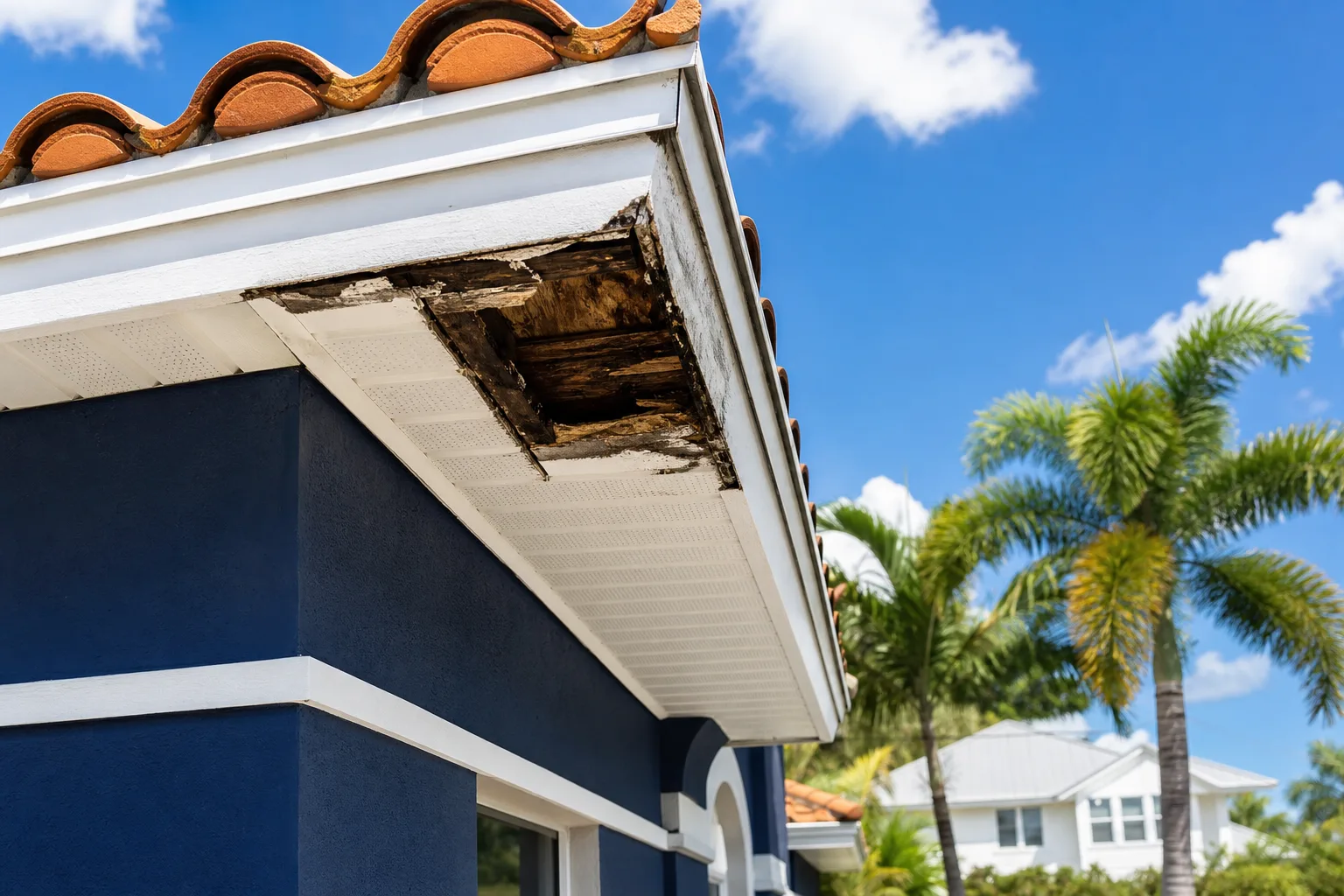
- Soft, spongy, or discolored wood, which signals rot or previous wetting
- Mold or mildew smell
- Insulation that looks compressed or discolored at the edges (a sign of water tracking)
Attic moisture also points to ventilation problems. Poor airflow traps heat and humidity, which accelerates deck deterioration from the inside. Check out ridge vents and soffit vents in Florida if your attic feels unusually hot or damp.
Step 3: Check every penetration and flashing point
Penetrations are the most common source of leaks. Work through this list:
- Pipe boots: Rubber pipe boots crack in the South Florida sun within a few years. Look for cracking or separation at the base. This is one of the leading causes of leaks in the region. More detail at pipe boot failures and South Florida roof leaks.
- Chimney and wall flashings: Metal should lie flat against the surface with no gaps, rust, or lifted edges.
- Skylights: Check the curb flashing all the way around. Look for dried caulk that has pulled away.
- Ridge caps: These take direct rain and wind. Any cracked or loose ridge caps need attention before storm season. See what ridge caps do and why they fail first.
- Drip edge: Missing or corroded drip edge lets water wick under the edge course. See what a drip edge does if you are not sure what to look for.
Is your roof ready for hurricane season? Visit the Storm Center
Step 4: Clean and test your gutters and downspouts
Clogged gutters back water up against the fascia and under the roof edge. In a heavy Florida downpour, that overflow happens in minutes.
- Clear all debris from gutter channels by hand or with a blower.
- Flush each section with a garden hose, starting at the end opposite the downspout.
- Watch the downspout outlet. Water should flow freely within a few seconds.
- Check that gutters slope toward the downspout. Standing water in a gutter between storms means the pitch is off.
- Look for loose hangers, separated seams, or sections pulling away from the fascia.
- Extend downspout discharge at least four feet from the foundation.
If your home does not have gutters, or they are undersized for the roof area, that is worth addressing before June. See gutter services for options.
Step 5: Check the roof deck condition from available angles
You cannot see all of the decking without removing roofing material, but you can catch obvious problems. From the attic, probe any suspicious areas gently with your finger. Soft wood means the deck has taken water at some point.
From the exterior, look for any section of the roof plane that dips or waves. A properly installed roof should appear flat and consistent in each plane. Waves or dips suggest decking that has swelled, rotted, or delaminated underneath.
For context on what decking problems look like and why they matter, roof decking and water damage in Florida rain covers this in more detail.
Step 6: Document and prioritize what you found
Not every issue needs emergency repair before the rainy season. Here is a simple way to sort what you found:
| Condition | Urgency |
|---|---|
| Active staining, soft decking, missing flashings | Repair before rainy season starts |
| Cracked pipe boots, lifted ridge caps, loose gutters | High priority, schedule soon |
| Minor shingle granule loss, small caulk gaps | Monitor, repair in the fall if stable |
| Cosmetic rust or staining with no penetration | Low priority, document and watch |
Anything in the first two rows should be addressed before June. Roof repairs are typically much less expensive when caught before a leak develops.
Common mistakes
Waiting until after the first leak. Once water gets into the deck or ceiling, the scope and cost of repair grows quickly. Prep in spring, not after the damage is done.
Skipping the attic. Most homeowners inspect the exterior and stop there. The attic tells you what has already happened and where the next problem is coming from.
Assuming a new-looking roof is problem-free. Pipe boots, flashings, and ridge caps age faster than the field of the roof. A five-year-old roof can still have failing boots or compromised flashings.
Hiring an unlicensed contractor for storm-season work. After the first big storm, unlicensed contractors appear quickly. Verify the license before anyone gets on your roof. Florida licenses are searchable at the Florida Department of Business and Professional Regulation.
Ignoring gutters. Gutters are part of the roof drainage system. A clogged or failing gutter can cause as much interior damage as a hole in the roof field.
Bottom line
Rainy season prep is not complicated, but it does require being methodical. Do the attic inspection, work through the penetration checklist, clean the gutters, and address anything in the high-priority categories before June.
If you find something you are not sure about, get a professional set of eyes on it. Millennium Makeover serves Boynton Beach, Delray Beach, West Palm Beach, Boca Raton, and the surrounding area and has been doing this since 2005. You can get a free instant estimate or request a quote to have someone take a look before the rain starts.
For storm-specific resources and what to do if a major storm is approaching, see the Hurricane Storm Center.
Is your roof ready for hurricane season?
A pre-season inspection is the cheapest insurance you'll ever buy. Our Storm Center has you covered before and after the storm.
Frequently asked questions
When should I do rainy season roof prep in South Florida?
May is the ideal window. Florida's rainy season typically begins in early June, so completing your inspection and any repairs in May gives you time to schedule a contractor without rushing. Avoid waiting until the first storm has already hit.
Can I inspect my own roof or do I need a professional?
A ground-level visual inspection, attic check, and gutter cleaning are reasonable DIY tasks. Getting on the roof to inspect or repair flashings, pipe boots, and ridge caps is best left to a licensed roofing contractor, both for safety and to avoid causing damage to the surface.
How much does rainy season roof prep typically cost?
That depends entirely on what you find. Gutter cleaning and minor caulk repairs are low-cost. Replacing pipe boots, re-seating ridge caps, or patching flashing is more involved. Getting a professional inspection and estimate before committing to any work is the best way to understand the actual scope.
What if I have a flat or low-slope roof, not a shingle or tile roof?
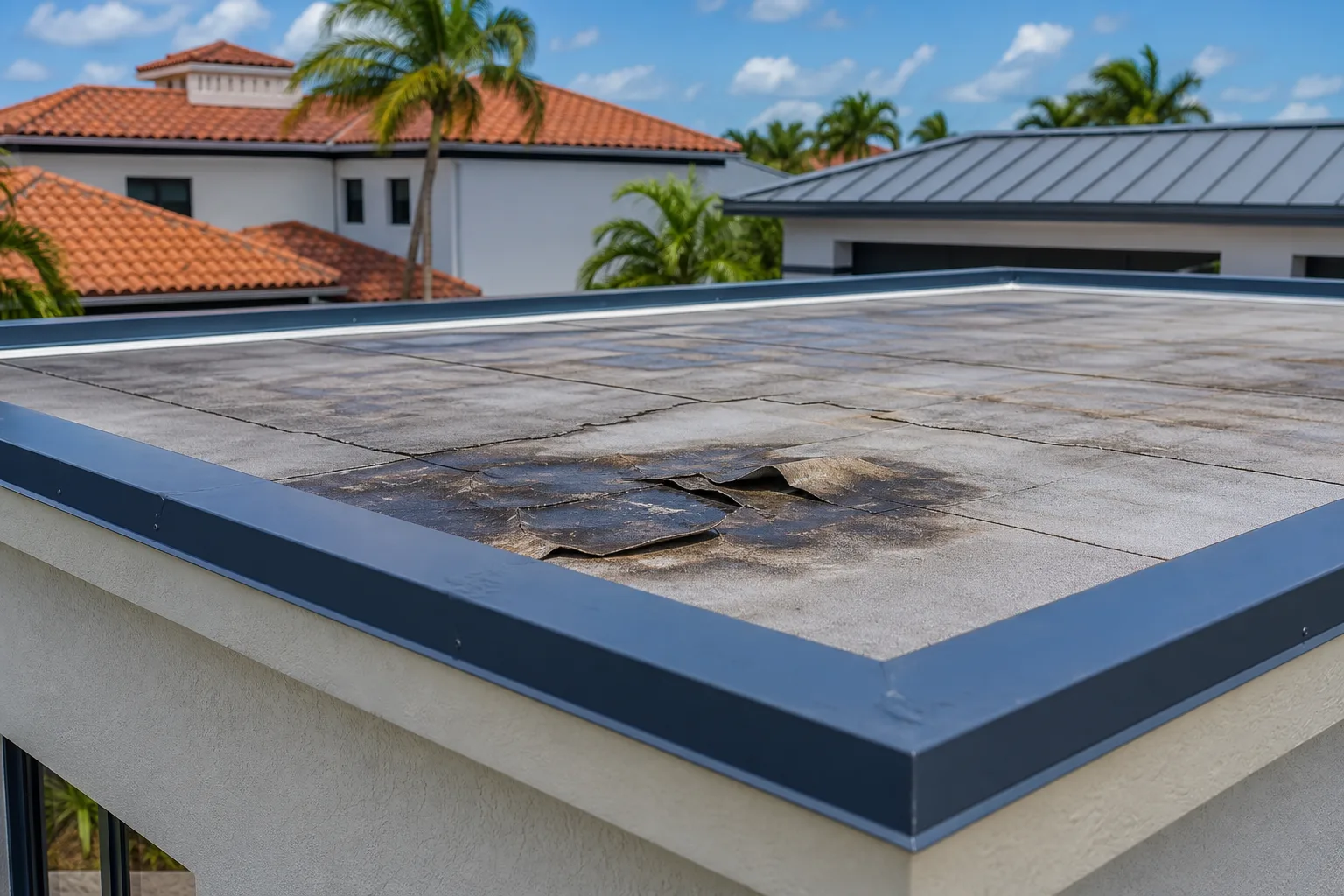
Flat roofs have their own set of pre-season checks, including membrane condition, drain flow, and seam integrity. Ponding water on a flat roof is a red flag heading into rainy season. See the related article on flat roof repair versus replacement for guidance on what to look for.