TPO Meaning in Construction: Definition, Uses & Key Facts
In this article
TL;DR: TPO meaning in construction refers to thermoplastic polyolefin, a single-ply roofing membrane heat-welded at the seams. It's widely used on flat and low-slope commercial roofs for its reflectivity and cost efficiency. Understanding what you're buying matters more than the brand name on the roll.
What TPO Means in Construction
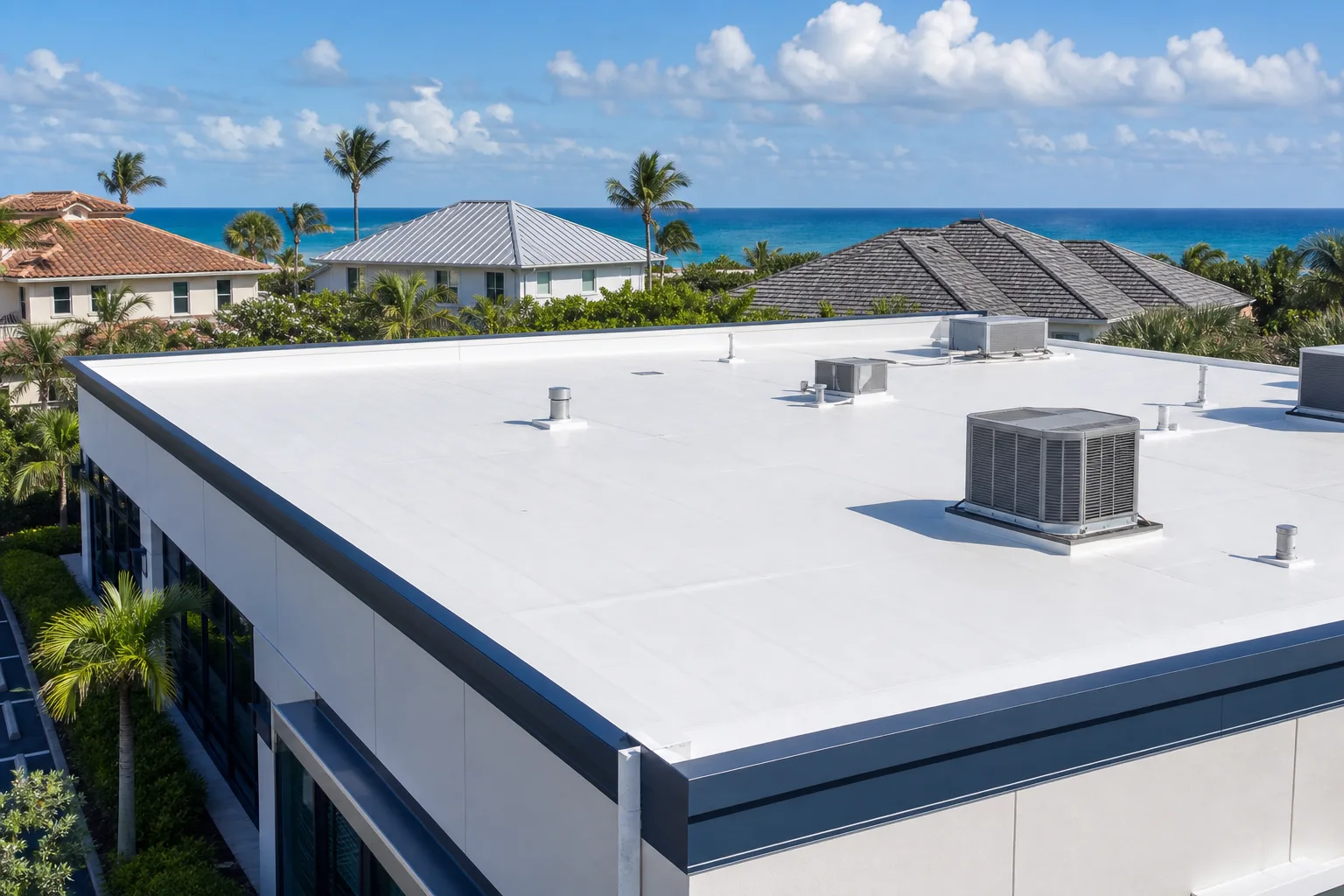
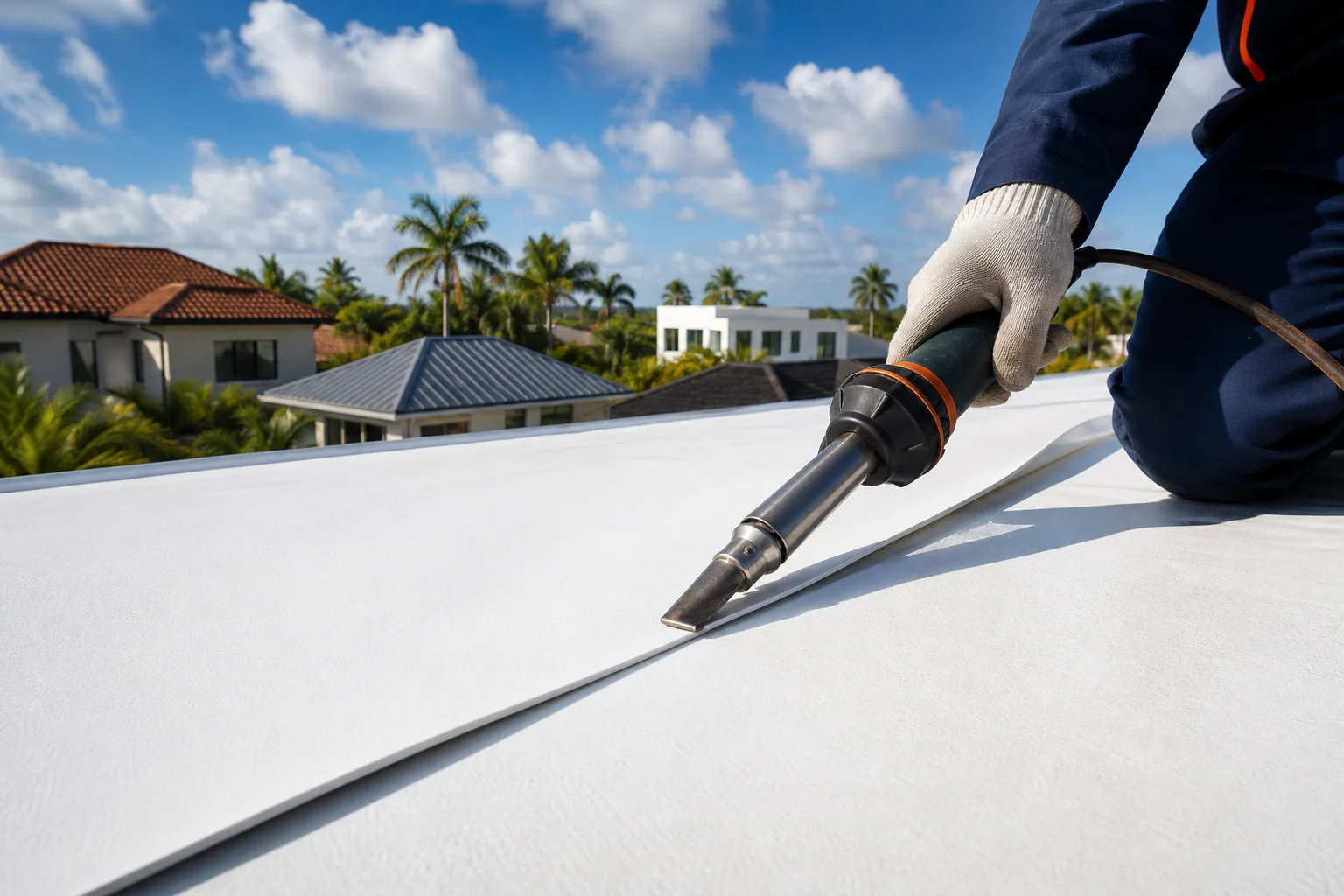
TPO meaning in construction is straightforward: thermoplastic polyolefin is a synthetic roofing membrane made from a blend of polypropylene and ethylene-propylene rubber. It comes in large rolls, typically 10 to 20 feet wide, and is installed in overlapping sheets that are fused together with hot-air welding equipment.
The result is a continuous, watertight membrane across a flat or low-slope roof deck. No lap sealant, no exposed fasteners at the seams. When installed correctly, the welded seam is actually stronger than the membrane itself.
TPO sits in the single-ply membrane category alongside EPDM (rubber) and PVC. It's the relative newcomer of the three, introduced commercially in the early 1990s, and has grown to become the best-selling commercial roofing membrane in the United States according to industry groups like SPRI.
What TPO Is Used For in Construction
TPO is primarily used on:
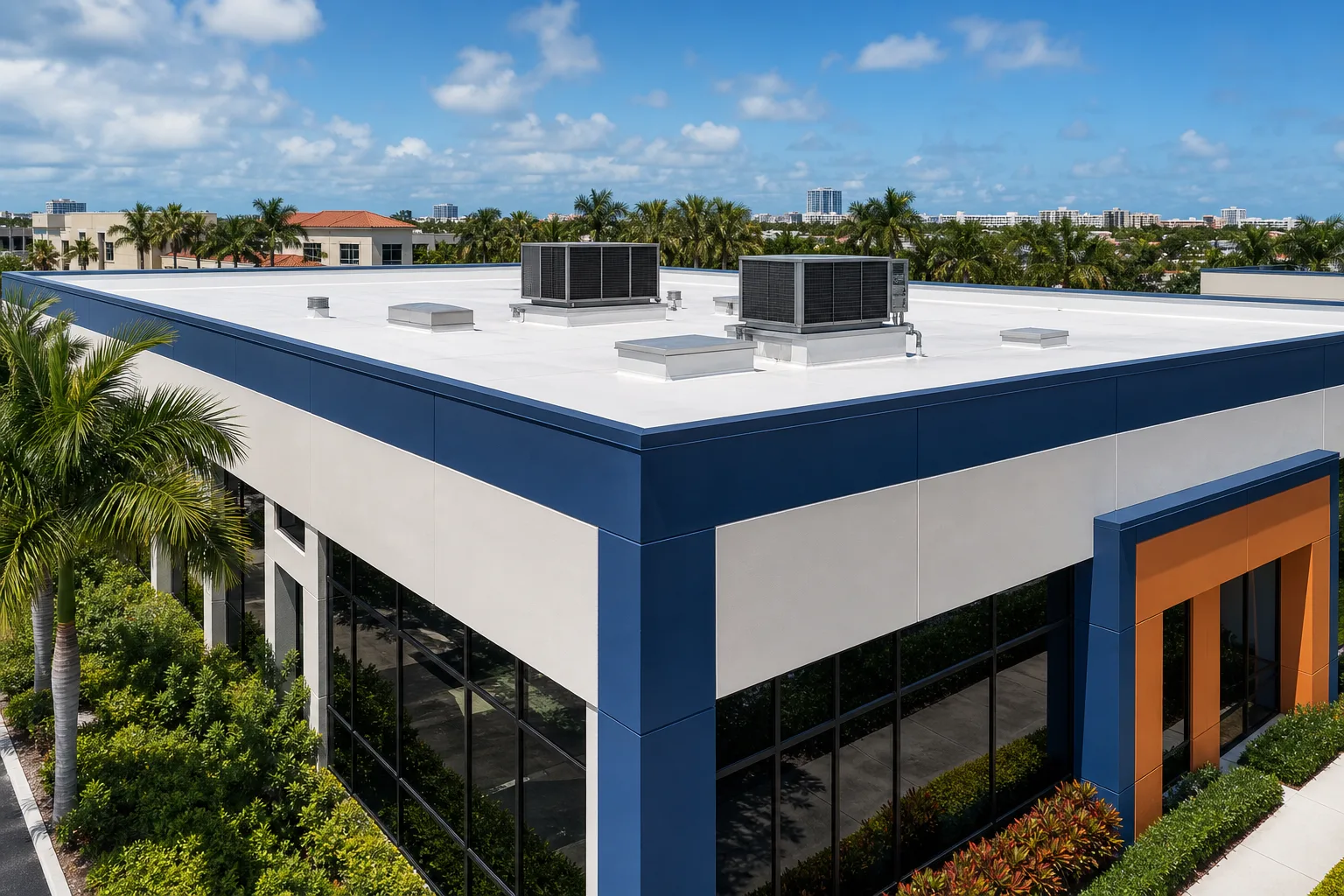
- Flat and low-slope commercial roofs (slopes under 2:12 generally), including retail centers, warehouses, office buildings, and multi-family structures
- Residential flat roofs and additions with low-slope sections, such as carports, covered patios, or low-slope garage roofs
- Re-roofing over existing membrane systems where the substrate is sound and local code allows an overlay
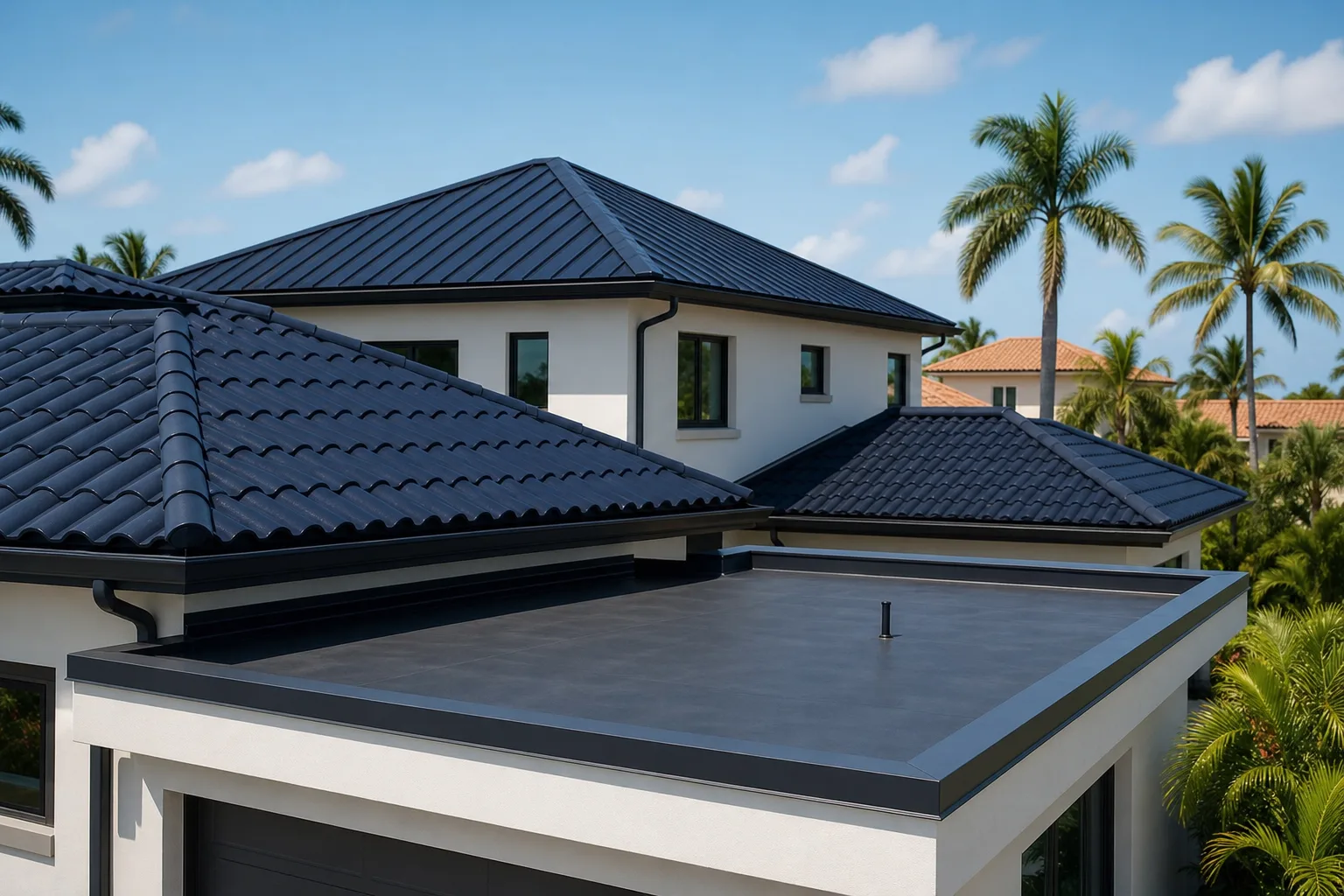
In South Florida's commercial construction market, TPO is common on strip malls, industrial buildings, and mixed-use developments across Boynton Beach, West Palm Beach, and Boca Raton. Its white or light-gray surface reflects solar energy rather than absorbing it, which matters a lot when your roof sits in direct sun 365 days a year.
For a deeper look at how TPO performs specifically on commercial buildings, see our post on what a TPO roof is on a commercial building.
Protecting a commercial property? Request a commercial assessment
Why TPO Matters: Key Technical Facts
How it's installed
TPO membranes are installed using one of three methods:
| Method | How it works | Best for |
|---|---|---|
| Mechanically attached | Fasteners through the membrane into the deck | High-wind zones, new construction |
| Fully adhered | Bonded to insulation with membrane adhesive | Low noise, retrofit jobs |
| Ballasted | Held down with gravel or pavers | Limited in high-wind areas like South Florida |
In Florida's high-velocity hurricane zones, mechanically attached or fully adhered systems dominate because ballasted systems can't reliably meet wind-uplift requirements under the Florida Building Code.
Seam quality is everything
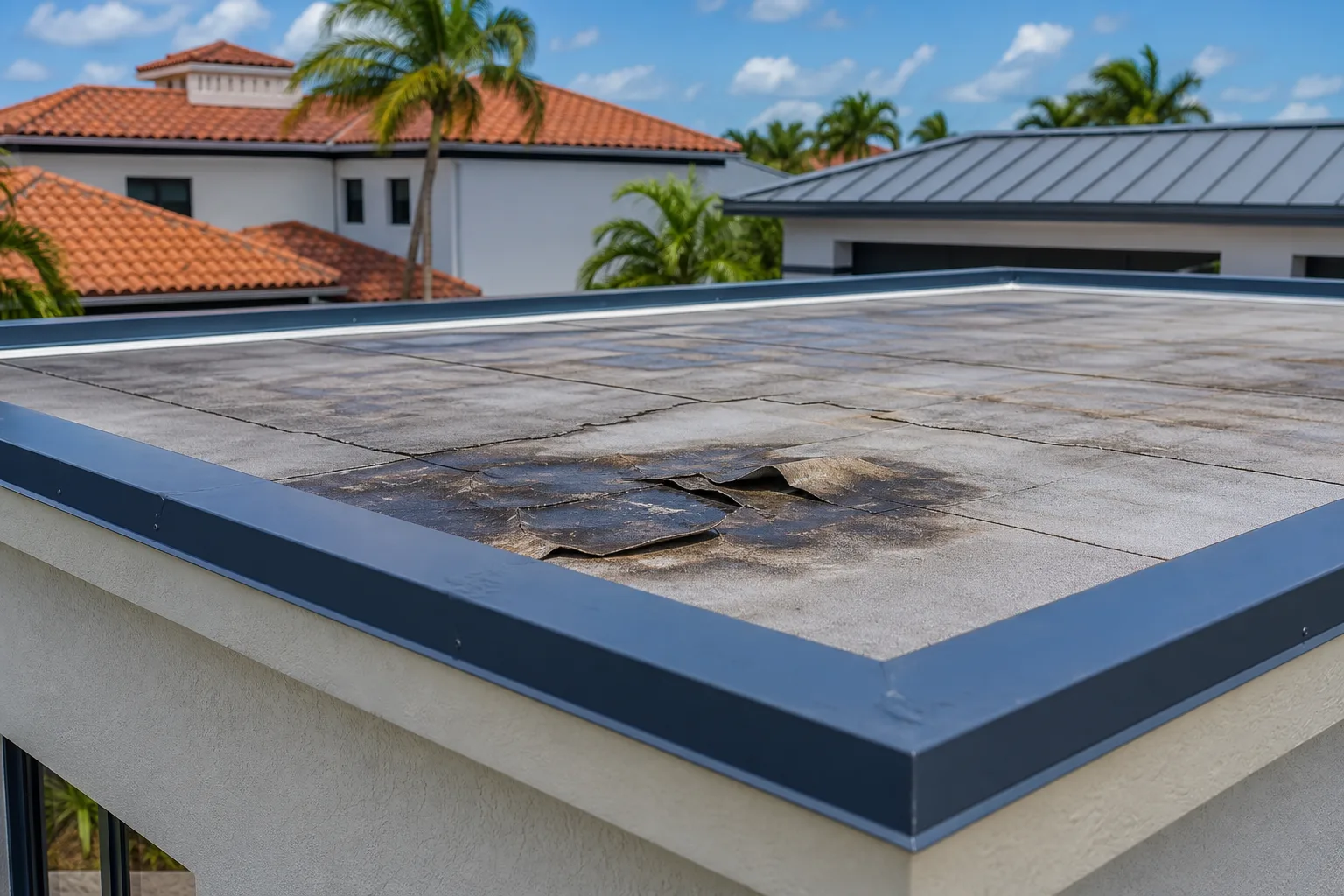
TPO seams are welded with hot-air guns or automated welding equipment. The quality of those welds is the single biggest variable in how long a TPO roof performs. A rushed installer or poor equipment calibration produces weak seams that fail under thermal cycling and wind load. This is not a material you want a crew rushing through.
Thickness and formulation variation
Not all TPO is the same. Membrane thickness ranges from 45 mil to 80 mil or higher. Thicker membranes handle puncture and foot traffic better. Formulations also vary by manufacturer. Some early TPO products from the 1990s had durability issues; modern formulations have improved significantly, but quality still varies across brands.
What We Don't Know Yet About TPO
TPO has only been in wide commercial use for about 30 years. That's long enough for a solid track record on well-installed systems, but it doesn't give the full lifespan data that 50-year-old materials like built-up roofing have accumulated.
Long-term performance under repeated South Florida UV exposure and storm cycling is still being established. Most manufacturers offer 15- to 30-year warranties, but those warranties have conditions around installation, contractor certification, and maintenance that buyers frequently overlook.
The other open question is formulation consistency. Unlike EPDM, which has a relatively standardized chemistry, TPO formulations differ enough across manufacturers that two 60-mil TPO membranes can behave quite differently over time. Independent third-party testing exists (FM Approvals, UL listings), but real-world durability comparisons across brands remain limited in published research.
What to Do About It: Decisions for Building Owners
If you're evaluating TPO for a flat roof in South Florida, here's a practical decision sequence:
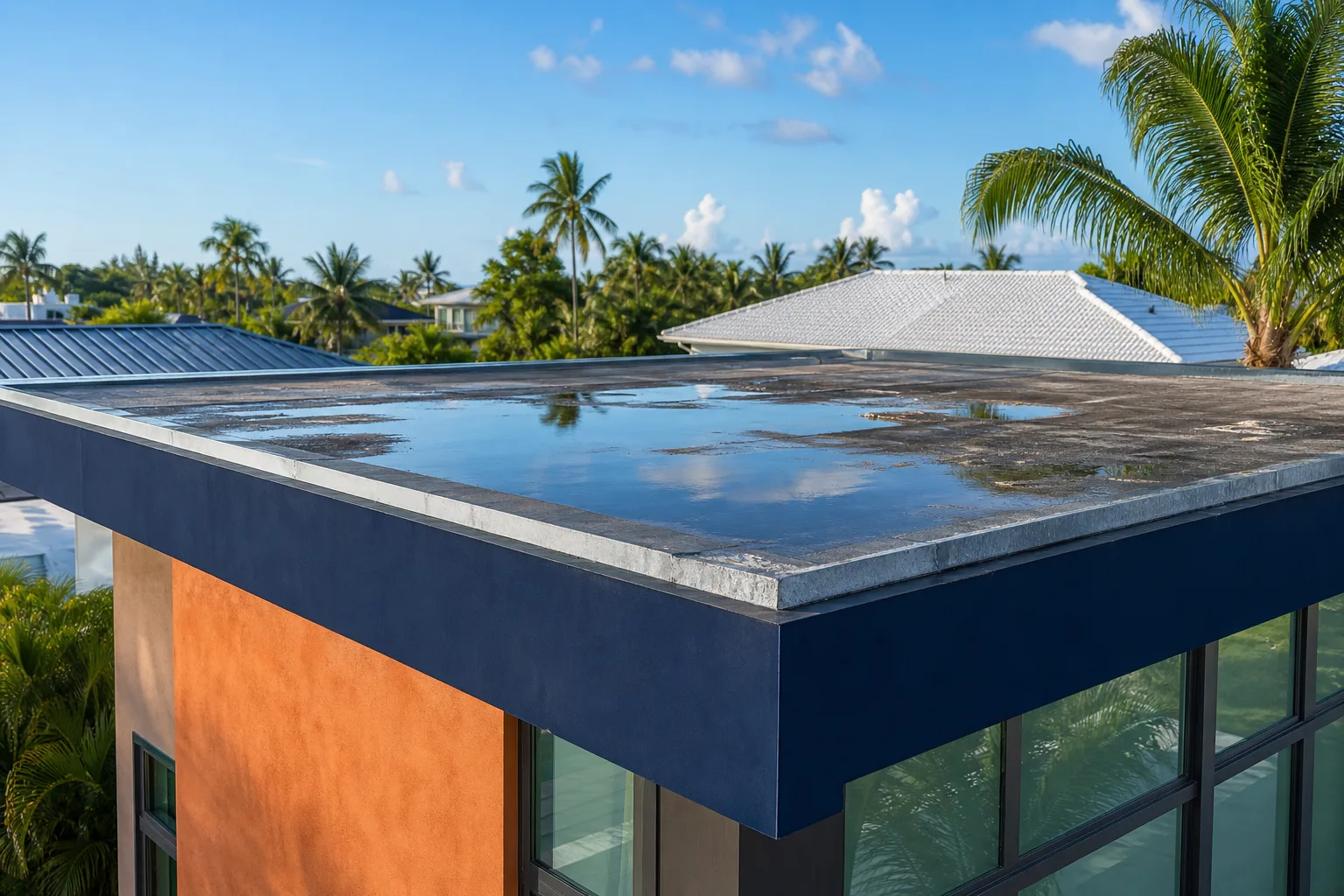
- Confirm your slope. TPO requires proper drainage. A roof holding standing water after rain is a maintenance and warranty problem regardless of membrane type.
- Ask about membrane thickness. For a roof with foot traffic or mechanical equipment, 60 mil or thicker is worth the cost premium over 45 mil.
- Verify wind-uplift compliance. Your contractor should be pulling a permit and specifying a system with FM or UL wind-uplift ratings that meet Florida Building Code for your county.
- Ask how seams will be inspected. A reputable installer will probe-test welds after installation. If a contractor doesn't mention this, that's a flag.
- Read the manufacturer warranty terms. Most require the system to be installed by a certified contractor and registered with the manufacturer within a set window after installation.
For commercial roof replacement or repair on an existing TPO system, our commercial roofing services cover South Florida including West Palm Beach, Delray Beach, and Boca Raton. If you're not sure what your flat roof needs, start with a free instant estimate and we can take a look.
If you're dealing with storm damage to a flat roof, our Hurricane Storm Center has guidance on what to document and how to approach the repair process without getting burned by storm chasers who show up after every hurricane with a roll of TPO and no local accountability.
Protecting a commercial property?
We handle flat, tile, and metal commercial roofs across Palm Beach County with minimal disruption to your operation.
Request a commercial assessment
Frequently asked questions
Is TPO the same as PVC roofing?
No. Both are thermoplastic single-ply membranes heat-welded at the seams, but they use different polymer chemistries. PVC has been around longer and generally has stronger documented long-term performance data, while TPO tends to cost less upfront. The right choice depends on your building's use, budget, and what wind-uplift ratings are required for your county.
Can TPO be installed over an existing flat roof?
Sometimes yes, depending on the condition of the existing substrate and what local code allows. An overlay can save tear-off costs, but only if the existing insulation is dry and structurally sound. A contractor should probe or core-test the existing roof before recommending an overlay rather than a full replacement.
How long does a TPO roof last in South Florida's climate?
Manufacturer warranties typically run 15 to 30 years depending on membrane thickness and the warranty tier purchased. Actual service life depends heavily on installation quality, seam integrity, drainage design, and how often the roof is inspected and maintained. South Florida's UV exposure and storm cycles make those maintenance intervals more important than in milder climates.
Does TPO qualify for any Florida insurance or energy credits?
A white TPO membrane can contribute to energy code compliance under Florida's energy efficiency requirements because of its solar reflectance. Whether it affects your insurance premium depends entirely on your insurer and the specifics of your policy. Talk to your insurance agent and a licensed contractor rather than assuming any particular benefit applies to your building.