What Happens to Your Roof If You Ignore a Small Leak
In this article
TL;DR: A small roof leak in South Florida can escalate from a stained ceiling to structural rot, mold, and a denied insurance claim within one or two wet seasons. The damage follows a predictable sequence. Knowing the stages helps you act before the cost multiplies.
What You Need
Before walking through the damage progression, here's what you'll need to catch a leak before it worsens:
- A safe way to access your attic (flashlight, non-slip shoes)
- Basic knowledge of where your roof penetrations are: pipe boots, ridge vents, skylight curbs, valleys, and chimney flashings
- Photos dated with your phone for any staining or wet spots you find
- Contact with a licensed roofing contractor for anything beyond a visual check
You do not need to get on the roof yourself. In fact, walking an unfamiliar roof in South Florida's afternoon heat is a real hazard, and most leak origins are easier to spot from the attic anyway.
Step 1: Water Finds a Path Through the Roof System
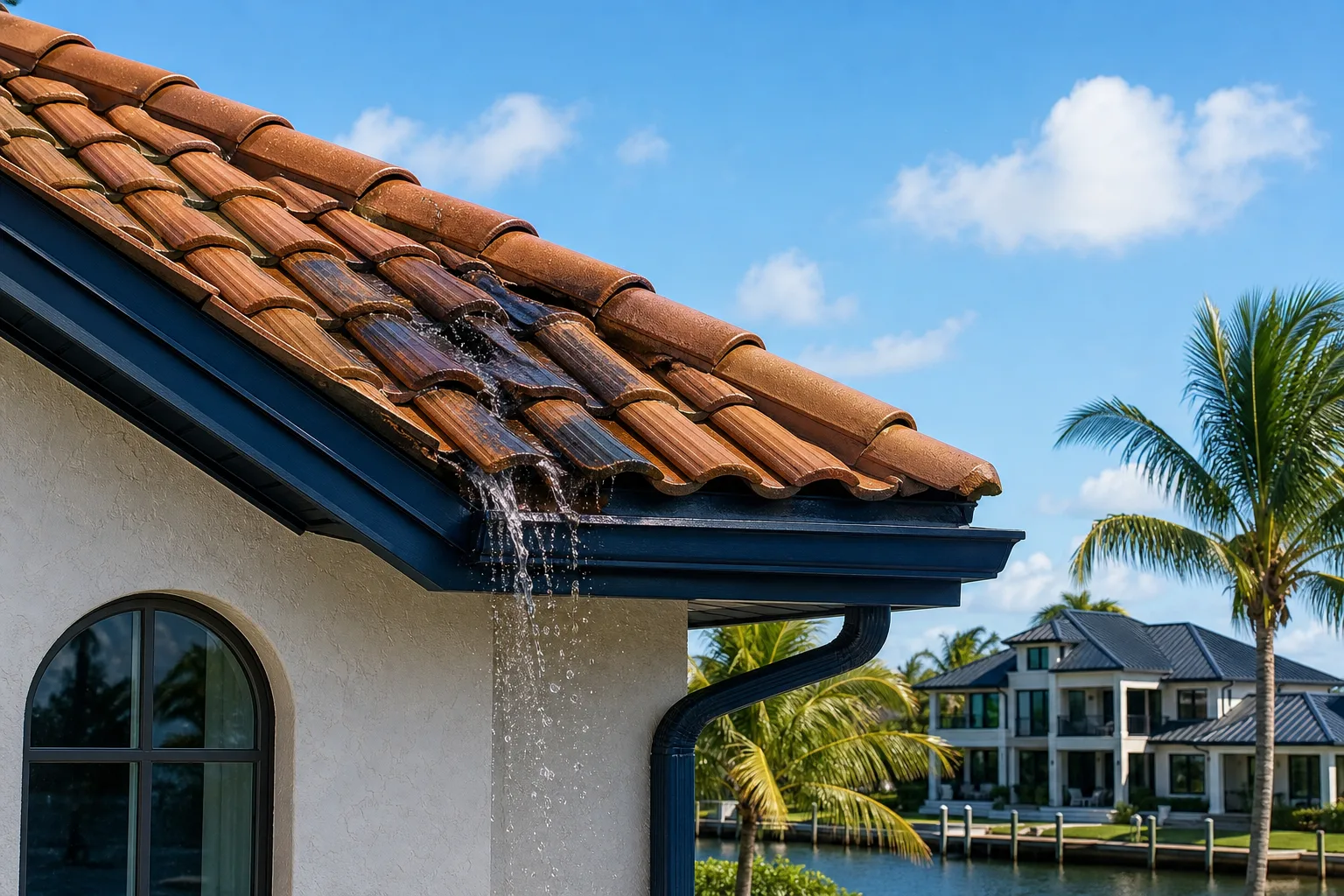
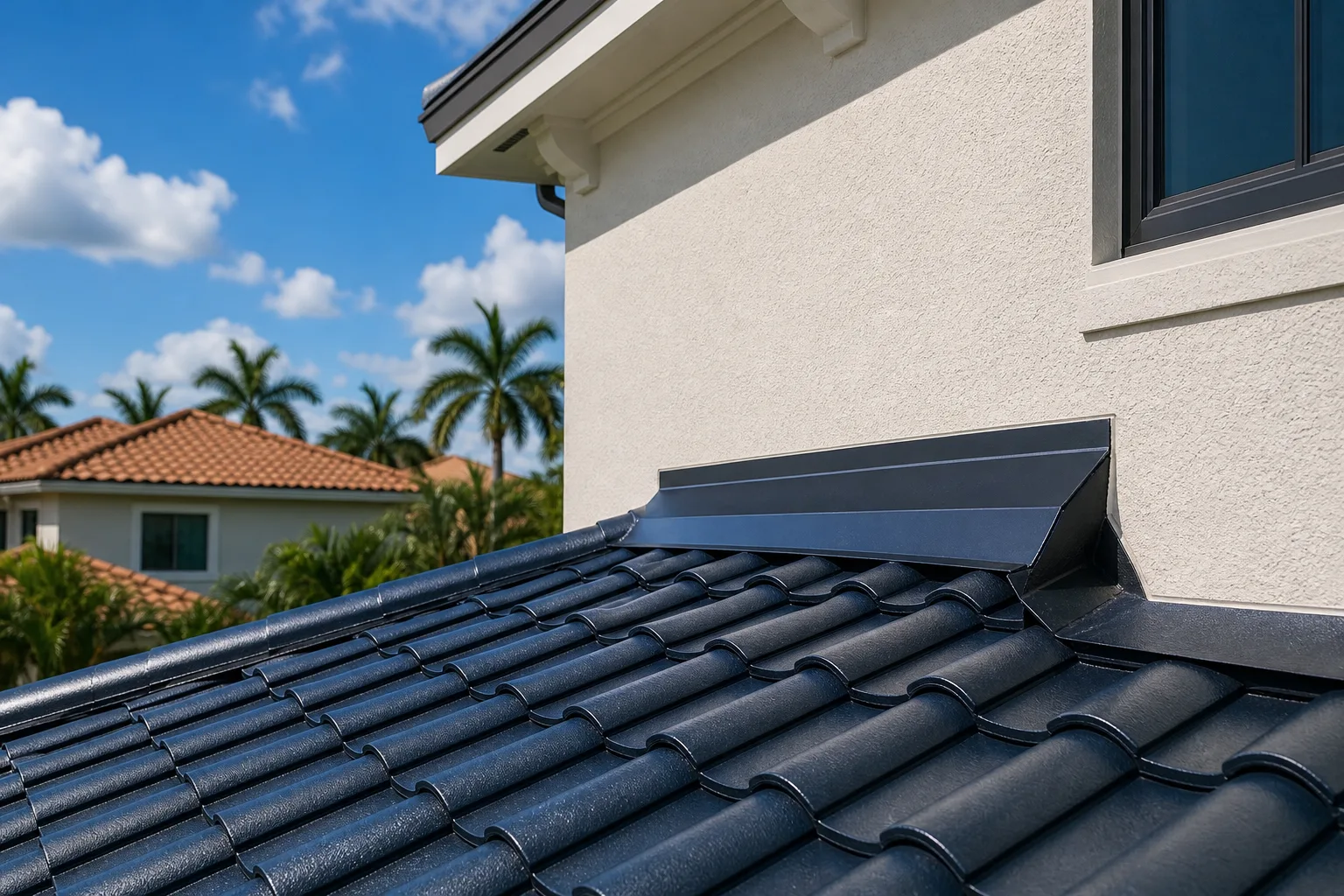
Every leak starts at a failure point. In South Florida, the most common culprits are pipe boot seals that dry out and crack in the UV exposure, lifted or cracked tile, nail pops under shingles, and flashing that was never properly set or has pulled loose over time.
When water enters, it rarely drops straight down. It follows the slope of the decking, the direction of roof trusses, and the path of least resistance. The wet spot on your ceiling may be several feet from where water actually entered. That makes self-diagnosis tricky and is one reason roof repairs require someone who can trace the water path, not just patch the most obvious spot.
At this stage, the damage is usually limited to a small area of the roof deck. Fix it now and you're likely looking at a straightforward repair.
Step 2: The Roof Deck Begins to Soften
Most South Florida homes use oriented strand board (OSB) or plywood decking under their tile, shingle, or metal systems. Both materials handle occasional moisture reasonably well when they can dry out. When water intrudes repeatedly, or sits trapped under a watertight roofing layer above, the decking cannot dry.
Within one rainy season, typically June through October here, repeated wetting cycles cause OSB to delaminate and plywood to soften. You may start to notice a spongy feel underfoot if you do walk the roof, or visible dark staining when you look at the decking from the attic.
Softened decking loses its fastener-holding strength. For tile roofs, that matters enormously. Florida Building Code requires specific fastener patterns precisely because tile is heavy and wind uplift is severe. A fastener pulling through rotted decking in a 90-mph gust is one of the primary ways roofs fail during storms.
Repairs at this stage involve replacing the damaged decking sections in addition to sealing the leak source. Still manageable. Still far less than a full replacement.
Step 3: Insulation and Framing Get Involved
Once decking is compromised, water reaches the insulation layer and the top chords of your roof trusses or the rafters in older construction. Fiberglass batt insulation does not recover well once saturated. It compresses, loses its R-value, and holds moisture against the wood framing below it.
Wood rot in roof framing is where costs climb fast. Trusses are engineered assemblies. You cannot simply sister a truss chord the way you might repair a floor joist. In many cases, damaged truss sections require a structural engineer's sign-off before a contractor can proceed with repairs, which adds both time and cost to the project.
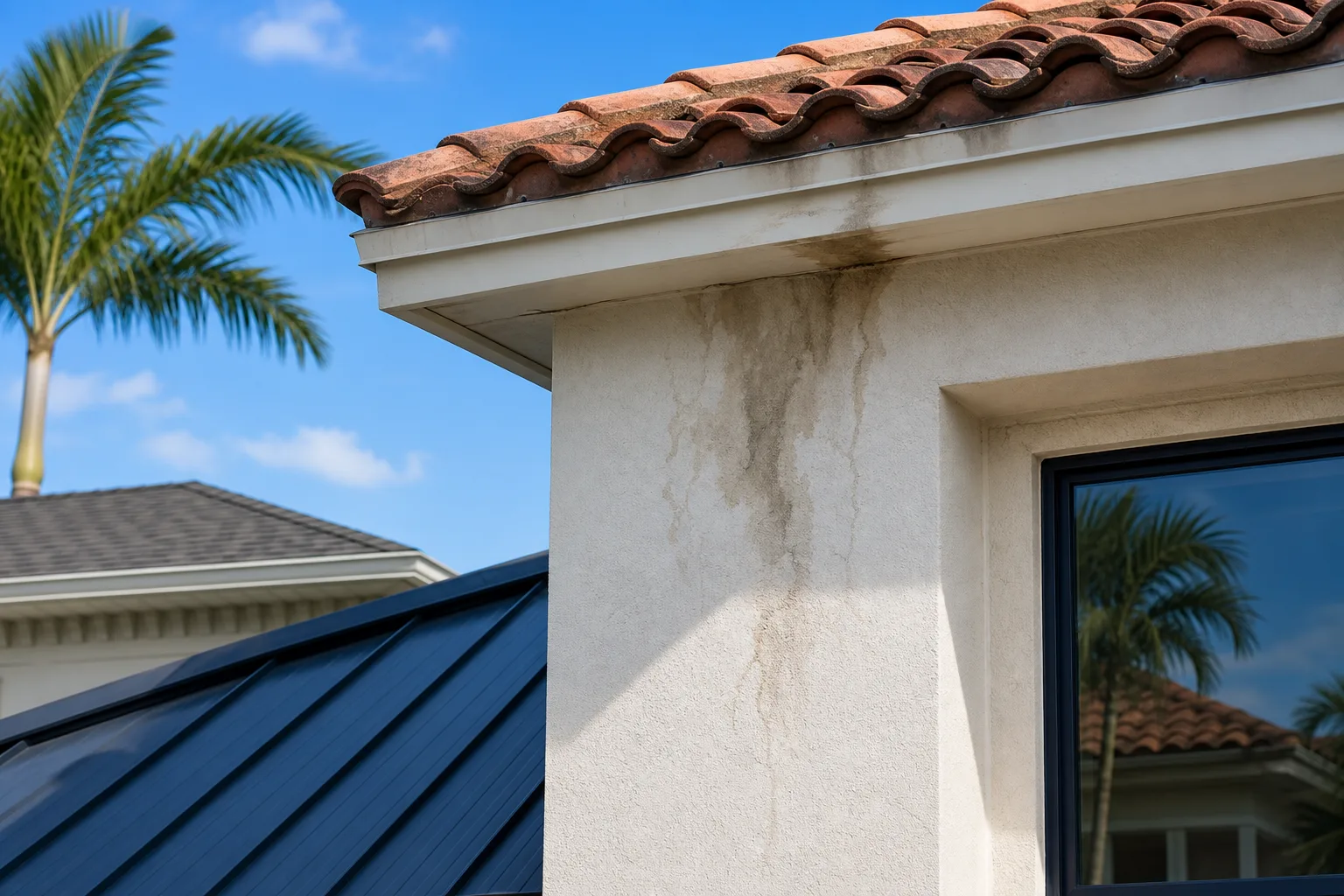
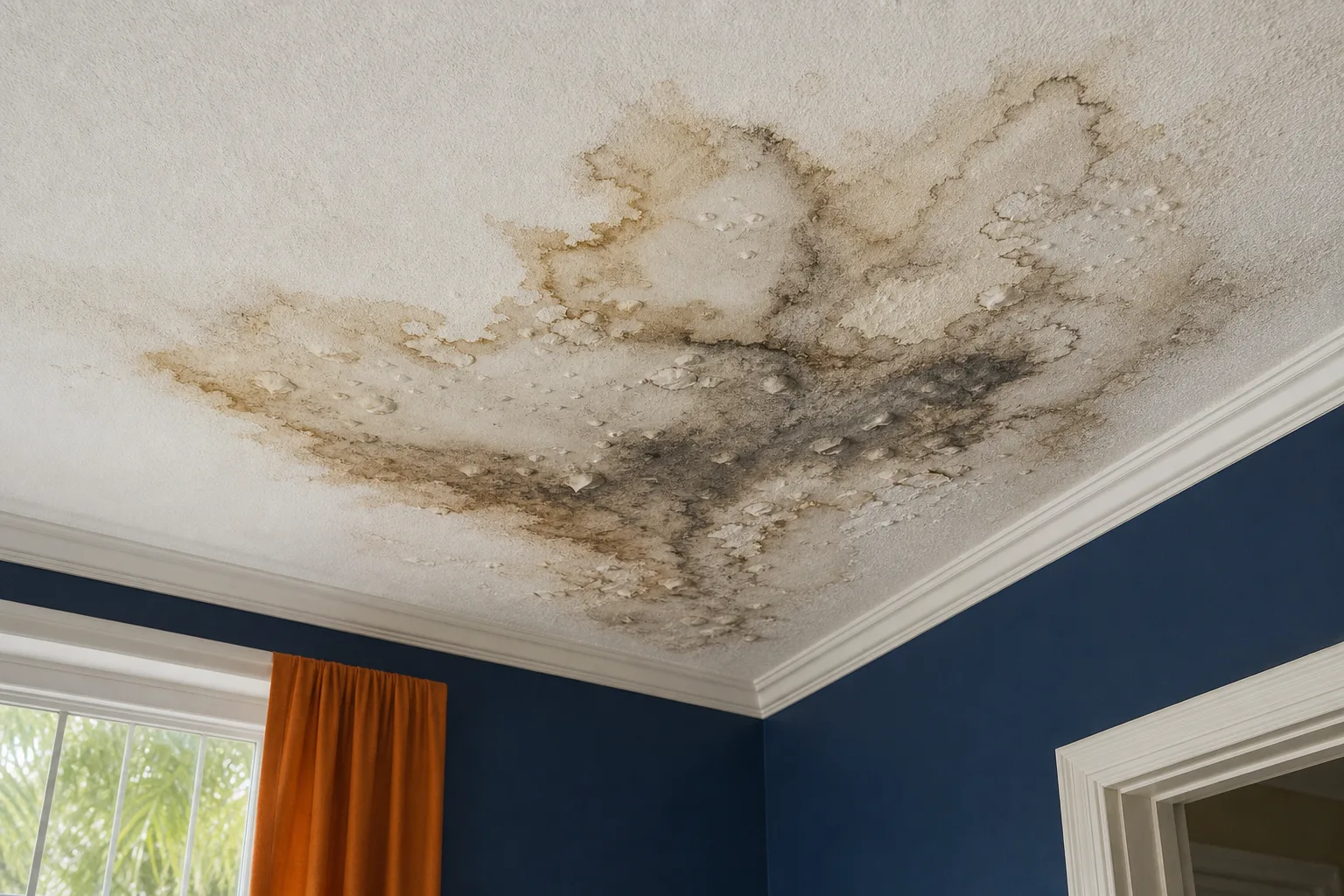
This stage also tends to be the point where homeowners first notice a problem, because the ceiling drywall begins to stain or bubble. By then, the damage above it has been developing for months.
Spotted a leak or missing tiles? Schedule a repair visit
Step 4: Mold Becomes the Real Problem
South Florida's average relative humidity runs above 70 percent for most of the year. Attic temperatures can exceed 130°F under peak summer conditions. That combination is ideal for mold growth on any wet organic material, including wood framing, drywall, and the paper facing on insulation.
Mold colonies can establish within 24 to 48 hours of water intrusion on the right substrate. Once mold is present in an attic or wall cavity, remediation is a separate project from roofing. It typically involves a licensed mold assessor, a licensed mold remediator, and clearance testing before work can be covered or closed in. That process is regulated under Florida law governing mold assessors and remediators and cannot be skipped if you plan to file an insurance claim or sell the property.
The roofing repair might cost a few hundred to a few thousand dollars. Mold remediation in an attic can run significantly more, and homeowner's insurance policies in Florida have increasingly strict mold exclusions or sublimits. Getting ahead of the leak gets you ahead of that cost.
Step 5: The Insurance Picture Gets Complicated
This is the part nobody likes to talk about plainly, so I will. Florida homeowner's insurance carriers look closely at how long damage has been present when you file a claim. Policies typically cover sudden and accidental damage. They routinely deny or reduce claims for damage that shows evidence of long-term water intrusion, because that is framed as a maintenance issue rather than a covered peril.
Adjusters look for things like staining rings on drywall that suggest repeated wet-dry cycles, black mold rather than fresh mold, decking that is fully delaminated rather than recently softened, and rust staining on fasteners. All of those are evidence that the leak was not new.
If a major storm later causes additional damage to a roof that was already compromised, the carrier may dispute the entire claim on the basis that pre-existing damage contributed to the loss. That is a real scenario that South Florida homeowners face after every named storm. Staying current with documented repairs protects your claim.
For more on storm-season readiness and how roof condition affects your coverage position, our Hurricane Storm Center covers the Florida-specific issues in detail.
Step 6: The Roof System Reaches End-of-Life Prematurely
A roof that was well-installed and should have lasted 20 to 25 years can reach functional end-of-life in 10 to 12 years if repeated leak damage goes unaddressed. The failure is not just the original leak point. It is the secondary damage radiating outward from it.
When you eventually do call a contractor, the scope of work is no longer a repair. It is a roof replacement, including new decking, new underlayment, and a new roof system. That is a fundamentally different budget conversation than what a timely repair would have been.
The math is not subtle. A pipe boot repair today versus a full replacement two or three years from now is not a hypothetical, it is the pattern we see repeatedly in older Boynton Beach, Delray Beach, and West Palm Beach neighborhoods where homeowners put off calls hoping the rainy season just misses them. Prices vary widely based on roof size, material, and market conditions, but the difference in scale between a minor repair and a full replacement is significant by any measure.
If you want a current read on what repairs versus replacement actually costs for your roof type, the fastest way is to get an instant estimate without committing to anything.
Common Mistakes
Caulking over the symptom. Applying sealant around a pipe boot or flashing without diagnosing the actual water path does not fix a leak. It may redirect water to a new exit point or seal moisture in, accelerating rot. Caulk is a supplement to proper flashing, not a substitute.
Waiting for the next dry season to get it looked at. In South Florida, dry season is your window for easy repairs. Contractors have better scheduling availability, decking can dry properly before new underlayment goes down, and you are not racing a storm deadline. Using dry season to patch wet-season damage is the right play.
Assuming one wet ceiling stain means one small problem. Staining on drywall tells you where water has exited the roof system. It does not tell you how far the damage has spread above it. The attic inspection is the real diagnostic step.
Skipping the attic after a storm. After any storm that drops significant rain or wind, check your attic with a flashlight within a day or two. Fresh water stains on the decking show you exactly where intrusion occurred before the evidence blends into older staining. Our team covers what to look for at the Hurricane Storm Center.
Hiring an unlicensed contractor for a cheap fix. Florida requires a state-issued roofing contractor license (CCC prefix) for any roof repair. Unlicensed work may void your roof warranty and creates problems with insurance claims. Check the license at the Florida DBPR before any work begins.
Bottom Line
A small leak does not stay small in South Florida. The heat, humidity, and storm season create conditions where minor water intrusion accelerates into structural and mold issues faster than homeowners expect. The damage follows a clear sequence: entry point, deck softening, framing damage, mold growth, insurance complications, and premature system failure.
The only variable you control is where in that sequence you intervene. Earlier is always cheaper.
If you have a stain on the ceiling, a wet attic after rain, or a roof that has not been inspected in the last few years, now is the right time to get eyes on it. You can request a quote or use our instant estimate tool to get a starting point with no obligation.
Spotted a leak or missing tiles?
Small problems get expensive fast in the Florida sun. Get it looked at by a local crew before the next storm.
Frequently asked questions
How fast can a small roof leak cause serious damage in South Florida?
In South Florida's climate, a small leak can begin softening roof decking within a single rainy season (June through October). Mold can establish on wet organic material within 24 to 48 hours of water intrusion. The combination of heat, humidity, and repeated storm rainfall accelerates the damage timeline compared to drier climates.
Can I patch a roof leak myself with caulk or sealant from the hardware store?
Applying caulk over visible gaps is not a reliable repair and can actually make things worse by redirecting water or sealing in moisture. Caulk is a supplement to proper flashing and sealing work, not a standalone fix. A licensed roofing contractor can trace the actual water path and address the source rather than the symptom.
Will my homeowner's insurance cover damage from a long-ignored roof leak?
Florida homeowner's policies typically cover sudden and accidental damage. Damage showing evidence of long-term water intrusion is routinely classified as a maintenance issue and may be denied. Adjusters look for staining rings, delaminated decking, and rust on fasteners as signs the leak predates any recent storm event.
How do I know if my roof deck has already been damaged by a leak?
The most accessible check is a flashlight inspection from inside the attic. Look for dark staining or soft spots on the underside of the decking, sagging sections, visible mold growth on wood surfaces, or wet insulation. If you see any of these, contact a licensed roofing contractor before the next rain event.
What does it cost to fix a small roof leak versus waiting and replacing the whole roof?
A minor leak repair, such as a failed pipe boot or loose flashing, can often be addressed for a few hundred to a few thousand dollars depending on access and scope. A full roof replacement on a South Florida home typically runs significantly more. Catching damage early is almost always the lower-cost path by a wide margin.