Why Some Roof Leaks Only Appear During Windblown Rain
In this article
TL;DR: Windblown rain enters roofs at angles and pressures that vertical rain never reaches. The likely entry points are horizontal lap joints, sidewall flashing, penetration seals, and low-profile openings that face the prevailing wind. Identifying which storm direction triggered the leak narrows the search considerably.
What Happens
Vertical rain falls into the roof system mostly at gravity's pace. It follows predictable paths: through cracks, open seams, or failed membranes, and downward.
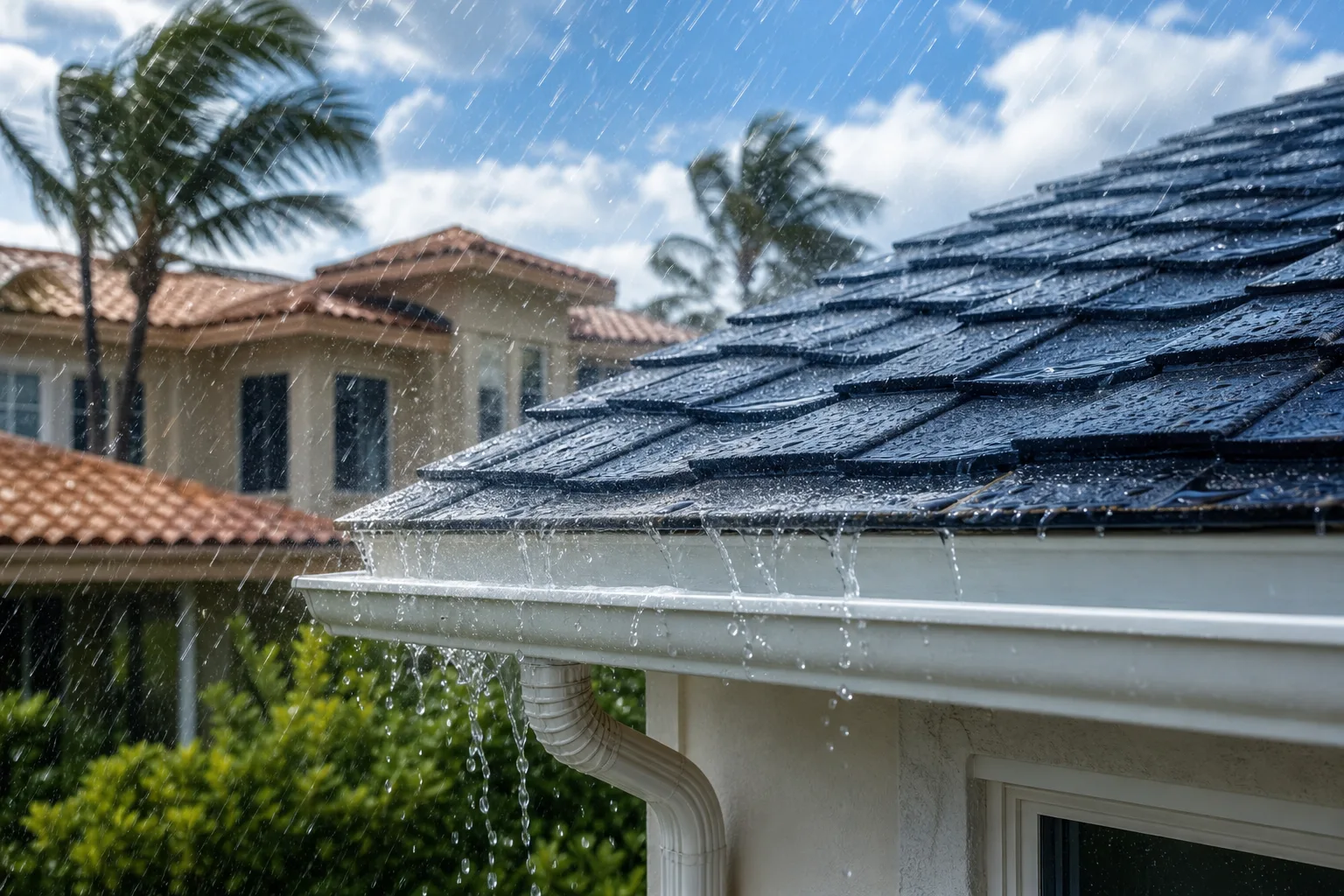
Wind-driven rain is different. Even at moderate wind speeds, rain can strike a roof at a steep angle rather than falling straight down. At hurricane-force speeds, it can be nearly horizontal. That angle change means water is now being pushed into gaps that gravity-fed water would simply flow past.
The result: a roof that appears completely weathertight during a calm rainstorm can drip steadily through a storm with 25-mph gusts, even if no shingles are missing and no obvious damage exists.
Why It Matters
South Florida's storm season produces both types of rain, often in the same event. A passing squall band can hit a home with 50-mph gusts before the main rain even arrives. If your roof only leaks then, the problem is real, it is not random, and the building science behind it points to specific failure locations.
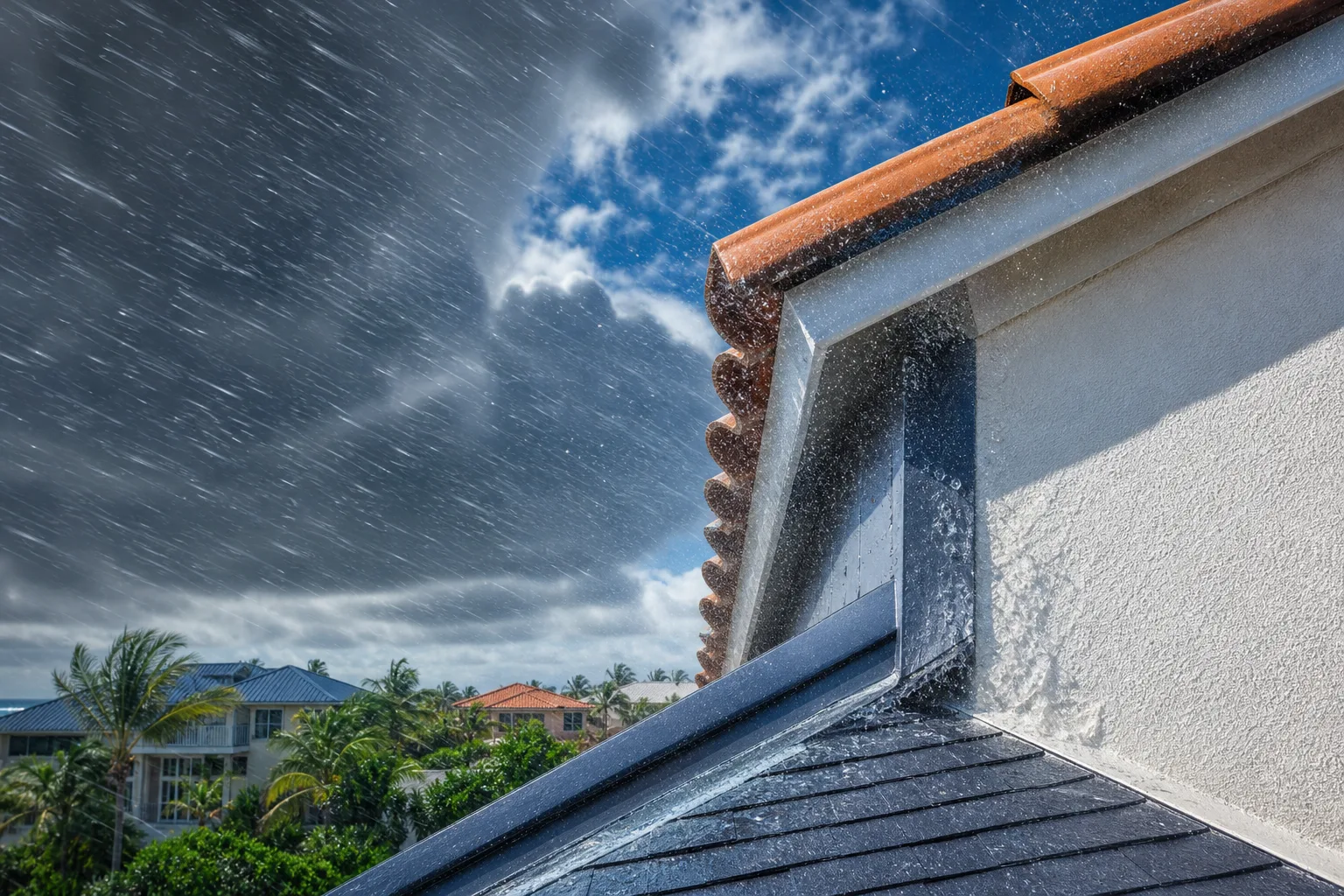
Pressure dynamics matter. Wind creates positive pressure on the windward face of a structure and negative pressure (suction) on the leeward side. On the windward side, that pressure can push water through small gaps, laps, and seams that gravity-fed water would normally flow past. Florida Building Code requirements for roof coverings address wind-driven rain resistance, particularly regarding roof coverings and their attachment to the substrate.
Insurance implications. Many homeowners discover that an adjuster's inspection after a dry week finds nothing, because the leak only replicates under storm conditions. Documenting which wind direction and storm intensity produced the leak is useful when filing a claim.
Spotted a leak or missing tiles? Schedule a repair visit
What We Don't Know Yet
Wind-driven leak paths are notoriously difficult to trace because water can travel horizontally inside a roof assembly before appearing at a ceiling stain. The entry point and the drip point can be several feet apart.
Without a controlled water test or an experienced set of eyes on the assembly during or immediately after a storm, it is often unclear whether the problem is:
- A failed horizontal lap in the underlayment
- A counter-flashing or sidewall flashing that lacks a sealant bead on the wind-exposed face
- A vent boot or pipe collar that is correctly sealed on top but open on the upwind side
- A rake-edge drip edge or fascia gap where wind can push water backward under the first course
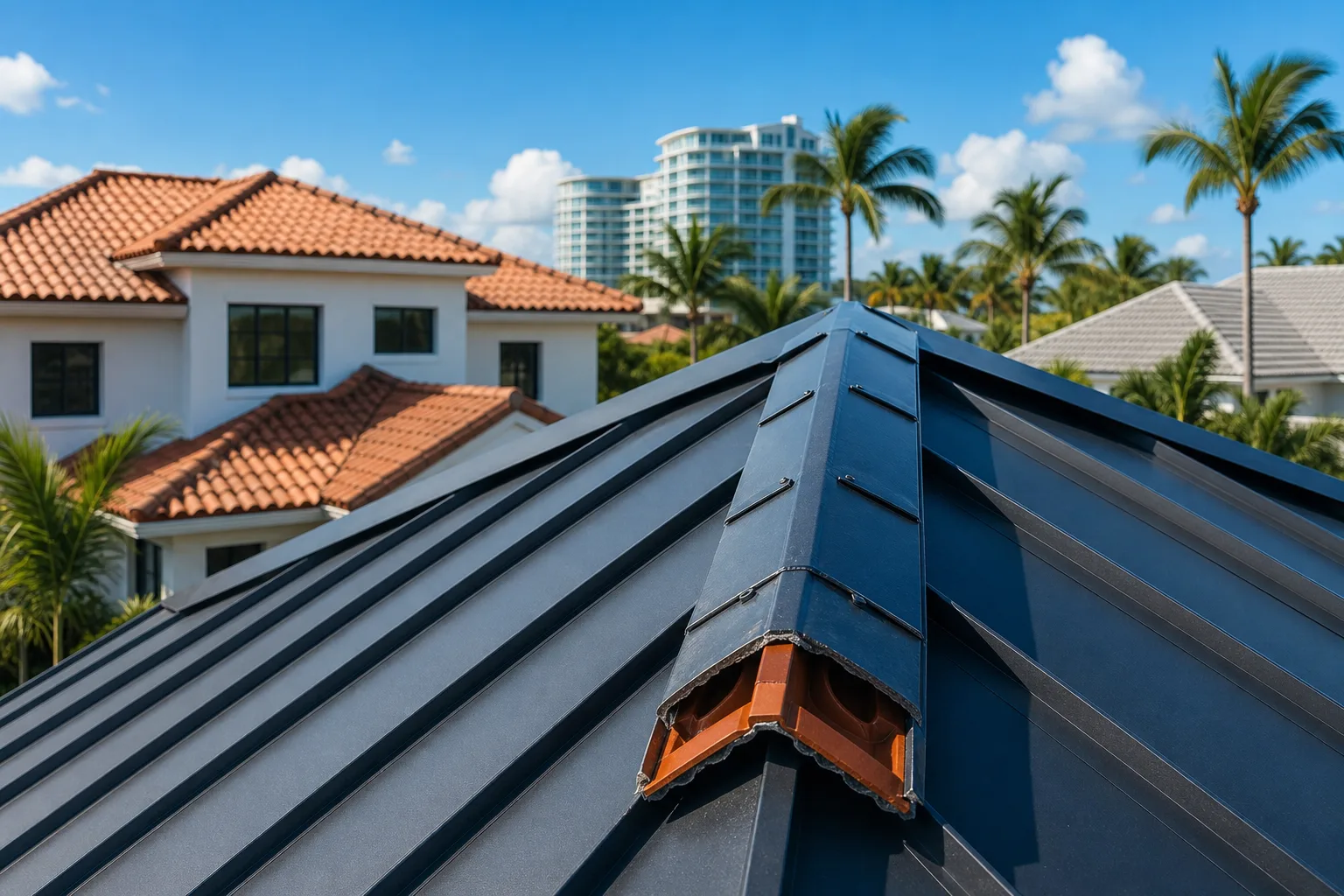
- A ridge cap with exposed nail heads that face the prevailing wind direction
The location and orientation of the leak relative to the storm's wind direction is the most useful diagnostic clue, but it requires noting which storms triggered the drip and which did not.
What to Do About It
Step 1: Log the conditions, not just the leak
Before anything else, record the following for each leak event:
- Date and time the drip started
- Approximate wind direction (apps like Weather Underground show station-level data by neighborhood)
- Wind speed at onset
- Location of ceiling stain or drip point inside the home
- Whether rain was heavy or light when the drip began
A pattern across two or three storms will often point directly at a compass-facing section of the roof.
Step 2: Check the wind-facing penetrations and edges first
If northwest storms trigger the leak, start at every penetration on the northwest face: pipe boots, vents, A/C curb flashings, and any sidewall transitions. These are the locations most likely to admit wind-driven water.
For tile roofs, check the rake edge where tiles terminate. For shingle roofs, check whether the rake drip edge is properly lapped and nailed. For metal roofs, check the sidelap sealant on the upwind side of panels. Each system has a different first point of failure under lateral pressure.
Step 3: Know when to call a professional
Self-inspection is reasonable for accessible, single-story sections with obvious visible gaps. But if the entry point is unclear after two storm events, or if the ceiling stain is growing, a professional roof inspection is the right next step. A roofer can run a controlled hose test at angle and pressure to replicate wind-driven conditions and isolate the entry point.
Millennium Makeover handles roof repairs across South Florida and can identify wind-driven leak sources on tile, metal, and shingle systems. If you want an assessment before the next storm band rolls through, the Hurricane Storm Center is a good starting point, or you can request a quote directly.
For broader context on what commonly fails in South Florida storms, the roofing resources section covers local code and material questions in plain language.
Spotted a leak or missing tiles?
Small problems get expensive fast in the Florida sun. Get it looked at by a local crew before the next storm.
Frequently asked questions
Can a roof pass a standard water test but still leak in wind-driven rain?
Yes. A standard garden hose test applies water vertically at low pressure, which does not replicate the angle or force of wind-driven rain. A proper wind-driven rain test angles the water stream and may use a blower to create pressure differential. This is why a roof can appear watertight in one test and leak in a 30-mph storm.
Is wind-driven rain damage covered by homeowners insurance in Florida?
Wind-driven rain damage is often covered under the wind portion of a Florida homeowners policy if wind caused the opening that allowed water entry. If water entered through an existing gap without a wind-created opening, many policies exclude it, and coverage always depends on your specific policy and deductible. Check with your insurer or agent. Coverage questions often hinge on whether the damage originated from a storm event versus pre-existing deterioration. Document the storm conditions and get a written assessment from a licensed contractor to support any claim.
How do I tell if my rake edge is contributing to windblown leaks?
Look at the rake edge, the sloped edge of the roof at the gable end, from the ground after a storm. If you see water staining on the fascia or soffit directly below it, wind may be pushing water backward under the first row of shingles or tiles. A roofer can confirm whether the drip edge is properly installed and whether a sealant bead is needed on the upwind side.
Does roof pitch affect vulnerability to wind-driven rain leaks?
Lower-pitched roofs are generally more vulnerable because wind-driven rain approaches at a shallower angle relative to the surface, making it easier for water to travel upward under laps and flashings. Very steep roofs shed wind-driven water more effectively, though they introduce different vulnerabilities at ridges and hips where turbulence concentrates.