5 Reasons a Flat Roof Repair Fails Within the First Year
In this article
TL;DR: Most early flat roof repair failures come down to incomplete surface prep, wrong membrane choice, skipped flashing work, missed drainage problems, or repairing a roof that needed full replacement. Knowing which one applies to your situation can save you a second repair bill.
Flat roofs are unforgiving. Water has nowhere to escape quickly, so any gap in the repair becomes a direct path inside. After walking commercial and residential flat roofs across South Florida for years, I see the same failure patterns repeat. Here are the five that cause the most early callbacks.
1. The Old Membrane Was Not Properly Cleaned or Primed Before Patching
Adhesion is everything on a flat roof. If the existing membrane has dirt, oxidation, standing moisture, or old coating buildup, a new patch or layer will not bond correctly, no matter how good the material is.
In South Florida's heat, that bond can start pulling away within a few months. You will see bubbling, edge lifting, or small blisters that eventually open up.
What proper prep looks like:
- Membrane surface swept and blown clean of debris
- Any standing moisture dried or removed before application
- Appropriate primer applied and allowed to tack before the new material goes down
- Edges of existing membrane trimmed clean so the patch laps onto solid, bonded substrate
If a contractor skips primer because "the surface looks fine," that is a flag worth asking about.
2. The Wrong Repair Material Was Used for the Existing System
Flat roofs use different membrane systems: modified bitumen, TPO, EPDM, built-up roofing (BUR), and coatings applied over those. Not every material bonds to every other material.
Patching a TPO roof with modified bitumen, or applying a generic roof cement over a single-ply membrane, creates an incompatible joint that breaks down under UV exposure and thermal cycling. South Florida's temperature swings, especially on a dark flat roof, are significant.
A repair should use material compatible with the existing system, or the damaged section should be fully removed and replaced with matching membrane. When you get a repair quote, ask specifically what product will be used and confirm it is rated for your existing system.
3. Flashing at Walls, Curbs, and Penetrations Was Not Addressed
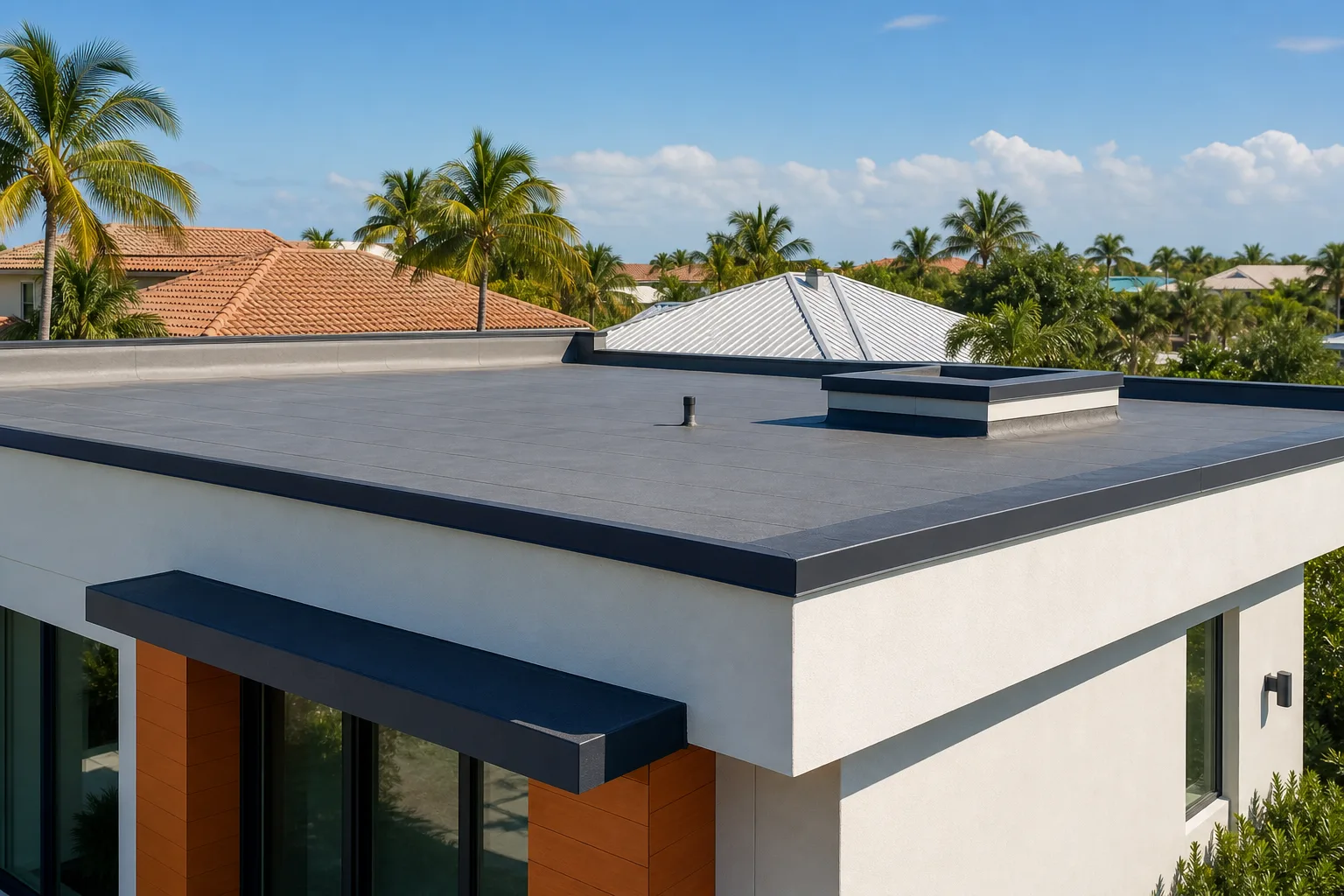
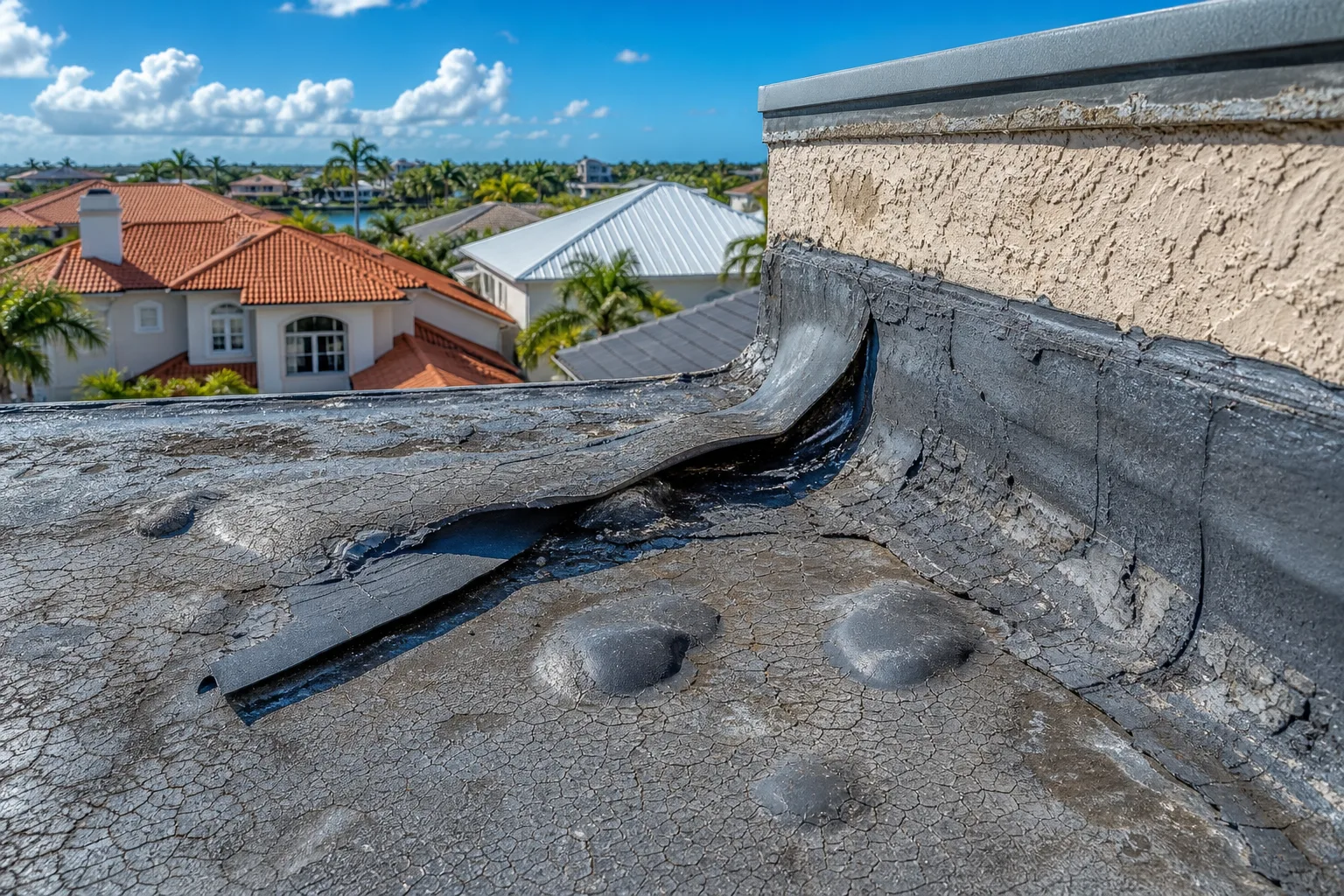
The flat field of a roof membrane rarely fails first. The failures almost always start at termination points: where the membrane meets a parapet wall, an HVAC curb, a drain collar, a pipe boot, or a skylight curb.
A repair that patches the field but ignores deteriorated termination flashing is only solving half the problem. Water will find the unaddressed edge and re-enter the building, often in a location that looks unrelated to where the visible damage was.
For a closer look at how termination and flashing details matter, the post on what flashing around a skylight actually looks like up close covers the concept in detail.
Before accepting a flat roof repair, confirm the scope includes:
- Inspection and resealing of all penetration flashings in the repair zone
- Wall base flashing checked and re-adhered if lifting
- Drain collar integrity verified, not just the membrane around it
Spotted a leak or missing tiles? Schedule a repair visit
4. The Drainage Problem That Caused the Damage Was Not Fixed
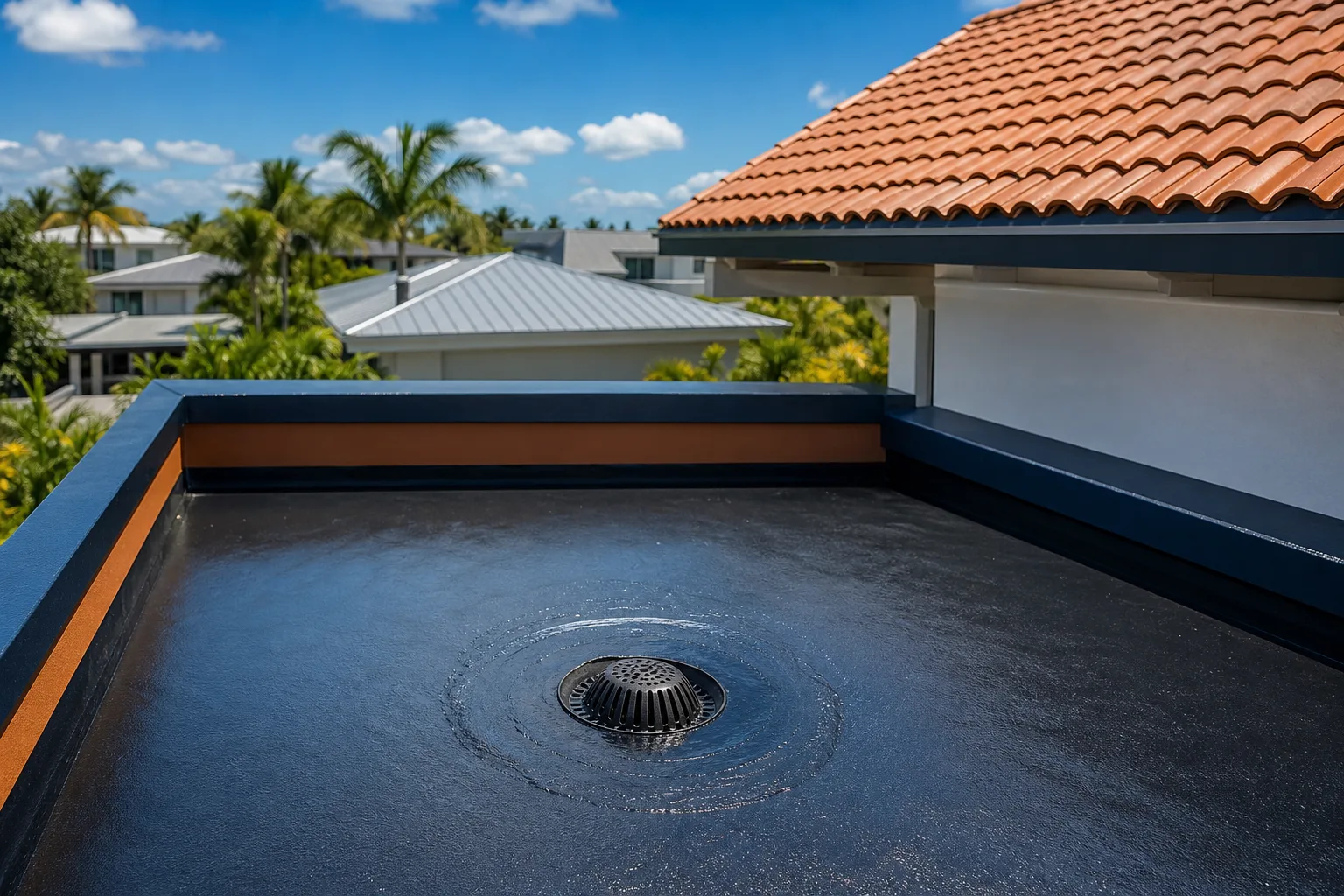
Standing water is usually the symptom, not the root cause. The root cause is a drainage problem: a clogged drain, a low spot created by settling or improper slope, a blocked scupper, or a gutter that is backing up onto the roof surface.
If you repair the membrane without correcting drainage, the same spot will pond again. Prolonged ponding accelerates membrane degradation, works at seams, and adds load. Within one South Florida rainy season, that repair can be compromised.
The article on how roofers slope a flat roof so water actually drains explains how slope and drainage are engineered. If your roof has chronic ponding areas, that piece will help you understand what a real fix involves.
Also check that gutters and scuppers are flowing freely before and after any repair.
5. The Roof Was Beyond the Point Where a Repair Could Hold
This is the uncomfortable one. A repair fails within a year because the underlying deck, insulation, or existing membrane was too deteriorated to support a durable patch. The contractor either did not probe deep enough or the job was scoped as a repair when replacement was the right answer.
Signs that a repair is likely to be short-lived:
- Soft spots or spongy feel when walking the roof, indicating wet insulation or rotted decking
- Multiple active leak areas spread across the roof rather than one localized failure
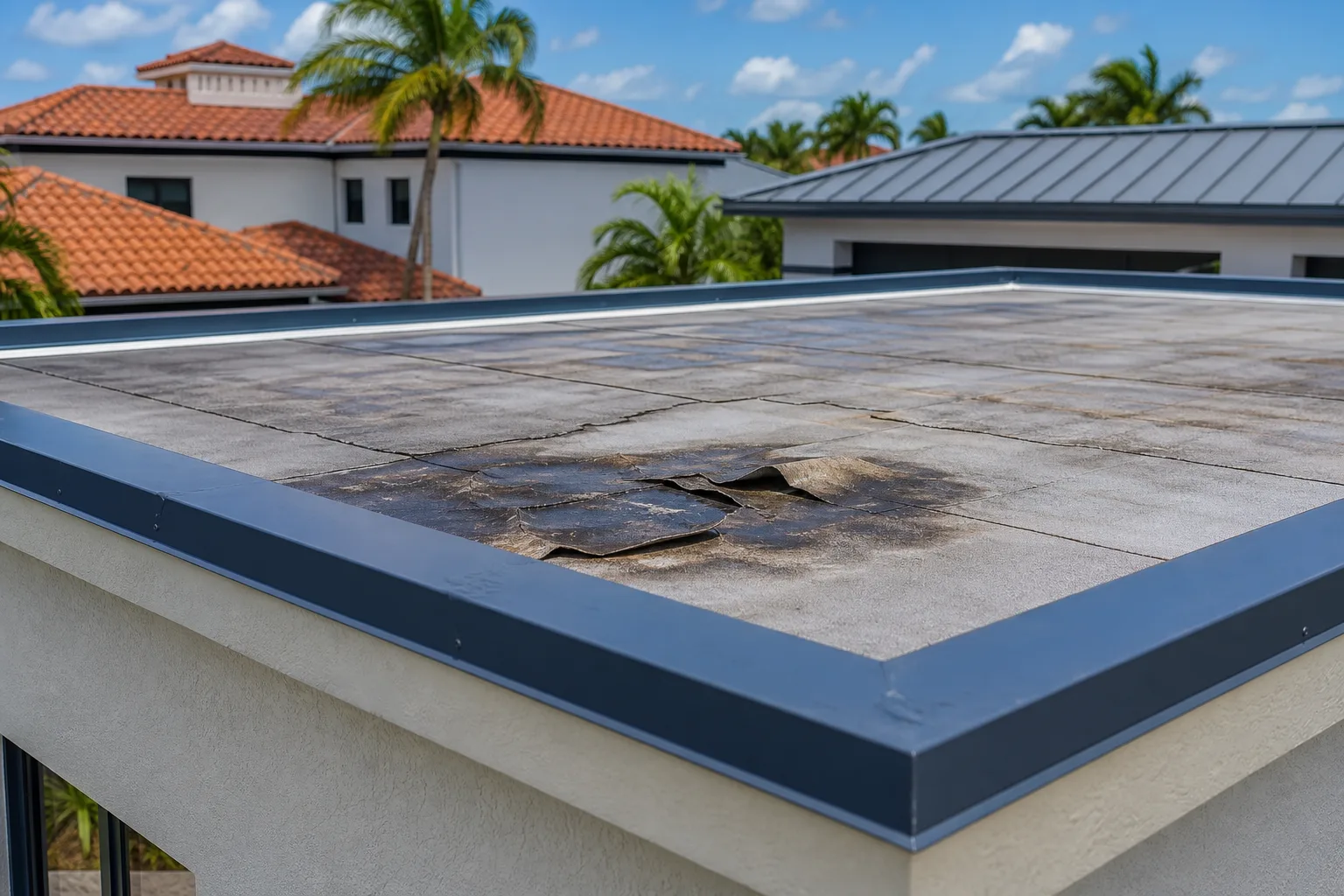
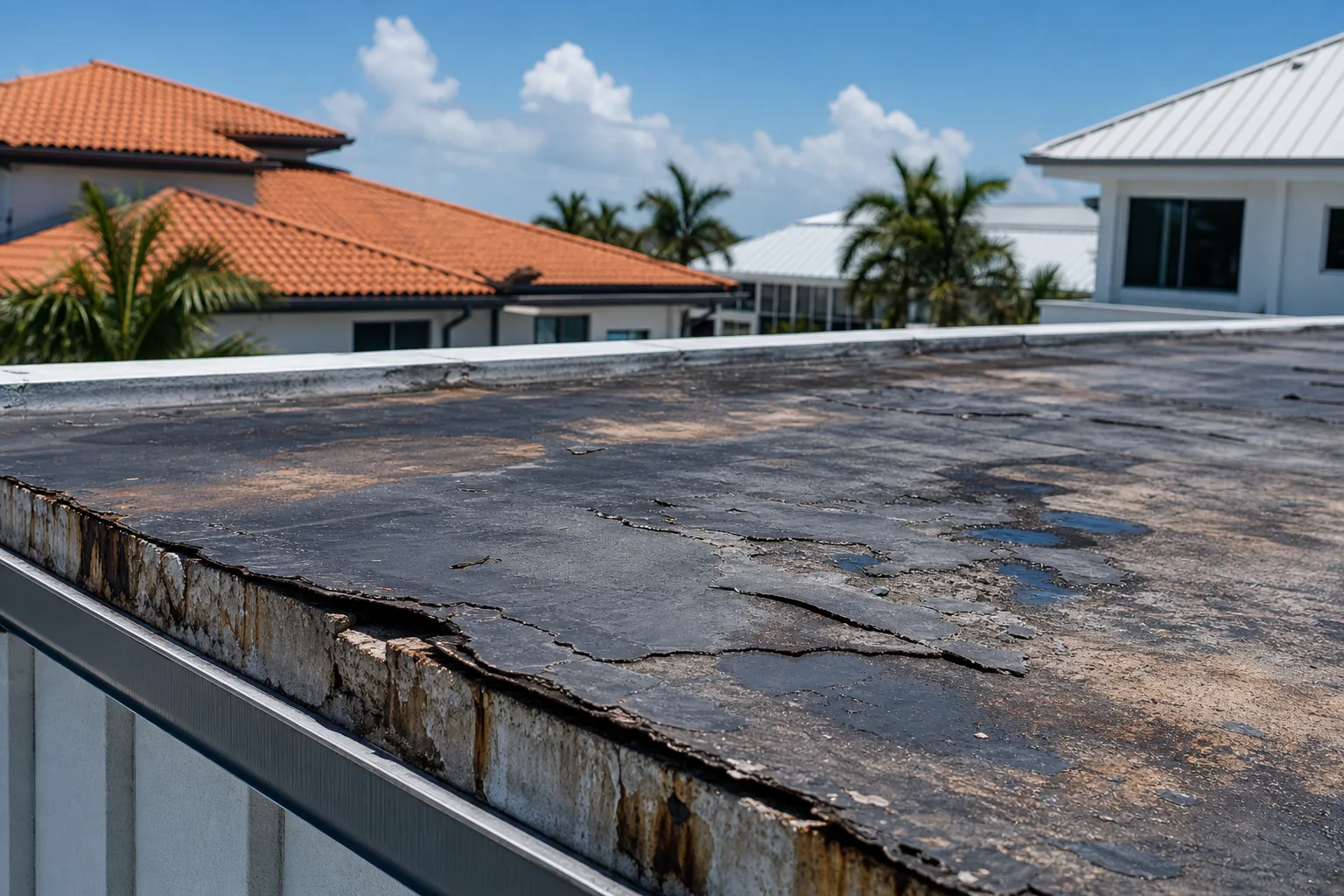
- Existing membrane that is cracked, heavily alligatored, or shrinking away from flashings across large sections
- A roof that is already at or past its expected service life
If any of these are present, a repair buys time at best. For more on what happens when wet insulation is discovered during a flat roof job, see what roofers do when they find wet insulation under a flat roof.
For South Florida commercial flat roofs, commercial roofing services and maintenance can help you understand replacement versus repair thresholds.
Bottom Line
A flat roof repair fails early for predictable reasons, and most of them are visible before the job starts if someone is actually looking. Surface prep, material compatibility, flashing scope, drainage, and honest condition assessment are the five checkpoints that separate a repair that holds from one that sends you back to square one.
If you are unsure whether your flat roof qualifies for a repair or needs more, start with a free instant estimate or request a detailed quote from our team. We serve Boynton Beach, Delray Beach, West Palm Beach, Boca Raton, and the surrounding South Florida area.
Spotted a leak or missing tiles?
Small problems get expensive fast in the Florida sun. Get it looked at by a local crew before the next storm.
Frequently asked questions
How long should a properly done flat roof repair last?
A well-executed repair on a sound roof should last several years at minimum, often five to ten depending on the membrane system and repair scope. Repairs on older or deteriorated roofs tend to have shorter effective lifespans regardless of workmanship quality.
Can I tell from the ground whether a flat roof repair was done correctly?
Not reliably. Some failure indicators like edge lifting or blistering can be spotted from a rooftop walkover, but most critical details, such as primer application and flashing terminations, are only visible during or immediately after the repair. A post-repair inspection by an independent party is the most reliable check.
Does my flat roof repair require a permit in Florida?
Permit requirements vary by municipality and repair scope in Florida. Full membrane replacements almost always require permits, while minor patches may not. Check with your local building department or ask your contractor to confirm before work begins.
What is the most common flat roof system used on commercial buildings in South Florida?
Modified bitumen and TPO single-ply membranes are both widely used on South Florida commercial flat roofs. The best choice depends on the building's existing system, sun exposure, and budget for the repair or replacement.