Flat Roof vs. Sloped Roof: Which Wins in Florida?
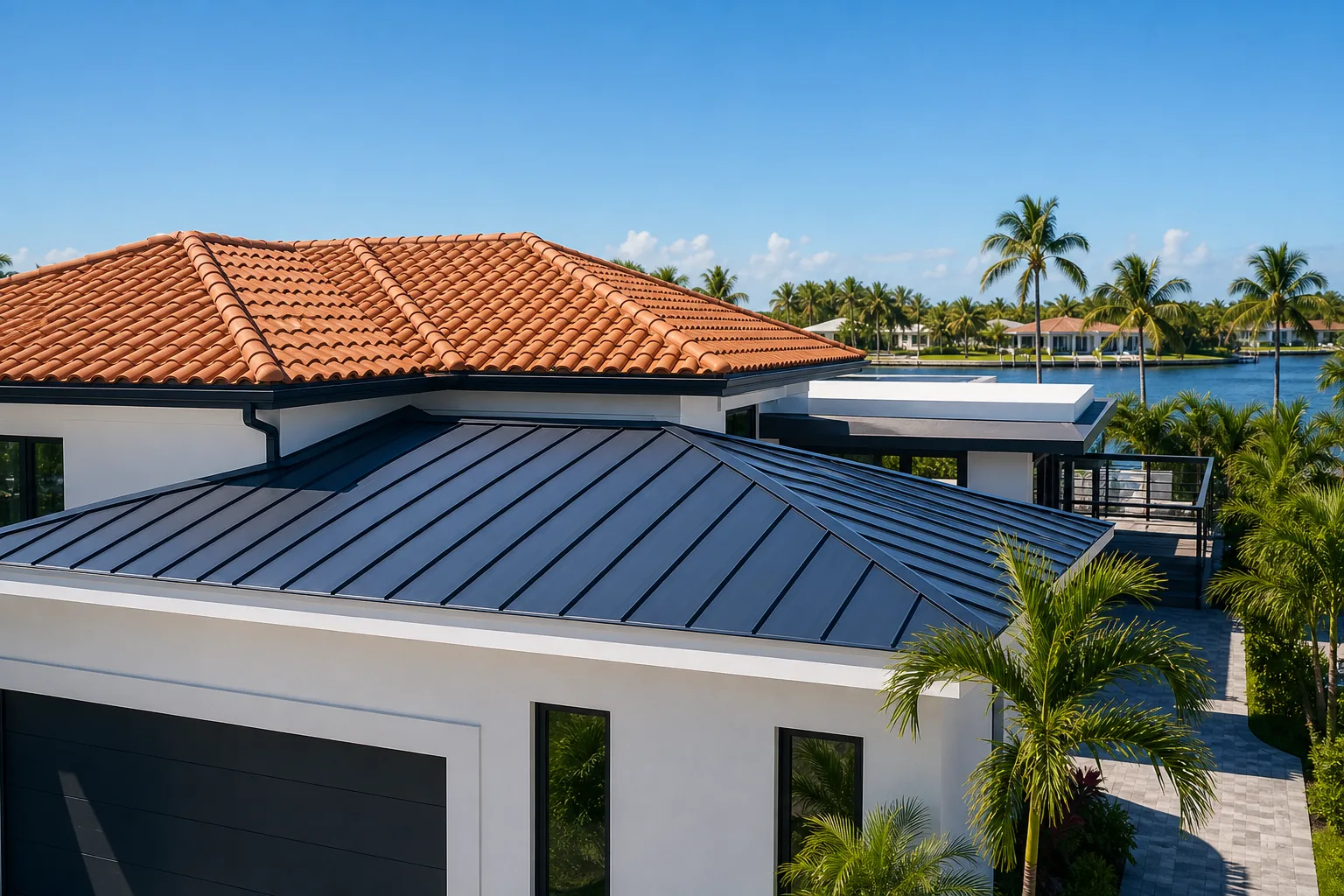
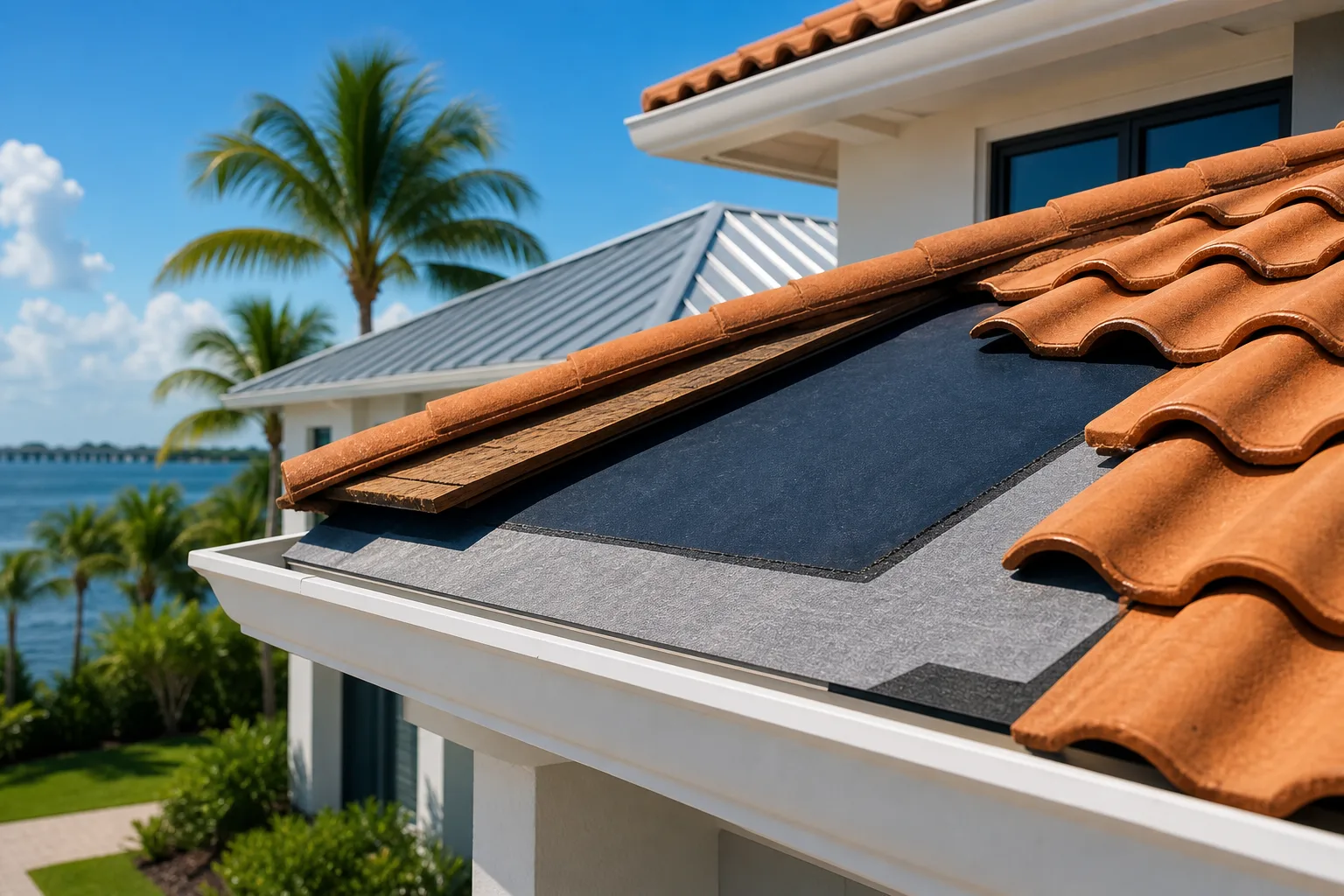
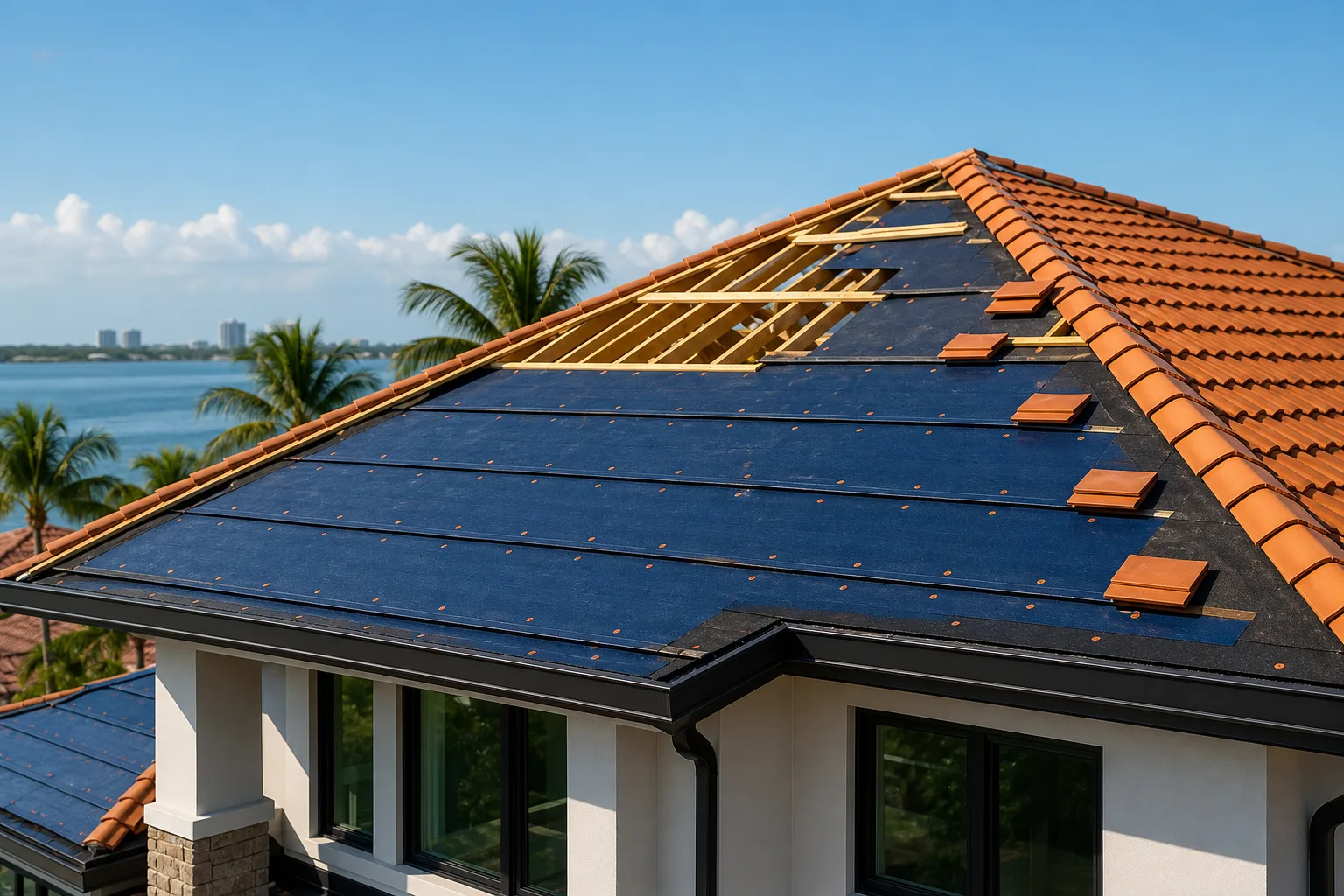
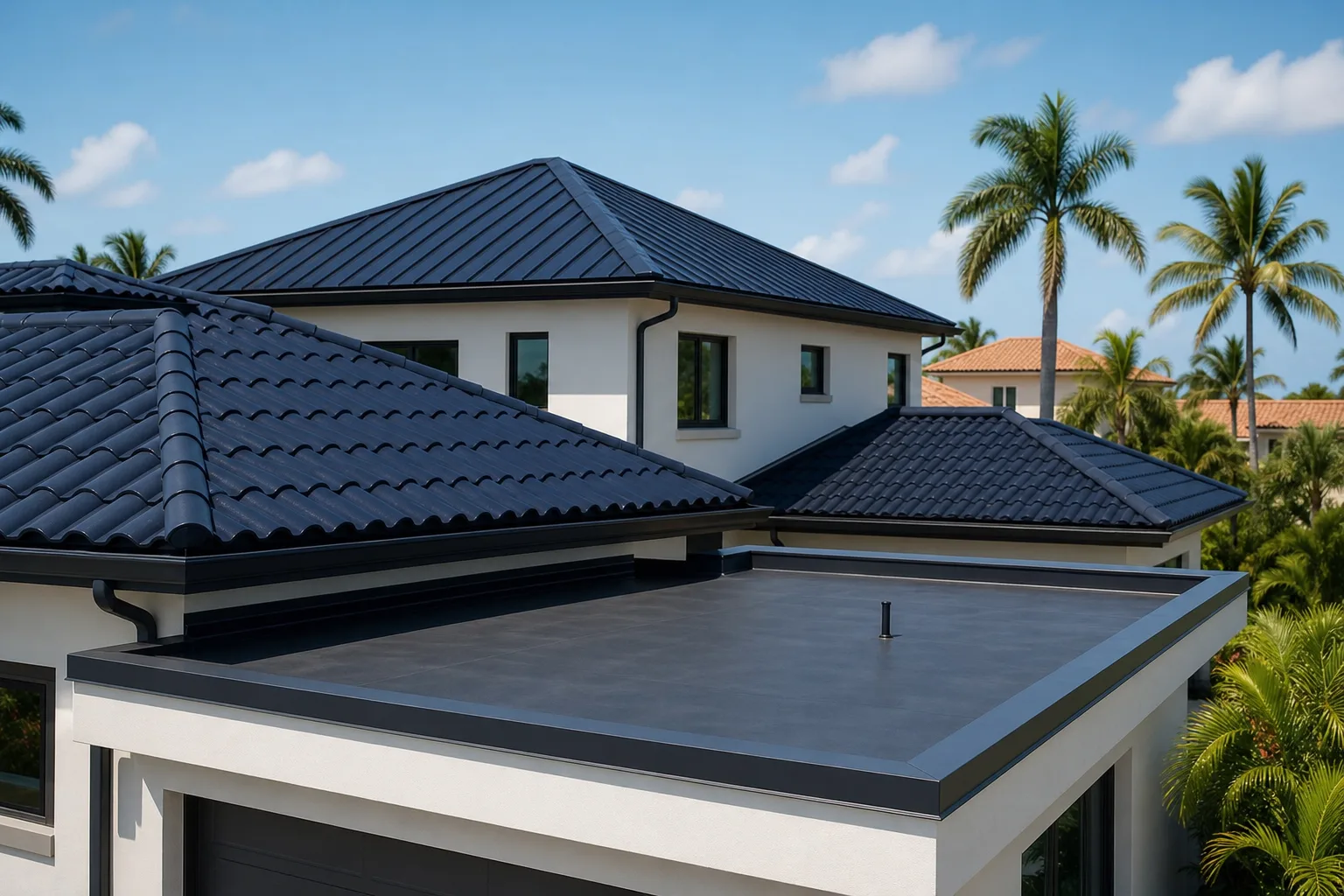
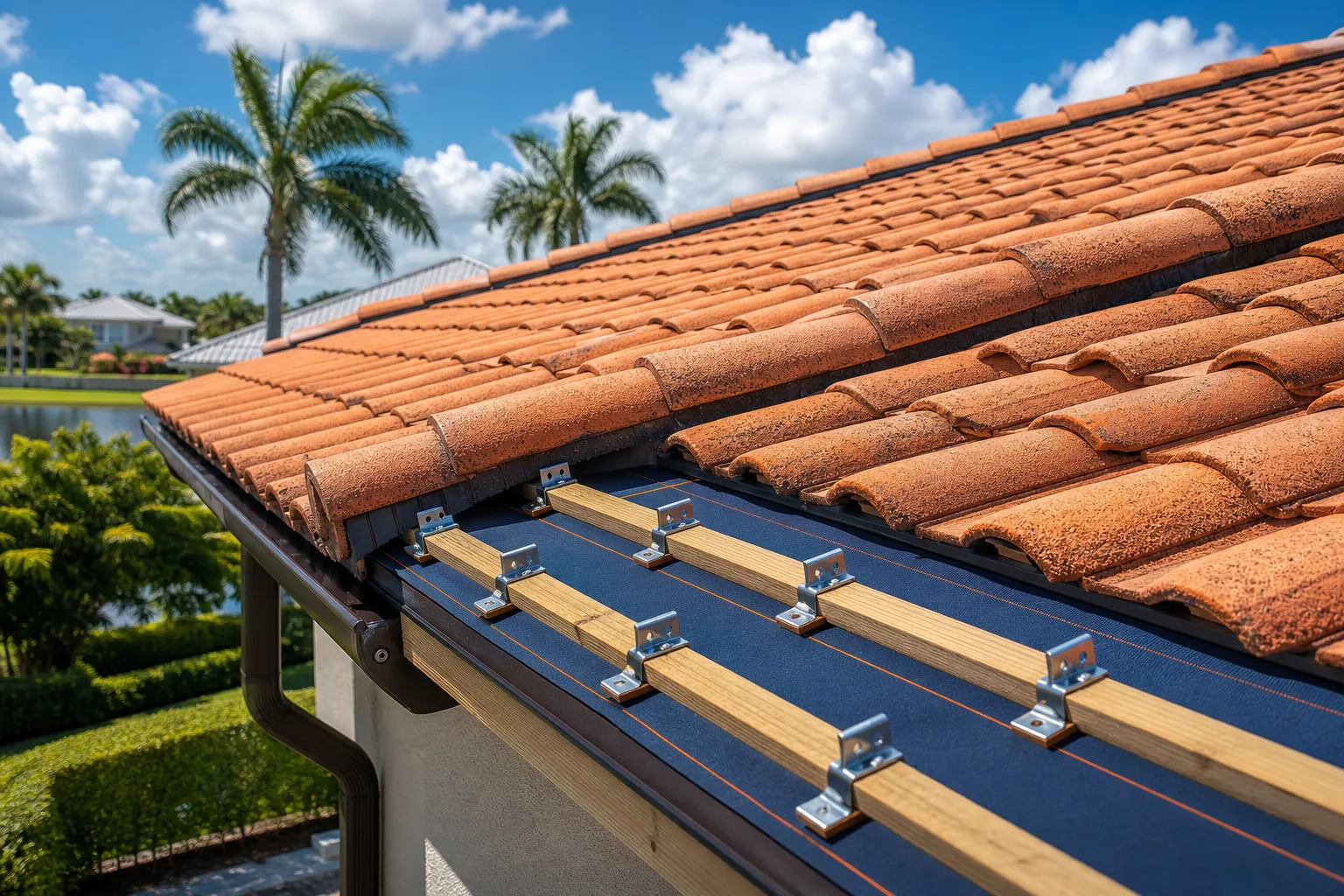
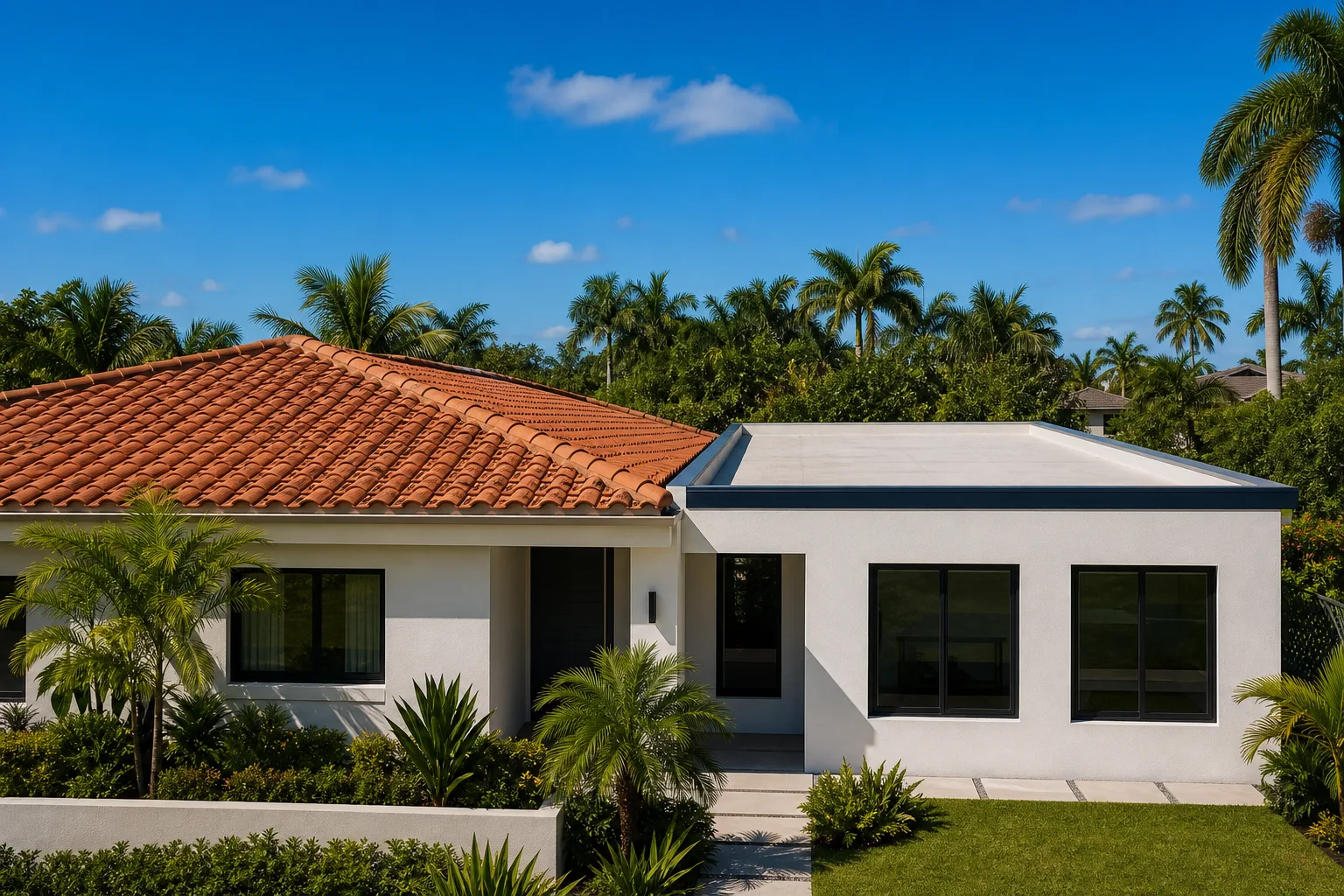
TL;DR\n\nSloped roofs generally shed wind and water better in a hurricane, which is why most South Florida single-family homes use them. Flat roofs work fine on additions, porches, and commercial buildings when they're built and maintained correctly, but they demand more attention to drainage and membrane condition. Neither style is automatically "safer," it comes down to design, materials, and upkeep.\n\n## At a glance\n\n| Factor | Sloped Roof | Flat Roof |\n|---|---|---|\n| Wind performance | Better uplift resistance with proper slope and fastening | More vulnerable to uplift at edges and corners if not detailed correctly |\n| Water drainage | Gravity does the work | Needs tapered insulation, drains, and scuppers |\n| Common materials | Tile, shingle, metal | Modified bitumen, TPO, roof coatings |\n| Florida Building Code fit | Straightforward wind uplift and underlayment rules | Requires careful attention to ponding and drainage per FBC | \n| Maintenance | Annual inspection, gutter checks | More frequent inspection, drain cleaning |\n| Typical lifespan | 20 to 50 years depending on material | 15 to 25 years depending on membrane and coating |\n| Insurance perception | Usually straightforward | Sometimes flagged for ponding history or membrane age |\n\n## Why slope matters more here than almost anywhere else\n\nFlorida sits in a spot where two things collide: heavy seasonal rainfall and hurricane-force wind. A roof has to handle both, and slope affects how it deals with each.\n\nOn a sloped roof, water runs off before it has a chance to sit and find a weak seam. On a flat roof, water has nowhere to go unless the roof was built with enough pitch, tapered insulation, and functioning drains to move it off. When drainage falls behind on a flat roof, even by an inch of standing water, you get the slow breakdown of the membrane that we've written about before when it comes to standing water sitting on a flat roof over time. Ponding isn't just a cosmetic issue, it accelerates aging and increases the chance of a leak finding its way to the deck.\n\nWind behaves differently depending on roof shape too. A steeper slope with a hip design (four sloped sides meeting at a ridge) tends to perform better in high wind than a low-slope or flat roof, because the wind has less flat surface to grab and lift. That's part of why the Florida Building Code treats wind uplift calculations differently for low-slope versus steep-slope assemblies, and why fastening patterns, underlayment, and edge metal specs vary by roof type.\n\n## Sloped roofs: the default for a reason\n\nMost single-family homes in Boynton Beach, Delray Beach, and Boca Raton are built with sloped roofs, and it's not just tradition. A well-built sloped roof:\n\n- Sheds rain naturally without relying on mechanical drains\n- Distributes wind load across a shape that resists uplift better than a flat plane\n- Works with a wider range of materials, from tile to metal to shingles\n- Has a long track record with local wind mitigation inspectors and insurance underwriters\n\nThe tradeoff is that sloped roofs have more components that can fail individually. Flashing at valleys, ridge caps, and roof-to-wall transitions all need attention. If you've ever wondered why flashing fails more often than the field material itself, it's because these transition points take the brunt of wind-driven rain. A sloped roof isn't maintenance-free, it just fails in more predictable, repairable spots.\n\nTile roofs in particular hold up well in Florida's climate when installed to current code, though individual tiles can crack from debris impact or foot traffic. The good news is you usually don't need a full tile roof replacement for a handful of damaged tiles. Metal roofing has become more popular for its wind rating and longevity, especially on homes doing a full roof replacement after storm damage.\n\n## Flat roofs: where they make sense, and where they don't\n\nFlat roofs aren't wrong for Florida, they're just a different animal that needs a different maintenance mindset. You'll see them on:\n\n- Additions and Florida rooms attached to a sloped-roof house\n- Older mid-century homes, particularly in some West Palm Beach and Lake Worth neighborhoods\n- Commercial buildings, warehouses, and multi-family properties\n\nA properly engineered flat roof uses tapered insulation to create enough pitch, usually a quarter inch per foot, to move water to drains or scuppers. The membrane, whether modified bitumen or a single-ply system like TPO, has to be fully adhered or mechanically fastened per current wind uplift testing. When that design is done right and the drains stay clear, a flat roof can perform reliably for its expected lifespan.\n\nWhere flat roofs get into trouble is neglect. Drains clog with leaves and debris, water backs up, and ponding sets in. Over years, UV exposure and standing water degrade the membrane faster than a sloped roof's equivalent material would age. This is also where roof coatings come up as a maintenance option, they can extend membrane life if applied before deterioration is severe, but they're not a fix for a roof with real drainage or structural problems.\n\nFor commercial property owners managing multiple flat-roof buildings, this is exactly the kind of thing that needs a proactive inspection schedule rather than a wait-and-see approach. Our commercial roofing team spends a lot of time catching drainage problems before they become deck damage.\n\n## The insurance and code angle\n\nFlorida Building Code treats low-slope and steep-slope roof assemblies differently for wind uplift, underlayment, and attachment requirements. If you're re-roofing, whichever style you have, the permit and inspection process will follow the code path for that roof type. This matters for insurance too. Wind mitigation inspections look closely at roof shape (hip versus gable), roof covering, and the condition of the roof deck attachment. A hip-shaped sloped roof often scores better on wind mitigation credits than a gable or flat design, which can affect your premium.\n\nFlat roofs sometimes draw more scrutiny from insurers, particularly if there's a documented history of ponding or if the membrane is past a certain age. It's worth asking your agent directly how your specific roof type and age affect your policy, since this varies by carrier and hasn't gotten simpler in the current Florida insurance market. For general guidance on wind mitigation inspections, the Florida Division of Emergency Management and My Safe Florida Home program are solid starting points.\n\n## What actually fails first in a hurricane, by roof type\n\nOn sloped roofs, the first failure points are usually ridge caps, hip flashing, and any spot where the roof meets a wall or chimney. Wind gets under a lifted edge and peels back material from there. On flat roofs, the vulnerable spots are the perimeter edge metal, parapet flashing, and any seam that wasn't fully sealed. Once wind gets under a membrane edge, it can travel and tear a much larger section than the initial breach.\n\nIf you want a real walkthrough of what happens to a roof assembly during high wind, we've broken it down in what happens to your roof during a hurricane. It applies to both roof types, but the failure sequence looks a little different depending on slope.\n\nBoth roof types also depend heavily on gutters and drainage working correctly during a storm. A clogged gutter system can back water up under roofing material regardless of slope, which is why we treat gutter problems as a roof issue, not a separate one.\n\n## Verdict\n\nFor a typical South Florida single-family home, a sloped roof is the more forgiving, better-tested choice for hurricane performance, and it's what most homes here are built with already. If you're building new or doing a full replacement and have the choice, a hip-style sloped roof with tile, metal, or shingle generally gives you the best combination of wind performance and insurance-friendly design.\n\nFlat roofs aren't a bad choice, they're just a commitment. They work well on additions, older homes designed for them, and commercial buildings, but only with disciplined maintenance: clear drains, periodic membrane inspection, and coating or recoating before the material ages out. If you already have a flat roof, the smartest move isn't necessarily replacing it with something sloped, it's making sure the drainage and membrane are in solid shape before hurricane season.\n\nWhichever roof type you have, the same rule applies before storm season: get it inspected now, not after the forecast turns. Our Hurricane Storm Center has season-specific prep guidance, and if you want a straightforward look at your roof's condition, you can request a quote or grab a free instant estimate before the next system starts spinning in the Atlantic.
Want to know what your roof actually needs?
Millennium Makeover has been roofing South Florida homes and businesses since 2005. Get a straight, no-pressure estimate from a licensed local crew (CCC1326328).
Frequently asked questions
Is a flat roof or sloped roof better for hurricane wind resistance in Florida?
Sloped roofs, especially hip-style designs, generally perform better in high wind because their shape gives wind less flat surface to lift. Flat roofs can perform well too, but they depend heavily on correct edge detailing and membrane attachment to resist uplift.
Do flat roofs leak more than sloped roofs in Florida?
Not necessarily more, but they fail differently. Flat roofs rely on drains and slight tapered pitch to move water off, so clogged drains or ponding can lead to leaks over time, while sloped roofs are more prone to leaks at flashing and transition points.
Does roof type affect my homeowners insurance in Florida?
Yes, wind mitigation inspections consider roof shape, covering, and deck attachment, and hip-shaped sloped roofs often score better for certain credits than flat or gable designs. It's worth asking your insurance agent how your specific roof affects your premium.
Can I add a flat roof section to a sloped roof home?
Yes, this is common for additions and Florida rooms, and it's done all the time as long as the flat section is engineered with proper tapered insulation and drainage. The transition point between the two roof types needs careful flashing since it's a common leak spot.
How often should a flat roof be inspected in South Florida?
We generally recommend inspecting flat roofs at least twice a year and after any major storm, since debris and ponding issues develop faster than on sloped roofs. Clearing drains and checking membrane seams regularly catches small problems before they become deck damage.
Which roof type lasts longer in Florida's climate?
It depends on material more than shape. Well-installed metal or tile sloped roofs can last several decades, while flat roof membranes typically need replacement or recoating sooner, often within 15 to 25 years depending on the system and maintenance.