Why Roofers Install Ice-and-Water Shield in South Florida
In this article
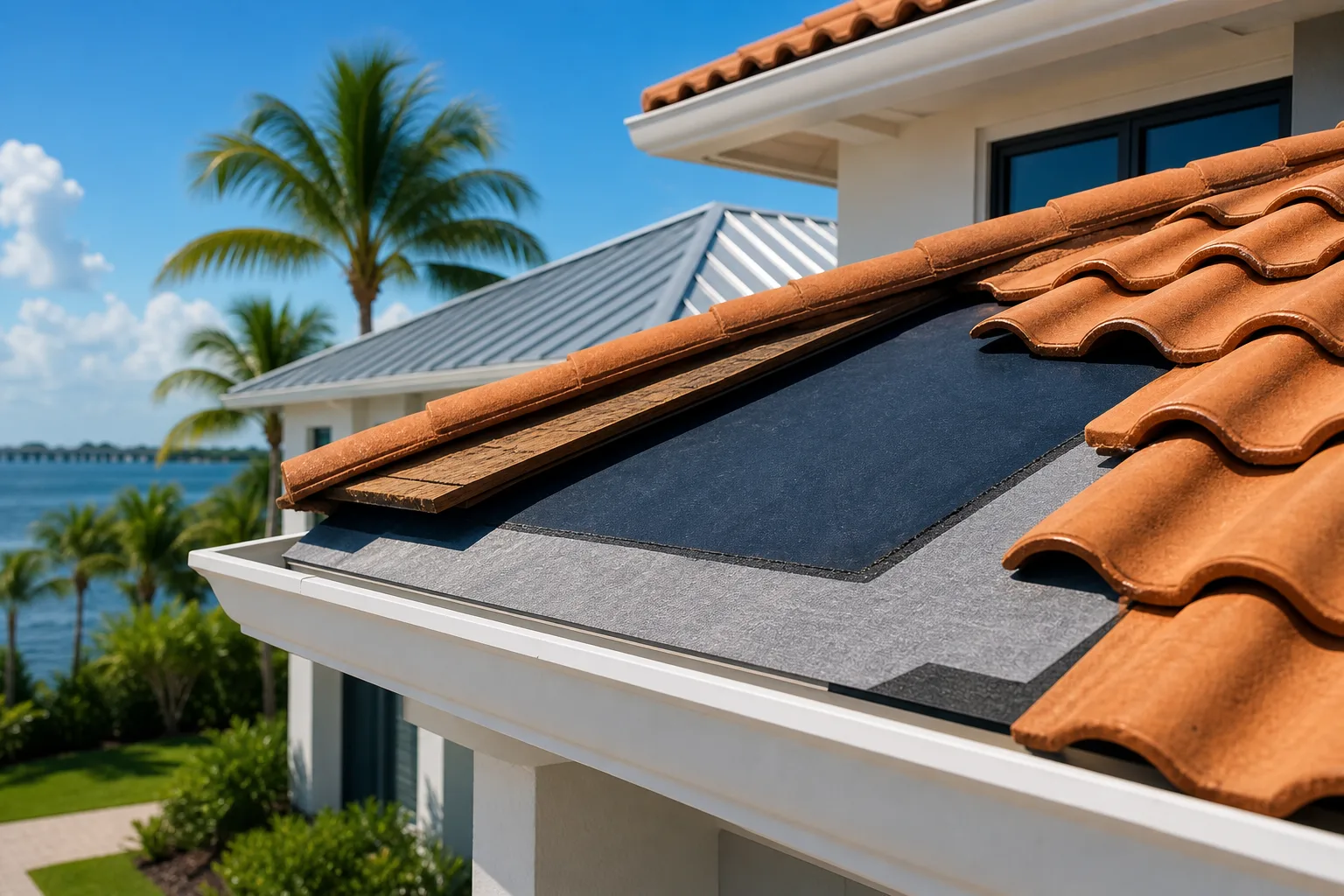
TL;DR: Ice-and-water shield is a self-adhering waterproof membrane installed under your main roofing material at the most vulnerable spots on the roof. In South Florida, it has nothing to do with ice. It exists to stop wind-driven rain, hurricane uplift, and water that travels backward up the roof slope. Florida's building code requires it in specific locations, and skipping it or using felt paper instead is a shortcut that shows up as a leak eventually.
What Happened
Ice-and-water shield has been a code requirement in Florida for years, but many homeowners still encounter it for the first time when reviewing a roofing estimate or watching a crew work on their house. The name throws people off. South Florida rarely sees freezing temperatures, so it sounds like an unnecessary line item.
The product was originally developed for northern climates where ice dams form at the eaves and force meltwater backward under shingles. Florida adopted it because wind-driven rain during tropical storms and hurricanes does the same thing physically: it forces water up a slope, underneath laps, and through gaps that would drain fine in calm conditions.
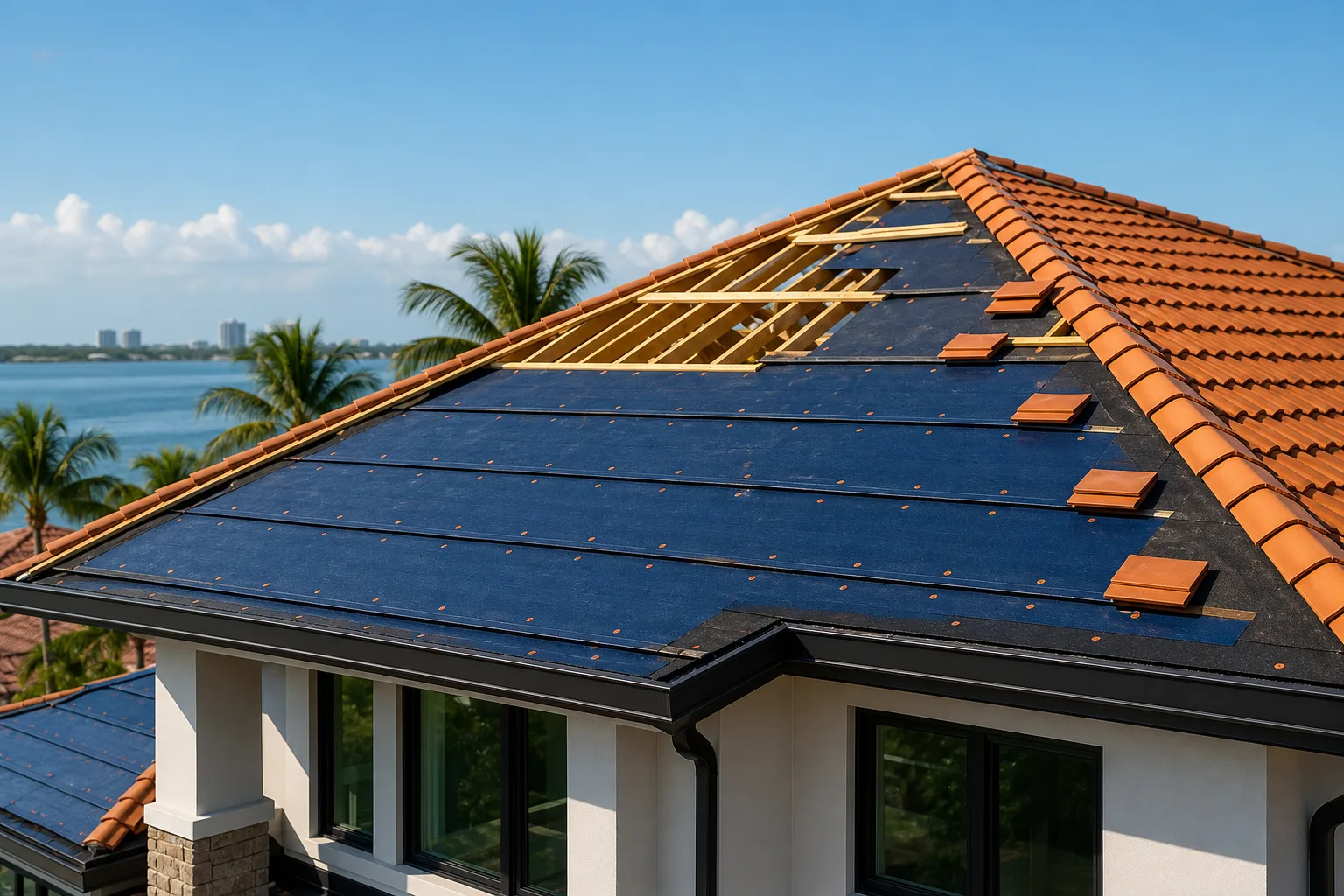
Florida's current residential building code, based on the Florida Building Code (FBC), requires self-adhering polymer-modified bitumen underlayment (what contractors commonly call ice-and-water shield) at roof valleys, eaves, and around penetrations on certain roof types. The specific requirements vary by roof slope and material, but the intent is consistent: protect the locations where water is most likely to back up or concentrate.
Why It Matters
Regular felt underlayment, sometimes called tar paper, is a slip sheet. It slows water down and provides a temporary barrier while you're installing the roof, but it's not fully adhered to the deck and it isn't self-sealing. A nail or staple through felt leaves a hole. A nail or staple through ice-and-water shield seals around the fastener because the rubberized asphalt compound grips it.
In South Florida, the places where ice-and-water shield is most critical are:
Valleys. This is where two roof slopes meet and water concentrates. During a hard South Florida rain, a valley can carry a surprising volume of water fast. If any of it gets pushed sideways by wind, it goes under the roofing material. Roof valleys are among the most vulnerable spots on any Florida roof, and proper underlayment at the valley is a first line of defense.
Eaves and low edges. Wind during a storm doesn't just push rain horizontally. It creates pressure differentials that can pull water up under the first few courses of shingles or tile. Ice-and-water shield at the eave prevents that backed-up water from reaching the deck.
Around penetrations. Pipe boots, vents, and skylights are already waterproofed with flashing and sealant, but a self-adhering membrane beneath the flashing adds redundancy. It's the difference between one seal and two.
Hips and ridges on certain systems. Some installs require it here as well, particularly on low-slope shingle applications.
A contractor who substitutes standard felt at these locations because it's cheaper is gambling with your roof deck. The deck is wood. Once it gets wet repeatedly, it rots, and replacing rotted decking during a re-roofing project adds real cost. Doing it right the first time is cheaper than fixing it the second time around.
Want to know what your roof actually needs? Get a free estimate
What We Don't Know Yet
Not every roofing product marketed as ice-and-water shield performs identically. The category includes products with different peel-and-stick adhesive strengths, temperature ratings, and surface textures. In South Florida's heat, installation temperature matters: a membrane applied on a 95-degree afternoon bonds differently than one applied in the morning, and some products are better suited to hot-climate installs than others.
There's also an open question about coverage area. Florida's code sets minimums, but a contractor doing quality work on a house with complicated geometry, multiple valleys, or a low pitch often runs the membrane further up the slope than the minimum requires. Whether that's necessary on a given house depends on roof configuration, exposure, and the specific product being used. It's worth asking your contractor which product they're using and how far they're running it.
What to Do About It
If you're getting estimates for a roof replacement, read the estimate line by line. Look for the underlayment spec. It should distinguish between where self-adhering membrane is being used and where standard synthetic underlayment is used. If the estimate just says "felt" or "tar paper" throughout, ask specifically what's going on at the valleys and eaves.
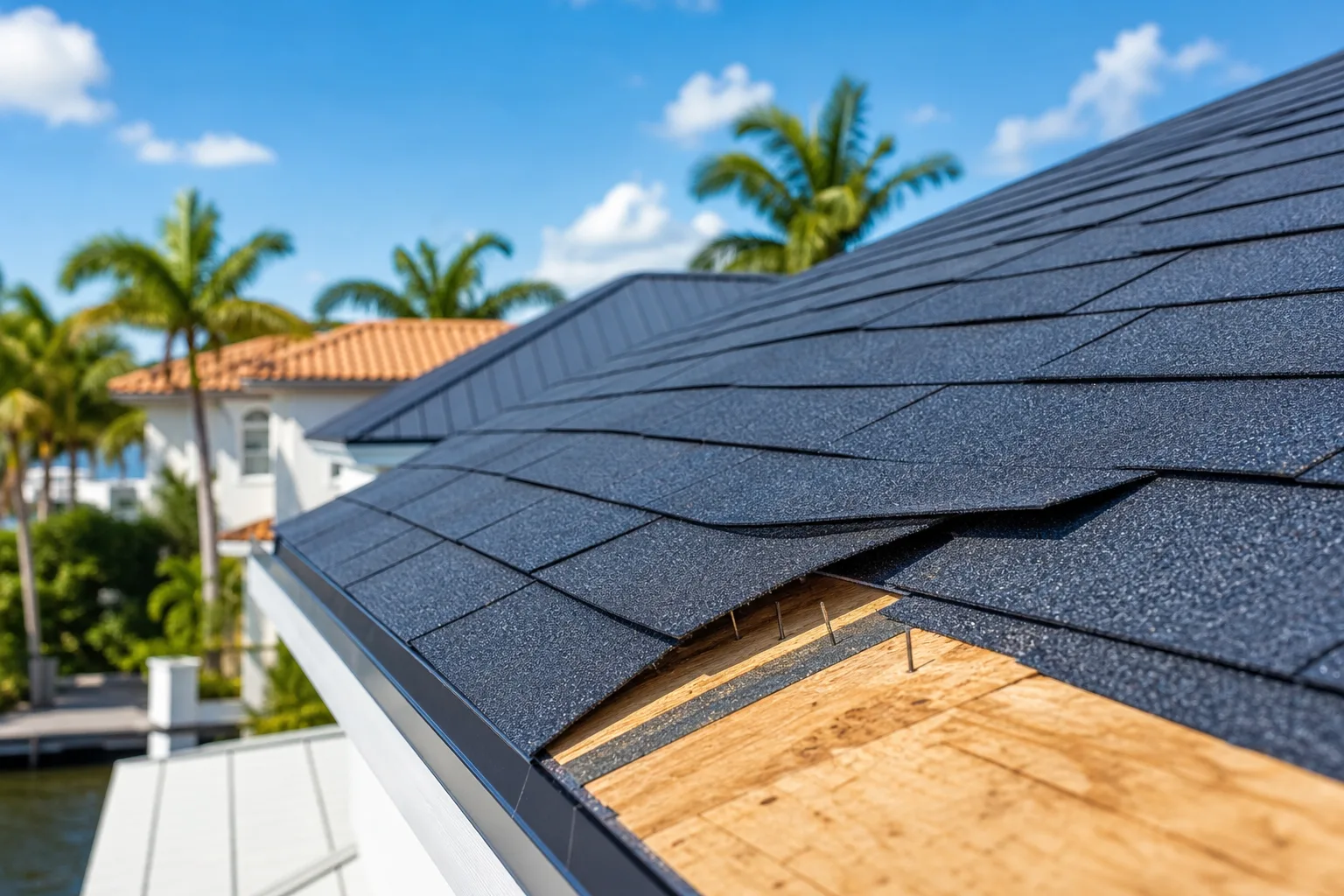
If you're evaluating an existing roof after a storm or before buying a house, a roofing contractor can pull up a valley cap or edge course to check what's underneath. This is a reasonable inspection request.
For most homeowners, this isn't a self-help situation. The membrane installs during the decking or tear-off phase, before any new roofing material goes on. Once shingles or tile are down, there's no practical way to retrofit it without removing the surface layer.
If you're planning a replacement or want to understand what's currently on your roof, request a quote or use our instant estimate tool. If a storm has already caused damage, our Hurricane Storm Center has information on what to do next.
For questions to ask before any contractor gets started, this checklist is a useful starting point.
Want to know what your roof actually needs?
Millennium Makeover has been roofing South Florida homes and businesses since 2005. Get a straight, no-pressure estimate from a licensed local crew (CCC1326328).
Frequently asked questions
Is ice-and-water shield required by Florida building code?
Yes, Florida's building code requires self-adhering polymer-modified bitumen underlayment at specific locations including roof valleys, eaves, and around penetrations for certain roof types. The exact requirements depend on roof slope and roofing material. A licensed contractor should know the current FBC requirements for your specific system.
Can ice-and-water shield be added to an existing roof without replacing it?
No. The membrane installs directly on the roof deck during tear-off or new construction, before any roofing material is applied. There is no practical way to add it once shingles or tile are already in place without removing the surface layer in those areas.
Does ice-and-water shield cover the entire roof deck?
Typically no. It's installed at the most vulnerable areas: valleys, eaves, and around penetrations. The rest of the deck usually uses standard synthetic underlayment. Some contractors extend the membrane further than code minimums on low-slope roofs or roofs with complex geometry.
How can I tell if my current roof has ice-and-water shield?
You generally can't tell from the outside once the roofing material is installed. A roofing contractor can check by carefully lifting a valley cap or edge course to see what underlayment is below. If you're planning a full replacement, the tear-off phase will reveal exactly what was installed.