Hip Roof vs. Gable Roof: Which Holds Up Better in Florida Storms
In this article
TL;DR: Hip roofs shed wind more efficiently than gable roofs and have fewer large flat surfaces for pressure to act on. That makes them the stronger default choice in South Florida. A gable roof with modern bracing and code-compliant construction can still perform well, but it requires more deliberate detailing to get there.
At a glance
| Factor | Hip Roof | Gable Roof |
|---|---|---|
| Wind resistance (base) | Higher | Lower |
| Vulnerable surface | Minimal flat faces | Gable end walls |
| FL Building Code treatment | Preferred in high-wind zones | Requires gable-end bracing |
| Attic ventilation | More complex to plan | Easier ridge-to-soffit path |
| Cost to build or replace | Typically higher | Typically lower |
| Insurance discount potential | Yes, in many cases | Less common without upgrades |
Why roof shape matters in a hurricane
Wind does two things to a roof: it pushes up from below (uplift) and it creates suction by accelerating over the surface. The geometry of your roof determines how much of each force acts on the structure.
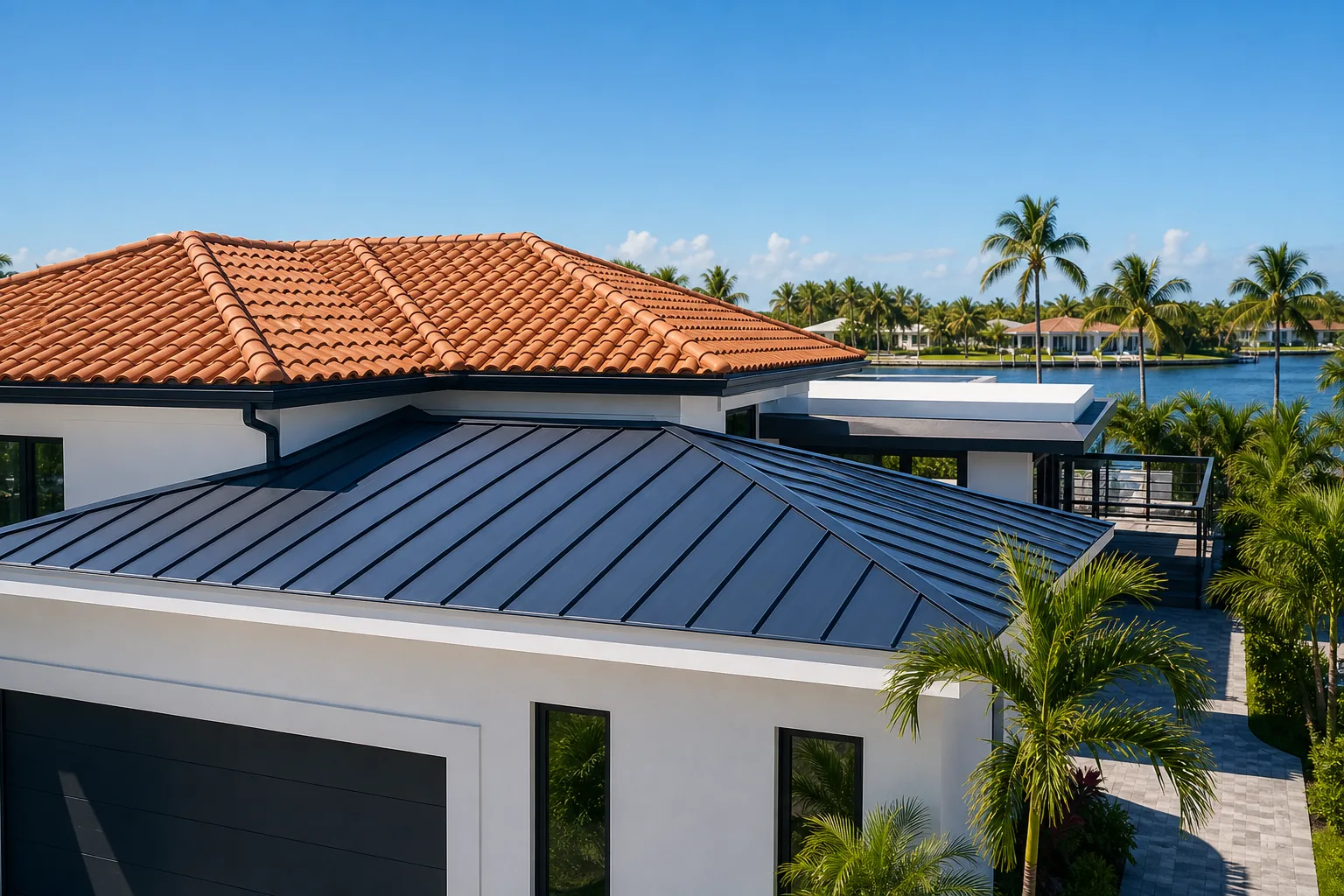
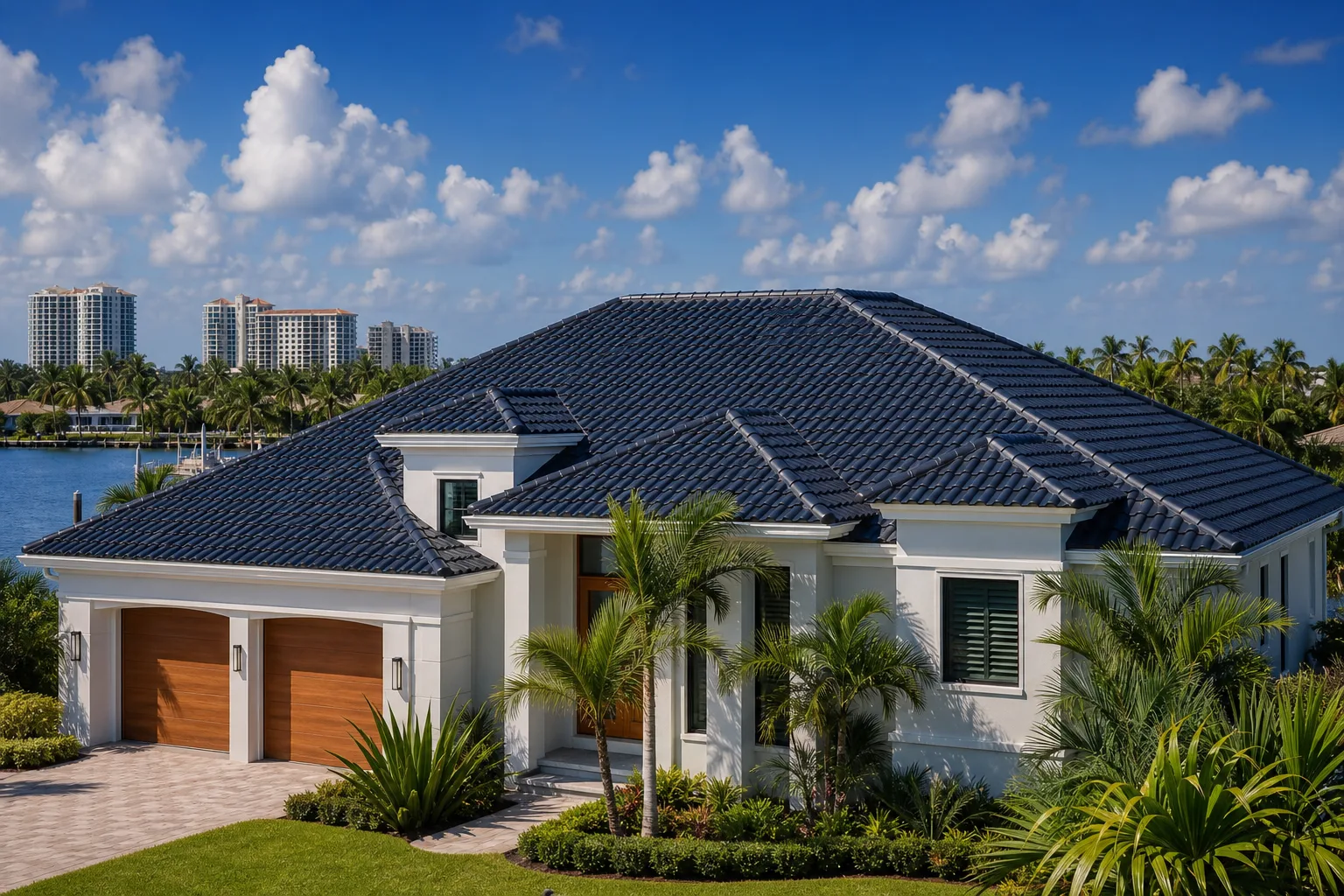
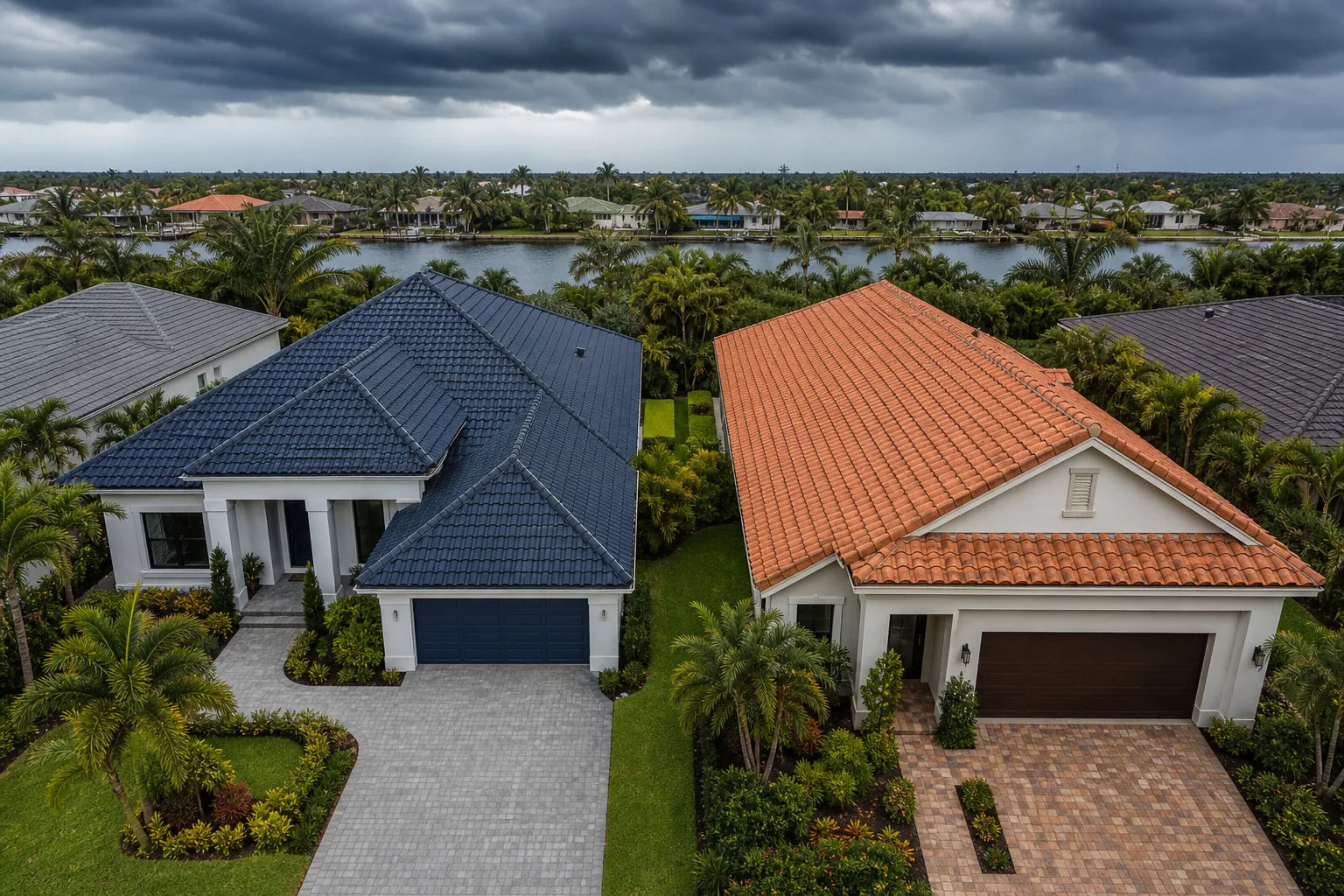
A hip roof has four sloped faces that all meet at a central ridge. Wind hits a slope, gets redirected upward and over, and the pressure distributes across multiple faces. There is no large vertical wall of roof framing exposed to the full force of the storm.
A gable roof has two sloped faces and two triangular end walls, called gable ends. Those gable ends are essentially vertical panels facing directly into the wind. When a hurricane makes landfall, those panels receive the full dynamic pressure load, and if the framing behind them is inadequate, they can fail inward or outward, taking part of the roof system with them.
The Florida Building Code angle
Florida's High-Velocity Hurricane Zone (HVHZ), which covers Miami-Dade and Broward counties, and the broader wind-speed requirements that apply to Palm Beach County and the Treasure Coast, both address gable roofs specifically. Post-2002 construction in these zones requires gable-end bracing, including lateral bracing from the gable wall back into the attic framing, in a way that older homes simply do not have.
If your home was built before the 2002 Florida Building Code update, and especially before Hurricane Andrew in 1992, the gable ends may have little to no interior bracing. That is the single biggest structural risk factor a gable roof owner in South Florida should investigate.
Hip roofs receive more favorable treatment in wind mitigation inspections, which directly affects your insurance premium. Many insurers in Florida apply a credit for hip or hip-equivalent roof shapes because the actuarial loss data supports it.
What actually fails first on each roof type
Gable roofs: Gable end walls and the rake edges along those ends are the most common failure points. Rake edge flashing and fascia can peel back, and once the gable end loses integrity, the entire roof deck is exposed. Ridge vents near the gable peak also see concentrated uplift.
Hip roofs: Hip roofs concentrate their vulnerability at the hip ridges and at any valley intersections. The hip ridge lines require solid flashing and proper nailing of hip cap shingles or tiles. Hips also have more linear feet of ridge and hip, which means more potential penetration points if the details are not right.
Neither shape is immune. What separates a roof that survives a Cat 3 from one that does not is usually the quality of the attachment details, not just the geometry. Deck-to-truss fastening, underlayment type, and edge metal all matter as much as shape. See why underlayment matters more in Florida for context on that layer.
Is your roof ready for hurricane season? Visit the Storm Center
Comparing the tradeoffs
Storm performance: Hip roofs have a measurable advantage in Florida's wind environment. Research from Florida International University's International Hurricane Research Center has documented lower mean pressure coefficients on hip roofs compared to gable roofs under simulated hurricane conditions. That advantage is largest when wind strikes a gable end directly.
Construction cost: Hip roofs use more material and more complex framing. If you are replacing a gable roof with a hip conversion, the structural work is significant. Replacing like-for-like, a hip replacement is typically more expensive than a gable replacement of the same footprint because of the additional hip ridge lines and cut angles.
Attic ventilation: A gable roof lends itself naturally to soffit-to-ridge ventilation. Hip roofs can achieve the same airflow but require more planning around the shorter ridge length and the hip intersections. Poor ventilation in a South Florida attic accelerates deck deterioration regardless of roof shape. See how ridge vents and soffit vents work together for specifics.
Insurance impact: Wind mitigation inspectors in Florida classify roof shape as one of several credits. A confirmed hip or hip-equivalent shape (where hip covers 90 percent or more of the roof perimeter) can reduce the wind premium component meaningfully. Gable roofs with documented gable-end bracing may qualify for a partial credit but typically do not reach the same discount tier.
Decision table: which applies to you
| Your situation | What to do |
|---|---|
| Existing hip roof, pre-2002 | Verify hip ridge flashing and edge metal; get a wind mitigation inspection |
| Existing gable roof, pre-2002 | Have the gable-end bracing inspected; it may be absent or inadequate |
| Existing gable roof, post-2002 | Confirm permits were pulled and code bracing was installed |
| Replacing a gable roof now | Discuss hip conversion with your contractor; get the cost delta in writing |
| New construction or full replacement | Hip is the stronger default in South Florida's wind zone |
What a wind mitigation inspection tells you
A licensed wind mitigation inspector completes the OIR-B1-1802 form, which documents roof shape, deck attachment, opening protection, and other factors your insurer uses to set your premium. If you do not know whether your gable end is braced, or whether your hip qualifies for the full shape credit, this inspection is the fastest way to find out. It costs a few hundred dollars and can pay for itself many times over in premium reductions.
The inspection also tells you whether your roof-to-wall connections use clips, single wraps, or double wraps, which is a separate but equally important factor in storm performance.
Verdict
Hip roofs are the better default choice for South Florida storm resistance. The aerodynamic advantage is real, the insurance benefit is documented, and Florida's own building code reflects the engineering consensus.
That said, a gable roof with current code-compliant bracing, solid edge metal, ring-shank deck fasteners, and quality underlayment can perform well. The shape disadvantage does not automatically mean failure. It means the gable roof requires more deliberate work to reach the same level of resilience.
If you are replacing a roof now, it is worth having a conversation about whether a hip conversion makes financial sense for your property. If you are staying with a gable, prioritize verifying the gable-end bracing before the season starts.
For South Florida storm prep guidance or to get a free instant estimate on a replacement, Millennium Makeover's team can walk you through what your current roof shape and details actually mean for your risk. You can also visit our Hurricane Storm Center for seasonal preparation resources, or explore residential roofing options if you are weighing a full replacement.
Is your roof ready for hurricane season?
A pre-season inspection is the cheapest insurance you'll ever buy. Our Storm Center has you covered before and after the storm.
Frequently asked questions
Can I convert my gable roof to a hip roof during a replacement?
Yes, but it is a structural project, not just a re-roofing. Converting requires modifying or replacing the framing, which adds cost and requires a permit. The financial case depends on the potential insurance savings versus the added construction cost, so get an itemized quote that separates the conversion work from the standard replacement scope.
Does a hip roof always qualify for the full wind mitigation shape credit in Florida?
Not automatically. The OIR-B1-1802 form requires that hip geometry cover at least 90 percent of the roof perimeter to qualify for the full hip shape credit. A home with a mostly hip roof but a small gable section over a garage or dormer may be classified differently. A licensed wind mitigation inspector makes that determination.
How does roof shape interact with the type of roofing material?
Shape and material are independent variables that both affect storm performance. A hip roof covered with improperly fastened shingles can still fail, and a gable roof with code-compliant bracing and metal roofing can outperform a poorly detailed hip. See our metal roofing page for how material choice fits into the storm-resistance picture.
What is the biggest mistake homeowners make when evaluating their roof before hurricane season?
Focusing only on the surface condition, such as missing shingles or cracked tiles, while ignoring the structural connections underneath. Gable-end bracing, deck fastener pattern, and roof-to-wall connectors are not visible from the ground but are the factors most likely to determine whether a roof stays on in a major storm. An attic inspection is often the most useful first step.