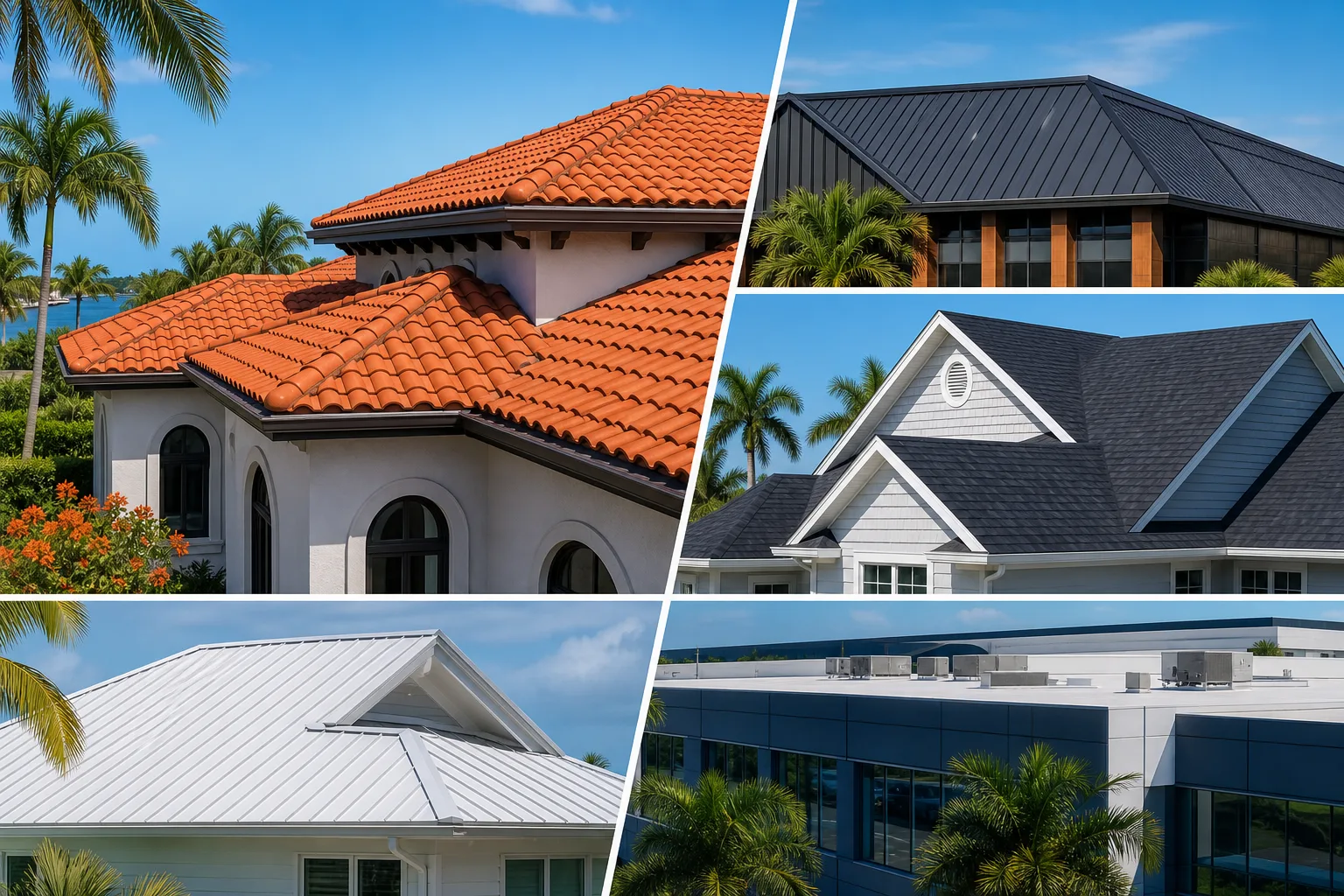
Shingle Roof Lifespan in Florida: What Cuts It Short
In this article
TL;DR: Asphalt shingles in South Florida rarely hit their rated lifespan. UV exposure, heat cycling, humidity, and storm season stack up fast. The good news is that proper installation, the right shingle grade, and basic annual maintenance can add meaningful years to your roof.
What You Need
Before walking through the factors that affect shingle longevity, it helps to have a baseline. Here's what matters going into this:
- Your shingle type and grade. Three-tab shingles, standard architectural (dimensional), and impact-resistant architectural shingles all behave differently here.
- Your roof's age and installation history. Do you know who installed it? Were permits pulled?
- Basic access to your attic. Some of the earliest signs of shingle failure show up from below before they're obvious from the street.
- A record of past repairs. Patched areas age differently than the original roof field.
If you're not sure where you stand, a visual inspection from a licensed contractor is the fastest way to get a clear picture. You can request a free estimate without committing to anything.
Step 1: Understand What Florida's Climate Actually Does to Shingles
Shingle manufacturers rate their products under ASTM lab conditions. Florida is not a lab.
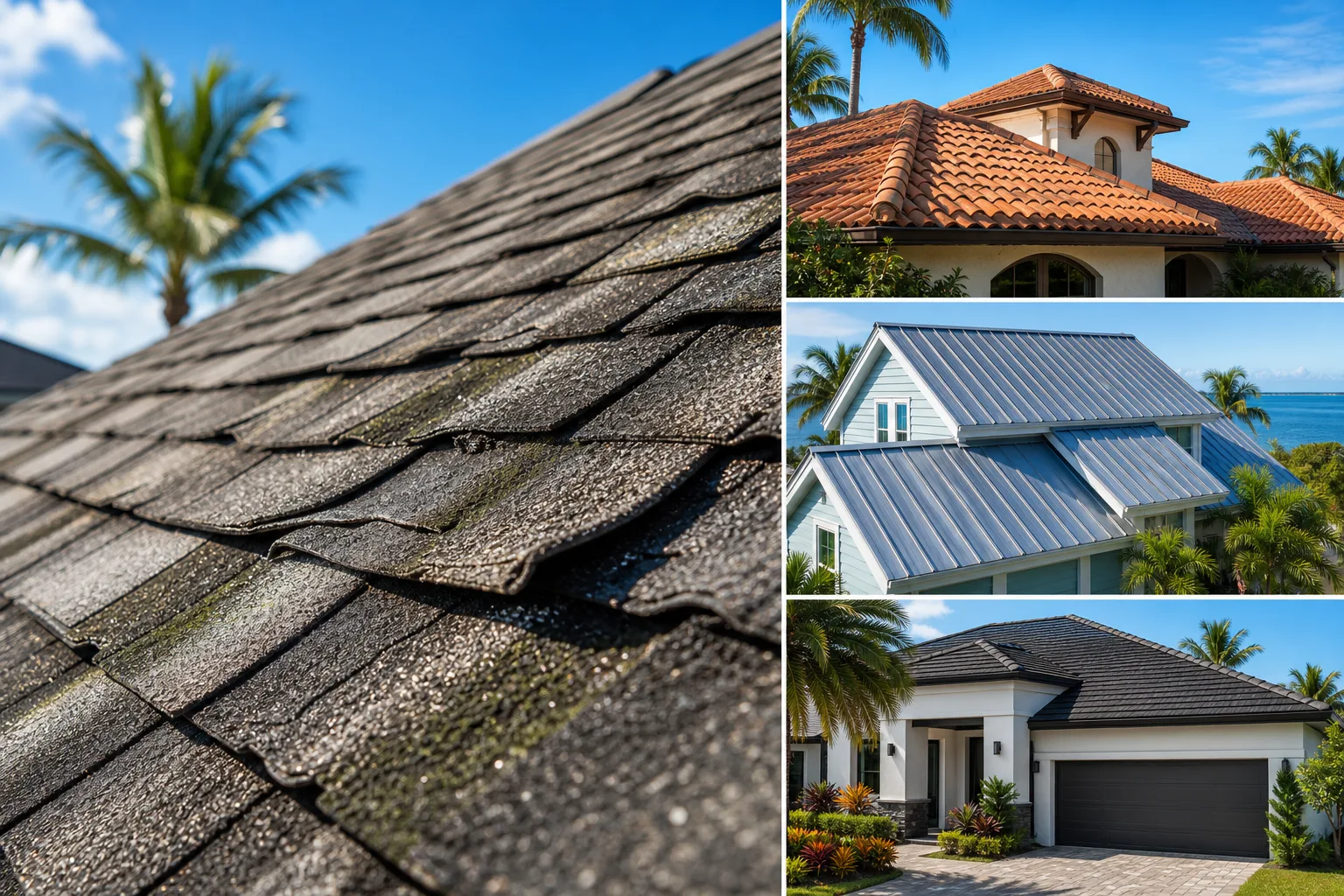
South Florida averages roughly 2,800 hours of sunshine per year. UV radiation breaks down the asphalt binder in shingles continuously. The granules on top of each shingle exist partly to block UV. As they loosen and wash off, the binder underneath starts oxidizing, which makes shingles brittle and prone to cracking.
Heat cycling is the other major factor. Surface temperatures on a dark asphalt shingle in Boynton Beach or Delray Beach can exceed 160 degrees Fahrenheit on a summer afternoon, then drop 40-50 degrees overnight. That repeated expansion and contraction stresses the shingle mat and the sealant strips that hold courses together.
Humidity adds a third layer. Moisture that gets under improperly seated shingles, around flashings, or through a poorly ventilated attic creates conditions for algae, mold, and accelerated granule loss. You'll often see black streaking on roofs in Lake Worth and West Palm Beach neighborhoods. That streaking is usually Gloeocapsa magma algae, and it signals that your shingles are retaining moisture they shouldn't be.
The takeaway: every year in South Florida is harder on a shingle roof than roughly two years in a northern climate.
Step 2: Know the Installation Factors That Cut Lifespan Short
This is where I spend a lot of time during estimates. A shingle roof that was installed correctly starts with a longer clock than one that had shortcuts.
Improper nail placement is one of the most common problems I find on older roofs. Shingle manufacturers specify a nailing zone, usually a narrow band across the shingle face. Nails driven too high (above the zone) create a "high nail" situation where the shingle can release in wind. Too low, and you're nailing through two layers of the shingle below, which compromises the seal.
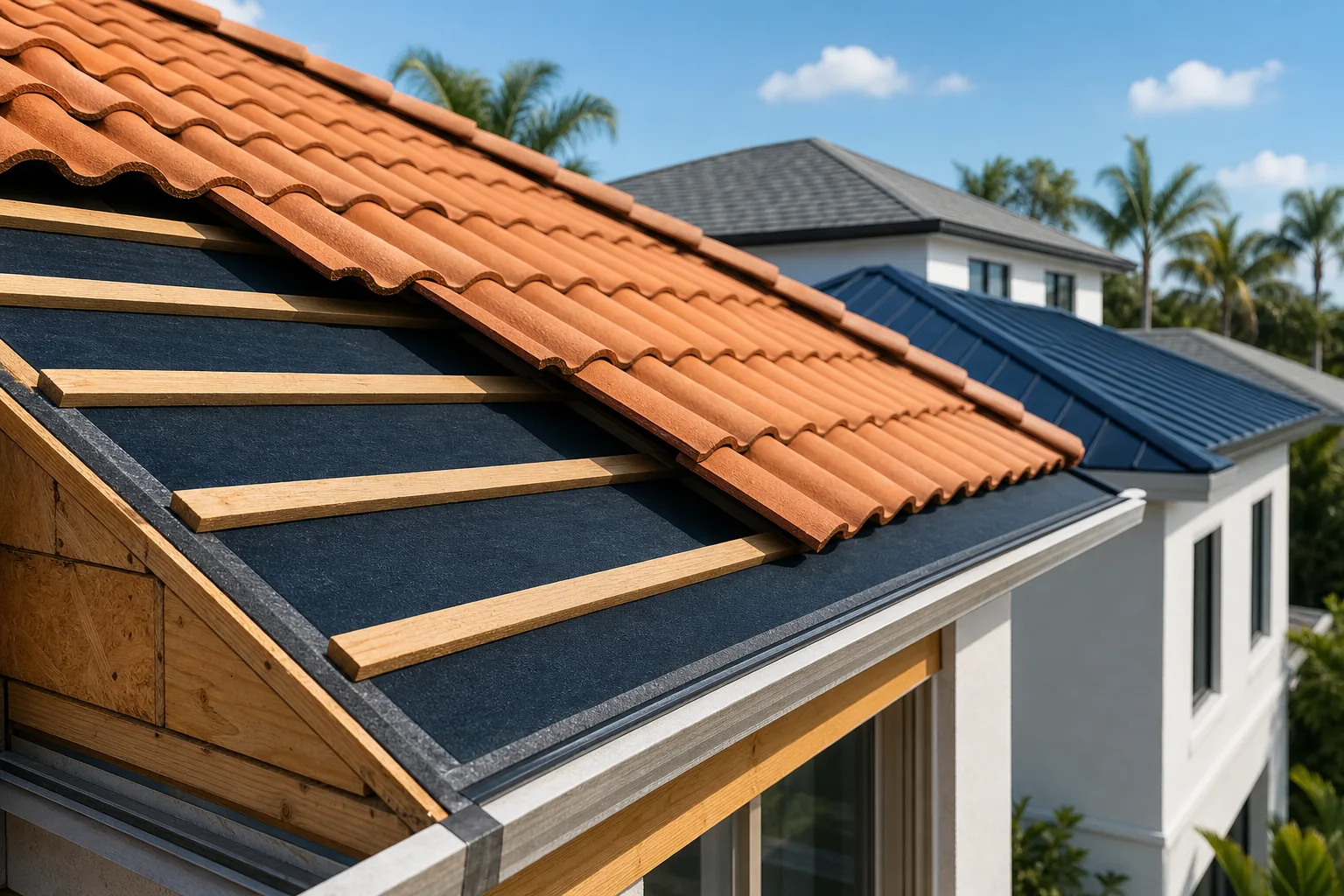
Inadequate underlayment. The bare minimum used to be 15-lb felt. Today, synthetic underlayments perform much better in Florida conditions, and many quality installations use two layers or a self-adhering peel-and-stick membrane at vulnerable areas. If a contractor skimped on underlayment, the shingles above it age faster because moisture management below them is poor.
Poor flashing work. Step flashings, valley flashings, and pipe boot collars are where roofs fail first. A flashing that was caulked instead of properly bedded and overlapped will fail in a few years in Florida heat. When the flashing goes, water intrudes, and the decking below the shingles starts to rot. Rotted decking means re-decking costs on your next replacement.
Ventilation gaps. I know we said we wouldn't rehash the ventilation article, but it connects here: an under-ventilated attic raises shingle temperatures and dramatically accelerates granule loss. It also keeps moisture from escaping, which affects the deck and the shingle adhesive.
If you want to understand more about what a licensed contractor looks for during installation, the residential roofing service page lays out how we approach a proper installation.
Step 3: Recognize the Storm Season Factor
This one is specific to South Florida and it's non-negotiable.
Every tropical storm or hurricane that comes through puts mechanical stress on shingles that no UV or heat cycle can match. Wind-driven rain gets under lifted shingles. Flying debris scores granule surfaces. Even a near miss, something that brings sustained winds in the 50-60 mph range, can break sealant bonds on shingles that are already aged.
The problem is that a lot of this damage is invisible from the ground. A shingle that looks fine from the street may have a broken sealant bond that lets it lift the next time a strong front moves through. That's why a post-storm inspection is worth doing even if you don't see obvious damage.
Our Hurricane Storm Center has more on what to look for after a storm and how to document it if you're going through insurance. Knowing how to compare roofing estimates after a storm event is also useful if you're getting multiple bids for repair or replacement work.
Want to know what your roof actually needs? Get a free estimate
Step 4: Build a Simple Maintenance Routine
This is the part most homeowners skip, and it's one of the higher-return things you can do.
Annual visual inspection. Once a year, walk the perimeter of your home and look at the roof from the ground with binoculars if you have them. Look for curling at shingle edges, bald spots where granules are missing, and dark streaking. Look for any flashings that appear lifted or separated.
Clean your gutters twice a year. Clogged gutters back water up under the drip edge and first course of shingles. That standing water accelerates edge deterioration and can wick into the fascia board. Our gutter service addresses this directly if your gutters need work beyond a cleaning.
Clear debris promptly. Leaves, palm fronds, and branches that sit in valleys or against flashings hold moisture. That moisture is working on your shingles continuously.
Address small repairs before they spread. A single cracked shingle or a loose flashing is typically a minor repair costing a few hundred dollars, though actual costs vary by contractor, scope, and market conditions. Left for a season, that same spot can mean decking replacement and additional labor costs. The roof repairs page gives a straightforward look at what common repairs involve. There's also a useful breakdown of when repairs make more sense than replacement at roof repair vs. replacement.
Step 5: Choose the Right Shingle for South Florida Conditions
Not all shingles perform the same here, and the choice you make at replacement time has a direct effect on how many years you get.
Three-tab shingles are thinner, lighter, and rated for lower wind speeds. They're cheaper upfront and still used in some budgets, but they don't hold up as well under Florida conditions. I rarely recommend them for a primary residence.
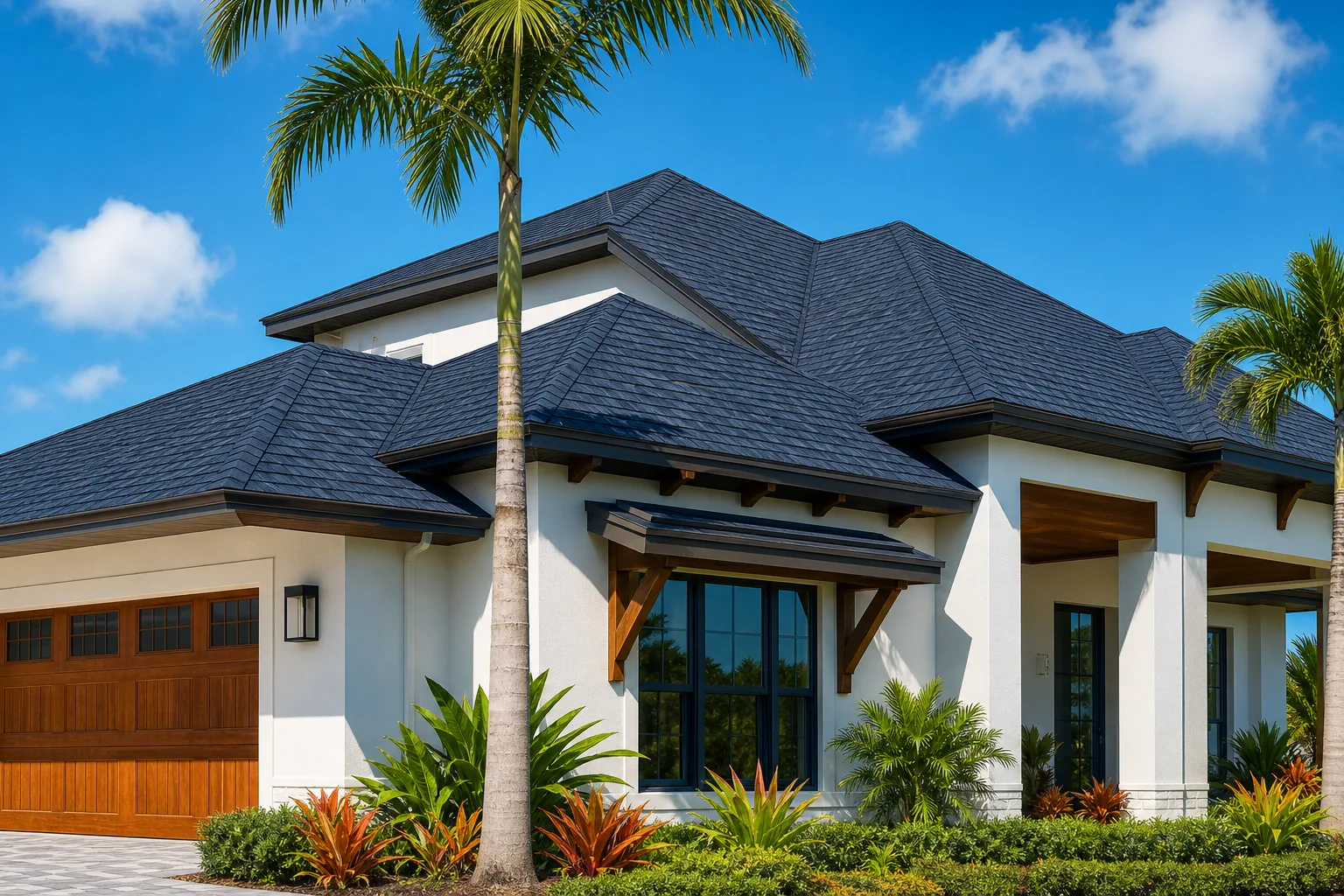
Architectural (dimensional) shingles are the standard for most residential replacements in South Florida. They're heavier, have a stronger sealant strip, and are typically rated to 130 mph or higher when installed to manufacturer specs. Most of what we install falls in this category. See the shingle roofing page for specifics on what we carry.
Impact-resistant shingles (Class 4 rated) are worth considering in areas where hail occurs or where insurance discounts may apply. Florida doesn't get much hail, but the impact-resistant versions often have a denser granule layer that holds up better under UV and debris hits. Some Florida insurance carriers may offer discounts for impact-resistant roofing materials, but this is not universal, check with your insurer before assuming a discount applies.
Algae-resistant shingles with copper-infused granules are standard in most quality lines now. If your current roof is showing black streaking, make sure your replacement includes this feature.
Common Mistakes
Assuming the rated lifespan applies in Florida. A "30-year shingle" is a classification, not a guarantee in this climate. Adjust your expectations and your maintenance budget accordingly.
Skipping inspections after mild storms. The storms that produce insurance claims are obvious. The ones that silently break sealant bonds and lift flashings are the ones that shorten lifespans without anyone noticing until water appears inside.
Choosing a contractor on price alone. The installation quality gap between a bottom-dollar crew and a licensed, experienced contractor matters more in Florida than almost anywhere else. Flashing details, nail patterns, and underlayment choices directly affect how long your roof lasts. Check how to choose a roofing contractor in South Florida before committing.
Ignoring attic conditions. A new roof over a poorly ventilated attic will age faster than the previous one. If you're replacing a roof that underperformed, ask your contractor about attic ventilation at the same time.
Letting algae go untreated. Algae doesn't just look bad. It holds moisture against the shingle surface and can accelerate granule loss over time. A low-pressure wash with a diluted bleach solution (per manufacturer guidelines) handles it without damaging the shingles.
Bottom Line
Shingle roofs in South Florida face conditions that are legitimately harder on materials than most of the country. The rated lifespan on the box is a starting point, not a promise. What actually determines how long your roof lasts is a combination of what was installed, how it was installed, how you maintain it, and how much storm activity it sees.
The things within your control, shingle grade, contractor quality, maintenance habits, and prompt repairs, can realistically mean the difference between 15 years and 22 years on the same product. That's a meaningful gap.
If you're not sure where your current roof stands, the easiest first step is a professional look. You can get a free estimate or reach out directly to schedule an inspection with our team. We've been doing this in Boynton Beach, Delray Beach, Boca Raton, West Palm Beach, and Lake Worth since 2005, and a straight answer about your roof's condition costs you nothing.
Want to know what your roof actually needs?
Millennium Makeover has been roofing South Florida homes and businesses since 2005. Get a straight, no-pressure estimate from a licensed local crew (CCC1326328).
Frequently asked questions
How long do asphalt shingles actually last in South Florida?
Most architectural shingles in South Florida realistically last 15 to 22 years, depending on installation quality, ventilation, and maintenance. A shingle rated for 30 years in a northern climate will not hit that number here because of intense UV exposure, heat cycling, and annual storm season stress.
What is the black streaking on my shingles and does it shorten roof life?
That streaking is typically Gloeocapsa magma, an algae that thrives in humid conditions. It holds moisture against the shingle surface and can contribute to accelerated granule loss over time. Algae-resistant shingles with copper-infused granules help prevent it, and low-pressure washing with a diluted bleach solution can remove existing growth without damaging the shingles.
Does storm damage always show up visibly on a shingle roof?
No, and that's the tricky part. Wind events in the 50-60 mph range can break sealant bonds between shingles without lifting or removing them visibly. Those broken bonds let shingles lift in the next storm, which allows water intrusion. A post-storm inspection by a licensed contractor is the only reliable way to catch this kind of damage.
Are impact-resistant shingles worth the extra cost in Florida?
They can be. Class 4 impact-resistant shingles have a denser granule layer that holds up better under UV and debris hits, which is relevant in South Florida even without significant hail. Some Florida insurance carriers also offer discounts for impact-resistant roofing materials, though this is not universal, so checking with your insurer before replacement is a worthwhile step.
What's the single biggest maintenance mistake Florida homeowners make with shingle roofs?
Skipping annual inspections and ignoring small repairs. A cracked shingle or a lifted flashing is a minor repair when caught early. Left through a South Florida wet season, the same issue can mean rotted decking, water damage inside the home, and a much larger repair bill at replacement time.