5 Spots a Roofing Contractor Should Inspect Before Quoting a Repair
In this article
TL;DR: A trustworthy repair estimate starts with a thorough inspection, not a quick look from the driveway. The five spots that matter most are the damaged field area, flashings, decking condition, penetrations, and gutters or drip edge. Skipping any one of them can turn a simple repair into a surprise re-visit.
When I walk a roof before writing an estimate, I follow the same sequence every time. Not because I'm being slow, but because the visible damage almost never tells the whole story. If a contractor quotes you a repair without getting on the roof and checking these five areas, that number isn't a real estimate. It's a guess.
Here's what I look for, in the order I look for it.
1. The Damaged Field Area
This is the obvious starting point, the spot that made you call us. But the inspection here goes beyond just counting broken tiles or lifting shingles.
I'm checking the size of the compromised zone, how far water may have traveled laterally under the surface material, and whether adjacent sections are already soft or showing granule loss. Water rarely stops exactly where the visible damage ends.
On tile roofs, I check whether the underlayment beneath a cracked tile is still intact. On shingle roofs, I check for cupping or lifting in surrounding shingles that suggests the damage pattern is wider than one spot. On flat roofs, I probe the membrane edge of any blister or crack for delamination. Each material type has its own tell.
For more on how underlayment condition plays into tile repairs, see What Holds Roof Tiles Down in a Florida Hurricane.
2. Flashings Around the Damaged Zone
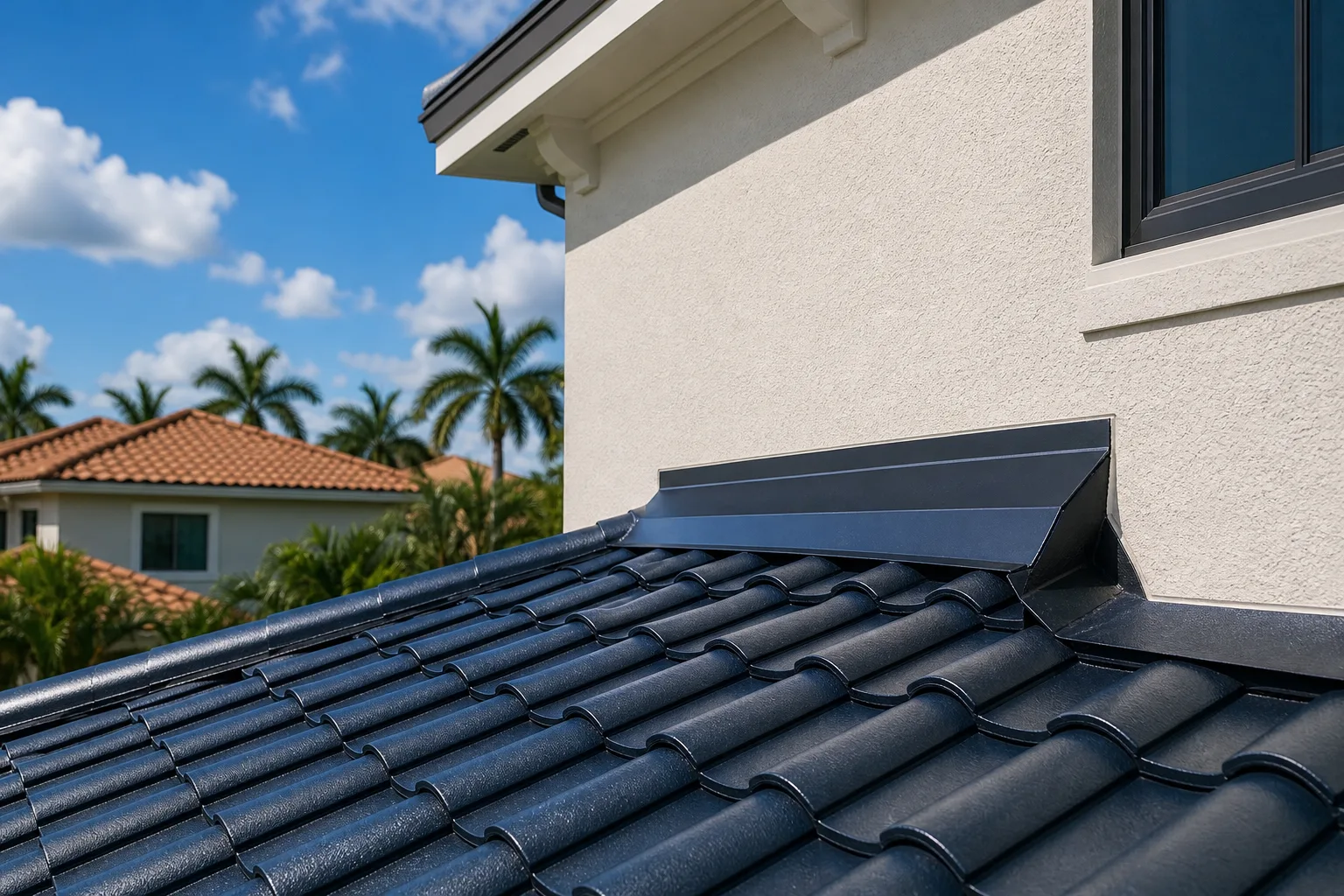
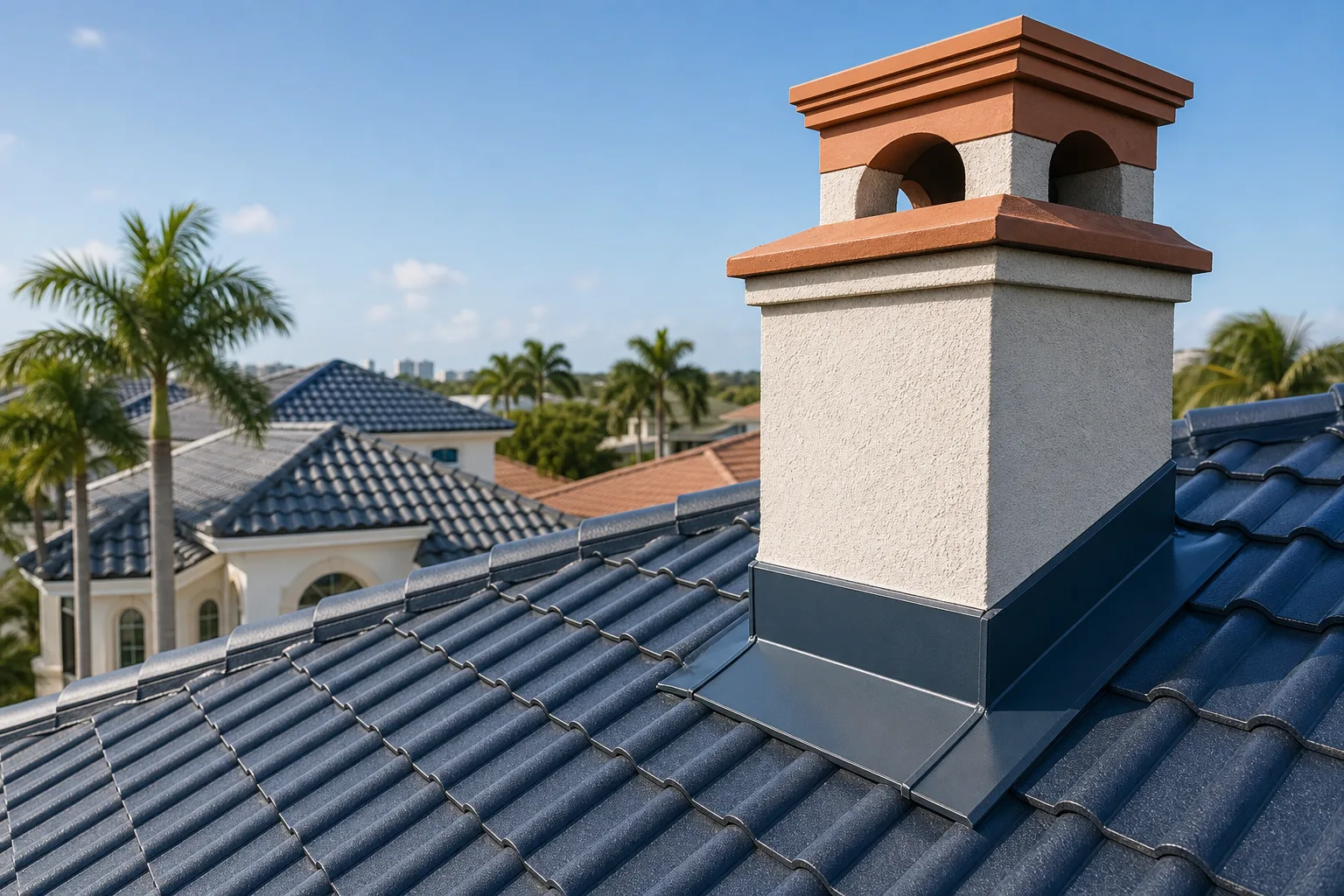
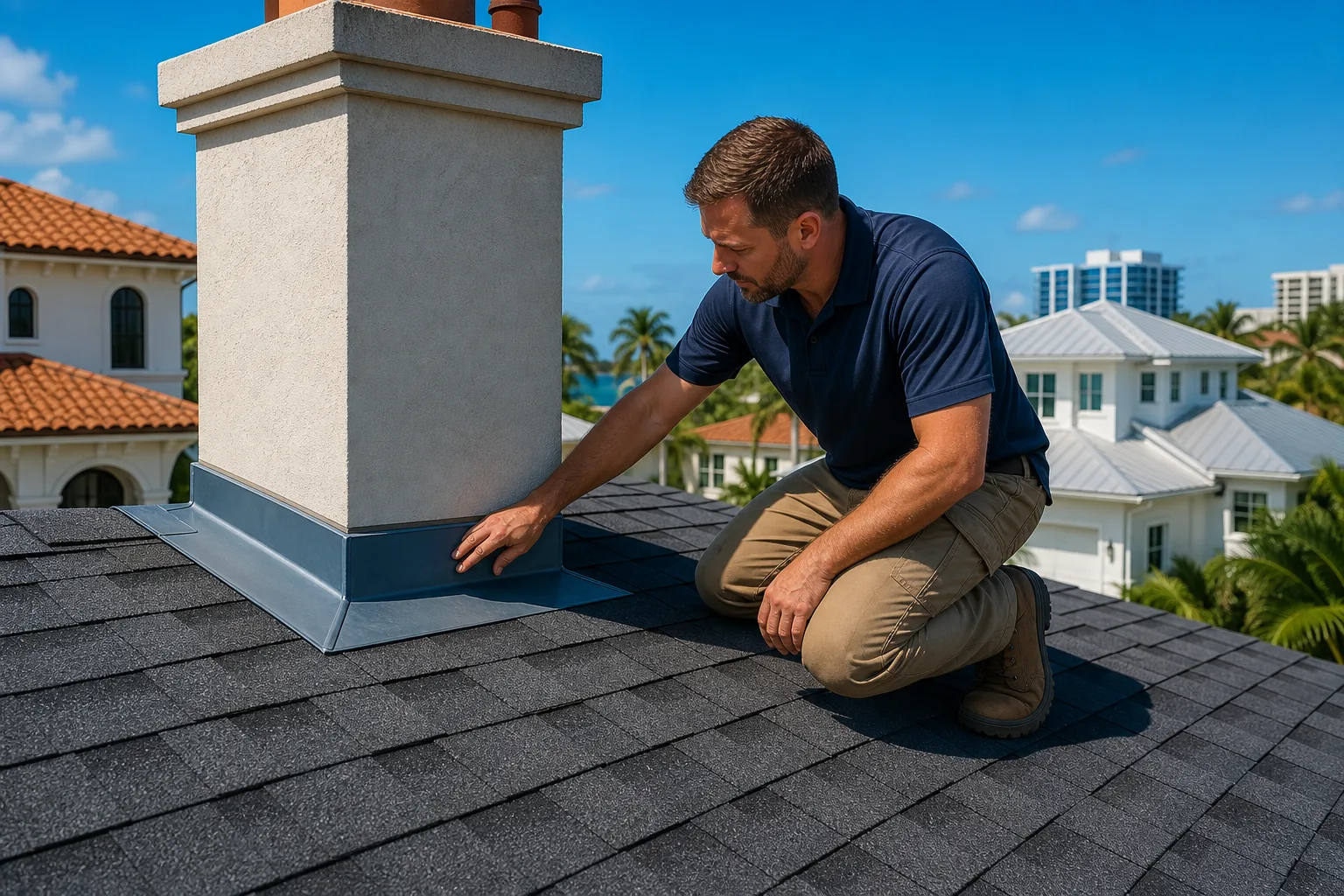
Flashings are the metal strips that seal roof-to-wall transitions, chimney bases, skylights, and any place the roof surface meets a vertical element. They are also one of the most common entry points for water in South Florida homes.
Before I quote any repair, I check the flashings within several feet of the damage. What I'm looking for: lifted edges, cracked sealant, rust staining, or prior patch jobs using roofing cement that have since dried and pulled away.
A cracked tile three feet from a failing step flashing can mean two separate repairs, or one repair that needs to address both. If I don't check the flashing, I'll quote only the tile and you'll call me back in six months when the flashing leak finally shows up inside.
See Why Roof Valleys Are the Most Vulnerable Spot in a Storm for more on how water concentrates at these transition points.
3. The Decking Beneath the Damage
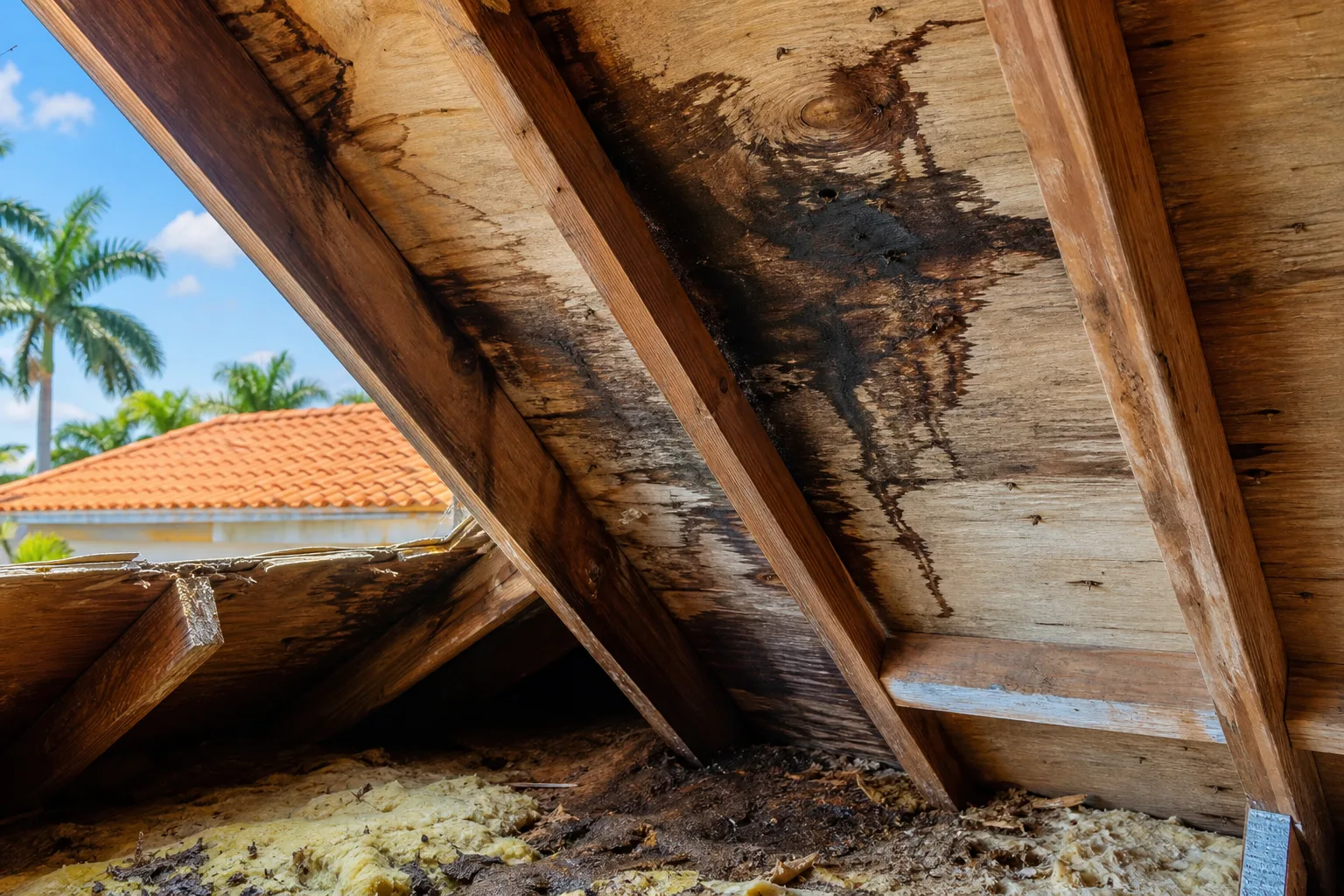
This one requires getting close, either by lifting a material edge carefully or by pressing the surface to feel for softness and bounce. Plywood or OSB decking that has been wet and dried repeatedly loses its stiffness before it shows visible rot.
If the decking under the damaged area is spongy, delaminated, or visibly dark, that affects the repair scope directly. You can't re-nail new shingles into soft wood and expect them to hold. Damaged decking has to be replaced as part of the repair, and that changes the cost and the timeline.
I note decking condition on every estimate I write. If I can't confirm it without lifting material, I say so in writing rather than leaving it out.
Spotted a leak or missing tiles? Schedule a repair visit
4. Penetrations Nearby
Penetrations are any point where something passes through the roof surface: vent pipes, HVAC curbs, exhaust boots, satellite dish mounts, or solar conduit runs. Each one is a potential water entry point independent of the main damage area.
Before I quote, I check every penetration within a reasonable radius of the damaged zone. What I'm looking for: cracked pipe boots, missing collars, improperly sealed conduit runs, or penetrations where someone used caulk as a long-term solution instead of proper flashing.
Finding a failing pipe boot during the inspection means I can include it in the same repair visit, which saves you a separate service call. Missing it means the penetration keeps leaking after I've fixed the primary damage and you're left wondering why.
5. Gutters and Drip Edge
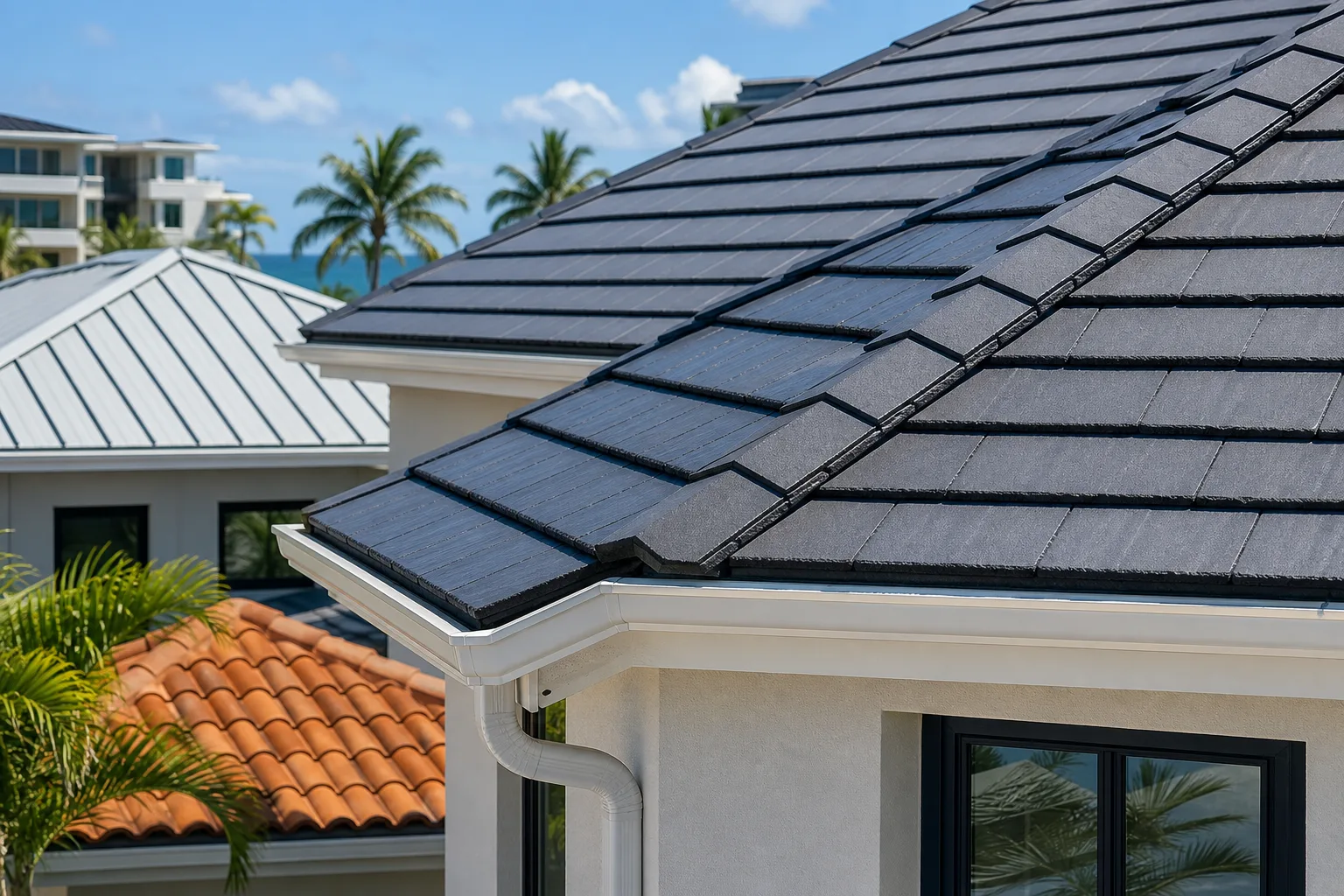
Gutters and drip edge sit at the perimeter of the roof and directly affect how water exits the system. They're often overlooked during a repair inspection because they're not on the roof surface itself.
Here's why they matter: a clogged or pulling gutter can back water up under the drip edge and into the fascia. A missing or improperly installed drip edge lets water wick behind the gutter and rot the fascia board underneath. Either condition can make a repair look like it failed when the real problem is at the edge.
I check gutter slope, connection points, and whether the drip edge is lapped correctly over the gutter flange. If there's a problem here, I note it separately so you know it's a related issue and not an upsell.
For more detail on drip edge installation practices in Florida, see What Drip Edge Does and Why Florida Roofers Skip It.
How to Use This Checklist When Comparing Bids
If you're getting multiple repair quotes, use these five inspection points as a simple filter.
| What to ask | Red flag answer |
|---|---|
| Did the contractor get on the roof? | No, just looked from the ground |
| Was decking condition noted? | Not mentioned at all |
| Were flashings checked? | Only the visible damage area |
| Were penetrations in scope? | Don't know what you mean |
| Was gutter condition noted? | Not my department |
A lower bid that skips three of these five areas is not a better deal. It's an incomplete scope. See How to Read a Roofing Estimate Line by Line for more on what a complete estimate document should contain.
Bottom Line
A reliable repair quote requires physically checking the damaged field, nearby flashings, the decking condition, surrounding penetrations, and the gutter and drip edge system. Any contractor who skips steps is either rushing or isn't experienced enough to know what they're missing.
If you want an inspection that covers all five before we put a number on paper, you can request a repair quote or use our free instant estimate tool to get the process started. We serve Boynton Beach, Delray Beach, West Palm Beach, Boca Raton, and Lake Worth.
For storm-related damage specifically, our Hurricane Storm Center has additional guidance on what to document and when to act.
Spotted a leak or missing tiles?
Small problems get expensive fast in the Florida sun. Get it looked at by a local crew before the next storm.
Frequently asked questions
Should a roofing contractor charge for an inspection before quoting a repair?
Some contractors charge an inspection fee, especially for complex or storm-damaged roofs. Others include the inspection as part of the estimate process. Either way, you should receive a written scope of work, not just a verbal number, before any work begins.
How long should a thorough pre-repair roof inspection take?
For a typical residential repair, a careful inspection of all five areas usually takes 30 to 60 minutes depending on roof size, pitch, and accessibility. If a contractor is back at their truck in under 10 minutes, they likely did not check decking, penetrations, or flashings.
What if the contractor finds additional damage during the repair itself?
This is common, especially when decking or underlayment is exposed. A reputable contractor will document the additional scope with photos and get your approval before proceeding. Make sure any change in scope is confirmed in writing before the work continues.
Can I do any of these inspection checks myself before calling a contractor?
From the ground you can look for missing or cracked tiles, visible shingle lifting, and gutter separation. Getting on the roof yourself is not recommended without proper safety equipment and roofing experience. A professional inspection is the only way to assess decking condition and flashing integrity accurately.