Drip Edge: What It Does and Why Florida Roofers Skip It
In this article
TL;DR: Drip edge is the metal flashing installed along roof eaves and rakes to direct water away from the fascia and into the gutter instead of behind it. Florida Building Code requires it on most roof systems, but it still gets left off, undersized, or installed under the underlayment instead of over it. If you can't see a clean metal edge along your roofline, it's worth a look before the next heavy rain.
What is drip edge and what does it do?
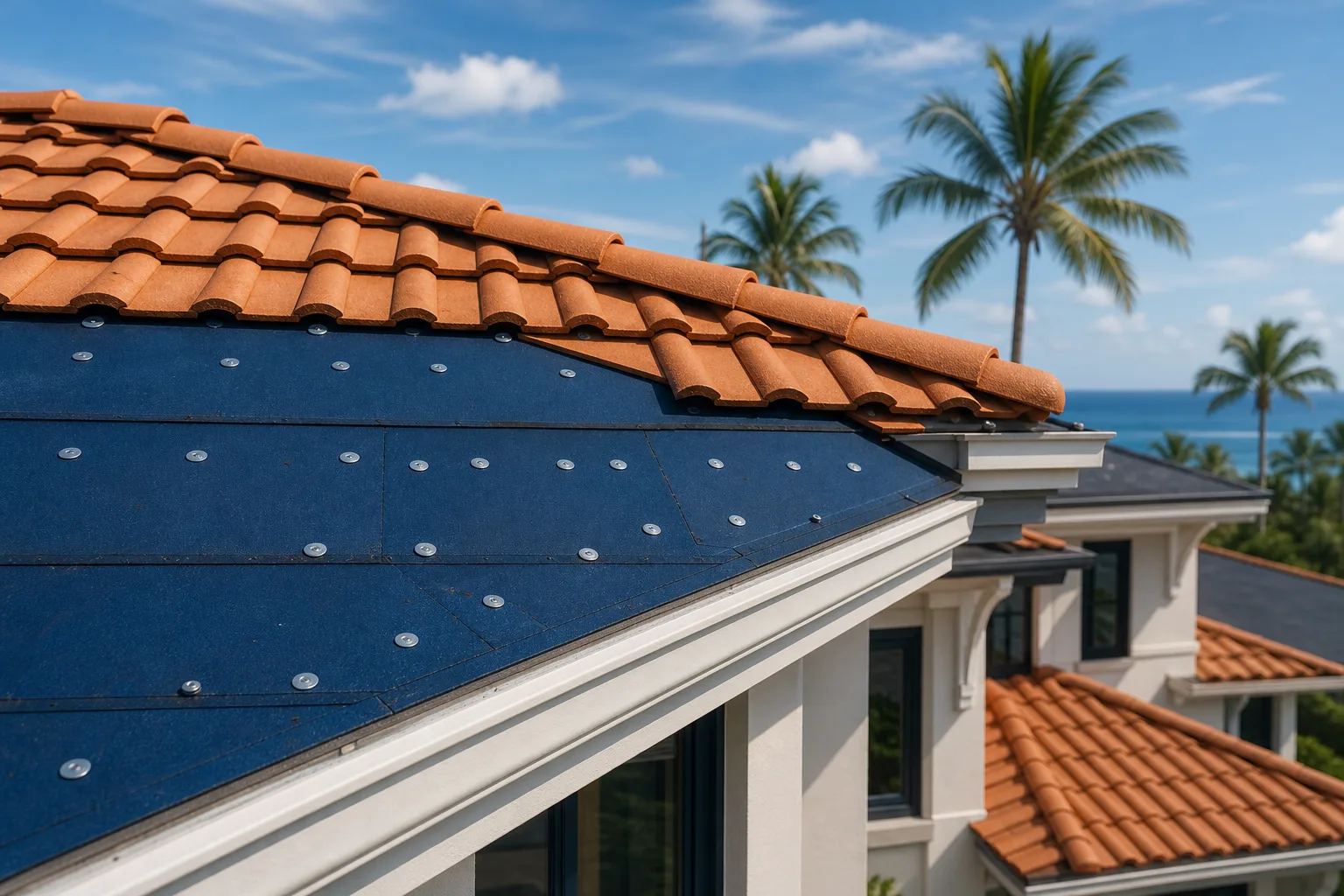
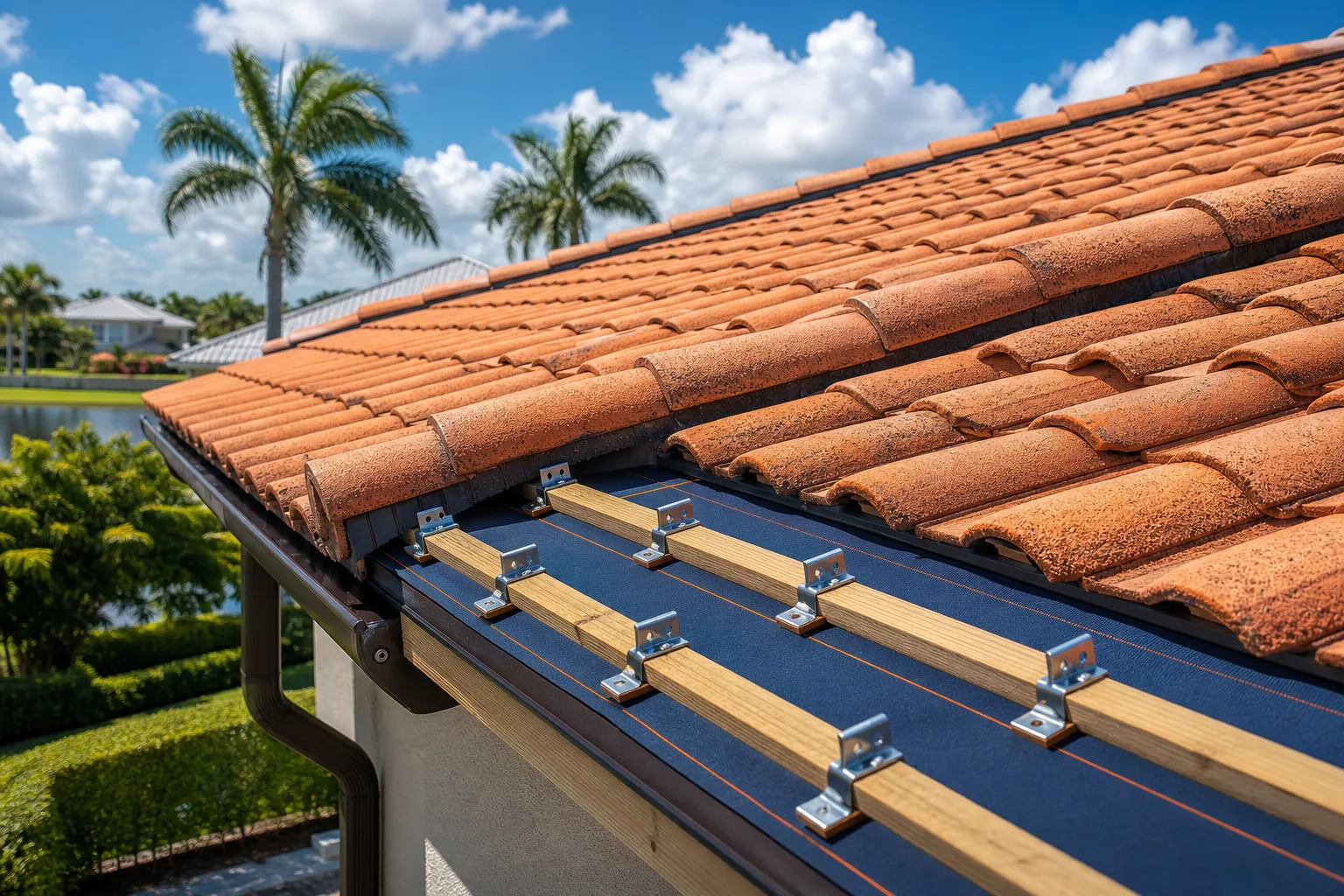
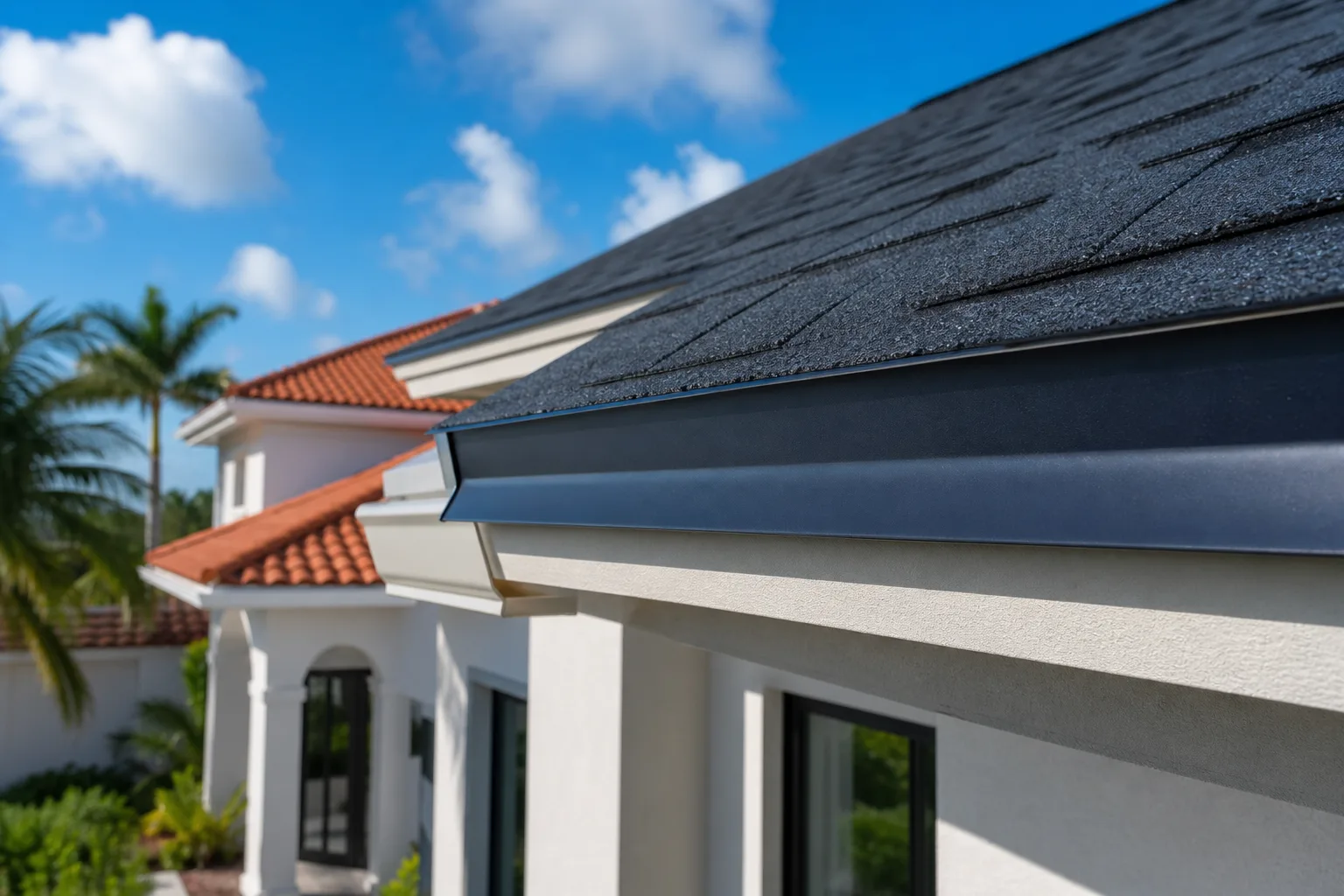
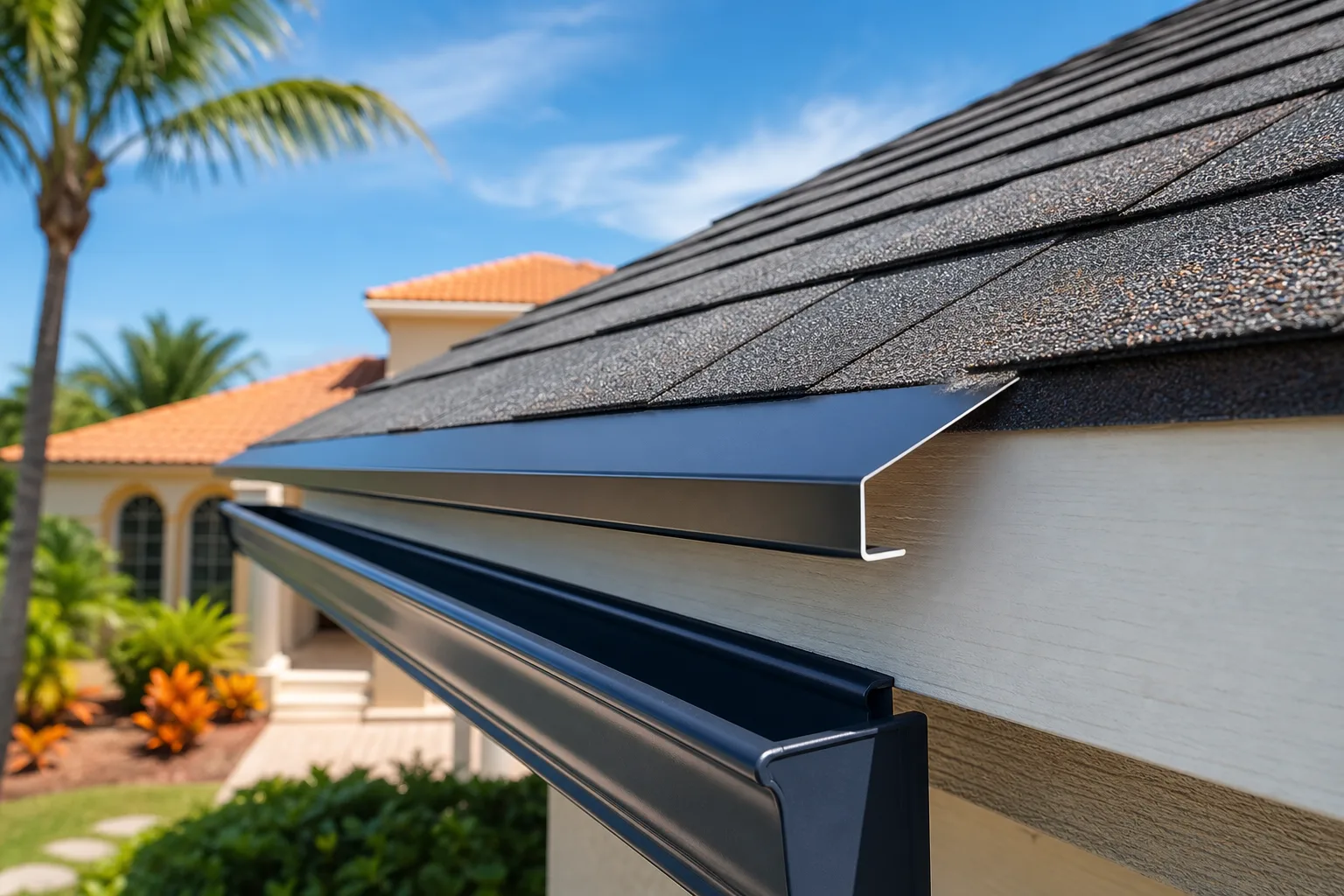
Drip edge is a thin L-shaped or T-shaped metal strip that runs along the eaves (the low horizontal edges) and rakes (the sloped edges) of the roof. Its job is simple: give water a controlled path off the roof deck and into the gutter, instead of letting it curl back under the shingles or drip down the fascia board.
It is one of the cheapest materials on a roof and one of the most commonly skipped or misinstalled, especially on older re-roofs and lower-bid replacements. Florida Building Code, Residential, references drip edge requirements under the flashing and roof covering installation sections, and most shingle and tile manufacturers require it for warranty coverage. Despite that, it is easy to miss during a quick re-roof, especially when a crew is reusing old flashing to save time or when the drip edge gets tucked under the underlayment instead of over it at the eaves, which defeats the purpose.
Why drip edge matters for South Florida roofs
Without proper drip edge, water finds the path of least resistance, and in South Florida that path is usually the fascia board and the top of the wall sheathing.
- Fascia rot. Water that runs behind the fascia instead of into the gutter soaks the wood over time, leading to soft, spongy boards that eventually can't hold gutter hangers or hold up under wind load.
- Decking edge damage. The plywood or OSB at the roof's edge is one of the most exposed spots on the whole deck. Without drip edge, it takes on moisture from every rain event, not just storms.
- Wind uplift starting point. During a hurricane, the roof edge is where wind uplift forces concentrate first. Drip edge that's properly nailed and sealed adds a layer of mechanical attachment at exactly the spot most vulnerable to peeling. Improperly installed drip edge can actually give wind a place to grab.
- Insurance and permit issues. If a roof was permitted and inspected without proper drip edge, that's a code compliance gap. It may not show up until a claim is filed after storm damage, at which point an adjuster or engineer noting missing or improper flashing can complicate the payout.
This ties into a bigger pattern worth knowing: why some Florida roofs last 40 years and others fail at 15 often comes down to small flashing details like this one, not the shingle brand.
Spotted a leak or missing tiles? Schedule a repair visit
What we don't know yet
We can't tell you, without seeing your roof, whether your drip edge is missing, undersized, or installed backwards. Installation quality varies a lot depending on the age of the roof, who did the last re-roof, and whether it was permitted and inspected. A roof that looks fine from the ground can still have drip edge tucked the wrong direction under the underlayment at the eaves, which is a common shortcut that isn't visible without getting close.
We also can't say how a specific insurance carrier will treat a missing drip edge in a claim. That depends on the policy, the adjuster, and whether the damage is tied directly to that missing detail. If you're unsure whether your roof was permitted correctly at all, that's worth checking separately, since unpermitted roof work carries its own consequences beyond just flashing details.
How to check your own roof for drip edge problems
Here's a simple way to check your own roof from the ground and know when to call in a professional:
- Look at the eaves from below. You're looking for a visible metal edge, usually painted to match the fascia or gutter, running along the lowest roof edges. If all you see is shingle or tile hanging over bare wood, drip edge may be missing.
- Check the rakes (sloped edges). Same idea: there should be a metal edge visible along the gable ends, not just exposed felt or shingle overhang.
- Look for water stains on the fascia. Streaking, dark stains, or peeling paint just below the roofline are a sign water is getting behind the edge instead of into the gutter.
- Check gutter attachment. If gutters are pulling away from the fascia or the fascia feels soft when you press it (from a ladder, carefully), that's often rot from years of water intrusion at the edge.
- Know your roof's age and permit history. Roofs installed or replaced before code updates, or done without a permit, are more likely to be missing proper drip edge.
If you spot any of these signs, especially soft fascia or visible staining, it's worth having someone assess it before it turns into a bigger repair. This is a straightforward fix compared to structural repairs, but it does need to be done correctly, tucked over the underlayment at eaves and under the underlayment at rakes, per manufacturer specs.
For a fast look at your roof's condition, start with a free instant estimate or request a quote. If you're heading into hurricane season and want a broader check on your roof's readiness, the Hurricane Storm Center walks through what to inspect before the season windows open. For active leaks or fascia damage already showing, roof repairs can address it directly, and if gutters are involved, gutter services covers that end of the system too.
Spotted a leak or missing tiles?
Small problems get expensive fast in the Florida sun. Get it looked at by a local crew before the next storm.
Frequently asked questions
Is drip edge required by Florida code on all roofs?
Florida Building Code requires drip edge on most residential roof systems as part of the flashing requirements, and manufacturers typically require it for warranty coverage. Requirements can vary slightly by roof type and jurisdiction, so it's worth confirming with a licensed contractor if you're unsure about your specific roof.
Can drip edge be added to an existing roof without a full replacement?
In many cases yes, especially at the eaves, but it depends on the roof's condition and how the existing edge was built out. A roofer would need to inspect the fascia and decking first to see if it can be retrofitted or if repair work is needed at the same time.
How do I know if my drip edge was installed backwards?
The most common mistake is installing drip edge under the underlayment at the eaves instead of over it, which lets water get behind the metal instead of running off it. This usually isn't visible from the ground and requires a closer inspection at the roof edge to confirm.
Does missing drip edge affect an insurance claim after a storm?
It can, since adjusters and engineers sometimes note missing or improperly installed flashing as a code compliance issue separate from storm damage itself. How it affects a specific claim depends on the policy and the extent of damage, so it's not something we can generalize without seeing the details.