What Happens to Caulk and Sealants on a Florida Roof Over Time
In this article
TL;DR: South Florida's UV radiation, heat cycling, and humidity break down roof caulk and sealants significantly faster than in cooler climates. Most products fail within five to seven years here. Catching failure early, especially before hurricane season, keeps a small maintenance item from turning into a costly repair.
What You Need
- Binoculars or a safe ladder position for a visual inspection
- A flashlight for checking the underside of eaves and soffits from inside the attic
- A dated log or photo record of past sealant work
- Contact with a licensed roofing contractor for anything beyond surface-level visual checks
Step 1: Understand Why Florida Is Unusually Hard on Sealants
Standard caulk and roofing sealants are polymer-based. In South Florida, they face a combination of stresses that accelerates breakdown:
UV radiation. South Florida receives some of the highest UV index readings in the continental United States. UV degrades the polymer chains in silicone, polyurethane, and latex-based sealants, causing them to become brittle over time.
Heat cycling. Roof surface temperatures can exceed 160°F on a summer afternoon and drop 40 or more degrees overnight. That daily expansion and contraction stresses any material bonded across two different substrates, like a metal pipe boot sealed to a tile field.
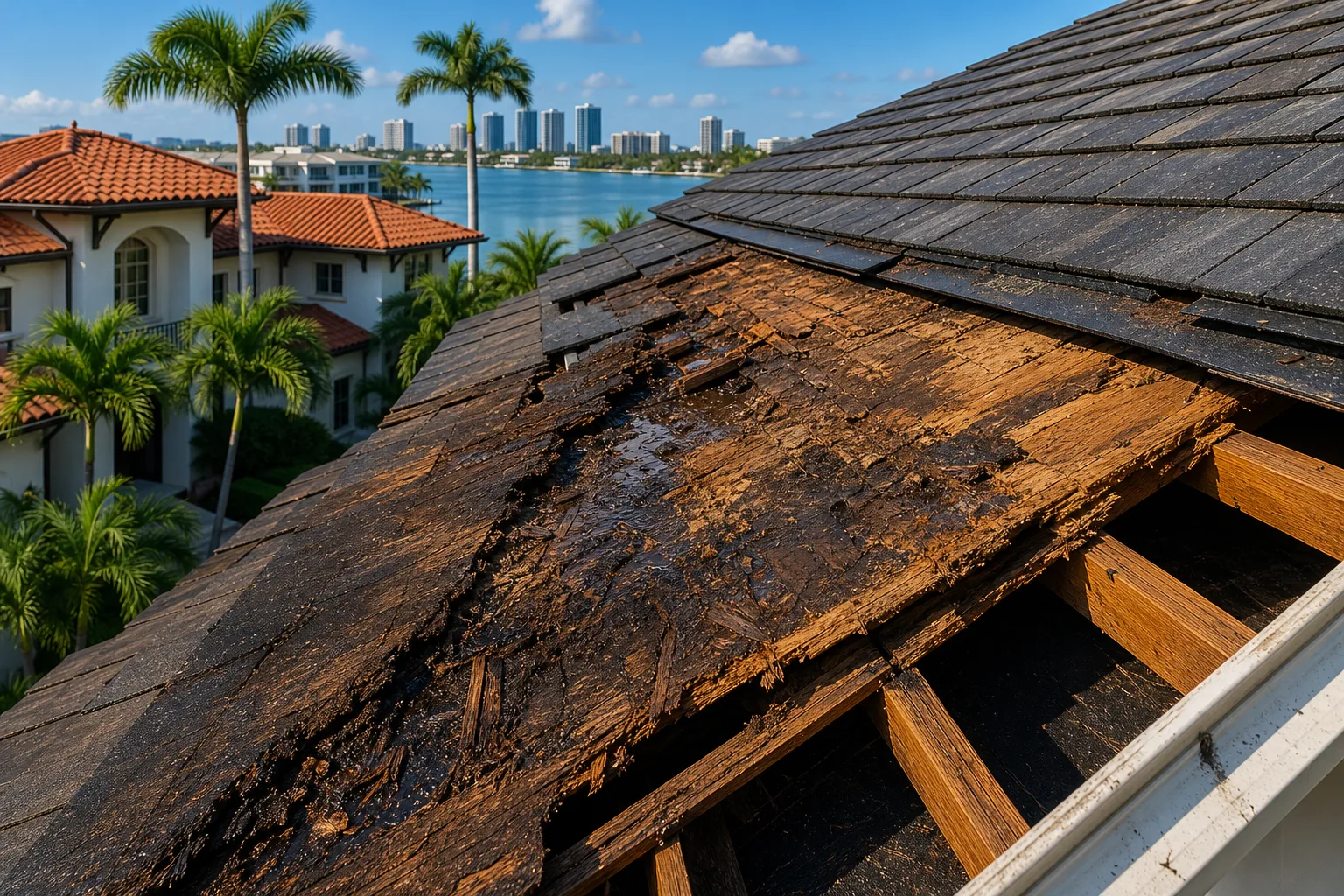
Humidity and moisture intrusion. When a sealant develops even a hairline crack, South Florida's humidity works its way in. Moisture behind a sealant bead accelerates adhesion loss. If water sits long enough, it can lift the sealant entirely.
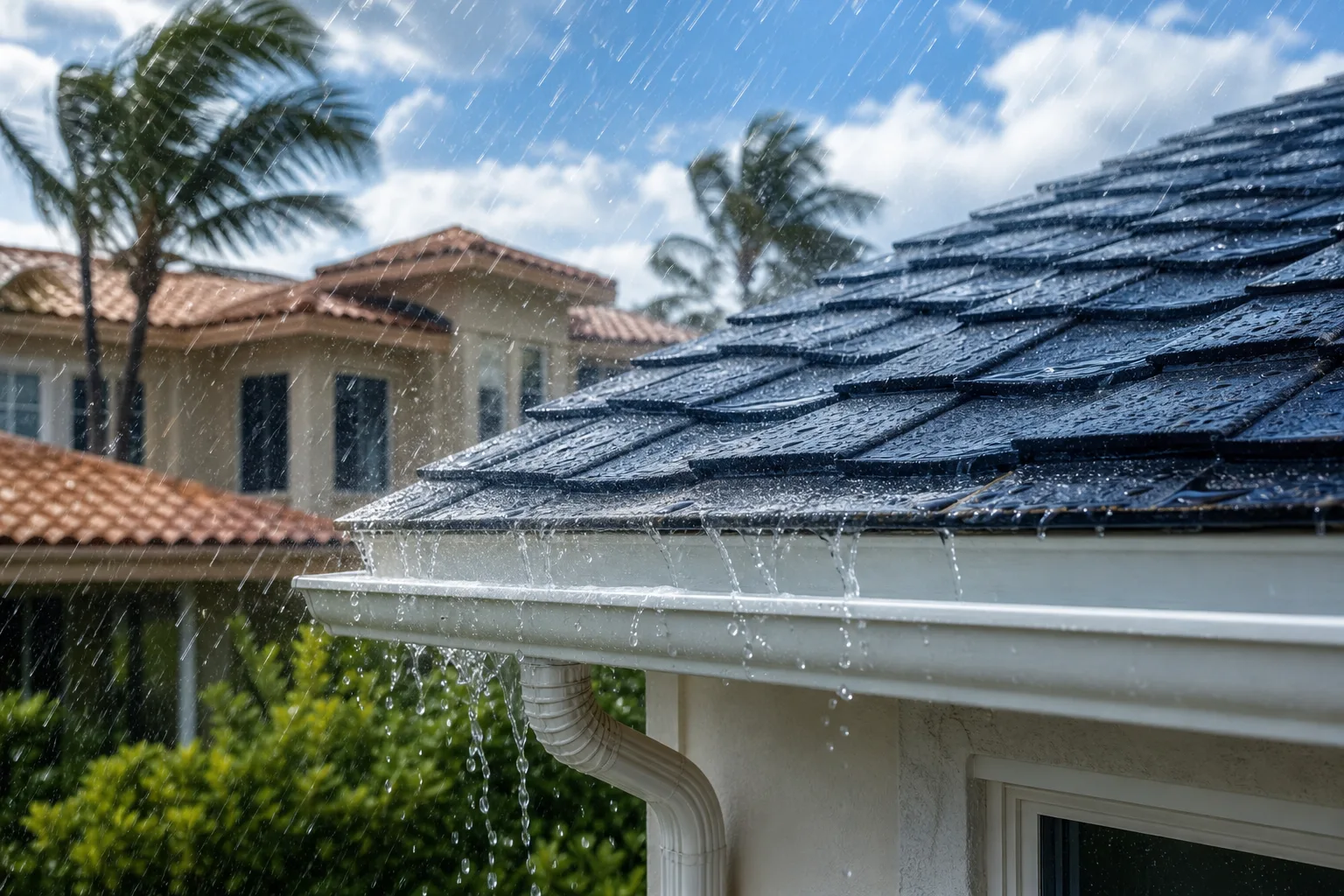
Wind-driven rain. During tropical weather events, rain arrives horizontally. A sealant joint that holds fine in a standard rainstorm may admit water under those conditions. The Florida Building Code sets wind-driven rain resistance standards for roofing systems precisely because of this reality.
Step 2: Know Which Sealant Locations Fail First
Not all caulked joints age at the same rate. These are the highest-risk spots on a typical South Florida roof, roughly in order of failure frequency:
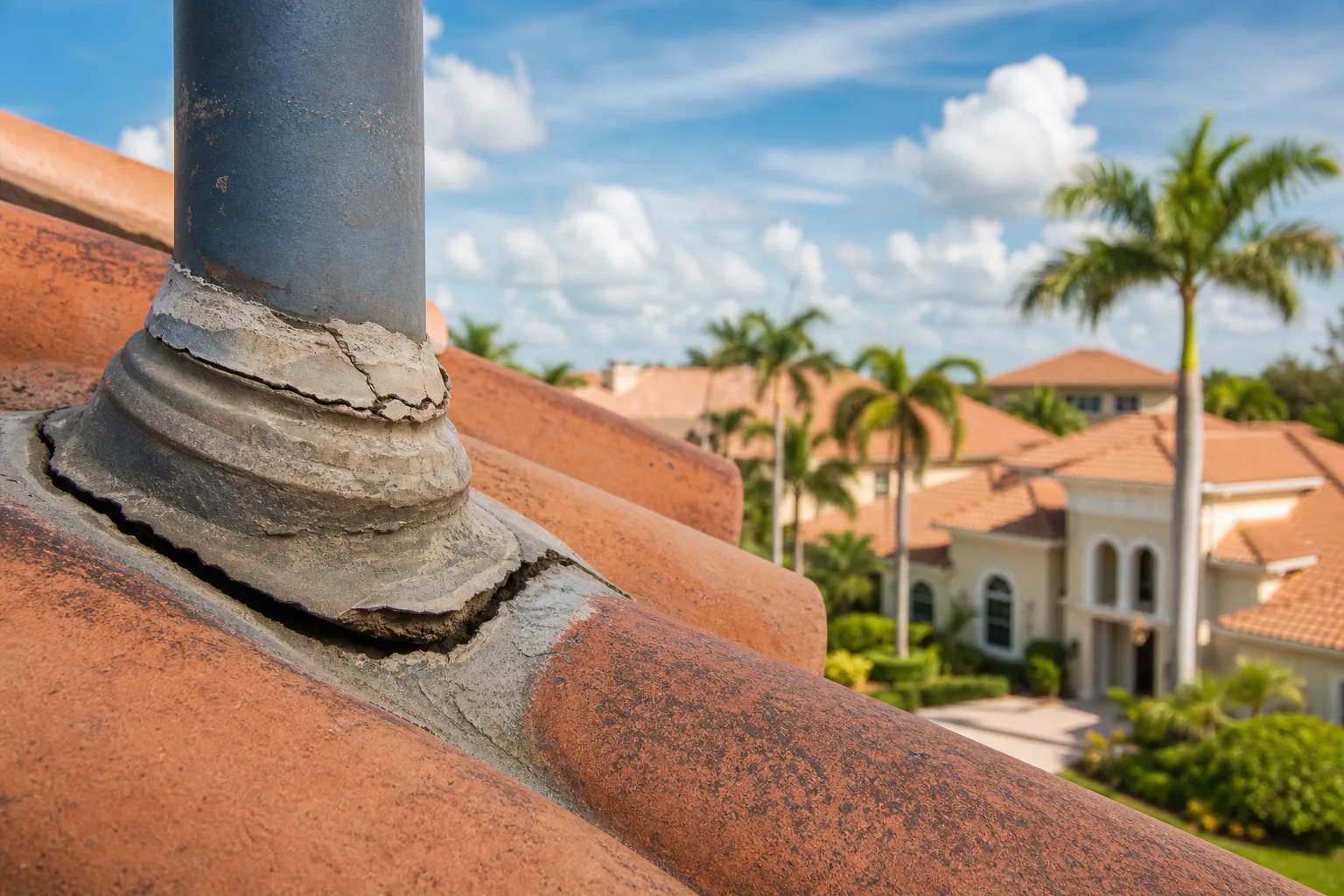
- Pipe boots and plumbing penetrations. The neoprene or EPDM collar degrades, and any caulk bead around the base is exposed to full sun. This is the single most common source of small active leaks.
- Roof-to-wall transitions (step flashing and kick-out flashing joints). Sealant along these joints is under constant thermal stress and is often the first place water finds a path at the wall line.
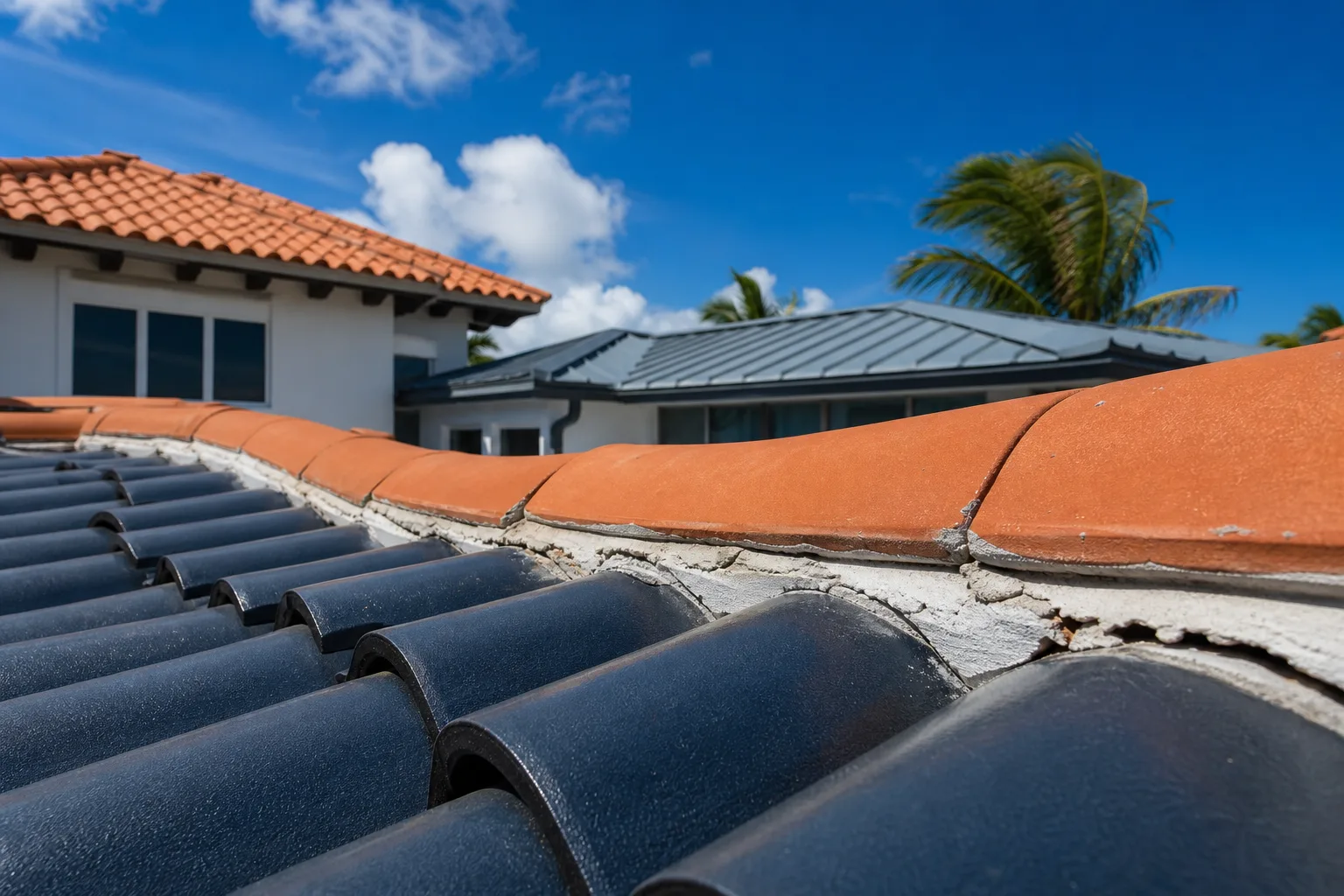
- Ridge cap and hip cap mortar joints (tile roofs). On older tile roofs, the mortar and sealant holding ridge caps eventually dry out and crack. A cracked cap can shift or lift in a Cat 1 wind event. See our tile roofing page for more on what holds a cap in place.
- Skylight perimeter sealant. The joint between the skylight frame and the surrounding roof field is a common failure point. If you want to understand what that area looks like up close, this article on skylight flashing is worth reading.
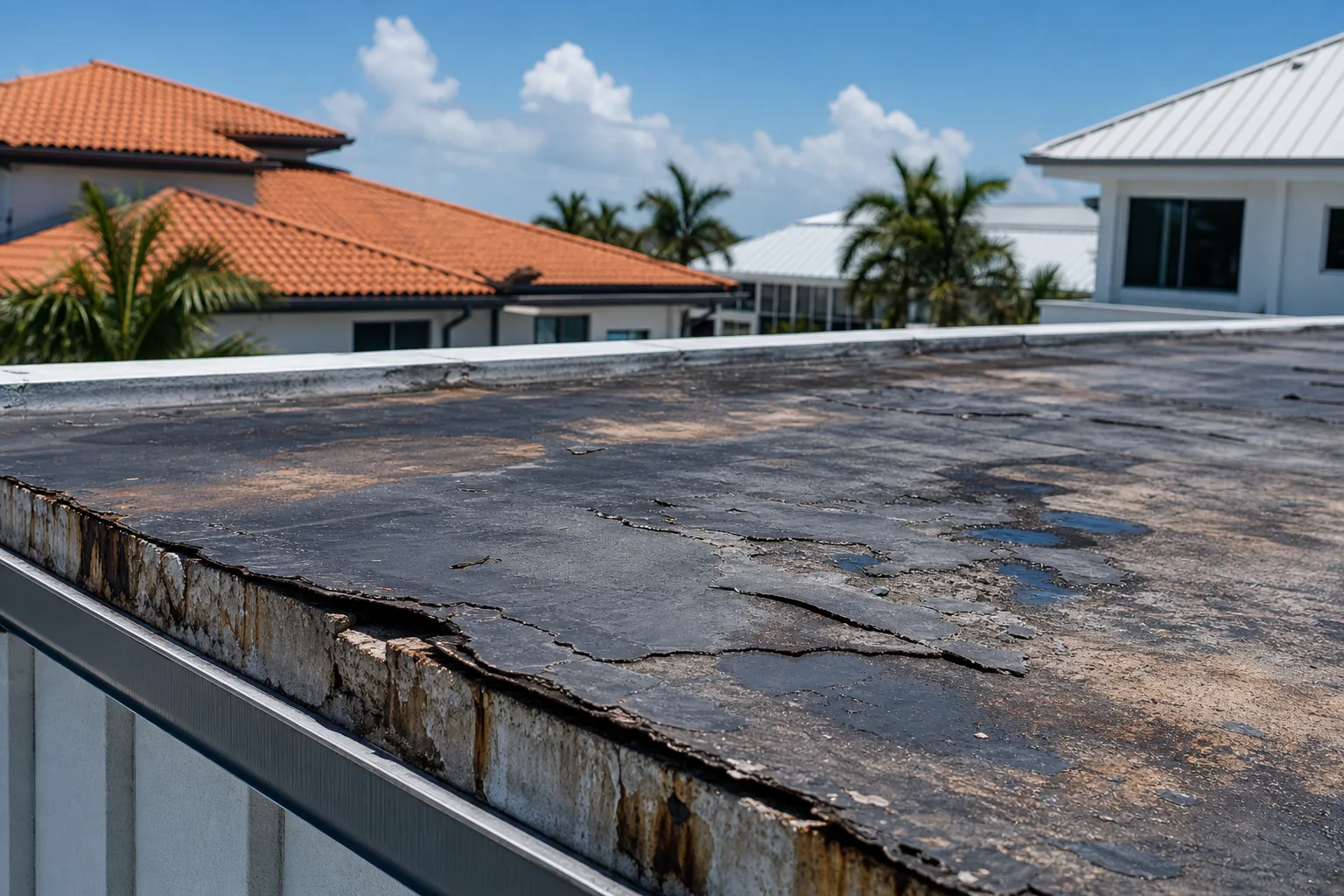
- Chimney and parapet cap joints. Wherever two materials meet at a horizontal surface, water pools and sealant is asked to do long-term work it was not designed for without periodic renewal.
- Gutter end caps and downspout connections. Often overlooked, these joints see standing water after every rain. Failed sealant here sends water down the fascia rather than away from the foundation.
Spotted a leak or missing tiles? Schedule a repair visit
Step 3: Inspect Before Hurricane Season Opens
The Atlantic hurricane season runs June 1 through November 30. The practical prep window in South Florida is March through May, before the summer rainy season also begins in June.
Here is a diagnostic sequence you can run from the ground or a safe vantage point:
| Location | What to Look For | Risk If Missed |
|---|---|---|
| Pipe boots | Cracking, shrinkage gap, missing collar | Active drip leak into attic |
| Ridge and hip caps | Visible cracks in mortar or sealant bead | Cap displacement in high wind |
| Step flashing joints | Separation between sealant and wall surface | Water tracking down interior wall |
| Skylight perimeter | Brown staining on adjacent shingles or tile | Ceiling damage over time |
| Gutter seams and end caps | Rust streaks, peeling paint on fascia below | Fascia rot, foundation drainage issues |
| Parapet cap edges | Gaps, lifted material, bubbling | Water entry at top of parapet wall |
For anything you cannot clearly see from the ground, binoculars work better than getting on the roof yourself. A licensed roofer should do a close-up inspection of anything that looks questionable.
Step 4: Understand the Limits of DIY Re-Caulking
Over-the-counter caulk from a hardware store is not the same product a commercial roofer applies. Roofing-grade sealants are formulated for UV exposure and substrate adhesion in ways that consumer products are not. That said, there are situations where a homeowner can reasonably address a sealant issue and situations where it makes sense to call a professional.
Self-help is reasonable when:
- The area is accessible and safe to reach
- The existing sealant is simply dried and shrunk with no underlying moisture damage
- You are using a product rated for the specific substrate (silicone on metal, polyurethane on masonry, etc.)
- The joint is not part of a flashed or lapped system where the layers need to be pulled back
Call a licensed roofer when:
- There is any sign of water staining on the decking or framing below
- The sealant failure is at a flashed penetration (pipe boot, skylight, chimney)
- You are on a tile roof and the ridge or hip caps have shifted
- The property has had prior storm damage that may have compromised underlying layers
- The roof is more than 15 years old and has not had a documented sealant inspection
For South Florida properties, some insurance carriers may ask for maintenance records when evaluating claims, so having a licensed contractor perform and record sealant work can give you a paper trail that matters if a claim is disputed. Requirements vary by insurer and policy, so check with your provider directly.
Common Mistakes
Caulking over failed caulk without removing the old bead. New sealant will not bond properly to degraded material. The old bead needs to be cut out and the substrate cleaned before applying a new joint.
Using interior-grade or window caulk on a roof. These products are not UV-stabilized or rated for wet immersion and will fail within one season.
Assuming a dry inspection means everything is fine. Sealant can appear intact from the ground but be fully debonded from the substrate, acting as a flap rather than a seal when wind-driven rain arrives.
Ignoring the gutter system when addressing roof sealants. The two systems connect. Failed gutter end caps and seams redirect water in ways that stress the fascia and soffit. If you are maintaining roof penetration sealants, check the gutter connections at the same time.
Waiting until there is an active leak. By the time water appears on a ceiling, it has often been traveling through the assembly for a while. Proactive inspection before the rainy season is more cost-effective than reactive repair.
Bottom Line
Roof caulk and sealants in South Florida have a real service life, usually five to seven years at most high-exposure joints, and the climate is not forgiving when that life is exceeded. The highest-risk locations are pipe boots, ridge caps on tile roofs, step flashing joints, and skylight perimeters. Inspect them before hurricane season opens each year. Use the right product for the substrate, and do not caulk over failed material.
If your last sealant inspection was more than two years ago, or if you have never had one documented, a pre-season roof repair assessment is a practical next step. You can also start with a free instant estimate to understand what a professional inspection would involve for your specific roof type and age.
Spotted a leak or missing tiles?
Small problems get expensive fast in the Florida sun. Get it looked at by a local crew before the next storm.
Frequently asked questions
What type of caulk or sealant should be used on a Florida roof?
The correct product depends on the substrate. Silicone-based sealants are generally preferred for metal-to-metal joints and pipe boots because they remain flexible under heat cycling. Polyurethane sealants are commonly used on masonry surfaces like parapet caps. Consumer-grade window and door caulk is not appropriate for roofing applications because it lacks UV stabilization and wet-immersion ratings.
Can I tell if my roof sealant has failed without getting on the roof?
Often yes, with binoculars and an attic inspection. From the ground, look for visible cracking, shrinkage gaps, or discoloration around pipe boots, ridge caps, and wall-to-roof transitions. From the attic, look for daylight around penetrations or any staining on the decking or framing directly below a suspected joint. Anything inconclusive should be assessed by a licensed roofer.
Does Florida homeowners insurance cover sealant failure and related leaks?
Insurance generally covers sudden and accidental water intrusion, not maintenance-related deterioration. If an adjuster determines that a sealant failed due to age or lack of upkeep, the resulting damage may be classified as a maintenance issue rather than a covered loss, though outcomes vary depending on your specific policy and insurer. Policies differ significantly, so review your policy documents carefully and consult your insurer or a licensed public adjuster to understand what your coverage actually includes. Keeping a documented record of sealant inspections and repairs can strengthen your position if a storm-related claim is disputed.
How does hurricane season affect the urgency of sealant repairs?
A sealant joint that holds under normal rain can fail under wind-driven rain at tropical storm or hurricane force. The Florida Building Code requires roofing systems to resist specific wind-speed and rain-infiltration benchmarks, but that standard assumes the system is intact. Degraded sealant at a pipe boot or ridge cap is a vulnerability that gets exposed precisely when conditions are worst. Completing repairs before June 1 is the practical goal.