Why Your Roof Leaks Even When It's Not Raining Hard

In this article
TL;DR: Light rain leaks usually trace back to failed flashing, clogged drainage, or deteriorated sealants, not missing shingles. These are fixable problems, but they get dramatically worse when a serious storm rolls through Palm Beach County. Find the source promptly, especially before the next storm.
What You Need
Before you start tracing a leak, gather a few basics:
- A safe way to access your attic (a flashlight and a dry day work fine, no roof walking required)
- Ask a qualified roofer whether controlled water testing is appropriate; avoid creating new damage yourself
- A notepad or phone for photos and notes
- A licensed roofing contractor's number for anything beyond visual diagnosis
You do not need to get on your roof. In fact, for most South Florida homes, especially tile systems, walking the roof without training damages the very surface you're trying to inspect.
Step 1: Understand Why Low-Rain Leaks Happen Differently
Heavy rain is a brute-force test. It overwhelms everything at once, so the source of a leak is sometimes obvious: a big hole, a missing tile, a lifted shingle.
Light rain is a precision test. It hits at a lower angle, it runs along surfaces instead of driving straight through them, and it exposes the slow failures that have been building for years. A hairline crack in a sealant bead around a vent pipe might never matter in a drizzle hitting at 90 degrees straight down, but wind-driven drizzle may enter through that defect.
This is especially common in the months just before hurricane season, March through May, when South Florida gets its "pre-season" rain events: moderate wind, diagonal rain, and enough moisture to reveal every compromised detail on your roof.
Step 2: Check Your Flashing First
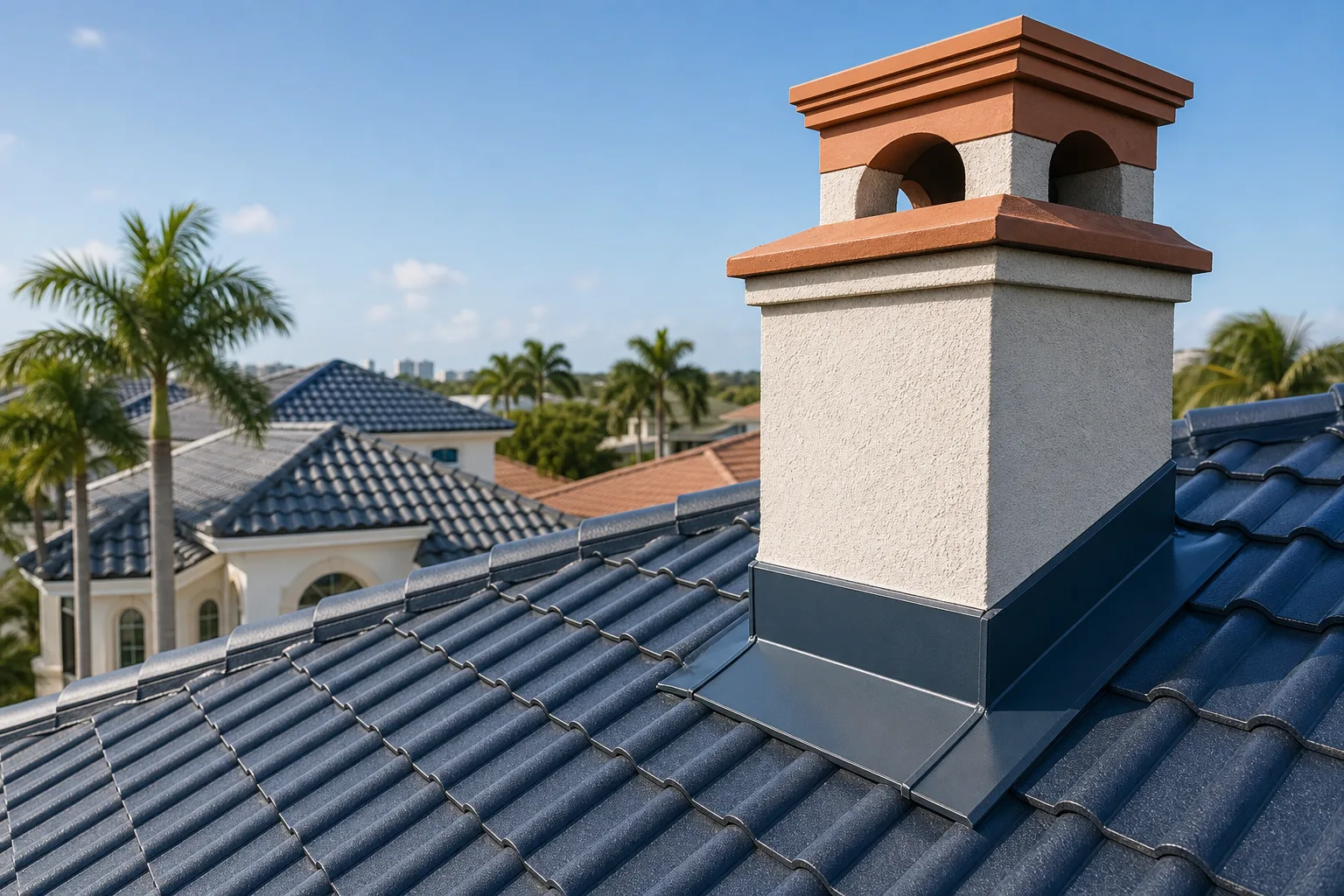
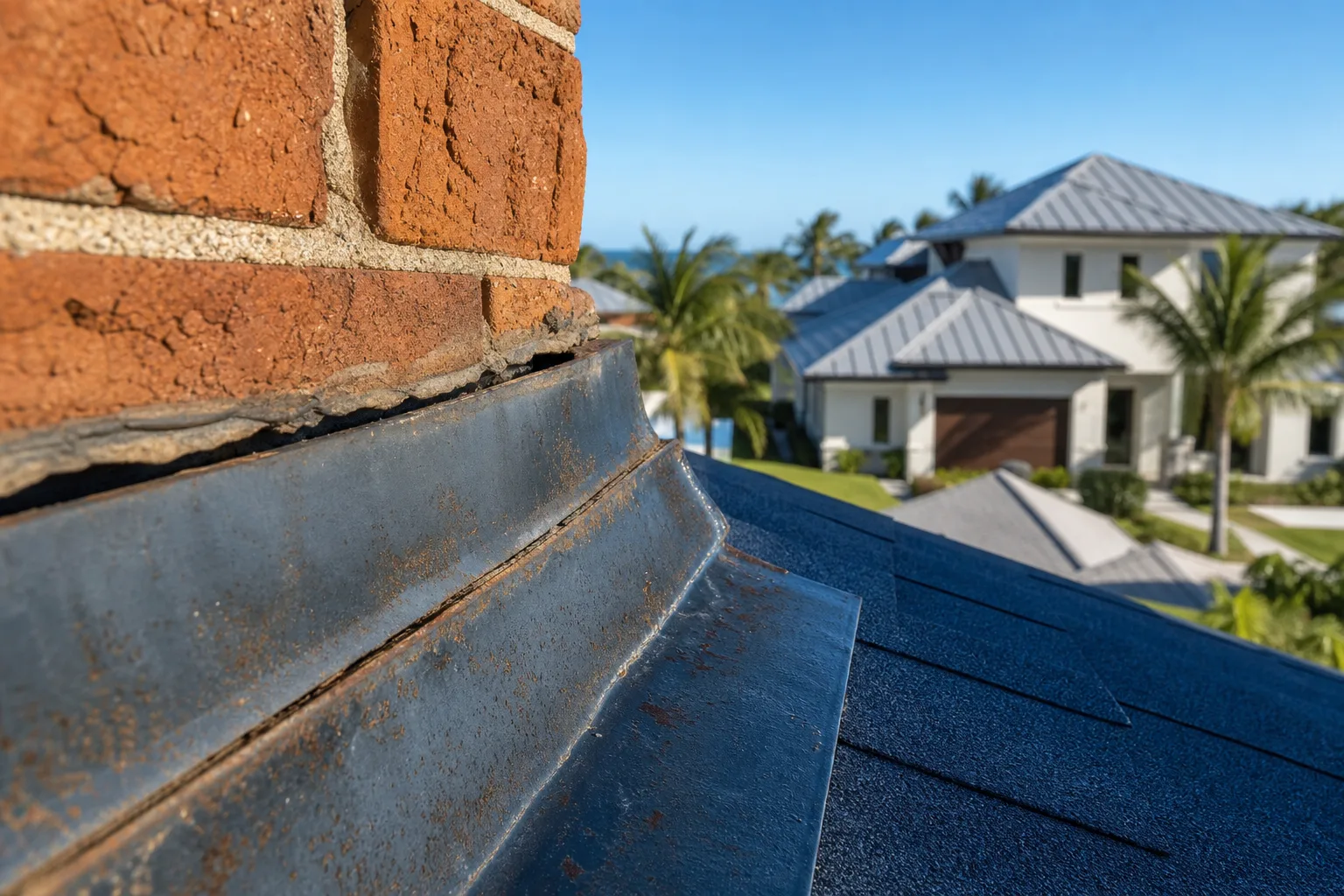
Flashing is the sheet metal (or sometimes rubberized membrane) installed at every transition point on your roof: where the roof meets a wall, around chimneys, skylights, vents, and valleys where two slopes meet.
Flashing is one possible source of light-rain leaks. Here's why: when a roofing crew installs flashing correctly, it's designed to direct water away from the transition. But over time, sealants crack, metal corrodes, and fasteners back out. Florida's heat cycles accelerate all of this.
What to look for from the ground or attic:
- Rust staining around any metal on the roof
- Separation between the flashing edge and the wall or chimney
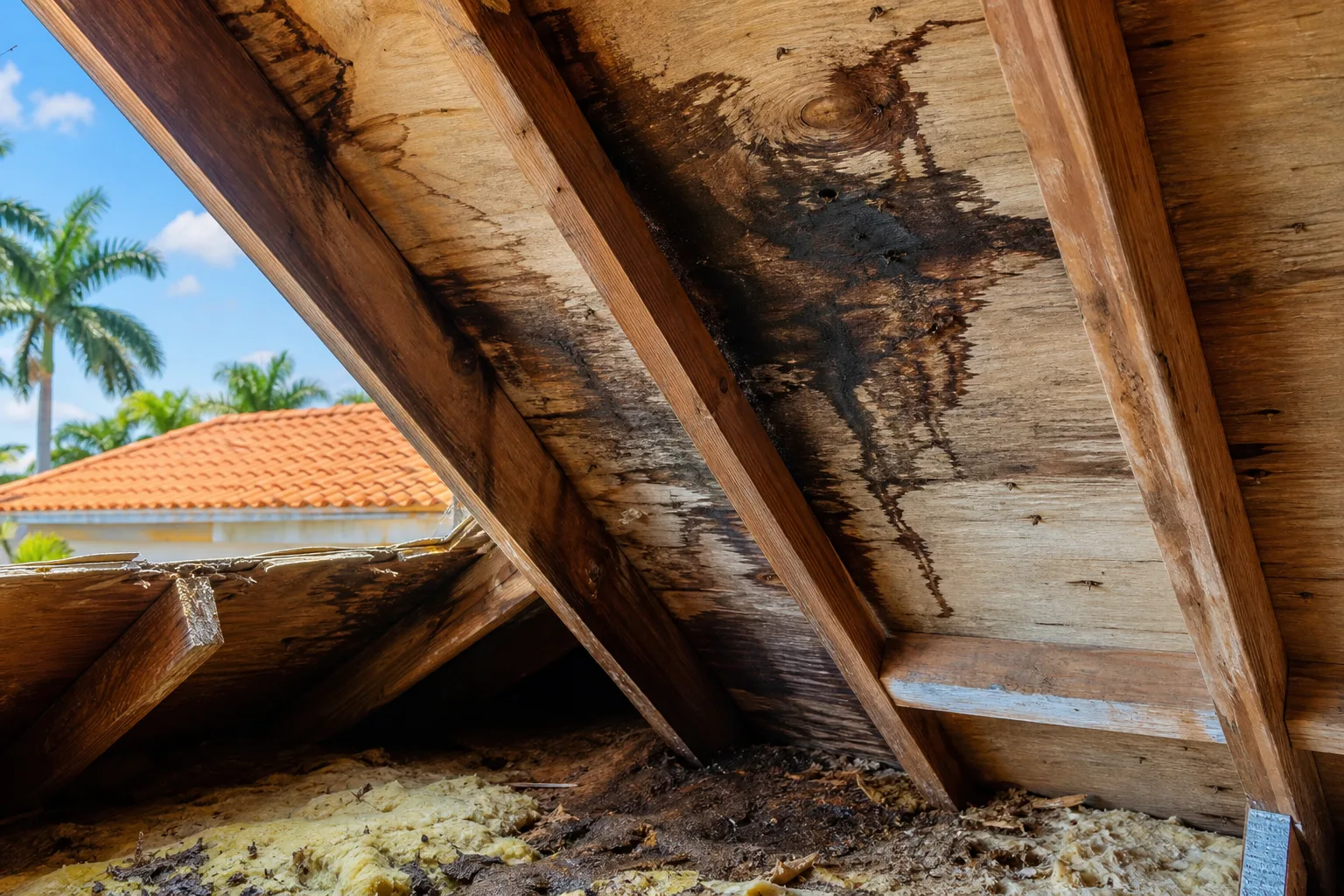
- Water stains on attic sheathing that radiate outward from a wall penetration
Step flashing along dormers and additions is particularly vulnerable in South Florida homes built in the 1990s and early 2000s. If your home is in that age range and you've never had the flashing inspected, it's worth checking now. Our roof repair services cover flashing replacement as a standalone job, whether a re-roof is needed depends on the wider roof condition.
Step 3: Look at Every Penetration on the Roof
Pipes, vents, exhaust boots, satellite dish mounts, attic fans. Every single penetration through your roofing surface is a potential entry point.
The rubber boots around plumbing vent pipes are a common offender. They're typically neoprene or EPDM rubber, and South Florida's UV exposure degrades them faster than the manufacturer's warranty suggests. A cracked vent boot may leak under wind-driven rain even when it appears dry during straight-down rain.
For tile roofs specifically: the mortar that sets ridge caps and hip caps can develop hairline fractures that aren't visible from the ground. Water works into those fractures at low volume, wicks down the underlayment, and shows up inside as a slow drip that seems unrelated to rain intensity. If you have a tile roof, the tile roofing page has more detail on what a proper cap and mortar inspection covers.
Step 4: Test Your Gutters and Drainage
This one surprises people. A clogged or improperly pitched gutter doesn't just cause overflow damage at the foundation. When gutters back up, water pools against the fascia board and works under the drip edge. In South Florida, where we can get an inch of rain in 20 minutes even on a calm day, that pooling happens fast.
A fascia leak typically shows up as a water stain along the ceiling near an exterior wall, not in the middle of the room. Homeowners often assume it's a window seal issue, but the source is frequently water backing up from the gutter.
Check your gutters:
- After any rain, walk the perimeter and look for overflow points (not just at downspouts)
- Look for sagging sections, which indicates improper pitch or weight from debris
- Check where gutters connect to downspouts for gaps or separations
Our gutter services include inspection and resealing of gutter joints, which is often the only repair needed to stop a fascia-area leak.
Spotted a leak or missing tiles? Schedule a repair visit
Step 5: Check Your Attic Ventilation and Condensation
Not every "leak" during light rain is actually rain getting in from outside. Attic condensation can sometimes resemble a roof leak.
Here's how it happens: warm, humid outdoor air enters through soffit vents, hits cooler attic surfaces (especially around air conditioning ducts), and condenses into water droplets. When the AC system runs hard during a rain event, the temperature differential increases, and so does the condensation. The dripping appears to correlate with rain because that's when temperatures and humidity fluctuate.
You can often distinguish condensation from a true leak by checking the attic on a dry day after a humid night. If there's moisture on the sheathing or trusses without any recent rain, condensation is one possibility to investigate. The right fix depends on whether the moisture comes from condensation, ductwork, plumbing, or roof intrusion.
Step 6: Map the Water Path Inside and Work Backward
Water travels. Where you see the stain on your ceiling may not be directly below where the water entered. It runs along rafters, pools in low spots, and drips at the lowest point it can find.
To find the true entry point:
- On a dry day, go into the attic with a flashlight
- Look for staining, discoloration, or soft spots on the sheathing
- Follow the stain uphill (toward the peak) to find where it originates
- Mark the spot with a piece of tape or chalk
Once you know the approximate location on the roof surface, have a contractor examine that area specifically. This saves time and money. A vague description of "it leaks somewhere over the master bedroom" covers a lot of roof square footage. A marked attic location narrows it down considerably.
For homeowners who want a professional to do this systematically, our post on what happens during a professional roof inspection walks through exactly how a thorough inspection is conducted.
Step 7: Prioritize the Fix on a Hurricane-Season Timeline
Here's the part most roofing content skips: a small flashing gap or a cracked pipe boot that produces a drip in a light rain will behave completely differently when a tropical storm or Category 2 hits. Wind-driven rain at 80 or 90 mph doesn't trickle through a gap. It can increase water entry through the same gap.
Florida Building Code roofing provisions address roof coverings and flashing installation; a roofer should check the applicable edition and local permit requirements for the specific repair. This isn't just a construction standard. It's relevant to insurance claims. If an adjuster determines that a pre-existing condition allowed water intrusion before the storm event, coverage for storm-related water damage can be disputed.
The 2026 changes to storm damage roof claims are worth reading before you file anything. But the cleaner approach is to address known defects before they become a claim issue at all.
If you want a professional set of eyes on your roof before the next storm, you can get a free instant estimate or visit our Hurricane Storm Center for the full pre-season checklist.
Common Mistakes
Patching the ceiling instead of the roof. Repairing interior finishes before finding the source leaves the water-entry path unresolved. The stain comes back because the entry point was never addressed.
Assuming light leaks will "hold" through the season. Even a small leak warrants assessment because storms can worsen water intrusion. What's manageable now becomes catastrophic in August.
DIY sealant over flashing without cleaning. Applying caulk or roofing cement over old, contaminated surfaces may fail if the underlying defect is not addressed. Proper flashing repair means removing the old material, cleaning the substrate, and reinstalling with the correct product for South Florida's UV exposure.
Ignoring second-story or hip-roof geometry. Hipped roofs, which are extremely common in Palm Beach County, have more valley and ridge intersections than gabled roofs. More transitions mean more flashing, and more potential failure points. Hip roof leaks often show up far from their actual source.
Waiting for a roofer to "have time" after a storm. Post-storm demand in South Florida is extreme. Contractor availability can tighten after local storm damage. Addressing known issues promptly can reduce the chance of seeking repairs during post-storm demand.
Bottom Line
A light-rain leak is your roof telling you something specific. It's not catastrophic, but it's not something to watch and wait. The most common causes, flashing failure, penetration seal deterioration, gutter backup, and condensation, can often be diagnosed and repaired; arrange an assessment promptly.
If you're in Boynton Beach, Delray Beach, West Palm Beach, Boca Raton, or Lake Worth and you've got a mystery drip, the first step is getting into your attic and mapping the water path. The second step is calling a licensed contractor who knows what they're looking for in South Florida construction.
Millennium Makeover has been doing exactly this since 2005. You can request a quote or reach us directly through our contact page if you'd rather talk it through first.
Spotted a leak or missing tiles?
Small problems get expensive fast in the Florida sun. Get it looked at by a local crew before the next storm.
Frequently asked questions
Why does my roof only leak when there's wind-driven rain, not straight-down rain?
Diagonal, wind-driven rain exploits vulnerabilities that vertical rain misses, especially gaps in flashing, failed pipe boot seals, and open mortar joints on tile ridges. These openings are often too small or angled to allow vertical water entry, but lateral pressure pushes water right through them. This is one reason light, breezy rain events expose leaks that a heavy summer downpour never revealed.
How can I tell if my roof leak is actually condensation and not rain getting in?
Check your attic on a dry morning after a humid night. If you see moisture on the sheathing, rafters, or duct work without any recent rain, condensation is likely the cause. True roof leaks leave staining patterns that trace back to a specific entry point, while condensation tends to appear more broadly across cooler surfaces near air conditioning components.
Can a small flashing gap really get worse during a hurricane?
Yes, significantly worse. Wind-driven rain can increase water intrusion through an existing gap. The physics of wind-driven rain at hurricane speeds are completely different from a gentle drizzle, and small defects become major water pathways very quickly under those conditions.
Will my homeowner's insurance cover a light-rain leak?
It depends on the cause. Insurance generally covers sudden storm damage, not gradual deterioration or pre-existing defects. If an adjuster determines that the leak resulted from long-term maintenance neglect rather than a specific storm event, coverage may be denied. Addressing known issues before storm season is one way to avoid disputes over whether damage was pre-existing.
How soon before hurricane season should I get a roof inspection in South Florida?
Arrange an inspection when you suspect damage or need to plan repairs before a storm. That gives enough lead time to schedule any needed repairs before contractor demand spikes in June. In South Florida, the window between the end of the dry season and the start of active storm season is narrow, and licensed roofing crews fill up fast once the first named storm forms.
Do I need a full roof replacement to fix a flashing or sealant leak?
Not in most cases. Flashing replacement, pipe boot repair, and sealant work are typically standalone repairs that don't require replacing the entire roof surface. A qualified contractor can assess whether the issue is isolated or a sign of broader system failure, but many light-rain leaks are resolved with targeted repairs at a fraction of replacement cost.