Florida Roof Shapes: Which FL Roof Shape Works Best in Your Climate
In this article
TL;DR: In South Florida, hip roofs are the strongest wind performers, flat roofs work well on commercial buildings with proper drainage, and gable roofs need extra bracing to meet current code. The best FL roof shape for your home depends on your structure, budget, and how much storm resilience you want built in.
When homeowners search for the right FL roof shape, they usually start with aesthetics. But in Boynton Beach, Delray Beach, and the rest of Palm Beach County, shape is a structural and weather-performance decision as much as a visual one. South Florida sits in the highest wind-zone categories in the continental U.S., so geometry matters.
Here is how the most common roof shapes perform in our climate.
1. Hip Roof: The South Florida Standard for a Reason
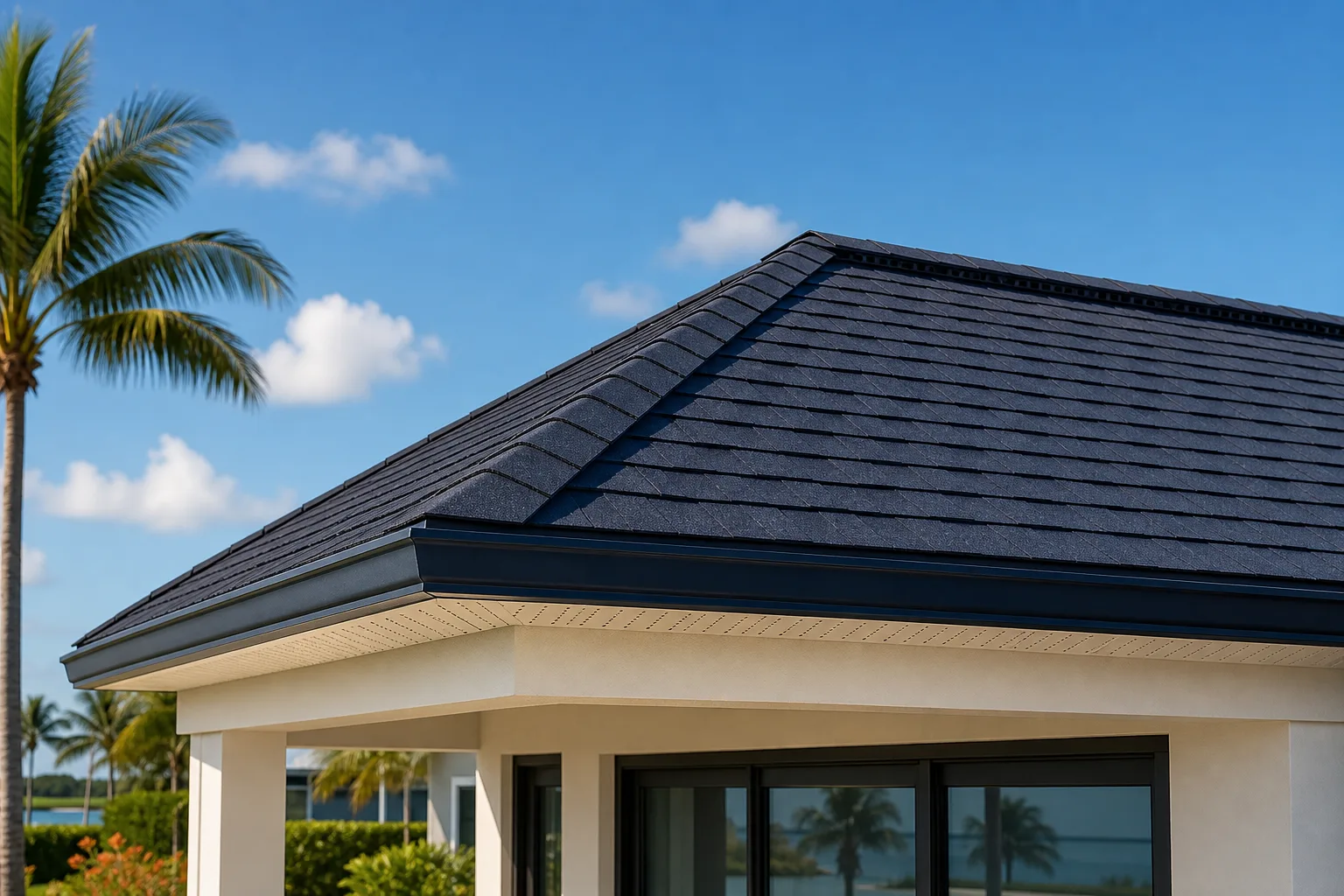
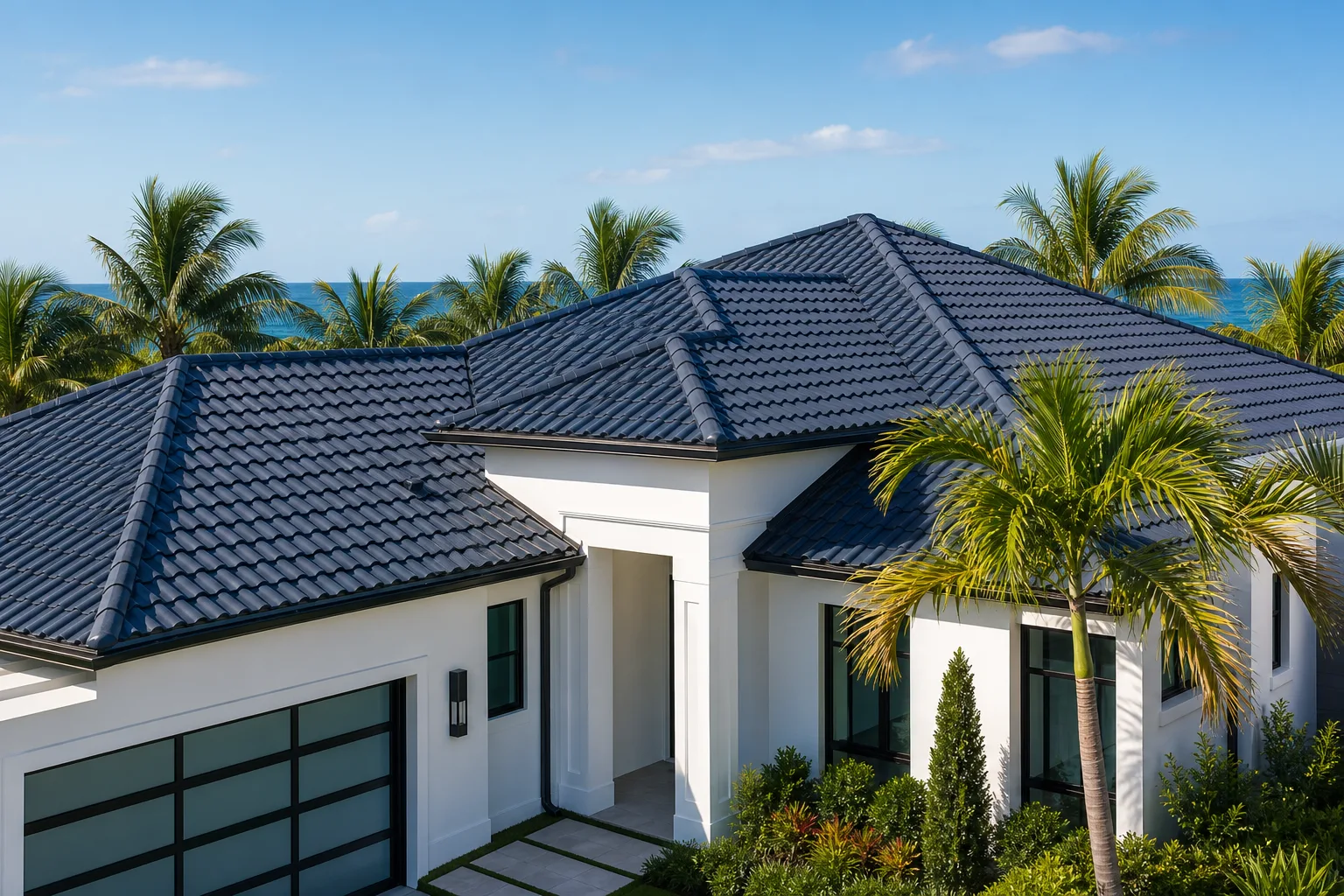
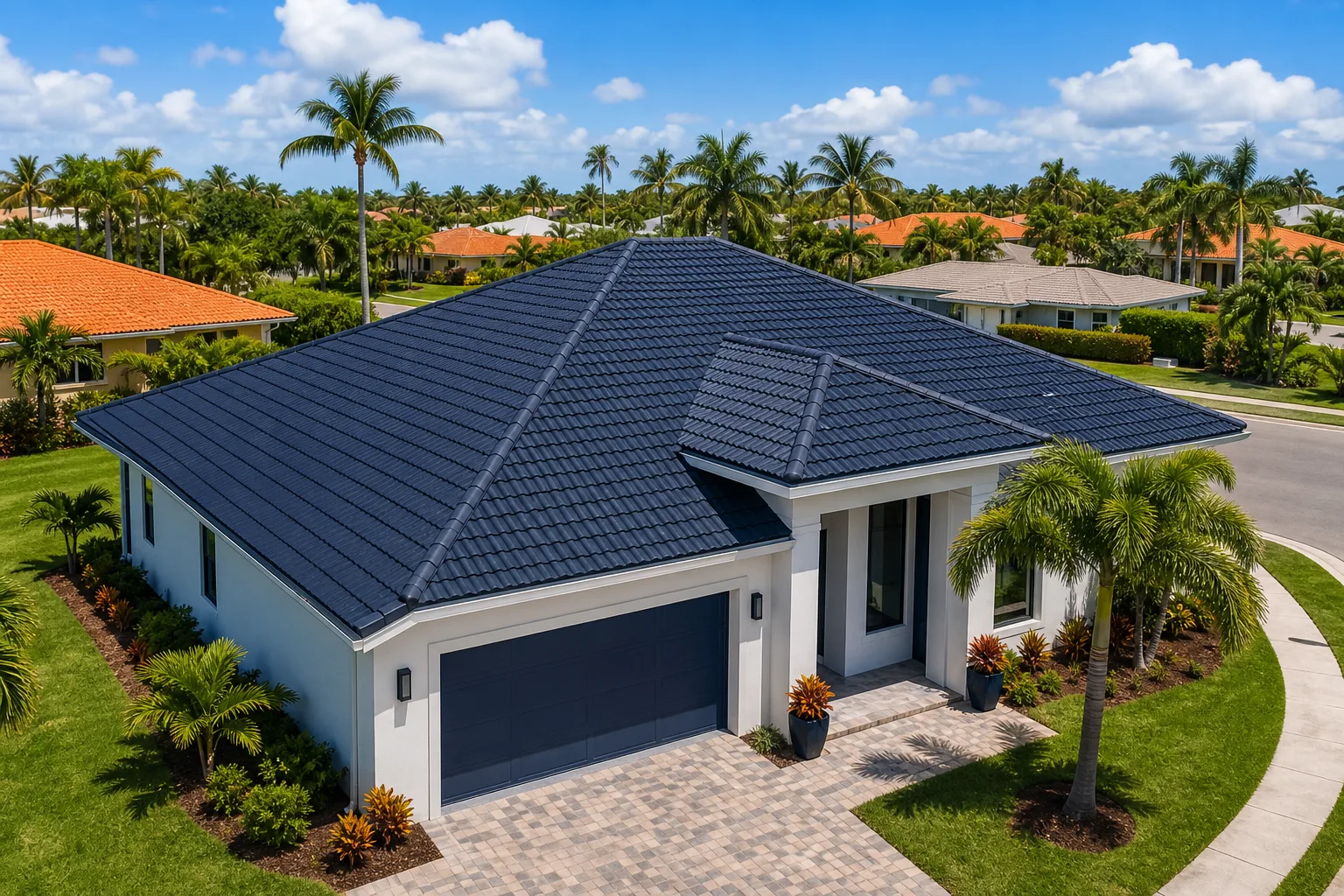
A hip roof slopes on all four sides, meeting at a central ridge. There are no vertical end walls exposed to wind pressure. That geometry is why Florida's building code and insurance underwriters tend to favor it.
When wind hits a hip roof from any direction, it has no flat face to push against. The sloped surfaces deflect pressure upward and around the structure. This is not just theory. The Insurance Institute for Business and Home Safety has documented that hip roofs generally outperform gable roofs in high-wind events.
Best for: Single-family homes throughout South Florida, especially in communities with strict wind-mitigation requirements.
Tradeoffs: Hip roofs have more surface area than a simple gable of the same footprint, so material costs run higher. They also have more valleys where two slopes meet, which means more flashing details and more places where leaks can develop if workmanship is poor. See how to spot poor workmanship after a roof replacement to know what to check after installation.
2. Gable Roof: Common, but Needs Extra Attention Here
A gable roof has two slopes meeting at a ridge, with triangular walls (the gable ends) on each side. It is one of the most common shapes in older Florida neighborhoods and costs less to frame and shingle than a hip roof.
The problem in our climate is those triangular end walls. They act like sails in high wind. If the gable end is not properly braced, it can fail in a hurricane, which can trigger partial or total roof loss. Florida's post-Andrew building codes addressed this, but older homes may still have under-braced gable ends.
Best for: Lower-wind-exposure areas, homes with large attic ventilation needs, or situations where budget limits options.
Tradeoffs: Gable roofs can qualify for wind-mitigation discounts if the gable ends are properly braced and documented. If you own an older home with a gable roof, a licensed inspector can evaluate the bracing. Fastener patterns on the decking also matter here. See what roof fastener patterns mean for hurricane resistance.
3. Flat Roof (Low-Slope): The Commercial Default
Flat roofs are not truly flat. They carry a slight pitch, usually 1/4 inch per foot or more, to direct water toward drains or scuppers. In South Florida, they are standard on commercial buildings and common on mid-century modern homes.
The challenge is drainage. South Florida receives roughly 55 to 60 or more inches of rain per year depending on location, often falling at intense rates during afternoon thunderstorms and tropical systems. A flat roof that cannot move water fast enough will pond, and ponding accelerates membrane deterioration.
Material choice is critical on flat roofs. TPO, modified bitumen, and built-up systems each handle our heat and UV exposure differently. Commercial roofing on flat decks requires careful drain placement and regular maintenance checks.
Best for: Commercial buildings, additions, and contemporary residential designs where aesthetics call for a clean horizontal roofline.
Tradeoffs: Ongoing maintenance is higher than on a pitched roof. Drains need clearing, and membranes need inspection after every major storm. The upside is that flat roofs are easier to walk and inspect, and reroofing costs per square can be lower when material is a single-ply membrane rather than tile or shingle.
4. Mansard Roof: Rare in South Florida, for Good Reason
A mansard roof has a nearly vertical lower slope and a nearly flat upper section. It originated in French architecture and shows up occasionally in South Florida on older commercial buildings or estate-style homes.
In high-wind conditions, the steep lower slopes behave somewhat like vertical walls, creating significant uplift potential. Mansard roofs are not common enough in our area to have a strong track record in hurricanes, but the geometry is not favorable for wind resistance.
Best for: Historic preservation projects or specific architectural requirements where the shape is required.
Tradeoffs: Higher complexity means higher installation and repair cost. Finding roofers with experience on this shape in South Florida can be difficult.
Want to know what your roof actually needs? Get a free estimate
5. Shed Roof (Single Slope): Simple and Functional
A shed roof is a single sloped plane. It is common on additions, carports, covered patios, and contemporary new builds. The simplicity makes it inexpensive to build and easy to waterproof.
In wind, a shed roof performs better than a gable but not as well as a hip, depending on orientation. If the high end faces the prevailing wind, uplift pressure increases significantly.
Best for: Additions, accessory structures, and contemporary homes where the orientation can be controlled during design.
Tradeoffs: Drainage concentrates at one low edge, so gutters are critical. See our gutters page for what South Florida drainage systems need to handle.
6. Dutch Gable (Hip-Gable Combination): A Middle Ground
A Dutch gable roof combines a hip base with a small gable element at the top. The gable section adds attic space and ventilation compared to a pure hip roof, while the hip base still provides four-sided slope coverage.
It performs better in wind than a full gable but not quite as well as a pure hip. The small gable section still presents some vertical wall area to wind, though the exposure is much smaller than on a standard gable roof.
Best for: Homeowners who want more attic space or ventilation than a hip roof provides, but want better wind performance than a straight gable.
Tradeoffs: More complex framing adds cost. More ridges and valleys mean more flashing details to get right.
FL Roof Shape Comparison: Quick Reference
| Roof Shape | Wind Resistance | Drainage | Complexity | Common Use |
|---|---|---|---|---|
| Hip | High | Good | Moderate | Residential |
| Gable | Moderate (bracing required) | Good | Low | Residential |
| Flat/Low-slope | Variable (drainage-dependent) | Requires drains | Low-moderate | Commercial, modern residential |
| Mansard | Lower | Moderate | High | Historic/specialty |
| Shed | Moderate | Concentrates at one edge | Very low | Additions, carports |
| Dutch Gable | Moderate-high | Good | High | Residential |
Bottom Line
For most South Florida homeowners, a hip roof is the best-performing FL roof shape in our wind and rain climate. Gable roofs can work, but they require proper bracing and documentation to perform well and qualify for wind-mitigation credits. Flat roofs are the right choice for commercial applications when drainage is designed correctly.
If you are replacing or repairing a roof and want to understand how your current shape affects your options, a professional estimate is the right starting point. You can get a free instant estimate or request a quote from Millennium Makeover. If your home took storm damage and your shape is part of what failed, the Hurricane Storm Center is the right place to start.
For a full look at residential roofing options in South Florida, see our residential roofing services.
Want to know what your roof actually needs?
Millennium Makeover has been roofing South Florida homes and businesses since 2005. Get a straight, no-pressure estimate from a licensed local crew (CCC1326328).
Frequently asked questions
Does my FL roof shape affect my homeowners insurance premium?
Yes, in Florida it often does. Hip roofs may qualify for larger wind-mitigation discounts because they tend to perform better in high-wind events, though actual discount amounts vary by insurer and policy. A licensed inspector can document your roof shape and other features on a wind-mitigation form, which your insurer uses to calculate your discount.
Can I change my roof shape when I replace my roof?
Structurally, yes, but it involves framing changes beyond just reroofing, which adds significant cost and requires permits. Most homeowners keep the existing shape and focus on upgrading materials and fastening. If you want to convert a gable to a hip, that is a larger renovation project than a standard replacement.
How does a hip roof affect attic ventilation compared to a gable roof?
Gable roofs make it easy to add gable-end vents for cross ventilation, while hip roofs rely on soffit and ridge vents. Both systems can work well in South Florida's heat, but hip roofs require careful vent placement to achieve adequate airflow. A roofer should evaluate your attic ventilation when quoting any replacement.
Are flat roofs more prone to leaks in South Florida's heavy rain?
Flat roofs are not inherently leakier, but they are less forgiving of drainage problems. If drains or scuppers are undersized, blocked, or poorly placed, water ponds and stresses the membrane. Properly designed and maintained flat roofs can perform reliably in South Florida's rainfall patterns.